Transcribing the Addams Papers!

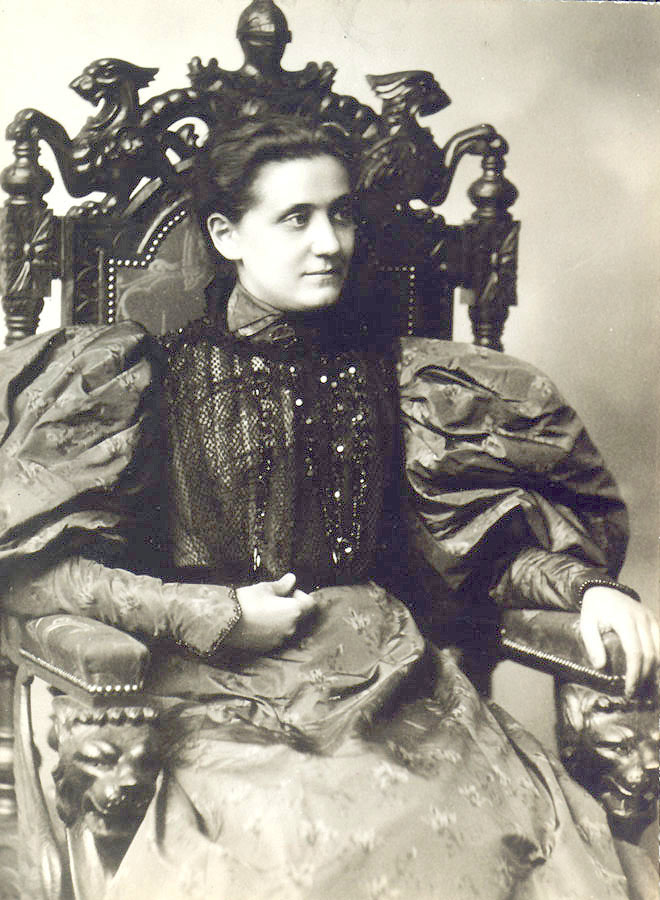
A woman in a formal, ornate dress with puffed sleeves sits on a large, intricately carved chair with lion heads on the armrests and decorative figures on the backrest. She looks to the side, holding her hands in her lap.

We have partnered with From the Page to invite the public to transcribe Addams documents from 1877 to 1899. Using this innovative platform, you can transcribe Addams’s speeches, articles and other writings, transcribe her incoming letters, and if you are feeling brave, tackle Jane Addams’s handwriting yourself!

Screenshot of a digital archive webpage displaying a handwritten letter from 1887. The left side shows the letter, while the right side has a typed transcript and options to edit, save, and mark the text as complete.
Transcription interface on From the Page.

When the Project came to Ramapo College ten years ago, our two goals were to complete the Selected Papers of Jane Addams and to create the digital archive. We started our work with the year 1901, where Volume 4 of theย Selected Papers began. As we are getting close to completing the years 1901-1935, we are turning back to the first three reels of correspondence and to Addams’s early writings.ย These years include, Addams’s college years, her travels abroad as a young woman, and the first ten years of Hull-House.

A woman in a formal, ornate dress with puffed sleeves sits on a large, intricately carved chair with lion heads on the armrests and decorative figures on the backrest. She looks to the side, holding her hands in her lap.
Jane Addams in 1896 (Swarthmore College Archives)

Crowdsourcing is a great way to engage those interested in Addams’s life and work, and by transcribing you get an experience of close reading unlike any other.ย  Puzzling out the names, finding archaic terms and spellings brings us closer to the authors and gives a real sense of what it was like to be alive in the late 19th century.

From the Page’s interface is easy to use. All you need to do is create an account and then find the Jane Addams Papers. You will see documents that need to be transcribed and can select any that interest you, or you can press the Start Transcribing button and get a random page!

We started adding documents to the portal last month, and even before a day was out, volunteers hooked on transcription rolled up their sleeves and got to work.ย  As of this morning, 360 pages of material have already been transcribed, from 71 of the 868 works we mounted. We haven’t even advertised it yet!

Once these are transcribed we will import them into our digital archive and students working the the project will attach metadata and link the names of people, organizations and events to the text, just as we have done with those created by project staff. The work of volunteers will make it easier for us to make these documents freely accessible to the public.

So if you would like to try your hand at transcription, dive on in!

A red oval button with white text that says, Start Transcribing!.


Two Chautauqua Summers

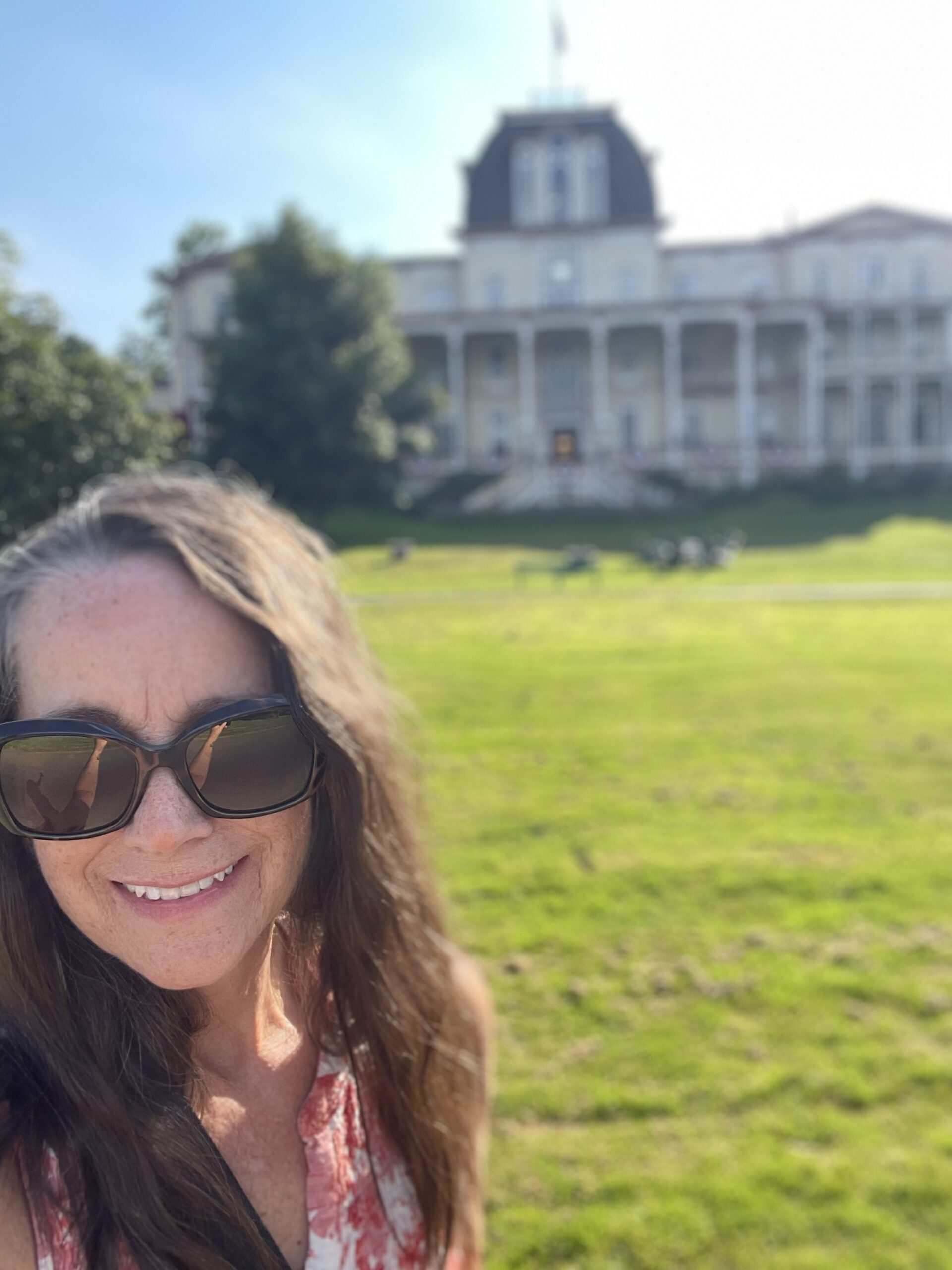
A woman with long brown hair and sunglasses smiles in the foreground; behind her, a large, white historic building stands across a sunny lawn.
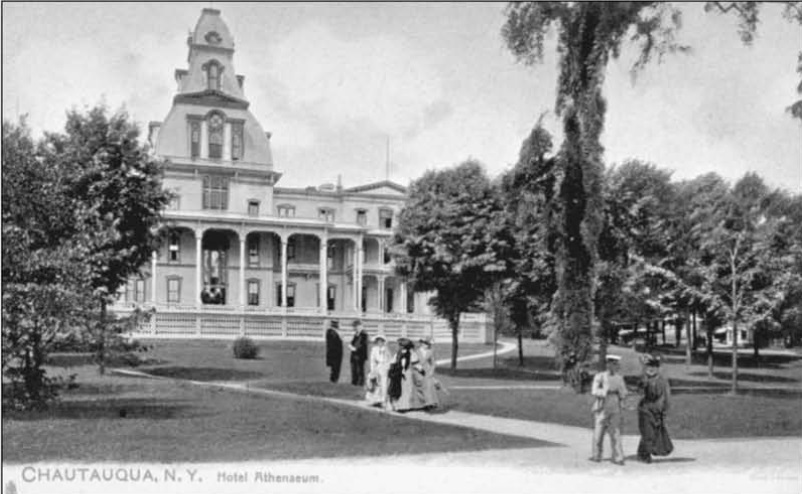
The Athenaeum Hotel, 1912

Jane Addams left Illinois for Chautauqua, New York, on Friday, July 4, 1902, at 3 p.m. Traveling on the New York Central Railroad, perhaps in a sleeping car, she had at least one book with her to read, as she always traveled with books. Onboard the train, Addams enjoyed the countryside passing by outside the train windows and engaged in casual conversation with fellow travelers. She may have snacked or had a light meal in the dining car and polished up her series of five lectures she was scheduled to deliver during her week-long stay at the Chautauqua Institution. She arrived in Chautauqua in the wee hours of the morning the following day and checked into the Athenaeum Hotel, a Second-Empire building opened to guests in 1881. The hotel boasted an ornate three-story tower with a mansard roof, centered on the front faรงade of the hotel. It stuck a magnificent pose from atop a small hill overlooking a deep lawn and Chautauqua Lake, matching in style the long skirts and elaborate hats of the women who strolled on the winding paths below it.

Exactly 123 years after Addams arrived in Chautauqua, I left Illinois for Chautauqua at 7:45 a.m. I drove by myself in my Ford Escape hybrid, stopping overnight in northern Indiana at my momโ€™s house. I drove the remaining six of the nine-hour journey the next day, snacking on cashews and dried mango while alternately listening to an audio book and rehearsing memorized sections of the one lecture that I was scheduled to deliver during my week-long stay at the Chautauqua Institution. I arrived in Chautauqua in the midafternoon on Sunday, July 6, and checked into the Athenaeum Hotel. Despite its peeling paint and the somewhat ragged appearance of the wicker chairs lined across the inviting two-story porches, the historical charm of the building calmed my road-weary spirit and my nerves, frazzled from sharing the road with semi-tractor trucks oblivious to speed limits. I would not learn it until later, but the stately hotel tower was two-stories shorter than the one that greeted Jane Addams in 1902, the upper stories having been dismantled for safety reasons in the 1920s. Still, in the hazy heat of July in 2025, the hotel was yesteryear grand, nestled as it was among mature trees and rich foliage, the Victorian porches already calling me. I made a vow to enjoy them each day of my visit, to drink coffee and watch every sunrise over the lake and sip cocktails as evening shadows fell over the enchanting, historic village.

In 1902, Jane Addams was not only a featured lecturer for Chautauquaโ€™s โ€œSocial Settlement Week,โ€ but she also brought with her the Hull-House Summer School. After ten years at her alma mater in Rockford, Illinois, this year she was hosting the Summer School at Chautauqua Institution. Seventy young women, mostly teachers from Chicago, would reside in various cottages scattered across the Chautauqua campus, participate in a variety of Institution lectures on topics like pedagogy and history and participate in activities like swimming and an excursion to Niagara Falls. The students would also attend Addamsโ€™s lectures and then met with her each evening in a shelter by the ravine piazza of the Institutionโ€™s auditorium. Addamsโ€™s good friend and fellow settlement house leader Graham Taylor from Chicago Commons was also joining her as a member of the Chautauqua faculty that summer.

In 2025, I was at Chautauqua as part of a group assembled by President Lincolnโ€™s Cottage, a historic site in Washington, DC, where Abraham Lincoln and his family lived for one-quarter of his presidency. It is the place where Lincoln wrote the Emancipation Proclamation and where he and his family grieved the death of eleven-year-old Willie Lincoln in 1862. Our group was leading a Master Class series to provide both historical and modern contexts for the Metropolitan Operaโ€™s Chautauqua workshop of Lincoln in the Bardo, based on the novel of the same name about Willie’s death and his father’s grief. My lecture was part history about the Lincoln family and grief, and it also shared my personal story of grief and illustrated, as well, how my emotional connection to the figures I study informs my understanding of the past.

I was in Chautauqua because of my years as an editor of Abraham Lincolnโ€™s papers, but I went to Chautauqua with Jane Addams in my head. I knew about the long, storied history of the Chautauqua Institution through my work editing Jane Addamsโ€™s papers, and I was eager to breathe in the place to which she returned many times during her long career as a reformer, writer, and renowned lecturer.

Chautauqua Institution was founded in 1874 by Episcopal Bishop John Heyl Vincent (1832-1920) and Lewis Miller (1829-1899), a religious leader, educator, and industrialist. The first Chautauqua assemblies were camp meetings for Sunday school teachers (attendees sleeping in actual tents!), but the organization expanded quickly four years later when Vincent established the Chautauqua Literary and Scientific Circle (CLSC), a correspondence school which offered โ€œcourses of reading for all classes of people.โ€ The early popularity of the CLSC and the growth of the Chautauqua Institution in western New York spurred the organization of Chautauqua societies across the country, the Chautauqua Movement promoting the idea of lifelong learning for adults, celebrating the most important work of educators, scientists, artists, writers, political leaders, and reformers, and espousing the idea that an educated public is a healthier public.

In his 1886 book The Chautauqua Movement, Vincent wrote: โ€œEducation, once the peculiar privilege of the few, must in our best earthy estate become the valued possession of the many. It is a natural and inalienable right of human souls.โ€

Jane Addams was a lifelong learner herself, and all of her reform work in Chicago and beyond was rooted in her steadfast belief that education and learning had power to lift up individuals and communities and help create a better world for all people. It is not surprising, then, that she supported the Chautauqua Movement, as did numerous leaders during the Progressive Era.

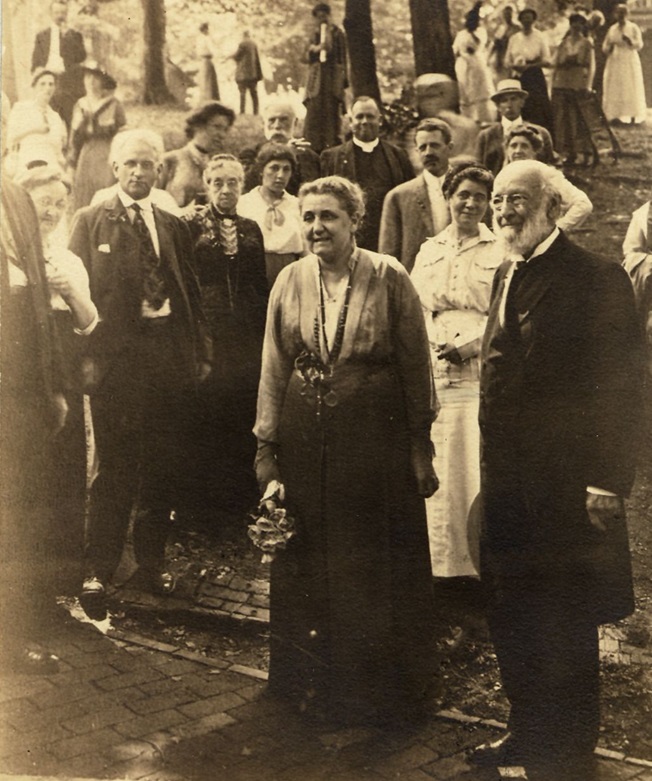
Jane Addams at Chautauqua in 1915; Bishop Vincent is on the right.

Addamsโ€™s trip to Chautauqua for Social Settlement Week in July 1902 was not her first. She previously lectured there in July 1893 as part of another program about social settlements, and she returned in July 1895. In August 1898, she lectured on โ€œAspects of the Social Problem,โ€ and in August 1900, she was back to deliver four lectures. Jane Addams valued the mission of Chautauqua, speaking at numerous Chautauqua Movement events throughout the Midwest and returning to Chautauqua Institution as a featured lecturer six times between 1903 and 1915. Ill health forced her to turn down an invitation to Chautauqua in 1918, but as she wrote Arthur Bestor, president of Chautauqua Institution, in March of that year: โ€œMy plans are of necessity indefinite but as it is always a pleasure to me to speak at [Chautauqua] I shall hope to be able to arrange it this year.โ€

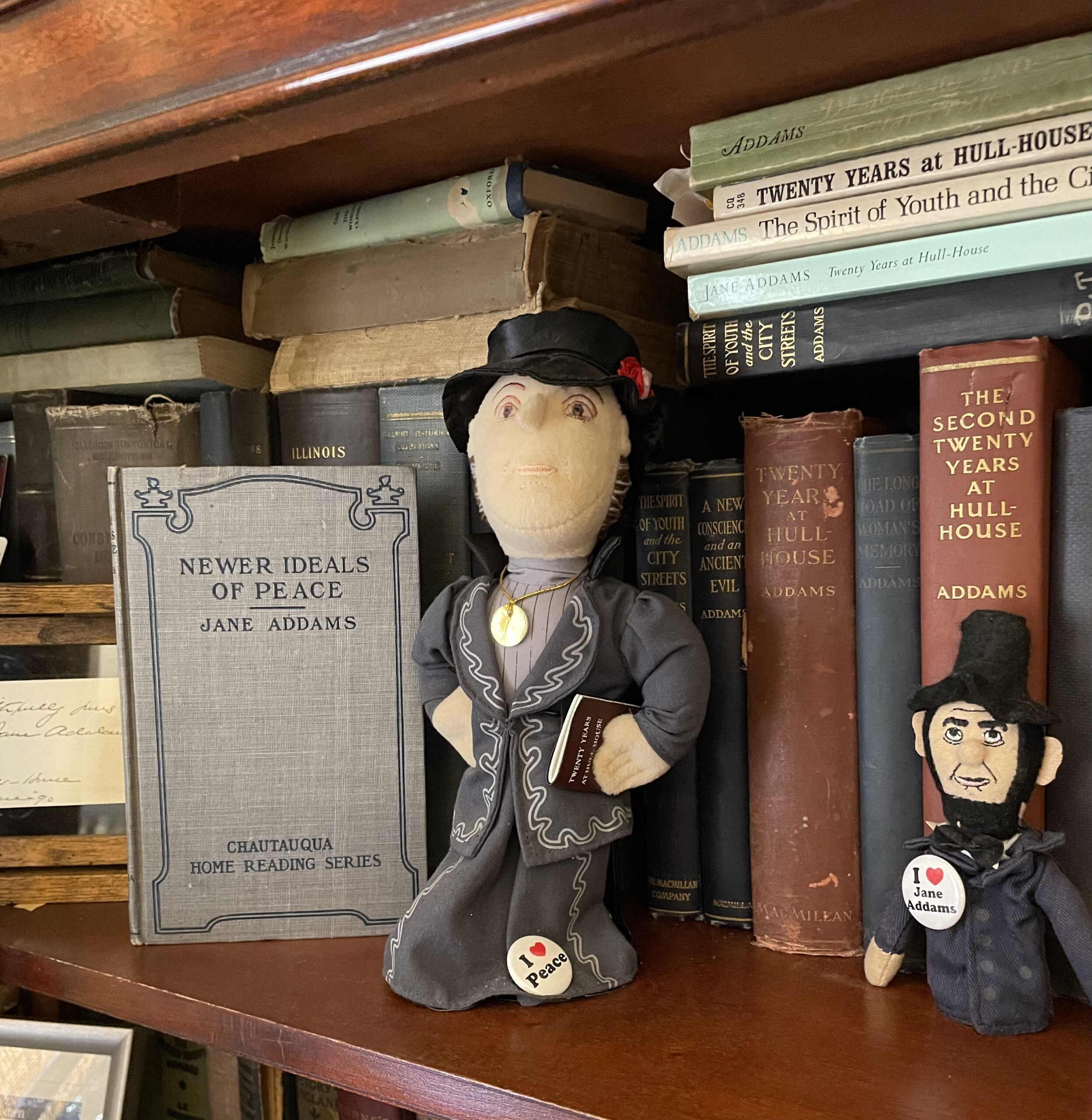
My cabinet of curiosities. (And, yes, I do believe that Abraham Lincoln would have loved Jane Addams).

Two of Addamsโ€™s books were selected as part of the coveted CLSCโ€™s annual reading curriculum: Newer Ideals of Peace in 1907-1908 and Twenty Years at Hull-House in 1911-1912. It is the Chautauqua Edition of Newer Ideals that I have in my Jane Addams cabinet of curiosities. The 2025 CLSC reading list includes one of my favorite books of recent years, Eve by scholar Cat Bohannon as well as Liberation Day, stories by George Saunders. Saunders was the featured lecturer at Chautauqua during the week I was there. He was present at the end of the week for the opera workshop of his brave and human novel Lincoln in the Bardo. Not bragging or anything, but it was a thrill for me to meet Saunders and have him inscribe my personal copy of Lincoln in the Bardo.

George Saunders was the star of my week at Chautauqua, but Jane Addams was always the star when she visited the Chautauqua Institution.

Even in 1915, when her peace work made her unpopular with some audiences, people clamored to read her books and articles, to meet her, and to hear her speak. In a speech at Chautauqua Institution in August that year, just four months after the United States entered the World War, she took the podium to defend herself. As an unwavering peace advocate, she was subject to criticism by many who believed that patriotism required total support of oneโ€™s government during wartime. Addams disagreed, believing instead that to be a patriot was to question the government and that free speech in time of war was even more important than in peacetime. In a speech at Carnegie Hall in New York on July 9, during which she had discussed her tour of Europe as part of the work of the International Congress of Women, Addams made some statements about soldiers, the use of stimulants in the European armies, and definitions of bravery that rankled many. However, at Chautauqua she reiterated those statements, reaffirmed the horror faced by men in the trenches, and celebrated the courage of soldiers.

I donโ€™t know how the audience received her lecture, but that the Chautauqua Institution granted Jane Addams a forum to raise her voice of peace during a time of war, speaks to the Institutionโ€™s commitment to free speech and the free exchange of ideas.

I witnessed that commitment to free speech at Chautauqua, as well. In a crowded amphitheater on July 10, at the coveted daily 10:45 a.m. Chautauqua Institution lecture, I watched Deborah Rutter, the widely regarded and long-time director of the Kennedy Center for the Performing Arts, defend her tenure leading the Center. Fired in February by President Trump for cultivating diversity and inclusion in the arts, Rutter spoke to the Chautauqua audience about the importance of creative expression in a democracy. She defended the Centerโ€™s mission to bring people of diverse backgrounds to perform on a variety of stages and to bring in audiences across all social, political, racial, ethnic, and economic divides. Her Chautauqua audience interrupted her speech numerous times in rousing applause of her arguments that art is important for artโ€™s sake, that creative expression in dark political times can save us, and that we must support the arts even more strenuously now that some voices are under the threat of being silenced.

Jane Addams would have been every bit as impressed with the speech and the audience as I was.

My week at Chautauqua was inspiring, rewarding, eye-opening, and a little bit magical. It was a modern experience informed by my interest in and emotional connection to the past. I was there in the company of new friends and historical figures, Jane Addams front and center in my mindโ€™s eye during my eight days on the Chautauqua campus. I am one of those history nerds who is always looking to run into ghosts of the past, and on that front my summer week in Chautauqua did not disappoint.

By Stacy Lynn, Associate Editor


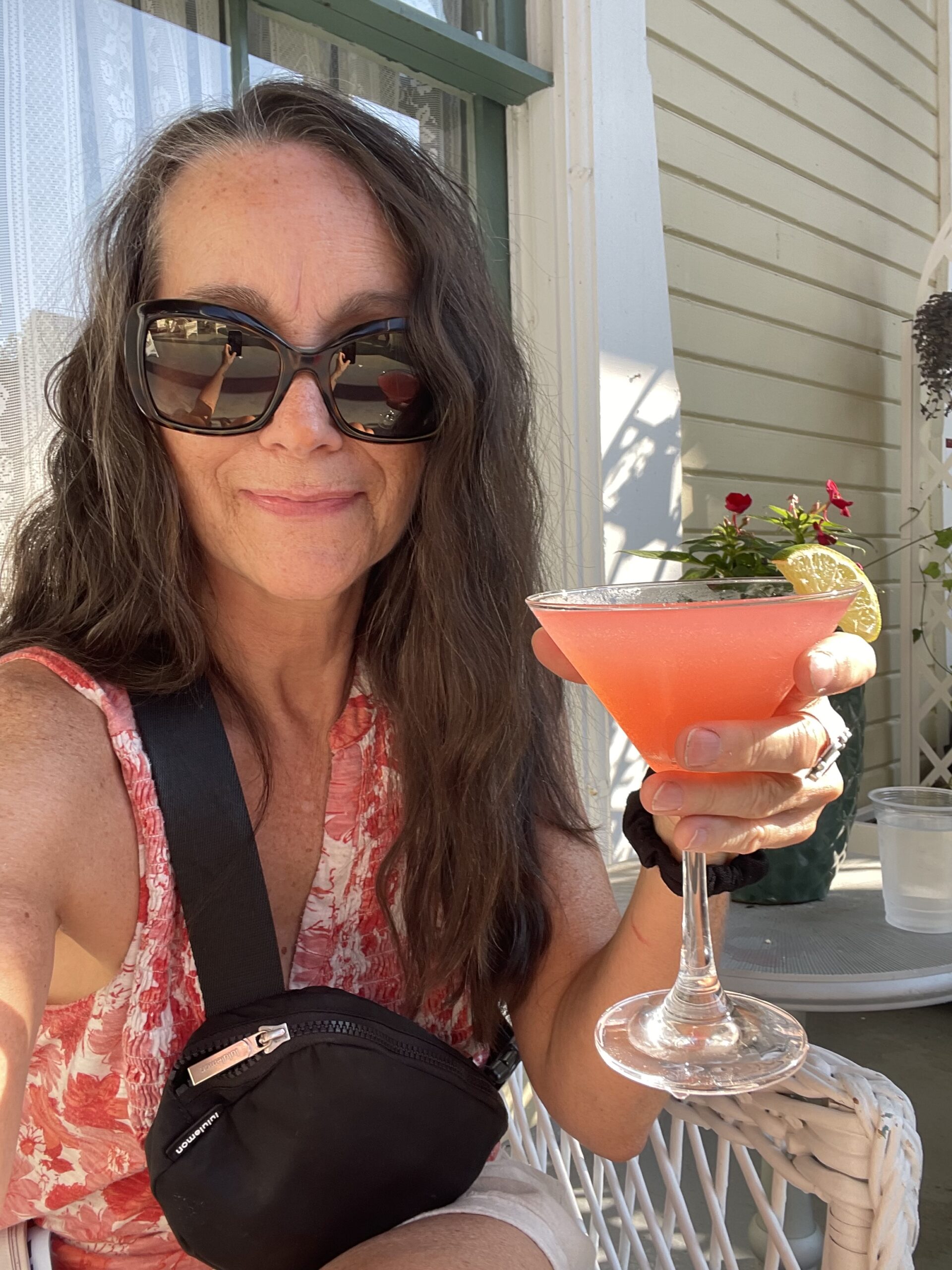
A “Chautauquapolitan” on one of the glorious porches of the Athenaeum.

Pro Reader Tip: Are you looking for suggestions for your next read? Consider consulting the CLSC Book List, 1878-2024. There is bound to be a perfect book for you to consider. Cheers and happy reading!

Sources: Jonathan David Schmitz and William Flanders, Postcard History Series, Chautauqua Institution (Charleston, SC: Arcadia, 2011), 13, 52; American National Biography; John H. Vincent, The Chautauqua Movement (Boston: Chautauqua Press, 1886), 2; โ€œNext Season at Chautauqua,โ€ The Buffalo (NY) Review, June 21, 1902, 5; โ€œChautauqua 1902,โ€ The Chautauquan, 35 (July 1902): 385-411; โ€œRailway Time Tables; Chicago Tribune, July 3, 1902, 15; โ€œPersonal Record,โ€ The Daily Journal (Freeport, IL), July 3 1902, 4; โ€œJane Addams Goes East to Open Summer School,โ€ Chicago Tribune, July 5, 1902, 4; โ€œChautauqua Is Open,โ€ The Fredonia (NY) Censor, July 9, 1902, 5; โ€œA Fair Chautauqua,โ€ Buffalo (NY) Evening News, July 10, 1902, 1; โ€œChautauquaโ€™s Success,โ€ Buffalo Evening News, July 13, 1902, 24; โ€œJane Addams to Be at Chautauqua,โ€ Buffalo Evening Times, Aug. 11, 1915, 5; Hull-House Bulletin, 1 (Dec. 1, 1896): 3; Hull-House Bulletin, 15 (Semi-Annual, 1902, no. 2): 4; Selected Papers of Jane Addams, vol. 3, 320, 437, 654n7; Democracy and Education, August 9, 1900; Jane Addams to Julia Clifford Lathrop, July 13, 1902; Chautauqua Girls to Jane Addams, c. August 1902; Jane Addams to Sarah Alice Addams Haldeman, August 15, 1903; Work and Play: Recognition Day Address, August 16, 1905; Hull-House Year Book 1906-1907; Macmillan Company to Jane Addams, October 11, 1906; Jane Addams to Sarah Alice Addams Haldeman, July 10, 1907; Newer Ideals in Education, July 3, 1908; George Platt Brett Sr. to Jane Addams, January 10, 1911; Peace, August 14, 1915; Jane Addams to Arthur Eugene Bestor, March 1, 1918, all in Jane Addams Digital Edition.

Democratic Ensembles: Spoken Art and Politics at Chicago Settlement Houses, 1890-1920

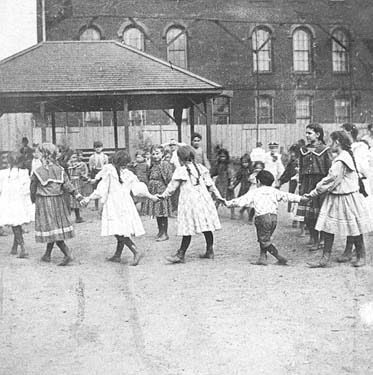
A group of children holding hands in a circle, playing outdoors on a dirt playground near a building with arched windows and a covered area in the background. The children are wearing old-fashioned clothes.

By Fiona Maxwell, PhD Candidate, Department of History, University of Chicago.

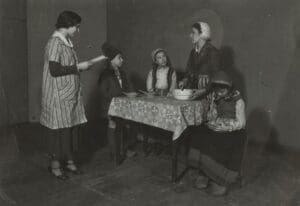
Four children in period costumes stand or sit around a table with bowls, while an adult woman in an apron stands beside them holding a book, possibly directing or reading to them in a staged setting.
Hull-House staffer Nicolette Malone working with actors for a dramatic performance (Hull-House Photograph Collection, University of Illinois Chicago).

In the Chicago settlement house movement, performance and sociability supplied a means and a metaphor for reimagining democracy as a collective project in service of the common welfare. My recently completed PhD dissertation, โ€œDemocratic Ensembles: Spoken Art and Politics at Chicago Settlement Houses, 1890-1920,โ€ takes self-governing settlement house clubs as a case study for exploring how Progressive Era concepts of social democracy unfolded in everyday practice. The project underscores the role of artistic collaboration in envisioning and bringing about desired political futures, and it introduces a more extensive dramatis personae to the history of Progressive reform.

Although a work of history, โ€œDemocratic Ensemblesโ€ has its origins not merely in writerly imagination and archival holdings, but in the actorโ€™s craft. I began studying at the Piven Theatre Workshop in Evanston, Illinois as a child, working my way through their performance ensembles and eventually joining the teaching staff. The Piven approach to actor trainingโ€”rooted in theatre games and story theatre adaptation, and defined by values of process, improvisation, and ensembleโ€”descends from the work of Neva Boyd and Viola Spolin at Hull-House during the 1920s and 1930s. While honing my skills as a performer and pedagogue, I kept hearing tantalizing whispers about a fabled prehistory of our approach.

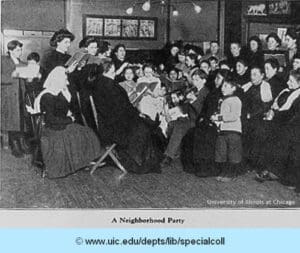
A black-and-white photo of a large group of women and children gathered indoors for a community event, labeled A Neighborhood Party. Some women appear to be reading or singing from papers.
A Neighborhood Party (Hull-House Yearbook Photos, University of Illinois Chicago)

When it came time to write a BA thesis as a History and Theatre major at Northwestern University, my mind immediately gravitated to Hull-House. I determined to learn as much as I could about the working-class Chicagoans who enrolled in settlement house arts education programs to further their educations, find like-minded peers, and exercise their creative imaginations. In this early stage, my research focused on the community reception of childrenโ€™s dramatics at Hull-House, with the goal of tracing the social and cultural history of early, pre-Spolin theatre education while foregrounding the perspectives of youth participants. I immersed myself in the Hull-House Collection at the University of Illinois at Chicago, as well as a burgeoning wealth of published and online resources, including the Jane Addams Papers Project. Wading through thousands of documents, I encountered Hull-Houseโ€™s dauntless cadre of reform-minded residents, as well as countless neighbors determined to realize their individual and collective aspirations. Reluctant to return home from this time travel expedition, I realized that pursuing a PhD was in order.

My early years of graduate school at the University of Chicago coincided with an explosion of public and scholarly discourse on democracy. During the late 2010s and early 2020s, historians began to revisit late nineteenth- and early twentieth-century reformers and theoristsโ€”particularly Jane Addams and John Deweyโ€”with renewed appreciation for their idea that democracy could be strengthened by social interaction across political and cultural divides and by prioritizing group welfare over individual gain. I embarked on my dissertation research paying close attention to how settlement workers articulated their theory of social democracy. I discovered that the language they used to describe their political philosophy mirrored the language that is still in practice today in ensemble-based theatreโ€”conceptual gifts from Progressive Era politics to contemporary artistic practice. Recognizing the broader political significance of the settlement story, I expanded my earlier focus on Hull-House theatre to embrace the โ€œspoken artsโ€โ€”including storytelling, group games, dramatic reading, oratory, and debateโ€”at settlement houses across Chicago, and I moved from children to โ€œchildren plus,โ€ examining how young people refined and implemented their artistic and political agendas as they aged and tracking how childrenโ€™s involvement catalyzed the participation of adult family members. I was lucky enough to discover a surfeit of underutilized materials in settlement club archives. At settlement houses across Chicago, working-class โ€œneighborsโ€ organized self-governing clubs that left plentiful records of their daily activities, in the form of constitutions and meeting minutes, neighborhood news and club gossip, and the occasional script, poem, joke, or lyric.[1] Piecing these fragments together recasts settlement houses, not merely as gathering places for the reform-minded middle and upper classes, but as genuinely grassroots centers of community education and local organizing.

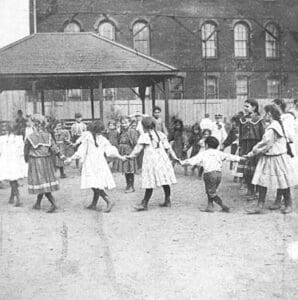
A group of children holding hands in a circle, playing outdoors on a dirt playground near a building with arched windows and a covered area in the background. The children are wearing old-fashioned clothes.
Hull-House Circle Games

In its current iteration, โ€œDemocratic Ensemblesโ€ investigates the ways in which settlement volunteers and participants used the spoken arts to bridge social boundaries and develop a collaborative approach to democratic participation. Generations of scholars have explored the ways in which Chicago settlement leaders codified neighborhood service into new academic and professional fields, claimed a role for women in federal policymaking, and contributed to pragmatist philosophy and democratic theory. This dissertation uncovers the full โ€œensemble castโ€ of Chicago Progressivism by introducing two previously unexamined settlement constituencies: student volunteers from local universities, who drew on their interdisciplinary training in the arts, humanities, and social sciences to facilitate settlement pedagogy; and, most significantly, the neighborhood families who embraced settlement programming and made it their own. It joins an interdisciplinary scholarly conversation concerning how political, social, and artistic speaking genres have generated theories and practices of democracy, and it applies analytical frameworks drawn from book history, rhetoric, and theatre and performance studies. Combining archival research, interdisciplinary methods, and process-oriented theatre pedagogy, this project constructs a social and political history of spoken arts education, which adds to scholarly inquiry in urban history, gender history, and the history of childhood and youth and offers an actionable model for current practice. The dissertation tells the story of enfranchisement through cultural experiences and, in doing so, contributes a new conception of the role of the spoken arts in civic life.

The story begins with early settlement house founders diagnosing the lack of communal gathering spaces in industrial Chicago as a threat to the viability of democratic self-governance. The early chapters explore how settlement workers adapted traditional forms of domestic sociability and artistry to create a new piece of social infrastructure that invited equal participation from men, women, and children of all classes and cultural backgrounds. To explain how and why the spoken arts achieved such primacy in settlement programming, I analyze the formative experiences of a key yet previously unexamined subset of volunteer club and class leaders: students and graduates of Northwestern Universityโ€™s Cumnock School of Oratory, who organized settlement programs with a conviction that through performance and pedagogy, they could speak a more inclusive and collaborative public sphere into being.[2]

The remaining chapters conduct an in-depth analysis of on-the-ground settlement programming, tracking the transition from arts education to political organizing from the perspectives of school-aged children, working young people, and whole families. The ability of working-class, immigrant, and Black schoolgirls and boys to engage in collective deliberation and semi-autonomous artistic production inspired settlement workers to theorize childrenโ€™s club work as an apprenticeship for civic engagement. Working adolescents and young adults, meanwhile, utilized their skills in persuasive speech and organizational leadership to assert their voices in settlement administration and local reform. Experience with shared governance and extensive training in verbal expression enabled young people to transition from planning parties and staging plays to mobilizing in service of political change.[3] The participation of adult family members solidified the civic influence of the settlement project. When settlements inaugurated all-ages, mixed-gender governing bodies, fathers and sons were compelled to recognize their wives, sisters, and daughters as effective public actors. With the advent of municipal suffrage in 1913, neighborhood families began working to extend the vision of an activist, welfare-oriented local government they had devised in settlement clubs into formal electoral channels.

The idealism that accompanied whole-family politics shattered with the declaration of war in Europe in 1914. Global warfare abroad and racial violence at home exposed the challenges of bringing club ideals and methods into the world beyond settlement doors. โ€œDemocratic Ensemblesโ€ concludes by identifying postwar trends in settlement work and gesturing towards the subsequent evolution of settlement artistic methodologies, particularly their codification and widespread dissemination by mid-twentieth-century Chicago theatre practitioners and educators. Amidst the continued struggle to bring collaborative values and social consciousness into formal politics, Chicagoansโ€™ persistent commitment to neighborhood arts programs as a force for grassroots change has emerged as one of the most hopeful legacies of the Progressive Era.

Although the dissertation phase of this project is ending, it is only the beginning for โ€œDemocratic Ensembles.โ€ In the months and years to come, I intend to transform the dissertation into a book that has crossover appeal for scholars, practitioners, and the wider public. I look forward to continuing to mine settlement archives and sharing the stories they contain in a variety of formats, from academic writing to public performance.[4] The questions posed by settlement workers and participants over a century ago remain relevant today: as we continue to work towards more inclusive and equitable futures, how can engaging in everyday acts of cultural production help to foster common understanding, celebrate diversity, and provide the framework for an ensemble-based politics?

Fiona Maxwell is a final-year PhD Candidate in History at the University of Chicago. Her research and creative practice explore the connections between spoken performance and democratic social movements, with a focus on Progressive Era Chicago. In addition to her own writing and performance activities she collaborates with museums and arts organizations on content and program development. You can reach her at fmaxwell@uchicago.edu.


[1] I detail a key facet of this archiveโ€”club newspapersโ€”in Fiona Maxwell, โ€œClub Newspapers and Civic Collaboration at Chicago Settlement Houses,โ€ย C19: The Society of Nineteenth-Century Americanists Podcast,ย Season 8, Episode 3 (October 21, 2024).ย https://on.soundcloud.com/FY7sAtBt6ePA84pZ7

[2] For an article-length study of the gender dynamics of oratorical pedagogy at the Cumnock School, see Fiona Maxwell, โ€œโ€˜Expression is powerโ€™: Gender, residual culture and political aspiration at the Cumnock School of Oratory, 1870โ€“1900,โ€ Gender & History (2024): 1-18. https://doi.org/10.1111/1468-0424.12786

[3] For an example of this process, as illustrated by the Home Culture Club of young workingwomen, see Fiona Maxwell, โ€œโ€˜Talking lowd and laughing gay, Everyone has so much to sayโ€™: Working Girlsโ€™ Clubs, Spoken Art and Political Organising at Chicago Settlement Houses, 1890โ€“1920,โ€ Lilith: A Feminist History Journal (2025): 109-130. http://doi.org/10.22459/LFHJ.30

[4] I perform original, semi-fictional storytelling pieces based on settlement archival materials at universities, public history sites, and storytelling venues. Select appearances include Open House Chicago at the Jane Addams Hull-House Museum (2024) and Chicago Storytelling in Bughouse Square at the Newberry Library (2022).

Teaching Jane Addams in High School AP Classes

Text logo reading New Jersey Council for the Humanities in bold, dark blue letters at a diagonal angle on a white background.

Text logo that reads: New Jersey Council for the Humanities in bold, dark blue letters slanted diagonally upwards to the right on a white background.We are delighted to announce that, with a grant from the New Jersey Council for the Humanities, we will be working with a group of New Jersey high schoolย  teachers and an educator from the Jane Addams – Hull-House Museum to explore ways to use the Jane Addams Digital Edition in high school AP classes.

The award, Developing Digital Educational Modules for High School AP Courses, will support a series of virtual meetings between Addams Project staff, and a select group of high school teachers from around the state. We are especially excited to also be working with Michael Ramirez, the Education Manager at the Jane Addams – Hull-House Museum in Chicago.

Two Ramapo College teacher-education students, Allie Cheff and Marina Kaiafas, will work with the teachers and Addams staff to develop primary-source-based educational materials that draw from the digital edition.

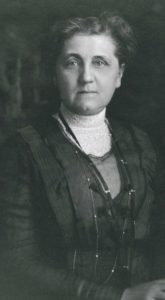
A black and white portrait of a woman with short, wavy hair wearing a high-collared blouse and a dark dress, looking directly at the camera with a neutral expression.Jane Addams’s work during the Progressive Era and early 20th century was wide-ranging, and available topics range from her work in establishing social settlements, professionalizing social work, fighting against child labor and the persecution of immigrants and African-Americans, working to win support for woman suffrage, and her efforts for peace and social justice through the Woman’s Peace Party and the Women’s International League for Peace and Freedom.

We will hold a virtual symposium at the end of the grant to talk about what we learned and make publicly available to the materials on the project’s Education hub. We will also develop a guide for archives and other editing projects to help them create similar resources based on their holdings.

Teachers invited to participate are from all over the state and have extensive teaching experience. They are: Staci Anson (Ramapo High School), Yvonne Beatrice (Mahwah High School, ret.), Katherine DeVillasanta (Clearville Regional High School), Joseph Dobis (Franklin High School), Joseph Dwyer (Nutley Public Schools), Angela Funk (Indian Hills High School), Keri Giannotti (Bloomfield High School), Scott Kercher (Sparta High School), Faye Johnson Brimm Medical Arts High School), Allison McCabe Matto (Red Bank Regional High School), Louis Moore (Red Bank Regional High School), Frank Romano, Jr. (Perth Amboy Public School), Robert Schulte (Neptune High School), and Patricia Yale (Hillsborough High Schoo).

This grant builds on work that we did a few years back, also funded by the NJ Council for the Humanities, that developed National History Day guides and lesson plans using the digital edition for middle school students. Renee Delora, who led that effort, has joined this project to provide support to the student workers.

Jane Addamsโ€™s Dilemma: American Catholic Education in the Progressive Era, 1890-1925

Historian Carol Coburn’s keynote address Thursday eveningย  has deepened our understanding of the crucial role Catholic sisters have played in building and shaping Catholic culture and American life over the last 200 years. You donโ€™t have to look far for examples: right around the corner at the Loyola Museum of Art in the โ€œCrossings and Dwellingsโ€ exhibit is visual evidence of the contributions of the Religious of the Sacred Heart and the Sisters of Charity of the Blessed Virgin Mary (BVMs) to the social infrastructure of Chicago and to the development of an American Catholic middle class.ย  Many of the BVMs were immigrants themselves or the daughters of immigrants and they understood that Catholic schools could play a central role in shaping American democratic life. Their schools gained a reputation for excellence and grew steadily, enrolling more than 5,000 students in Chicago by the time of the 1893 Worldโ€™s Fair. At the turn of the 20th Century, BVMs were in the vanguard among American Catholic educators in planning high schools and colleges for the great industrial cities where working-class Catholic immigrants had settled. St. Mary High School on Chicago’s Near West Side, followed by The Immaculata on the city’s North Side, were modern central high schools where Catholic girls from across the metropolitan area were educated for academic, religious, and commercial careers.ย  The BVM vision of a comprehensive educational system for women took physical shape in 1930 with the opening of Mundelein College. Not only did the Art Deco skyscraper reflect a modern sensibilityโ€”with a curriculum to matchโ€”but the commuter college provided opportunities for a new generation of American-born Catholics.

In the last fifty years historians have documented the contributions of American women to the social, cultural, political, and economic life of the nation in the transformative years of nation-building at the turn of the 20th Century.ย  We now know that a robust womenโ€™s political culture existed decades before women won the vote and there is extensive scholarship describing and critiquing the contributions of women to the formation of the modern welfare state.ย  Jane Addams is one of the well-studied women in this great narrative of American women’s social history and while progress has been made, historians of gender and women’s history continue to grapple with the problem of integrating gender and women’s history into the master narrative.

To complicate our work, I want to introduce the problem of where American women’s Catholic history fits into American women’s history, and, implicitly, where it fits into the national narrative, a narrative that has been dominated for the past two hundred year or more, by the Protestant worldview and has been told largely through Protestant male voices. This morning I am using Jane Addams and her relationship to Catholics to examine this historiographic problem. Addams was a self-proclaimed democratic cosmopolitan who regarded her Hull-House settlement as a positive force to uplift her immigrant neighbors but, like many middle class Protestants, she regarded their neighborhood as a slum, devoid of the leadership necessary to form a higher life for men, women, and children. In London, the social settlement was a recent effort by an Anglican priest and his wife and a group of Oxford University graduates to overcome the widening gap between the people who ran English society and the masses who lived and worked separated from culture and privilege.ย  Addams regarded Toynbee Hall, and her own work, as an outgrowth of a humanitarian impulse in a new generation of educated Protestants who found the traditional approaches of their denominational churches inadequate to the problems of industrial life.ย  It was a kind of missionary endeavor of a new, non-sectarian sort. Addams understood that the English model didn’t fit the needs and conditions in American cities and one of the most obvious differences was that in Chicago, where she and Ellen Gates Starr โ€œsettledโ€ in 1889, the population was overwhelmingly immigrant and Catholic.

My revisionist work on Jane Addams and Hull-House has led me to reconsider the contributions of Catholic sisters and to question why Hull-House continues to be regarded as the norm against which Catholic institutions are compared.ย  Neither Addams nor historians writing about her acknowledge that Catholic parishes and schools functioned as social centers that performed many of the same functions as the settlement. On the whole, Addams scholars have not been terribly concerned that she interpreted urban problems without any reference to the parish system and the work of Catholic Sisters teaching in the Hull-House neighborhood. Far from critiquing Addamsโ€™ basic sociological views on the subject of Catholic immigrants and their adjustment to American life, the opposite has occurred. The trend in Addams scholarship has been to argue for her inclusion as a major American sociologist and as a pragmatic philosopher.

On the other hand there has been a new effort to understand the historiographic problem of the Protestant bias in the writing of American history, to which I applaud.ย  Until we are able to de-center the implicit Protestant hegemonic view of American history we will continue to have problems integrating new knowledge of Catholics in American history, and, more pointedly, we will continue to write the narrative of Addams and Hull-House without acknowledging the dilemma she had in her work with Catholics.

ย We must carefully distinguish Addams’s positive attitudes toward immigrants and her sympathetic concern for their rights and welfare from her attitudes about the serious issue of religious pluralism in democracy. Simply put, Addams loved the people but disliked and distrusted their churches, their priests, their schools and the Sister-teachers who ran them. When we study her evaluation of immigrants we have to understand this dimension of her deeply rooted world-view. ย 

The paradox of Addams’s thinking about her immigrant neighbors is most apparent in her agenda for the educational needs of foreign-born children and children born in the United States of immigrant parents. For Addams and other social feminists and progressive reformers the public schools were the only sure route to a harmonious and effective democracy. Immigrants and their children could be good citizens if they didn’t go to parochial schools. More than this, Addams and her colleagues called for reform of the public schools to address the special needs of these immigrant children.ย 

The Roman Catholic teaching sisters, the BVMs and the Jesuits who taught young men in St. Ignatius College, just a few blocks from Hull-House, believed they could establish a system of Catholic schools that would promote a wholesome Americanism as well as traditional Catholic religious values. They intended for their graduates to enrich the national civic life not imperil it.ย  They also had definite ideas about the kind of instruction and curriculum their students required.ย 

The Hull-House settlement and the Holy Family parish schools competed for control of the education of the neighborhood children. It was a political battle that was waged in the City Council, on the School Board of the Chicago Public Schools, at the State level where compulsory education legislation was debated, and “on the ground” in the competition in the neighborhoods for students.ย  It was self-conscious, on both sides. Jesuit priests begged the BVMs to open their schools in August before the public schools.ย  There was a rush to keep up with the Catholic student population and make certain no families were kept from placing their children in parochial schools. Public school policy was shaped in the context of this battle royal; Catholicsย  as a beleaguered minority shaped their American church identity and their individual identities in the heat of the discourse over the schools.

The debate over the role of the State in the education of children in a democracy that has many cultures, races, and ethnicities attending a variety of school systems was important at the turn of the 20th Century and continues to be important in the 21st Century. If we have time in the Q & A section this morning, it might be interesting to think about how inner-city Catholic schools are viewed in our present education crisis and how they were viewed about one hundred and twenty years ago! Today and yesterday the relationship of education to citizenship and to the stability and success of the economy and the social system elevates debates about pedagogy, social control, and curricula choices to the highest levels of social policy.

In the 19th and 20th centuries, non-Catholics saw the public schools as “good schools” and the parochial schools as “bad schools.”ย  This certainly was the attitude of Jane Addams and the reformers in the Hull-House circle.ย  This fits in with Tracy Fessenden’s interesting analysis of Protestantism and Catholicism in American culture and literature. ย Fessenden describes how anti-Catholic Protestants created a myth of good religion and bad religion that they masked with notions of secularism in public life. Good religion is associated with freedom and enlightenment, bad religion with coercion and constraint, and this scheme, Fessenden says, has become implicit in the “progress narrative of democracy.”[1] Now Catholics also had ideas about good and bad religion. This was the whole point about avoiding the public schools, which Catholics continued to believe were really a cover for protestantizing efforts. When Hull-House was accused by one of the principals at St. Mary High School as not being a “Christian institution,” this was really a statement about the settlement house’s anti-Catholic (and implicitly pro-Protestant) approach.

Most troubling to me as an historian is that Addams fails to give a fair accounting of the religious and educational institutions in the neighborhood after claiming that only through the experience of living in the neighborhood could educated Americans like herself uplift the people in these working class and immigrant districts. ย By 1892, twelve Catholic schools existed in the Hull-House neighborhood.[2] I have found no documentation that she approached these institutions, to which so many of the children and youth who participate in the settlement house, were enrolled, with any openness or interest even as she had pledged herself to engage with the common lot of people. The families in her neighborhood, including many who sent their children to Hull-House programs after school and in the summer, also enrolled their sons and daughters in the Catholic school system. Addams knew these children and could see their talents and their maturation, even with the influence of the religious sisters and the priests.ย  And the teaching sisters were well aware of the influence of Hull-House. The children knew there was a conflict.ย  Francine Tarsitano, a 1954 graduate of St. Mary High School, identified this tension when she recounted the disapproval her BVM teachers expressed when she came to school wearing a special Hull-House club jacket:

Well, we were called into the principalโ€™s office about these jackets.ย  โ€œWhere is this club? What is this club?โ€ย  โ€œThis is a Hull-House club.โ€ย  We were so proud to say that, that it was from Hull-House.ย  She said, โ€œYou cannot wear those jackets here.ย  And we advise you not to go to Hull-House anymore because it is not a Christian organization.โ€ย  So I went home and I told my mother and father that and they said, โ€œA Christian organization.ย  We never even thought of it as that.โ€ย  But you know, my father went to . . . [St. Mary’s]and said, โ€œTheyโ€™re going to Hull-House. She is going to Hull-House. Theyโ€™ve only done good things for our family.โ€ย  Well we were never allowed to wear the jackets anymore, that was it.ย  Couldnโ€™t wear it to St. Maryโ€™s. [3]

For Addams, who affixed a Chi-Rho Cross to her bodice, her work at Hull-House was religious[4]; yet by establishing her settlement as an independent association without ties to any religious organization, university, or other agency, and by not requiring religious worship or religious education, she set out to spread a Christian humanism that she envisioned as cosmopolitan and democratic, inclusive, and tolerant. ย In this way she envisioned Hull-House as a “cathedral of humanity,” a place where people of all religious persuasions could learn about each other and engage in a kind of civic or democratic fellowship. ย Did this mean that she resolved to exclude religious ideas from Hull-House?ย  Not really. In a letter to a college settlement colleague, Addams spoke candidly: “We find each year that it is more possible to discuss frankly religious problems and differences, because our neighbors have constantly less fear that we will proselyte them.”[5] Frannie Tarsitano’s father, the son of Italian immigrants, was comfortable sending his children to Hull-House where they had “done good things for the family.”ย 

The Hull-House approach to Catholic schools really begins before Addams located her new experiment in the Nineteenth Ward, otherwise known as Holy Family parish. She was already convinced that immigrants needed to attend public schools and was pleased when her new friend and guide to Italian neighborhoods, Alessandro Maestro Valerio, reported to her that he had in three months time “sent five hundred Italian children to [public] school.” [6] Addams shared Valerio’s goal to place as many Italian children in public schools as possible; he, like the liberal Protestant social feminists who worked with Addams on school reform, were saving children from the dangers of indoctrination in papal-controlled classrooms.ย  This fear by the hegemonic Protestant culture of Catholic indoctrination in the formation of new citizens was so strong that for the Hull-House residents, imbued with these ideas, children in the elementary parochial schools could not be counted as properly “schooled”; this is indicated in the famous Hull-House Maps & Papers volume published in 1895. Children of immigrants who attended parochial schools, even though they were born in the United States and most likely were English speaking, were counted in the Nationalities Maps along with their parents as foreigners.

The campaign for more public schools in the Nineteenth Ward was led by the Hull-House reformers who claimed that there were 5,000 children in need of seats in new classrooms and demanded the board of education begin construction immediately. This happened to be the exact number of children enrolled in the Catholic elementary schools taught by the Sisters of Charity of the Blessed Virgin Mary (BVMs).[7] ย In the Hull-House view, American born children of immigrants who had not been influenced by the public schools were more truly designated “second-generation immigrants than first- generation Americans.”[8]

In 1897, Jane Addams, addressing the influential National Educational Association (NEA) on the needs of foreign-born children, or the American-born children of immigrants, explained that their families had โ€œno social life in any structural form, and can supply none to the child.โ€[9] Addams is not making a derogatory comment about immigrants, who she asserts have very strong family values and love their children very much. Rather, she is expressing a sociological concept. For John Dewey, Chicago educator and superintendent of schools Ella Flagg Young, Addams and others in the progressive education movement, schools had to become social centers to supply the kind of guidance, training, and information that immigrant families were unable to provide.ย  What the Hull-House maps demonstrate is the lack of public schools in the thirty or so blocks most distressed. In fact, a larger project of the Hull-House education reformers was to develop a decent public school system which did not yet exist, although Addams and others felt justified in their claims of its inherent superiority.

When Addams and Starr arrived in the Nineteenth Ward, the public schools had quite a bit of catching up to do. ย Addams and Starr ultimately chose a location for their settlement house that placed it at the intersection of two Catholic neighborhoods: to the east of Halsted Street there were about thirty city blocks of Chicago-style tenements, filled with immigrants of many nationalities, but predominantly Roman Catholic and Italian; here in the river wards, industrial and commercial businesses had mushroomed after the Great Chicago Fire in 1871, and the housing stock accommodated increasing numbers of immigrant workers’ families. To the west (and including Hull-House itself) was a more prosperous neighborhood of more seasoned immigrants and of older residents, who Addams called “old settlers” and invited to the settlement house just as she invited the newcomers;ย  in America for many generations,ย  they had settled originally in the Near West Side when they, like Charles J. Hull, himself a real estate developer and evangelical Christian who built his homestead in 1856, imagined their homes would increase in value. Relatively undeveloped before the Civil War, this western edge of urban growth also attracted the Rev. Arnold J. Damen, S.J. who founded the Holy Family parish one year after Hull built his house. Addams coveted relationships with the neediest newest immigrants, the Italians, but the earliest efforts at Hull-House could not have gotten off the ground without the cooperation and engagement of the Irish Americans and “Old Settlers” who lived west of the settlement house. ย 

Addams tended to underestimate the private associational strength of the Nineteenth Ward as if the developments at her settlement had no antecedent or parallel institutions with which to have social intercourse. This was particularly true of the underestimating of the Catholic strength and contribution.[10]ย 

Had the Hull-House Maps & Papers project mapped the west side of the Nineteenth Ward, their narrative would have been dramatically different.ย  We are not talking about immense space, just four or five blocks south, north, or west of Halsted Street and Hull-House would have given the neighborhood a different cast; it would have appeared “mixed” economically, with prosperous sections and brick residences, prosperous shops owned by immigrants, and lots of parochial schools and churches. Even the east side, the area mapped, was not all of one piece.ย  Italian families who lived in this congested “slum” did not describe it that way. Francine Tarsitano, who told the story of her Hull-House jacket and the reaction of the BVM principal of St. Mary High School, was the youngest of a large Italian family.ย  In 1901, her grandfather Leopoldo Tarsitano had settled in the east end of the Nineteenth Ward, on a block in the densely populated blocks earlier depicted in the Hull-House Maps. Leopoldo had been in the Italian Calvary before coming to the U. S. With his wife Rosario and son Gabriel, the Tarsitano’s lived for several years in a flat and Leopoldo worked as a grocery cart peddler but by 1907 the family had saved enough money to buy their own two-story store front brick home located just west ofย  Holy Guardian Angel Church, an Italian parish. The store was on the first floor with the family living in the upper levels.ย  The Tarsitano’s children and grandchildren all participated in the cultural and recreational opportunities offered by Hull-House, and they were devotees of the summer camp in Waukegan, a place where the daughters and sons of immigrants had the taste of life outside the neighborhood. They all attended Holy Guardian Angel Church, the parish schools and all of Leopoldo’s four granddaughters attended St. Mary High School; one became a physician, after graduating from Mundelein and Loyola University Medical School; two became school teachers, graduating from Northern Illinois University; ย and another sister married and had children but did not work outside the home; two grandsons attended St. Ignatius Jesuit High School and Our Lady of Pompeii High School, the former attending the University of Illinois briefly and ending up with a business career at the managerial level; the latter graduated from Loyola University, did graduate work at De Paul and at the University of Nebraska and became a political science professor at the College of Du Page. ย 

One cannot judge whether the successes were mostly the result of the Hull-House connection or the extensive connection with Catholic schools. The more complete genealogy of the family indicates that the trends towards secularization in religion and society can be seen in the family as well as a lasting ethnic and culturally Catholic identity. There has been some intermarriage with non-Catholics and geographical mobility outside of the neighborhood, to be sure. There are also lasting remnants of the imprint of both Hull-House and the values of the teaching sisters.

The St. Mary High School experience was critically important for the Italian girls. They may not have fully understood how unique the experience was for the daughters of working class and immigrant families in the inner city.ย  St. Mary’s had already drawn attention to itself when by 1915 social feminist Ella Flagg Young, superintendent of Chicago’s public schools voiced her concerns that there was a disproportionate numbers of Catholic high school grads enrolled in the Chicago Normal School. They had done so well on the entrance exams that Young was quoted as accusing the Catholics of running “cramming schools” to inflate their numbers entering the teachers’ college. There was anxiety about having too many Catholics from the catholic system end up as public school teachers. The issue had been brewing for some time. ย As early as 1903, Chicago school boards had openly strategized to limit the numbers of Catholics entering the teaching profession.[11] Superintendent of Schools Young, testifying in 1915 before a state committee investigating the Chicago School Board, “proposed a quota system by which the board would assign to each high school, both public and private , a fixed number of places in the Normal School. The Catholic newspaper the New World saw this as one more bigoted effort to limit the number of Catholic teachers in the public schools.”[12]

Such a proposal and others that followed in subsequent years were not successful, but they had a bearing on the Catholic school culture and the responses made by administrators in the Catholic high schools. [13]

This is a crucial part of the Catholic narrative of education that, unfortunately, is often not known in Catholic circles either. What provoked the Progressive social feminists was the great progress made by the BVM-run St. Mary High School for Girls.ย  Located a stone’s throw from Hull-House, St. Mary High School was inaugurated at the height of the debate over urban education. ย Both the public system and the Catholic began the twentieth century with inadequate secondary institutions. At the turn of the century, when St. Mary’s was opened, secondary education remained an option for only a small segment of the population, whether Americanโ€‘born or immigrant. ย St. Mary High School immediately identified college and careers in education as the major goal for its students, many of whom were the daughters of Irish immigrant women who had worked as laundresses, seamstresses, and domestics.ย  BVM schools already had pioneered commercial programs for boys and girls in the 1890s,[14] so when commercial courses were introduced in 1902, they realistically prepared St. Mary’s students for the sector of the economy where jobs for women were expanding rapidly: the commercial office.ย  Courses in bookkeeping, typing, business arithmetic, and soon,ย  stenography, set the tone, with the goal for many graduates of attending a business college. [15]ย 

ย The young women also studied laboratory sciences including physics and chemistry, and biological sciences including botany, zoology, and physiology.ย  Music, drawing, manual training, and domestic science courses were also available.ย  Textbooks used were the standard ones assigned in the public schools.ย  Significantly, St. Mary’s was the first catholic girlโ€™s high school to offer advanced academic work in the form of college extension courses taught by the Jesuits.[16]

ย โ€œThe object of the social settlement,โ€™ Addams had outlined, โ€˜is the uplifting of the peopleโ€”the word people representing the working classesโ€”and this can best be accomplished by the poor acting as their own missionaries. No doubt the working people could be raised if they could be made to feel their power as citizens, because they are nearer to the needs of the poorest, while those who live in more comfortable parts of the town only hear of their needs remotely and know little practically about them.โ€[17] This statement by Addams paradoxically could have been written by the BVMs, simply changing “social settlements” to “Catholic schools.”ย  ย The BVM sister-teachers came from immigrant backgrounds, some were the first women in their families to achieve literacy. They were, indeed, “the poor acting as their own missionaries.” The young women who were educated at St. Mary High School included many who came from the thirty or so blocks east of Halsted Street, mapped by the Hull-House residents in 1895 and designated as a “slum” neighborhood.

In innumerable cases, neighborhood boys and girls of talent and potential found Hull-House to be a school of opportunity and refinement, a bridge out of the neighborhood. In delving into their backgrounds, however, one can draw this surprising conclusion: many of the best and brightest stars who, as one of them put it, “bit the apple” of the settlement ideology about civic engagement, had been educated in the American Catholic parochial system. The Hull-House neighbors did not make an “either/or” choice but as children and later as young adults, many immigrants and their children and grandchildren found ways to benefit from religious, family, and social settlement networks in ways that were not imagined by either the social reformers or the Catholic hierarchy.

More than most mainline Protestants, Addams challenged her own biases and consciously pursued an openness to her immigrant neighbors. She opposed immigration restriction, and upheld the rights of aliens, including their freedom to dissent and criticize the government. She insisted that Hull-House not proselytize its Jewish and Roman Catholic neighbors, and she took pride in the Greek plays, the Italian and German social get-togethers, and the exhibits of old-world arts and crafts displayed in the Hull-House Labor Museum.ย  She handled religious and cultural differences through the “performance” of religious pageantry without worship, religious art without prayer, and enactments of ethnic plays in the context of ethnically mixed audiences.[18]ย  But the heavy-duty lifting educationally in the neighborhood remained in the hands of Catholic women, the teaching Sisters whose recent flight from poverty and illiteracy in their crossings gave their commitment to educate Catholics an urgency and a wisdom as they prepared the poor to “be their own missionaries.”


[1] Tracy Fessenden, Culture and Redemption: Religion, the Secular, and American Literature. Princeton and Oxford: Princeton University Press, 2007, 3.

[2] Historian Ellen Skerrett documents twelve Catholic schools in the Hull-House neighborhood in 1892: Convent Academy of the Sacred Heart, opened fall 1860, 485 [1258] W. Taylor Street ; A free school at the northwest corner of Taylor and Lytle streets for girls of Holy Family parish, 1860; additional buildings for the Sacred Heart Academy complex were  constructed in 1864 and 1886; Holy Family Boys School, new building at 462 [approx. 1231] S. Morgan Street] opened 1865; St. Ignatius College, 413 [1076] W. 12th Street [Roosevelt Road]  opened 1870 (also enrolled young boys);St. Aloysius School, new building at 210 [631] W. Maxwell Street  opened 1870; Holy Guardian Angel School, 168 [ 711] W.  Forquer Street [Arthington Street]  opened 1874;St. Joseph School, on W. 13th Street near Loomis Street [1413 W. 13th Street]   opened 1876 ;St. Agnes School, 530 [approx. 1361] S. Morgan Street  opened 1887; Ephpheta School for the Deaf, 409 [1100] S. May Street in operation by 1890 (see attached Tribune article on Eliza Allen Starr, March 16, 1890);St. Francis of Assisi School, new building at southwest corner of 12th and Newberry Avenue  opened 1884;Notre Dame [French] School, new building at Oregon [Flournoy] and Sibley Street [approx. 1338 W. Flournoy] opened 1885;St. Wenceslaus [Bohemian] School, new building at 185 [710] W. DeKoven Street opened in 1893. Sources: โ€œProvince of Chicago,โ€ [1890 statistics compiled on the Archdiocese of Chicago], in James J. McGovern, Souvenir of the Silver Jubilee in the Episcopacy of His Grace The Most Rev. Patrick Augustine Feehan, Archbishop of Chicago, 1890 (Privately printed, 1891), 242-253; Brother Thomas M. Mulkerins, S.J., Holy Family Parish Chicago: Priests and People, ed. Joseph J. Thompson (Chicago: Universal Press, 1923); Rev. Msgr. Harry C. Koenig, ed., A History of the Parishes of the Archdiocese of Chicago 2 vols. (Chicago: the Archdiocese of Chicago, 1980).

[3] Francine Tarsitano Underdown Oral Interview Transcript OH-114, Hull-House Oral Interviews, Spec. Collections, Daley Library, University of Illinois at Chicago.

[4] The simple Chi-Rho Cross she prominently affixed to the collar of her dress can be seen in all the surviving photographs of Addams from the 1890s. It can be seen in the famous photo that has come to symbolize the determined young woman in her inaugural year as co-founder of Hull-House. The Chi-Rho Cross is visible in the 1892 charcoal drawing of Jane Addams by Alice Kellogg Tyler; it is in the famous portrait of Addams that appeared in New England Magazine, July 1898, in an article about Hull-House by Florence Kelley. It is visible in the portrait of Jane Addams that is on the cover of Victoria Bissell Brownโ€™s new edition of Twenty Years at Hull-House (1999) and in the majestic photo portrait of Jane Addams seated in an elaborate Victorian chair that graces the front cover of Allen F. Davisโ€™ American Heroine: The Life and Legend of Jane Addams reprinted in 2000. Preparing to open a settlement house, Addams compared her intentions with the goals of the College Settlement Association in New York City: “I will inclose [sic] the circular of a similar thing in New York,” she wrote her sister. “We are modest enough to think that ours is better, is more distinctively Christian, and less Social Science.”

 Jane Addams to Mary Catherine Addams Linn, March 13, 1889, Stephenson County Historical Society, in JAMC (reel 2-1043-1048), Special Collections, The University Library, The University of Illinois at Chicago.

[5] Jane Addams to Katherine Coman, Chicago, Dec. 7, 1891, JAP Microfilm Reel 2-1283.

[6] Jane Addams to Mary Catherine Addams Linn, March 13, 1889, Stephenson County Historical Society, in JAMC (reel 2-1043-1048), Special Collections, The University Library, The University of Illinois at Chicago.

[7] Rima Lunin Schultz, “Introduction,” 20, Hull-House Maps & Papers by the Residents of Hull-House (Urbana& Chicago: University of Illinois Press, 2007; reprint of original 1895 edition). 

[8] Hull-House Maps & Papers, 59.

[9] Jane Addams, โ€œForeign-Born Children in the Primary Grades,โ€ National Educational Association Journal of Proceeding and Addresses of the Thirty-Sixth Annual Meeting Held at Milwaukee, Wis., July 6-9, 1897 (University of Chicago Press, 1897), 106.

[10]In โ€œHull House, Chicago: An Effort Toward Social Democracy,”Forum, October 1892, Jane Addams states that: โ€œThere are seven churches and two missions in the [Nineteenth] ward.  All of these are small and somewhat struggling, save the large Catholic church [Holy Family] connected with the Jesuit College [St. Ignatius] on the south boundary of the ward and the French Catholic church [Notre Dame de Chicago] on the west boundary.  There are but three out of these nine religious centres in which the service is habitually conducted in English.โ€  The fact that English is only spoken in three out of the nine religious institutions is particularly upsetting to Addams. Addams also ignores the twelve Catholic schools in the Nineteenth Ward already established by 1892. โ€œProvince of Chicago,โ€ [1890 statistics compiled on the Archdiocese of Chicago], in James J. McGovern, Souvenir of the Silver Jubilee in the Episcopacy of His Grace The Most Rev. Patrick Augustine Feehan, Archbishop of Chicago, 1890 (Privately printed, 1891), 242-253; Brother Thomas M. Mulkerins, S.J., Holy Family Parish Chicago: Priests and People, ed. Joseph J. Thompson (Chicago: Universal Press, 1923); Rev. Msgr. Harry C. Koenig, ed., A History of the Parishes of the Archdiocese of Chicago 2 vols. (Chicago: the Archdiocese of Chicago, 1980).

[11] Sanders, 28.

[12] Sanders, 28.

[13] “Bishop Muldoon Denies Charges of Mrs. Young,” Chicago Tribune, Aug. 6, 1915, 13;  P. L. B[lakely], “High Winds in Chicago,” America, Vol. 13, No. 21, Sept. 4, 1915, 525-526. It is perfectly clear that the Roman Catholic hierarchy was in competition with public schools in Chicago and did not wish them “success”; rallying around a common enemy stirred up support among Catholics to support their own schools. It was a strange predicament, however, since graduates of Catholic schools found employment in public schools and this was used to defend Catholic education.

[14] Callan, “The Sisters of Charity of the Blessed Virgin Mary and Their Schools in Chicago, 1867-1940,” Master’s Thesis Paper 607, Loyola University Chicago, 1941, Loyola eCommons, 60, establishes that The BVMs had experimented successfully with commercial programs.

[15] William H. Chafe, The Paradox of Change: American Women in the 20th Century Oxford University Press, 1991, 68.

[16] St. Mary’s Herald, vol. I, no. 4, January 1931 includes historical material about the early years. St. Mary High School and Center for Learning papers, Richard J. Daley Library, Special Collections, University of Illinois at Chicago. The BVMs had experimented successfully with commercial programs earlier:

[17] โ€œOutlines A New Creed.โ€ Chicago Tribune, Nov. 7, 1898, pg. 10.

[18] The role of Hull-House theater โ€œin negotiating immigrant difference,โ€ as Shannon Jackson puts it, is too large a topic to discuss in this paper. See Stuart J. Hecht,  โ€œHull-House Theatre: An Analytical and Evaluative History,โ€ Ph.D. dissertation, Northwestern University, 1983; also: Elizabeth C. Barrows, โ€œThe Greek Play at Hull-House,โ€ Commons (January 1904); Shannon Jackson, Lines of Activity: Performance, Historiography, Hull-House Domesticity (University of Michigan Press, 2000.) Such performances could also be seen as Addams’s efforts to simulate a “cathedral of humanity.” Jenkin Lloyd Jones, Unitarian minister and ally of Addams, who often invited the settlement leader to lecture from his pulpit, called her โ€œthe unordained minister of the unecclesiastical church of human helpfulness that is to be.โ€  โ€œJenkin Lloyd Jones Memorial,โ€ Unity, vol. LXXXII, No. 12 (November 28, 1918), 148.
What Role Did Jane Addams Conceive for the Settlement as an Educational Institution?

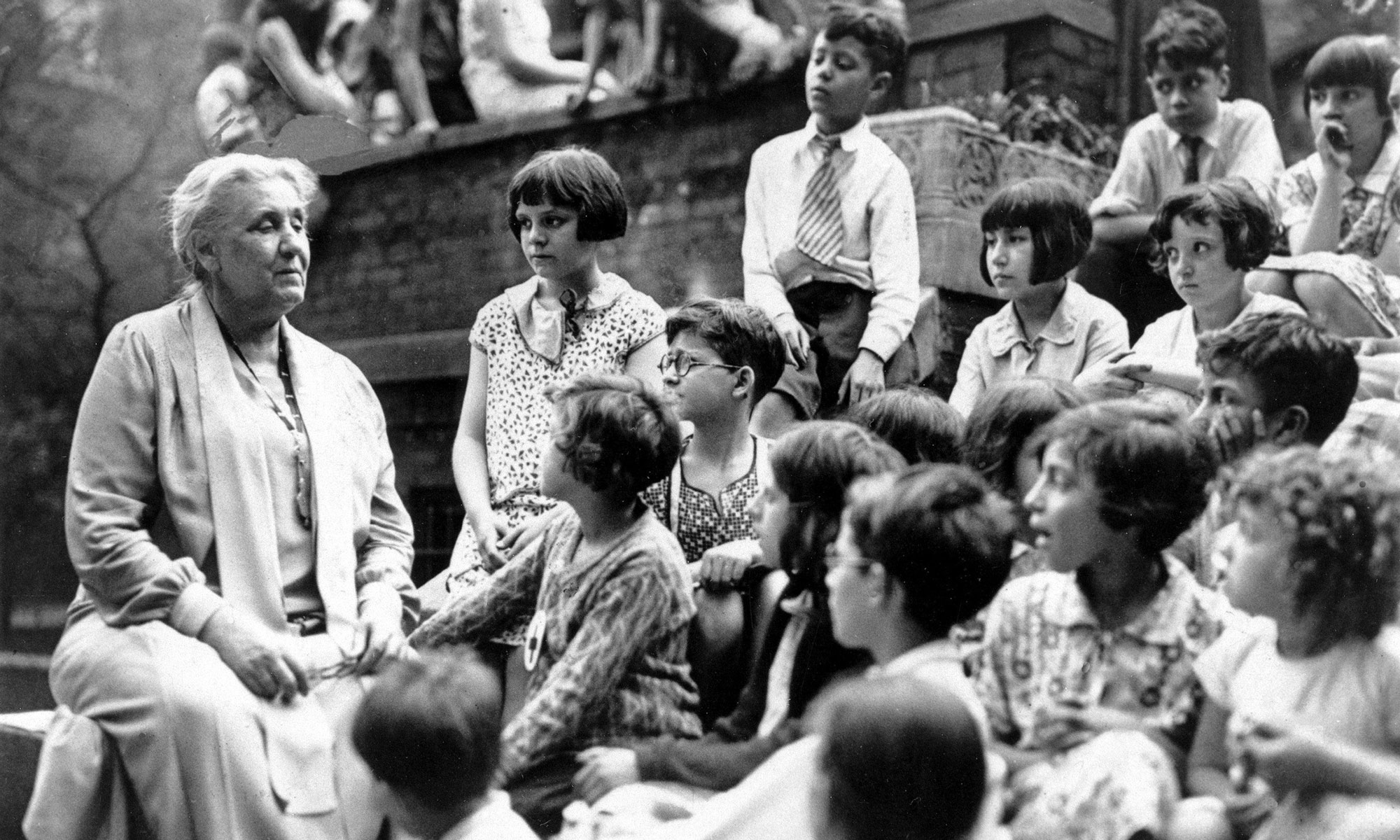
Jane Addams gives us no indication that she planned to establish a major educational institution when, with Ellen Gates Starr, she founded the Hull-House settlement; indeed, they shied away from any kind of institutional identification when they opened their “home” to their neighbors. Later Jane would recall that she and her close associates boldly thought their settlement was like a college in some ways, and also like a universityโ€”and by 1907 the settlement had grown to thirteen buildings and had the feeling of a campus; it was substantial and contained classrooms, dormitories, communal eating spaces, libraries, gymnasiums and theaters, art exhibit rooms, a music school and an art school, buildings for clubs and social activities. At its high point, there are estimates that nine thousand children and adults used the facilities annually. One gets dizzy thinking about the activities that were offered and the flow of human beings through the reception room and into the various buildings. Photographs show clusters of children climbing on the stone walls and gathering in alcoves, romping through the courtyard, piling up on the stairs and porches. By the 1930s, all reports about the place indicate how shabby and used up it had become. The people had been invited in, and they had come.ย 

In the early years, social activities and neighborly receptions were followed by all kinds of educational programs and classes; these initiatives were followed by research projects that might well have been undertaken at a university; articles and books were published, leading thinkers and social critics found Hull-House to be one of the most intellectually stimulating places. Before long an art gallery and library opened in the second building in what would become a thirteen-building campus. The informal and formal classes, lectures, and entertainments were targeted to the whole community. Jane Addams hoped that the mix of people who came to Hull-House would provide another kind of education; this was, after all, the initial conception of the settlement. The social geography of Hull-House could be complex; for example, the Hull House Woman’s Club was dedicated to community improvement, but it was also a stage for cross-class social and political interactions. Sometimes the neighborhood women would be invited to the home of a wealthy suburban clubwoman; on other occasions limousines brought downtown clubwomen to Hull-House’s Bowen Hall. It was an experience that was so rare in real life that the Chicago newspapers reported the comings and goings of the Hull-House Woman’s Club as if they were members of the social elite. On another level, a kind of cultural education was taking place as individuals from different ethnic groups came into contact with each other. Hull-House provided the setting for ethnic plays and exhibits of ethnic crafts, folkdances, and music. Here was a common ground where Italians could see the finest cultural expressions of Greeks and Jews, and Greeks and Jews could see performances of Italian opera.  The idea was to inculcate respect and intercultural understanding. The Labor Museum was the crystallization of this philosophy.

The most ambitious and continuous effort at education across class lines derived from the residency program that was at the heart of the settlement experience. College educated women and men, generally single, but also as married couples, came to Hull-House to live for at least one year; some remained for two or three, others for a lifetime. Residents paid for room and board and volunteered their services to the settlement, finding some way to participate and be useful. During Jane Addams’s lifetime, there were hundreds of residents who participated in the programs at Hull-House and who were educated about working class and immigrant life and industrial conditions. The residency program comes closest, in my mind, to a definition of Hull-House as a kind-of-college. It may have been the most successful of the approaches to education initiated by the settlement movement; many generations of professional social workers, teachers, businessmen, artists, writers, and lawyers, among others, were touched by the settlement spirit and informed by a vision of the possibilities of democracy.

Hull-House opened up the world of art, literature, travel, drama, history and politics to immigrants and working-class people. I have often wondered about the audience for this great array of intellectual and cultural offerings.  Who were the members of the famous Shakespeare Club? Who attended the series of lectures on evolutionary theory that were taught by a University of Chicago professor? Who were the members of the Social Science Club and the Plato Club?  Unfortunately, there are no “student” records to analyze and quantify but the record of life at Hull-House, through images, letters, newspaper accounts, memoirs and oral histories is richer than previously thought. Residents did develop important relationships with talented youngsters from the neighborhood who came to Hull-House for music lessons or art classes, who took part in the drama clubs; and the clubs created social worlds of lasting importance to the young people themselves. There were also community leaders, and intellectuals and artists who lived in the neighborhood and found a home at Hull-House. This was all positive affirmation Hull-House had connected with the neighbors and that at least a part of the original mission had been accomplished. 

But what about the ordinary working-class inhabitants? What relationship did Hull-House have with the workers? What role did the settlement play in the formation of a working-class culture that broke down ethnic and racial barriers in the neighborhood? What role did Hull-House play in the education of the working class?  I ask these questions because a good part of the conference today and tomorrow is about civic engagement—- about finding ways to engage as broad a group of community people with university people in ways that will empower ordinary people and develop their participation in the democratic process..

We are attracted to Jane Addams because of her vision, her dream of an American democracy that is inclusive and based on mutual respect and justice for all. This vision required, above all else, according to Jane Addams, a new kind of education; schools and settlement houses had to forge educational methods that would bring more and more people into the circle of civic participation. In addition, she was committed to providing education to working people that would offer them full opportunity for personal development and a way of connecting themselves with a broader community. Addams was a realist; she assumed that there would be a steady increase in technology and the use of machines that further separated humankind into specialized occupations. She understood that capitalism was global and would seek its resolution without regard to the welfare of workers or nations, unless democracies organized to restrain and regulate industry. She accepted the fact that the majority of workers would find no inherent meaning or craft in their work, even as they improved their wages.  The industrial worker, Addams wrote, needed education about his purpose and role in the larger scheme of things.

            In re-reading Democracy and Social Ethics in order to prepare for today’s discussion, I found myself taken aback at the depressing account of attempts at reaching the working class through educational methods.  Addams published this book in 1902. In it she confesses that among the many disappointments that the settlement experiment has brought to its promoters, perhaps none is keener than the fact that they have as yet failed to work out methods of education, specialized and adapted to the needs of adult working people. Addams, it should be noted, is writing about the failures to reach the working class men in her neighborhood right at the time that she has also conceded failure in the local political arena where the male voters of the ward repeatedly had rejected the Hull-House endorsed candidates. Addams admits that settlements in general had succeeded in reaching only a select few from the neighborhoodโ€”these individuals were of the academic type of mind to begin with, and while these classes might have been valuable, they left quite untouched the great mass of the factory population in the neighborhood.

            In 1930 Addams returned to the issue of worker involvement. “We came rather slowly to the conviction that the effort [to incorporate the worker in educational programs] could best be done through the use of the current event” she writes. Addams realized that the role of the settlement as an educational institution was to engage with the larger community in the work of interpreting what she called “the contemporaneous situation”โ€” and to make it usable to large numbers of people. It was an acknowledgement that ultimately the educational process was (and is) a political process.