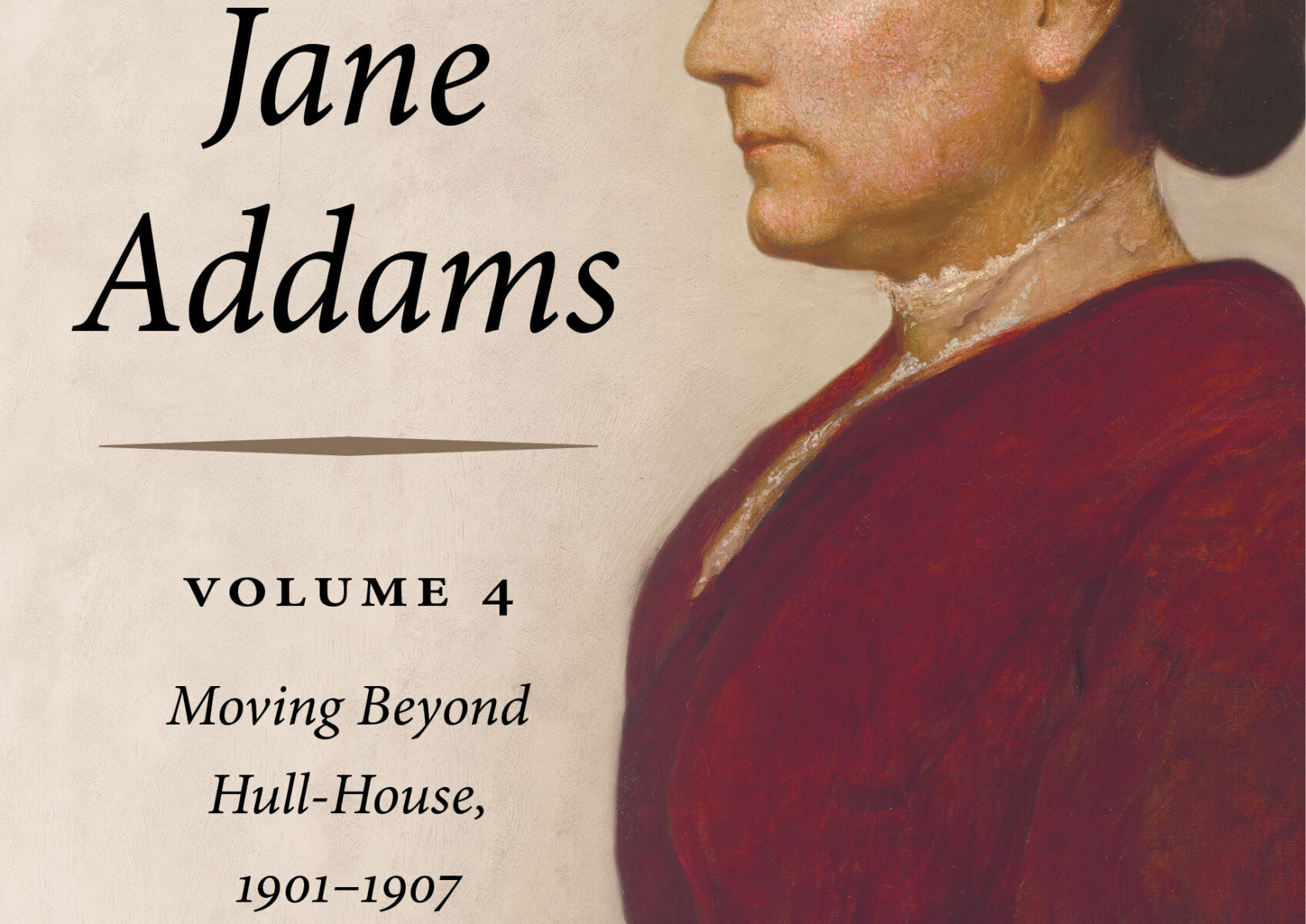
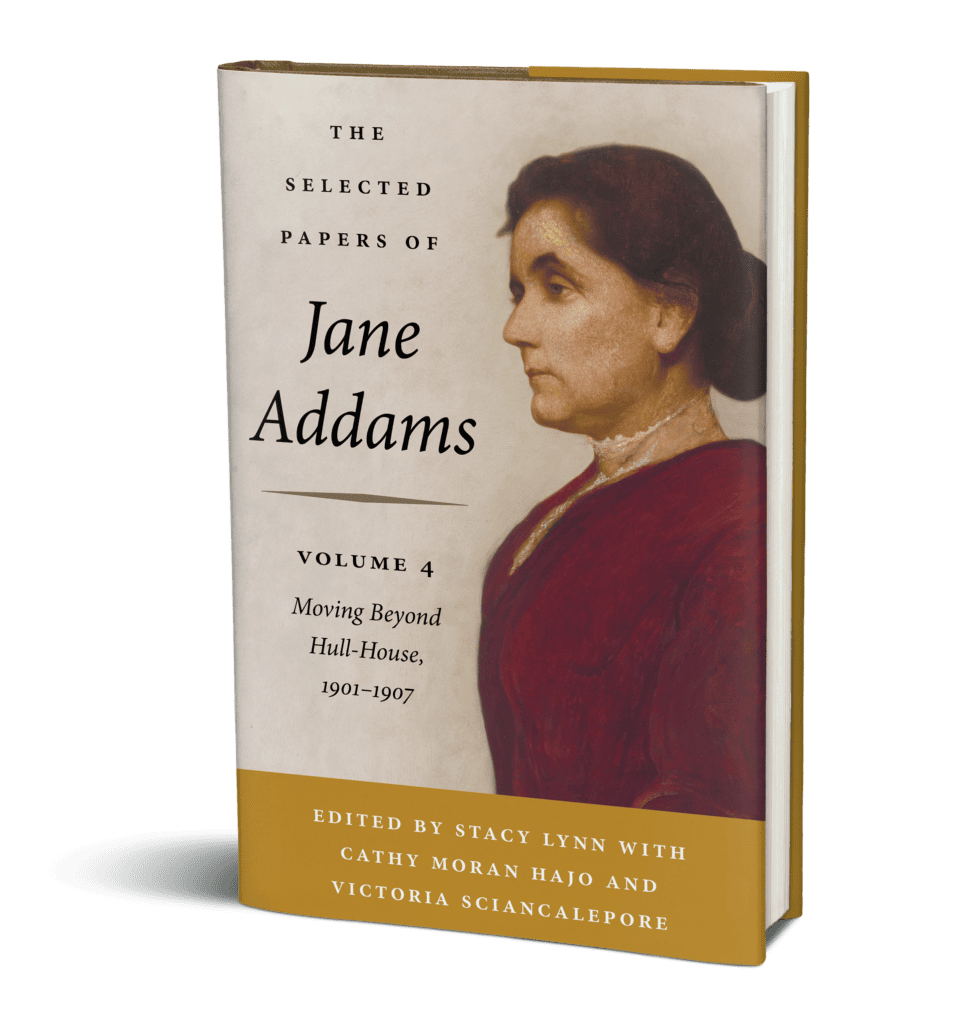
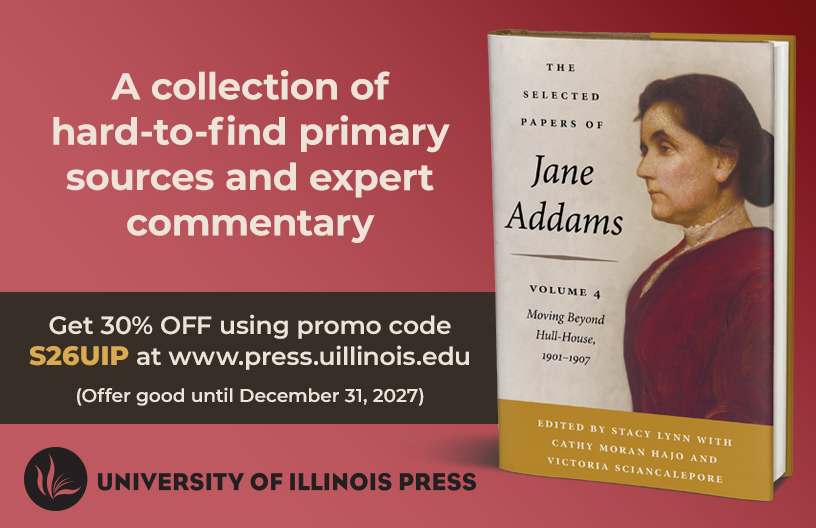
We are delighted to announce the publication of Volume 4 of the Selected Papers of Jane Addams. Edited by Stacy Lynn, with Cathy Moran Hajo and Victoria Sciancalepore, it is the first volume published by the new editorial team.
This volume presents a selection of Jane Addams’s writings from 1901 to 1907, a period of significant growth in her influence as a reformer, writer, and public intellectual. The front matter provides editorial method, transcription policies, and historical context. Part 1, Progress Belongs to Us Altogether, 1901-1903, explores Addams’s expansion of Hull-House, advocacy for immigrants, child labor legislation, and engagement with political leaders. Part 2, Making All Life Fuller and Better, 1904-1905, highlights her role as a member of the Chicago Board of Education, and growing interest in international peace. Part 3, In the Hands of Women, 1906-1907, examines her deepening commitment to the woman suffrage movement and continued activism in labor and child welfare. Throughout this period, Addams’s prominence grew as she connected settlement work with broader social and political reforms. She balanced activism with writing, publishing Democracy and Social Ethics (1902) and Newer Ideals of Peace (1907), positioning herself as a leading voice in Progressive Era thought. This volume captures her evolving philosophy, expanding national presence, and enduring commitment to social justice, illustrating her transition from a local settlement leader to an influential advocate for systemic change.
Jane Addams entered 1901 as a confident voice in the American settlement movement and pioneer in many of its methods. The period that followed marked the dramatic expansion of the Hull-House campus and its reach even as Addams increasingly devoted more time to lecturing, lobbying, and building bridges of reform in Chicago, Washington, D.C., and beyond.
The fourth volume in the series follows Addams’s increasingly busy life. Her activities included greater participation in the women’s suffrage movement and speaking tours of twenty-five states and the District of Columbia to discuss child labor, settlement work, and women’s issues. At the same time, she maintained relationships with an intimate circle of female friends, her extended family, the Hull-House community, and most importantly her companion Mary Rozet Smith. The editors provide an extensive collection of documents on this side of Addams’s life while rooting her in the unique time and place of an era of fast and far-reaching change.
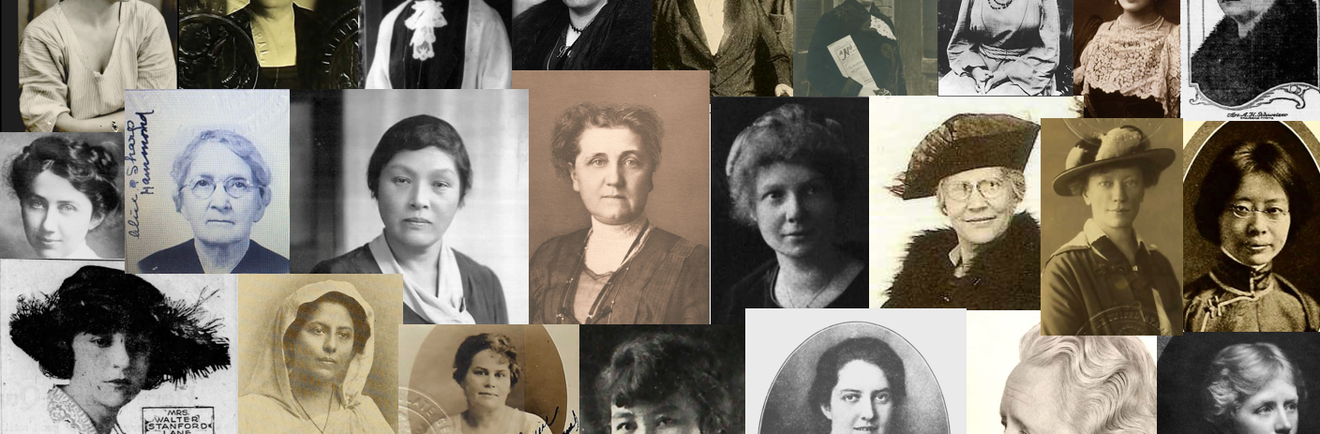
At the Jane Addams Papers Project every month is women’s history month, but in March we take the time to officially recognize it! Addams is an icon of women’s history, famous in her time as a social worker, social reformer, philosopher and advocate for peace, equality, and social justice. If we have learned anything while working on her papers, it has been the sheer breadth of her work — the connections that she had with women from every continent as they tried to better the world through cooperation, community, and charity.
The Jane Addams Papers tells the story not just of Jane Addams, but the women who worked with her, who were inspired by her, and who opposed her. It offers a deep understanding of the wide variety of women’s experiences in a pivotal time in world history. Over 9,000 women have been named in Addams’s papers, ranging from rank and file members of the Women’s International League for Peace and Freedom, settlement workers in New Orleans and Minnesota, and child labor activists in Chicago and New York. They include Japanese and Chinese feminists, Italian peace workers, Mexican social workers, and Dutch suffragists.
Please support the Jane Addams Papers Project!
The National Endowment for the Humanities will match donations dollar-for-dollar to the Project! The past year has been a challenging one financially for the project. Funding for the humanities is in short supply, and for projects that document the work of women, especially those who worked for equality and social justice, support has been tough to find. We lost an editor in 2025 due to federal funding cuts and have been short-staffed as we try to stay on task. Private support is needed in order to meet the costs of student researcher salaries, research, and web development. For that we need you!
Our goal is to raise $5,000 during this Women’s History Month. Can you help?
We have partnered with From the Page to invite the public to transcribe Addams documents from 1877 to 1899. Using this innovative platform, you can transcribe Addams’s speeches, articles and other writings, transcribe her incoming letters, and if you are feeling brave, tackle Jane Addams’s handwriting yourself!
Transcription interface on From the Page.
When the Project came to Ramapo College ten years ago, our two goals were to complete the Selected Papers of Jane Addams and to create the digital archive. We started our work with the year 1901, where Volume 4 of the Selected Papers began. As we are getting close to completing the years 1901-1935, we are turning back to the first three reels of correspondence and to Addams’s early writings. These years include, Addams’s college years, her travels abroad as a young woman, and the first ten years of Hull-House.
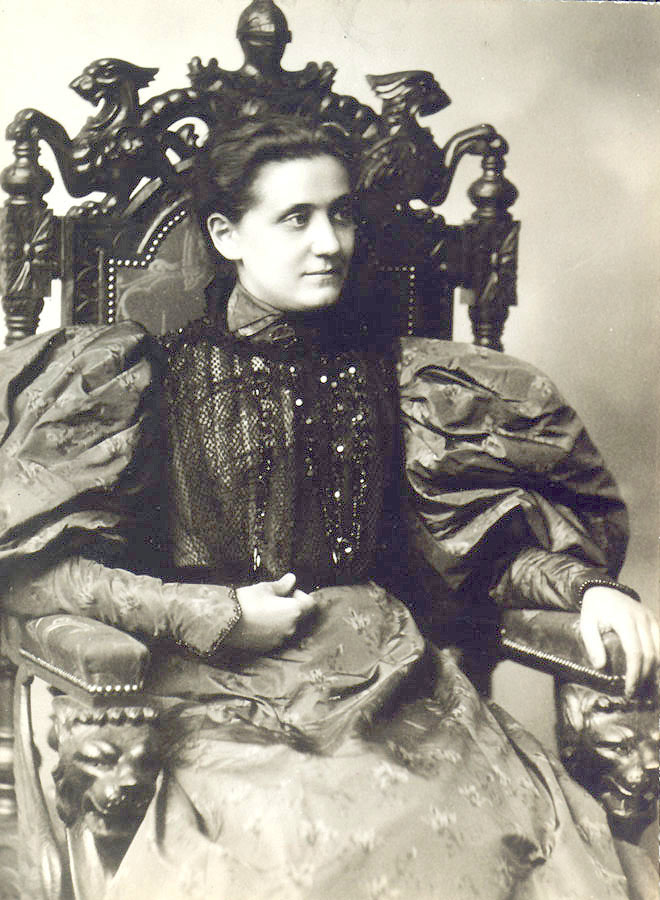
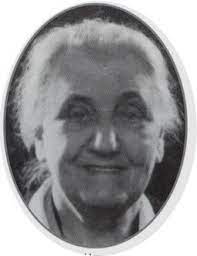
Jane Addams in 1896 (Swarthmore College Archives)
Crowdsourcing is a great way to engage those interested in Addams’s life and work, and by transcribing you get an experience of close reading unlike any other. Puzzling out the names, finding archaic terms and spellings brings us closer to the authors and gives a real sense of what it was like to be alive in the late 19th century.
From the Page’s interface is easy to use. All you need to do is create an account and then find the Jane Addams Papers. You will see documents that need to be transcribed and can select any that interest you, or you can press the Start Transcribing button and get a random page!
We started adding documents to the portal last month, and even before a day was out, volunteers hooked on transcription rolled up their sleeves and got to work. As of this morning, 360 pages of material have already been transcribed, from 71 of the 868 works we mounted. We haven’t even advertised it yet!
Once these are transcribed we will import them into our digital archive and students working the the project will attach metadata and link the names of people, organizations and events to the text, just as we have done with those created by project staff. The work of volunteers will make it easier for us to make these documents freely accessible to the public.
So if you would like to try your hand at transcription, dive on in!
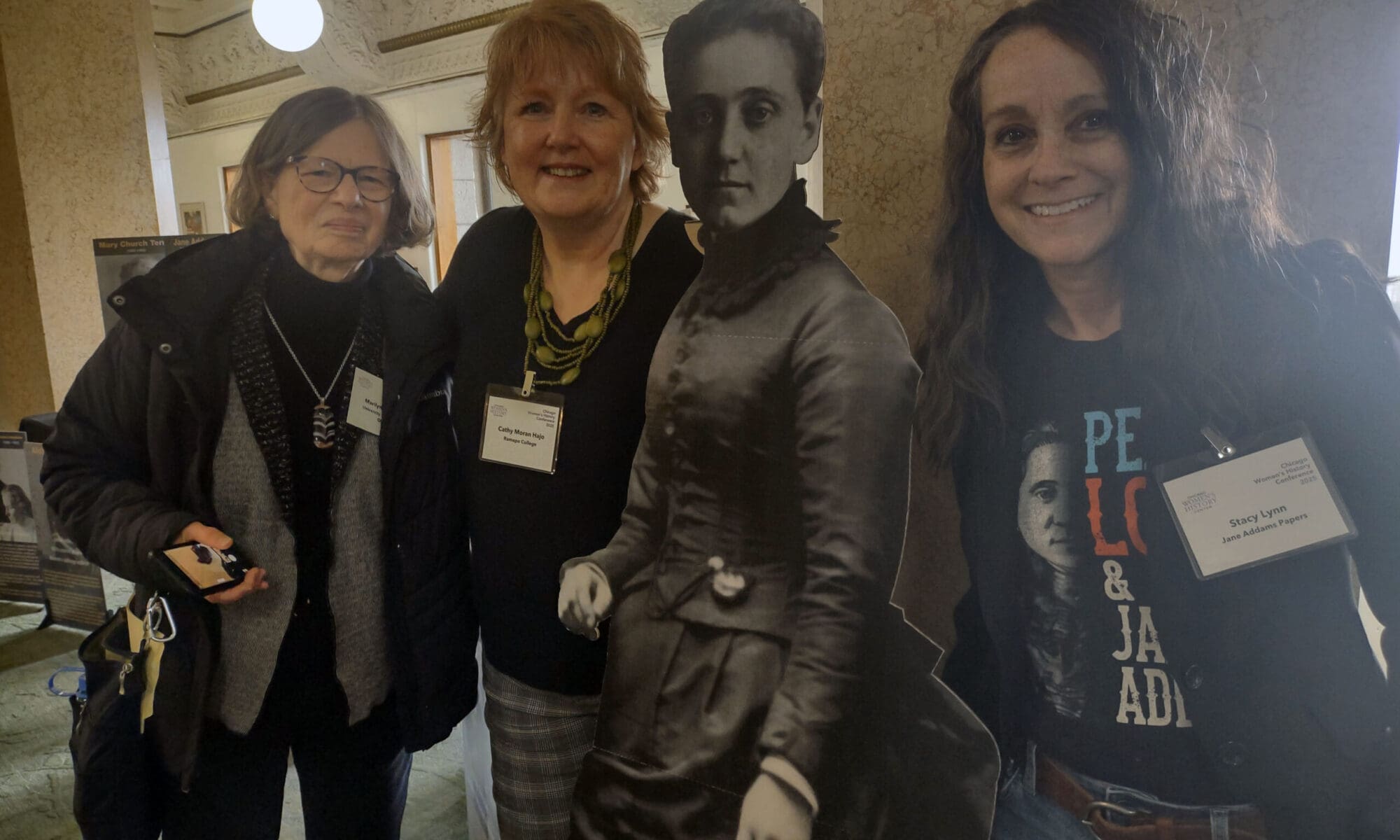
Marilyn, Cathy, Jane, and Stacy at the Chicago Women’s History Conference, March 22, 2025.
The Jane Addams Papers Project represented at the Chicago Women’s History Conference this past Saturday. Cathy Moran Hajo, Stacy Lynn, and advisory board member Marilyn Fischer led a workshop devoted to the importance of Jane Addams, the digital edition, and how scholars and teachers can use it. Stacy talked about how influential Addams and the women of Hull-House were, and Cathy demonstrated the digital edition, while Marilyn discussed how she uses the digital edition to trace Addams’s word use in her three part book series about Addams as an evolutionary philosopher.
Our workshop was just one session in a day filled with really interesting work. The biggest challenge was choosing between them! And Jane Addams was everywhere! From the cardboard cutout at the Women’s International League for Peace and Freedom’s booth, to morning presentations by Sherryl Engstrom on Hull House Performs: A Description and Evaluative Study of the Performing Arts at Hull House, 1920-1937 and Fiona Maxwell on “We Women Would Rule the World of Politics”: Women’s Oratory and Activism at Chicago Settlement Houses, 1890-1920. In the afternoon, we delighted to Ann Keating and advisory board member Rima Lunin Schultz’s presentation, “Beyond the Second Wave: Working Class Women Activists and City Planning: Florence Scala and Chicago’s Near West Side.”
Keynote speaker Jamila Woods was inspiring and plenary session with Pinqy Ring and her amazing students ended with an emotional bang. What an amazing time.
We are hiring! The Project seeks a full-time, grant-funded Assistant Editor to join our work on the Project’s digital edition and on the Selected Papers of Jane Addams. Please share this opportunity with potential candidates in your networks.
The successful candidate will work in-person at Ramapo College of New Jersey, in Mahwah, NJ. This position is not eligible for remote work. The assistant editor’s responsibilities will primarily support work on the Jane Addams Digital Edition. Under the supervision of the Project Director, the Assistant Editor verifies transcriptions and metadata, supervises and trains student employees, conducts research, and assists in all phases of implementing editorial practice at the project. The Assistant Editor also assists with grants and project promotion.
For more information about the position see the posting linked below or email Cathy Moran Hajo chajo@ramapo.edu.
We are delighted beyond words to announce that the Jane Addams Papers has received two major grants.
The National Historical Publications and Records Commission awarded us $160,000 in support for 2022-2023. The NHPRC’s program in Publishing Historical Records in Collaborative Editions has been a stalwart supporter of the Project and has published many papers projects that document the lives of women. Funds from this grant help support the salaries of editors working on the Jane Addams Digital Edition.
The National Endowment for theHumanities awarded us a three-year $300,000 grant (2022-2025). The NEH’s program in Scholarly Editing aids in the publication of the Selected Papers of Jane Addams as well as our work on the digital edition. The NEH’s support for historical editions has enriched the study of our nation’s heritage tremendously.
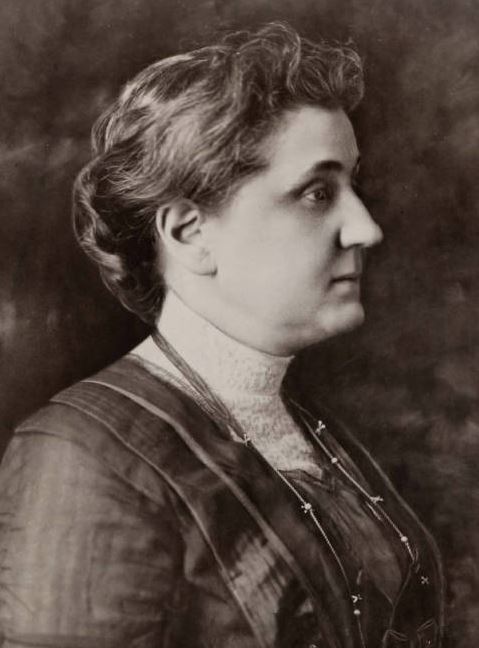
E. B. Waters portrait of Jane Addams (1902) Library of Congress
A Challenge: How You Can Help
Our new NEH Grant offers a way for you to help power the Addams Papers. The NEH will provide us with an additional $150,000 in matching funds if we can raise $150,000 from private sources. These much needed funds are needed to support the salaries of our student workers, research costs, and the editorial salaries that aren’t covered by the NEH and NHPRC.
We are currently short-staffed, with fewer student assistants than usual. Your support will ensure that we meet our goals for 2022-2023:
Entering over 1,000 new Addams documents with descriptive metadata in the Jane Addams Digital Edition.
Transcribing over 1,000 new Addams documents for the digital edition.
Proofreading student work to ensure quality before publication.
Submitting Volume 4 of the Selected Papers of Jane Addams to the University of Illinois Press.
Continuing research on Volume 5 of the Selected Papers of Jane Addams.
Working with high school teachers to develop AP resources.
Researching and writing biographies and descriptions of the people, organizations, events and publications mentioned in the Jane Addams Digital Edition.
So, if you can, please donate now. Your contributions will be matched dollar-for-dollar by the NEH and will power the students whose work makes all of this possible.
I am delighted to announce that the Jane Addams Papers Project has been awarded a grant by the Gladys Krieble Delmas Foundation! We are extremely grateful to the Foundation for their support of our work and their support for humanities research.
The award for Making the Jane Addams Papers Accessible to the Public
will support the work of undergraduate student assistants who are currently entering Addams documents in 1924 into our system. Our students analyze the digitized texts, creating descriptive metadata that makes them easier to locate and understand, and transcribe the texts. This makes text searches possible and helps readers unfamiliar or unable to read cursive. The Delmas grant will also fund the work of a student to help us create educational materials for high school AP and honors curriculum.
The grant will also be matched by the National Endowment for the Humanities. A win-win!
If you are able to help support the work of the Jane Addams Papers Project, please click on the donate link to keep our student workers typing away!
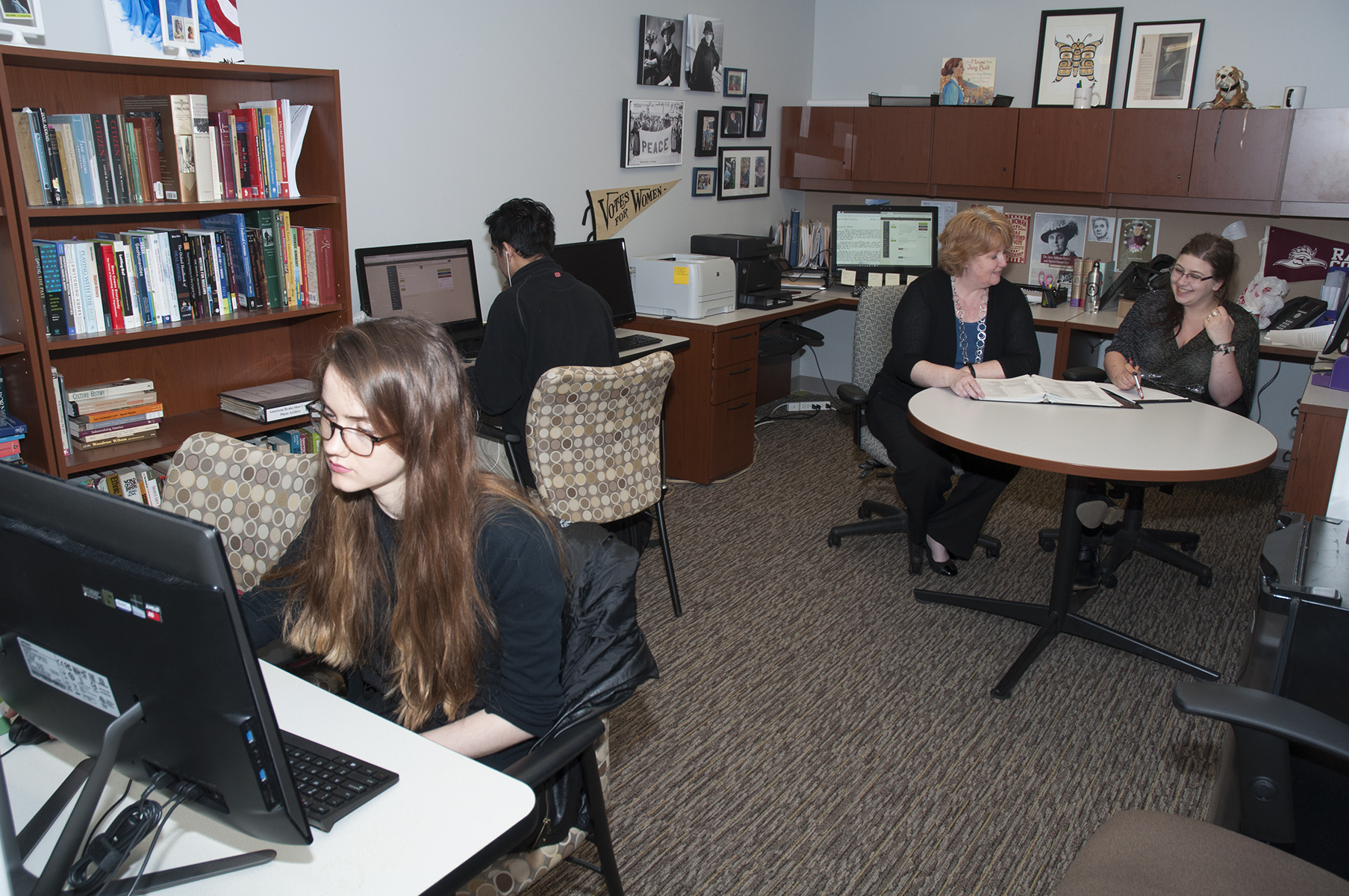
When the Jane Addams Papers Project came to Ramapo College in September 2015, space was a concern. The project was designed with the idea that undergraduate student workers would be an integral part of our work and in the early years, we were not quite sure where we would be able to fit them. Ramapo College has been a great partner to the project, giving us new space and increased capacity as the project has grown.
Our current space. Students work at computers while Cathy and Tori discuss a document.
Our first office was a small faculty office, into which we squeezed three computer stations — one for Cathy, one for me, and one for a student. A short time later, Ramapo provided me with an office next door. We squeezed in three more computer stations and were now able to have four (or sometimes five) students working with us. We had to stagger schedules to make it work, and it got a little tight sometimes, but we built great camaraderie at close quarters. When we had too many students to fit, the Dean allowed them to use a conference room and sometimes we flowed out into the Library or student lounges.
In 2018, with the Project hiring between 8-10 students per semester, Ramapo upgraded our space. We moved into a Project office, a large space where up to six students and two staff can work together. This space has become a hub of activity and attracts attention from faculty and students alike who pass in the hall. Working from home during the pandemic meant missing the collaboration that goes on in the office every day.
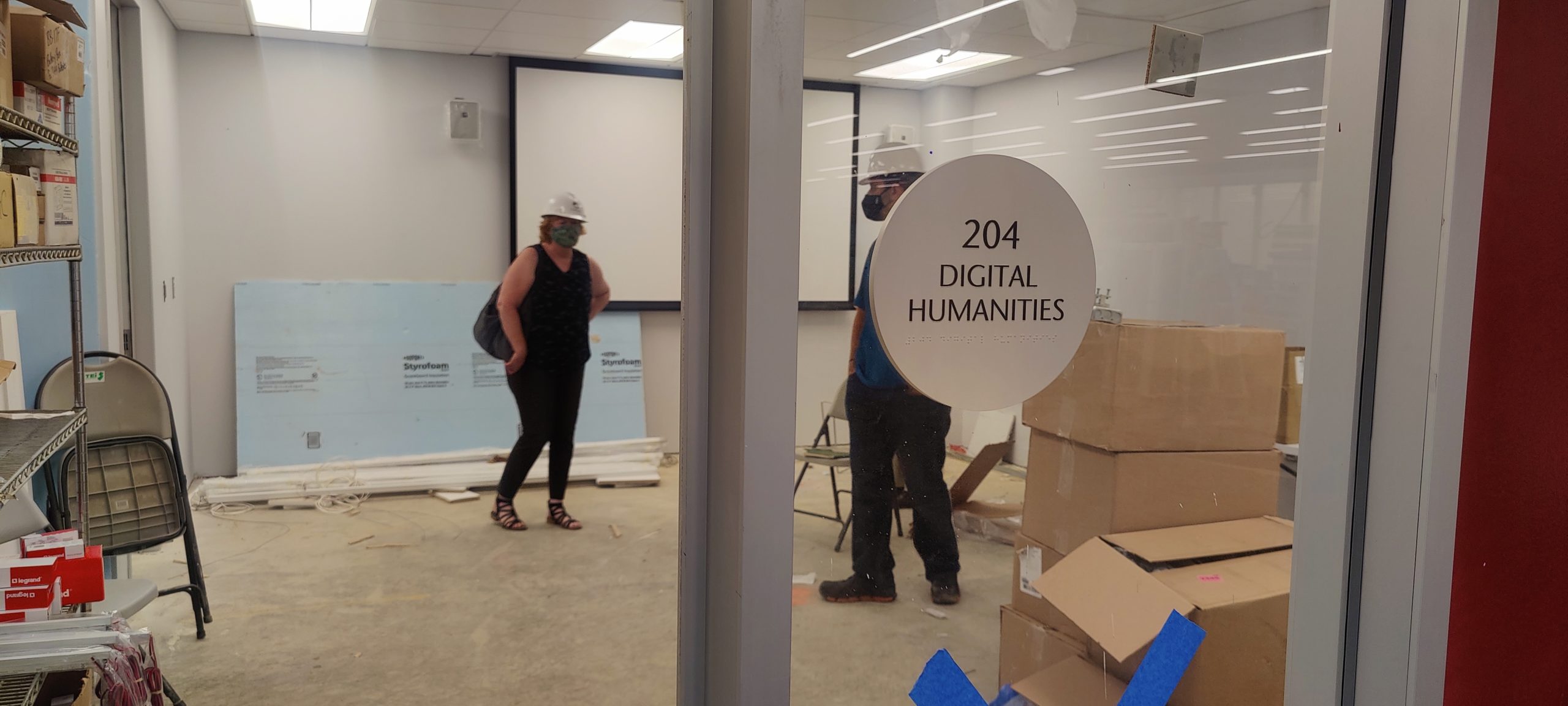
Cathy discusses details of the office while standing in the unfinished space.
When the construction is finished, we will have a new home at the Peter P. Mercer Learning Commons. Ramapo’s newest building, an expansion and enhancement of the George Potter Library, has been under construction since 2019. While it seemed the project would never end, and we feared that the pandemic would slow construction, the end is in sight: Fall 2021.
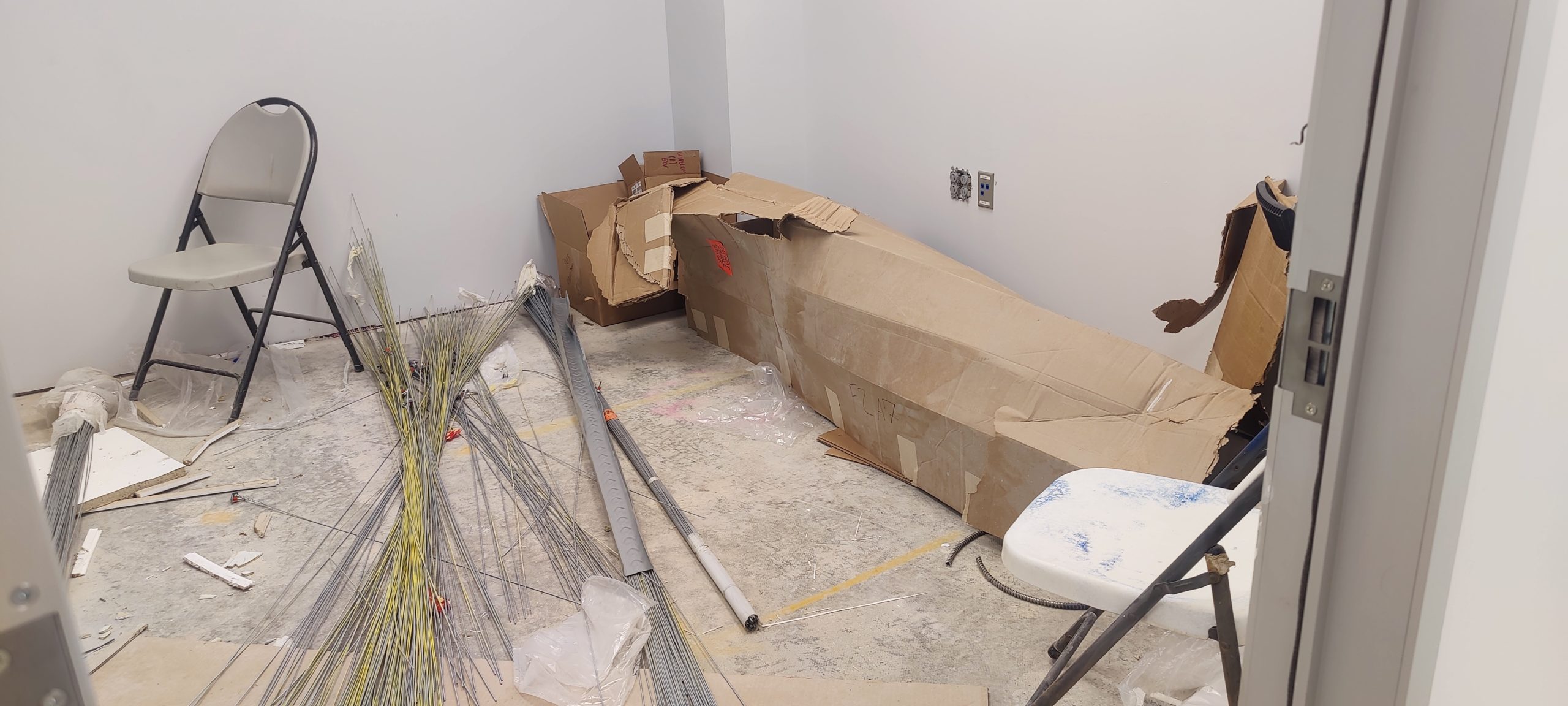
Inside Cathy’s office, still very much a work in progress.
The Jane Addams Papers will occupy the Library’s Digital Humanities suite, with a large workspace that can fit eight or more students at a time, as well as space for my desk, files, and books, and a separate attached office for Cathy. We will be located on the Learning Commons’s second floor, close to the College Archives. All around us will be a brand new, four story library with abundant private and group study areas, smart classrooms and conference rooms, a café, outdoor seating, and a maker space. The hope is that this new lively space will become the heart of the campus and we are delighted to have a place there.
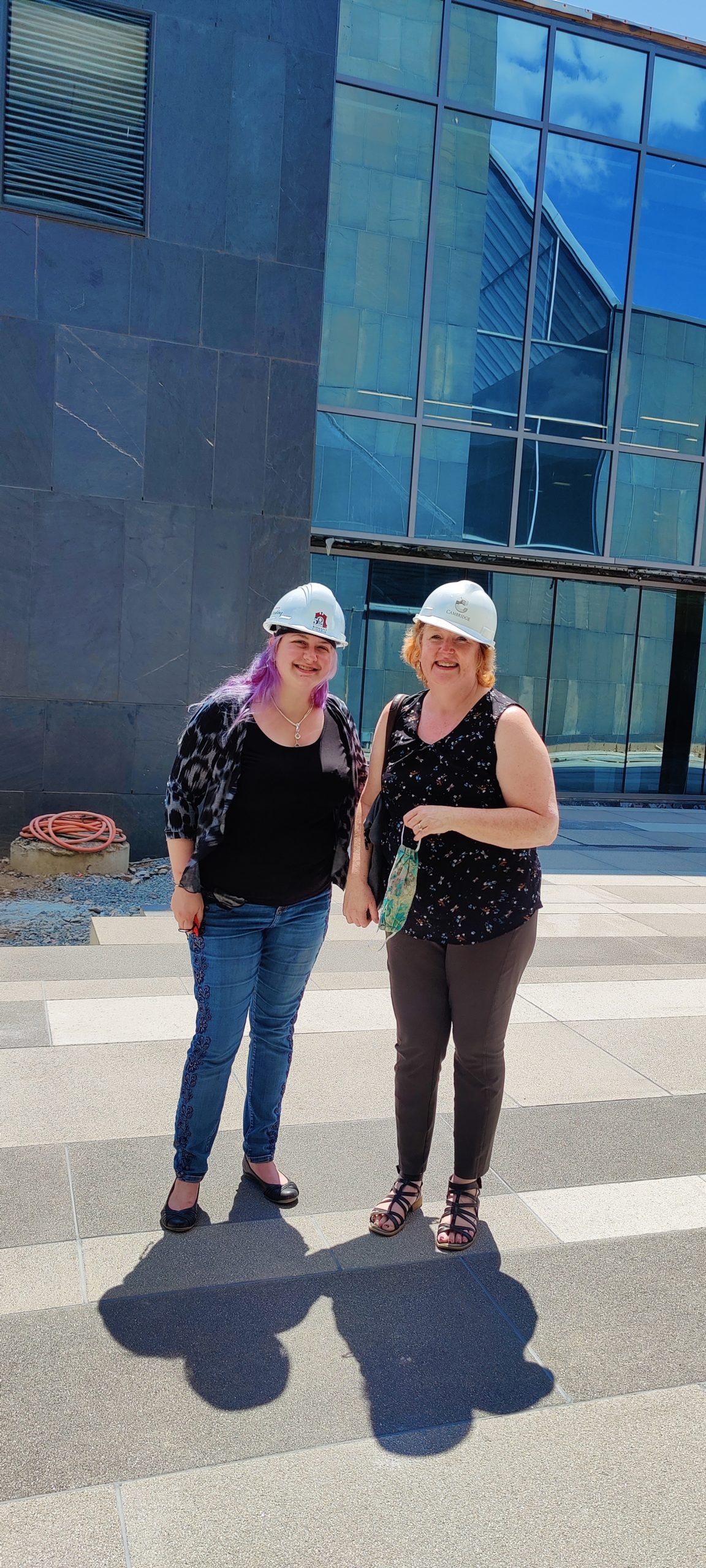
Cathy and I were recently given a hardhat tour of the construction site so that we could see our new space. Guided by Ramapo’s Director of Capital Planning, Daniel Roche, and Ramapo’s Construction Project Manager, Kosta Svarnas, we finally saw our new space! We are so happy that Ramapo gave us exactly what we wanted and needed in our new offices, and we could see all the possibilities of the space even while still under construction. Cathy’s office,
Tori and Cathy stand outside the Peter P. Mercer Learning Commons.
connected to the main workspace, will allow her easy access to the staff while also being able to conduct private meetings with students and others. My space, just outside her office, will allow close work with both the students and Cathy, and we will finally have enough space to store our document images in our offices. We have an overhead projector and screen which will help train students and give presentations about the project. And we will have a neat graphic presence that we will reveal once we are in the space.
While we don’t have an exact move in date, we are extremely excited about the future of the Project at the College and in this new space. And that, I think, is what really excites us the most.
We are delighted to announce that, with a grant from the New Jersey Council for the Humanities, we will be working with a group of New Jersey high school teachers and an educator from the Jane Addams – Hull-House Museum to explore ways to use the Jane Addams Digital Edition in high school AP classes.
The award, Developing Digital Educational Modules for High School AP Courses, will support a series of virtual meetings between Addams Project staff, and a select group of high school teachers from around the state. We are especially excited to also be working with Michael Ramirez, the Education Manager at the Jane Addams – Hull-House Museum in Chicago.
Two Ramapo College teacher-education students, Allie Cheff and Marina Kaiafas, will work with the teachers and Addams staff to develop primary-source-based educational materials that draw from the digital edition.
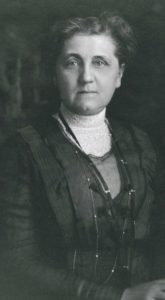
Jane Addams’s work during the Progressive Era and early 20th century was wide-ranging, and available topics range from her work in establishing social settlements, professionalizing social work, fighting against child labor and the persecution of immigrants and African-Americans, working to win support for woman suffrage, and her efforts for peace and social justice through the Woman’s Peace Party and the Women’s International League for Peace and Freedom.
We will hold a virtual symposium at the end of the grant to talk about what we learned and make publicly available to the materials on the project’s Education hub. We will also develop a guide for archives and other editing projects to help them create similar resources based on their holdings.
Teachers invited to participate are from all over the state and have extensive teaching experience. They are: Staci Anson (Ramapo High School), Yvonne Beatrice (Mahwah High School, ret.), Katherine DeVillasanta (Clearville Regional High School), Joseph Dobis (Franklin High School), Joseph Dwyer (Nutley Public Schools), Angela Funk (Indian Hills High School), Keri Giannotti (Bloomfield High School), Scott Kercher (Sparta High School), Faye Johnson Brimm Medical Arts High School), Allison McCabe Matto (Red Bank Regional High School), Louis Moore (Red Bank Regional High School), Frank Romano, Jr. (Perth Amboy Public School), Robert Schulte (Neptune High School), and Patricia Yale (Hillsborough High Schoo).
This grant builds on work that we did a few years back, also funded by the NJ Council for the Humanities, that developed National History Day guides and lesson plans using the digital edition for middle school students. Renee Delora, who led that effort, has joined this project to provide support to the student workers.
When the Jane Addams Papers started work in 2015 at Ramapo College, in many ways it felt like a brand-new project. We were focused on the digital edition, developing metadata rules, learning how to read Addams’s charming handwriting, and immersing ourselves in turn of the century Chicago and the work of Hull-House. But we were not a new project. We built our edition standing on the shoulders of the original Jane Addams Papers Project, founded by Mary Lynn Bryan in 1975.
Working with a team of dedicated editors, Mary Lynn produced an amazing microfilm that became the basis for our digital edition. We scanned that microfilm in 2015 and started working with the images, beginning in 1901, on our digital edition. The microfilm edition represented decades of work; they conducted an international search for Addams documents in archives, private collections and published sources, organized the documents and indexed them. At the start of our project, they had published two volumes of the Selected Papers of Jane Addams (since then Volume 3 has been published).
The microfilm headers that her team created gave our undergraduates a real head start when working with the texts. A letter to “Alice” was in fact a letter to Addams’ sister “Sarah Alice Addams Haldeman,” carbon copies of letters that had no signatures were identified clearly in the targets. They also identified the place where the letter was written from and sometimes the correct date.
We left the microfilm headers on the scans showing the work of the founding project.
And even more, we had the index to the microfilm. Unlike most other editing projects, the Jane Addams Papers Microfilm Index identified not just the authors and recipients of letters, but most time, the people mentioned in those letters, and in some cases the subjects. So, if “Edith” was mentioned in a letter and the students (or editors!) did not know who Addams was talking about, we could consult the microfilm index, and with a little adjustment, convert a microfilm reel and frame citation to our digital image files. This really helped in the early days of the project, when most of the correspondents and associates were not in our system.
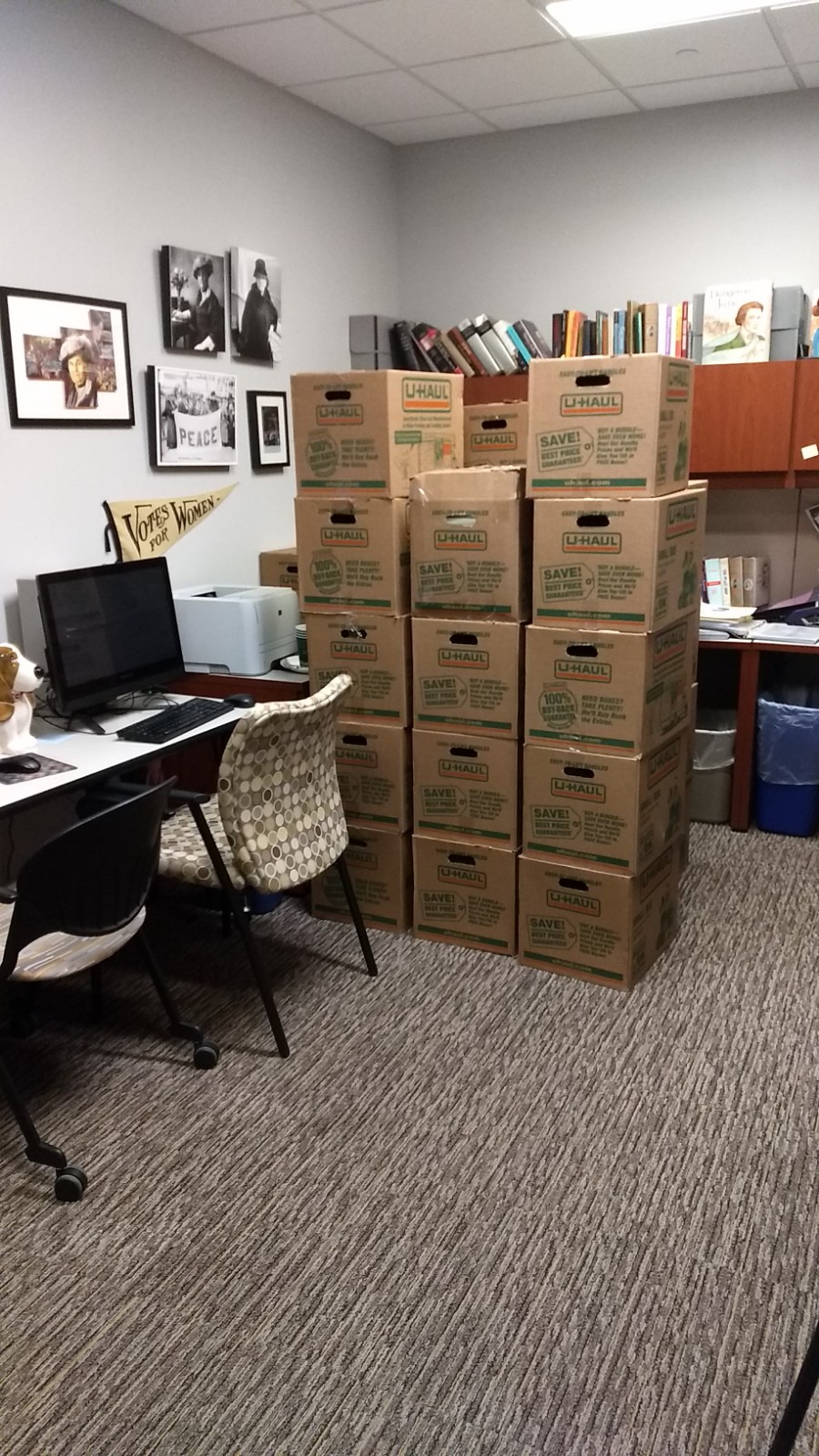
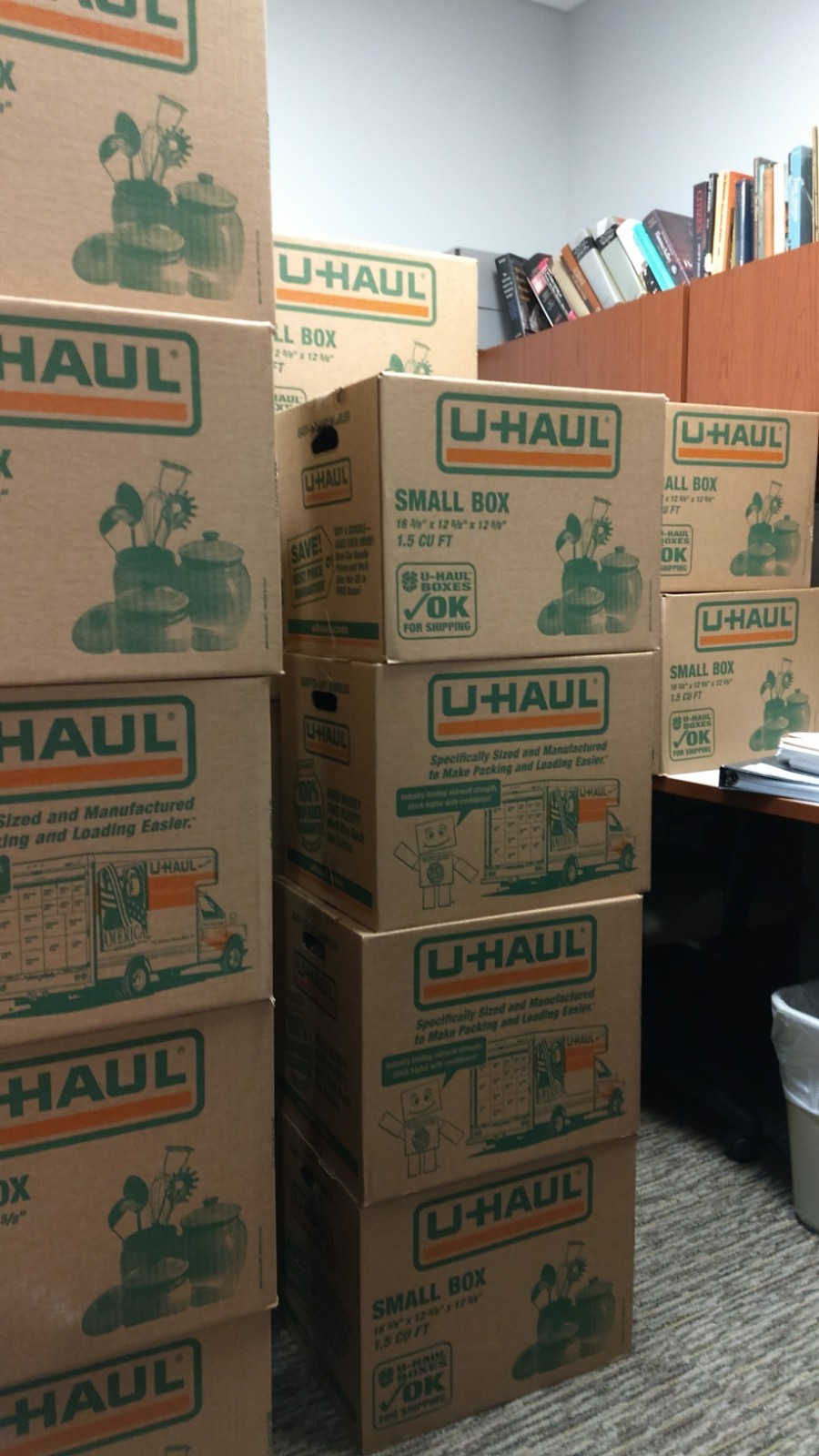
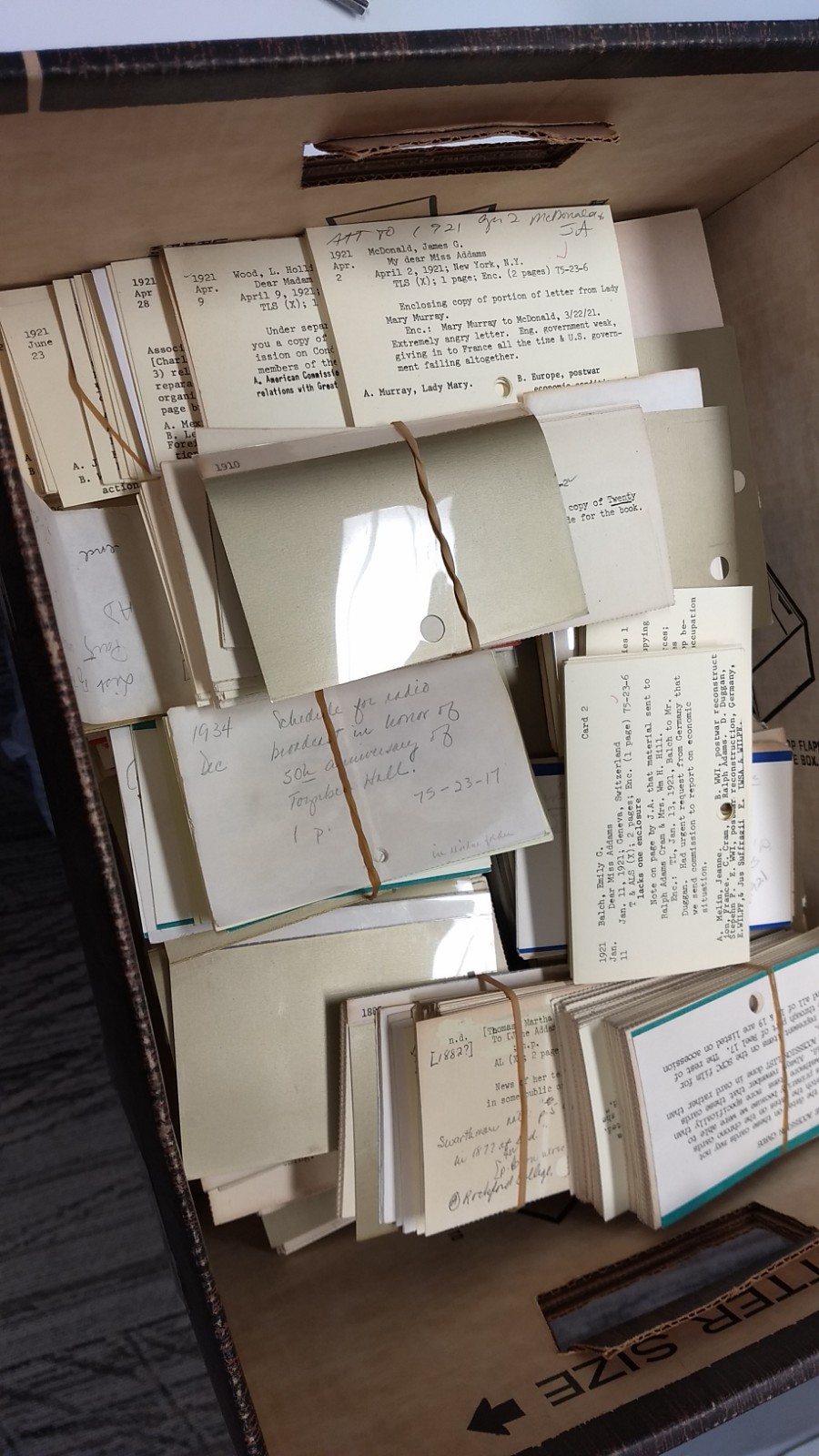
This January, Assistant Editor Victoria Sciancalepore took a road trip to North Carolina to get some of the archives of the original Jane Addams Papers Project. We brought the precious boxes, filled with index cards, copies of the documents and targets that were used to create the microfilm, and archival search records. It was exciting to unpack them and fill our file cabinets (and then some!) with these records, which we immediately put to use.
Boxes, we had boxes!
More boxes…
Index cards… databases the old fashioned way!
While most of the scans from the microfilm are good quality, there are some that are difficult to read. In the past we identified documents with poor images with an “Onsite” tag. Slowly but surely we contacted or traveled to the archives to get a new image. Some were penciled originals or light blue carbon copies that had been copied, then microfilmed, and then scanned. To our delight, we were able to substitute the copy in the Addams Project files for a number of light scans, which will save us time and money.
Even more valuable, and appreciated by student transcribers, many of the files also included handwritten transcriptions for some of the more difficult to read handwritten documents. While the first three volumes of the Selected Papers only carry the story to 1900, these transcriptions are throughout the collection. It has helped clear up a lot of [illegible]s from our early transcriptions.
Our debt to the editors that went before us, finding, organizing, transcribing and editing these documents cannot be overstated, and we want to thank each and every one of them!
Last spring I had the pleasure of working with two undergraduate students, Taylor Lundeen and Catie Olson, enrolled in the University of Michigan’s School of Information. They worked on a capstone project on data visualization, using our Jane Addams digital edition databases. Anneliese Dehner, our web developer, helped out with the some technical aspects of the collaboration.
One of the many great things about digital publication is that the information we create can be reused and repurposed in ways that we might not have thought of. Making our data available to researchers to explore has been one of our goals from the start of our work on Jane Addams, and with this investigation we have learned what we can do fairly easily, and what is more complex.
Accessing the Data
Our first step was to get a copy of our data exported out so that Taylor and Catie could work on it. What they found worked the best was an Omeka plugin (Omeka Rest API) that allowed them to export data in a format that worked well with data manipulation software.
Our ultimate goal is to have a utility on the digital edition that will enable users to download all or parts of the data for investigation.
One problem that reared its head immediately is that we have a very large dataset, and it is growing larger every day. This made it difficult, using the tools they had available to work with the whole set.
Natural Language Processing
One of the approaches, which Catie worked on, was seeing what we could learn from analyzing the “Text” field in our database, where transcriptions are stored. This kind of analysis can track the frequency of words, or compare word usage over time. Eventually it could be used for topic modeling, where a digital tool tries to make sense of words that appear together. These groupings can uncover connections that we sometimes don’t expect.
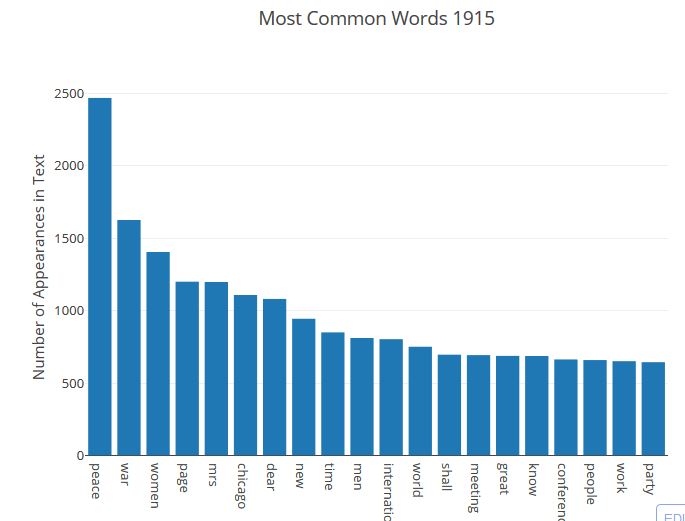
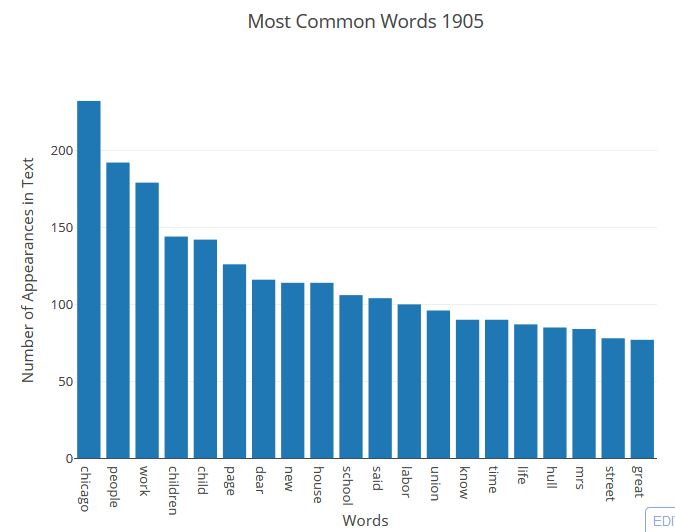
An important step in working with our texts was data cleaning, the process by which HTML and special characters were cleaned out and text was split word by word. Then Catie built bar charts that displayed the most common words. She built a separate chart for each year to allow us to compare years to see what Addams was thinking and writing about.
The most obvious finding to me, was that we needed to think about stop words — words that are excluded in the results because they are too common or have no analytical meaning. Articles, like “a” and “the” are common stop words– we also had to consider “page” which we use to signify the next page in our transcriptions, and, gulp, even “Hull House” because we transcribed the letterhead that Jane Addams used. Other words like “Mrs,” “Mr.” and “Miss” and salutations like “Dear” are candidates for being pulled from the analysis.
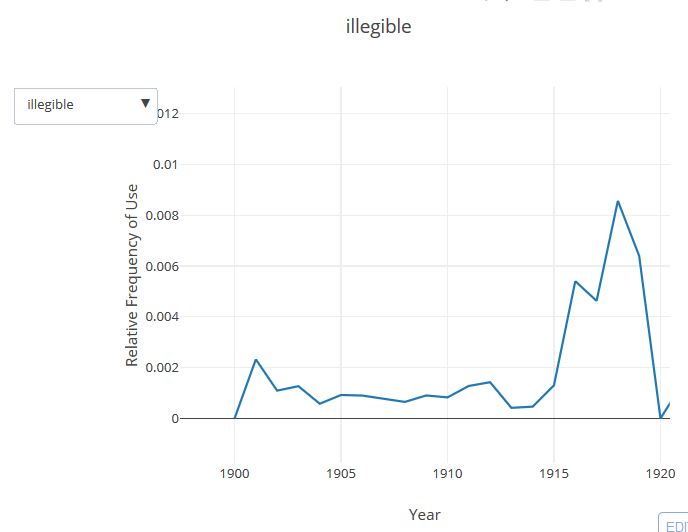
We also got to see the frequency of that nemesis of editors – “illegible.” This comes up far more frequently than I would like, but I was gratified to see that in the years where we have proofread the texts, the frequency is much lower.
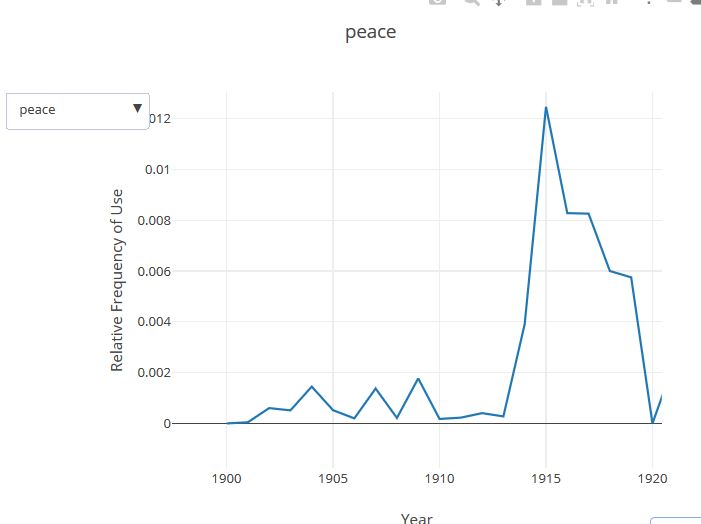
It will surprise no one that “peace” and “war” shot to the top in 1915.
Frequency of words in 1915.
In 1905, the most frequent words deal more with the plight of children and represent Addams’ work on child labor and welfare in Chicago.
Frequency of words in 1905.
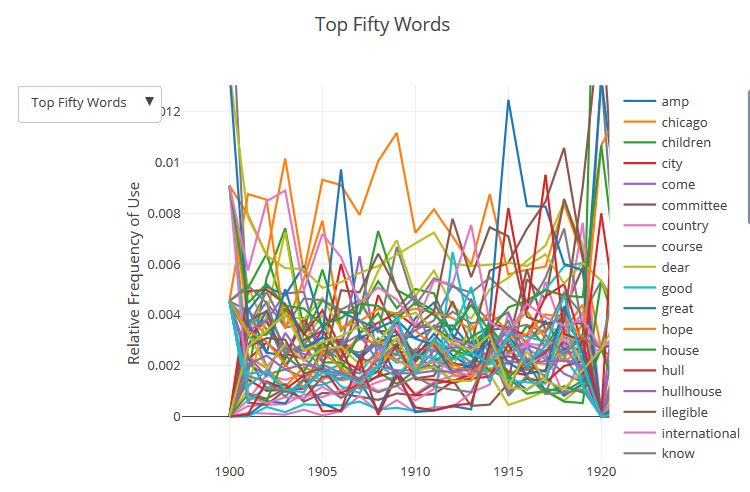
Catie also worked on another way to show the content of Addams’ writings, plotting the frequency of a word over time. Similar to the Google n-gram viewer that can compare the frequency of words in Google Books over time, this gives you a sense of the chronology. We did not have the capacity at this point to allow users to type the words they want, but were able to produce n-grams for some of the most popular words.
Seen together, it is a little frightening, but on the live version on the site, you can select a single word to analyze.
The Top 50 Words, all in one place!
Tracking “peace” from 1901-1917.
The n-gram for “Illegible” shows the power of proofreading! When the data was downloaded for use, we had just finished proofreading 1915!
An n-gram of words we could not read.
Social Network Analysis
Another approach was to see what we could learn from social network analysis. Using Omeka’s Item Relations plugin, we have been tracking relationships — mostly between documents and the people, organizations, and events that are mentioned in them. We also are building connections between people and organizations, tracking which people were members of which organizations, for example, or who participated in a specific event. We wondered whether the relationships between people and organizations might yield some interesting insights, or whether we could find other connections between people and the metadata gathered about them. Taylor was responsible for this project.
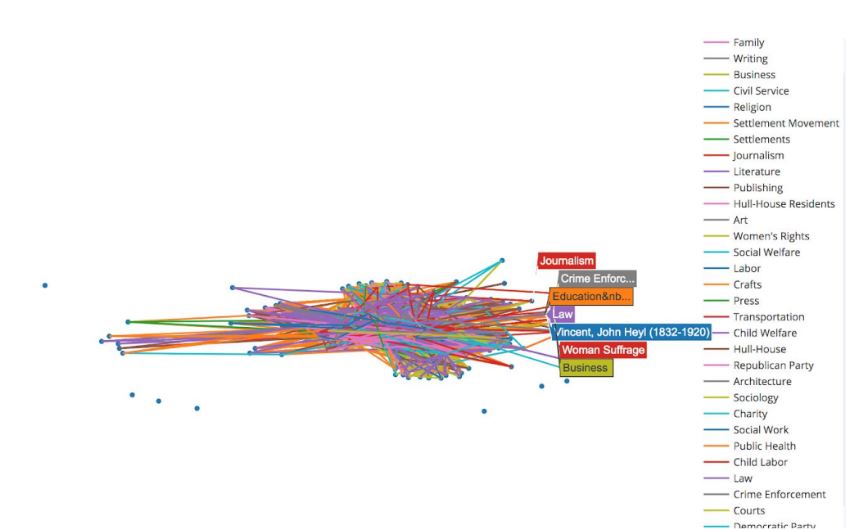
Our large dataset proved to be problematic for developing a meaningful social network based on shared connections. We think there is promise for this in future by controlling which people are included in the network, but the sheer number of people and the amount of common tags produced a daunting graph.
This plot includes only 270 Addams connections associated with Chicago. The full data on 8,000 names was too complex to load.
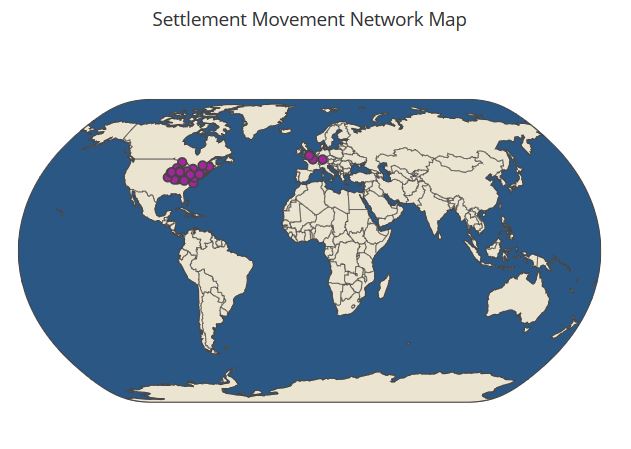
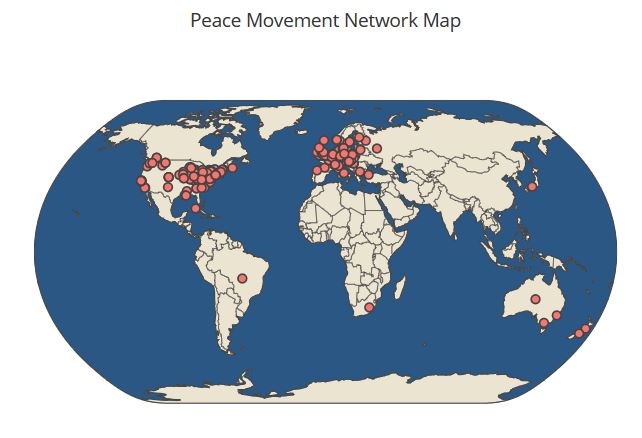
Instead, Taylor created a geographical visualization of Addams’s social networks related to several topics. We used our tags for movements like “Woman Suffrage,” “Child Labor,” and “Peace” and plotted their geographic locations. Compare Addams’ Settlement Movement network and her Peace network below to see the expansion of her work internationally.
On the live version of these maps, you can zoom in and out and mouse over each dot to reveal the name of the activist.
Going Forward
It was amazing to see what two talented students could do in such a short period of time! The experience has helped us think more about how we want to make our data accessible, and has uncovered challenges that we need to think about. Our database is large and complex and developing means to limit the queries is going to be important.
We are looking forward to working with other UMSI students and any digital humanists interested in advancing this work.
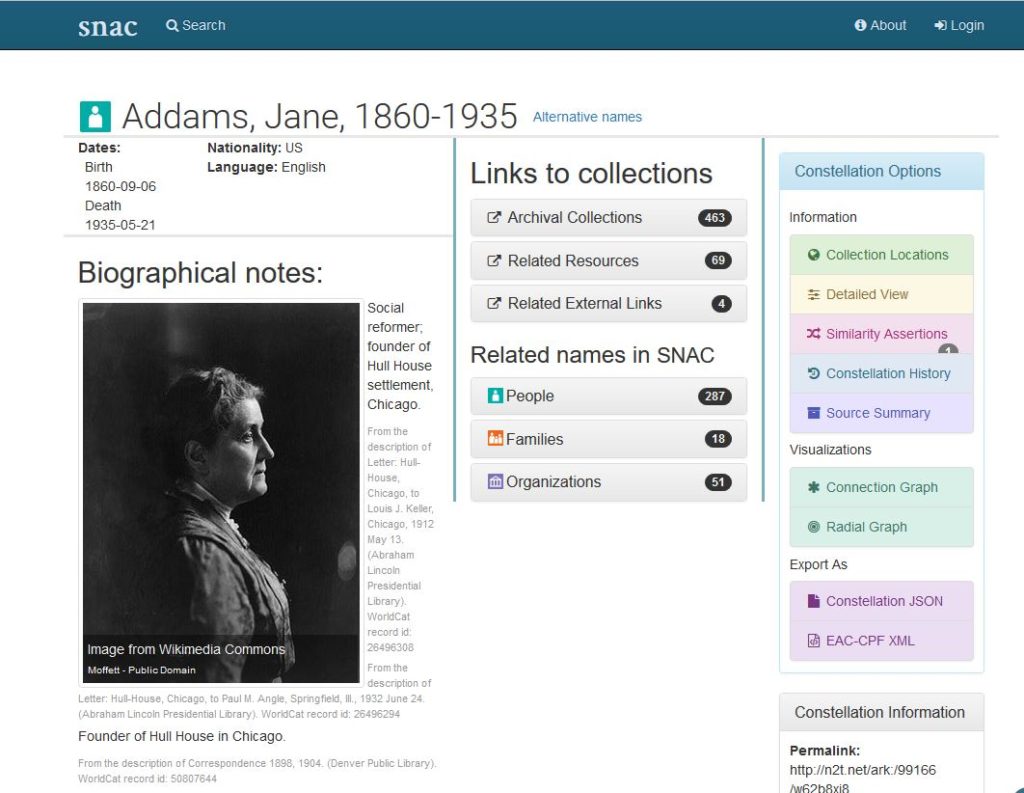
I am pleased to announce that the Jane Addams Papers will be joining the Social Networks and Archival Context (SNAC) Cooperative in its final phase of work. SNAC has been hosted by the University of Virginia’s Institute for Advanced Technology in the Humanities and the University Library and funded by the National Endowment for the Humanities (2010-2012) and the Andrew Mellon Foundation (2012-2017). The Cooperative seeks to improve the economy and quality of archival processing and description, and build a global social-document network using both computational methods and human curation.
I first came across the SNAC web portal when doing research for biographies for our digital edition. SNAC provides biographical information, links to archival collections, and to related people, families and organizations.
I decided that we would make SNAC one of our go-to resources for our biographies. We link all our biographies to the SNAC record to enable our researchers to locate an ever expanding list of resources on that person. SNAC imports data from finding aids, Wikipedia entries, and other sources. As we made links between our biographies and theirs, I started to wonder whether we might be able to contribute materials as well. I reached out to Daniel Pitti, the project director.
The Jane Addams Papers is not an archive, but an edition, and I wasn’t exactly certain how what we we would interact with SNAC. With only two years of work under our belts, we have identified over 4,500 individuals, who wrote letters to Jane Addams, received letters from her, or were mentioned in the documents. Our individuals range from historical figures, like Plato and Wat Tyler, to Chicago police George Shippy and John McWeeny. We have over 100 suffrage activists, including Catherine Karaveloff, Carrie Chapman Catt, and Zofia Golińska-Daszyńska. There are philosophers, criminals, homemakers, and union leaders, and over 200 social workers and welfare activists. About 60% of the names we have linked thus far are men and 40% are women.
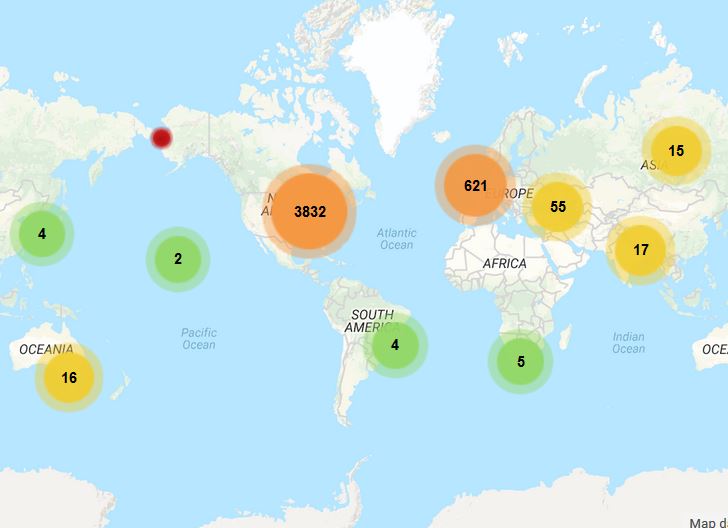
The people who come up in Addams’ documents are primarily American, but we have increasing numbers associated with Europe and Asia as Addams broadened her reach and networks. The screen shot below of our map view of individuals will change as we deal with more of Addams’s international peace work.
We are looking forward to seeing how SNAC can work with data coming from our Omeka-based digital edition. We will not be the only editing project joining at this time, the Walt Whitman Archive is also coming on board.
The Jane Addams Papers Project would not be possible if not for the support of the federal government, in our case, the National Historical Publications and Records Commission (NHPRC) and the National Endowment for the Humanities (NEH). The work that we do, bringing rare archival documents to broad audiences, serves a wide range of the public–from a scholar working on an interpretation of Addams’ philosophy, to a college student writing a thesis on the impact of women on the Progressive Era, or a high school freshman creating a National History Day performance on Hull House. (National History Day, by the way, is also funded by the NEH).
At the Addams Papers, support provided by these two agencies has funded:
The microfilming of the Jane Addams Papers in the 1980s, which serves as the basis for our digital edition. Without the work done finding, copying and microfilming materials, identifying dates and authors in a detailed index, our work would be much more difficult.
The scanning of the Addams microfilm to build our digital edition.
The salaries of eight students who describe and transcribe documents and conduct research. This is an added boon, because federal dollars spent on student workers pay twofold. Besides the help we get on the project, it provides the students with unique experience in historical research and digital humanities work that helps them stand out whether applying for a job or going on to graduate school.
The salary of an assistant editor who helps supervises student work and training, and insures quality control over their work through proofreading and verification. She also conducts research, transcribes documents, and works on clearing permissions so that we can publish the documents.
The salary of a part-time assistant editor who manages work on our book edition. She selects the initial pool of documents to be published as a fully annotated scholarly print edition. She also helps with proofreading and verification.
The work of our Chicago researcher who gathers newly found Addams documents, helps us with difficult transcriptions, and conducts research on Chicago-area topics.
The efforts of two web developers who have customized and designed the functionality of the Jane Addams Digital Edition and designed a beautiful site.
Our goal is to provide free public access to Jane Addams’ correspondence and writings, via a digital edition. You don’t have to be a scholar who can travel to an archive, or a student at a large research library to access these documents. The site is also building a unique resource of identifications of the people, organizations, events, and publications discussed in the documents that will provide students of the Progressive Era with a rich resource.
The Addams Papers is but one of the many projects supported by the NHPRC and the NEH that help enrich our understanding of the past.
What you can do
Once a year, the National Humanities Alliance focuses support and attention for federal funding for the humanities. Advocates from every state come to Washington on Humanities Advocacy Day (Tuesday, March 14) to talk to their representative and senators about the importance of this work and its value to all Americans. It is especially important this year due to rumors that funds for the NEH may be eliminated from the President’s budget.
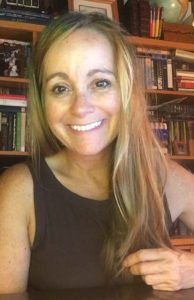
It is with great pleasure that we welcome Stacy Lynn to the Jane Addams Papers team as our new Assistant Editor. Stacy comes to us with a wealth of over 20 years experience as a scholarly editor, gained at the Papers of Abraham Lincoln, where she most recently served as Associate Editor and Assistant Director.
Stacy holds a Ph.D. from the University of Illinois and is the author of two books that came out of her Lincoln research: Mary Lincoln: Southern Girl, Northern Woman (2015) and The Jury in Lincoln’s America (2012). In addition, she worked on four volumes of the The Papers of Abraham Lincoln: Legal Documents and Cases, 4 vols. (2008). She has written many articles and book reviews and given conference papers and presentations.
Stacy’s primary responsibility will be managing our work on the Selected Papers of Jane Addams, starting with Volume 1, which will cover 1901-1913, but we anticipate that she will also work on our social media outreach and other editorial tasks.
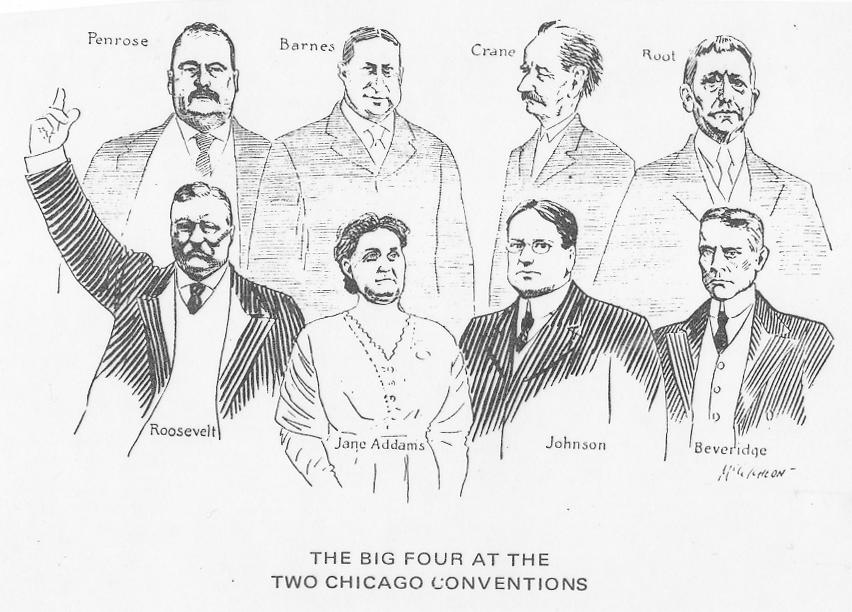
Members of the losing party of a presidential election are met with disappointment and sadness. In the following months the party is left to recuperate and reorganize. The losing and winning party must also plan how they will function with each other in the future. In the election of 1912, the election involved a variety of political parties with some overlapping and some clashing goals. Jane Addams had an important role in the election of 1912 and its many political parties as she became the first woman to nominate a presidential nominee by seconding the nomination for Theodore Roosevelt in the Progressive Party. The backlash she received for seconding the nomination of Theodore Roosevelt for the Progressive Party, also known as the Bull Moose Party, was astounding. It lead to some of the most interesting letters I have ever read throughout my time at the Jane Addams Papers Project. After the election, Addams continued to receive letters about her participation in the 1912 election.
A 1912 US cartoon, showing the “Big Four at the Two Chicago Conventions”. Front row (Progressive or “Bull Moose” party): Theodore Roosevelt, Jane Addams, Hiram Johnson, Albert Beveridge. Back row (Republican party): Boies Penrose, William Barnes, Jr., Winthrop M. Crane, Elihu Root.
While the Progressive Party was attempting to recover after a presidential loss, Addams received a letter that claimed that the party would potentially be destroyed by all of the other political parties involved in the election of 1912. An anonymous writer, referring to himself as “a Bull Moose,” wrote Addams on December 13, 1912 an at first seemingly innocent letter, praising Addams for her efforts with the suffrage movement. As “Bull Moose” continues, he wrote to Addams about an alleged “disaster” for the Progressive Party. In this alleged disaster the Republicans, Democrats, Socialists, and Prohibitionists had created a trap for the Progressive Party to fall into and ruin the party forever. “Bull Moose” decided to take it upon himself to create five “shamtraps” for the Progressive Party, in order to expose the traps of the other parties, but the “shamtraps” needed to be dealt with before December 15th or the plan would not work.
This was not even the strangest part of the letter. “Bull Moose” then goes on to say that Addams can tell no one else about the letter except Theodore Roosevelt, who he refers to as “our future President,” despite the fact that Roosevelt has already lost the 1912 election. “Bull Moose” must have been hoping for a 1916 victory for Roosevelt. Unfortunately for “Bull Moose,” Roosevelt would not enter the 1916 election. “Bull Moose” proceeded to give Addams a list of instructions that will prevent the other political parties from trapping the Progressive Party. The first few seem pretty reasonable – instructions such as “not to side with either Drys nor Wetts,” which makes sense since the Prohibition Party is allegedly involved in this “shamtrap” plot. Instructions six and seven are the strangest. In rule number six, “Bull Moose” instructed Addams that he would come to her as a “polish tramp to wash windows, with a raincoat on” and told her all of the horrible ways to treat him. Rule number seven instructed Addams to treat a hobo the same way, perhaps worse, if “Bull Moose” should have sent a hobo in his place.
Addams was instructed by “Bull Moose” not to share the contents of this letter with anyone besides Theodore Roosevelt until 1917. So far there has been no indication that Addams ever shared the contents of the letter with anyone, including Theodore Roosevelt. The Jane Addams Papers Project works chronologically so we have not yet read and transcribed the letters from 1917. I will certainly keep my eyes peeled for any letters about “Bull Moose” once we get there.
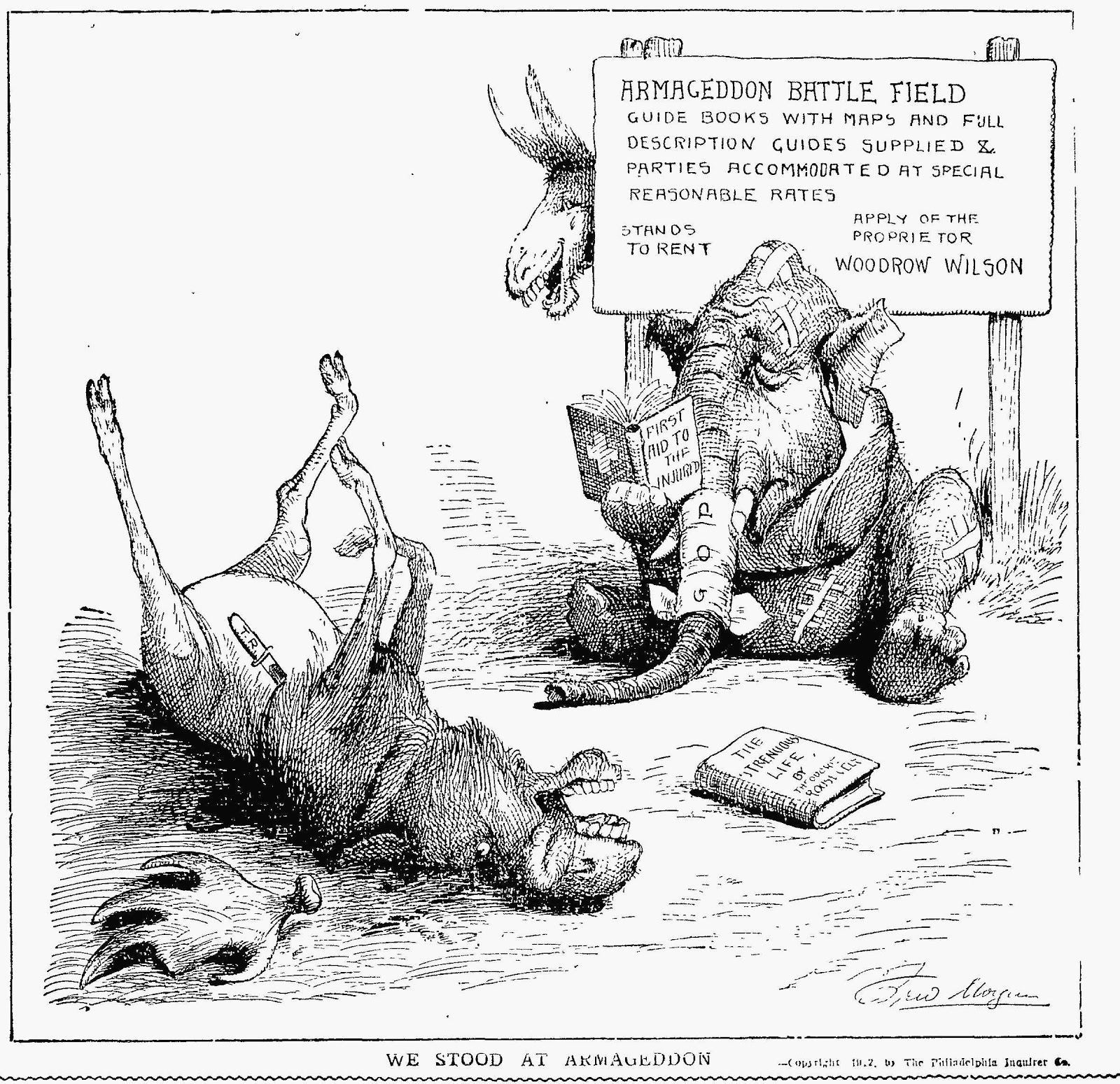
This political cartoon follows the 1912 Presidential Election in which Woodrow Wilson (D) won in a landslide defeat over Theodore Roosevelt (Progressive/Bull Moose Party), William Taft (R), and Eugene Debs (Socialist Party). (From the November 8, 1912 issue of the Sandusky Register.)
“Bull Moose” was not entirely off the mark when he said that the other political parties were planning to destroy the Progressive Party. The Progressive Party ultimately did fall because of other parties, mainly the Republicans. The Progressive Party essentially merged back together with the Republican Party, especially after Roosevelt refused to accept the Progressive presidential nomination in 1916 and chose to campaign for the Republican Party. Maybe the Progressive Party would have lasted longer if Addams had followed “Bull Moose’s” instructions!
This document can be located on the Jane Addams Papers microfilm on Reel 7, frame 542. It will soon be freely available to read and view in digital form on our database website, which can be found by clicking the link to the right of this post.
The Jane Addams Papers Project is seeking a part-time Assistant Editor to help work on the preparation of Volume 4 of the Selected Papers of Jane Addams. The position is funded by a grant from the National Endowment for the Humanities. It is renewable year-by-year dependent on funding.
The Selected Papers of Jane Addams is a six-volume, selected edition. Volume 1-3, prepared by Mary Lynn Bryan and her staff covers the years 1860-1900. Volume 4, prepared by Cathy Moran Hajo and the staff at Ramapo College of New Jersey, will cover 1901-1913. The volume will be published by the University of Illinois Press.
The assistant editor will work 25 hours per week, some portion of which may be done by telecommuting. Earliest start date is October 15. The successful candidate will help select documents for inclusion in Volume 4, prepare the manuscript, help identify and organize the annotation research process, conduct research, and assist with proofreading. Duties may also include proofreading transcriptions and identifications for the digital edition, writing blog posts, and supervising student workers.
Required: M.A. in American history or a related field or current enrollment in a graduate program. Meticulous attention to detail and familiarity with computers, including database use, is essential. Preferred: Subject specialization in the Progressive Era with emphasis on Jane Addams, the suffrage and settlement house movements; or experience in scholarly editing or the publication of scholarly materials. AA/EOE. For more information, and to apply for the position, see job 223009 at Ramapo College’s website.
2016’s Institute for the Editing of Historical Documents was held New Orleans, LA, in a hotel on the corner of Bourbon Street and Canal Street. Its courses promised to educate those new to the field of documentary editing, as well as a chance to ask questions about our own projects. Just after classes ended, the Association for Documentary Editing held their annual meeting in the same hotel. And, with a generous grant from the National Historical Publications and Records Commission (NHPRC), the Institute offered a stipend for accepted students.
My very first question was – Where can I sign up?
After an application process and multiple emails with the Institute’s Education Director, the excitement of acceptance to the program gave way to agonizing anticipation. Finally, after months of biding my time and waiting until the night before my flight to pack, I was stepping off the plane into the hot and humid air of Louisiana.
The next day, we began promptly at 8am with breakfast, and at 8:30 transitioned straight into class time. I was one of 22 classmates, and initial introductions showed just how varied our backgrounds were: There were some, like me, working on a traditional project with a print edition of selected letters, as well as a digital edition on a website. But there were some working on solo projects, with many questions on how best an institute could help their projects. There were librarians who had enough of helping with research, and had decided to delve into their own projects. And there were some still in school as Ph.D. candidates who had become swept up in the world of editing historical documents.
Classes were taught by experts in their fields, and those experts were Amanda Gailey (Scholarly Editing), Cathy Moran Hajo (Jane Addams Papers), and Jennifer Stertzer (Washington Papers). We were educated in a range of topics, from encoding text to better represent a transcription on the web, to preparing to fund your project through your home institution and private donors. There were classes on publishing digitally vs. publishing in print, as well as the best method for indexing and annotating those published documents. And the week of classes wrapped up with a thought on the future of documentary editing.
But there were things we couldn’t learn from our “experts”, and could only discover by talking to the other Institute participants. Each one had their own obstacles to overcome, such as funding and staffing, and their own experiences with editing documents. But with each hurdle, they had their own slightly unique solution, and those collective exchanges definitely helped facilitate discussions for the keys to solving unanswered questions.
At the end of our stay, many of us knew how to get to Café Du Monde by heart, and some had walked the length of Bourbon Street multiple times. But each of us who attended the Institute found ourselves no longer identifying as a singular project, but rather as one documentary editor with a network of peers, never truly alone in our shared quest to preserve and interpret history.
At the recent meeting of the Association for Documentary Editing, held August 4-6 in New Orleans, Louisiana, I participated in “New Approaches to Publishing Editions, a panel that explored the diverse ways that projects are putting their documents online. Each panelist talked for a short time, and then we displayed posters and demonstrations of our platforms and tools. Joining me on the platform was Jennifer Stertzer, the chair (Washington Papers), Ben Brumfield (Brumfield Labs), Ondine LeBlanc (Massachusetts Historical Society), Erica Cavanaugh (Washington Papers), M. Safa Saracoglu (Bloomfield University), and Clayton McCarl (University of North Florida).
Representing the Jane Addams Papers, my poster outlined the project’s use of Omeka, a content management platform designed by the Roy Rosenzweig Center for History and New Media to create digital archives and exhibits for small-scale museums and archives. Omeka was a good choice for the Jane Addams Papers because we are digitizing a large number of documents (over 20,000), including letters, articles, speeches and reports from 1901-1935.
The challenge for the Addams Papers was to develop a system simple enough for undergraduate student workers to use, while also building complex connections between the documents using descriptive metadata. We wanted to be able to publish documents online easily and flexibly, without having to learn to program. Omeka fit our needs well, and allows us to transcribe the documents, making them searchable.
Cathy and Tori at the ADE after the poster session.
We also needed a system that would enable us to manage permissions and copyright clearance. For 20th century documents, permissions are complex–not only do we need the permission from the owners of the manuscript, but we also need the authors or their heirs to grant permission for all documents published after 1922. For unpublished documents, authors fall into the public domain if they died more than seventy years ago–before 1946, but if they died later, we need to locate and secure permission from their heirs. In eleven months’ work, we have already entered the names of more than 2,000 individuals and organizations. While we don’t have to clear permission for all of them (many are only mentioned, or received letters, but did not write them), there are plenty that we do need to clear and we needed our digital platform to be able to track permission status.
We also want to build a digital edition that can take advantage of emerging digital humanities tools. We are currently able to generate maps and subject indexes directly from the Omeka database, and are tracking relationships between individuals, documents, events, and organizations.
Out of the box, so to speak, Omeka offers great possibilities. It maintains complex relationships between the different items that we include–tracking the authors, recipients, and people mentioned in documents, relating the drafts and similar versions of documents to one another, linking enclosures to their letters, while also letting them appear as their own documents.
One of the most useful features of Omeka is that it is open-source and can be extended with plugins. This means that the plugins we develop for use at the Addams Papers can be shared with other projects that are interested in the same kinds of functions. We already have plans to share our publishing, mapping, and relations improvements with the Franz Boas Papers.
We will be posting a more in depth exploration of how the project uses Omeka on the digital edition site in the near future.
(This post was originally published on the Association for Documentary Editing’s website.)
Since 2001, the Digital Humanities Summer Institute (DHSI), held annually in Victoria, B.C., Canada, has been an annual gathering of technologists, scholars, librarians, graduate and undergraduate students…and editors. For the past three years, Jennifer Stertzer and I, joined this year by Erica Cavanaugh (George Washington Financial Papers Project), have offered a course entitled “Conceptualising and Creating Digital Editions,” one of a rich slate of hands-on and theoretical week-long immersions into digital humanities.
Students working on their website designs.
The twenty students who took our course came with some incredibly varied and fascinating projects. Just a few include Deanna Stover’s plan to create a digital edition of H.G. Wells’s Floor Games and Little Wars, a 1911 narrative set of gaming rules, Fiona Coll’s work on a digital editions of Morgan Robertson’s short works of fiction based on his sea-going experiences, and Elizabeth Honing’s plan to create a classroom module featuring a digital edition of Richard Hakluyt’s Principal Navigations (1598-1600). The breadth of topics spanned centuries, from Rachel Roberts’ work on Anne Dowriche’s The French Historie (1589) to Eric Rasmussen’s plan to create an online web resource for studying the artistic and social networks around the contemporary American writer Lynne Tillman, and Kate Sikloski’s project to create a digital companion to her critical biography of Tobagonian-Canadian poet M. NourbeSe Philip. Paula Johanson was seeking guidance on turning her guide to kayaking, Green Paddler, into a digital edition, while Ellen Malenas Ledoux investigated creating a critical edition of Mary Darby Robinson’s Memoirs. All the projects represented rich resources that will be greatly enhanced by the editorial work planned for them.
Jennifer with Rachel Roberts and Melinda Creech at the class showcase on Friday afternoon.
The four and a half day course covered a lot of ground, but was focused on introducing students to many of the editorial issues that arise when contemplating a digital edition. We discussed how the main tasks of editing, selection, transcription, annotation, and research are changed when the materials are presented in a digital platform. We spent time talking about the pros and cons of various digital edition platforms and the tactics editors need to use to adapt them, focusing on TEI/XML, Drupal, Omeka, WordPress and Scalar. Through description, demonstration, and analysis, we helped students decide between platforms by focusing on the goals of their edition and the nature of their documents.
Erica and I at the course showcase on the last day of DHSI.
Students used one of the tools, Omeka, to begin to craft plans for their digital projects. They drafted policies on selection, transcription, annotation, and searching, developed site maps to envision navigation, page appearance, and useability, and estimated the time and work hours that it would take to complete their projects. Students played with metadata by creating sample documents, transcriptions and descriptions of their materials. They had one on one time with Erica, Jennifer and I to ask for advice, to experiment with visualization tools such as text analysis, digital maps and timelines, and some created rough prototypes of their site plans using Drupal.
DHSI offers many other courses of interest to editors, from intensive work with TEI encoding to text analysis, and project management. Victoria is beautiful (we went whale watching!), and the immersion on hands-on work with other people passionate about documents, scholarship, and technology makes for an experience unlike any other.
I’ll be the first to admit it. Reading Jane Addams’ handwriting is difficult, and just when you think that you have gotten it down, you run across a letter that makes you question your profession.
Working on a digital edition with such challenging handwriting has been a bit different than working on a print edition. With print it is essential to get the transcription as perfect as you can because it is unlikely that there will ever be a revised printing of your edition; the best you can usually hope for is an embarrassing errata page that highlights every mistake that you have made (at least those that you have found!). With digital publication, we can seamlessly correct errors in transcription as soon as we discover them. And while this means there is less pressure on us to craft a perfect transcription, we do have to grapple with the question of how good our transcription should be in order to publish it.
From Jane Addams to Mary Rozet Smith, April 30, 1901. Our current reading is: “P. S. I am much impressed with the Methodists. Anybody who says “Protestantism is dying out” [ought] to have seen them Sunday night raising $50000. for a clinical University & heard them sing out the [illegible]—”
First pass transcriptions generally have errors. Most of our draft transcriptions are done by students (amazing students!), who have made great strides in reading and transcribing Addams’ hand, but they are not perfect. Errors are made even when transcribing typed documents, which are sometimes long and have repetitive elements. In order to ensure that these errors are caught and corrected, we proofread each transcription at least once, in teams. What this means is that one editor reads from the document (reading punctuation and capitalization aloud as well) while the other follows along with the transcription. Whenever the two do not match, we stop and identify the discrepancy and correct it. It is not always the transcription–sometimes we read the document incorrectly. But this ensures that we have carefully proofread the original.
Problems arise when we cannot make out the words at the proofreading stage either. We mark the places where we are unsure of the meaning of the word with [square brackets], adding [question marks?] when the reading is a bit less certain that that, and we admit that the word or words are [illegible] when we just can’t make them out. No editor likes to see [illegible words] in her edition–each one stabs at us, taunting us with our own inadequacies–no matter how hard that word really is to read!
From Jane Addams to Sarah Alice Addams Haldeman, Nov. 18, 1902. Our current reading is: “I have given a long lecture. Esther’s baby is so pretty and dear. I spent Sunday in St. Louis and came away with a lot of [cherubic?] [illegible]”For most editors, the decision of when to give up and publish a problem document’s transcription is a difficult one, and we review and revise our readings of the document over and over until we throw our hands up in frustration and let it go out with an [illegible]. When publishing a digital edition, this decision gets even harder. Is it more useful for our readers that we publish a transcription of 99% of a document quickly, or that we wait and wait to get that last 1%? We have made the decision to publish the 99% and to invite help, both from experts on our Advisory Board, Addams scholars, but also from the general public, to help tease out that 1%.
Jane Addams to Richard T. Ely, November 27, 1902. Our current reading is: “Women [illegible] tending with the house–conventional [war]. [Women] entering into the commercial life & work industrial condition with its element of warfare, of competition of “racing” [piece] work withdraw the [illegible] in a certain sense.”We’ve done this by creating a Help! tag for documents in the digital edition that have words that we cannot read. To get a look at them, follow this link, or select Browse Items, and then Browse by Tag. If you think you can read the [illegible words] that we couldn’t, drop us a line in the Comment box at the bottom of the document. If this is something you enjoy doing, reach out to us; we would be delighted to have you check our problem documents before they are published.
I’m delighted to announce that we have begun publishing Jane Addams documents on our website — http://digital.janeaddams.ramapo.edu! We are still in the early stages, and have lots of work yet to do, but the site is up and running.
The digital edition is built on the Omeka content management system, with plugins built by programmer Daniel Berthereau in order to optimize it for operating a digital edition. Some of the features already in place for documents are:
Metadata–the Jane Addams Digital Edition provides detailed metadata on each document in its collection, helping you locate materials by date, type, subject, language, and description.
Images–the digital edition includes document images from the microfilm (and some scans from original documents as well).
Transcriptions–all documents will be transcribed so that they are text-searchable.
We are also building identifications of the people and organizations, and some events and places named in the documents. These short identifications will provide readers with some context for the documents, and will provide links to our sources and to open-access resources to help them in their research.
Metadata–We are also building ways for readers to explore Jane Addams’ world by searching her correspondents and associates. You can search descriptions of people using tags to identify all social workers, all men or women, all politicians, or all family members, etc.
Images–When we can locate a rights-free image of the person, we will include it with a citation.
We have gathered information on the repositories that contain Jane Addams material, starting by entering over 700 archival collections that appear in the Jane Addams Microfilm Edition, and adding new collections as we locate materials. Once documents from these collections are added to the digital edition, they will be linked to the archival collection.
The tag cloud allows readers to find everything on a set of large-scale topics. It also provides a good overview of the kinds of materials that are in the collection.
We are also using a map to plot people, organizations, events, and documents, producing another way to explore the materials. A search page below the map enables you to limit the items–looking at where Addams’ correspondents lived in 1903, or where settlement houses were located, etc.
Content
We began with the goal of publishing documents between 1901-1903 as our first installment. In order to publish a complete document, we need to:
Create and proofread the metadata
Create and proofread the transcription
Obtain permission to publish the image from the archive, library, or person that owns it.
Obtain copyright permission when needed.
We can only publish a document when all four steps have been completed. Fortunately, many of our document’s authors are in the public domain, which makes the process easier. We have received the cooperation of most of the archives and libraries that own the document, but obtaining permission is a cumbersome task. Proofreading our transcriptions of difficult-to-read documents has also been a slow process. This helps explain why not all of the documents between 1901-1903 are up yet. We are clearing them for publication as fast as we can, and will post them as soon as possible.
We have located over 1,000 individual people in our first six months of work, and while we have been creating entries as fast as we can, there are still many to go, and we haven’t proofread and checked all of them. As names go live, the links between documents and subjects will also go live.
What’s next?
This summer we will focus on getting more documents up, more identifications complete and developing the design of the site. Its an exciting time at the Jane Addams Papers Project.
Please let us know here, or by emailing me at chajo@ramapo.edu what you think of the work done so far.
Jo Anne Zellers, Tori Sciancalepore and Cathy Moran Hajo at the presentation at Brandywine Senior Living, Feb. 2, 2016.
One of the goals of the Jane Addams Papers Project at Ramapo College is to make our documents available and accessible to a wide audience. We have a dedicated cadre of student workers and volunteers here at the project who are transcribing and indexing the documents for web-based publication. While we have been interested in using crowd-sourcing as a tool to help complete first drafts of Addams’ letters, we had been thinking about it largely in terms of building an it as an option on our website. Last week, however, we started a collaboration with the staff and residents of Brandywine Senior Living in Mahwah.
The idea came from a conversation I had with Jo Anne Zellers, Ramapo College’s Director of Constituent Relations, about the difficulty that readers had with Jane Addams’ handwriting. Addams’ letters are daunting when you first look at them, hastily written, and filled with proper nouns and turns of phrase that are difficult for college students and all but impossible for younger readers. Providing transcriptions is critical to our mission, as they enable readers to make sense of the letters and enable text searches. Jo Anne surmised that older people might have an easier time of reading Addams and her contemporaries, and that led naturally to the idea of seeing whether there was interest from the seniors.
We met with Brienne Fuellhart, the Escapades Producer at Brandywine, and she was enthusiastic about the idea. On Wednesday, Tori Sciancalepore (Assistant Editor at the project), Jo Anne and I traveled to Brandywine and did a presentation on Jane Addams’ life and then a short introduction to transcription and Jane Addams’ hand. While the residents at first found Addams writing difficult, within a few minutes they were calling out their guesses. The next morning Brienne reported that “residents were excited and impressed and I think we should be able to put together a good group to help with this project.”
Our plan going forward is to share a folder of handwritten documents, via a share drive. Brienne will display them in the large screen movie room at Brandywine and residents will come and tease out the meaning of the documents in a transcription group. Brienne or another helper will type up their transcriptions and upload them to the shared drive, where we can access them and add them to our digital archive. Tori and I will proofread the transcriptions and make any corrections needed before we post them on the public site. We will visit Brandywine frequently, giving them some new pointers and introducing the project to residents who did not attend the initial meeting.
Engaging the public in this way is exciting and we feel certain that it will become a model for working with other community groups–schools, clubs, or anyone interested in historical documents. If you know of a group that would like to participate, whether in our neck of the woods, or at a distance, please contact me and we can set things up.
Between 1976 and 1983 the original staff of the Jane Addams Papers Project, led by Mary Lynn Bryan, undertook a massive search for Addams documents, searching thousands of archival collections and locating documents in 574 of them. These documents, microfilmed in 1996, will serve as the base of the new Jane Addams Digital Edition. We estimate that they found almost 20,000 letters from the period between 1901 and 1935. They also found evidence that not everything had been preserved. Some documents were lost, but others were deliberately destroyed.
No historian likes to hear stories like this:
According to Ellen Starr Brinton, Curator of the Swarthmore Peace Collection, “A chance call on Jane Addams in Hull House, Chicago, just when she was burning personal papers on the fireplace was the beginning of the Swarthmore College Peace Collection.”(1)
or to see what Addams wrote to her nephew and biographer, James Linn shortly before her death:
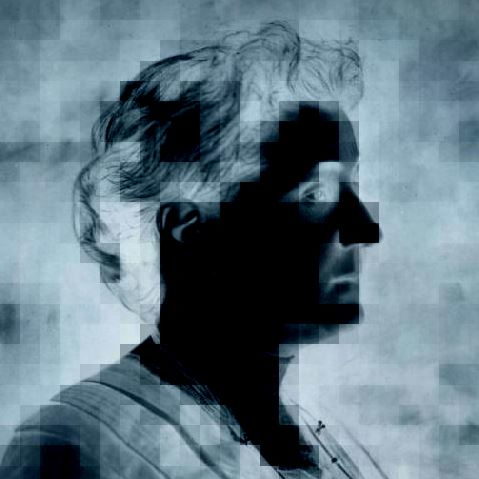
Jane Addams in 1935.
I have been going over a box full of letters of mine to Mary Smith. They quite filled a drawer of her desk–all sorts of notes. I am destroying a good many and sending others–a lot in fact–on to you. Not that you will want to use them, I hope, but they will give you a certain ‘feel’ of the 1890s, etc. Among those am I destroying are the purely family ones–of her family or mine–but I am sending a few on to you that you may want to read first. Please ‘read–destroy.’ (March 8, 1935)(2)
We are grateful that Linn didn’t do it–what little correspondence remains between Mary Rozet Smith and Jane Addams survives because of Linn’s disobedience.
The Addams Papers editors searched archives and libraries, located private collections, found articles published in newspapers and locked away in attics and basements. As they did so, they identified other holes in the Addams archive, the most prominent being:
All but two of Hull-House’s complex was razed to build the University of Illinois at Chicago Circle in 1963.
Some key Addams’ diaries are missing, including the ones that chronicled her visit to Toynbee Hall, where she and Ellen Gates Starr hit upon the idea to open Hull-House.
Manuscripts for many of her books have not been found.
Many of Hull-House’s records were destroyed accidentally when a basement they were stored in flooded during construction.
After Addams’ death, her family sold or donated various parts of her papers and the family papers to a number of archives, scattering the Addams archive.
As any researcher knows, you can never find everything. Even if you search all known collections for Addams materials, the day that you stop looking, a new collection will be deposited at an archive or an existing collection will finally be processed (described and organized by archivists) and reveal new Addams documents.
As we embark on building a digital edition of Jane Addams’ correspondence and writings, it is time to do another search.
A New World
The last Addams search was done 30 years ago and a world away when you think about it in terms of technological advances. As we begin our search, we have so many research tools that the editors in the 1970s and 1980s did not.
We used to consult incomplete printed guides to locate archives and libraries that might have holdings. The NUCMC (National Union Catalog of Manuscript Collections) was organized by state and city, and editors used to tackle a few pages at a time, writing letters (yes, actual letters!) to them seeking information about their holdings. Smaller libraries might not even be listed. Now we can search the web to find libraries and archives and use databases like ArchiveGrid that provide information and links to specific archival collections, in many cases letting us see the finding aids that describe them. These guides are often so detailed that we can simply e-mail the archives and ask them to look in specific folders and send copies.
We actually had one like this at the Margaret Sanger Papers in the 1990s.
To locate newspaper articles written by Addams, or about her activities, editors had access to very few indexed newspapers, and often had to scan old newspapers on microfilm, hoping to find coverage. Looking for journals was a bit easier, as many were indexed, but obtaining copies from them could take months as we relied on inter-library loans and letters (again!) to libraries and archives. Now many journals and newspapers, especially those published before 1923 are available online, through large sites like Google Books, the Digital Public Library of America, the Hathi Trust, or the Internet Archive. Old newspapers are becoming more easy to access, through sites like the Library of Congress’s Chronicling America, though many sites require subscriptions. The Addams Papers has access to ProQuest’s historical newspapers, Newspapers.com, and a number of other databases that we will be able to search, both for missing Addams documents, and for details on her life and travels.
Some things have not changed. It is still a complex process, but one that technology helps us to master. Creating visualizations, like the graph below, have shown us a new potential gap in the collection–the sudden reduction of documents written by Jane Addams in 1923. A serious decline in her usual production might mean a box of documents was lost or destroyed, perhaps she wrote less because she was traveling the world, or because she became ill. Using databases to enter all potential sources of new Addams documents allows us to track our progress in contacting them and obtaining materials. In many cases, we will still have to do the leg work of visiting the archives, checking through boxes and boxes of material, and making copies and scans.
We have started by listing the archival collections that do not appear in the microfilm. We will search these, by e-mail and in person, and then check the documents found against what was filmed on the microfilm (some could be duplicates). We plan to search digitized newspaper sites and e-journals looking for Addams articles that might have slipped through the original search, and will also look to European archives, which are also far more accessible using digital tools than they ever were before. With luck, we can add to the substantial work done to build the Addams microfilm to make available even more of Jane Addams’s documents.
Sources:
(1) Mary McCree Bryan, The Jane Addams Papers: A Comprehensive Guide, (1996), p. 68.
(2) Mary McCree Bryan, The Jane Addams Papers: A Comprehensive Guide, (1996), p. 69.
Thanks to the students, faculty and staff who came to last night’s meeting about the work of the Jane Addams Papers. I was happy to provide some background on Jane Addams’ life and talk about the ongoing efforts to preserve, gather, and publish her papers, and about the goals of the Addams Papers here at Ramapo College.
Student participation will be key to the success of the Jane Addams Papers, and I was delighted with the numbers of students who came up to talk about joining the project. The Addams Papers is hiring student assistants right now, through our postings on Archway.
Editorial Assistant (Archway #9533) will anaylze and digitize documents, entering metadata about them in our online content management system. Students will read documents to assign them subjects, and note mentions of people, places, events and organizations. Students will transcribe documents according to project guidelines and help editors proofread transcriptions. Editorial assistants will be researching and writing blog posts about the project and Jane Addams, and researching and writing identifications for people and organizations. We have 2 open positions, for up to 15 hours per week.
Research Assistant (Archway #9543) will focus more on researching and writing identifications for the people, places, organizations and events mentioned in the documents, but will also work on transcribing the documents digitized by the editorial assistants. Research assistants will also help research and clear copyright and publication permissions for documents, and assist the editor in locating and obtaining new Addams documents from archives, newspapers, journals and other sources. We have 2 open positions, for up to 15 hours per week.
Publicity Assistant (Archway #9542) will design and implement a social media publicity and promotion campaign for the Jane Addams Papers. Working with the editors, the assistant will map out a strategy, schedule blog posts and social media updates, and help spread news about the project to related organizations, such as archives, museums, colleges, and activist groups. The assistant will also take part in transcribing documents, and will assist the editor with answering research queries, and attracting volunteers. This position is for up to 15 hours per week.
Learn to research using the U.S. Census!
I also encouraged students to consider volunteer and internship opportunities at the Project. One of the goals for the project is that is serve as a research lab for humanities students and others across the College. We’d like to help you gain practical skills doing historical research, investigating digital humanities tools, and opportunities to get your writings and other creative work published on the web.
We can use more help transcribing documents, conducting research and writing up the results. If you don’t have the time to commit to a job, you can come in as a volunteer on your own schedule.
We are looking for guest bloggers. If you have written a paper or essay using the Jane Addams Papers or focusing on Addams or her associates, write a blog summarizing your findings and we’ll publish it on our website. Or, if you enjoy writing about history, come volunteer to research and write blogs about the project or about Addams’ life.
We would love to involve graphics design students in helping us design logos and promotional materials and improve our website design.
If you are a computer science student with an interest in digital humanities or working with humanists to play with primary source materials, we would be happy to help you get a project or application started. We want to feature these kinds of collaborations on our website.
We welcome education students who might help us develop document-based lesson plans or guides for programs like National History Day.
We will be looking for translators to help with foreign language documents.
Have an idea for an interactive map, a digital chronology, or a digital exhibit about Addams, settlement house, the World War I peace movement, woman’s suffrage, education in Chicago or any of the many other activities Addams undertook? We’ll help you research and present it, and make it a part of our website.
Looking for a research topic for your coursework this semester? Consider the Jane Addams Papers.
NEW DIGITAL HUMANITIES INITIATIVE ANNOUNCED! Dr. Stephen Rice, Dean of the Salameno School of Humanities and Global Studies, has announced that Ramapo College has received a major grant from the National Historical Publications and Records Commission (NHPRC) – the funding agency of the National Archives – that will enable us to launch the Jane Addams Papers Project this fall.
Jane Addams was a pioneer in the settlement house movement, having co-founded Hull House in Chicago in 1889. She was also a leader in the women’s suffrage and peace movements of the early twentieth century. In 1931 she received the Nobel Peace Prize for her efforts to end war.
The NHPRC has for a number of years supported the publication of her papers. With this grant the project will move from Duke University to Ramapo, and will take on a new direction as a digital humanities initiative. Starting in September Ramapo students will have opportunities to work on campus in all facets of a digital publication project, including the transcription and editing of documents, historical research, website design and maintenance, blogging, and software coding.
The project will be directed by Cathy Moran Hajo ’85, the former Associate Editor of New York University’s Margaret Sanger Papers Project. Dr. Hajo brings a wealth of expertise not only in documentary editing, but also in the techniques of digital humanities.




 We are hiring! The Project seeks a full-time, grant-funded Assistant Editor to join our work on the Project’s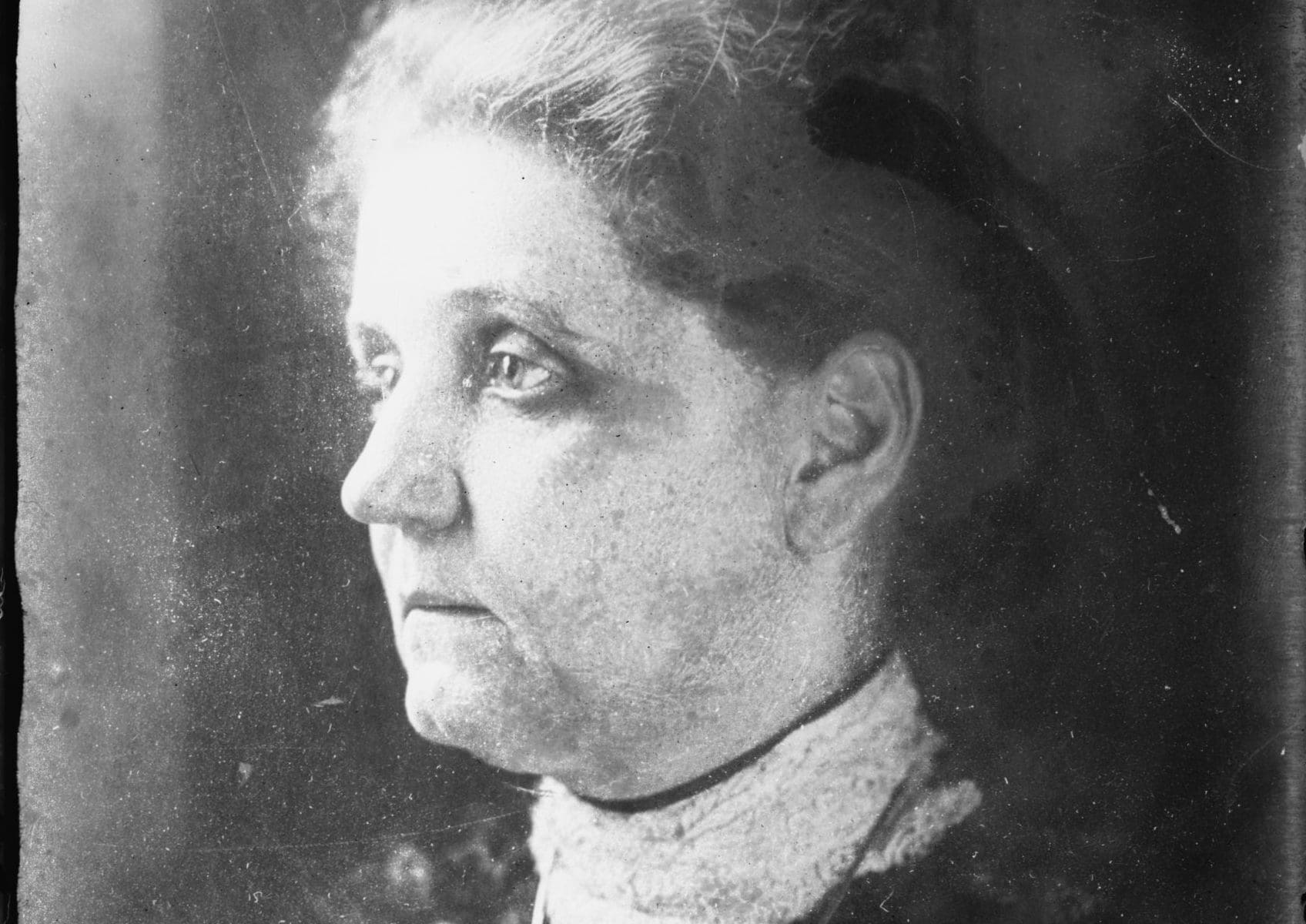
 The National Endowment for the Humanities awarded us a three-year $300,000 grant (2022-2025). The NEH’s program in Scholarly Editing aids in the publication of the Selected Papers of Jane Addams as well as our work on the digital edition. The NEH’s support for historical editions has enriched the study of our nation’s heritage tremendously.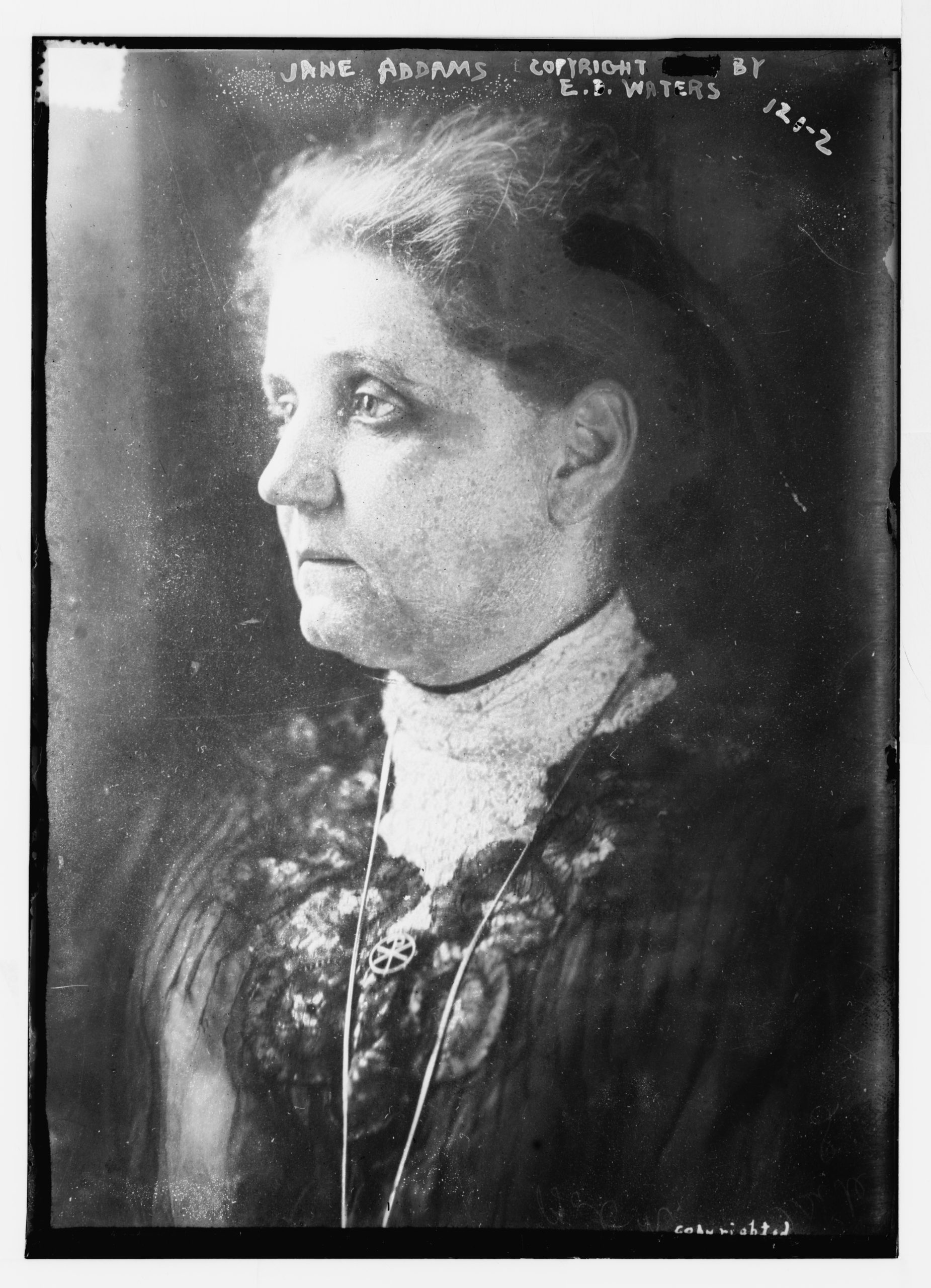

 I am delighted to announce that the Jane Addams Papers Project has been awarded a grant by the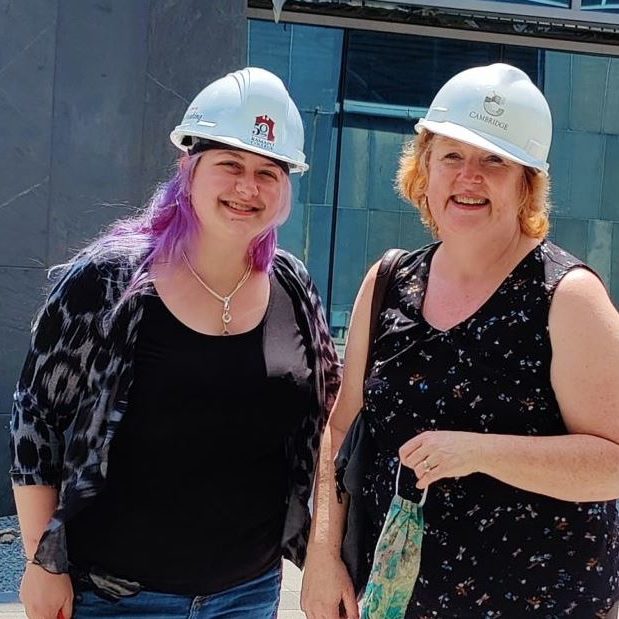
 We are delighted to announce that, with a grant from the
  Jane Addams’s work during the Progressive Era and early 20th century was wide-ranging, and available topics range from her work in establishing social settlements, professionalizing social work, fighting against child labor and the persecution of immigrants and African-Americans, working to win support for woman suffrage, and her efforts for peace and social justice through the Woman’s Peace Party and the Women’s International League for Peace and Freedom.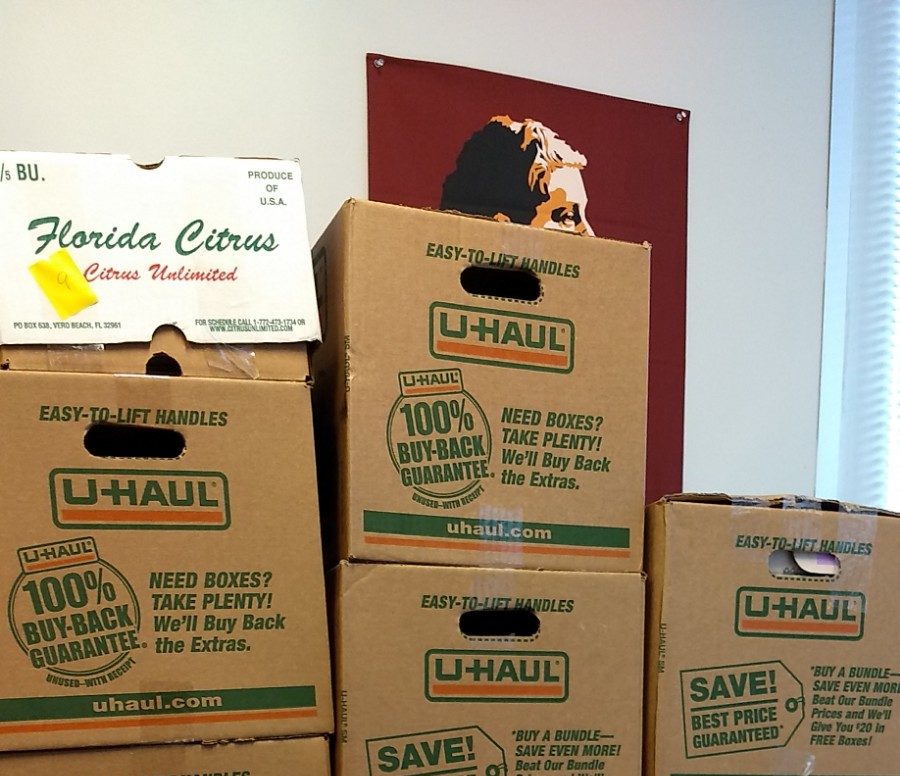
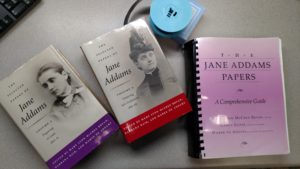 Working with a team of dedicated editors, Mary Lynn produced an amazing microfilm that became the basis for our digital edition. We scanned that microfilm in 2015 and started working with the images, beginning in 1901, on our digital edition. The microfilm edition represented decades of work; they conducted an international search for Addams documents in archives, private collections and published sources, organized the documents and indexed them. At the start of our project, they had published two volumes of the Selected Papers of Jane Addams (since then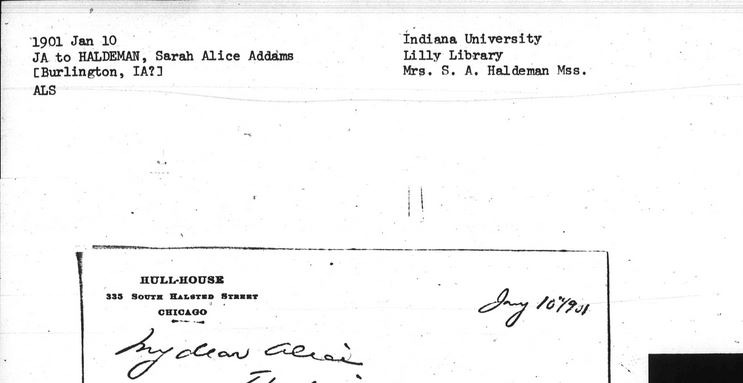
 The Jane Addams Papers Project would not be possible if not for the support of the federal government, in our case, the
  It is with great pleasure that we welcome Stacy Lynn to the Jane Addams Papers team as our new Assistant Editor. Stacy comes to us with a wealth of over 20 years experience as a scholarly editor, gained at the Papers of Abraham Lincoln, where she most recently served as Associate Editor and Assistant Director.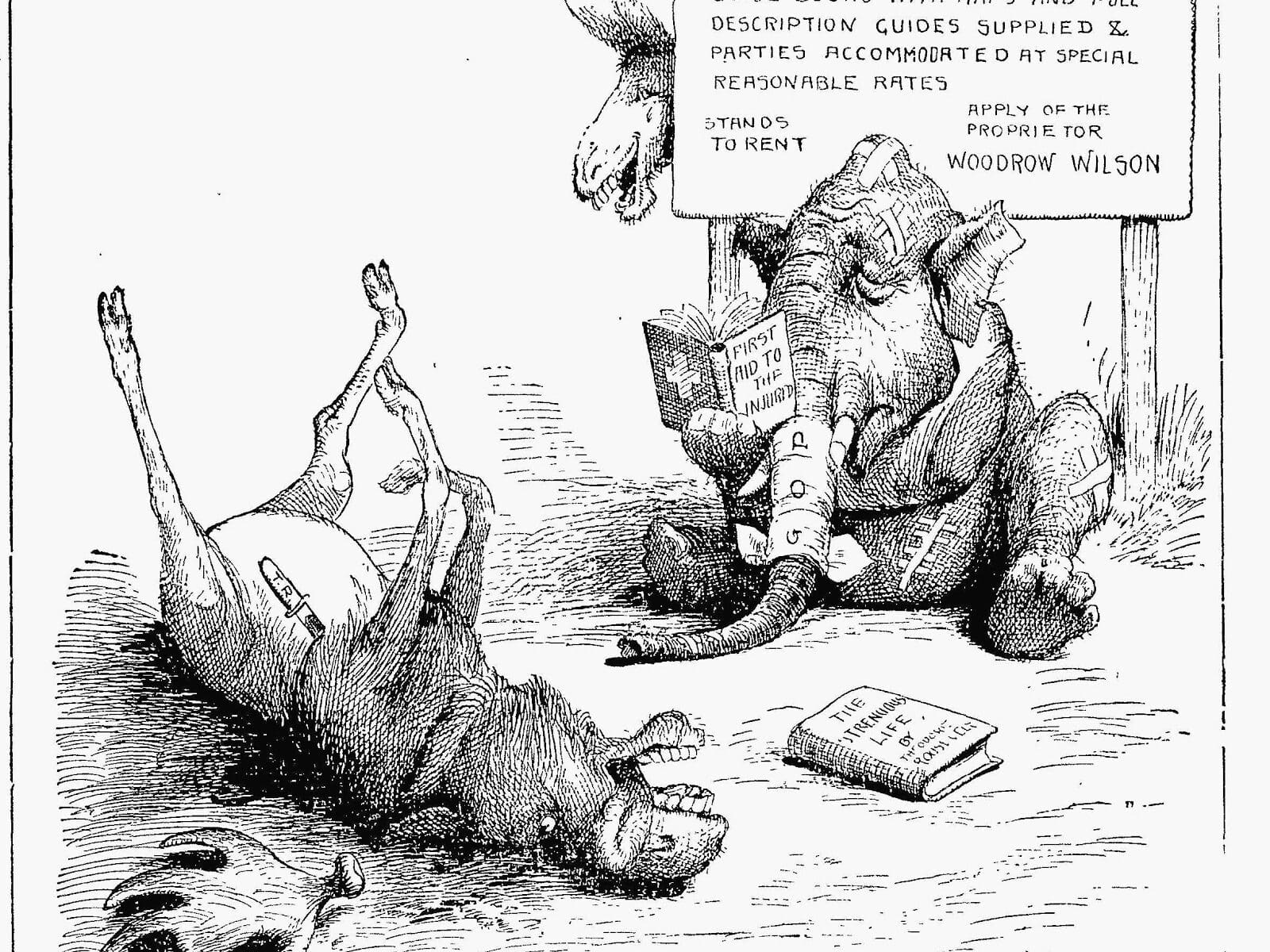
 The Jane Addams Papers Project is seeking a part-time Assistant Editor to help work on the preparation of Volume 4 of the Selected Papers of Jane Addams. The position is funded by a grant from the National Endowment for the Humanities. It is renewable year-by-year dependent on funding.
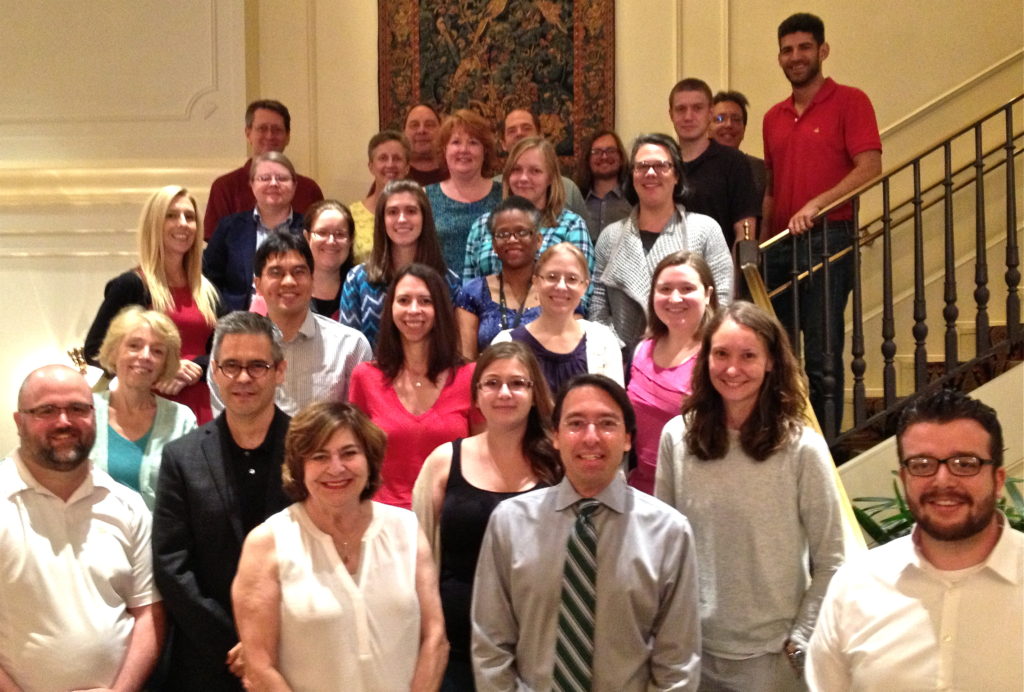 2016’s Institute for the Editing of Historical Documents was held New Orleans, LA, in a hotel on the corner of Bourbon Street and Canal Street. Its courses promised to educate those new to the field of documentary editing, as well as a chance to ask questions about our own projects. Just after classes ended, the Association for Documentary Editing held their annual meeting in the same hotel. And, with a generous grant from the National Historical Publications and Records Commission (NHPRC), the Institute offered a stipend for accepted students.
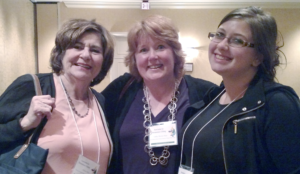 At the end of our stay, many of us knew how to get to Café Du Monde by heart, and some had walked the length of Bourbon Street multiple times. But each of us who attended the Institute found ourselves no longer identifying as a singular project, but rather as one documentary editor with a network of peers, never truly alone in our shared quest to preserve and interpret history.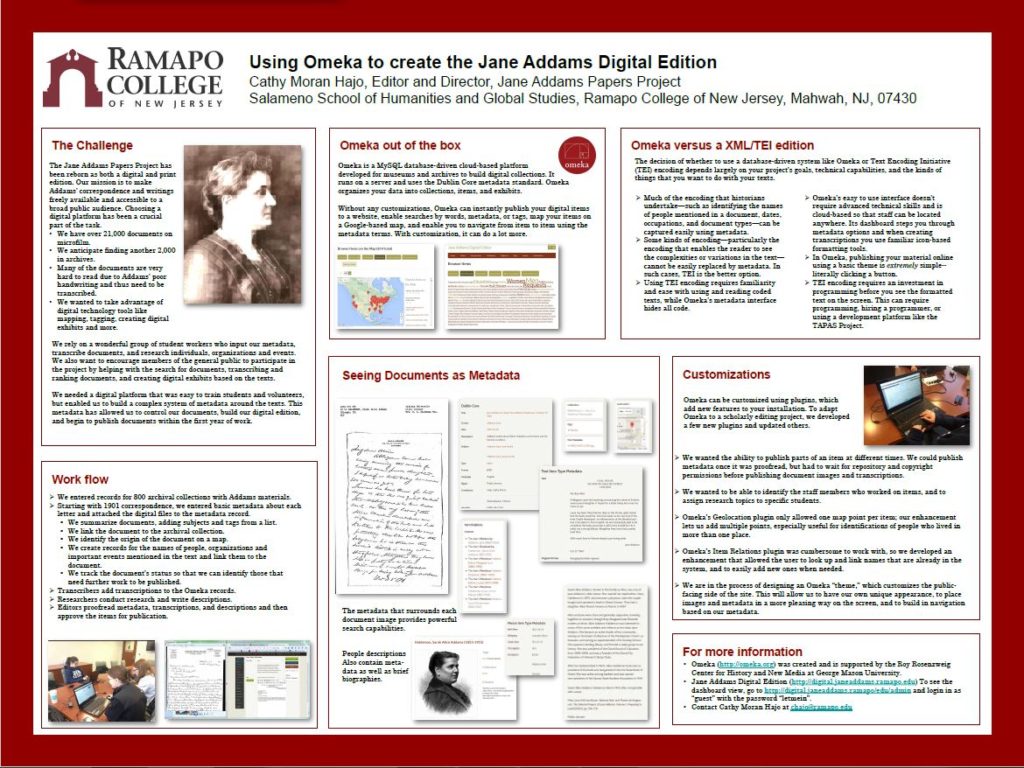
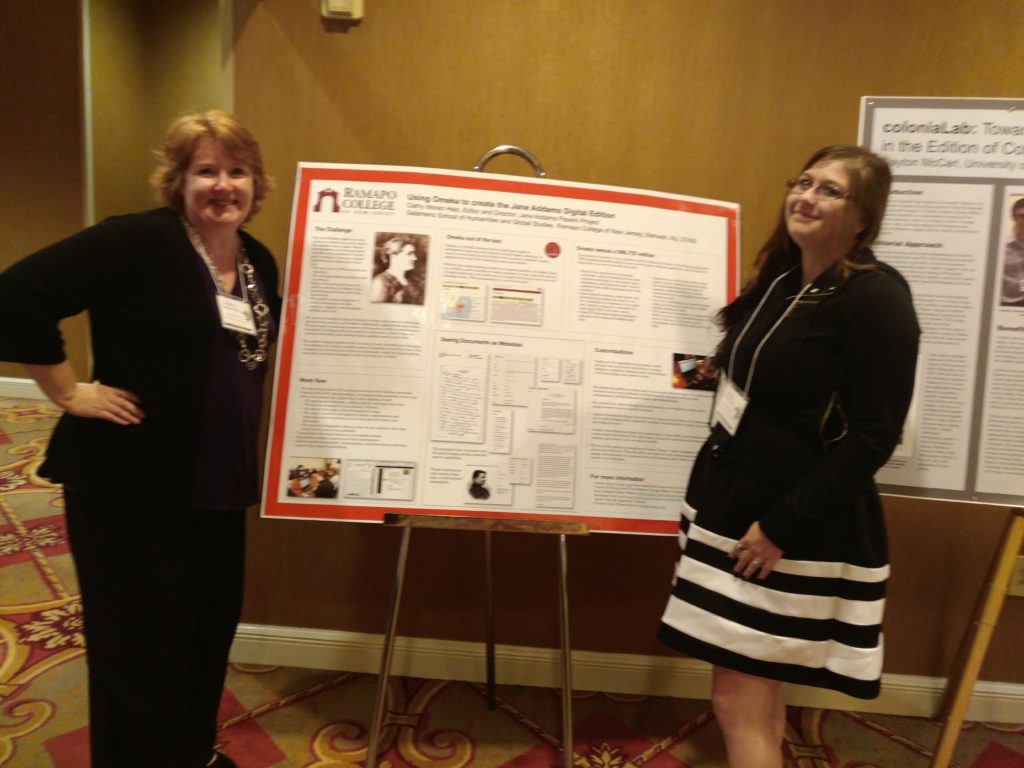
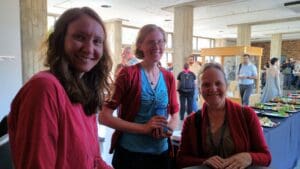
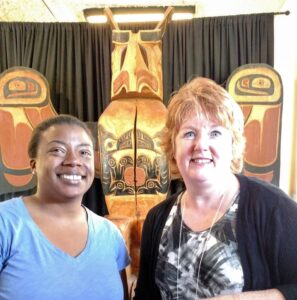
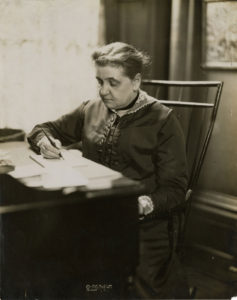
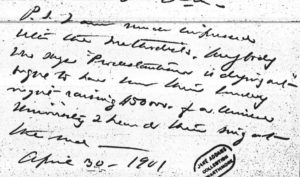
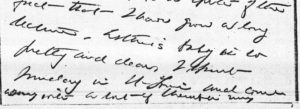
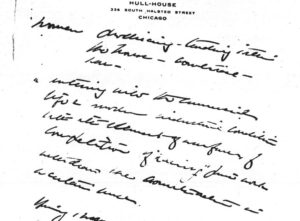
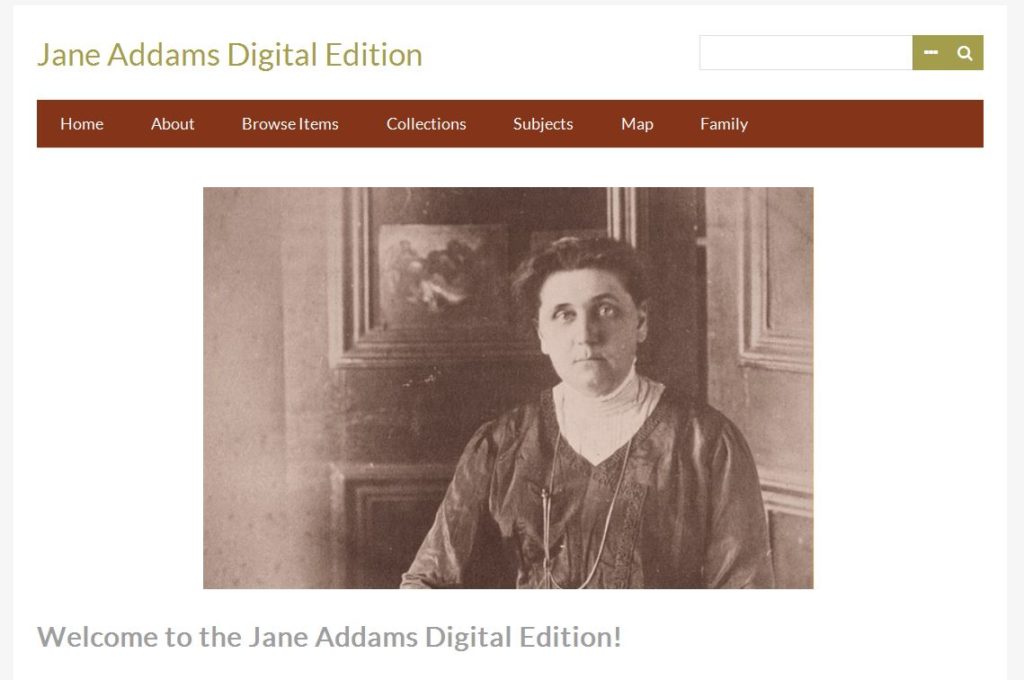
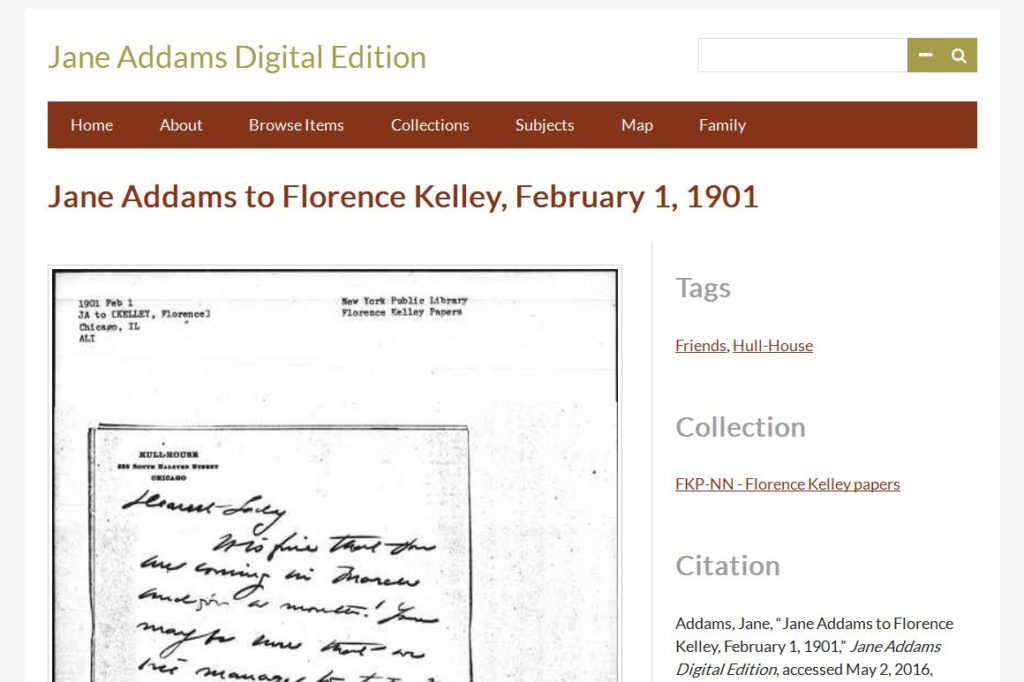
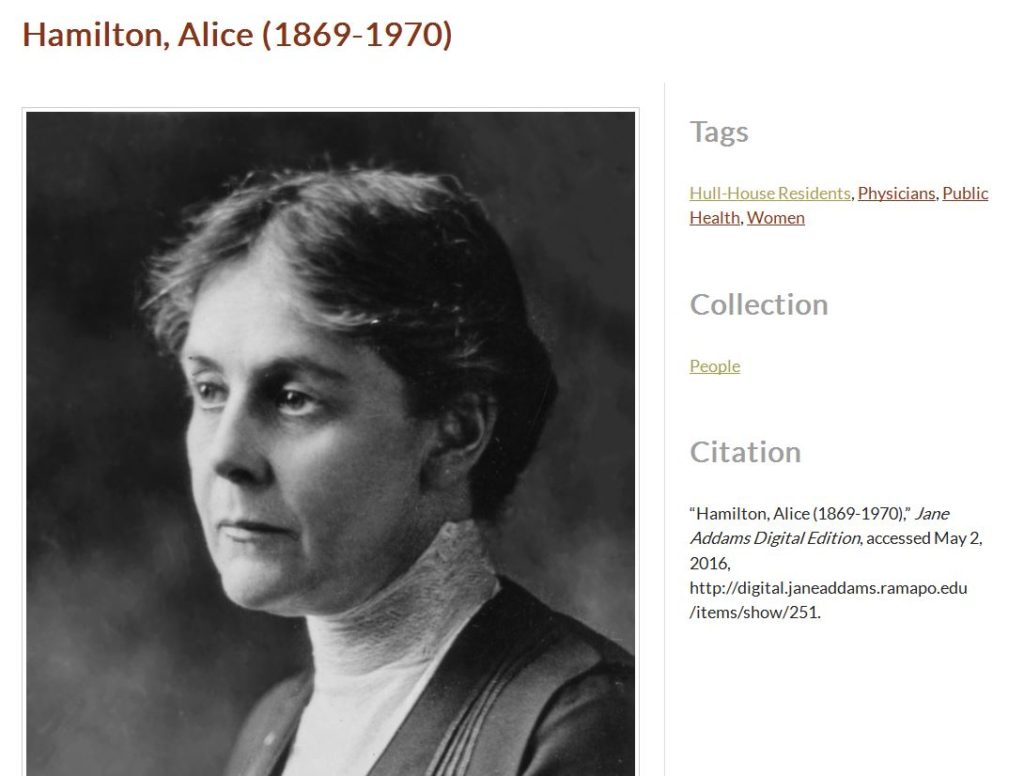
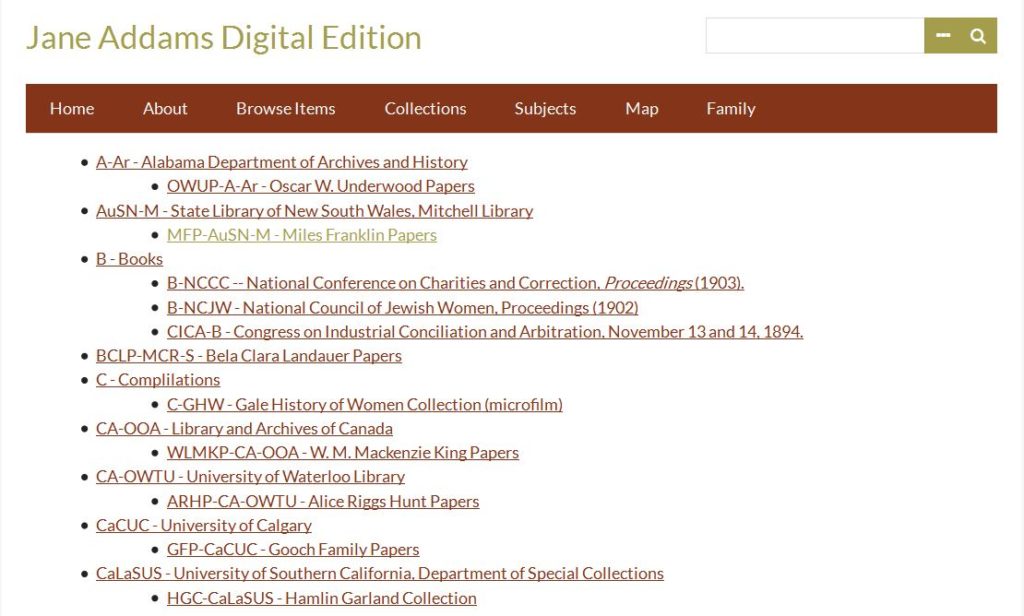
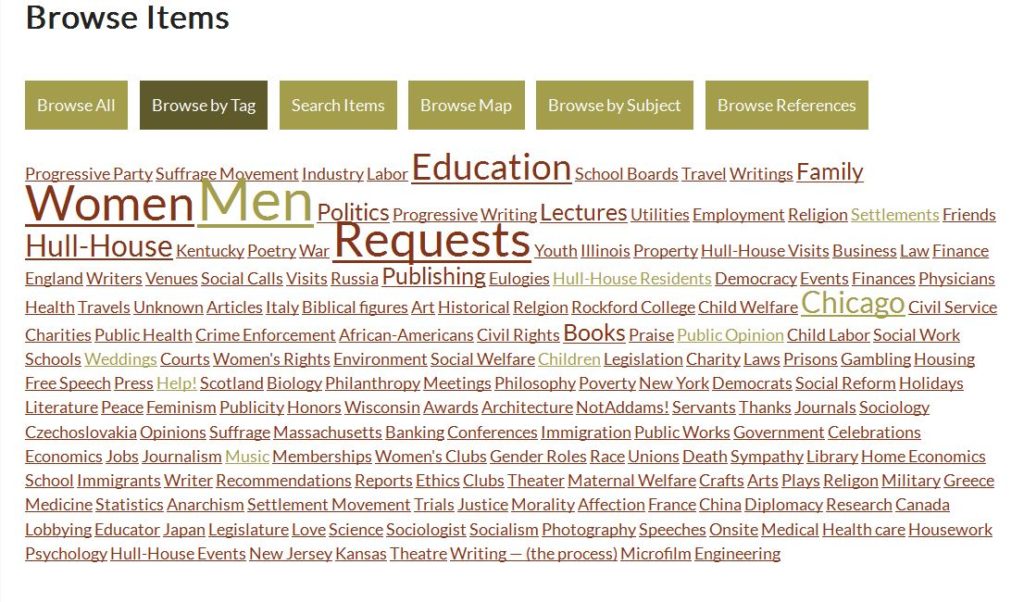
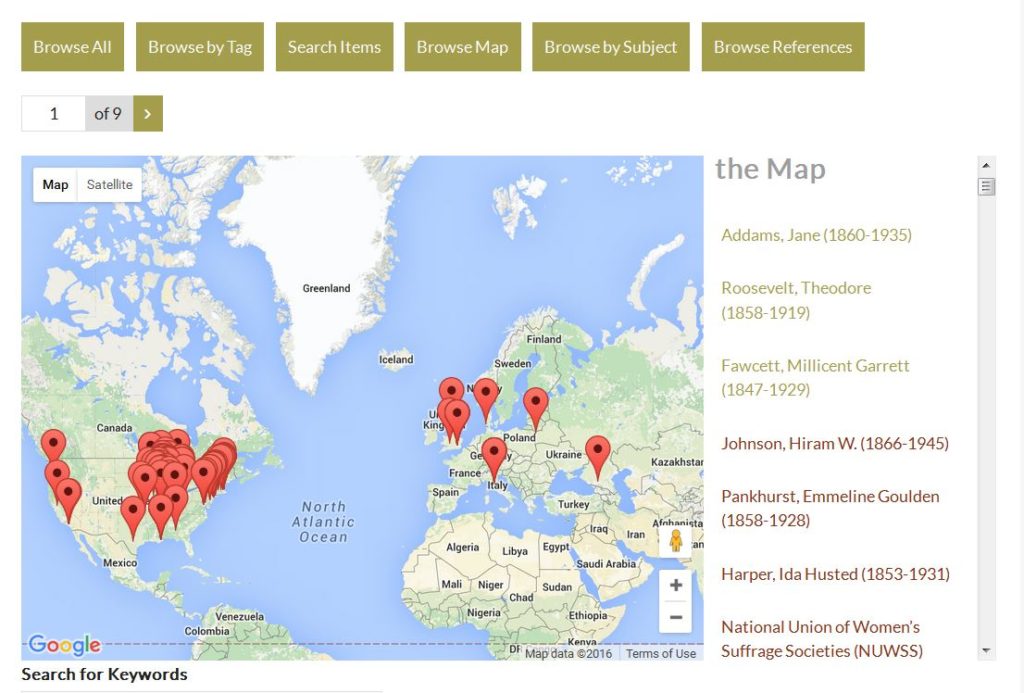
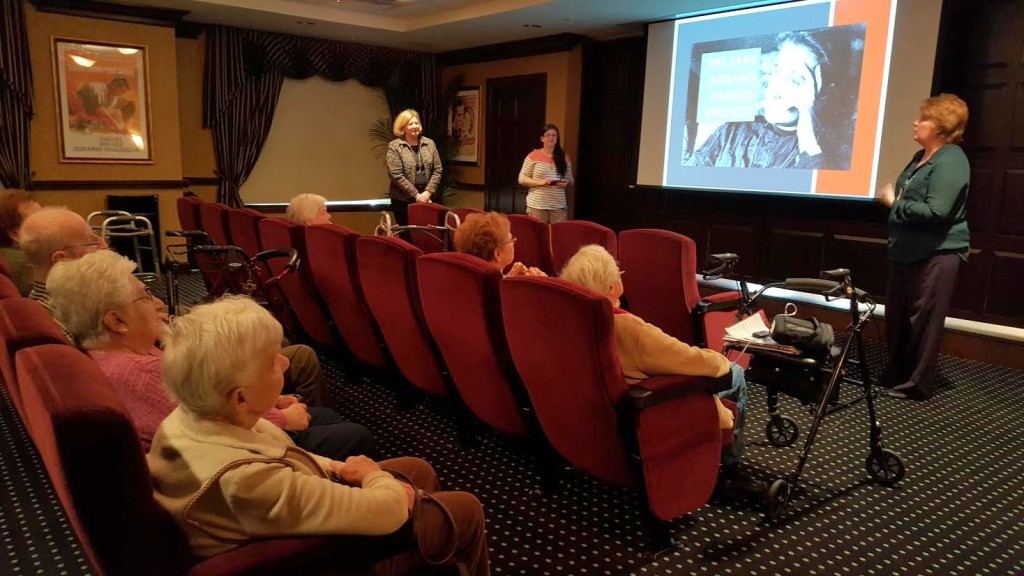
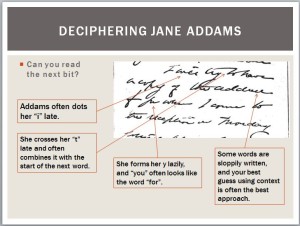 We met with Brienne Fuellhart, the Escapades Producer at Brandywine, and she was enthusiastic about the idea. On Wednesday, Tori Sciancalepore (Assistant Editor at the project), Jo Anne and I traveled to Brandywine and did a presentation on Jane Addams’ life and then a short introduction to transcription and Jane Addams’ hand. While the residents at first found Addams writing difficult, within a few minutes they were calling out their guesses. The next morning Brienne reported that “residents were excited and impressed and I think we should be able to put together a good group to help with this project.”
 Between 1976 and 1983 the original staff of the Jane Addams Papers Project, led by Mary Lynn Bryan, undertook a massive search for Addams documents, searching thousands of archival collections and locating documents in 574 of them. These documents, microfilmed in 1996, will serve as the base of the new Jane Addams Digital Edition. We estimate that they found almost 20,000 letters from the period between 1901 and 1935. They also found evidence that not everything had been preserved. Some documents were lost, but others were deliberately destroyed.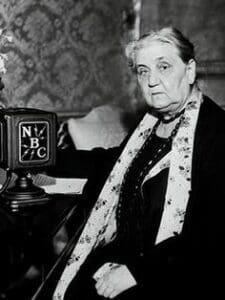
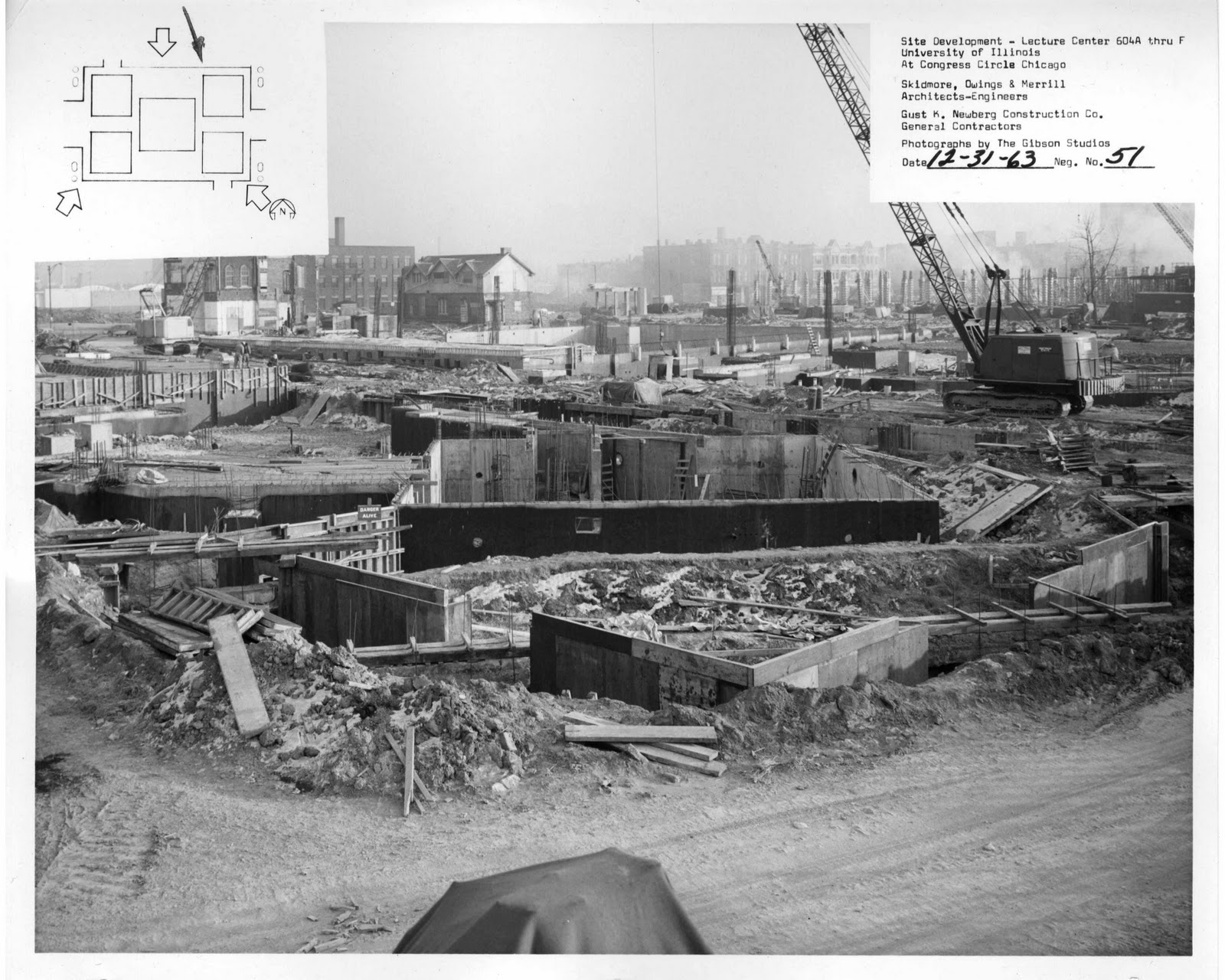
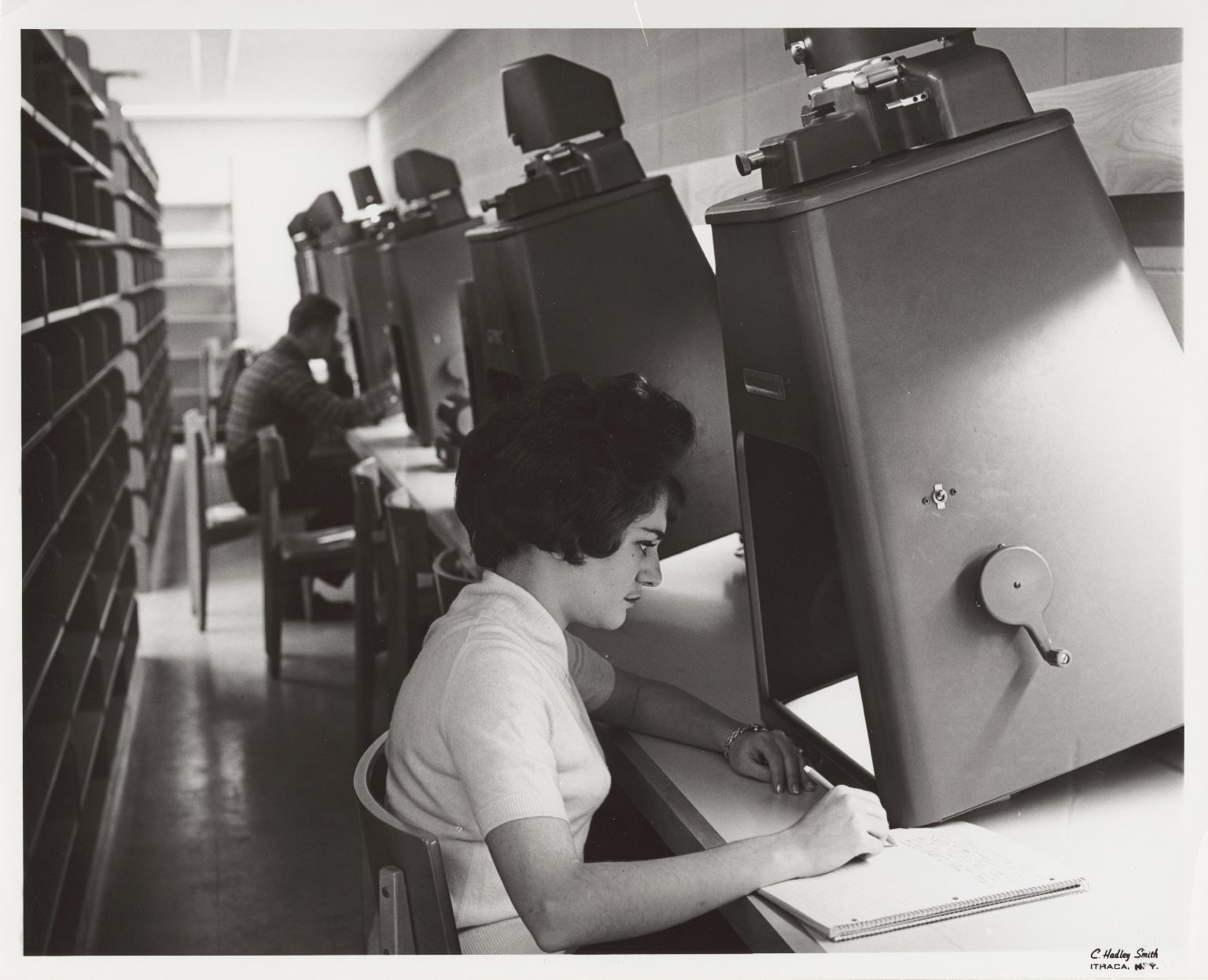
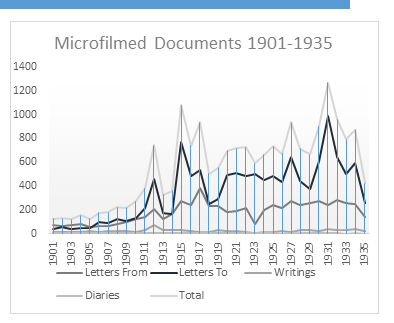
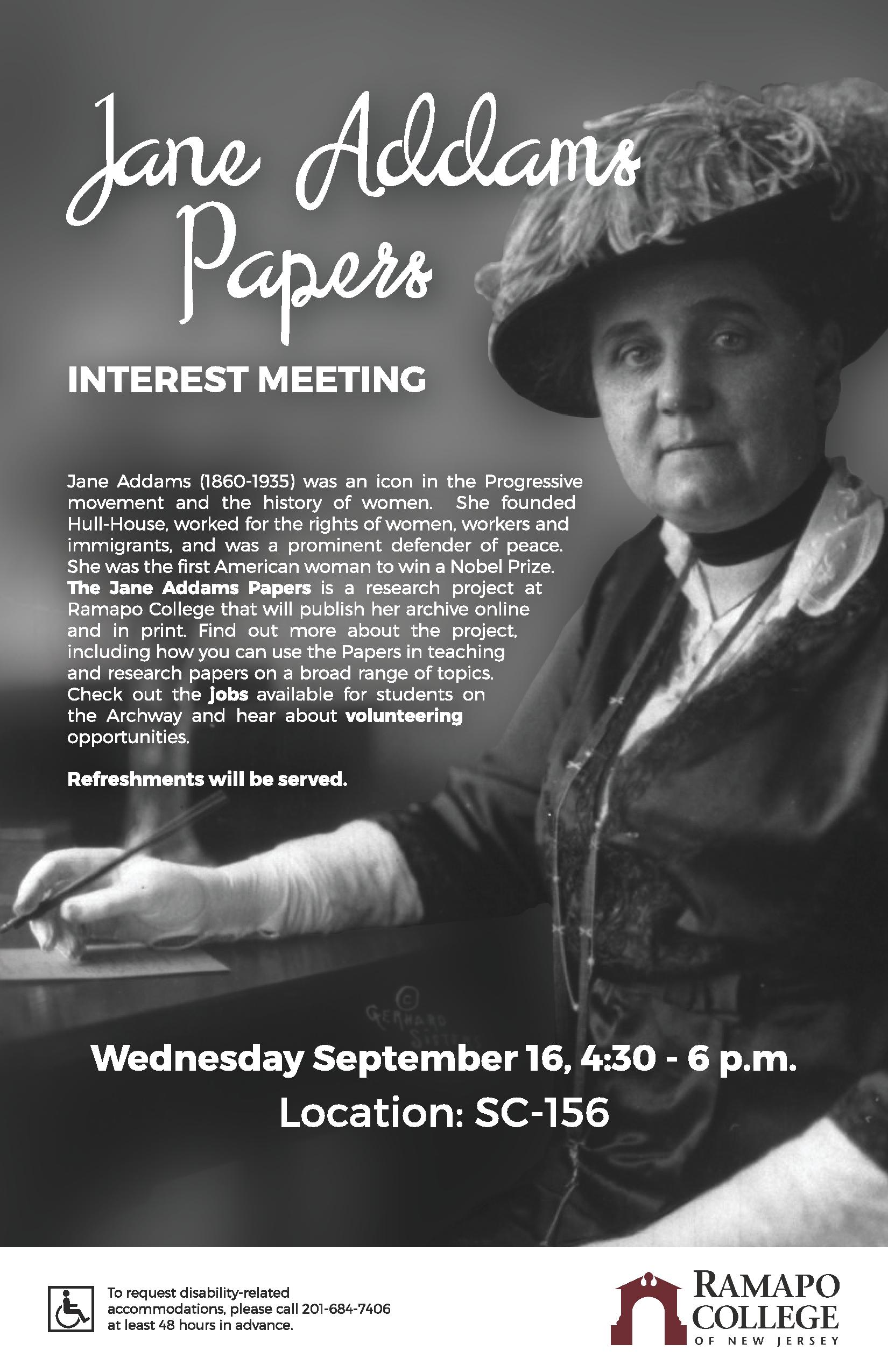
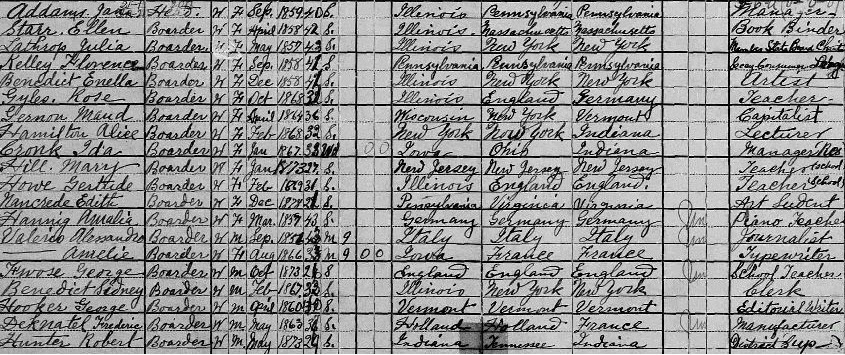
 NEW DIGITAL HUMANITIES INITIATIVE ANNOUNCED! Dr. Stephen Rice, Dean of the Salameno School of Humanities and Global Studies, has announced that Ramapo College has received a major grant from the