This post was delivered by Rima Lunin Schultz at a plenary panel on What Citizen Jane Can Teach Us, at an Interdisciplinary Conference on Higher Learning and Democracy, held at Rockford College, April 25-26, 2004.
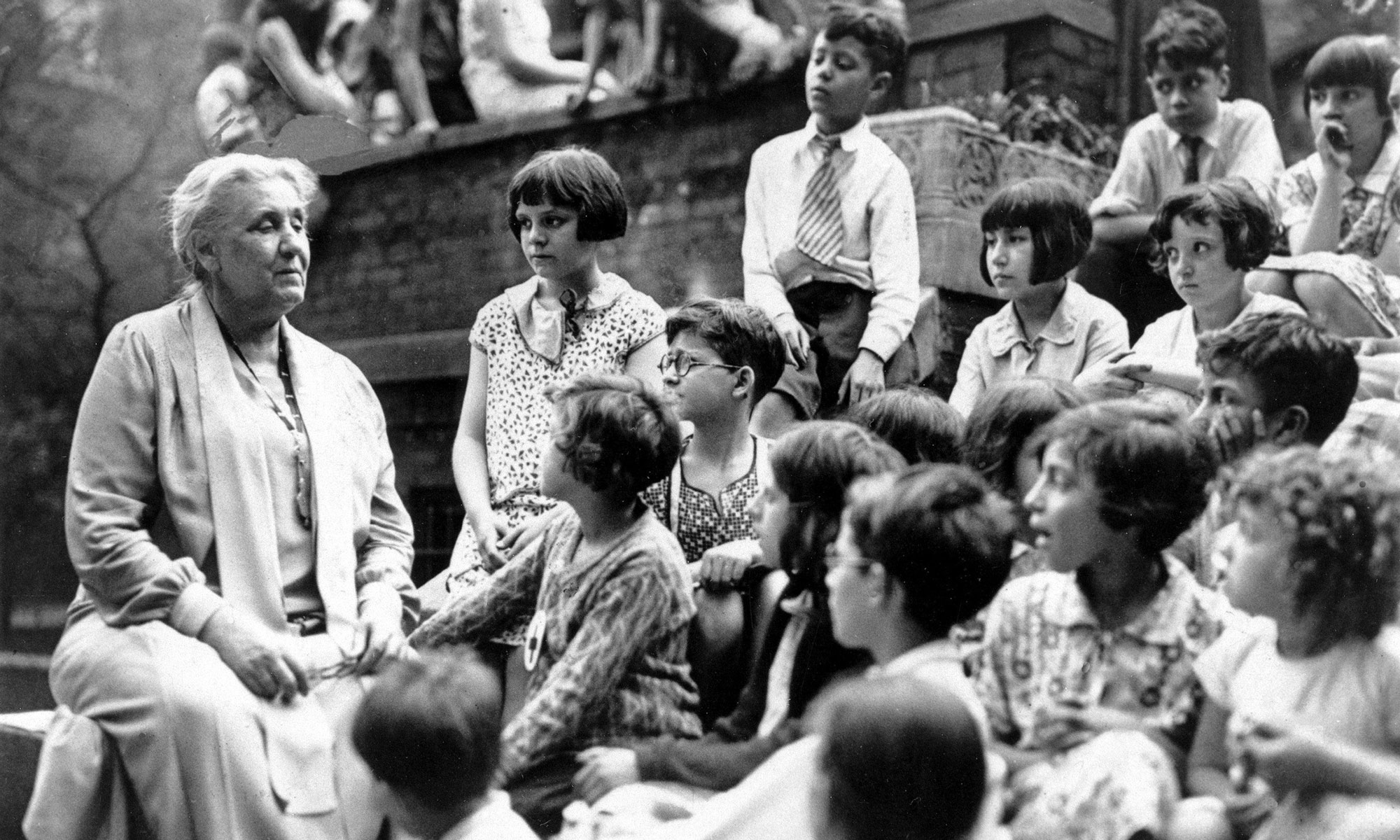
Jane Addams gives us no indication that she planned to establish a major educational institution when, with Ellen Gates Starr, she founded the Hull-House settlement; indeed, they shied away from any kind of institutional identification when they opened their “home” to their neighbors. Later Jane would recall that she and her close associates boldly thought their settlement was like a college in some ways, and also like a university—and by 1907 the settlement had grown to thirteen buildings and had the feeling of a campus; it was substantial and contained classrooms, dormitories, communal eating spaces, libraries, gymnasiums and theaters, art exhibit rooms, a music school and an art school, buildings for clubs and social activities. At its high point, there are estimates that nine thousand children and adults used the facilities annually. One gets dizzy thinking about the activities that were offered and the flow of human beings through the reception room and into the various buildings. Photographs show clusters of children climbing on the stone walls and gathering in alcoves, romping through the courtyard, piling up on the stairs and porches. By the 1930s, all reports about the place indicate how shabby and used up it had become. The people had been invited in, and they had come.
In the early years, social activities and neighborly receptions were followed by all kinds of educational programs and classes; these initiatives were followed by research projects that might well have been undertaken at a university; articles and books were published, leading thinkers and social critics found Hull-House to be one of the most intellectually stimulating places. Before long an art gallery and library opened in the second building in what would become a thirteen-building campus. The informal and formal classes, lectures, and entertainments were targeted to the whole community. Jane Addams hoped that the mix of people who came to Hull-House would provide another kind of education; this was, after all, the initial conception of the settlement. The social geography of Hull-House could be complex; for example, the Hull House Woman’s Club was dedicated to community improvement, but it was also a stage for cross-class social and political interactions. Sometimes the neighborhood women would be invited to the home of a wealthy suburban clubwoman; on other occasions limousines brought downtown clubwomen to Hull-House’s Bowen Hall. It was an experience that was so rare in real life that the Chicago newspapers reported the comings and goings of the Hull-House Woman’s Club as if they were members of the social elite. On another level, a kind of cultural education was taking place as individuals from different ethnic groups came into contact with each other. Hull-House provided the setting for ethnic plays and exhibits of ethnic crafts, folkdances, and music. Here was a common ground where Italians could see the finest cultural expressions of Greeks and Jews, and Greeks and Jews could see performances of Italian opera. The idea was to inculcate respect and intercultural understanding. The Labor Museum was the crystallization of this philosophy.
The most ambitious and continuous effort at education across class lines derived from the residency program that was at the heart of the settlement experience. College educated women and men, generally single, but also as married couples, came to Hull-House to live for at least one year; some remained for two or three, others for a lifetime. Residents paid for room and board and volunteered their services to the settlement, finding some way to participate and be useful. During Jane Addams’s lifetime, there were hundreds of residents who participated in the programs at Hull-House and who were educated about working class and immigrant life and industrial conditions. The residency program comes closest, in my mind, to a definition of Hull-House as a kind-of-college. It may have been the most successful of the approaches to education initiated by the settlement movement; many generations of professional social workers, teachers, businessmen, artists, writers, and lawyers, among others, were touched by the settlement spirit and informed by a vision of the possibilities of democracy.
Hull-House opened up the world of art, literature, travel, drama, history and politics to immigrants and working-class people. I have often wondered about the audience for this great array of intellectual and cultural offerings. Who were the members of the famous Shakespeare Club? Who attended the series of lectures on evolutionary theory that were taught by a University of Chicago professor? Who were the members of the Social Science Club and the Plato Club? Unfortunately, there are no “student” records to analyze and quantify but the record of life at Hull-House, through images, letters, newspaper accounts, memoirs and oral histories is richer than previously thought. Residents did develop important relationships with talented youngsters from the neighborhood who came to Hull-House for music lessons or art classes, who took part in the drama clubs; and the clubs created social worlds of lasting importance to the young people themselves. There were also community leaders, and intellectuals and artists who lived in the neighborhood and found a home at Hull-House. This was all positive affirmation Hull-House had connected with the neighbors and that at least a part of the original mission had been accomplished.
But what about the ordinary working-class inhabitants? What relationship did Hull-House have with the workers? What role did the settlement play in the formation of a working-class culture that broke down ethnic and racial barriers in the neighborhood? What role did Hull-House play in the education of the working class? I ask these questions because a good part of the conference today and tomorrow is about civic engagement—- about finding ways to engage as broad a group of community people with university people in ways that will empower ordinary people and develop their participation in the democratic process..
We are attracted to Jane Addams because of her vision, her dream of an American democracy that is inclusive and based on mutual respect and justice for all. This vision required, above all else, according to Jane Addams, a new kind of education; schools and settlement houses had to forge educational methods that would bring more and more people into the circle of civic participation. In addition, she was committed to providing education to working people that would offer them full opportunity for personal development and a way of connecting themselves with a broader community. Addams was a realist; she assumed that there would be a steady increase in technology and the use of machines that further separated humankind into specialized occupations. She understood that capitalism was global and would seek its resolution without regard to the welfare of workers or nations, unless democracies organized to restrain and regulate industry. She accepted the fact that the majority of workers would find no inherent meaning or craft in their work, even as they improved their wages. The industrial worker, Addams wrote, needed education about his purpose and role in the larger scheme of things.
In re-reading Democracy and Social Ethics in order to prepare for today’s discussion, I found myself taken aback at the depressing account of attempts at reaching the working class through educational methods. Addams published this book in 1902. In it she confesses that among the many disappointments that the settlement experiment has brought to its promoters, perhaps none is keener than the fact that they have as yet failed to work out methods of education, specialized and adapted to the needs of adult working people. Addams, it should be noted, is writing about the failures to reach the working class men in her neighborhood right at the time that she has also conceded failure in the local political arena where the male voters of the ward repeatedly had rejected the Hull-House endorsed candidates. Addams admits that settlements in general had succeeded in reaching only a select few from the neighborhood—these individuals were of the academic type of mind to begin with, and while these classes might have been valuable, they left quite untouched the great mass of the factory population in the neighborhood.
In 1930 Addams returned to the issue of worker involvement. “We came rather slowly to the conviction that the effort [to incorporate the worker in educational programs] could best be done through the use of the current event” she writes. Addams realized that the role of the settlement as an educational institution was to engage with the larger community in the work of interpreting what she called “the contemporaneous situation”— and to make it usable to large numbers of people. It was an acknowledgement that ultimately the educational process was (and is) a political process.