Terrence J. McDonald is Arthur F. Thurnau Professor Emeritus, University of Michigan. He is the author of Nearly Neighbors: Jane Addams, Johnny Powers, and the Progressive Political Imagination (2026), published by the University of Chicago Press.
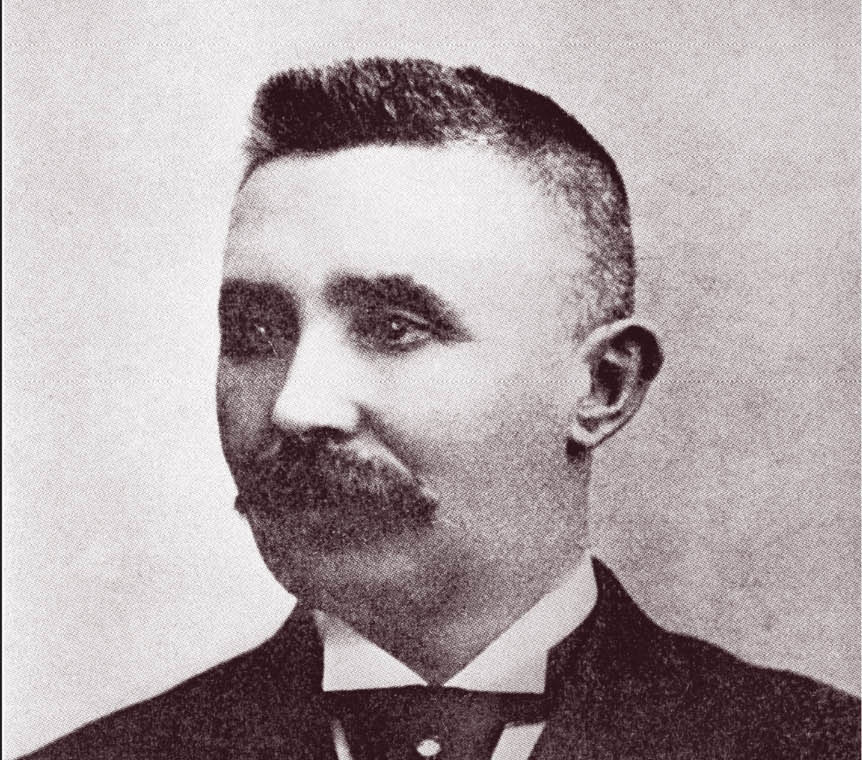
In early December 1893 Chicago’s Hull House had an important visitor. The minutes of the residents’ meeting for December 10 noted that “Miss Addams announced that she had been honored with a visit from Alderman Powers, who proposed giving some thousands of pounds of turkey and beef to the poor of the ward at Christmas, and desired Hull House to make the distribution.” The proposal from Nineteenth Ward Democratic Alderman John “Johnny” Powers set off a strenuous debate among the sixteen settlers at the meeting, with the minutes recording a “protest,” two motions, and an amendment. Finally, “by general consent it was agreed that the Chief [Addams] should write to Mr. Powers, as she had herself suggested, to the effect that Hull House had so much provender sent in at Christmas time that it would be well for him to distribute his turkeys through other agencies.”
So began what would become one of the most famous, complicated, and significant relationships between a “boss” and a “reformer” in American history. From then until the spring of 1898, Addams and her Hull House colleagues would steadfastly oppose Powers, first simply by attempting to clean up the ward without his permission, then by coordinating two attempts to defeat him for reelection to his aldermanic seat in 1896 and 1898. More important in the long run, Addams’s own reflections on this relationship would become among the most famous of her early writings and also a major source for thinking about the conflict between bosses and reformers and the possibilities for a kind of “social ethics” in the American city in twentieth-century America, in her own time and thereafter.
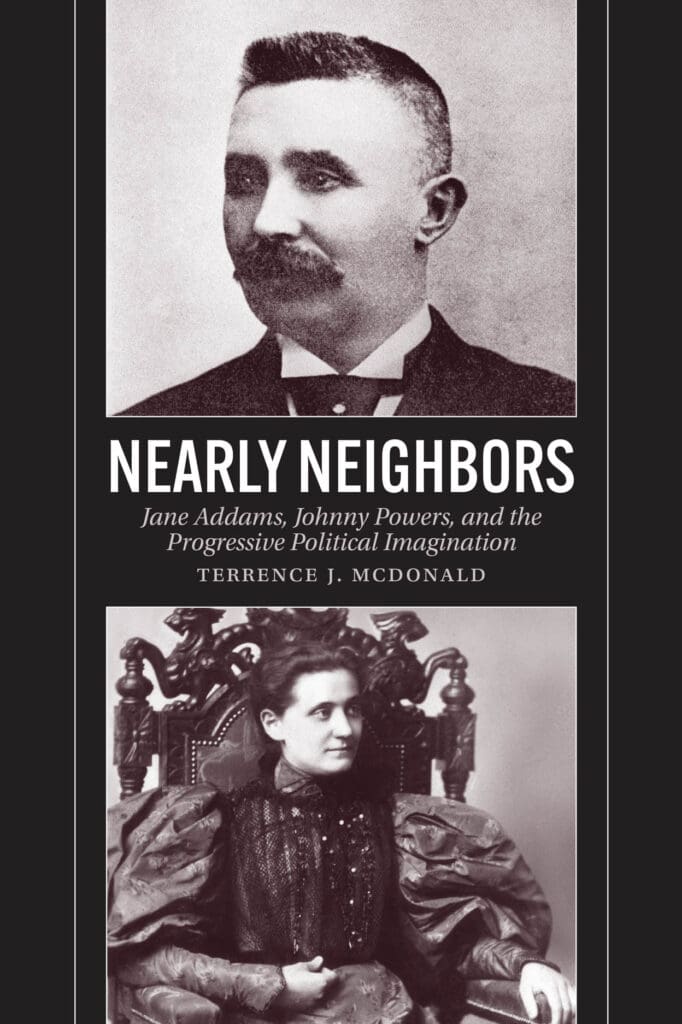
But my new book, Nearly Neighbors: Jane Addams, Johnny Powers, and the Progressive Political Imagination is the first – ever – to attempt to write a contextualized history of this encounter, embedding it in the social and political culture and structures of Chicago and the Nineteenth Ward in the 1890s and using that context to understand both how Powers and Addams operated politically and how her – definitely important – writings about this experience portrayed it.
By 1896 Addams began lecturing on the way that ward bosses prospered politically, and by 1897 she had written a talk that was often entitled “Ethical Survivals in City Immorality.” A much revised and lengthened version of this lecture was published in the International Journal of Ethics in 1898 under the title “Ethical Survivals in Municipal Corruption,” and then a shortened form appeared in The Outlook, where it received the more popular title “Why the Ward Boss Rules.” A version of the long version of this essay became the stirring last chapter of her 1902 book, Democracy and Social Ethics, and formed the core of her remarks at the 1904 World’s Fair, which were published as “Problems in Municipal Administration” in the American Journal of Sociology in 1905.
Addams set out in these writings humanely to reject the reigning conception among some reformers that municipal corruption stemmed from “ignorant foreigners” driven to the polls by devious politicians. She wrote that the “simple people” of the ward were cultureless, bound together only by their “basic human nature.” But importantly they were also bundles of genuine economic need. Her argument was that it was perfectly rational for “needy” immigrants to vote for corrupt politicians, and furthermore, that satisfaction of those immigrant economic needs that were legitimate by an expanded local state was the pathway to “social democracy.”
In recognizing these needs, she argued – for a job, bail money, legal “pull,” rent money, presents at weddings, help with funeral expenses, etc. — the ward bosses, corrupt as they were, at least noticed them. Reformers, meanwhile, spent their time complaining about this state of affairs rather than humanely recognizing the needs of the immigrants. Addams’s ringing conclusion was this: “If we discover that men of low ideals and corrupt practice are forming popular political standards simply because such men stand by and for and with the people, then nothing remains but to obtain a like sense of identification before we can hope to modify ethical standards.”
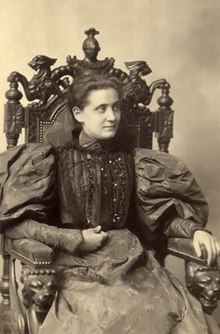
Addams’s views were powerful because of her position: not only was she living among the immigrant poor since 1889, but, unlike many others in the settlement movement she had bravely challenged the political “boss” of the ward. But to make this argument Addams completely mis-characterized the ward population. Her starting assumption that immigrants were “cultureless” was her rationale for the work of the settlers which was, after all, to bring the “correct” culture to the immigrants. But this led her to ignore the dense markers of ethnic culture in the ward and, in particular, to leave out the fact that Hull House was surrounded by five ethnic Catholic parishes and their schools, including the largest English-speaking Catholic church in Chicago, Holy Family – home of the Irish – whose steeples were clearly visible from Hull House. These churches and schools had been in operation for decades before Hull House opened but the word “Catholic” would only casually appear in any version of her writings, and the word “Irish” would play no significant causal role.
Moreover, her account ignored the event that galvanized an ethnic Catholic political identity, a ferocious statewide 1892 battle over a new compulsory education law that gave public school boards the power to qualify all parochial schools – Catholic, Protestant, or other — for meeting the law. Although Hull House resident Florence Kelley was more vociferous in her support for the law Addams, too, sided with the reformers against her ethnic neighbors. And although neither of them was a nativist, the campaign on behalf of retaining the law was riddled with nativist arguments.
This battle has been mis-characterized by those around Hull House including pioneering scholars Edith Abbott and Sophonisba Breckinridge — as a fight over teaching in foreign languages. But this meant nothing to the Irish, all of whose clergy and schools used perfect English. The issue for all sponsors of parochial schools was control of the curriculum and, yes, the ethnic recognition that the Irish and Germans, in particular, demanded but that Addams, Kelley and the reform coalition refused to deliver. The schools were a remarkable testimony to the belief of hard-pressed immigrants, many of whom were illiterate, in the power of education for their children. But this reality seemed lost on the upper-class reformers in favor of the law including those at Hull House. And this failure of recognition eliminated the possibility of an alliance among both reformers and immigrants on behalf of education.
Condemned by Catholic and Protestant clergy alike, the law was quickly repealed after the election of Democratic governor John Peter Altgeld and Democratic majorities in both houses of the Illinois legislature. Because municipal elections in Chicago occurred in the spring and state elections in the fall, this battle did not involve Powers directly at first. Powers had immigrated to Chicago in the 1870s and thanks to the pioneering work of an uncle and Powers’s future wife had become the owner of both a bar and a grocery store in the ward. He was a practicing Catholic, sent his children to the Catholic schools, and belonged to the relevant Irish associations. But in a ward where every elected official was the same there was little need to stress his background for most of the years after his first election in 1888. For most of that time, too, he simply ignored Hull House in his campaigns.
But the political persistence of Addams led Powers to shift to a completely identity-based campaign in 1898. Its symbolic and real climax was a parade on the Saturday night before the election that local reports said involved 3,000 marchers and thousands of spectators and formed up about a block away from Hull House. The parade itself was based on the periodic parades for first communions and holy days at Holy Family and the Holy Family youth temperance band (funded by Powers) – the St. Matthew’s Cadets — led it off. Of special interest were the Ladies Auxiliary of the Nineteenth ward Democratic Club and the Nineteenth ward Businessmen’s Club.
Neither the St. Matthew’s Cadets nor the Ladies Auxiliary or Businessmen’s Clubs had been seen in ward politics before. Powers had funded the first, and his campaign clearly organized the second and third. The Cadets were named after the famous Irish temperance advocate Father Theobold Matthew and proved that although Powers was Irish and a bar owner, he was comfortable with personal temperance efforts, including those of Holy Family parish itself. The Ladies Auxiliary and Businessmen’s Club carried heavier water, the former to show that the “local” women supported him – unlike those at Hull House – and that latter that the “calumnies” in the speeches and writings of the settlers and their candidates damaged the economic interest of the ward.
But the key thing about this parade and the campaign more generally was the ability of Powers to identify himself as a member of the ward based ethnic, religious, and political culture defending its interests against the “downtown” elites displayed in the Hull House campaign. Unable to respond carefully to this neighborhood appeal the reform forces disastrously invited as their keynote speaker against Powers an “uptown” city council member who was the son of a United States supreme court justice and graduate of Princeton who emphasized that Powers was the “Prince of Boodlers” on City Council. Powers took 72 percent of the votes in this election and would remain on the council until 1923.
Although the settlers promised to keep up the fight, Hull House withdrew from ward politics just before the municipal election of 1900. In explanation Addams claimed that it was because, given his “wealth and political methods he could easily defeat any honest man.” But this had little to do with his victory. He was certainly rich and he may very well have been corrupt but had won in 1898 because – partially out of desperation – he had found a way to endorse and celebrate the identity of the ward against the “downtown” interests and “hectoring” reformers – most of whom had publicly supported the controversial school law that Addams herself never condemned.
It was an article of faith among progressive era intellectuals and reformers – originating with the young John Dewey — that an “unidentified” political subject and thus emerging citizen existed. In her important 1902 essay “Friendship in Politics,” the New York settlement worker Mary Kingsbury Simkhovitch—clearly influenced by Addams — wrote that progress toward that goal was actually being made. “That is the hopeful thing about democracy,” she wrote, “it is slow but thorough. A common consciousness is arising. The man is becoming the citizen.” This emerging “common consciousness” was a consciousness of shared human needs, not of differing—and sometimes conflicting—cultures. And it was founded on and ratified by the all-important experience of the settlement workers on the urban front lines who defined their mission as bringing culture to the immigrants, not necessarily discovering the role of immigrant cultures in political mobilization.
But as historian Richad Oestreicher pointed out in a classic essay about class and politics in the American city it is the process of political mobilization that helps create political consciousness and not the other way around. And that initial mobilization leaves a mark. This process was repeated in Chicago through the next decades with the rise of the United Societies for Local Self-Government as the bane of reformers and the foundation for the election of the city’s first foreign born mayor, Anton Cermak.
Addams’s wise – if misdirected — words ring down through the centuries: “If we discover that men of low ideals and corrupt practice are forming popular political standards simply because such men stand by and for and with the people, then nothing remains but to obtain a like sense of identification before we can hope to modify ethical standards.” But identify with what? The immigrants around Hull House were bearers of culture and not just bundles of economic needs. Their enrollment in what has come to be called “identity” politics was a foundational historical reality rather than an obstacle to historical development based on some other criterion, such as class, mobility, assimilation, etc. And the failure of otherwise brave and self-less settlers to understand this has impeded the development of a positive theory of a multicultural society down through the twentieth century.
Jane Addams, “Residents’ Meeting of December 10, 1893,” in The Jane Addams Papers, 1860–1960, ed. Mary Lynn McCree Bryan (Ann Arbor, MI: University Microfilms International, 1984).
Jane Addams, “Ethical Survivals in Municipal Corruption,” International Journal of Ethics 8, no. 3 (April 1898): 273–91; “Why the Ward Boss Rules,” The Outlook 58, no. 14 (April 2, 1898): 879–82; “Political Reform,” in Democracy and Social Ethics (New York: Macmillan, 1902), 221–77; “Problems in Municipal Administration,” American Journal of Sociology 10, no. 4 (January 1905): 425–44. Twenty Years at Hull-House with Autobiographical Notes (New York: Macmillan, 1910).
Abbott, Edith, and Sophonisba P. Breckinridge. Truancy and Non-Attendance in the Chicago Schools: A Study of the Social Aspects of the Compulsory Education and Child Labor Legislation of Illinois. Chicago: University of Chicago Press, 1917.
Hamilton, Alice. Alice Hamilton to Agnes Hamilton, April 3, 1898. In Barbara Sicherman, Alice Hamilton: A Life in Hamilton Letters, 120–22. Cambridge, MA: Harvard University Press, 1984.
Dewey, John. The Ethics of Democracy. Ann Arbor, MI: Andrews, 1888.
Simkhovitch, Mary Kingsbury. “Friendship and Politics.” Political Science Quarterly 17, no. 2 (1902): 189-205.
Oestreicher, Richard. “Urban Working-Class Political Behavior and Theories of American Electoral Politics, 1870–1940.” Journal of American History 74, no. 4 (March 1, 1988).