
This post was written by Rima Lunin Schultz and presented at the Teacher’s Workshop at the Terra Museum of Art, on August 3, 2004
Today I want to tell you something about the history of Hull-House and the role of the visual arts in its programs and philosophy. Before I do that, however, I need to talk briefly about the reform movement that gave birth to settlement houses all over the world, and to attempt a definition of what a settlement house is. It is easier to begin by establishing what a settlement house is not. It isn’t a charity organization, or a relief bureau, or an unemployment center, though at different times settlements provided direct relief and helped the unemployed. It isn’t a recreation center or a day care center, although settlement houses have sports and recreation programs and often have day care and nursery facilities. The settlement house, an approach to social reform with roots in religious, scientific and economic ideas in the mid-nineteenth century, was a method for serving the poor in urban areas by living among them and serving them directly. Settlement houses initially attempted to bring art and culture to the industrial districts of cities, areas where working class people struggled to survive as they dealt with the new factory system: low wages, long hours, cyclical unemployment and no insurance or healthcare. Child labor became a necessity for the majority of families. Women and children often worked in sweatshops or did piecework in their congested tenement apartments.
The early leaders of the settlement movement were motivated by a deep concern for the spiritual and emotional well-being of the working class as well as their material needs. How could human beings survive without art, without any beauty in their lives, without the opportunity for leisure? There was also a concern for the growing gap between the social conditions and experiences of the poor and working classes and the rising standards of living for the middle and privileged classes. The settlement movement adherents began to critique the traditional Christian charity organizations and the church establishment who held the poor personally responsible for their condition.
There was a growing sentiment among elements of the privileged classes that demanded a new understanding of the social and economic inequality of society. In religion reformers talked about a “social gospel” and began to reinterpret the Sermon on the Mount as a call to action to change society. The new field of social science called for the study of society in scientific terms. In the arts there were writers who questioned whether or not industrialism was really progress. They saw the new technology changing the traditional relationship of labor and craft or art and in the deskilling and dehumanizing work experienced by factory laborers, they believed that humanity was being alienated and denigrated. The consequences of having masses of industrial workers, dehumanized and severed from art and culture, the sources for civilization and moral values, was a frightening specter that haunted many of the thinkers of the age.
The educated young men and women who joined the settlement movement believed that they had to find the answers to the industrial and labor questions not in universities or in bookish pursuits, but experientially. They had to learn about life from life itself. Yet they also understood how key working class literacy was in developing the shared social goals for transforming the economic system along social justice lines. Sharing the life of the neighborhood was the key to the settlement houses’ developing vision. Dispensing art and culture was quickly supplemented by the task of meeting more obviously pressing needs: providing childcare, kindergartens, and classes for adults— homemaking, parenting, vocational training, and the English language for immigrants. Workers who saw children playing in streets and alleys every day began to campaign for city parks, and helped create the first public playgrounds.
But the path led deeper still—to the economic and political roots of certain social problems. Hull-House residents were astonished one Christmas when local children refused offered candy, till they learned the children worked long hours in a candy factory. Workers investigated living and factory conditions; they gathered statistics about child labor, housing, tuberculosis, and documented the circumstances that drove young women into prostitution. Jane Addams found herself riding with the garbage trucks, mapping their routes and keeping notes on their performance. (She eventually got herself elected garbage inspector for her ward.) Settlement workers aroused public opinion, teaching their neighbors to demand more from those running for political office.
What motivated Addams and Starr to live among the poor? Addams and Starr were college friends; both were born at the start of the American Civil War and came from families whose roots went back to New England. Their fathers had migrated to Illinois—John Huy Addams became a wealthy, influential civic leader, a state senator and friend of Abraham Lincoln. Caleb Starr never acquired wealth and as a farmer and small-town proprietor of a pharmacy, had participated in agrarian protest politics after the Civil War. Both men favored abolition, political rights for freed slaves, and education for women. Addams graduated from Rockford Female Seminary in 1881 and for the next eight years searched for a way to escape the domestic boundaries of upper-class Victorian family life; Starr, from an economically more modest but cultured family, only completed the first year at Rockford and, for financial reasons, took a job as a schoolteacher.
In 1888, the old school friends who had maintained an engrossing and complex relationship largely through letter writing, traveled to Europe together and, in the process of visiting cathedrals, museums, and finally, Toynbee Hall, a social settlement located in a London slum, began to imagine a life together as residents of a similar establishment in Chicago.
Coming out of rural, small town backgrounds, Addams and Starr were raised on ideals of democracy and Christianity; college educated, they had read widely in the humanities including the classics, the works of the romantics, and the critiques by men like John Ruskin and William Morris of the industrial age. They were dismayed by the excesses of Gilded Age materialism and political corruption, protested the conventional values that kept educated women dependent and subordinate to family claims, and had become aware of the deep social and economic inequalities that had emerged among the different classes in industrial cities. They had come to believe that traditional Christian charity was useless when it came to dealing with social injustice. They also had absorbed a Ruskinian sensibility of how labor and art were connected. You are familiar with the song “Bread and Roses” in which union girls demand not only sustenance for the body, but food for the soul. This, really, was the basis of all the efforts at Hull-House to support their neighbors; it meant that Hull-House residents worked in the arenas of politics and trade unionism in support of better material and working conditions at the same time that efforts had to be made to provide the opportunity for soul nourishment and this latter goal in a variety of ways, was expressed through activities with the arts.
Hull-House grew from its opening in 1889 in a shabby, but once elegant home in the heart of a working-class district, to, by 1907, a thirteen building complex. At Hull-House the visual arts took center stage from day one.
Addams wrote: “The attempt of Hull-House to make the aesthetic and artistic a vital influence in the lives of its neighbors, and a matter of permanent interest to them, inevitably took the form of a many-sided experiment” and that “the first furnishings of Hull-House were therefore pictures. They were hung upon all the wall spaces and were largely selected from photographs”[1] which Addams and co-founder Ellen Gates Starr had purchased in Europe the previous year. The first building erected for Hull-House, the Butler Art Gallery Building, Addams wrote, “contained a little art-exhibit room, carefully planned with a high, dark wainscoting and a north light, that fifty pictures might be exhibited to the best advantage.”[2] Opened in 1891, one and a half years after the settlement had been established, it had shown, by 1895, eight loan exhibits: five of oil paintings, one of old prints and engravings, one of water-colors, and another of photography.
The construction of the Butler building for the purpose of bringing great art to a working-class immigrant neighborhood was such an unusual event that the opening art show was reported in great detail in the Chicago press. Chicago writers called Hull-House the “Chicago Toynbee Hall”[3] indicating the link between the local experiment in settlement house work and the pioneering work of London’s Toynbee Hall settlement. American journalists knew that Addams and Starr were part of a larger social reform movement that was gaining adherents in industrial cities in Western Europe and the United States. They also realized that one of the central convictions of this new experiment in working with the poor was the idea that the arts had a crucial role in the lives of the “have nots” as well as the “haves” in society, that the privileged in society had an obligation to bring art to the masses. The list of wealthy Chicagoans who attended the opening of the Butler Gallery, and who had loaned works of art from their own collections for the exhibit, was a mirror image of Chicago’s leading art patrons and trustees of the Art Institute of Chicago.[4]
All of the interior spaces at Hull-House can be considered informal galleries. This was true of the public areas of the Hull-House complex in which activities and programs were open to the neighborhood and generally were free of charge, as was the Butler gallery.
It was also true of the areas where the Hull-House residents lived. These residents were women and men, mostly college educated, who came to Hull-House to live for from six months to several years or, in the case of Enella Benedict, the head of the Hull-House Art School, from 1892 until her death in 1942, a half century. They came not as social workers or teachers who received salaries, but as volunteers who paid room and board for the privilege of experiencing the settlement house community life. Often they held “day jobs” and were able to volunteer in evenings and on weekends, assisting in the social clubs and classes that proliferated. Benedict, for example, the daughter of wealthy Lake Forest, Illinois, merchant and civic leader Amzi Benedict, studied at the Art Institute of Chicago and in France. She shared with Addams and Starr their “vision of the interdependence of art and society and the role of the arts in improving the lives of the urban poor while renewing the dignity of labor.”[5] Benedict taught drawing, painting, and anatomy at the Art Institute of Chicago in the morning and then attended to her duties at Hull-House and, like the other residents, paid for her room and board and participated in many Hull-House activities besides the studio arts that she taught and supervised.
In the early years women artists and crafts persons including Benedict, Ellen Gates Starr, Alice Kellogg Tyler, and Norah Hamilton taught art at Hull-House at the same time that they were artists-in-residence. Their works included neighborhood scenes, portraits of each other and of neighbors. Domestic and public spaces were loosely defined in the Hull-House complex and the genre art produced there reflects this aspect of the social settlement. One of the outcomes of this interrelationship between the neighbors and the residents was an art that reflected the immigrant quality of the neighborhood
Here again Benedict serves as an interesting example. Her landscape paintings were in the style of the impressionists and the subject matter reflected scenes away from the urban life at Hull-House. Two paintings demonstrate the influence of the neighborhood. The first, the portrait of Edith, is an example of how the women artists painted what was familiar. Edith was a neighborhood girl yet she is painted in this instance in the style of impressionism and just as Benedict might paint her own niece. The second example is a pastel of men walking rather somberly along a city street. Although there is no date for this drawing, it clearly shows the influence of urbanism and the plight of the unemployed. Benedict, along with the other residents who lived at Hull-House during the economic depression of 1893 and 1894, and witnessed the unemployment lines in the neighborhood began to paint the poverty that she saw. .
From the earliest days artists and photographers became interested in Hull-House and its neighbors. By the time that Addams published Twenty Years at Hull-House with Autobiographical Notes, in 1910, photographs by the famous social photographer Lewis Hine and by the illustrator, Norah Hamilton, a Hull-House resident, were graphic representations indelibly etched in the consciousness of countless Americans. In general, the images of immigrants produced by Hull-House residents were humanistic and constructive rather than derogatory and dehumanizing. Although they did not avoid all the pitfalls of immigrant stereotyping, in the context of the national debate on immigration policy that was characterized by a pseudo-scientific and erroneous racial theories, Hull-House treated immigrants as individuals deserving of respect and protection whose traditions should be preserved even as adaptation to new American conditions was encouraged. These images, of course, were also viewed by the immigrant neighbors themselves and were part of the visual experience of Hull-House.
One particular immigrant woman was depicted by artists and photographers at Hull-House. Her image by Lewis Hine was included in the serial version of Jane Addams’ Twenty Years at Hull-House with Autobiographical Notes in 1910. That was the same year that the book length Twenty Years appeared and in it the immigrant woman—I have called her a “neighborhood Madonna” appears in a drawing by Norah Hamilton. A photograph of the Hull-House art studio shows our “neighborhood Madonna” at rest, perhaps awaiting the moment when she will pose for an artist.
For Ellen Gates Starr, providing art within the buildings of the Hull-House complex was not enough. What about the child in the crowded and unadorned schoolroom in the neighborhood public school? Or the family that lived in a tenement flat that had no objects of beauty? Two programs emerged almost simultaneously: lending pictures to the poor and providing pictures for the public schools. Starr initiated these programs at Hull-House but realized that one settlement house could never meet the needs of a city like Chicago. The program of lending pictures to the poor spread to other settlement houses that had been established in other immigrant and working-class districts and were influenced by Hull-House. For example, a Chicago newspaper reported that “The success of the circulating picture gallery at Hull-House, Chicago, induced the promoters of the Friendly Aid House, which is under the guardianship of All Souls’ Unitarian Church, to introduce such a feature”[6] at its settlement.
Starr was concerned about the school children, especially those in cities like Chicago where the culture of the streets seemed to take away a child’s innocence just as the need for child labor sapped the young and turned them prematurely old. She wrote that the nourishment to life of one good picture to supplant in interest vicious story-papers and posters; of one good song to take the place of vulgar street jingles, cannot, I believe, be estimated or guessed. A good picture for every household seems unattainable until households can produce, or at least select, their own; but certainly a good one in every schoolroom would not be unattainable, if the public should come to regard it as a matter of moment that the rooms in which the children of the land spend their most impressionable days be made beautiful and suggestive, instead of barren and repellent.”[7] Starr was able to enlist the cooperation of a committee of women from the Chicago Woman’s Club, one of the key social reform organizations of women in the city, to form the Chicago Public School Art Society in 1894.
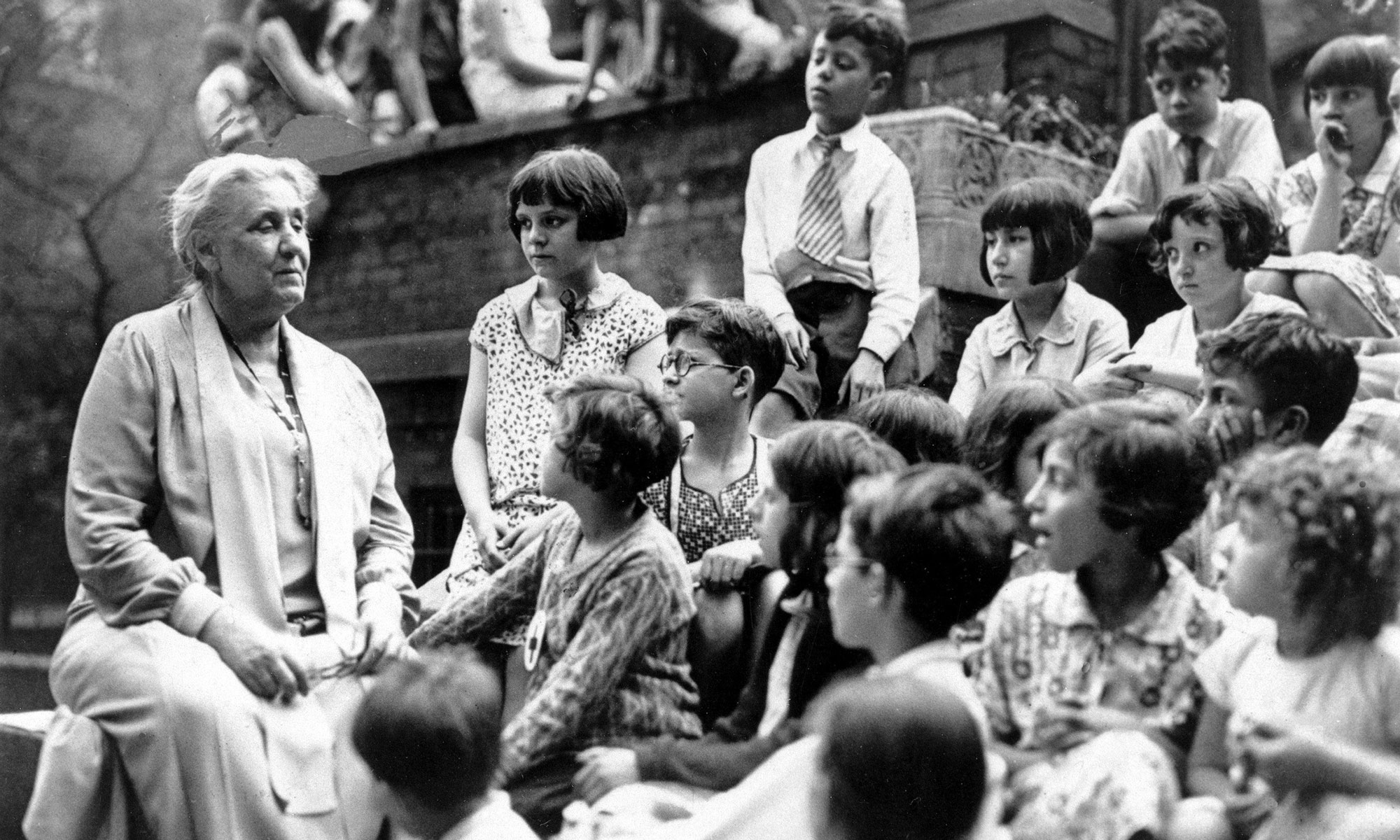
At Hull-House formal art education for children achieved a high priority, again because of the belief that children’s moral and spiritual development depended upon exposure to transcendent ideals, especially in a world so rooted in materialism and so lacking in places of beauty. The Hull-House Art School for children emerged from the original art studios in the Butler building. It moved from that location to the top floor of the Smith or Children’s Building in 1910; there after years of working by gas light, the artists were delighted to have natural lighting from above. Children proceeded in their art education along a systemic line of study and were exposed to a variety of media, starting in beginner classes for the very young to more advanced classes in technique and composition for older children. A pottery program in the art studio appealed to older children. Children were encouraged to sketch out of doors, whether the outside consisted of the neighborhood in the vicinity of Hull-House, or on the grounds of the Bowen Country Club, the summer camp in Waukegan, Illinois, operated by the Hull-House Association. As the pictures illustrate, the Hull-House complex created an environment where reading, sketching, designing a piece of pottery or painting on an easel were normal activities for working-class kids from the neighborhood.
Starr and Addams were interested in art for adults as well as children because they associated it with the development of a collective spirit in a people. Art had spiritual and civilizing power and therefore was crucial in the character formation of young people and in the resurgence of ethical behavior among adults whose labor in dehumanizing industrial jobs alienated and demoralized them. This worked two ways at Hull-House. On the one hand, the realities of industrial life forced an enlightened citizenry to meet the challenge by examining the conditions under which most immigrants lived and worked and, finding them wanting, make the appropriate changes. For the Hull-House residents, immigrants presented the United States with a challenge to live up to the ideals of democracy; the way to teach immigrants about democratic values was to work with them in political and labor alliances to reform American society and, in the process, strengthen democracy. There was also the challenge of providing opportunities for immigrants to engage in arts and crafts, to attend good theater and listen to great music, to have objects of beauty close at hand, and, for the children, to provide opportunities for education in the visual and performing arts. Hull-House became known for its music and art schools; children had to show potential talent or aptitude to take individual music classes and they also had to pay a fee for lessons, albeit a minimal one. There were always scholarships available. Indeed, children with talent were cultivated. Music and art teachers took students in small groups or individually to symphony hall or to the opera or a theatrical production downtown. Addams sought scholarships to private schools and the University of Chicago in cases where a young person from the neighborhood exhibited outstanding promise.
We now come to the final portion of my talk today. We turn to the concept of art by the people and examine its manifestation in the Labor Museum, conceived more by Jane Addams than by Ellen Starr, but out of a shared concern for the denigration of craft and the isolation of labor from art. The ideas that informed the Labor Museum were partly from the arts and crafts movement. But Addams ignored certain key aspects of the art and labor theories. For one thing, she never attempted to create an arts and crafts shop that was owned and managed cooperatively by the workers. I do not have time to talk about the Hull-House Kilns and the Mexican pottery production that was supervised by Myrtle and Beals French from 1927 to 1937, but there is much information about this aspect of art at Hull-House on the Urban Experience website—but my understanding of the structure of ownership and authority in terms of creation and distribution of the ceramics and pottery produced there, is that the work was done under very conventional lines, with the workers being subordinate both in terms of creativity and in outright ownership. The ideas of the arts and crafts movement, sans the communitarian or worker-controlled shops, informed many of the programs incorporated into the daily life of the settlement as well as the way in which the settlement evolved architecturally and decoratively. Addams had observed how the children of immigrants seemed to devalue the traditions and crafts of their parents’ homeland. Children did not like to see their parents wearing ethnic-looking clothing, for example. Addams also observed older women and men who never quite adjusted to American society. Often she found out that an individual who had had a talent for woodworking and had expressed himself through a folk art that had no purpose in America. The Labor Museum, which opened in 1900, was conceived to address these issues of displacement, intergenerational conflict, and deskilling.
Hull-House used art to advocate for democratic principles, to teach democratic values by living up to the highest standards of conduct with respect to the rights of others; and to encourage the broadest, most inclusive cultural as well as civic engagement of the whole community. Long before the New Deal programs for theater and art inaugurated a period of intense public support for the arts in a democracy, Addams critiqued the narrow eighteenth century notion of democracy as being equated almost entirely with representation through voting, and sought to make democracy relevant to the cultural needs of the masses.
[1] Jane Addams, “The Art-Work Done by Hull-House, Chicago,” Forum 19 July 1895, p. 614.
[2] Ibid.
[3] “A Local Toynbee Hall,” Chicago Inter-Ocean (April 24, 1892): 4.
[4] http://tigger.uic.edu/htbin/cgiwrap/bin/urbanexp/main.cgi?file=cultural.ptt&id=857 (link no longer works)
[5]Cheryl R. Ganz, “Enella Benedict,” in Women Building Chicago 1790-1990: A Biographical Dictionary, ed. Rima Lunin Schultz and Adele Hast (Bloomington & Indianapolis: Indiana University Press, 2001): 75-6.
[6]“Pictures Lent to the Poor,” (unidentified March 1896 clipping) Hull-House Association Records, Scrapbook III, Folder 508, 71; JAMC, Special Collections, The University Library, The University of Illinois at Chicago.
[7] Ellen Gates Starr, “Art and Labor,” Hull-House Maps and Papers: A Presentation of Nationalities and Wages in a Congested District of Chicago, Together with Comments and Essays on Problems Growing Out of the Social Conditions (New York: Thomas Y. Crowell, 1895), 165-166.