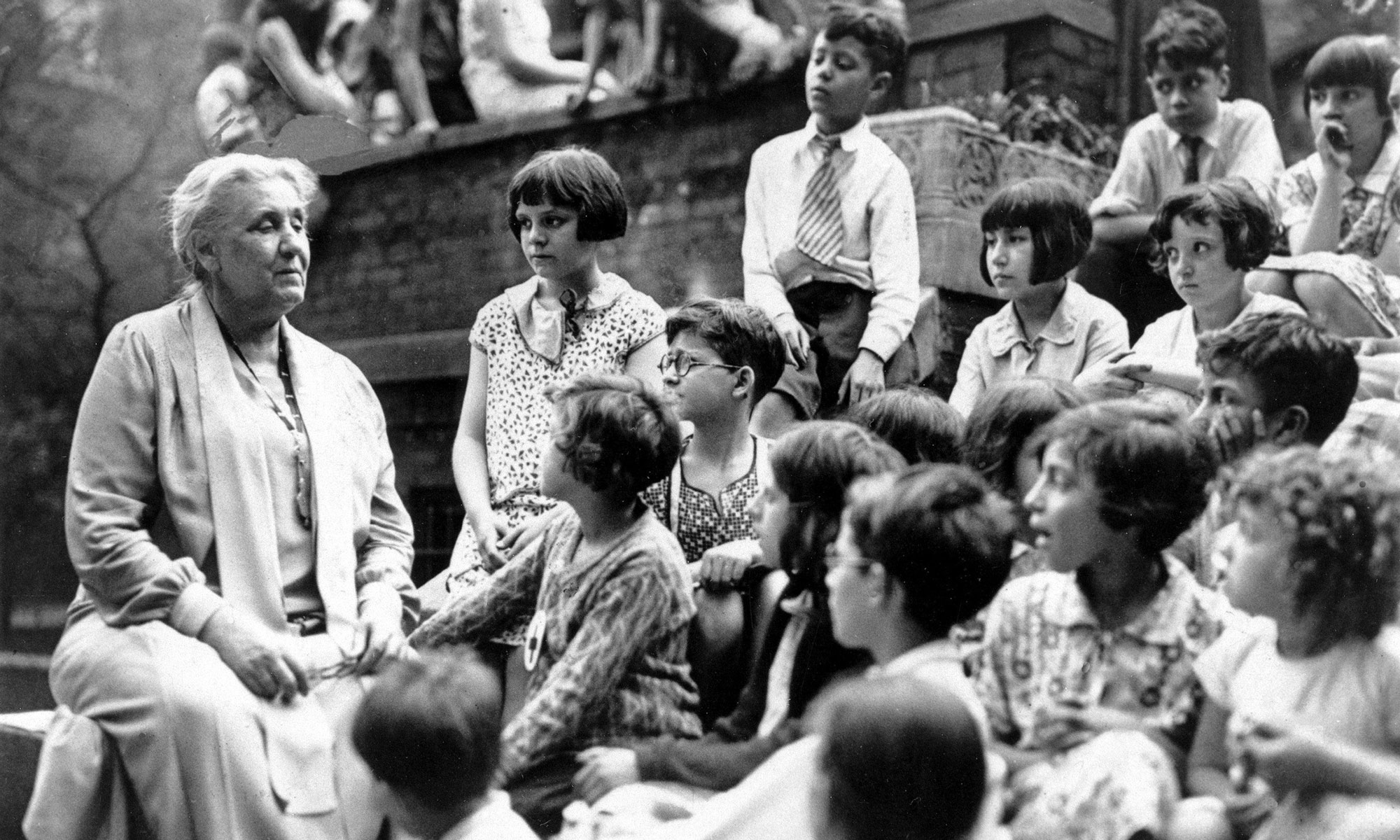

This post was a paper delivered by Rima Lunin Schultz at the Urban History Seminar, held at the Chicago History Museum on February 16, 2017.
“I went to S. Clark St. this morning to show tenement houses there to [George Ward Springer] a youth of wealth who is inspired by the Holy Ghost to build model tenement houses,” Ellen Gates Starr wrote her sister in 1890. “I don’t mean that he professes this inspiration, but the source is undoubtedly no less. . . Mr. [Allen] Pond says his father is rich, & that he himself commands money.”[1]
When Starr and Jane Addams had selected the Hull home in 1889, with advice from Pond, they were already on the look-out for opportunities to re-build the slums. Renting rooms in the rundown Hull mansion from Helen Culver, who had just inherited the house and surrounding properties from her cousin Charles Hull, was most likely more than a coincidence. News of Culver’s spectacular inheritance of the Hull real estate empire was in the daily press at the time when Addams and Starr were house hunting. And Culver was a philanthropist receptive to the reform ideas of the young women. Culver, along with Allen Pond, and several other wealthy, but civic-minded Chicago women and men capitalists served as trustees when the Hull-House Association was first incorporated and backed Addams’s plans with money. Under Addams’s leadership slum property was obtained, cleared, and new buildings constructed. A coffee-house replaced the saloon, a neighborhood institution dominated by corrupt politicians and the liquor interests; gymnasium and playground were new additions to a neighborhood that Addams believed ignored the public recreative needs of citizens; the children’s building provided innovative approaches to child nurture and offered immigrant mothers instruction in scientific motherhood; art gallery and library, men’s and women’s clubs, space for meetings and adult classes and forums, for music concerts and dancing offered a new kind of social and cultural space free of the corrupting influences of crass commercialism, liquor, prostitutes, and corrupt politicians.
The complex, as it evolved, had political implications too. In 1898, having lost to the political machine, Addams used the expansion of a new building as a statement of opposition to the ward boss. “This [new] building will be right back of Hull house gymnasium and will be connected with the steam-heat and electric plants of the Hull house building. It will be a three-story brick structure, with what is known as an English basement. . . work will begin immediately. Considering how little Ald. Powers admires us,” added Miss Addams, “and how he would like to force us out of the 19th Ward, this addition to our buildings and our work seems more than enjoyable, even in a political point of view.” The building was the Jane Club, a residence for working girls.[2]
In building the Hull-House complex Addams was modeling her imagined neighborhood. I am using the term “imagined” in several ways: first, it is the social plan that Addams exhibits in her construction of buildings and in the invention of multiple uses within the space; it has political and social policy implications. Second, I use the term to identify Addams’s description or portrayal of the Near West Side and its people.
Third, I use the term “imagined neighborhood” to distinguish Addams’s representations from the real challenges her settlement agenda confronted among working class men and women. It was easier for Addams to gain the support of middle-class and wealthy capitalists concerned about class conflict and urban disorder for her projects to build model tenements and upgrade the alleys and streets. The challenges to engagement with adult neighbors were substantial: “I used to carry placards up and down the street, and into crowded saloons to get people into those [settlement] classes,” Hull-House resident Edward Burchard, the first male resident in 1890, explained. “Those [neighborhood] men did not care about art. They did not attend our college classes. There were a few selected people who came to them.”[3] Addams had referred to those selected few as the “transfigured few” and she had stopped the art exhibitions within four years of opening the Butler Art gallery, turning instead to the industrial shops and Labor Museum that was to become more central to the settlement.
Working-class discomfort with the bourgeois culture the settlement represented was part of the reason why trade union women left the attractive surroundings of Bowen Hall. In 1908 the Chicago chapter of the Women’s Trade Union League decided to meet in the Chicago Federation of Labor hall rather than in Hull-House’s women’s space. This rupture after a multi-year relationship was painful for the Hull-House residents and other middle-class allies associated with the union. The young women workers voted, they said, to move “coming out ‘flat footedly’ for trades unionism and the ‘labor atmosphere’ as against artistic surroundings in Bowen hall, formerly the meeting place of the league.”[4]
This evening, in the brief time I’ve got, I’d like to sketch out some ideas I’ve been working on along this theme of an imagined plan for the neighborhood that Addams hoped would become its reconstructed space. At the end of Edith Abbott’s book on tenement conditions in Chicago, there is a rendering of the plan for the Jane Addams Homes, the public housing project that is built only a few blocks west of the Hull-House settlement and opens in 1937, two years after Addams’s death. Department of the Interior secretary Harold Ickes, a longtime ally of Addams, had written the aging, but still active Addams in 1933, about site considerations for a public housing project in Chicago: “Frankly, I would like to have a slum clearance project as near Hull House as possible because that would give fullest opportunity of cooperation between your institution and the Federal Government.”[5] True to his progressive reform roots, Ickes was glad Addams was “sounding an optimistic note” for “real ‘slum clearance’ . . . in Chicago.” He wrote her: “I have been pushing it from this end, not only on account of my natural interest in Chicago but because it seems to me that it offers a wonderful demonstration point.”[6] Demonstration point is a key phrase. The Jane Addams Homes, initially intended to have built-in social services and connections to the social settlement in the neighborhood, most likely came closest to the “imagined” residential component envisioned by Addams.
Here the disconnect with her neighbors was most acute. Not all her neighbors were eager to abandon the possibility or reality of individual home ownership for a rental in public housing. Addams had rejected the ideal of home ownership for the working class years before. In 1900, the year she and Anita McCormick Blaine put together the City Homes Association to promote model tenements, Addams had told attendees at a meeting of the American Academy of Political and Social “that the individual ownership of a cramped up little house on a dwarfish little city lot was [not] ideally beneficial to the working man.” But two years later, speaking to the same group, Addams revealed she had learned how complicated property ownership in workers’ neighborhoods actually was. “We discovered several things which were very surprising, among them that many of the houses were owned or partially owned by the people living in them.” Addams found that the tenant and landlord were represented by the same type of person. “Their interests are identical, not in the larger sense, but in the immediate sense, and they stand together either in demanding or opposing certain regulations.”[7]
Many of the Hull-House neighbors saw value and promise in the old neighborhood and opposed the ideas of professionals who had taken their clues from the social settlement movement’s condemnation of tenement life and missed the complicated narrative of working-class and immigrant entrepreneurship and the great desire for homeownership as a step toward a life of middle class independence, the American dream. Addams had ignored stories of immigrant advancement through ladders of local retail commerce and she had criticized homeownership, especially as she saw family’s pooling the wages of their children and renting out to boarders.
The family histories I have gathered of Italians whose roots were firmly established in the thirty blocks mapped in the famous 1895 Hull-House Maps and in investigations on housing conditions from 1900 to 1936 tell a different story.
Father Stephen Giovangelo, Florence Scala’s nephew, now a retired Episcopal priest grew up in the family’s two flat, a stone’s throw from Hull-House. On his mother’s side, a great-grandmother and grandmother ran a family grocery near the old Holy Guardian Angel Church, east of Halsted. On his father’s side, his grandfather—Florence’s dad—owned a tailor shop. Florence and Ernie, Steve’s father, grew up as Hull-House kids; they were also Catholic parishioners, Ernie working after graduating from the University of Illinois-Urbana, for the Catholic Youth Organization, and later, with Florence, joining the neighborhood efforts organized by Hull-House resident Eri Hulbert, to develop a community-based plan to rehabilitate or conserve the sections of the neighborhood that, to the community, had value and a future. In the 1950s in Father Steve’s memory “the neighborhood was anything BUT ‘a ghetto’ or ‘slum’ as some of the city developers referred to it.”
Earlier Addams had come to a different conclusion. She acknowledged that Hull-House had not been able to marshal the public opinion capable of local political reform. In her eyes the neighborhood had deteriorated. “Slowly through the years one is forced to recognize that the increase of crime is connected with the general state of political corruption throughout the community as a whole,” Addams asserted in 1932. “No social institution can escape from the community which gives it birth and which either promotes or retards its operation.”[8] All the cultural activities, the best art and music, the great theatrical productions, could not protect against the street.[9]
How could Addams’s view of the neighborhood differ so substantially from the neighbors who fought so valiantly years later to save their humble blocks from clearance in preparation for the coming of the University of Illinois Chicago campus?
Addams dealt with immigrants but not with the diversity of culturally different institutional structures and ethnicity, or the commitment her neighbors had to owning their own houses and businesses. In not working with the potential energy for citizen’s activism by incorporating competing religious institutions, the powerful Protestant elites did not generate successful citizen-initiated planning. Jane Addams and the progressives were not against demolishing old neighborhoods and ignoring cultural, religious, and social anchors because they didn’t value them; they had come to change them. They were not particularly excited by the “street” and were disinterested in finding ways to fix up the houses and loan money for mortgages, or build affordable housing beyond the most meager efforts. Such strategies emanated instead from the neighborhood groups after the 1930s and, ultimately, in the 1950s were met with resistance from professional urban planners and public housing advocates and the real estate industry and city hall.
In 1935 Edith Abbott found there had been several housing reform movements in Chicago but very few improvements have come as a result of these efforts. “Certainly no one political group can be charged with responsibility for the failure to find the way out of our tenement problems” she concluded, and did not hazard a guess as to what role progressive reformers themselves might have had in the failures of reform efforts. Progressive era reformers mapped the neighborhood and stamped it as a “slum” and began a tradition of using the “best” worst case to argue for critically needed reforms of sanitation facilities, housing and work conditions, at the same time leaving out positive signs of social and occupational mobility inside the neighborhood.[10] Abbott, echoing Addams, held great enthusiasm “for new and better houses and gardens for the families living on low wages, or no wages” with the prospect that the expenditure of public funds in the long run will be “counterbalanced by smaller demands for hospitals, juvenile courts, reformatories, courts and prisons.”
There was something even more basic in the “imagined” community that Addams had created that can account for the ultimate clash of interests between the people and the reformers. Ellen Starr did not agree completely with the direction that Hull-House settlement was taking early on in the experiment. Her disagreement, which she voiced, distanced her from Jane Addams. In 1892 she accused Hull-House of being merely “an excuse for the things we ought to do and be and don’t and aren’t.”[11] She worried about the contradictions of offering bourgeois culture to workers but not sharing power with them. “If we don’t wish working people to stand upon the same ground with us, if we believe that there is an eternal distinction, if we believe in caste, no matter how we disguise it, then why shouldn’t we let them alone? Why insult people by saying to them, ‘you are different, you will be different always, you can never be as we, knowing false and true, beautiful and ugly, but we wish to be kind to you, we want you to enjoy in your poor capacity, what you are capable of enjoying, and so we come and give you this and this.'”[12]
Although the settlement was also a meeting place for unpopular groups from the neighborhood, there was no thought that a neighbor who was active in the Hull-House Woman’s Club, or the men’s political group should take a place on the board of trustees. In fact, the trustees did not include neighborhood people until 1943 when Alex Elson, now a young lawyer who had grown up in the neighborhood and participated in Hull-House as a youngster and then as a young adult in the dramatic clubs, was selected by the board of trustees.[13]
Hull-House had gained its reputation in large part as an interpreter of the immigrant urban experience from that neighborhood. By the late 1920s Mexicans had moved into the Hull-House neighborhood and, more problematic to the Eurocentric programs of Hull-House, African Americans from the South were finding their way to the Maxwell Street neighborhood, an area south and east of Hull-House that had once been the home for Jewish immigrants. These demographic and economic changes were reshaping Chicago and other American cities and the settlement houses that had been situated in European immigrant communities. Few settlements began, as Lea Taylor of the Chicago Commons put it, “to take stock of the work” to determine whether they were meeting the needs of the neighborhood and “whether much more should not some how be done to get more of neighbors’ participation in meeting community problems, as well as in helping in the work of the settlement.”[14] Hull-House, ironically the leader of the settlement movement in the 1890s, had not taken stock of its role in the neighborhood, or looked introspectively at its programs or goals until the arrival of Charlotte Carr in 1937. A New Deal liberal with close ties to organized labor, Carr immediately initiated more community-based programs. Hull-House trustee William Deknatel suggested that Carr’s problems would soon be solved because “the neighborhood was disappearing” and the settlement should re-think its relationship to local projects.
Addams had demonstrated a similar attitude in the 1930s when she encouraged the City of Chicago to locate a municipal airport north of Hull-House in the Harrison-Halsted area, the heart of the Greek community, as a development stimulus. She had also negotiated the sale of the property owned by the Chicago Hebrew Institute on Taylor Street for the public housing project that would bear her name. She, along with Edith Abbott and Harold Ickes had advocated slum clearance and public housing as the solution to the tenement problem in the old Hull-House neighborhood. The commitment to the neighborhood as a place of meaning that had value and should be conserved was never the settlement’s or Jane Addams’s agenda. The cultivation of “neighborliness” not the neighborhood was its goal.
[1] Ellen Gates Starr to Mary Houghton Starr Blaisdell, 18 and 22 May 1890, Ellen Gates Starr Papers, Sophia Smith Collection, Smith College, Northampton, Massachusetts. The young capitalist referred to is George Ward Springer born 14 Dec 1868 in Abingdon, Illinois; attended Northwestern University Academy; got a B.S. Northwestern University in 1890; in real estate business for himself in 1902; Republican; Episcopalian; village trustee Wilmette, Illinois 1897-98; village president 1900-02. The Book of Chicagoans (1911), vol. 2, 636; Alumni Record, College of Liberal Arts, Northwestern University 1903, p. 212.
[2] “Jane Club’s New Home,” Chicago Daily News, April 2, 1898, 1.
[3] Edward L. Burch quoted in “School Center History in Chicago,” 292.
[4] Women’s Trade Union League Quits Holding Meetings at Hull-House. Pick Federation Hall instead; Jane Addams absent from the meeting during hot discussion of question. “Bowen hall, Hull house, was tabooed by vote yesterday, after a spirited discussion at a meeting of the Women’s Trade Union League of Chicago. It was the first meeting of the league in the hall of the Chicago Federation of Labor, 275 La Salle street, and the discussion was precipitated over the question of coming out ‘flat footedly’ for trades unionism and the ‘labor atmosphere’ as against artistic surroundings in Bowen hall, formerly the meeting place of the league.
“After nearly all the ‘prominent’ members had had their say about the proposition to move from Bowen hall, the ‘labor atmosphere’ won by a heavy majority. Miss Jane Addams, who is a member of the league, and was a constant attendant at the meetings in Bowen hall, was ‘visibly absent.’”
“Nothing was brought out in the debate to indicate a breach had occurred between Mrs. Raymond Robins, president of the league, and Miss Jane Addams over the latter’s attitude toward the former’s husband on, say, school board questions. An undercurrent of thought among the women, however, drifted strongly in that direction.[Note that Jane Addams had voted against the appointment of a superintendent who favored teachers’ unionism, the position of Margaret Haley, and was roundly criticized by Haley and her supporters & those in the labor movement who favored unionization of teachers along the lines of the Chicago Federation of Labor. Raymond Robins had supported the pro-labor union superintendent candidate favored by Haley.]
“’O, no. Our relations with Hull-house have been so lovely. We really regret the necessity to leave Bowen hall.’ These were the sentiments expressed by both Mrs. Robins and Mrs. Corinne Brown, who made the motion to ‘move from Bowen hall to Federation hall, as a permanent meeting place.’”
“The question of meeting place came up after a constitution and platform for the league were adopted. Mrs. Corinne Brown was the first to gain the floor.
“’I favor federation hall for the reason that here we will feel at home, while in Bowen hall we have been under restraint,’ said Mrs. Brown. ‘Here we can speak freely.’”
“This brought Miss Mary McDowell to her feet instantly with a protest against Mrs. Brown’s utterances.
“’I must take exception to Mrs. Brown’s statement that we have been under restraint at Hull house,’ said she. ‘I am sure we have been as free to express ourselves in Bowen hall as anywhere.’”
“’Well, I didn’t mean that any one restrained us there,’ Mrs. Brown hastened to explain.
“’What I meant was that we were under the natural restraint of being guests and not as free as in our own home.’”
“Mrs. Robins felt it was time to explain. She said the object of moving from Hull house was to come in closer touch with the labor movement and that an option had been obtained on Federation hall.
“’I object to leaving Hull house because I believe we are going to limit our usefulness by meeting in Federation hall,’ said Mrs. Harriet Van derVaart. ‘We will be looked upon simply as another labor movement.’
“’I favor Bowen hall because this place is known as a union headquarters, and many girls will be afraid to come here for fear their employers will learn of it,’ said Miss Anna Nicholes.
“’Federation hall suits me,’ said Miss Agnes Nestor. ‘The surroundings are more beautiful in Bowen hall, but the Halsted street car service is awful.’
“At this point Mrs. Louis F. Post arose and said: ‘I believe now that this league is the real thing.’”
“’This league has always been the <real thing,>’ Miss McDowell fired back. “Miss McDowell wanted the question postponed a month, but Mrs. Robins decided immediate action was imperative and a vote was taken by ballot. It stood 51 to 20 in favor of ‘closer touch with labor.’” [“League of Women Quits Hull House,” Chicago Tribune, Feb. 10, 1908, pg. 3.]
[5] Harold L. Ickes to JA, Washington, D.C., Dec. 27, 1933, Swarthmore College Peace Collection Jane Addams Papers Series 1 in JAP microfilm Reel 25-0598.
[6] Ibid.
[7] Jane Addams, “The Housing Problem in Chicago,” Annals of the American Academy of Political and Social Science, Vol. 20 (July 1902), 99-100.
[8] “Miss Addams Gives Views on Chicago Gang Disorders.” The Sun, Baltimore, Jan. 18, 1932, pg. 12.
[9] Jane Addams to West Side Sportsman’s Athletic Association, Chicago, Dec. 4, 1931, University of Illinois at Chicago Circle Jane Addams Memorial Collection Hull-House Association Records, in JAP reel 22-1305; William John Granata to Jane Addams, Chicago [Granata & Euzzino Attorneys at Law, 650 South Halsted Street], Jan. 11, 1932, in JAP reel 23-0558-0559; Jane Addams to My dear “Greek,” [William John Granata] drafts, January 15, 1932, Baltimore, JAP reel 23-0554-0557; [Greek ]Wm John Granata to Jane Addams, Chicago, Jan. 11, 1932, in JAP reel 23-0560.
[10] Rima Lunin Schultz, “Introduction,” Hull-House Maps & Papers. A Presentation of Nationalities and Wages in a Congested District of Chicago, together with Comments and Essays on Problems growing out of the Social Conditions. By Residents of Hull-House (Chicago & Urbana: University of Illinois Press, 2007; reprint of 1895 edition), 1-2; 5, 18, 33-34.
[11] Elizabeth Palmer Carrell, “Reflections in a Mirror: The Progressive Woman and the Settlement Experience,” Ph.D. dissertation, The University of Texas at Austin, 1981, 30.
[12] “Chicago’s Hull House.” Report on an Address by Ellen Starr, 1895, Hull-House Scrapbook, III, JAMC, Spec. Col. Daley Library, UIC.
[13] Alex Elson Oral Interview transcript, OH-074 [interviewed by Stuart J. Hecht] October 12, 1980, 13, Spec. Coll. Daley Library, UIC.
[14] Minutes, June 7, 1924, Folder 2350, Graham Taylor Papers, Midwest Manuscript Collection, The Newberry Library.