This post was written by Dr. Rima Lunin Schultz on March 3, 2007.
After seven years of searching for a way to live her life constructively, democratically, and autonomously, at age twenty-nine Jane Addams broke out of the traditional domestic box that society had constructed for women of her wealth and status. “I have been looking up different ‘slums,’” Jane Addams wrote to her sister before she and Ellen Gates Starr selected the dilapidated old homestead on Halsted Street that had once been owned by Charles J. Hull, a real estate developer, as the site for a social settlement they planned to establish. In 1889 Chicago was a city of contradictions and class conflict. Hull’s house was situated in one of the worst slums in Chicago. There Addams and co-founder Ellen Gates Starr opened the first social settlement in Chicago with high hopes of developing lines of communication and activity with people from different class, ethnic, and religious backgrounds. This was 1889.Twenty years later, the Hull-House settlement had grown into a world- renowned establishment of thirteen buildings, and Jane Addams had become an international figure known for her advocacy of social justice and peace. Ellen Gates Starr was recognized for her passionate support of striking women workers in the garment trades and was cited by Sydney Hillman as a great friend of labor. She was a leading figure in the Socialist Party in Chicago.
The two women had no reputation or political power when they first came to Chicago –Starr had worked as a schoolteacher in a preparatory school where Chicago’s wealthiest young ladies attended – and Jane was the daughter of a state senator who had known Abraham Lincoln—Ellen had no money, coming from an educated but not very prosperous family; Jane Addams had her inheritance (and between 1889 and 1895 she had spent it all with the Hull-House work). What is remarkable about them is that they were able, in a short amount of time, to become public figures in a growing reform movement with worldwide connections.
Addams–more than any other woman in the United States–engaged with both the male and female political cultures as a theoretician of democracy and as a political activist. Hers was an authoritative voice at the intersection of the great social movements for social justice, peace, and women’s rights long before women could vote in the United States. Such intellectual heavy weights as John Dewey, Richard T. Ely, William James, Henry Demarest Lloyd, W. E. B. Du Bois, and William Dean Howells considered her books worth reading, and her ideas valuable. At the high tide of the progressive movement Addams wielded influence and, yes, power. Progressive politicians wanted to use her name, as did Social Gospel ministers.
What I want to set before you today is an account of what I believe gave Addams the power to become this great public intellectual: in the theme of this lecture series, I suggest that it was her ability to “break the box” of conventional female roles –the domestic box— and to turn women’s traditional care-giving role into an argument for the expansion of government as the protector of women and children and the regulator of social and economic conflicts in industrial society. In short, her greatest contribution was to be a leading voice in the development of the modern welfare state.
Addams became an international figure because of her writings; these, she insisted, were based on a new kind of sociological knowledge. Addams, argued that she could learn about what the neighbors’ reality consisted of through lived experience and she claimed her work was scientific: she and other residents offered their studies “not as exhaustive treatises, but as recorded observations which may possibly be of value, because they are immediate, and the result of long acquaintance.” Addams makes it clear that the authority for her political activism comes from having lived in the neighborhood not as a theoretician or scholar but as an activist engaged in constructive work. This manner of knowing the neighborhood is valorized by Addams and is the hallmark of the sociological investigation undertaken by settlement houses independently of universities or government agencies.
Thus Addams creates a new role for herself (and for other activist women) without being a professor at a university, a government official, an elected politician, or a captain of industry: she breaks the box by situating the production of social science knowledge in the neighborhood — a think tank on Halsted street, and authorizes herself and her associates as experts who should be listened to precisely because of her location within the “belly of the beast” — the labor and political crises of the late nineteenth century. She does this by establishing this new institution, which she insists is not an agency or a society, but simply a household of educated women who want to be good neighbors. In creating this new urban space, she allows the actors of the urban drama—workers, anarchists, immigrants, upper-class reformers, artists, children—to perform their roles.
Re-Defining Class and Gender Relationships
In 1889, Jane Addams and Ellen Gates Starr, co-founders of the Hull-House settlement, approached “settling” in the spirit of experimentation. Starr and Addams were urban pioneers and as idealists, hoped that they could do something meaningful to help adjust the serious imbalances that they knew existed between rich and poor in urban areas. They had grown up in the aftermath of the American Civil War and were shocked by the excesses of Gilded Age corruption in politics and business; they were disturbed by the hypocrisy of organized religion, the disregard of people who called themselves Christians but were not offended by the poverty that workers and their families endured even though hours were long. They were disturbed to see the increase in child labor and the neighborhood in which Hull-House was situated happened to be the largest sweat-shop district in Chicago. As college-educated women they were unwilling to ignore their own talents and accept a limited, private role within the family; they wanted to engage in the “real world” and learn about life from life itself. In order to do this, they had to break the box of traditional middle-class behavior, ignore the vast literature that argued women belonged in subordinate roles in society; they were aware of the terrible contradiction of middle-class values in a society where working class mothers could not afford to care for their babies, where children as young as five or six were doing piece work along with their mothers and fathers in tenement sweatshops.
Using the trappings of domesticity — Addams and Starr set up “housekeeping” in the old Hull homestead just like any married women might have done with their first home. They invited in their “neighbors” for tea and conversation; they visited their neighbors and helped with illnesses, brought food and clothing, and slowly began to learn about the true facts of life in the industrial slum that was expanding on the Near West Side. To their neighbors, who couldn’t quite figure them out to begin with, they seemed somewhat like nuns, but not exactly—and certainly people you could come to with a problem; to the wealthy clubwomen and liberal businessmen who had a vague sense of wanting reform, they appeared more and more as authorities who could explain what was happening in working-class neighborhoods. And as the Hull-House residents became more informed about the needs of the community around them, they began to experiment with new enterprises such as day care, baths, a place for reading, classes for learning English, a room where a neighborhood political organization could hold a debate, and before long, the space around the original house began to fill up with new structures to address the needs of the community.
The physical development of the Hull-House complex—beginning with the interior transformation of the original Charles Hull residence in 1889—and ending when the last or thirteenth structure of the complex was completed in 1907, is a dramatic metaphor for the social experiment in which they and other women and men residents engaged. In the context of Victorian society, they had to overcome conventional boundaries and remake the traditional sphere defined for women’s and men’s activities. Women had to expand their nurturing values beyond the home and into the public sphere: the settlement house took domestic space and turned it into a social center where public policy would be debated and political organization and citizenship would be encouraged. The male residents at Hull-House were able to express cultural and social values and to engage in politics outside of the dominant political machines and the competitive market system.
Key to Addams’s vision of the social settlement was her theory of the subjective necessity of the project in which she and Ellen Gates Starr embarked. In her now-famous essay, “The Subjective Necessity of the Social Settlement” and in other essays, Addams identified her central concern to encourage women and men of her class and education to engage in relationships with city dwellers vastly different in background and social conditions from them. Some might say that for Addams the needs of privileged and educated Americans to know first-hand the social conditions of immigrants and workers in crowded urban neighborhoods was more crucial than any assistance these primarily college-educated men and women could provide to the “disadvantaged” or “the newcomers.”
Addams argued that political democracy was only the first stage in the development of a democratic society. Civic life had to be developed and knowledge of the needs of the working class and immigrants could not be acquired without personal experience. Residency was crucial in Addams’s concept of social democracy, that is, her expanded understanding of democracy that was a way of living, a process, not just a system of voting. Therefore from its inception a major goal of Hull-House was to attract the right kind of residents. The most striking “qualification” of a potential resident was her or his ability to donate time to Hull-House and to pay for room and board. The assumption was that residents would have another source of income—a “day job” so to speak—and would volunteer at Hull-House. Out of the daily experiences, residents acquired an authoritative voice: Addams and the Hull-House residents became interpreters of working class and immigrant life; they began to write about the neighborhood, study it through surveys and, innovatively, they actually “mapped” the wages and nationalities of the immigrant quarter directly to the east of the settlement house. Such studies were used to lobby for new laws and regulations to humanize the industrial system and protect women and children from the worst abuses of the factory system.
Constructing Space for Same Sex Partnerships and Family Life for Social Activists
At Hull-House Addams was able to reject heterosexual marriage and find love and support through a same sex relationship with Mary Rozet Smith. To live as they pleased, creating their own relationships away from kinship ties was extraordinarily difficult in the Victorian era. The settlement house offered a solution to the marriage problem by allowing residents to make their own choices about personal relationships in the safety of community life. In her own life Jane Addams craved acceptance and affirmation of her choice to “settle” rather than marry. Left motherless at the age of two, Jane Addams’s father remarried Anna Haldeman when Jane was eight years old. Jane Addams’s concern, love, and acceptance of responsibility for her siblings, including her stepbrothers, and for her nieces and nephews went deep and lasted until her own death, but these sentiments and feelings of responsibility did not keep her from escaping the grasp of the family claim. Her negotiation of the family claim remained an on-going tribulation as she both mediated the negative aspects of her own family’s ambivalence about her life choices and increasing fame, and at the same time, “adopted” the complicated network of extended family relations of Mary Rozet Smith, the woman who became her life partner. For some, the social settlement became a surrogate family;[ Slides 55-66] [offered an oasis of calm for neighbors & residents, Slides 67-69] for married couples interested in forging a lifetime of social activism, the settlement house provided childcare, communal meals, and a release from the day-to-day chores and responsibilities that plagued women who generally have had the major burden of family living.
The Construction of Cultural Space
By 1910 there were about 400 settlement houses in the United States (Allen Davis, Spearheads For Reform [1967], p. 12). Of these, many were purposefully designed by architects, allied with reformers, who shared a philosophy about the significance of architecture and arts and crafts in the lives of urban inhabitants. In the process of constructing settlements, they also designed bathhouses, gymnasiums, recreation buildings and field houses they were creating a new kind of urban space in working-class neighborhoods. They were pioneers in the use of adaptive space, and in the construction of cultural space. The Butler Art Gallery building, designed by the firm of Allen B. and Irving K. Pond, was one of the earliest examples of a museum located in a neighborhood where immigrants lived in contrast to the typical central-city location generally reserved for museums and libraries. The Butler Art Gallery and the other buildings that followed were an expression of the Hull-House settlement’s development of a new kind of social space by providing a built environment for interactions among neighbors and residents of different generations, and from a variety of ethnic, class, and religious backgrounds.
Jane Addams met architect Allen Pond just before she selected the old Charles J. Hull mansion as the site of her settlement. Pond, already interested in ways to ameliorate the adverse social conditions resulting from industrialization, was attracted to both the arts and crafts movement and the awakening of a multitude of literary and artistic enterprises in Chicago. He was a member of the Little Room group, as was his brother, Irving K. Pond, partner in their architecture firm, Pond & Pond.
Gendered Philanthropy and Social Space
Jane Addams began Hull-House with money from her own inheritance. From the start, however, she accepted that one of her roles was to fundraise. Seven months before they opened the doors of the Hull mansion to their neighbors, Ellen Starr wrote her sister Mary that they were not obliged to ask for money to begin their undertaking, but once “the thing is . . . under way” they would approach individuals. Starr was excited to report that Dr. Gunsaulus, a prominent Protestant minister, knew “one very wealthy girl, heiress to millions” that they could contact. (Starr to Mary Houghton Starr Blaisdell, February 23, 1889.) Volunteerism was another way in which privileged women indirectly financed Hull-House. The college educated women and men who arrived at Hull-House eager to participate as residents were required to volunteer their services and to pay for room and board. The assumption was that residents either had independent wealth or held professional jobs separate from their endeavors at the settlement.
There were also many volunteers at Hull-House. The volunteers and residents were overwhelmingly women. Characteristic of female philanthropists who supported Hull-House was that they combined a hands-on volunteer participation in the settlement with generous personal financial contributions. This was the hallmark of Louise deKoven Bowen and Mary Rozet Smith. On the other hand, businesswoman Helen Culver developed her own philanthropy style, more akin to a businessman’s approach. While there were male philanthropists who gave money to Hull-House, the key women donors–Bowen, Smith and Culver–provided the preponderance of funding. Two men who gave extensively to Hull-House–Charles Mather Smith and Joseph T. Bowen–were the father and husband respectively of Mary Rozet Smith and Louise deKoven Bowen. In addition, Louise Bowen and Addams engaged in fundraising campaigns for Hull-House. They used their social and political connections including the sizeable women’s reform infrastructure to secure funding through private donations. Bowen and Addams preferred private funding and were reluctant to accept contributions from foundations or charities or from government sources
Constructing Social Space
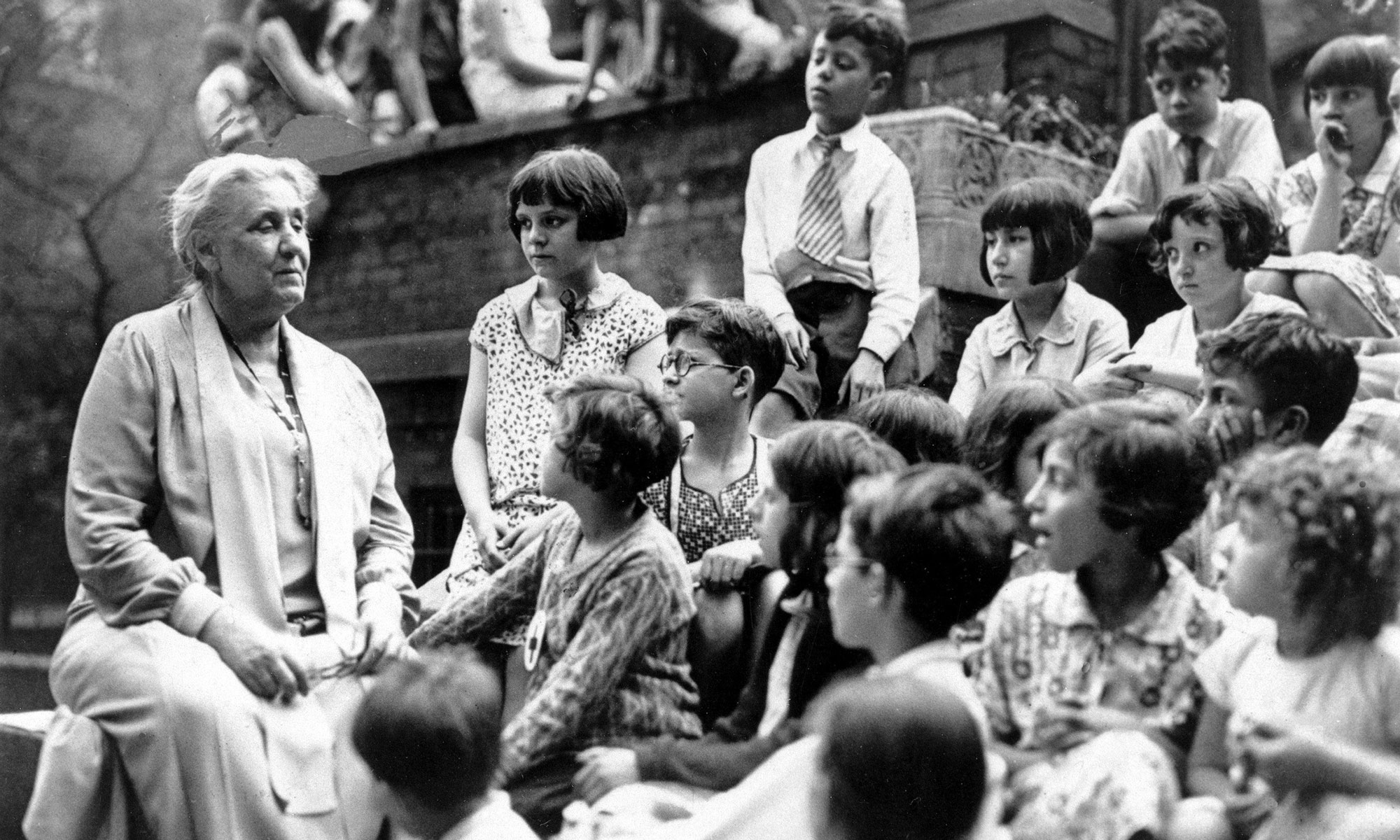
Before long Hull-House had a full schedule of clubs, lectures, associations, classes and activities. Residents and volunteers led groups. The concept of social space was tied to the original idea of establishing a comfortable, safe and aesthetically inspiring environment in which educated and privileged women and men would develop reciprocal relationships with neighborhood people. Jane Addams envisoned the clubs as opportunities for such exchanges and was more concerned about the quality and spirit of socializing than in the skills or information being disseminated, the training being offered, or the games or dramas in which children and adults engaged. There were exceptions, however; music lessons were given to children whose potential was evidenced. Youth with promise were encouraged to take courses at the University of Chicago, for example, and given scholarships. The multitude of drama clubs supervised by Edith de Nancrede are the best example of how the settlement or socializing spirit trumped any elitist model. Often young children began their drama experiences doing children’s plays and continued to be part of the drama club system into their young adult years.
Constructing Space for Multi-Cultural Expression
The choice to co-found the Hull-House settlement at Halsted and Polk streets was made in large part because the neighborhood was becoming increasingly populated with the most recent immigrants to the United States, people from southern and eastern Europe. Jane Addams and Ellen Gates Starr wanted to develop new avenues of social intercourse between middle class and wealthy Americans and the working poor who were largely immigrants and the children of immigrants. Dismayed by what they perceived to be the isolation of immigrants from any kinds of cultural and civic institutions, Addams and Starr hoped that by establishing a social settlement they could create a new kind of urban space. Initially, the parlors of Hull-House were transformed into this new space where educated and privileged young women and men who were residents or volunteers at Hull-House, would offer musicales, social evenings, reading clubs, and lectures to the immigrant neighbors. Problems of language and custom were in part mitigated by the settlement offering “ethnic” nights so that immigrants could partake of social life at Hull-House with their own country people.
Soon Hull-House was offering different groups in the neighborhood “space” to engage in ethnic theater, to join social, athletic, and political clubs that were composed of their country people, to take citizenship and English classes, to enroll their children in clubs and activities, or to take music or art lessons. Hull-House also offered community associations space to meet. There were clubs, classes, and activities that were multi-ethnic in composition. The settlement encouraged, but did not force, the mixing of races and nationalities during its first fifty years of existence. Instead, through its cultural and social activities, Hull-House attempted to model a new kind of citizenship and patriotism. It was based on the idea that immigrants brought to America the gifts of their traditional cultures and instead of seeing them as potentially dangerous to American institutions, Addams claimed that newcomers would become better Americans if they did not throw out the art and craft of their past experiences.
Constructing A New Citizenship For Women
Addams was a strong advocate for the organization of women into a system of clubs that promoted social reform. It was in this network of activist women’s clubs that Addams saw females attain their highest calling in the performance of duties beyond family responsibilities. Here in the “woman’s sphere” women assumed their social responsibilities, what Addams referred to as the “social claim.” It comes as no surprise that Addams and her colleagues in the settlement movement formed women’s clubs. The proliferation of local women’s clubs in late-nineteenth century America was part of the social transformation of the role of women in the workplace and in public life. Beginning in the 1870s, women in Chicago, Boston, New York, and Philadelphia formed clubs. Initially for literary and cultural studies, women’s self-education soon turned to public or civic affairs. The Chicago Women’s Club was established in 1876; by 1896, it had changed its name to the Chicago Woman’s Club, signifying its support of woman suffrage and its interest in an ambitious agenda of reform initiatives including a prohibition of child labor, anti-sweatshop legislation, and protective legislation for women workers. The club’s committees sponsored art in the public schools, school nurses, milk inspection and a juvenile court system. Jane Addams and other Hull-House residents were members of the Chicago Woman’s Club, the premier network of social activist women in Chicago and a model for the national movement of women’s clubs in the neighborhoods where their settlement houses were located in an effort to spread the structure and philosophy of organized womanhood. [Show slides 97 and 98] These slides make clear how much of the work of social settlements, not just Hull-House but others in American cities, reflected the divisions of race, ethnicity, religion, and class – even as there was an attempt to find ways to create a public square where interactions across these divides could happen — even at Hull-House, where radicals and nonconformists, homosexuals and artistic bohemians had freedom of expression, a de facto racism persisted.
Breaking Out of the Box — But Perhaps Constructing Another Box for Women
By turning domesticity on its head, so to speak, and redefining urban space through the construction of innovative institutions like the settlement house, women were empowered and gained an authoritative voice in the public square as an interest group. They did not, however, subdue the male dominated political culture that, in the last analysis, won the day. This final slide speaks volumes: Here Alderman John Powers — the bad boy of the neighborhood (and the most powerful of the alderman in Chicago during the first twenty years of Hull-House history) is shown throwing a brick at the settlement house. “He Won’t Be Reformed” is a familiar phrase in Chicago politics. Jane Addams and the political clubs at Hull-House challenged Powers in three successive elections — and they lost. We can discuss how much has stayed the same and how much of the vision that Addams and her colleagues shared has materialized — how much has urban America been redefined by the social reform vision first expressed by the urban visionaries of the social settlement movement.