
Generation Sangfroid

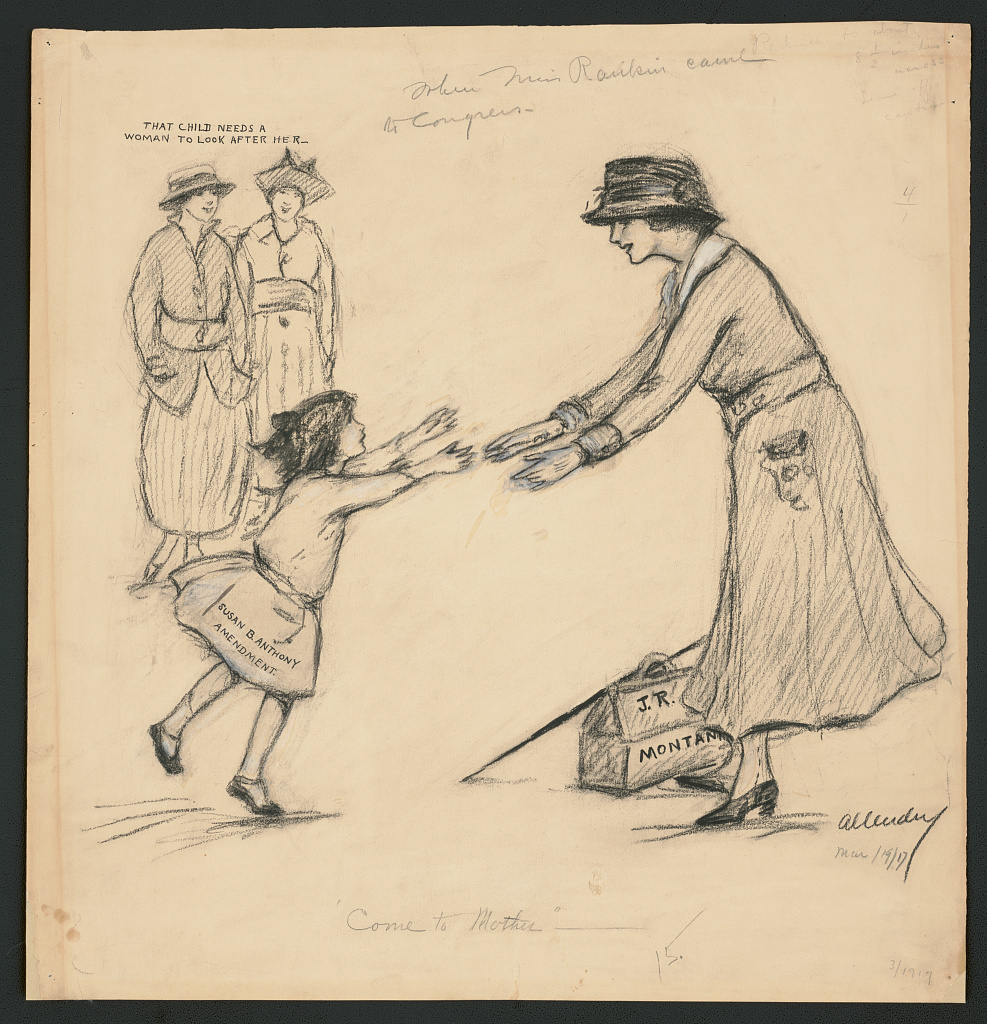
A woman with outstretched arms welcomes a young girl running toward her; two women watch in the background. A suitcase labeled Montana sits nearby. Text reads: That child needs a woman to look after her.

Currently, I am editing documents in the Jane Addams Papers from the 1920s. Jeannette Rankin, the first woman elected to the United States Congress, has been popping up a lot in my daily work. Rankin went to Europe with Addams in 1919 to attend the International Congress of Women in Zurich. She was a field secretary for the Women’s International League for Peace and Freedom (WILPF), of which Jane Addams was president. And in 1924, she lived and worked at Hull-House.

Of course, I had known about Rankin since I was an undergraduate studying women’s history, but I never had any depth of knowledge about her or her life. For a blog post I thought I would explore what led her to Hull-House, suspecting that Jane Addams was that gravitational pull. But those plans went almost immediately off the rails when I read a description of Rankin as exhibiting considerable sangfroid—sang-froid, from the French, literally “cold blood”—self-possession, coolness, or, as Merriam-Webster defines it, someone who is “cool as a cucumber,” possessing “imperturbability especially under strain.”

Wow, what a word, sangfroid, I thought (after I looked it up). And the more I kept reading the more I agreed with the description of Jeannette Rankin, the tough nut from Montana. This woman dared to run for a seat in the U.S. House of Representatives in 1916, just two years after women earned the right to vote there. She was a woman who unapologetically campaigned on a platform of equal suffrage for all American women, child protection legislation, and preparedness for peace instead of preparedness for war, while all of Europe was at war.
A woman with outstretched arms welcomes a young girl running toward her; two women watch in the background. A suitcase labeled Montana sits nearby. Text reads: That child needs a woman to look after her.
In this cartoon, Rankin’s bag is packed for Washington, as the Susan B. Anthony Amendment for woman suffrage reaches out for her. Nina Allender, “Come to Mother,” 1917, Library of Congress, Prints and Photographs, Washington, DC.

Cool as a cucumber, indeed, this 35-year-old Republican woman who won her Congressional seat despite Democrats sweeping up nearly all the others in Montana that year. This unrepentant pacifist Congresswoman voted NO in 1917 to declare war on Germany. “I want to stand by my country,” she said, “but I cannot vote for war.” Her vote won her praise in Montana, within the peace movement, and among Quakers, but she had been one of only a handful of dissenters in Congress and there was not much praise coming from anywhere else. Interestingly, Rankin had the historic opportunity to vote against world war again during her second term in the U.S. House of Representatives on December 8, 1941. On that day she cast the single, lonely, dissenting voice of Congress on the resolution to declare war against Japan. Defending her position, which was widely condemned and made her reelection impossible, she said: “As a woman I can’t go to war, and I refuse to send anyone else.”

And guess what? Jeannette Rankin lived long enough to protest the Vietnam War, too. On January 15, 1968, she led the Jeannette Rankin Brigade and several thousand marchers protesting the war in Washington. When a reporter asked her if she wanted her country to surrender in Vietnam, 87-year old Rankin said: “Surrender is a military idea. When you’re doing something wrong, you stop.”
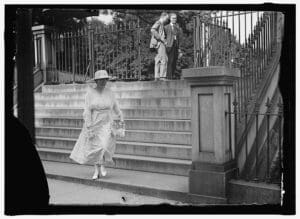
A woman in a long white dress and wide-brimmed hat descends outdoor stone steps, holding her skirt. Two men in suits stand at the top of the steps, watching her. Wrought iron railings line the stairs.
Rankin leaving the White House in 1917. Photograph by Harris & Ewing, Library of Congress, Prints and Photographs, Washington, DC.

Through all of it, Rankin was true to her principles, unwavering under tremendous pressure.

I kept reading about Rankin because she is fascinating, but I was no longer interested in her time at Hull-House (at least for now). Now I was intrigued by the qualities of Rankin’s character, particularly as compared with those of Jane Addams. I saw the common traits of quiet determination, commitment to personal values, and self-confidence. You see, at the Addams Papers we sometimes grumble a little bit about the stoicism of our dear subject. We sometimes long to discover chinks in the armor of her curated public personal. Jane Addams didn’t write much of anything at all about how hard it was to be a woman trying to save the world in the Progressive Era. We are sometimes frustrated that her composure even during the most stressful periods of her life makes it hard to know her. But as I kept reading about Rankin, I wondered if that biographer was onto something. Sangfroid, that curious new word, was pounding in my head as I continued reading.

Born in Montana in 1880, nine years before it gained statehood, Rankin was educated at Montana State University and the New York School of Philanthropy. Rankin’s interest in reform and social work mirrored the perspectives and paths of other educated and reform-minded women of her generation, but unlike most of them her priorities of suffrage, reform, and pacifism veered her directly into politics. Rankin’s term in Congress brought her fame and much respect and she rendered good service to her constituency, but she failed to be reelected in 1918. However, she seemed unphased by the defeat and just moved forward open to the next opportunity. After she left office in 1919, she joined the pacifist movement, went to Zurich with Addams, and became an active WILPF member. After Zurich, she worked with the formidable Florence Kelley at the National Consumers’ League. Then after she left Hull-House in 1924, she bought a small farm in Georgia, living a simple life there without plumbing and electricity. She kept her home in Montana, perhaps always thinking she might return to politics, and served nine years as a lobbyist for the National Council for the Prevention of War. She won her second term in Congress in 1940, beating out her antisemitic incumbent opponent. No matter what she was doing or where she was, she lived with intention and on her own terms.

The surface reading I was doing to write a short piece about her life was making it easy to see why Jane Addams took a shine to Jeannette Rankin. She was an intriguing woman, principled, fair-minded, and strong-willed. As if I needed more proof to believe that Jeannette Rankin was self-possessed, an example of Sangfroid right out of the Oxford English Dictionary, I came across the official portrait of the 65th Congress., the first in which she served.

A large group of men and one woman in formal attire pose on the steps of a government building; one person near the center (the woman!) is circled in yellow. Numbers are marked above each individual.
The 65th Congress, 1917, Library of Congress, Prints and Photographs, Washington, DC. Click to see the full photograph in all its panoramic glory.

There is Congresswoman Jeannette Rankin, sitting nearly dead center, the central portico of the U.S. Capital right behind her. The only hat and the only skirt. A woman in a sea of men.  Uncrossed legs and upright posture, she commands her space. There is a quiet, determined expression on her face. She is far more dignified than many of her fellows near her in the front row, slouching, legs splayed, arms crossed, and one shielding his eyes from the sun as he gazes into the distance at something he deems more interesting than the capturing of this historic photograph. Congresswoman Jeannette Rankin is sitting in that portrait like she belonged there because, of course, she knew she belonged there.

Yep.
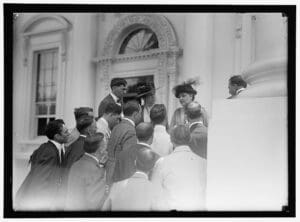
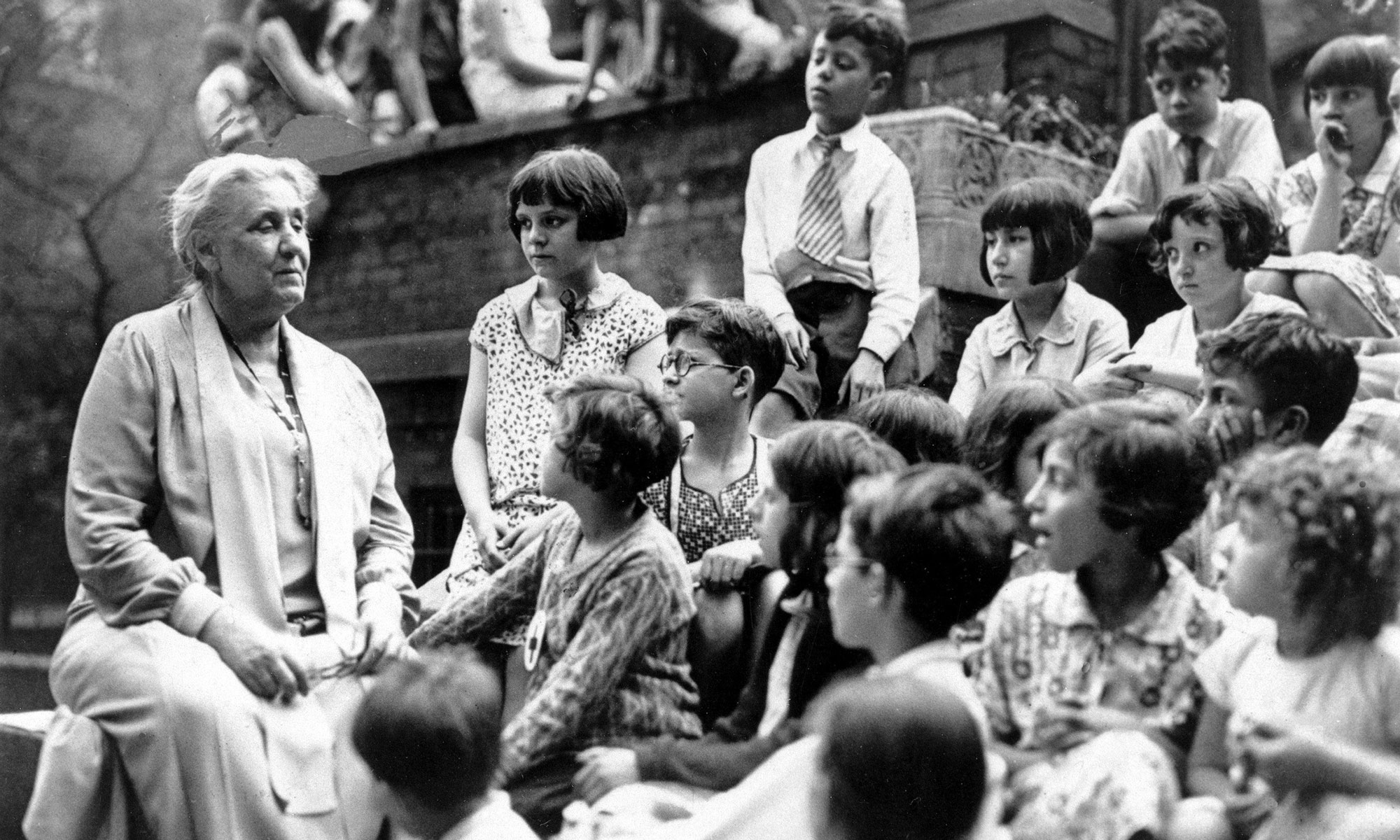
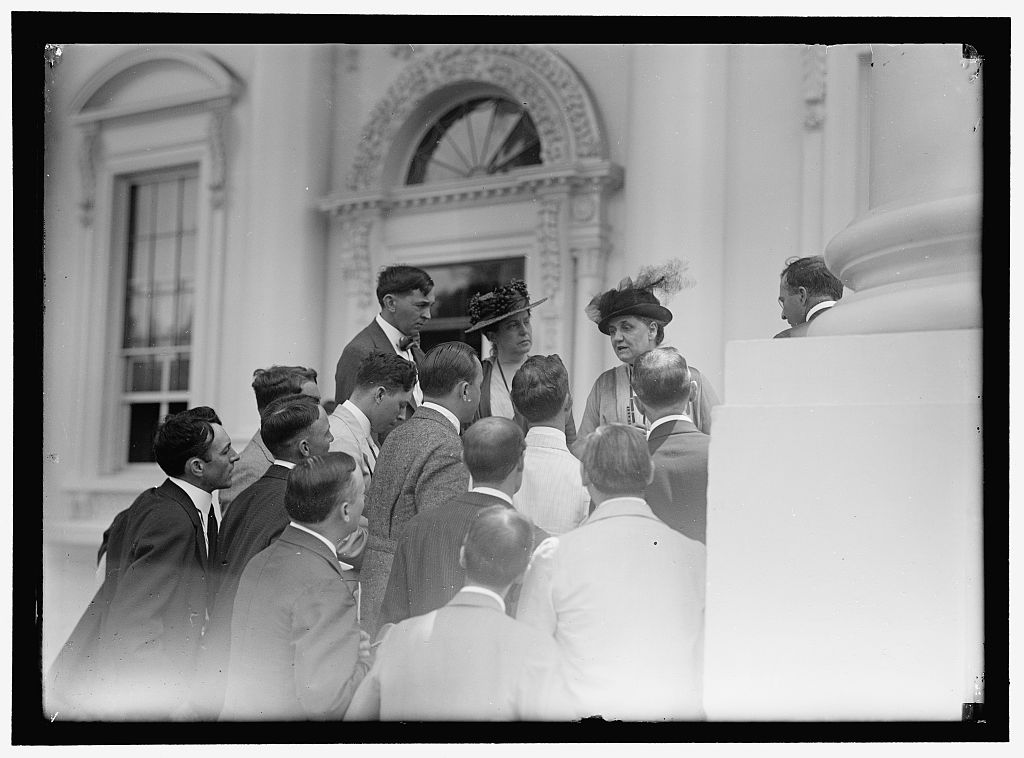
A group of men in suits gather around Jane Addams and Lillian Wald in hats, one with a feather, outside a large building with ornate windows and columns.
Sangfroid on display. Jane Addams (with Lillian Wald to her right) cool as a cucumber with an all-male group of journalists asking questions. (Image courtesy Library of Congress).

Sangfroid.

Unflappable is a word I have frequently used to describe Jane Addams. It is an apt word for a woman who stuck to her principles no matter the pressure. A woman who over and over and over again  kept making informed arguments in Springfield before the Illinois General Assembly about the evils of child labor against the manufacturing lobby who did not care one whit that factories were stealing the futures of children. Jane Addams, unflappable in the face of attacks that she was un-American, a Bolshevik, a traitor, because she dared to exercise her constitutional right to speak out against war and to promote peace for the benefit of humanity.

Unflappable works, but at every turn Jane Addams also exhibited considerable Sangfroid. Yes. Sangfroid is better. Unflappable sounds like a stiff brimmed, oversized, Edwardian hat on the windy city streets of Chicago. Sangfroid is a mighty oak standing against an impossible and exasperating Prairie tempest.

Yes. Sangfroid is better, so much so that I am beginning to consider the idea that what we have here is a generation of Sangfroid. Jeannette Rankin and Florence Kelley and Julia Lathrop and Jane Addams and so many members of that reforming generation of women were unperturbed, especially under strain. They had to be.

Rankin was the only woman in Congress when she served that first term in Congress. Everything she did and said was under a microscope. America was watching. The press was watching. History was watching. Jeannette Rankin stood up tall against all of that scrutiny. Sangfroid.

When Florence Kelley became the chief factory inspector for Illinois in 1893, she had to enter factories run by men to tell them that they were in violation of the law. She had to report her findings to a legislature of men at a time when women had no political power at all. Not surprisingly, men fought her tooth and nail, but still she kept walking into those factories and writing reports that led to the enacting of child labor legislation that changed lives and the future. Sangfroid.

When Julia Lathrop became the director of the U.S. Children’s Bureau in 1912, she was the favorite choice of many progressive men in Washington. However, many believed her task was woman’s work, not real work, and her budget to protect children was a fraction of the budget the U.S. government spent on the protections of livestock. Still, Lathrop did her work, spearheaded revelatory research studies, educated an entire generation about the needs of America’s most vulnerable children, and changed how Americans defined childhood despite an economic and political system that chafed at every suggestion of reform. Sangfroid.

Jane Addams was the first woman to do so many things I cannot name them all here but will give you a few examples: she was the first woman garbage inspector in Chicago, first woman president of the National Conference of Charities and Corrections, first woman to receive an honorary degree from Yale University, first woman to deliver a commencement address at the University of Chicago, and the first American woman to win the Nobel Peace Prize. She served on numerous boards and committees in which she was the sole woman. She boldly took her seat on panels of male scholars.  She lobbied before male-dominated state legislatures and the U.S. Congress and met with the most important religious, business, and political leaders in the United States and around the globe to make her arguments for a better world. For much of the time she had no political power, but she exerted her will anyway. She couldn’t even vote for president until 1916, but long before that she commanded audiences with presidents and sat down with them as an equal. Sangfroid.

This reform generation of American women was smart and compassionate and they had bold and brilliant ideas about how to make the world a better place. But perhaps even more important than their empathy and their ideas was the nature of their steely nerve. Men had all the power, and if women wanted to change the world they had to sit down at the table with disagreeable and disinterested and dismissive men and make them see the light. These women expected the chorus of doubt from those men (and some women, as well), but doubt for themselves was not an option. They had to open the doors and let themselves in, stand in extremely uncomfortable spaces, and hold their ground. Although they possessed warm hearts for the betterment of humanity, they had to be a little cold blooded.  Self-possessed. Cool as damned cucumbers.

In 1906, President Theodore Roosevelt wrote Jane Addams: “Will you let me say a word of very sincere thanks to you for the eminent sanity, good-humor and judgment you always display in pushing matters you have at heart? I have such awful times with reformers of the hysterical and sensational stamp, and yet I so thoroughly believe in reform, that I fairly revel in dealing with anyone like you.”

Jane Addams, Jeannette Rankin, and all of those reform women were up against thousands of patronizing Theodore Roosevelts as well as thousands more men who didn’t have Roosevelt’s bent toward reform and general interest in interesting women like Jane Addams. I’m now thinking about the bold women who organized female workers through the Women’s Trade Union League, Mary McDowell who worked her entire life in the impossibly tough Union Stockyards of Chicago, and suffragists, yes, all the suffragists. Alice Paul certainly exhibited imperturbability under strain! Sangfroid. All of them. Sangfroid.

I’ve written before about how Jane Addams developed a particular persona she found politically effective, a voice that would be heard in a public arena that in many ways was unattuned to women’s voices. I stand by my previous arguments that Jane Addams was guarded, deliberate, and dispassionate because, for her, the changes she wanted to see in her world were more important than any one person doing the work. She set her inner self aside, displayed a resolute dispassion, and made many of the tough Theodore Roosevelts of the world respect her, hear her, and listen to her ideas.

But now I have to wonder. Maybe it wasn’t so hard for Jane Addams to construct a demeanor of calm. Maybe Jane Addams was born exhibiting considerable sangfroid, like Jeannette Rankin’s biographer said she was born. Perhaps Jane Addams succeeded in her work and became the icon of the Progressive Era she became because imperturbability was innate in her character. I certainly would have slugged many of the fools Jane Addams had to face down, because I am, naturally, not even unflappable. I wonder, if we did a personality study of the all of the women who were first to do all kinds of stuff we wouldn’t find that each and every one of them possessed considerable sangfroid. Perhaps the historical circumstances didn’t effect such a demeanor but rather the demeaner itself, deep in their bones, made these women capable of opening all those doors and calmly standing in the fire on the other side.

By Stacy Lynn, Associate Editor

Sources: Nancy C. Unger, “Rankin, Jeannette Pickering,” American National Biography; Biographical Directory of Congress; “Jeannette Rankin: ‘I Cannot Vote for War,’” U.S. House of Representatives, blog; Martha G. Stapler, ed., The Woman Suffrage Year Book (National American Woman Suffrage Association, 1917), 14; from the Jane Addams Digital Edition: Theodore Roosevelt to Jane Addams, January 24, 1906; Congratulatory Telegram for Jeannette Rankin, November 12, 1916; Vachel Lindsay to Jane Addams, April 9, 1917; Romain Rolland to Johannes Vilhelm Jensen, May 15, 1917; Alice Thacher Post to Jane Addams, December 17, 1918 Jane Addams to Mary Rozet Smith, April 18, 1919; Alice Hamilton to Mary Rozet Smith, May 12, 1919; Contributions Received in National Office in Response to Miss Addams’ Letter, March 20, 1924.
 

Jane Addams and the Presidential Election of 1916

A group of men in suits gather outside a grand building, listening to Jane Addams and Lillian Wald, one of whom is wearing a hat with feathers, as they stand near a large column and ornate window.

What a difference four years and a world war made in the political opinions of Jane Addams.

In the Presidential Election of 1912, Jane Addams had supported Theodore Roosevelt and the new Progressive Party, in part because Democrat Woodrow Wilson and Republican William Howard Taft refused to add a plank for woman suffrage to their platforms as the Progressives had done. Jane Addams was also a member of the Progressive Party because it was pledged to social and industrial reform. When Woodrow Wilson was inaugurated on March 4, 1913, Addams was chair of the Department of Social and Industrial Justice of the Progressive National Service, an organization established to further the reform planks of the Party’s 1912 platform.

President Woodrow Wilson’s policies almost immediately rankled progressive reformers. For example, federal departments instigated segregationist policies that threatened the established civil service system which had employed Black Americans since reconstruction. Racial justice activists, organizations like the National Association for the Advancement of Colored People (NAACP), and social justice advocates like Jane Addams were watching. Just five months into Wilson’s administration, Addams headlined a small group of Chicago NAACP members protesting “against the adoption or extension of a segregation policy in the treatment of United States civil service appointees.”

A group of men in suits gather outside a grand building, listening to Jane Addams and Lillian Wald, one of whom is wearing a hat with feathers, as they stand near a large column and ornate window.
Jane Addams (with Lillian Wald to her left) speaking with journalists (Image courtesy Library of Congress).

During the next four years, Addams would frequently challenge the policies of the Wilson Administration. She protested the deportation of famed British suffragist Emmeline Pankhurst, took Wilson to task for his refusal to support woman suffrage, and urged him to meet with striking workers. Jane Addams had earned a national reputation as a leading thinker in America, her opinions held widespread sway, and she had impressive power to influence politicians. Her role in the Progressive Party presidential campaign of 1912 had enhanced that influence, particularly in American politics, and Wilson was wise to keep his door open to Addams, through correspondence and face-to-face meetings.

In January 1915, Addams praised Wilson for his veto of a harsh immigration bill. She commended his early commitment to maintain U.S. neutrality, at one point calling him “a splendid man.” As the war in Europe escalated, Addams continue to urge the President to keep the United States out of the conflict and to negotiate for peace. Her establishment of the Women’s International League for Peace and Freedom in the spring of 1915 at The Hague gave her an international platform for her ideas about democracy, humanitarianism, war, and peace. And she used that pulpit to press her claims. When she requested a meeting with the President in March 1915, Wilson wrote:

“I need not tell you how glad I shall be to consider any suggestion with regard to a peace that you may care to submit to me, but I literally dare not seek an interview such as you suggest because I think I do not exaggerate when I say that requests of a similar sort come from different quarters at least every week and I should have to draw some distinctions which would become invidious before I get through with them, unless I granted interviews to all who applied for them in this matter. You will understand the delicacy this situation places me in. I should welcome a memorandum from you with all my heart.”

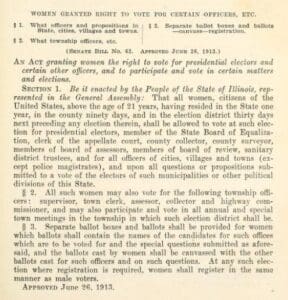
A vintage document titled Women Granted Right to Vote For Certain Officers, Etc. describes an Illinois law from 1913 granting women the right to vote in specific elections and outlines related procedures.
Laws of the State of Illinois (1912), 333.

In the spring and summer of 1916, as Republicans and Progressives considered strategies to defeat Wilson in the upcoming President Election, Jane Addams was convalescing (from an operation to remove a kidney) in Chicago and later in Bar Harbor, Maine. There would be no Progressive Party candidate for president, which likely dampened her appetite for the extensive campaigning she had done in 1912. But Addams would cast her first vote for president in the November election, as Illinois had granted women suffrage rights in June 1913. She would have to choose between Wilson, with whom she disagreed on a variety of issues, and Charles Evans Hughes, the compromise candidate of the progressive and conservative members of the Republican Party. Hughes was a former New York Governor (1907-1910), and President Taft appointed him to the U.S. Supreme Court in 1910. He was a moderate and would make few of the social reform promises Theodore Roosevelt had made in the 1912 presidential campaign.

Many progressive reformers and friends of Addams, including Louise de Koven Bowen whose home in which Addams was recuperating, planned to vote for Hughes. Theodore Roosevelt also supported Hughes, although his endorsement was decidedly lukewarm. President Wilson had supported some progressive measures and had sent Addams sixty long-stemmed American Beauty roses and get-well greetings. Still, Addams was always guided by her own conscience (and not a woman to be bribed by flowers, not even roses!). Jane Addams was a pragmatist. She carefully considered the two candidates. Like we often have in our modern elections, there were two imperfect options. Like we often have to do in our modern elections, Addams had to chose the lesser of two evils or the best of the middling.

On October 4, 1915, she made a public statement: “I am ill and not able to do any political work. I do not think I shall make any statement formally declaring myself. When I am asked the direct question about my vote I reply that I shall vote for Wilson.” Upon hearing of her support, Wilson sent Addams another impressive bouquet of flowers!

In the end, Jane Addams answered public pressure for a more verbose statement. And on the eve of the election, she explained herself in an article published in newspapers across the country. Introducing her declaration for Wilson, the Cincinnati Post wrote: “Jane Addams, Hull House, Chicago, is one of the world’s greatest women. In 1912 she was one of the most enthusiastic delegates to the Progressive Convention that nominated Roosevelt, and she supported him with all her ardor. That Jane Addams, whose sincerity and disinterestedness in the cause of the plain people are beyond question, gives her approval of the progressive laws enacted during the Wilson administration is of great significance.”

In her typical, clear-headed fashion, Addams explained herself:

“In 1912 many of us became members of the Progressive Party, not only because we believed that the correction of abuses inevitably developed by an uncontrolled industrialism should become a vital issue in federal politics, but also because we were convinced this modern type of remedial legislation could be accomplished only [through] a new party.

“Because of this belief I, at least, was quite unprepared for the distinctive period in American politics developed under the brilliant party leadership of President Wilson, when important federal measures were constantly passed for the national adjustment of nationwide problems.

“The present administration comes before the country with a social program that carries assurance because of a record of pledges fulfilled and a series of legislative achievements not equaled by any other administration. Prominent among its contributions to social and industrial justice are these:

“It has been established as a matter of law that labor is not to be considered a mere commodity or article of commerce.

“The seamen have been made free men and have been given the right, previously denied, to leave their employment when conditions become intolerable.

“The products of child labor have been excluded from interstate commerce.

“The most liberal workmen’s compensation law in the world has been enacted, affecting 400,000 federal [employees].

“The principle of the eight-hour day has been recognized.

“The rural credits bill and the Federal Reserve Act are contributions to the welfare of the entire country.

“This administration has made certain distinct advances toward more rational international relations:

“(a) Treaties with 30 nations have been signed which provide for a year’s delay and investigation of matters at issue before diplomatic relations are severed.

“(b) The repeal of the toll exemptions for American ships in the Panama Canal was a recognition of the principle of fair dealing among nations, which may be a first tentative step toward the internationalization of such highways of the sea as the Dardanelles, the Panama, Suez and Kiel canals.

“(c) Determination, in spite of almost insuperable difficulties and obvious blunders, to permit the Mexicans to work their way to self-government without recourse to the old imperialistic method of sending soldiers into a weaker nation, first to police property and then to become an army of occupation.

“(d) During the past four years the Pan-American Union has been strengthened and made more genuine. The importance of this is not merely local, for this union has seemed to distressed and bewildered students of internationalism in Europe to offer an example of the kind of machinery for international action which is not inconsistent with a sound nationalism.”

After the election, Wilson wrote Addams: “I wish I felt more worthy of the great trust imposed in me.”

Addams would stay the Wilson course, at least for a while. In just five months the United States would enter the war in Europe and test her support. On April 10, 1917, ten days after the United States declared war on Germany, she signed a petition to the President to demand his promise to uphold free speech and democratic values for all Americans during the war:

“We are deeply concerned lest America, having declared a state of war, should sacrifice certain safeguards fundamental to the life of her democracy.

“Several bills are now before Congress, or may come before it, seeking to punish those who designedly use military information for the benefit of foreign governments.

“With this purpose we, of course, are entirely sympathetic, but the administration of such laws, purposely made comprehensive, so as to include a wide range of possible offenders, may easily lend itself to the suppression of free speech, free assemblage, popular discussion and criticism.

“We believe that you would deem it essential, perhaps more at this time than at any other, that the truth should not be withheld, or concealed from the American people whose interests after all are the most vital consideration.

“Even by this time, we have seen evidence of the breaking down of immemorial rights and privileges. Halls have been refused for public discussion; meetings have been broken up; speakers have been arrested and censorship exercised, not to prevent the transmission of information to enemy countries, but to prevent the free discussion by American citizens of our own problems and policies. As we go on, the inevitable psychology of war will manifest itself with increasing danger, not only to individuals but to our cherished institutions. It is possible that the moral damage to our democracy in this war may become more serious than the physical or national losses incurred.

“What we ask of you, Mr. President, whose utterances at this time must command the earnest attention of the country, is to make an impressive statement that will reach, not only the officials of the federal government scattered throughout the union, but the officials of the several states and of the cities, towns and villages of the country, reminding them of the peculiar obligation devolving upon all Americans in this war to uphold in every way our constitutional rights and liberties. This will give assurance that in attempting to administer war-time laws, the spirit of democracy will not be broken. Such a statement sent throughout the country would reinforce your declaration that this is a war for democracy and liberty. It is only because this matter seems of paramount public importance that we venture to bring it to you at this time for your attention.”

Jane Addams was still watching, and she would keep on watching. She did not vote and forget about it. She stayed informed. She held her leaders accountable. She did not take her vote nor her political power for granted.

Presidential Election: November 7, 1916

Woodrow Wilson (Democrat)
Popular Vote: 9.1 million
Electoral College: 277

Charles Evans Hughes (Republican)
Popular Vote: 8.5 million
Electoral College: 254

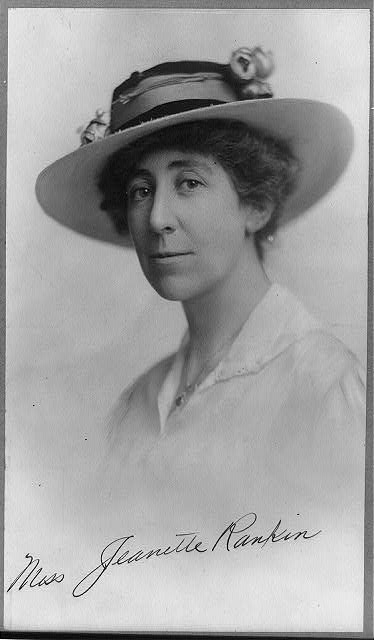
Black and white portrait of Jeanette Rankin wearing a wide-brimmed hat with flowers, a light blouse, and a subtle smile. Below the image is the handwritten name Miss Jeannette Rankin.
Jeannette Rankin, 1916

One resounding victory for women in 1916 was the election of Jane Addams’s friend Jeannette Rankin (1880-1973) of Montana to be the first woman to serve in the U. S. Congress.

Addams sent this telegram to Rankin: “Heartiest congratulations on your election and appreciation of what it means to all American women.” Biographical Directory of the U.S. Congress; Congratulatory Telegram for Jeannette Rankin, November 12, 1916, Jane Addams Digital Edition.

Sources: Louise W. Knight, Jane Addams: Spirit in Action (New York: W. W. Norton, 2010), 189-223; Neil Lanctot, The Approaching Storm: Roosevelt, Wilson, Addams and Their Clash over America’s Future (New York: Riverhead Books, 2021), 206-10, 243-46, 485-87, 562-63; American National Biography. Jane Addams et al. to Woodrow Wilson, August 26, 1913; Jane Addams et al. to Woodrow Wilson, October 18, 1913; Summary of Jane Addams et al. to Woodrow Wilson, October 19, 1913; Statements on Wilson Administration, December 16, 1913; Jane Addams to Woodrow Wilson, May 20, 1914; Jane Addams to Woodrow Wilson, January 29, 1915; Jane Addams and John A. Aylward to Woodrow Wilson, March 4, 1915; Frances Alice Kellor to Jane Addams, February 5, 1913; Woodrow Wilson to Jane Addams, March 8, 1915; Report of Department of Social Service and Industrial Justice, Progressive Service Committee, April 23, 1913; Comments on President Wilson, May 12, 1915; Statement on Addams’s Tuberculosis Diagnosis, April 6, 1916; Harriet Park Thomas to Jane Addams, August 8, 1916; Woodrow Wilson is Good Enough for Jane Addams, October 4, 1916; Manifesto Issued by International Congress of Women Envoys, October 15, 1915; Jane Addams to Woodrow Wilson, October 26, 1915; Jane Addams Sees Progressive Aims Attained Thru President, November 3, 1916; Woodrow Wilson to Jane Addams, November 23, 1916; Jane Addams et al. to Woodrow Wilson, April 16, 1917, all in Jane Addams Digital Edition.

For an in depth analysis of Jane Addams’s ideas about peace in juxtaposition with those of Roosevelt and Wilson, see Neil Lanctot, The Approaching Storm: Roosevelt, Wilson, Addams, and Their Class over America’s Future and his Jane Addams Papers Project blog post, “Jane Addams and the Great War.”

Note: This post is the second in a six-part series discussing Jane Addams’s political alliances and engagement in presidential elections from 1912 to 1932.

Jane Addams, Vachel Lindsay, and Me

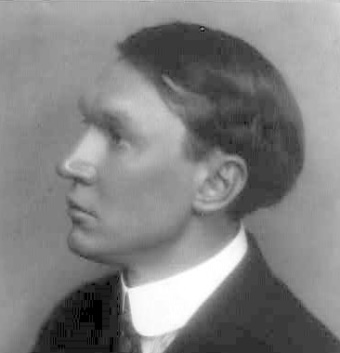
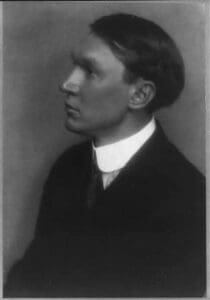
Black and white portrait photo of a man in profile with short, neatly combed hair, wearing a suit and a white collared shirt. He is looking to the left against a plain background.

History is, essentially, the stories of individual people and the interconnectedness of their stories to each other and to the broader history of their communities, their societies, and their world. The intersections of the lives of the historical figures who occupy my historical imagination are fascinating to me, and the people who inspired them are always central to the development of my understanding about their lives and the historical space they occupied. Jane Addams, for example, was an inspiration to an entire generation of female reformers who lived and worked at Hull-House, and the individual work those women pursued made an important impact on Addams’s world view, her writing, and her advocacy for social and economic justice. As well, her fascination with Tolstoy and her childhood memories of Abraham Lincoln offer us insights into the development of her ideas, her ideals, and her visions for reform.

As a historian, I spend a great deal of time thinking about these human connections of the past. The close relationships of the historical figures I study—like the intimate friendship between Jane Addams and Mary Rozet Smith or the professional relationship Addams shared with reformer and settlement worker Lillian Wald—offer obvious clues about Addams’s personal and professional life. The intersection of these particular personal stories tell me much about the lives of women in the first part of the 20th century, the network of Progressive Era reformers, and the conditions of life in the urban environments of Chicago and New York City. But as an enthusiast of the past, it really gets interesting for me when I chance upon an unexpected or less obvious historical connection. It is particularly thrilling when that connection also resonates in some way with my own personal story or relates to other historical interests I  entertain.

Recently, I was doing some editorial work on a set of documents dated just days after American entry into WWI. One document was a letter to Jane Addams, dated April 9, 1917:

My Dear Friend:

What shall I do? This war breaks my heart. Send me what you have written since [William Jennings] Bryan enlisted — for instance. Are you with Bryan? Do you accept President Wilson’s war message on its face value? Is that final with you?

I hate a hyphenated American. I hate war. But I owe no one in Europe a grudge. I would rather be shot than shoot anybody. If I had been in Congress I would have voted with Miss [Jeannette] Rankin and would have considered it a sufficient reason to say “I will not vote for war till she does.”

Please write me a tract, or send a clipping. With all respect

Nicholas Vachel Lindsay

Vachel Lindsay was a poet and performing artist who is relatively unknown today. He lived and worked in Springfield, Illinois, where I lived and worked myself for more  than twenty years; and, therefore, I am well acquainted with his body of work and the Black-and-white portrait of a young man in a suit, shown in profile facing left. He has short, neatly combed hair and wears a high-collared shirt with a dark jacket and tie. The background is plain.story of his life. When I read his letter to Addams, I recalled that Lindsay had written a poem about her, inspired by her peace trip to Europe in 1915. However, I was unaware he knew Addams personally nor that he had corresponded with her. The Jane Addams Digital Edition includes four letters from Lindsay to Addams, each revealing something of the poet’s respect for and fascination with Addams and with Hull-House. In an October 1916 letter, Lindsay proclaimed: “I have loved you a long time dear lady.”
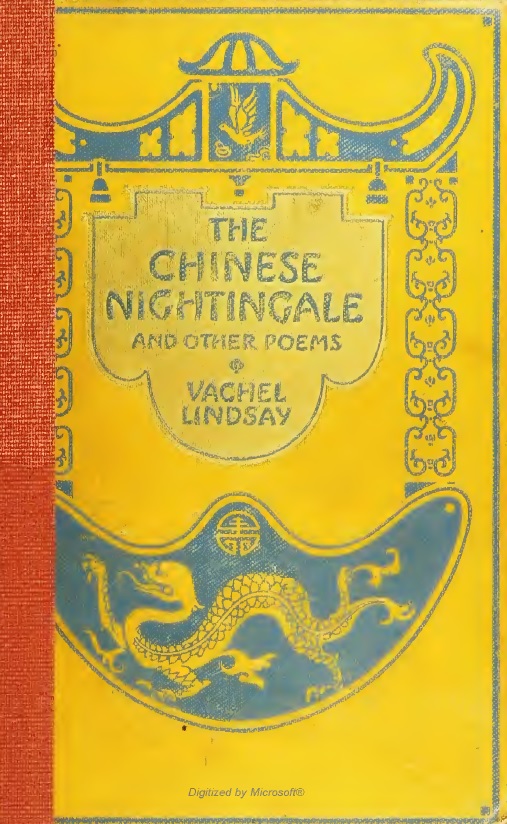
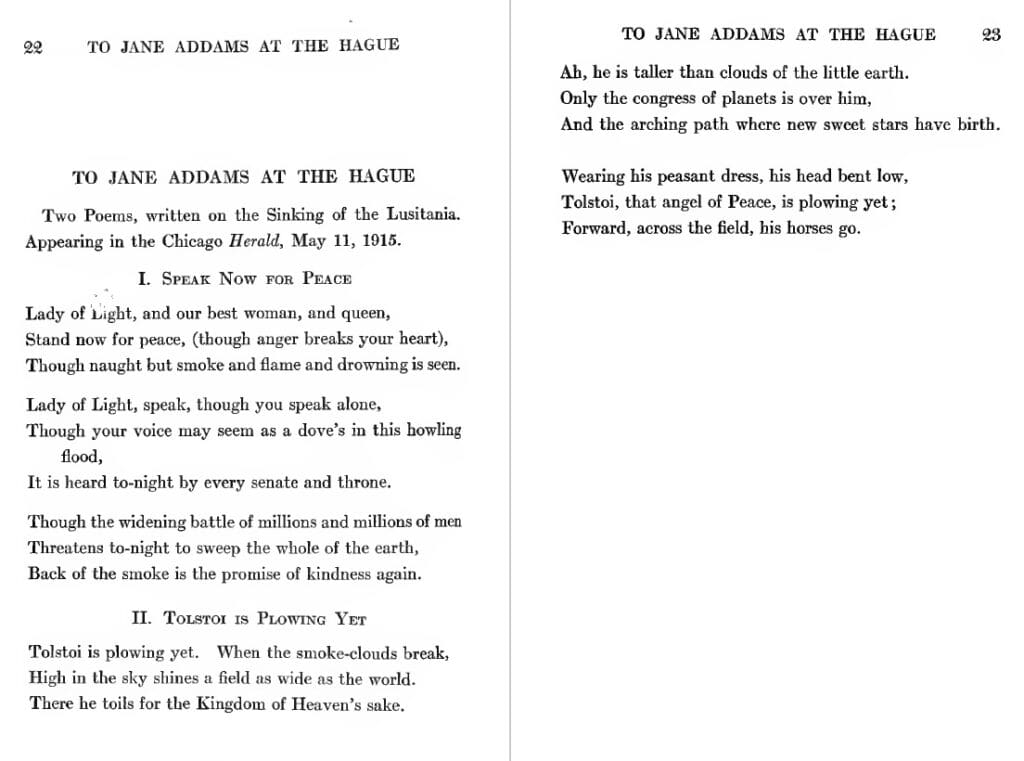
That love had, indeed, inspired the poem I had remembered, “To Jane Addams at The Hague,” which Lindsay first published in the Chicago Herald  in May 1915 and later as part of his popular 1917 collection The Chinese Nightingale and Other Poems.

In the 1910s, Lindsay spent time in Chicago performing his poems and seeing his literary friends, including the poet and magazine editor Harriet Monroe, with whom Addams was also acquainted. Lindsay frequented Hull-House, where his good friend George Hooker was a resident, and it seems likely he enjoyed at least one or two good talks with Addams. It is unclear when he might have been formally introduced to her, but in April 1916 he wrote her a letter indicating they had been corresponding for some time. That letter was a reply to a letter from Addams, and in it Lindsay sent her his wish that they may soon see a moving picture show together. There are no known extant letters of Jane Addams to Vachel Lindsay, but the content of his letters to her indicates she had some interest in the young man and his work, and in a speech in 1922, she quoted Lindsay’s analysis of the new medium of the movies in modern society.

Lindsay, who was associated with a group of celebrated Chicago writers that included Edgar Lee Masters and Carl Sandburg, was a creative and somewhat eccentric young man. He traveled the country on foot, selling his poems to support himself, and he popularized for a time the chanting and singing of poems, often performing them with musical and dance accompaniments. In December 1916, Lindsay invited Addams to one of those performances at the Little Theatre in Chicago. It is unclear if she attended, but there is evidence she invited Lindsay to Hull-House on a few occasions. In October of that year, Addams sent Lindsay a copy of her book The Long Road of Woman’s Memory, and in his letter of thanks he wrote: “I sat down and read it all morning and half the afternoon the minute it arrived. It is a lovely book—the work of a Greek, a woman more Greek than Christian.”

The fact that Lindsay, who was a progressive thinker, admired Jane Addams and her work is not surprising. Addams and Hull-House inspired many artists and writers, as well as reformers and social workers. Nor is it surprising that Lindsay, who spent time in Chicago and who interacted with people in the orbit of Hull-House, had a personal acquaintance with the famed settlement worker. What is surprising, and fascinating, too, is that Lindsay experienced a strong emotional connection to Addams. His friendship with her touched his soul, as one biographer put it. Lindsay looked to Addams for answers about his anxieties related to the war, sought her approval of his work, and shared with her his fears about failure. “Back of it all is the hope that my book shall be a live thing—a piece of ink-dynamite, not just a book pleasantly discussed by people who read my verses,” he wrote Addams in 1916. “With so many books dying before my eyes—I cannot bear to write a dead one.”

Lindsay had experienced his first hallucinations in 1904, initial signs of the future mental illness that would ultimately cost him his life; and his breakup with the poet Sara Teasdale in 1914 had been emotionally traumatic for the poet. But by 1916, Lindsay was enjoying considerable literary success, winning awards and selling books. Although four letters is far, far, far from enough evidence to evaluate the emotional importance Lindsay may have been attaching to his friendship with Addams, a close reading of the letters, however, evokes a whisper of the mental distress that was coming. There is a breathless quality to the words and the sentences, and the letters leave me wondering what kind of advice or encouragement Jane Addams may have offered Lindsay in their face-to-face interactions with each other. It is unlikely we will ever know.

What I know for certain, however, is that the relationship between Lindsay and Addams, despite what it may have meant to her on a personal level, is an example of the richness of the interconnectedness of human stories, the broader sphere of one person’s influence in the world. In this case, it speaks to the significance of Jane Addams as an inspirational figure. But it is also one of those delightful connections I am happy to chance upon, which light a spark in my historical imagination and connect my own story to the stories of the past.

Notes: Anna Massa, Vachel Lindsay: Fieldworker for the American Dream, Bloomington: Indiana University Press, 1970, 17, 46, 100-101, 202; Eleanor Ruggles, The West-Going Heart: A Life O Vachel Lindsay (New York: W. W. Norton, 1959), 240, 247, 258; “Lindsay, Vachel (1879-1931), American National Biography; Vachel Lindsay to Jane Addams, October 15, 1916; Vachel Lindsay to Jane Addams, October 29, 1916; Vachel Lindsay to Jane Addams, April 9, 1917; Vachel Lindsay to Jane Addams, June 26, 1917, all in Jane Addams Digital Edition. William Jennings Bryan (1860-1925) was a Democratic politician from Nebraska. In April 1917, he offered his services to the government in the war effort. American National Biography. Jeannette Rankin (1880-1973), a peace activist and Republican politician from Montana, was the first woman to serve in Congress. She voted against the American declaration of war against Germany in 1917. American National Biography; Biographical Directory of the United States Congress. The image of Lindsay is courtesy of the Prints and Photographs Division, Library of Congress, Washington, DC.