Jane Addams and the Presidential Election of 1912

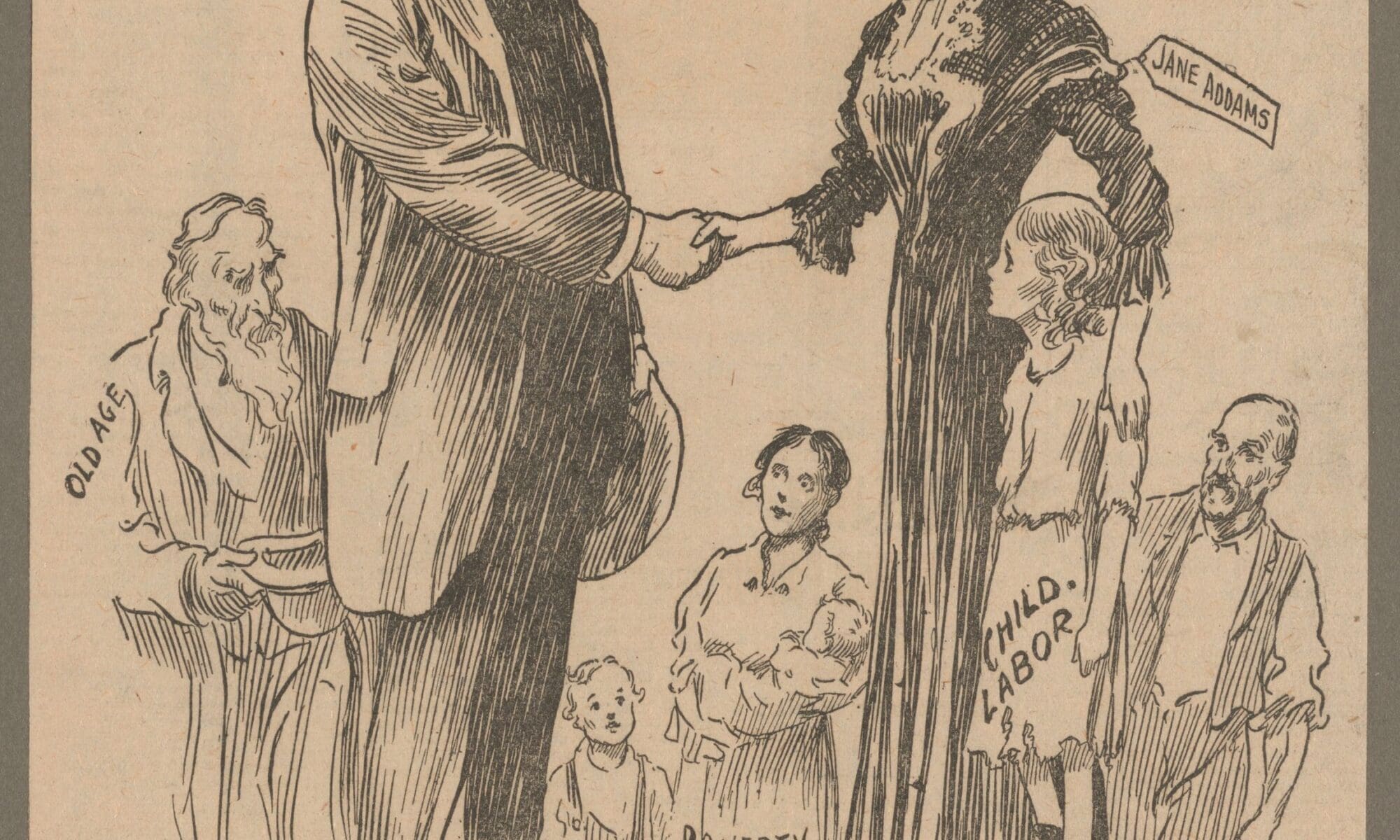
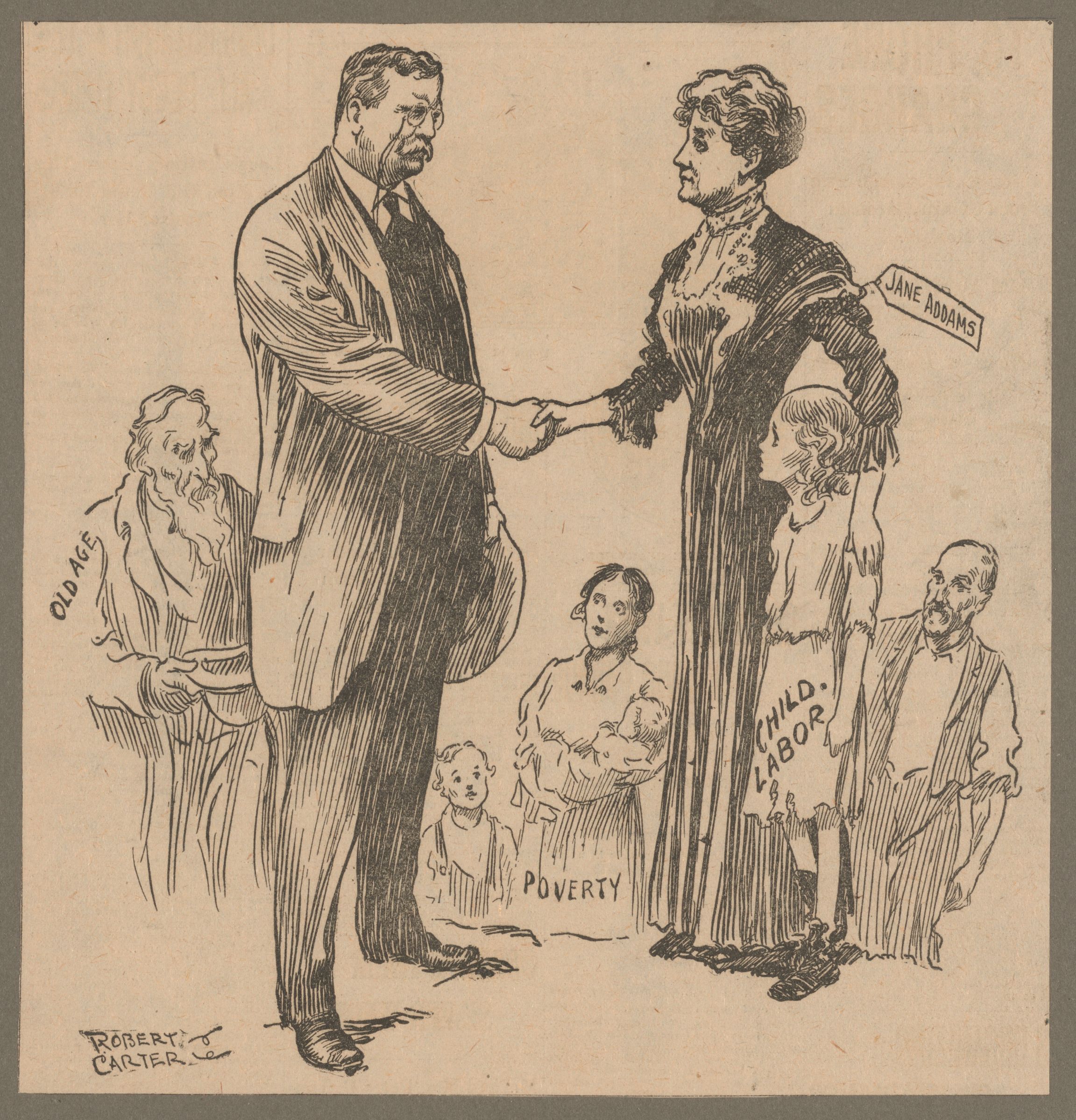
Political cartoon of a man and a woman labeled Jane Addams shaking hands; the woman stands with a child labeled Child Labor while a group labeled Old Age and Poverty watches in the background.
TR and JA Enlisted for the Great Battle. Philadelphia Times, Aug. 8, 1912.

One of the most fascinating decisions Jane Addams ever made was to enter the fray of partisan politics and back Theodore Roosevelt’s Progressive Party bid for the Presidency in 1912. She had endorsed political candidates before, but her participation as a delegate to the Progressive Party Convention in Chicago, her role in seconding Roosevelt’s nomination, and her stumping for and writing of a series of articles in support of the Progressive Party ticket and its platform was historic. It was a bold move for Addams. It raised many eyebrows. And although there is no evidence that it jeopardized Hull-House’s patronage, it went decidedly against the general philosophy of reform and charitable organizations whose livelihoods depended upon support from across the political spectrum.

When she stood on the stage of the Coliseum in Chicago at the Progressive Party Convention on August 7, 1912, Jane Addams explained to the cheering crowd why she supported Roosevelt and the Progressive Party:

I rise to second the nomination, stirred by the splendid platform adopted by this convention.
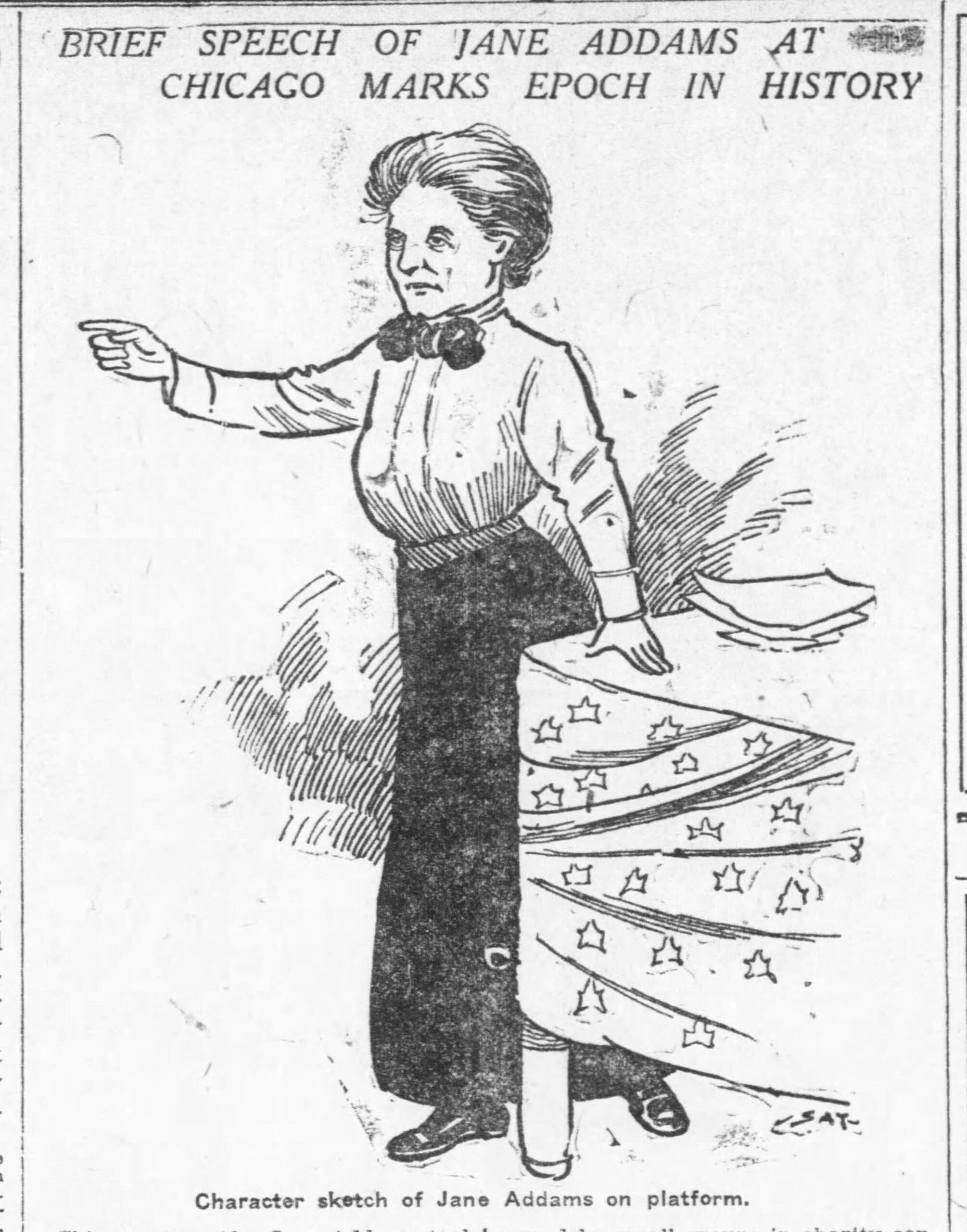
Cartoon drawing of Jane Addams standing on a platform decorated with stars and stripes, gesturing forward as if speaking; caption reads, Character sketch of Jane Addams on platform.
Pensacola (FL) News Journal, Aug. 13, 1912.

“Measures of industrial amelioration, demands for social justice, long discussed by small groups in charity conferences and economic associations, have here been considered in a great national convention and are at last thrust into the stern arena of political action.

A great party has pledged itself to the protection of children, to the care of the aged, to the relief of overworked girls, to the safeguarding of burdened men. Committed to these humane undertakings, it is inevitable that such a party should appeal to women, should seek to draw upon the great reservoir of their moral energy so long undesired and unutilized in practical politics—one the corollary of the other; a program of human welfare, the necessity for women’s participation.

We ratify this platform not only because it represents our earnest convictions and formulates our high hopes, but because it pulls upon our faculties and calls us to definite action. We find it a prophecy that democracy shall not be actually realized until no group of our people—certainly not 10,000,000 so sadly in need of reassurance—shall fail to bear the responsibilities of self-government and that no class of evils shall lie beyond redress.

The new party has become the American exponent of a world-wide movement toward juster social conditions, a movement which the United States, lagging behind other great nations, has been unaccountably slow to embody in political action.

I second the nomination of Theodore Roosevelt because he is one of the few men in our public life who has been responsive to the social appeal and who has caught the significance of the modern movement. Because of that, because the program will require a leader of invincible courage, of open mind, of democratic sympathies, one endowed with power to interpret the common man and to identify himself with the common lot, I heartily second the nomination.”

The following day, Roosevelt sent a long telegram to Addams:

“I wished to see you in person to thank you for seconding me. I do it now instead. I prized your action not only because of what you are and stand for, but because of what it symbolized for the new movement. In this great national convention starting the new party women have thereby been shown to have their place to fill precisely as men have, and on an absolute equality. It is idle now to argue whether women can play their part in politics, because in this convention we saw the accomplished fact and more-over the women who have actively participated in this work of launching the new party represent all that we are most proud to associate with American womanhood. …”

The week was a whirlwind, but Addams was, perhaps surprisingly, enjoying herself. She was all in on the campaign, writing her sister Alice Haldeman on August 9:

“You may have seen by the papers that I have become a full fledged ‘bull moose’ and this morning accepted a place on the National Committee. I am sending you a copy of speech of acceptance which really explains my attitude better than anything else does.”

On the surface, Jane Addams’s quick jump into partisan politics made a great deal of sense. The Progressive Party’s Platform was in alignment with her reform work and her values. In a series of syndicated articles she published in the fall campaign, she explained in great detail to the American public why the Progressive Party was right for women, workers, immigrants, and Black Americans. In one of those articles, Addams attempted to explain her conversion to partisan politics:

“When I try to write down the steps by which I became a Progressive, I am inclined to trace them first to the gradual discovery that philanthropic effort everywhere, is merging into civic effort. In fact the line between philanthropy and politics is so constantly changing that it is very difficult to know when the given step has been taken, which carried one from the first field into the second.”

Addams had come to understand that philanthropic work was, indeed, political work. By necessity, real reform required legislative force. Her alliance with the Progressive Party was rooted in that belief and, in her eyes, this new national political party stood soundly upon a foundation of reform. However, could Addams have supported the Progressive Party’s platform without jumping in with both feet? What made her go all in on Roosevelt, a man she had just two months prior called “wabbly” on woman suffrage? She had never before been involved in a presidential campaign. What was different in August 1912?

I cannot get into Jane Addams’s head, but I believe that the extensive woman suffrage campaigning Addams had done all spring in Kansas and Wisconsin inspired her decision to become a “Bull Moose.” She was frustrated and losing patience. As she wrote in an article in The Survey on June 1, 1912:

“The comfortable citizen possessing a vote won for him in a previous generation, who is so often profoundly disturbed by the cry of ‘Votes for Women,’ seldom connects the present attempt to extend the franchise with those former efforts, as the results of which, he himself became a member of the enfranchised class. Still less does the average voter reflect that in order to make self-government a great instrument in the hands of those who crave social justice, it must ever be built up anew in relation to changing experiences, and that unless this readjustment constantly takes place self-government itself is placed in jeopardy.”

It is true that when Theodore Roosevelt agreed to support an equal suffrage plank in the Progressive Party Platform and to personally support woman suffrage, Addams was willing to lend her reputation, her writing talent, and her valuable time to the presidential campaign. She recognized this historic opportunity to be part of a new reformed-minded national party that had a chance to win the election. Behind a seasoned politician like Theodore Roosevelt, the Progressive Party would put the issues she cared about most deeply on the national stage. The party platform included fifteen distinct social justice issues that Addams had championed, from the prohibition of child labor to support for the eight-hour workday to the favor of labor organization. Most critically, however, was the Progressive Party’s pledge: “to the task of securing equal suffrage to men and women alike.” For Addams, the plank of equal suffrage was more than icing on the cake, it was the imperative to ensure all the rest of the party’s aims. And so, even as she could not vote, she became a political animal, a dedicated Bull Moose for the presidential campaign of 1912.
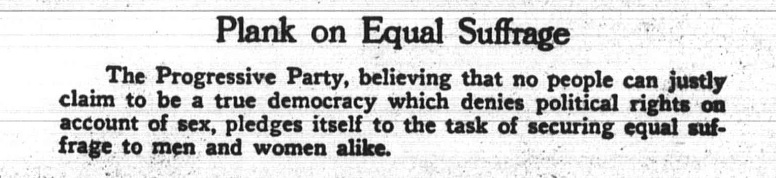
A newspaper clipping titled Plank on Equal Suffrage states the Progressive Party supports equal political rights and suffrage for men and women, pledging to secure this equality regardless of sex.
Progressive Party Suffrage Plank, 1912

It is also true that Addams surprised herself by the excitement the campaign roused for her.  A day at Progressive Party headquarters in New York City in late September, making campaign telephone calls, was particularly fun for her. To put ala Teddy, Addams was deee-lighted to be a Bull Moose. En route to Indianapolis for a campaign speech, she wrote her sister on October 14: “I am quite enjoying my campaigning and especially my trip [to] N.Y.”
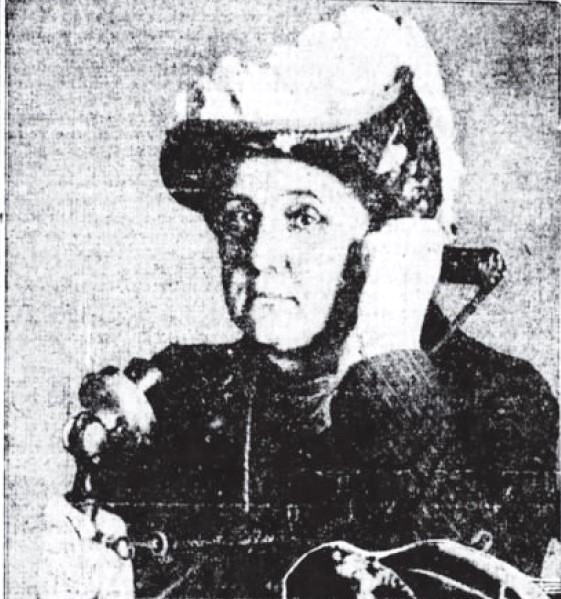
A black-and-white, grainy photo of a Jane Addams on a telephone
New-York Tribune, Sep. 26, 1912.

In addition to spending her summer vacation in Maine writing campaign articles, Addams served as chair of a Progressive party women’s committee in Chicago and as a member of the Cook County Progressive Committee.  She delivered speeches and attended campaign rallies in Colorado, Illinois, Indiana, Iowa, Kansas, Michigan, Minnesota, Missouri, Nebraska, New York, North Dakota, Oklahoma, South Dakota and Wisconsin. She wrapped up a western campaign swing in Kansas City on November 4 and was back home at Hull-House for election day.

On the night of the election, when the results were in, Roosevelt wrote Addams from Oyster Bay:

“Now, my dear Miss Addams, I wish to tell you how very much your support in this campaign has meant to me personally. We have fought a good fight; we have kept the faith; we have gone down in disaster. Yet I certainly feel that it would have been wrong for us not to have fought exactly as we did. At any rate, you may be sure of one thing: I shall conscientiously do my best so to act in the future that you shall not feel regret that you supported me in this campaign.”

Jane Addams had no regrets. She wrote Roosevelt on November 20 that she hoped to see him the following week at a Progressive Party Meeting in New York City:

“Perhaps I may have an opportunity to tell you then the tremendous impulse the campaign has given to social reform measures in which I have been interested for many years, but which have never before seemed to become so possible of fulfilment as at the present moment. I had never dared hope that within my lifetime thousands of people would so eagerly participate in their discussion. I am sure you have been in a large measure responsible for this outcome, and I shall hope to have a moment to discuss the subject with you in New York.”

Theodore Roosevelt had lost the election, but Jane Addams had had one hell of a ride.

Results of the Presidential Election: November 5, 1912

Woodrow Wilson
(Democrat)
Popular Vote: 6.3 million
Electoral College: 435

Theodore Roosevelt
(Progressive)
Popular Vote: 4.1 million
Electoral College: 88

William Howard Taft
(Republican)
Popular Vote: 3.5 million
Electoral College: 8

Eugene V. Debs
(Socialist)
Popular Vote: 901,551
Electoral College: 0

Progressive Party Campaign Articles by Jane Addams (all available in the Jane Addams Digital Edition):

The Progressive Party and Safeguards for Working Girls, August-September, 1912

The Progressive Party and the Protection of Immigrants, August-September 1912

The Progressive Party and Woman Suffrage, September 1912

The Progressive Party and Organized Labor, September 1912

The Progressive Party and the Disinherited, August-September, 1912

The Progressive Party and the Negro, November 1912

The Steps by Which I Became a Progressive, September-October 1912

My Experiences as a Progressive Delegate, November 1912

Be like Jane Addams, phonebank for your candidate. Get informed. Get involved. And don’t miss out on the opportunity Jane Addams did not have in 1912, VOTE!

Other Sources: Lewis L. Gould, Four Hats in the Ring: The 1912 Election and the Birth of Modern American Politics (Lawrence: University Press of Kansas, 2008); Sidney M. Milkis, Theodore Roosevelt, the Progressive Party, and the Transformation of American Democracy (Lawrence: University Press of Kansas, 2009); “‘Lady Moose’ Ready for Real Campaign,” The Inter Ocean (Chicago), Aug. 13, 1912, p. 4; “Progressive Women Campaigners in Town; Miss Jane Addams at Bull Moose Headquarters,” New-York Tribune, Sep. 26, 1912, 7; Jane Addams Diary,  Statement on Theodore Roosevelt, May 11, 1912; Votes for Women and Other Votes, June 1, 1912; Progressive Party Pamphlet, ca. August 5, 1912; Nominating Speech for Theodore Roosevelt, August 7, 1912 (version published in the Congressional Record, 62nd Cong., 2nd sess. (Appendix), vol. 48, pt. 12, 564-65); Theodore Roosevelt to Jane Addams, August 8, 1912; Jane Addams to Sarah Alice Addams Haldeman, August 9, 1912; Theodore Roosevelt to Jane Addams, August 9, 1912; Jane Addams to Harold LeClair Ickes, September 27, 1912; Jane Addams to Sarah Alice Addams Haldeman, October 14, 1912, Theodore Roosevelt to Jane Addams, November 5, 1912; all in Jane Addams Digital Edition.

Note: This post is the first in a six-part series discussing Jane Addams’s political alliances and engagement in presidential elections from 1912 to 1932.
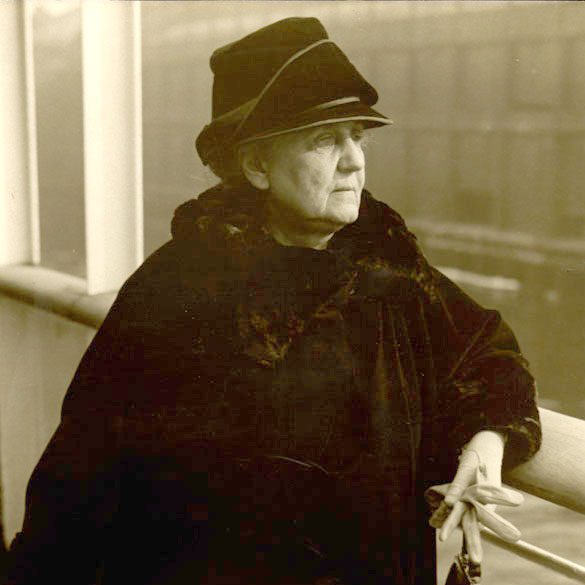
The Persona of Jane Addams

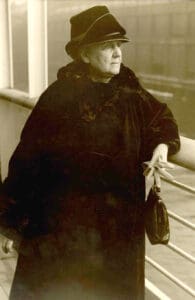
Jane Addams wearing a dark coat and hat stands by a railing, looking thoughtfully into the distance while holding light-colored gloves in one hand. The background appears blurred and softly lit.

In 1908 when Jane Addams was speaking at a dinner in Chicago, she expressed her frustration with women who ridicule suffragists:

There are women who will laugh at us for our interest in the ballot, and who will then give absorbed hours, in the privacy of their rooms, to great electrical massage machines, face-steaming engines, curious masks and huge flesh-reducing mechanisms. An elderly woman of this type, after an afternoon’s struggle with all sorts of beautifying devices, dyed her hair a bright gold. “Do you think it makes me look younger?” she asked me. “Yes,” said I. “About three weeks.” —  Jane Addams’s Retort, June 7, 1908, Jane Addams Digital Edition (JADE).

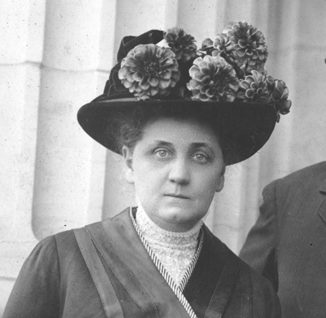
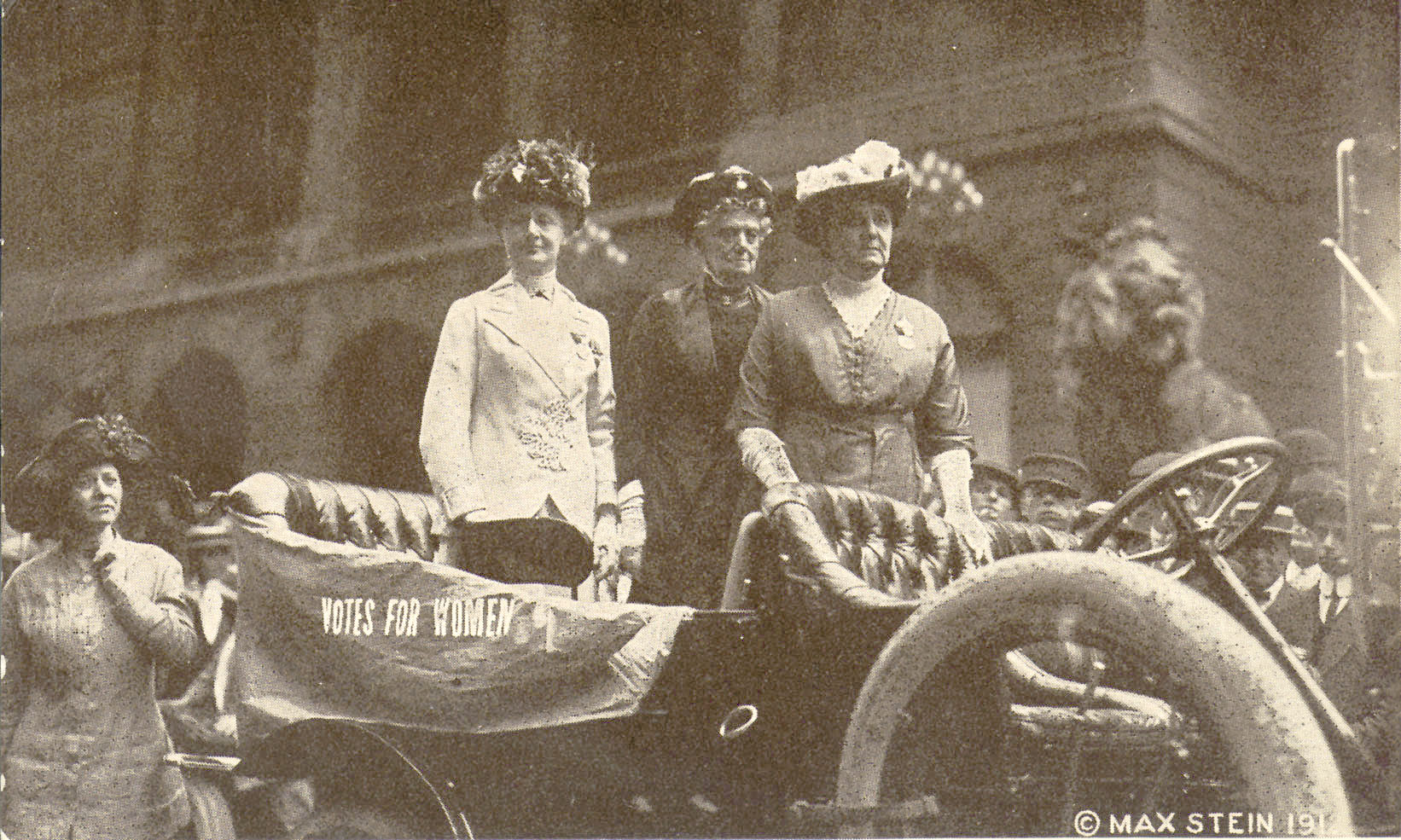
Historic black-and-white photo of Jane Addams and others in early 1900s attire standing in a car draped with a Votes for Women banner, participating in a suffrage parade, with a crowd and building in the background.
Jane Addams and other serious suffragists in fabulous hats, 1912. Image courtesy of Swarthmore College.

Jane Addams had a sense of humor, but she rarely made such public jibes as she did in telling this story, which was reported in newspapers across the country. It is understandable, however, that the frivolous, gold-haired woman mocking the suffrage movement would annoy her. Jane Addams was a serious woman who devoted her time to making the world a better place; she had no time to worry that her hair was turning gray and that lines were forming on her face. In fact, it was her assertion that as the social health of the nation was concerned “gray-haired women” needed to “become a part of it.”

By personality in 1908 Jane Addams wanted to appear to the world as a well-groomed, modest, serious woman in sensible shoes. Yet it is also true that Jane Addams likely curated a persona designed to make her a credible witness to the social ills she sought to remedy, to make the public feel at ease with her, and to convince people in power to be more open to her ideas. She struck a brilliant balance that allowed her to be approachable to her working-class Hull-House neighbors and to fit in among her middle-class peers and wealthy patrons. She dressed to blend in, not to stand out; she presented a gentle, serious, thoughtful demeanor in order to convey authority.

She was simply dressed. Her attire was a soft gray in deep harmony with the woman. Her hair was combed straight back from her high forehead, and made into a knot on the back of her head. Her eyes are large and soft, and continually there is a little light flickering in them, which seems to bid children welcome to her side. She radiates kindness and a big heart’s offerings would inspire any child to do better.Dedication of Bomberger Park, June 30, 1908 (The Dayton Herald), JADE.

What this large and visibly impressed crowd saw was a woman of medium height, with hair well streaked with gray, and dressed in a plain dark dress relieved only by a white lace collar. In a clear, well-modulated voice that carried to every corner of the room she started in, without preliminaries, to tell the story of the condition of the starving children of the European countries.Feed the World and Have a League of Nations, February 19, 1921 (Rochester Democrat and Chronicle), JADE.

Recently, I read a 1915 Washington Times interview with Jane Addams, which at first made me start and then made me consider this idea that Jane Addams wore a mask she designed for the successful female Progressive reformer she became. Florence Yoder, the young journalist conducting the interview, who was perhaps wearing her own mask as a woman in a newspaper world of men, described Addams this way:

Unlike any other person in the world whom we have ever seen, Miss Addams regulates her facial expressions by exactly the opposite method employed by the average person. When speaking of something in which she is very much interested, there is little or no animation, her face becomes a mask, she looks in one direction only, glancing occasionally full into the eyes of the listener. Her voice is pitched very low, almost a monotone, yet one never misses a word. Then when something trivial comes up, something of almost childish interest, her face brightens she relaxes into a smile, and the mask does not slip on again until the more serious subject is revived. It is almost as if she were trying to subjugate her own personality entirely, eliminate herself entirely from the discussion, and let only the ideas with which she wishes to impress her listener, register on the brain. — Interview with Florence E. Yoder, Jan. 8, 1915 (Washington Times), JADE.

Until I read that description of her, it had not occurred to me that Jane Addams might have subdued her own personality for effect. I have long understood her as a shrewd debater, a calm mediator, and a respectful listener, all skills she practiced in order to obtain her reform objectives. I have studied her ability to form coalitions and build networks, which required humility as well as strength. But did Jane Addams regulate her demeanor and her appearance to strike an expected pose for the public?

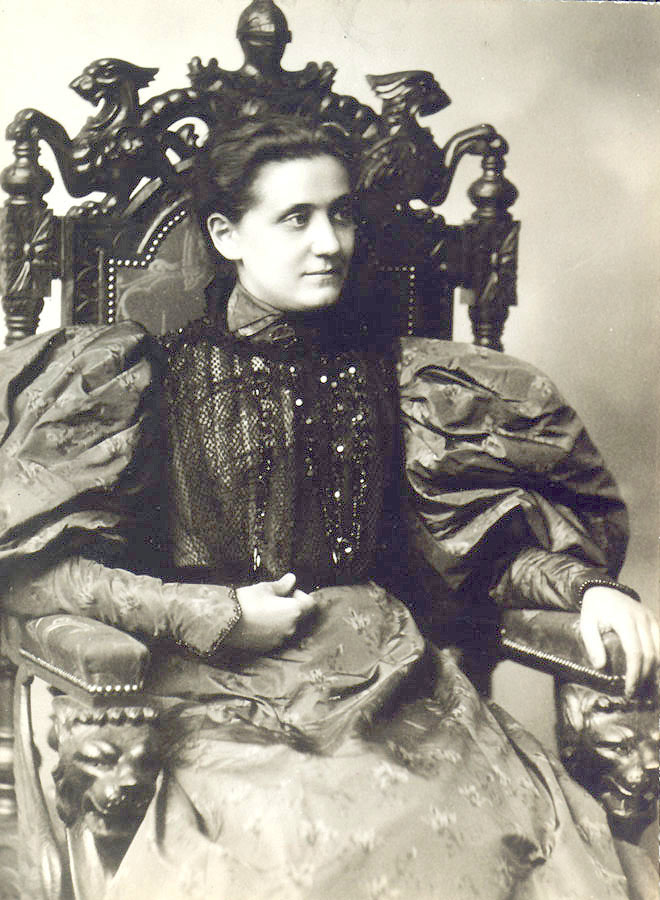
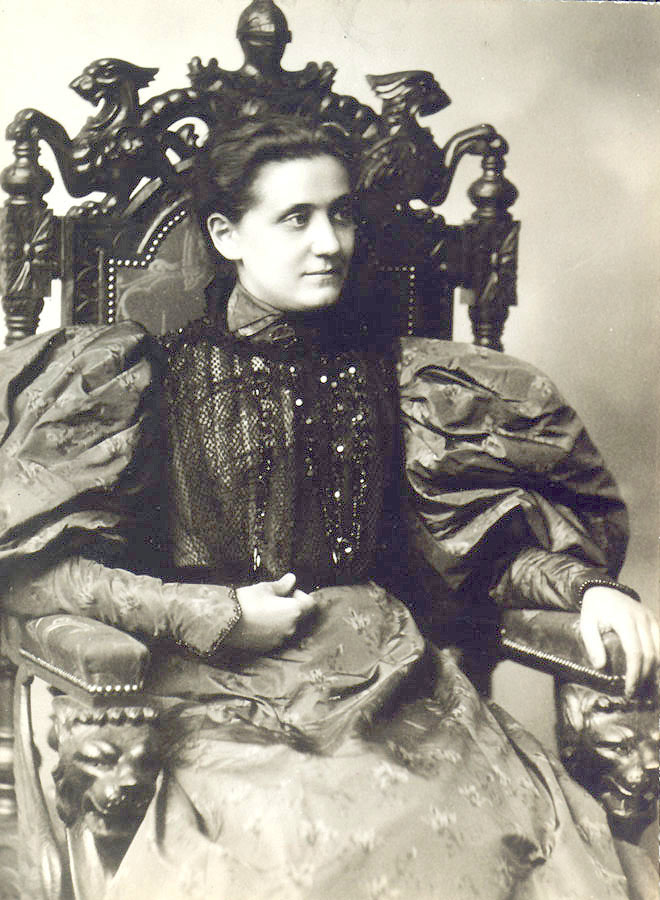
Jane Addams in a late 19th-century dress with puffed sleeves sits on an ornate chair decorated with carved lion heads and eagle figures, looking to the side with a composed expression.
Jane Addams, c. 1896. Image courtesy Library of Congress.

Yes, I suppose she did. I missed it before, for reasons (or gendered perceptions of my own) I may need to explore later. But now the truth of Jane Addams as a public persona seems clear. The more I have thought about the idea, the more I think I understand the woman behind the persona. It is always rewarding for a historian to pinpoint moments in the lives of their subjects that suggest a shifting perspective, particularly exciting when it reveals a blooming of wisdom. I think it is possible Jane Addams learned the power of appearance in July 1896 when she met Leo Tolstoy. Although the thirty-five-year-old Addams was already a serious woman with seven years of leading Hull-House and a social settlement movement in America to her credit, it was her fashionable 1890s frock that Tolstoy noticed. Addams remembered the meeting in a 1911 article:

Tolstoy, standing by clad in peasant garb, listened gravely, but, glancing distrustfully at the sleeves of my traveling gown, which, unfortunately, at that season were monstrous in size, took hold of an edge and, pulling out one sleeve to an interminable breadth, said that there was enough stuff on one arm to make a frock for a little girl, and asked me directly if I did not find “such a dress a barrier to the people.” — A Visit to Tolstoy, Jan. 1911, JADE.

Jane Addams probably did not return to Hull-House after her trip to Russia and immediately begin constructing a persona more in keeping with her humanitarian work than those voluptuous sleeves. However, Tolstoy’s comments penetrated her psyche. That she told the story fifteen years after the meeting might be enough evidence to prove it. She admired Tolstoy and continued throughout her life to be inspired by his plain-clothes and calloused-hands example of living. Jane Addams was moved at that moment in time of her meeting with an idol to be mindful of the image she portrayed.

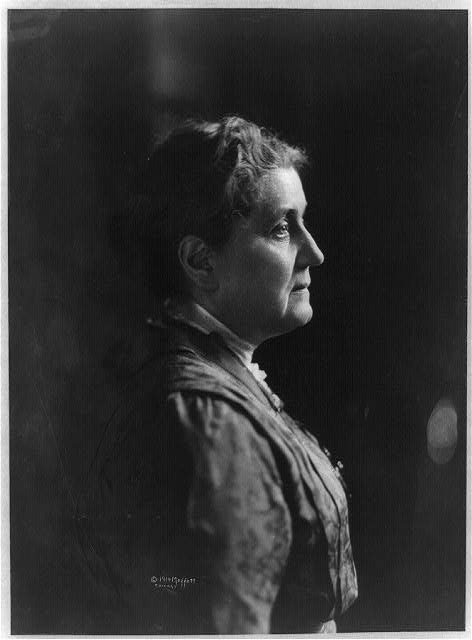
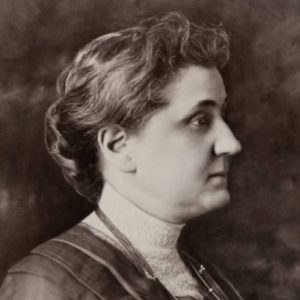
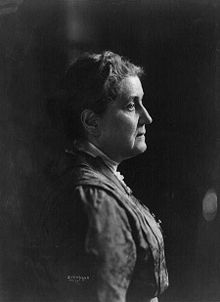
Black and white portrait of Jane Addams in profile, facing right. She has short, wavy hair and is wearing a high-collared blouse and a dark jacket against a dark, plain background.
Jane Addams, 1914. Image courtesy of the Jane Addams Collection, Swarthmore College Peace Collection, Swarthmore College, Swarthmore, PA.

At the Jane Addams Papers, we are often frustrated by the quiet, guarded language Addams employed in her correspondence, which makes it hard to know her. Given the care she seems to have always taken with her language, it should not surprise me that by the time Jane Addams became a nationally known figure, a successful reformer and inspirational leader on the public stage, she would understand and make good use of a curated public persona. I had falsely assumed Jane Addams was naturally unassuming instead of shrewdly navigating public expectations about what a female reformer could be and should be and what a credible female reformer must look like. Today, the physical appearance and demeanor of public women is still fraught with gendered assumptions, therefore imagine the dilemma for educated, working women of Jane Addams’s generation. Given the success Jane Addams enjoyed as a reformer, particularly her ability to bridge gaps as wide as the difference between rural clubwomen and American presidents, of course she crafted a persona that paid the proverbial bills.

That there was a Jane Addams persona is not to say that Jane Addams the woman was not a genuine human being. Far from it. Jane Addams was, indeed, motivated by true empathy and real intentions to save the world. That she crafted a public persona simply means that Addams had a private self and a public self, and as a woman the divide between her two selves required special caretaking, especially as success in her line of work required the open hearts and wallets of others. In order to take her compassionate heart and radical ideas out into the world, she had to package that heart and those ideas for public consumption.

So how did the public view Jane Addams? Reformers and scholars and philosophers of her day respected her humanitarian experience, her intellect, and her ideas. Publishers clamored to sell her words and philosophy of reform. Politicians sought her support. Women’s and men’s organizations of all types across the country and around the globe wanted her to speak to their memberships. But how did people see her? What was it about the visage Jane Addams presented to the world that drew people in close enough to hear the important messages she wanted to convey?

After spending some time searching through the documents in the Jane Addams Digital Edition looking for descriptions of Jane Addams’s physical appearance, I was struck not only by the similarity of gendered language to describe her over the years but also by the ways in which those descriptions reflected what the observers themselves defined as appropriate for a woman like Jane Addams in the twentieth century’s first three decades.

Often the descriptions evaluated the womanliness of Jane Addams. As this Washington Herald noted:

These words were spoken in a singularly soft yet vibrantly earnest voice—the voice of a woman dressed in gray, with a face softened by the beauty of tenderness and hair becoming silvered by time. From the face glowed eyes magnetic and prophetic. — We Must Go Man Hunting, Apr. 26, 1908, JADE.

The Birmingham News in 1914 described Addams’s meeting with national suffrage leaders in Alabama as “very human and feminine,” and wrote of Addams:

Simply attired and her graying hair gathered into a loose coil at the back of her neck, this venerable woman was distinctly one of the plain people whom she champions, and the essence of American naturalness. Speech on Woman Suffrage, Mar. 9, 1914 (The Birmingham News), JADE.

Last night at the Santa Fe railway station, any one observing the passengers who arrived from the west, might have failed entirely to see a motherly looking woman of medium height, with iron gray hair, descending from a Pullman, but once one saw the woman one knew that there was an individual who has been and is, the center of many big things. That person is Miss Jane Addams of Hull House, Chicago.  Speech to the Shawnee County League of Women Voters, Jan. 13, 1922 (Topeka State Journal), JADE.

Jane Addams wearing a dark coat and hat stands by a railing, holding a handbag and a pair of gloves, looking thoughtfully into the distance. The image is sepia-toned, giving it a vintage feel.

Jane Addams is gray but she is not masculine nor is she old. Certainly she is not hard. She smiled when the strange thought was told her. “I don’t get enough physical exercise to be hard. No, I’m afraid I’m rather much too soft.” Interview with Jane Addams, Jan. 30, 1925 (New York Times Magazine), JADE.

Warmth, understanding, keen judgment, shine from her blue eyes; warmth, motherliness, sympathy, strength, mark the face of this American woman who has been a pioneer in social service work and in work for International Peace. The thing which amazes a stranger who meets her is that she, while so many human problems are brought to her, can be so calm, so very calm. — Interview with Jane Addams for the Public Ledger Sunday Magazine, Dec. 1933.

Descriptions of Addams often reduced her, even while praising her:

Miss Addams is not a lecturer, but she is a very interesting talker. While she seemed perfectly at home on the platform her hands were busy all the time toying with her watch and the chain by which it was suspended from her neck. When she spoke she was forceful and energetic but her voice was almost lost in the bigness of the Auditorium. Speech on Hull-House Work, Dec. 8, 1905 (Topeka Daily Capital, Dec. 9, 1905), JADE.

They offered convoluted or backhanded complements:

 A woman so completely wrapped in her work that her other side of life is forgotten, a trifle hardened by the nature of her work, which has brought her in contact with every kind of suffering, are the first impressions gained of Miss Addams, but as talk progresses the softness coming from a big heart creeps into her eyes, about her mouth and a charming elderly woman is revealed. — Interview with Baltimore Evening Sun, Apr. 21, 1922, JADE.

Or they shamelessly judged her physical appearance:

She is a most satisfying person, even in appearance. She has a wonderfully strong face, square as a man’s, and her hair, parted simply and combed back into a low knot, does not conceal a line of the finely modelled head. Her eyes, gray and set wide apart, meet one with an impassive directness even when her straight, firm lips are smiling. Her mouth belongs to a compassionate woman, her eyes to one who is not readily deceived. As for her chin, it is [chiseled] determination. — Interview with Jane Addams, Jan. 30, 1911; (Washington Evening World), JADE. 

She is a medium-sized, rather stout, but quick-moving woman. Her manner is brusque but kindly. The blue eyes which have looked upon so much of want and misery, wretchedness and desolation, are sweet in expression and win you to the woman as she talks in her quick, direct manner. Her hair, the style of wearing which she never has changed since she began to coil it up from girlhood’s braids, is parted, and drawn back loosely from a finely shaped forehead. She smiles easily with her eyes, but not with her mouth. Her mouth is grave and rather sad. Interview with Jane Addams, Sept. 24, 1913 (Pittsburgh Press), JADE.

It is no wonder Jane Addams shunned the camera, relied on a couple of profile pictures for promotional images, and worked so hard to remain in character. No wonder either that observers were so keen to define her and to understand the extraordinary success of this incomparable woman. The St. Louis reporter who wrote this description in 1910, when Addams was serving her historic presidency of the National Conference of Charities and Corrections, leaned toward the poetic:

Miss Addams has a strong personality, that makes itself felt at once through her vital intellectuality and her warm, genial manner. She is of medium stature with bright, luminous penetrating eyes of a blue-gray shade, which are keen and searching. An intense love of mankind pervades Miss Addams’ every word and look. Her prominent cast of features are accentuated by the soft gray with which her hair is just beginning to be sprinkled, and there is a certain nobility and distinction about her carriage which would mark her a central figure in any assemblage, even though her name and fame had not preceded her. It is easy to be led by such a woman, and in the great work to which she has dedicated her life, there is a special field for the qualities with which she is so richly endowed, in the uplifting and betterment of her fellow-beings. — Interview at the National Conference of Charities and Corrections, May 22, 1910 (St. Louis Star & Times), JADE.

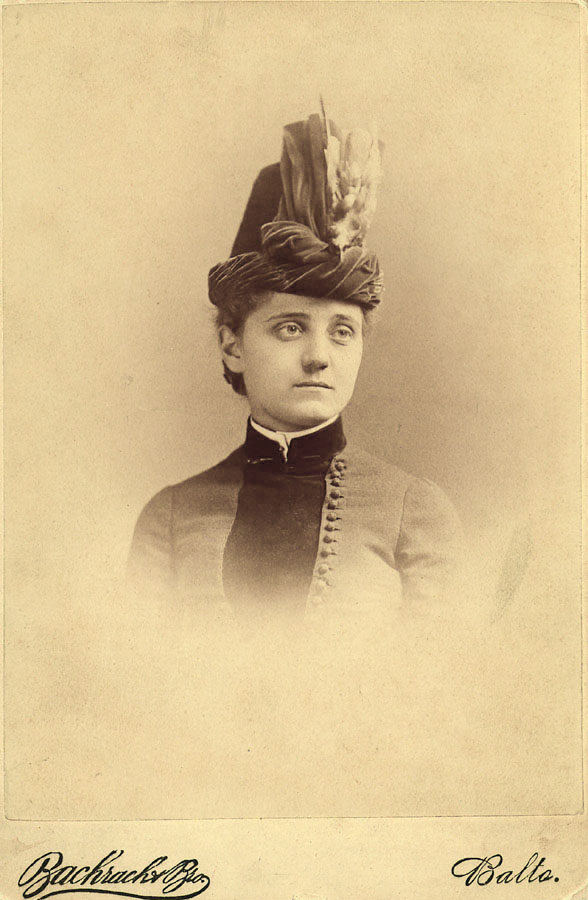
In 1928, Jane Addams wrote to an old friend: “I am sending you two pictures, one taken in Rockford in 1881 and one during the first years at Hull-House in 1891. You see I have always worn my hair the same way. A great lack of imagination.”

There was no lack of imagination about it.

Stacy Lynn
Associate Editor

Other Sources: Need a Woman Over Fifty Feel Old?, October 1914; Interview with Donna Risher, Jan. 12, 1920 (Des Moines Tribune); Jane Addams to Margaret Drier Robins, Mar. 6, 1928, all in JADE.

Jane Addams on Television

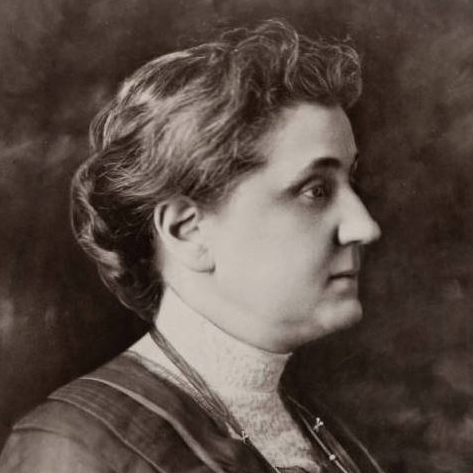
Black and white portrait of a woman in profile with short, wavy hair, wearing a high-collared blouse and a dark dress, looking to the right against a plain background.

Black and white portrait of a woman in profile with short, wavy hair, wearing a high-collared blouse and a dark dress, looking to the right against a plain background.During her lifetime, Jane Addams was famous throughout the United States and around the world. Known for Hull-House and as the leader of the American social settlement movement, respected for her wide-ranging reform activities, and beloved for her commitment to economic, political, and social justice for all, Addams became a household name. Reformers, educators, politicians, and the public looked to her for inspiration and for answers to the social and economic problems of the Progressive Era.

However, although she won the Nobel Peace Prize, published eleven books and hundreds of articles, and led consequential movements to restrict child labor, gain suffrage for women, improve the lives of immigrants, and change America ideas about poverty and the role of government in the protection of society’s most vulnerable people, she is grossly underappreciated today. I have stopped counting the number of people who ask me who Jane Addams was when I tell them I edit her papers and study her life. Although I take these opportunities to tell them about her or share a great story about her work, it makes me sad that Jane Addams is not a household name today. It is depressing that Americans can name the Kardashian sisters but have never heard of Jane Addams.

In our time of increasing inequality, rising hostility toward immigrants, and rampant civil discord, we need Jane Addams. We need inspirational figures who live or have lived in the service of others, not to themselves. Every day as I edit her papers, I am struck by how applicable the work and words of Jane Addams are today. Her dedication to equality and peace and her philosophical understanding of the connection of democracy and humanitarianism are still relevant, as is her talent to see need and suggest solutions, to mediate vast distances between cultures and ideas, and to inspire people to join her efforts to make a city, a country, or the world a better place. Her world view and ideas and her commitment to democracy are still imperative. As Charlene Haddock Seigfried writes: “The need to make democracy a vital way of life was a constant theme for Addams and one that challenges us yet again.”

The words of Jane Addams are still relevant:

Like what she wrote in defense of Russian Jews in Chicago in a 1908 article in Charities and the Commons: “In fact the more excited and irrational public opinion is, the more recklessly newspapers state mere surmises as facts and upon these surmises arouse unsubstantiated prejudices against certain immigrants, the more necessary it is that some body of people should be ready to put forward the spiritual and intellectual conditions of the foreign colony which is thus being made the subject of inaccurate surmises and unjust suspicion.”

Like the question she asked in 1913 of white Americans about what they had done or failed to do in pursuance of equality for Black Americans: “How far are we responsible that their civil rights are often rendered futile, their political action curtailed or frustrated, their equality before the law denied in fact, business and industrial opportunities withheld from them and, above all, that for twenty-five years they have been exposed to the black horrors of lynching?”

And the alarmed observation she shared in a speech at an American Sociological Society meeting in Chicago in 1919: “… for there is no doubt that at the present moment one finds in the United States the same manifestation of the world-wide tendency towards national dogmatism, the exaltation of blind patriotism above intelligent citizenship, as that evinced elsewhere.”

I do not meet historians of American history who are ignorant of her wide-ranging reform work. Illinois school children learn about Jane Addams when they study the state’s history; and Jane Addams is a popular subject for history students who participate in National History Day. The Jane Addams Papers Project is making her correspondence and writings freely available (Jane Addams Digital Edition) and has created Jane Addams lesson plans for high school teachers as well as AP history and National History Day resources (Jane Addams Exhibits). All of Jane Addams’s books are in print and/or available online. There is also a growing number of books about her life and her work, written from myriad perspectives, most notably Erik Schneiderhan’s The Size of Others’ Burdens: Barack Obama, Jane Addams, and the Politics of Helping Others (2015); Neil Lanctot’s The Approaching Storm: Roosevelt, Wilson, Addams and Their Clash over America’s Future (2021); and The Oxford Handbook of Jane Addams (2023).

There is no excuse to be ignorant of Jane Addams.

Especially now.

Because Jane Addams is now on television.

Black and white photo of Jane Addams looking out a window. Text reads: Jane Addams Together We Rise. Chicago Stories Now Streaming. PBS, WTTW, and app logos are in the bottom right corner.In October, WTTW, a PBS member television station in Chicago, premiered a Chicago Stories episode on Jane Addams. Jane Addams: Together We Rise examines the importance of Jane Addams in Chicago and of Hull-House as a laboratory for reform. It also chronicles the significance of Jane Addams as the leader of an incomparable group of women who became leaders in their own rights of a variety of Progressive Era organizations and activities to improve the lives of children, women, immigrants, and the working poor. When the producer Rachel Ruiz contacted the Jane Addams Papers Project about the documentary, we were thrilled and happy to assist. Our Project is based in New Jersey, but I live in Illinois and work remotely. It made sense for me to be the editor on camera for the film, although I was, at first, apprehensive.
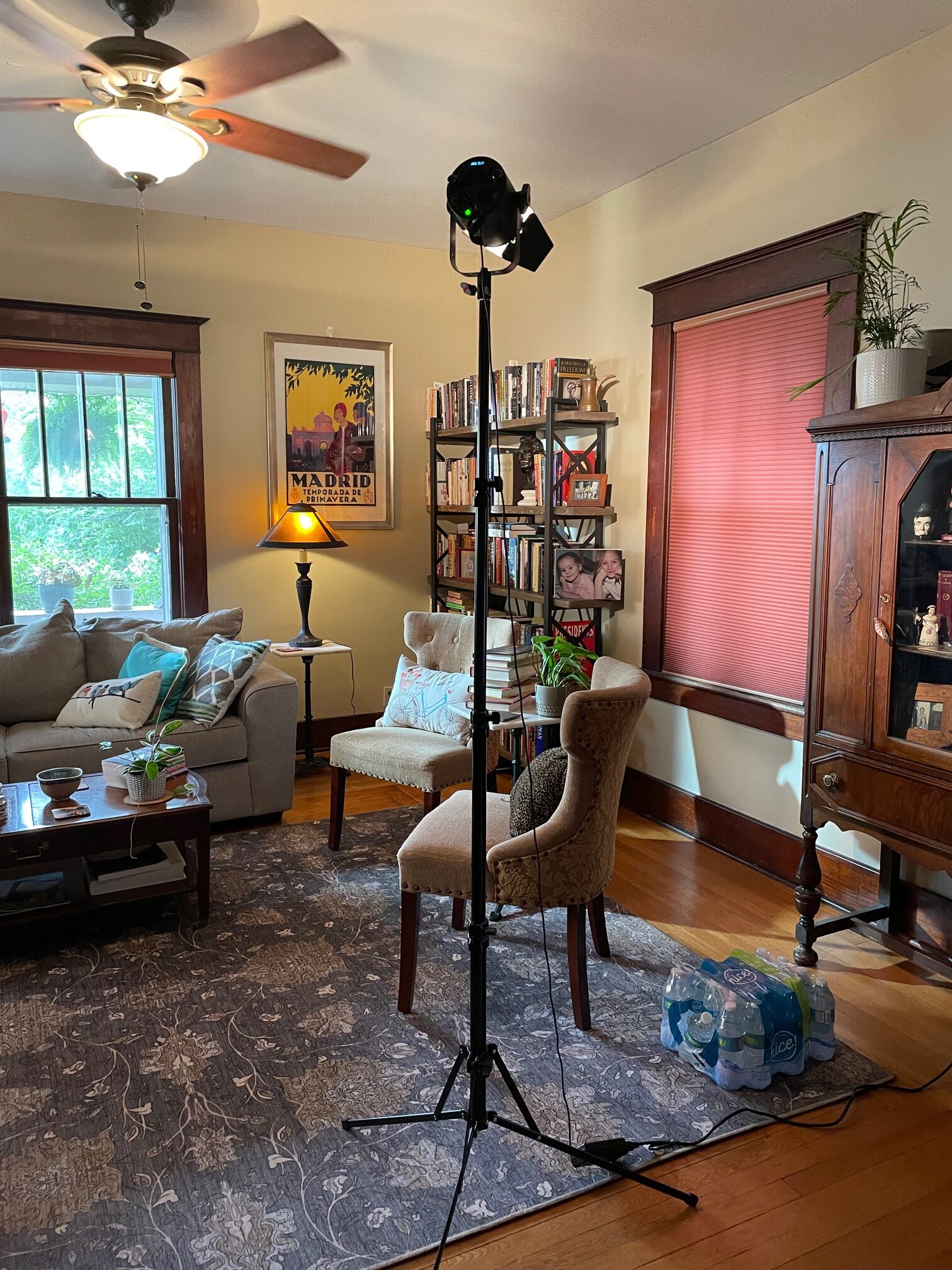
Jane Addams was shy about having her picture taken, and I am shy about appearing on camera.

As an editor of historical documents, I spend much of my professional life in solitude, reading letters and speeches, straining over handwriting, solving the mysteries of vague references, and contextualizing the words of my subjects. I do not teach and have little interaction with students. And, since Jane Addams is under appreciated, there are few opportunities for me to interact with the general public. During the twenty years I edited Abraham Lincoln’s papers, I gave numerous public presentations every year, hosted a long parade of visiting scholars, attended untold Lincoln events, and appeared in several Lincoln documentaries. It was often a bit much, especially in February for Lincoln’s birthday. I cannot lie. I prefer the quiet and the anonymity of my life as an editor of the Jane Addams papers.

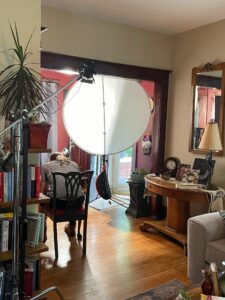
A living room with a sofa, chairs, and bookshelves, featuring a large window and framed art. A photography light on a stand is set up near the center, with a ceiling fan and indoor plants visible.

But because I cannot lie, I also have to admit it was pretty cool to have a film crew in my Jane-Addams-era bungalow and spend the day talking about Jane Addams. The novelty of the experience for me (and my two little dogs, one of whom made it into the film!) calmed my nerves about being under the blazing (unflattering) lights in front of a camera. Although it was terrifying a year later to preview the documentary the day before it aired, I am so proud and honored to have been part of it.

Jane Addams allowed photos of herself to be taken and dispersed for the good of her causes; and so, I was happy to participate in a documentary about her life for the good of our cause at the Jane Addams Papers Project: to make her work and her words accessible to a society that needs her now more than ever. Jane Addams’s life was consequential, her work was historically significant, and she still matters. Her extraordinary example of compassion, tolerance, civility, and the belief in the promise of democracy to lift up all people, is still relevant nearly eighty years after her death. We need American heroes right now, and few are more perfect for our troubled times than Jane Addams.

A person sits with their head down at a table in a cozy living room, with a large circular photography reflector and lighting equipment set up near sliding glass doors, bookshelves, and assorted home decor.Therefore, dear readers who already know the worth of Jane Addams, go forth and spread the Jane Addams word. Watch the documentary, read her books, and tell your friends, family members, teachers, students, and community leaders to do the same.
Stacy Lynn, Associate Editor


Books by Jane Addams (with links to first and early editions of them online)

Democracy and Social Ethics (New York: Macmillan, 1902); reprinted with introduction by Charlene Haddock Seigfried. Urbana and Chicago: University of Illinois Press, 2002.

Newer Ideals of Peace (New York: Macmillan, 1907); reprinted with introduction by Berenice A. Carroll and Clinton F. Fink. Urbana and Chicago: University of Illinois Press, 2007.

The Spirit of Youth and the City Streets (New York: Macmillan, 1909); reprinted with introduction by Allen F. Davis. Urbana and Chicago: University of Illinois Press, 2001.

Twenty Years at Hull-House with Autobiographical Notes (New York: Macmillan, 1910); reprinted with original illustrations by Norah Hamilton and introduction and notes by James Hurt. Urbana and Chicago: University of Illinois Press, 1990.

A New Conscience and an Ancient Evil (New York: Macmillan, 1912); reprinted with introduction by Katherine Joslin.  Urbana and Chicago: University of Illinois Press, 2002.

The Long Road of Woman’s Memory (New York: Macmillan, 1916); reprinted with introduction by Charlene Haddock Seigfried. Urbana and Chicago: University of Illinois Press, 2002.

Peace and Bread in Time of War (New York: Macmillan), 1922); reprint with introduction by Katherine Joslin. Urbana and Chicago: University of Illinois Press, 2002.

The Second Twenty Years at Hull-House. (New York: Macmillan, 1930).

The Excellent Becomes the Permanent (New York: Macmillan, 1932).

My Friend, Julia Lathrop (New York: Macmillan, 1935); reprinted with introduction by Anne Firor Scott. Urbana and Chicago: University of Illinois Press, 2004.

Forty Years at Hull-House; being “Twenty Years at Hull-House” and “The Second Twenty Years at Hull-House. (New York: Macmillan, 1935).

Sources: Charlene Haddock Seigfried, “Foreword,” in Patricia M. Sheilds, Maurice Hamington, and Joseph Soeters, eds., The Oxford Handbook of Jane Addams (New York: Oxford University Press, 2023), xvi; Neil Lanctot, “Jane Addams and the Great War,” Jane Addams Papers Blog, Dec. 21, 2021; from the Jane Addams Digital Edition: Jane Addams, “Chicago Settlements and Social Unrest,” Charities and the Commons, 20 (May 2, 1908): 155-66; Jane Addams, “Has the Emancipation Act Been Nullified by National Indifference,” The Survey, 29 (Feb. 1, 1913): 565-66; Jane Addams, “Americanization,” Dec. 29, 1919.

The Tense of Historical Editing (Or, The Death of Jane Addams)

When you edit the documents of a historical figure, you live with them as their life progressed, chronologically. They are alive with you, day in and day out, as you edit their correspondence and other papers, sometimes paused in a very concentrated place and time in their lives. As a result, I have an odd habit of thinking and speaking about the subjects of my work in the present tense. Jane Addams has been dead eighty-eight years, yet here I am in the present, for example, recording in the detailed life chronology I am creating for her: “takes the train from Paris to Marseilles.”

As I type that entry for Jan. 11, 1923, Jane Addams, in my mind, is stepping on that train. Right now she is finding her seat and beginning a conversation with her traveling companion Mary Rozet Smith. Perhaps they are talking about the RMS Kaisar i’Hind, the steamship they will meet in the Port of Marseilles that will sail them to India. Maybe they are already thrilling at the prospect of the white marble of the Taj Mahal glinting in the moonlight.

See, even my tense construction in the previous paragraph writes Jane Addams alive, at a moment in her life when she is anticipating an exciting vacation in her immediate future. And I am right in there with her on that train, dreaming of the Arabian Sea, Darjeeling and Mt. Everest, and the markets of New Delhi. I cannot wait to see what she will see. Now that I think about, maybe what my unusual problem with tense really means is that I am the one out of time. Jane Addams is not alive in my present. Rather, I am alive 100 years in the past with her.

You might think I need therapy. Maybe you just need to borrow my time machine: the editing of historical documents.

Anyway. I digress.

When I joined the Jane Addams Papers in 2017, I began working on documents from 1901 when Jane Addams was 41-years-old, in her prime, younger than I am, and with so much important work and life ahead of her. At first, her death never occurred to me at all, like it probably never occurred to her in 1901, either. She was too busy to die then, and I was too busy getting to know her for her to die.

I am now working in the 1920s and recently began proofreading transcriptions of documents from late 1922 to early 1923, when Addams was setting off on a grand tour of Asia. During that trip, she experienced a serious health scare. A lump in her breast and emergency surgery in Tokyo reminded the world and Jane Addams (and me) that she was a mortal woman. The tumor was benign, and she recovered, but I did not. I was coming on fast to her death, I couldn’t stop thinking about it, and the acknowledgment of it grew a lump in my throat. For me there is an empathy for a subject that I develop in the day-to-day examination of a life, and I am the kind of historian who has been known to cry over death or tragedy that happened to people who were long dead before I was even born.

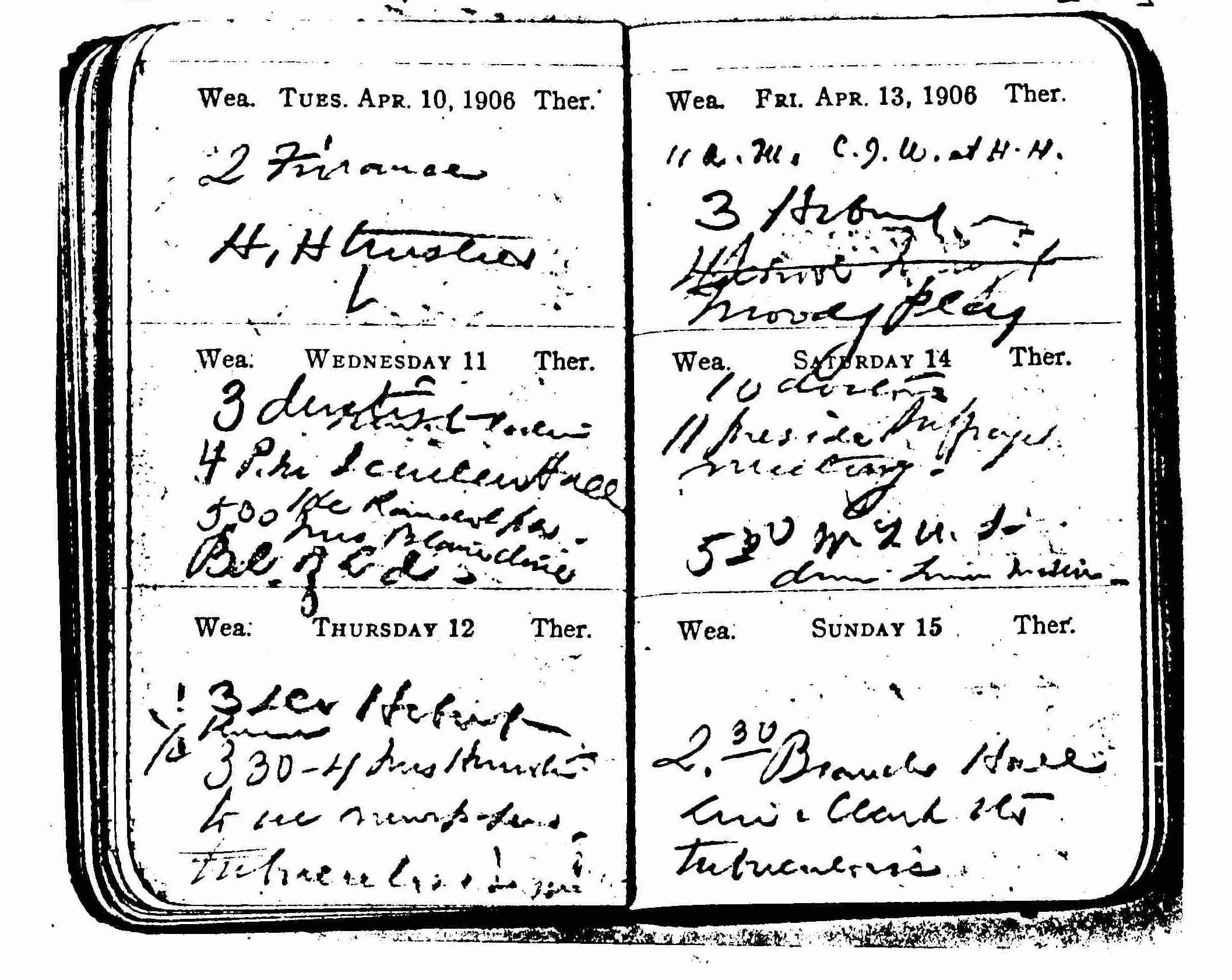
I suspect there are at least a few other editors or biographers or historians like me who feel a human connection with the past, but I will admit such an emotional reaction is probably quite strange. Perhaps even ridiculous, and so I swallowed the lump in my throat and decided to face Addams’s death and get over it. I jumped ahead to May 1935 and spent a couple hours looking at Addams’s calendar and reading the documents we have for the last month of her life.

Three women sit together at a table, engaged in conversation. They each have glasses of water in front of them and appear to be at a formal event or gathering. The image is in black and white.
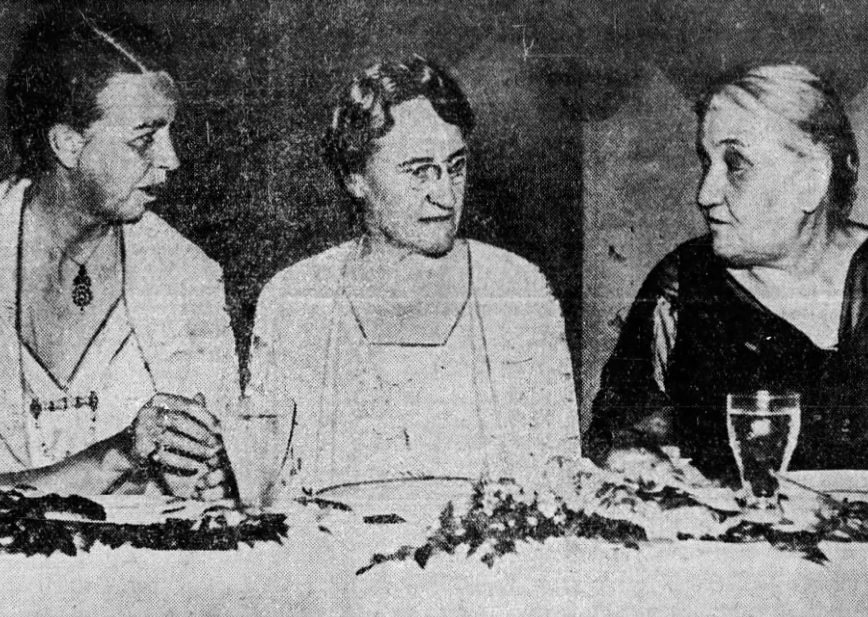
Eleanor Roosevelt, Rose Hull (the wife of Secretary of State Cordell Hull), and Jane Addams at the WILPF dinner, May 2, 1935, Washington, DC. [Los Angeles Times, May 5, 1935]
On May 1, Jane Addams arrived in Washington, DC, to celebrate the twentieth anniversary of the Women’s International League for Peace and Freedom (WILPF). As the founding president of the League, she was the honored guest at luncheons, participated in two international radio broadcasts, and attended a gala dinner hosted by Eleanor Roosevelt.

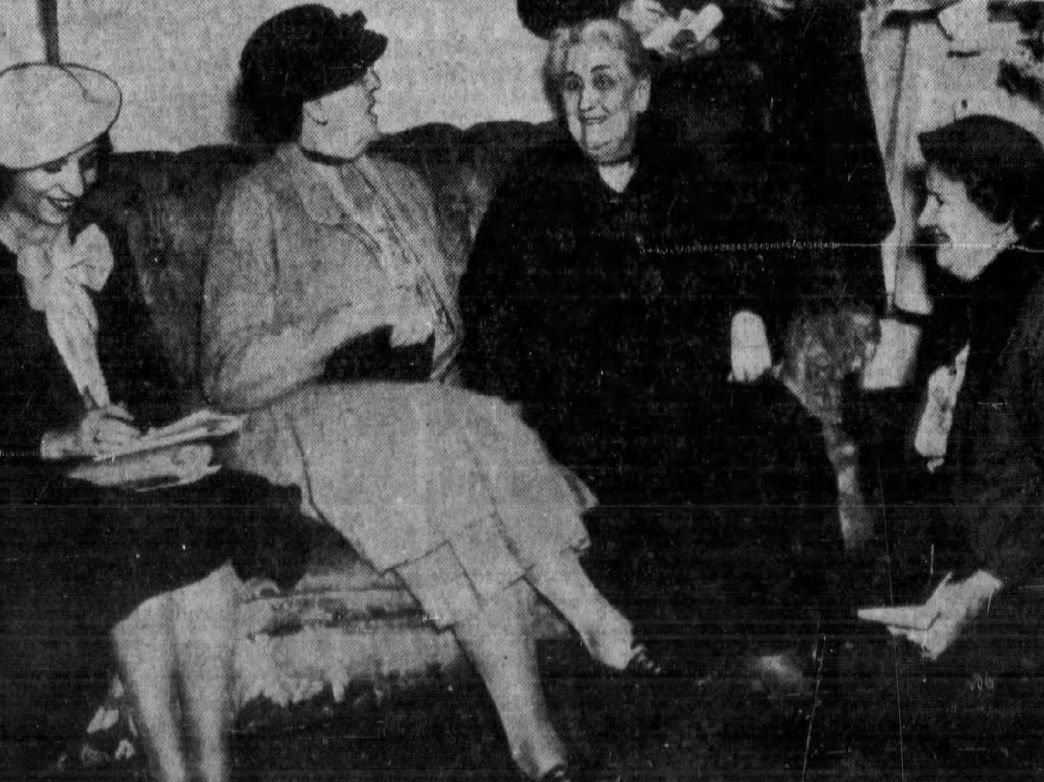
She was in frail health at this time, her heart still weak from a heart attack and the grief of losing her life partner, Mary Smith, who died of pneumonia in February 1934. Yet in Washington, she appeared radiant. In photos of these events, Addams is lovely, a silver-haired woman of seventy-four years commanding all audiences. In one photo, she has the undivided attention of the First Lady, and in another she is depicted with a rare smile upon her lips, enjoying a conversation with a gaggle of female reporters.

Four women sit on a sofa, engaged in conversation. Three of them wear hats and coats, while the woman in the center wears dark clothing. Two women are holding notepads and pens, appearing to take notes or interview.
Jane Addams, with Anna Wilmarth Ickes (daughter of old friend Mary Wilmarth and wife of Secretary of the Interior Harold Ickes) on her right, and surrounded by journalists in Washington. [The Springfield (OH) Daily News, May 2, 1935]
Jane Addams returned to Chicago on May 5 and holed up at her friend Louise de Koven Bowen’s home to complete the book she was writing about Julia Lathrop, her deceased friend and fellow reformer. In the following days, she presided over a Hull-House dinner for about sixty residents to tell them about her trip to Washington, worked on the manuscript and some correspondence, visited with friends, and attended a meeting and a lunch at Hull-House. On May 14, Addams went to Mercy Hospital to see an ailing Hull-House employee, penned her last known letter, and enjoyed her final dinner at Hull-House.

At 2:45 a.m. on Wednesday, May 15, Jane Addams awoke with a sudden, severe pain in her abdomen, but she did not call for help. When Louise Bowen woke up a few hours later, she found her friend quite unwell. Addams was running a fever, the doctors arrived, Addams felt a little better, failed again, and still more doctors. At 9:00 a.m. on Saturday, May 18, an ambulance delivered Jane Addams to Chicago Passavant Hospital, her dear friend Dr. Alice Hamilton traveling with her. When Louise Bowen arrived at the hospital soon afterward, Addams, who was sitting up in her bed reading a book, said to her worried friend: “Don’t look so solemn, dear.”

Later in the morning, Addams underwent surgery to remove a blockage in her bowel. She survived the surgery, but she would not survive the cancer. Over the next forty-eight hours, Addams was in and out of consciousness. On May 19, Weber Linn, Addams’s nephew, wrote his brother Stanley Linn, who lived in California: “Aunt Jane is old, she has done a great work, and she has never been the same since Mary Smith died.” The next day,  Alice Hamilton wrote to Grace Abbott: “There is something I have told only Mrs. Bowen and Weber Linn and nobody is to be told of it, for all of JA’s doctors are agreed that she herself is not to know. She will not get well, she may have a few months of comparative comfort but if she lives on, it can only mean pain, it is quite hopeless.”

At 3 a.m. on Tuesday, May 21, Hamilton telephoned Weber Linn to come to the hospital immediately. By the time he arrived, his beloved aunt had slipped into a coma. Louise Bowen arrived at the hospital at 7 a.m. to join the daylong vigil. At 4:14 p.m., Bowen sent a telegram to Stanley Linn: “Your aunt is dying cannot last more than an hour would not advise coming much sympathy.” Bowen, Hamilton, Weber Linn, and a few Hull-House residents kept to the bedside for two more hours, until 6:15 p.m., when the good heart of Jane Addams stopped beating.

Jane Addams was dead. I could now return to where I was when I went off on this odd little death tangent. January 1923. I add the next entry in the chronology for Jan. 12: sails at 5 a.m., bound for the Mediterranean Sea, the Suez Canal, and onward to India.

By Stacy Lynn
Associate Editor

Sources: Evening Star (Washington), May 2, 1935, 3, 22; “Peace Leader Honored at Dinner,” Evening Star, May 3, 1935, 3; “First Lady at Dinner for Jane Addams,” The Los Angeles Times, May 6, 1935, 11; “Jane Addams, [74], Undergoes an Operation,” Chicago Tribune, May 19, 1935, 1; “Jane Addams Gains; Hope for Recovery,” Chicago Tribune, May 20, 1935, 1; Alice Hamilton to Grace Abbott, May 20, 1935, in Barbara Sicherman, Alice Hamilton: A Life in Letters (Cambridge, MA: Harvard University Press, 1984), 353; Jane Addams to Esther Loeb Kohn, Jan. 11, 1923, Jane Addams Digital Edition;  from Jane Addams Papers Microfilm: NBC International Broadcasts, Celebration of WILPF, May 3 and 4, 1935 (26:1519-20); Jane Addams to Grace Abbott, May 14, 1935 (26:1547); James Weber Linn to Stanley Linn, May 19, 1935 (45:1249); Louise de Koven Bowen to Stanley Linn, May 21, 1935 (45:1251); Certificate of Death (cause:  intestinal obstruction from cancerous lesions), May 21, 1935 (27:1049); and Alice Hamilton, Account of Jane Addams’s Last Days, May 1-21, 1935 (45:1279-80). Addams’s book, My Friend Julia Lathrop, was published posthumously in November 1935.

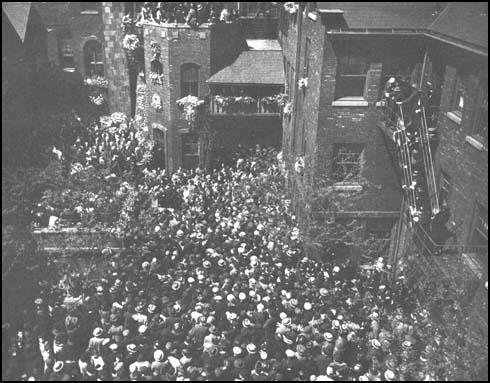
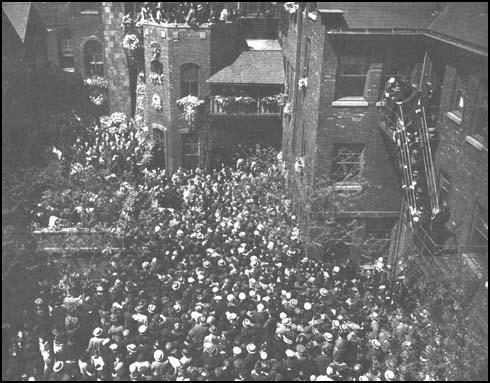
Crowds gather at Hull-House for Jane Addams’s funeral, May 23, 1935


Jane Addams and Abraham Lincoln

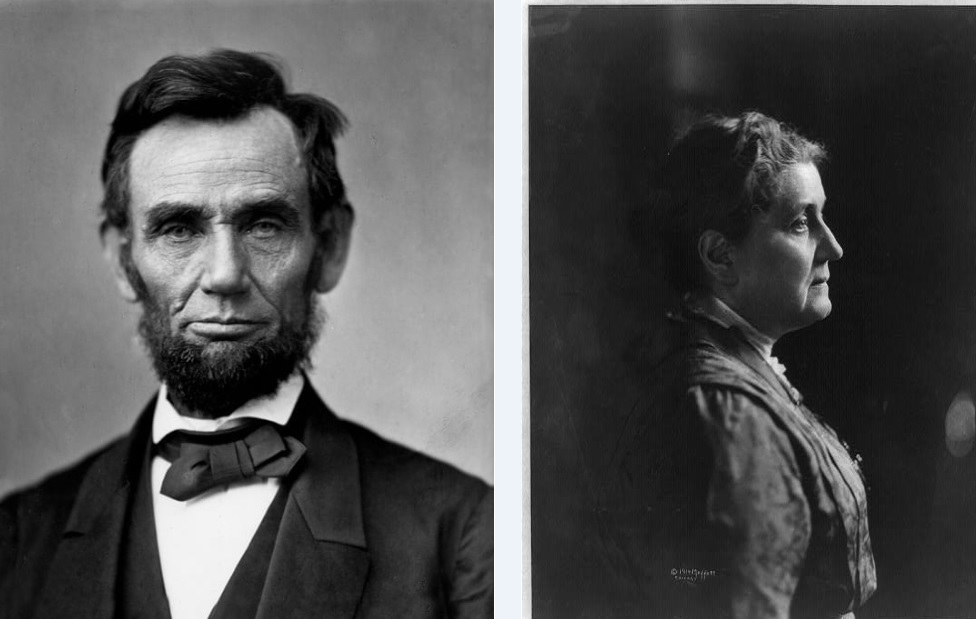
Side-by-side black and white portraits: on the left, a bearded man in a suit; on the right, an older woman in profile, wearing a dark dress with her hair pinned back.

On June 27, 1923, Jane Addams had a mastectomy, and the world held its breath. She was the most beloved woman in the United States and was respected worldwide for her reform work and efforts for international peace. News about this serious threat to her health spread rapidly in newspapers across the globe, and telegrams and letters filled with get-well wishes poured into Tokyo, where she and her partner Mary Smith had been traveling when the tumor in her right breast was discovered.

Newspaper editor Arthur Brisbane published a syndicated article on the day of her surgery, closing with: “If pure goodness, unselfishness and devotion count in Heaven as we believe they will do, Jane Addams will have a seat in front of Washington, Jefferson and many others, and very likely next to Lincoln.”

Side-by-side black and white portraits: on the left, a bearded man in a suit; on the right, an older woman in profile, wearing a dark dress with her hair pinned back.
Abraham Lincoln in 1863 and Jane Addams in 1914, both at the age of 54. Images courtesy of the Library of Congress.

Addams’s recovery was painful and long, but the tumor was benign and she would live another twelve years, publish three more books, preside over two more international women’s congresses, and win the Nobel Peace Prize. However, already in 1923 the historical significance of Jane Addams was under consideration. Her name could sit comfortably in a sentence with George Washington and Thomas Jefferson. And she was on the level with Abraham Lincoln.

Abraham Lincoln and Jane Addams were worlds apart. He a man of the nineteenth century. She a woman of the twentieth. Yet their stories are connected. Their lives overlapping, their experiences across 126 years of American history were lived in the midst of revolutionary political, social, and economic change, his old-world nineteenth-century contexts evolving into her modern twentieth-century contexts. Both Lincoln and Addams were inspired by books and craved knowledge. Each of them had compassionate hearts and carried the weight of their country’s problems upon their shoulders. Both were shaped by historical events while at the same time making history by their own determined actions.

In accepting an invitation to speak on the bicentennial of Lincoln’s birth in 1909, Addams wrote: “I have always been a Lincoln enthusiast.” Classic Jane Addams understatement. Abraham Lincoln was, in fact, a figure who rooted her, who guided her work to define her place and her purpose. She drew inspiration from Lincoln’s life for the entirety of her own. She was born in Illinois exactly one month before Abraham Lincoln was elected President of the United States. Her father John Addams knew Lincoln well and supported his candidacy. One of Jane Addams’s earliest childhood memories was of the gate in front of her home in Cedarville draped in black crepe and her father weeping over President Lincoln’s death. So important the spirit of Lincoln in her life and her chosen path of social settlement work that in her autobiography Twenty Years at Hull-House she included a entire chapter entitled “The Influence of Lincoln,” in which she wrote:

Is it not Abraham Lincoln who has cleared the title to our democracy? He made plain, once for all, that democratic government, associated as it is with all the mistakes and shortcomings of the common people, still remains the most valuable contribution America has made to the moral life of the world. 

In her reform work, Jane Addams connected democracy to human progress. Like Lincoln, she understood that the betterment of society meant the expansion of democratic institutions and the full inclusion of a growing number of the nation’s citizenry. She believed that equality was the answer to modern society’s most pressing problems. She saw her settlement work and efforts for social justice as an extension of the ideals Abraham Lincoln articulated.

Let [the law] become the political religion of the nation; and let the old and the young, the rich and the poor, the grave and the gay, of all sexes and tongues, and colors and conditions, sacrifice unceasingly upon its altars.—Abraham Lincoln, Springfield Young Men’s Lyceum Address, Jan. 27, 1838.

That the nation, shall have a new birth of freedom.—Abraham Lincoln, Gettysburg Address, Nov. 19, 1863.

With malice toward none and charity for all.—Abraham Lincoln, Second Inaugural Address, Mar. 4, 1865.

Addams studied Lincoln, drew inspiration from his words, expanding their purpose to meet the challenges of her rapidly changing world. She applied the underlying ideals of democracy Lincoln articulated into her philosophy of social ethics to include women and immigrants. She developed those ideals into her own creative and ambitious brand of humanitarianism.

Perhaps it is woman who can best testify that the honor of women is only secure in those nations and those localities where law and order and justice prevail.—Jane Addams, “Respect for Law,” The Independent, Jan. 3,  1901.

Most immigrants have come to America because they wanted more opportunity for themselves and their children; because they believed that this was a land of freedom and equality. It is a grave matter to [willfully] destroy the ideal with which they came to us…—Jane Addams,  “The Immigrant and Social Unrest,” speech in New Orleans, Apr. 19, 1920.

Our various charitable and benevolent societies and institutions, our laws for the preservation of life and health, all work to teach us the value of human life, and when this new, this broader humanitarianism, is spread worldwide, war will be a moral impossibility.—Jane Addams, “Newer Ideals of Peace,” syndicated newspaper article, Spring 1904.

Some of the activities in which Jane Addams participated were directly related to Abraham Lincoln’s legacy. After the devastating race riot in Springfield, Illinois, in 1908, Addams was the following year one of the signers of the Lincoln Birthday Call for racial equality that established the National Association for the Advancement of Colored People. At Hull-House, there was an Abraham Lincoln Club and a large mural of Lincoln painted on the wall of the settlement’s theater. In 1913, on the fiftieth anniversary of the Emancipation Proclamation, Addams published a scathing critique of America’s failure to live up to the promise of racial equality. And in 1920, Lincoln Memorial University, charted as a living memorial to Abraham Lincoln, conferred on Addams an honorary Doctor of Laws degree.

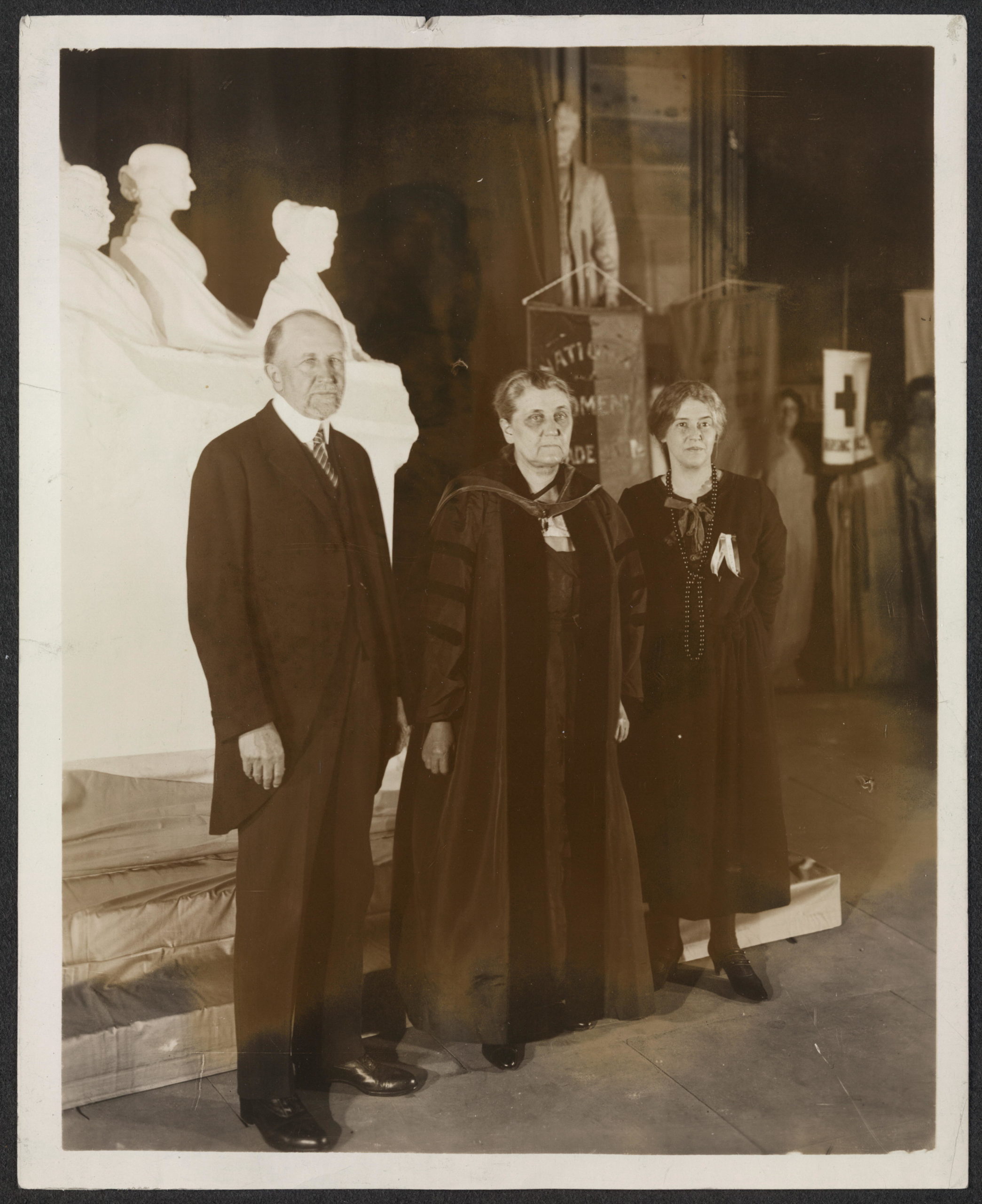
Over the years, Addams quoted Lincoln and connected his political positions to her reform ideas. She spoke at numerous Lincoln birthday events and put on some of her own, inviting W. E. B. Du Bois to deliver a lecture about Lincoln at Hull-House in Feb. 1907. She frequently evoked Lincoln’s legacy, like she did in 1921 in her remarks at the dedication of the woman suffrage statue of Lucretia Mott, Elizabeth Cady Stanton, and Susan B. Anthony. The suffrage statue had been placed in the U.S. Capitol next to the one of Abraham Lincoln, which had been sculpted by a woman, the artist Vinnie Ream.  Addams could not resist drawing a direct line to history: “It is fitting that they should stand next to the great emancipator of another group, who has also long since transcended national boundaries,” she said.

Most of the time, however, I think that Abraham Lincoln was in the background, quietly reinforcing all that Jane Addams knew was honest and right. Her interpretation of the past, her work for a better present, and her aspirations for a brighter future world were all her own. Knowing history gave Addams confidence in her own convictions. Whether she was arguing for child labor laws, better working conditions for women, justice for immigrants or Black Americans, freedom of speech, world peace, or woman suffrage, her perspective and her ideas for improving the lives of America’s most vulnerable citizens were always rooted in a long view of history. Jane Addams was a woman who understood the past, but she was a woman who faced forward, pressing toward the future.

Yet during times when the weight of the world was too heavy, she was not afraid to draw inspiration from her idols. When she doubted herself and felt helpless to answer the big human troubles right in front of her, she glanced back over her shoulder, to Abraham Lincoln. She did just that in the violent summer of 1894, when the Pullman Strike was tearing Chicago apart. In her autobiography Twenty Years at Hull-House she wrote:

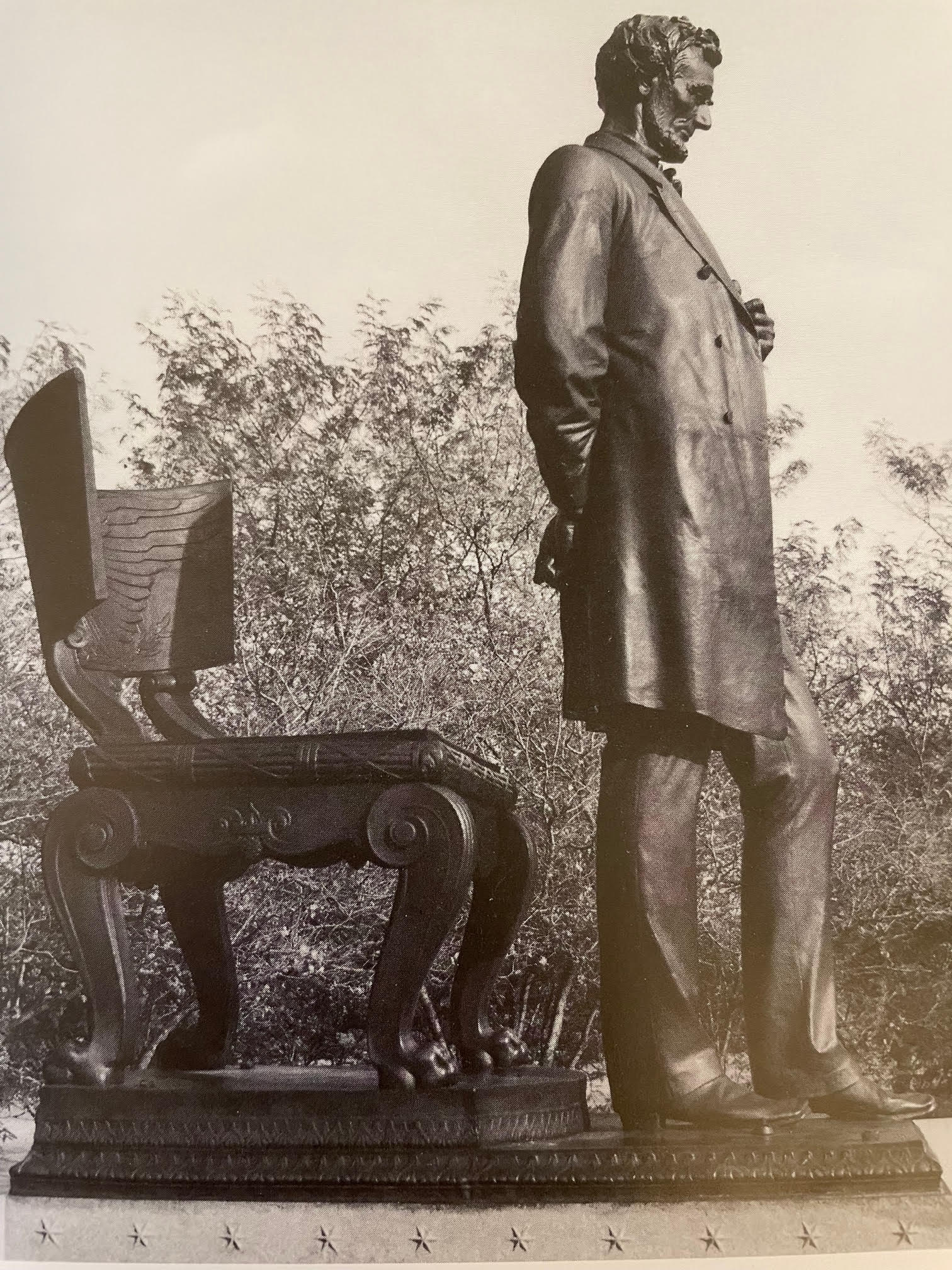
I recall during a time of great perplexity in the summer of 1894, when Chicago was filled with Federal troops sent there by the President of the United States, and their presence was resented by the governor of the state, that I walked the wearisome way from Hull-House to Lincoln Park—for no cars were running regularly at that moment of sympathetic strikes—in order to look at and gain magnanimous counsel, if I might, from the marvelous St. Gaudens statue which had been but recently placed at the entrance of the park. Some of Lincoln’s immortal words were cut into the stone at his feet, and never did a distracted town more sorely need the healing of “with charity [for] all” than did Chicago at that moment, and the tolerance of the man who had won charity for those on both sides of “an irrepressible conflict.”

A bronze statue of Abraham Lincoln standing beside an empty ornate chair, with trees in the background and a clear sky above.It is a romantic reflection, I know. But there is profound truth in it, too. I often visit the Lincoln Tomb in Springfield or the Lincoln Memorial in Washington to find my own magnanimous council in an effort to soothe my sorrows or to silence my doubts. Like Addams, I have also experienced the solace of a quiet visit with Mr. Lincoln in the form of that magnificent statute in Lincoln Park to which Jane Addams was drawn 129 years ago. There is a magic in communing with our admired spirits of the dead. Thinking about Jane Addams making that four-mile, sultry-summer walk from Hull-House connects me to her and to Lincoln in a very human way that anchors my own study of the past. I can imagine Addams making that journey, walking at an ambling pace, her mind thinking about and her heart breaking over the striking workers and their families, the people feeling most keenly the unrest and uncertainty in Chicago. Perhaps she walked north most of the way up Halsted Street, through immigrant neighborhoods and by tenements and storefronts and quiet streetcar platforms, all the way to North Avenue, before turning right, eastward toward Lake Michigan. Arriving then at the extreme southwest corner of Lincoln Park, she made her way into the urban oasis of green space and to the twelve-foot bronze statute. It was a purposeful, meditative walk back to the past to clear the cobwebs of the present.

The threads of history are ties that bind us across the generations, and the best leaders view history as a teacher, making meaning from the past and drawing inspiration from the human beings who went before us. It is a pleasing harmony to me the spirit songs of Abraham Lincoln and Jane Addams, linked to each other, and it is my honor and privilege as a historian to have studied them both.

By Stacy Lynn
Associate Editor

Other Sources: Louise Knight, Citizen: Jane Addams and the Struggle for Democracy (Chicago: University of Chicago Press, 2005), 357-58; Jean Bethke Elshtain, Jane Addams and the Dream of American Democracy (New York: Basic Books, 2002), 52-56;  Allen F. Davis, American Heroine: The Life and Legend of Jane Addams (New York: Oxford University Press, 1973), 162-65 The Selected Papers of Jane Addams, 1:3-4; Roy P. Basler, ed., The Collected Works of Abraham Lincoln, 8 vols. (New Brunswick, NJ: Rutgers University Press, 1953), 1:112, 7:18, 8:333; Lincoln Memorial University, Honorary Doctor of Laws, May 1920, Jane Addams Papers Microfilm, 45:863; Documents in Jane Addams Digital Edition: Respect for Law, Jan. 3, 1901; Newer Ideals of Peace, Feb. 19, 1904; Jane Addams to W. E. B. Du Bois, Jan. 26, 1907; Hull-House Year Book 1906-1907; Jane Addams to Joseph A. Bache, January 9, 1909; Address at Abraham Lincoln Center, Feb. 9, 1909; Call for a Lincoln Conference on the Negro Question, Feb. 13, 1909; Autobiographical Notes upon Twenty Years at Hull-House: A War Time Childhood, Apr. 1910; Has the Emancipation Act Been Nullified by National Indifference, Feb. 1, 1913; The Immigrant and Social Unrest, Apr. 19, 1920; Jane Addams to William Edward Dodd, May 12, 1920; Address at the Presentation Ceremony of the Monument to Lucretia Mott, Elizabeth Cady Stanton, and Susan B. Anthony, Feb. 15, 1921; Mary Rozet Smith to Esther Linn Hulbert, June 2-27, 1923; Heaven Wide Open, June 27, 1923. Image of the Lincoln statue in Lincoln Park, courtesy of Ron Schramm, Lincoln in Illinois (Springfield, IL: Abraham Lincoln Assoc., 2009), 3.

Three adults stand indoors before large white statues; two women wear dark dresses and one is in graduation-style robes, while the man is in a suit. A Red Cross banner and other people are visible in the background.

Speakers at the dedication of the suffrage statue in the U.S. Capitol, Feb. 15, 1920: Speaker of the House Frederick H. Gillett, Jane Addams, and poet Sarah Bard Field. I love it that the statue of Abraham Lincoln is looking on. He was in favor of woman suffrage, you know, advocating for it in an 1836 speech when he was campaigning for reelection in the Illinois House of Representatives (Collected Works, 1:49). Image courtesy of the Records of the National Woman’s Party, Manuscript Division, Library of Congress, Washington, DC.


Say, What?!!!

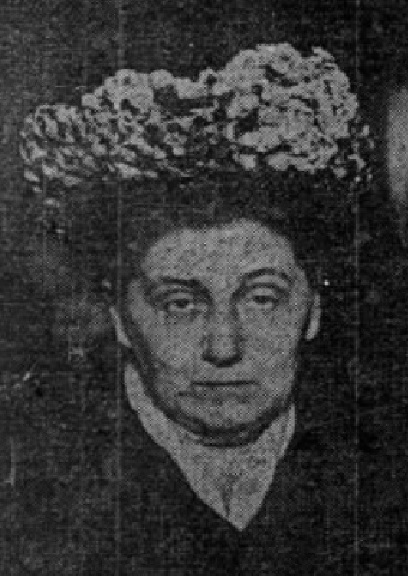
Black and white portrait of Jane Addams with a neutral expression, wearing a large, elaborate hat and a dark outfit. The image appears old and has a grainy texture.

One day I was proofreading transcriptions of Jane Addams documents, spending a typical day at my desk, when I came across this paragraph in a letter from a Swiss man named Alfred Kammermann:

As I have no relations, where I could find a young lady, who would give me her heart, I respectfully request you to bring me in connection with [an] intelligent serious, kind-hearted young lady, if possible with a certain fortune, who is [prepared] to become my wife. I was thirty yesterday.

Say, what?!!!Black and white portrait of Jane Addams with a neutral expression, wearing a large, elaborate hat and a dark outfit. The image appears old and has a grainy texture.

Yes, Jane, I made that face, too; and I read the letter again because I could not believe it said what I thought it said. But it did, indeed, say precisely what I thought it said. This male correspondent, writing from Bern, Switzerland, on Dec. 27, 1921, was asking Jane Addams, a world-renowned reformer, to hook him up with a woman. I have been working at the Jane Addams Papers Project for nearly six years, and I have proofread nearly 7,000 documents and read a few thousand more (FYI: we currently have 14,608 documents in our online database!). People wrote Jane Addams asking for all kinds of things—for advice or for money, to speak to their groups, to use her name in a particular cause, or to give them an introduction to someone; and there was one request from a man asking Addams to talk his wife into reconciling with him. But this is the first letter I have seen asking Jane Addams to find a man a wealthy wife.

Good Grief. What kind of a fella writes such a letter?

Well, Alfred Kammermann, who was born in Bern, Switzerland, addressed his letter to Addams as the President of the Women’s International League for Peace and Freedom (WILPF), so this is likely how he knew who she was. Addams had been writing about the food crisis in Europe and lecturing widely on serious problems Europeans faced after the World War. Kammermann was, presumably, following international relief work and was an informed person. He had written to Addams before about a plan he had to educate war orphans; and although we don’t have a reply to his first letter, Jane Addams’s secretary Anna Lloyd apparently wrote Kammermann on Oct. 20, 1921, that he should see Emily Balch, the Executive Secretary of the WILPF, in Switzerland to further discuss his educational scheme. Kammermann was clearly concerned about and interested in the conditions of war-torn Europe.

Kammermann’s full letter of Dec.  27 offers some additional clues. He was currently unemployed and looking for meaningful work. He was eager to “leave in earnest the business line,” which he had taken up to support himself, but for which he had no “real interest.” He told Addams that since his early youth it was his longest wish to work for the benefit of mankind.” Kammermann also mused that some other such “project of education” might be acceptable to him or, perhaps, Addams could just give him a job with the WILPF.

After discussing himself and his reform interests, Kammermann then set up the big request:

I have still a very great, delicate and especially unpolite request, which you however will certainly understand and therefore kindest excuse, if I tell you that I work without success since then years for social problems. If I shall not [lose] soon all my energy to combat further on, I must have somebody on my side, who encourages me. Having lost my beloved mother fifteen years ago at Xmas, I have no body, to whom I can have fullest confidence.

Ooo, boy.

And then he wrote the sentence that prompted this blog post, which I will repeat because it is so good in its unusualness:

As I have no relations, where I could find a young lady, who would give me her heart, I respectfully request you to bring me in connection with [an] intelligent serious, kind-hearted young lady, if possible with a certain fortune, who is [prepared] to become my wife. I was thirty yesterday.

Kammermann then apologizes (as well he should!):

Please do not consider it as an unpolite request, but please try to understand my feeling.

The end of the letter reads like a thousand other letters I’ve read: polite and not at all weird:

May I by this opportunity offer you, though too late, my sincerest congratulations for a happy New Year, trusting that you may always enjoy of best health and of a happy futurity. Trusting to be honoured with an early and favourable reply, and thinking you in advance very sincerely for your great kindness, I have the honour to be, dear Madam, Very respectfully Yours, Alfred Kammermann.

Apparently, Jane Addams did not answer Kammermann’s Dec. 27 letter, because he wrote her again on Jan. 18, 1922, asking her to confirm receipt of his letter of Dec. 27. In his January letter, Kammermann asked for help in obtaining a loan to begin his educational scheme. He does not mention his previous request for a wife. Whew. Maybe he took better hold of his senses.

There is no evidence at all Jane Addams helped this poor lonely guy find a wife because, of course, she would not have done so. For the purposes of this quick blog post, I was unable to do the kind of research necessary to figure out if Alfred Kammermann ever realized his goals to educate war orphans or ever married. Quick searches in a few online databases yielded nothing but a Swiss document indicating Kammermann was born in Bern in 1891 and traveled to Shanghai in February 1920. Not enough information to understand him. From the ten letters related to Kammermann in the Jane Addams Digital Edition (JADE), we know that in late 1922 he put together a fairly detailed proposal for educating European orphans and shopped it around. In the proposal he argued:

The whole world is in duty bound to adopt and support a scheme for the education and well-being of the thousands of unfortunate war orphans, many of whom suffered great hardship and untold misery, from which they have not yet been able to escape.

Kammermann was, it seems, a caring man, concerned for the welfare of humanity. On Sep. 23, 1922, Emily Balch wrote Kammermann:

Miss Addams and I read your proposition about the education of war orphans with great interest, but as we are obliged to restrict our work very strictly to the programme of our league as defined in the enclosed leaflet, we are sorry not to be able to deal with it officially or in public. We keep your letter filed among our documents and shall be glad to show it to any of the guests of Maison Internationale interested especially in this nation.

I don’t know if Kammermann ever got his project to educate war orphans off the ground. Nor do I know if he ever found a wife (I hope so). Part of me wishes I did know the answers. Part of me suspects he failed on both counts. Drawing from the phrasing of his letters and reading between the lines, to me he seems to have been something of a lost soul, groping for purpose. Kind of like this blog post, groping for purpose beyond being amused by this poor lonely guy hoping Jane Addams would introduce him to a good woman.

Sometimes the incoming letters we collect lead to significant stories that illuminate fascinating historical contexts, and sometimes they offer only mildly interesting vignettes that make us smile.

By Stacy Lynn, Associate Editor

Sources: Swiss Overseas Emigration, 1910-1953, Records on ancestry.com; letters from the Jane Addams Digital Edition: Alfred Kammermann to Jane Addams, Nov. 23, 1921; Dec. 27, 1921; Jan. 18, 1922; Aug. 23, 1922; and Oct. 6, 1922; Alfred Kammermann to Emily Greene Balch, Aug. 23, 1922; and Oct. 4, 1922; Alfred Kammermann, “Proposition for the Education of War Orphans in Europe,” Aug. 1922; Emily Greene Balch to Alfred Kammermann, Sep. 23, 1922; Adolf Finkler to Jane Addams, July 9, 1921, and Sep. 16, 1921. Image of Jane Addams looking weary, courtesy of Chicago Tribune, May 1, 1905, 3.

“A Reasonable Request”

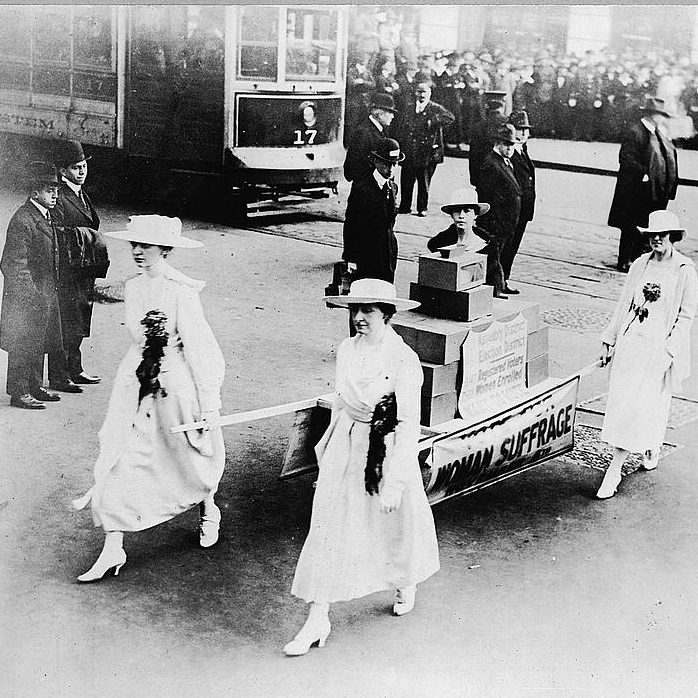
Two women in white dresses march in a parade pulling a cart with boxes and a sign reading Woman Suffrage, while people watch from the sidewalk and a streetcar is visible in the background.

I am an impatient woman, which makes me feel particularly indebted to patient women like Jane Addams who struggled year after year after year to convince men to give them the right to vote. I salute those women and whisper to their spirits that I am grateful for their patience and that it is lucky good they didn’t have to count on me. I would have wanted to bonk upside their heads those men in power who looked on, made fun, and kept saying “NO!” That the suffragists stayed the persistent course in the face of persistent rejection in order to gain a right so obvious (yes, even back then it was obvious) is heroic to me. I would have found it quite impossible to maintain for decades the energy it took to keep advocating, educating, marching, lobbying, writing, and coming up with new arguments and new nonviolent activities to bring awareness to the injustice of men denying women the right to vote, only to fail in that effort over and over and over again.

Suffragists were superheroes. They are my superheroes.

However, I must admit that it is a challenge sometimes to study the woman suffrage movement knowing how many freaking years it was going to take to be successful. It is hard to see some of the suffrage activities through the long and winding history of the movement as anything other than futile. But, thankfully, there are some suffrage efforts so inspired, so bursting with wisdom and enthusiasm that I wish I could have been there fighting with those goddesses of persistence.

Take the 1909 suffrage train from Chicago to Springfield as one shining example.

In the spring of 1909, there were three suffrage bills bouncing around like playground balls in the Illinois State Capitol, because there were a few suffrage supporters among the men in the Illinois General Assembly (Senators William M. Brown and Charles L. Billings, along with Rep. James M. Kittleman, all of Cook County, for example, each introduced suffrage bills). One such measure was a long-shot constitutional amendment to grant universal suffrage to Illinois women. There was also a Senate bill to allow Illinois women to vote in city and state elections, which had little-to-no support in the House. And there was the Chicago Municipal Suffrage Bill to give women in Chicago the right to vote in city elections. Illinois suffragists understood that the constitutional measure was on par with “when pigs fly,” but they were hopeful for the third measure and praying for the second, which would render the third measure moot.

Enter Superhero Catharine Waugh McCulloch.

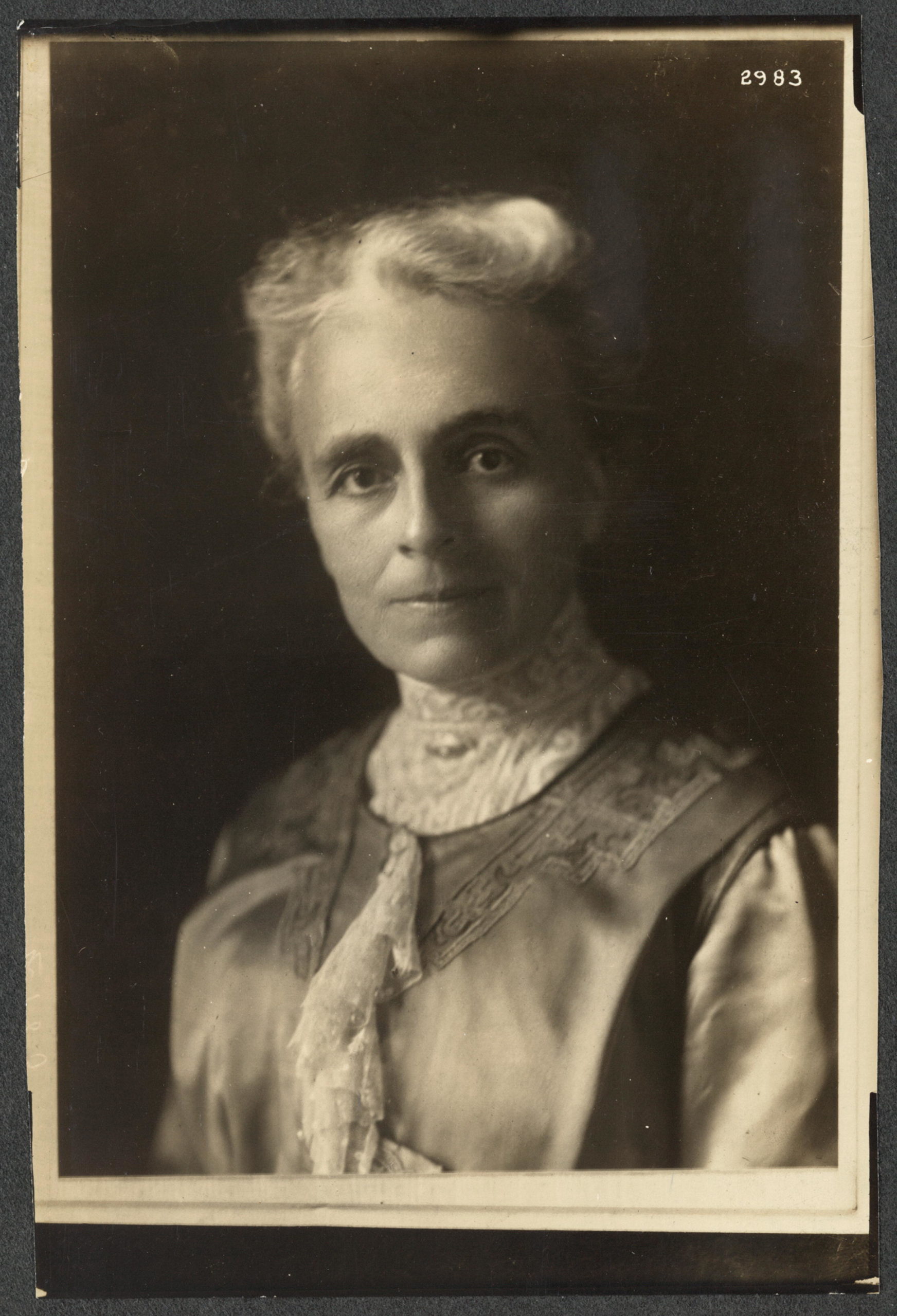
A black-and-white portrait of an older woman with light hair, styled up, wearing a high-collared lace blouse and an embroidered jacket. She looks calmly at the camera against a dark background.
Catharine Waugh McCulloch, c. 1907

McCulloch, a lawyer and justice of the peace in Evanston, Illinois, was chairman of the Legislative Committee of the Illinois Equal Suffrage Association. In order to raise public awareness of the suffrage bills and hit members of the Illinois legislature with reasoned arguments, coming at them from every angle imaginable, she spearheaded a star-studded, public spectacle, suffrage extravaganza. The event was to start in Chicago with a special suffrage train filled with the “wisest and most influential women” in Illinois, continue with whistle-stop suffrage speeches in six cities on the way to Springfield, and culminate in a public hearing of joint committees of the Illinois Senate and House of Representatives at the State Capitol Building. It would be the biggest, boldest lobbying effort of the Illinois suffrage movement to date, a giant push to collect new converts to the cause.

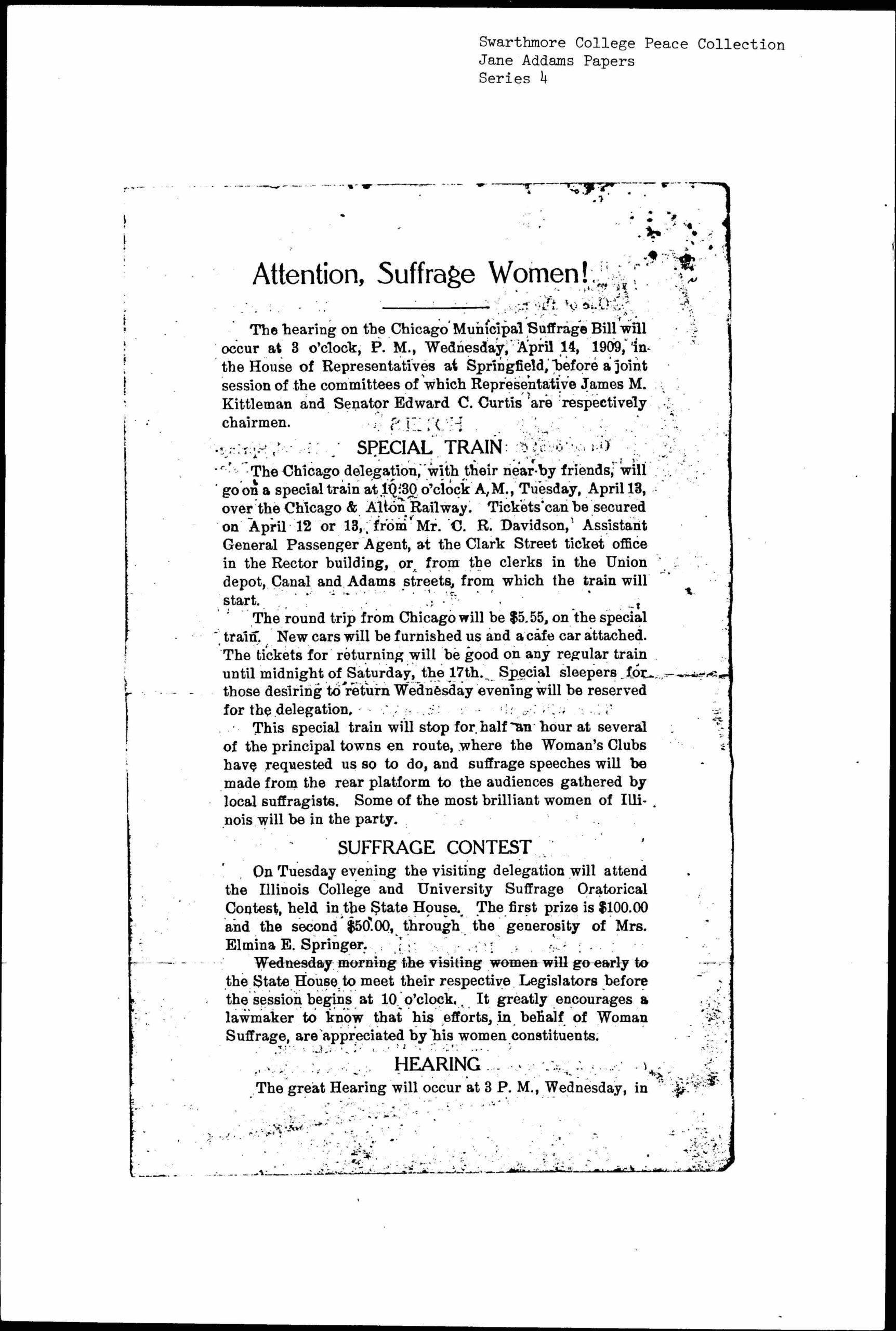
A typewritten announcement titled Attention, Suffrage Women! describes special train arrangements for travel to Chicago for a suffrage hearing, with fare details, scheduling, and a notice about requesting badges.

A typed document titled The Opening Week details logistics and objectives for a Woman Suffrage event in Springfield, Illinois, including hotel info, a reception, and three measures for advancing womens voting rights.
Illinois Equal Suffrage Association Flyer, c. April 1909

Superhero Jane Addams was one of the other women leading the charge.

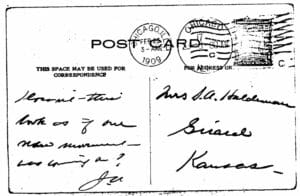
Addams was a member of the municipal suffrage committee in Chicago. In January the committee set up headquarters in the Stratford Hotel and “began the work of canvassing the entire city for the right to vote.” They held Saturday morning meetings and covered the city with posters. In February, Addams sent a suffrage postcard to her sister, writing: “Doesn’t this look as if our new movement was coming on?” The suffragists in Illinois were turning up the heat, as Addams declared in March: “There are plenty of things we need in this country for the protection of the health and the morals of our people. We could have them if we would ask for them, but the men won’t ask for them, and the women cannot.”

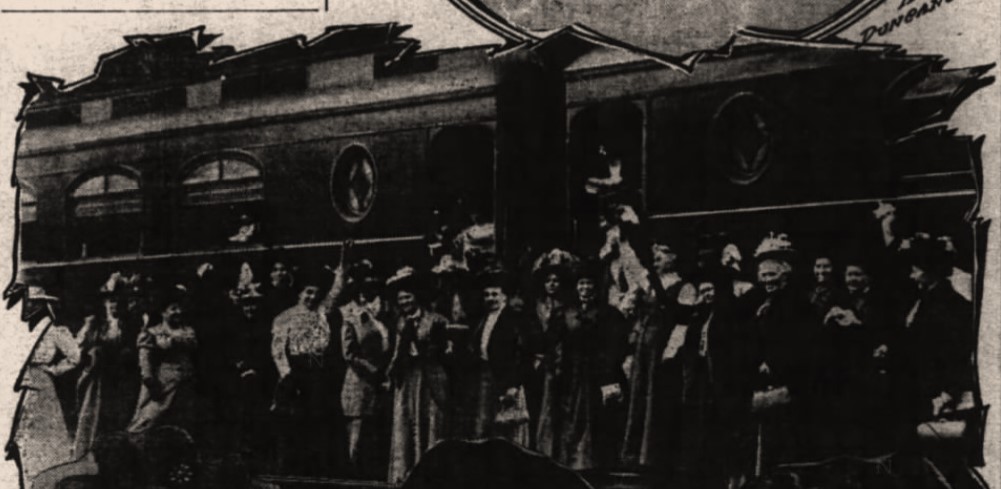
The women would, therefore, descend upon Springfield to make the case. On Tuesday, April 13, the special train, costing $5.50 for the round-trip fare and with a reported 150 suffragists on board, left Chicago on the Chicago & Alton Railroad at 10:30 in the morning. The train arrived at the first whistle stop in Joliet an hour later. Leading a group of four women who addressed a crowd at the Alton Depot of several hundred from a platform at the rear of the train, Jane Addams said:

“For many years the women have gone to Springfield, and in fact to all the capitals in the United States, asking for the right of voting. Their enfranchisement is no longer considered a radical move. The adherents of the move have steadily grown in numbers until today the movement has assumed an important position throughout the world. The women of today are treated in many ways the same as men. They have equal responsibilities and should be enfranchised. In Finland, which is a part of Russia, there are women in the parliament. It is hard to believe that America would be behind such a country in a matter so important. Belgium, England, and English colonies are giving more and more rights to women, and Illinois should not be in the rear. We ask reasonably for your sympathy in this movement. You have representatives in the legislature. Those men are anxious to please their constituents. A delegation of women is not going to have much weight with them, but your wishes will. We ask you to use what influence you have for our cause. It is but a reasonable request.”

A reasonable request, indeed.

A group of people in vintage clothing stands beside a train car, posing and waving for the camera. The scene appears to be from the early 20th century.
Suffrage Train, leaving Chicago for Springfield, April 13, 1909

After the rousing stop at Joliet, the suffrage train continued on, stopping in Pontiac, Lexington, Bloomington, Atlanta, and Lincoln. Greeted by large crowds at each depot, the women took turns on the rear platform making their case for the vote. The Joliet News called them the “Conquering Heroines.”

At the hearing the next day, Senator Kittleman gave the chair and gavel to Jane Addams, who introduced each of the nineteen suffrage speakers, all women except for one. Each of the speakers made their unique arguments in favor of woman suffrage grounded in their own particular experiences. The sheer magnitude of this brilliant lobbying effort was inspiring. By way of celebrating all the superheroes who took part I offer the full roster of speakers and the titles of their speeches:

Black-and-white portrait of a woman in profile with hair pinned up, wearing a high-necked, lace-embellished blouse. The background is dark and plain.
Ella Stewart
  • “Increasing Evidence that Women Want the Ballot,” Ella Stewart (1871-1945), President of the Illinois Equal Suffrage Association, married to Oliver Stewart, a former member of the Illinois legislature
  • “Changing Public Opinion toward Municipal Suffrage,” Elia W. Peattie (1862-1935), Chicago Tribune literary editor
  • “The Indirect Benefits of the Ballot,” Anna Nicholes (1865-1917), settlement worker and clubwoman
  • “The Ethics of Equal Suffrage,” Prof. Herbert L. Willett (1864-1944), University of Chicago Professor of languages and literature
  • “The Lack of the Ballot the Handicap of the Working Girl,” Agnes Nestor (1880-1948), a trade union organizer representing the International Glove Worker’s Association

    A young woman with dark hair styled up sits slightly turned, wearing a light-colored, high-necked, long-sleeved dress with pleats. The photo is black and white with a soft, vintage look.
    Agnes Nestor, 1914
  • “The Need of the Ballot for Working Women,” Margaret Dreier Robins (1868-1945), President of the Chicago branch of the Women’s Trade Union League
  • “The Woman Official and the Ballot,” Catharine Waugh McCulloch (1862-1945)
  • “The Farmer’s Wife and the Ballot,” Norah Burt Dunlap (1856-1932) a clubwoman from Savoy, Illinois
  • “The Professional Woman and the Ballot,” Marjorie Gomery of Rockford, Illinois
  • “The Foreign Woman and the Ballot,” Lilian Anderson, (b. c. 1883), a librarian at Northwestern University in Evanston, Illinois

    Three women in early 20th-century clothing and hats stand together in front of a set of stone steps, posing for a photograph. Each woman holds accessories, such as a handbag, gloves, or a hat.
    Julia Lathrop, Jane Addams, and Mary McDowell in Washington, D.C., lobbying for woman suffrage, 1913
  • “The College Associations for Equal Suffrage,” Harriet Grimm (b. c. 1886), who earned her Ph.D. at the University of Chicago in 1908
  • “Church Interests and Suffrage for Women,” Eugenia Bacon (1853-1933), a clubwoman from Decatur, Illinois
  • “The Ballot for Women and Progressive Legislation,” Mary McDowell (1854-1936), director of the University of Chicago Settlement
  • “The Experiences of the Chicago Municipal Suffrage Campaign,” Mrs. William Hill
  • “Improved Sanitary Legislation and the Ballot,” Dr. Caroline Hedger (1868-1951), a Chicago physician
  • “The Justice of Equal Suffrage,” Rev. Kate Hughes (b. 1854),  minister of a church in Table Grove, Illinois, and former president of the Illinois Equal Suffrage Association

    Black-and-white portrait of a woman with glasses, wearing an ornate high-neck lace dress. Her hair is styled up and she looks directly at the camera with a neutral expression.
    Elizabeth Hawley Everett, c. 1909
  • “The Attitude of the Illinois Club Woman toward Equal Suffrage,” Elizabeth Hawley Everett (1857-1940), President of Illinois Federation of Women’s Clubs, Highland Park, Illinois
  • “Modern Philanthropy and the Ballot for Women,” Flora Witkowsky (1869-1944), President of Jewish Chicago Women’s Aid
  • “The Ballot for Woman and Legal Protection of Children,” Harriet Park Thomas (1865-1935), Secretary of the Juvenile Protective Association of Chicago

None of the measures about which the speakers hoped to inspire legislative action that day passed into law. However, the suffragists won some allies and shifted momentum in their favor. They showed up and they proved they were in it to win it. They were determined to persevere, and just because I know it would take another four years until Illinois women would win voting rights does not render that suffrage train and hearing futile. The superhero suffragists did not get what they wanted in April 1909, but they made some serious noise and changed the game. The suffrage train of 1909 and the hearing orchestrated by the dynamic Catharine Waugh McCulloch and conducted by the cool and collected manner of Jane Addams was the dramatic beginning of the final push.
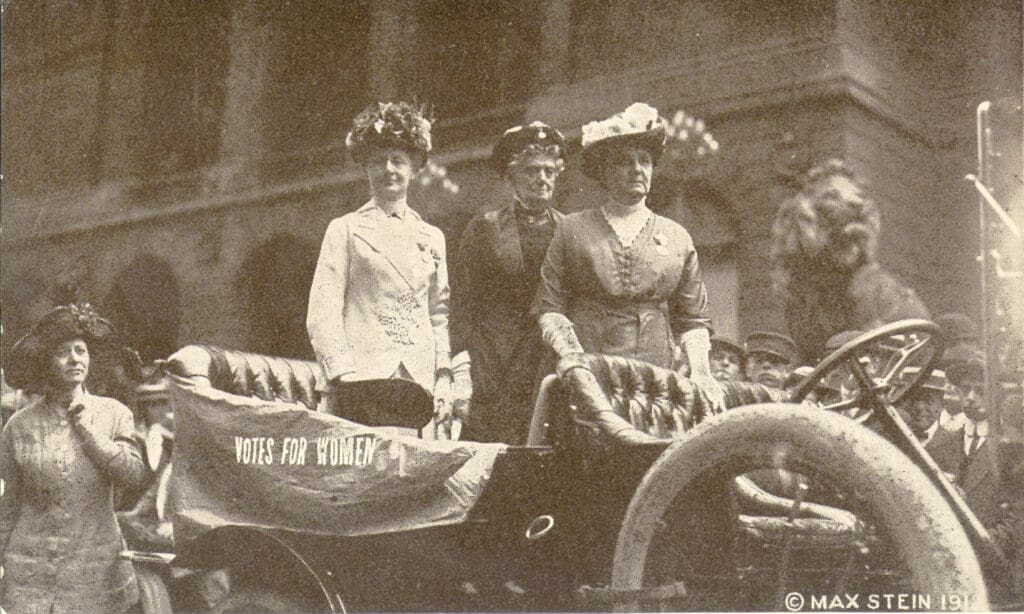
Nineteen cheers for these nineteen superheroes. And a hundred cheers for their persistence.

The legislative suffrage campaign in Illinois had begun in 1891 with a failed vote on a constitutional amendment to grant woman suffrage, continuing with more failed bills in 1893, 1895, 1897, 1901, 1903, 1905, 1907, and 1909. Finally in 1913, the Illinois legislature voted on S.B. 63 to grant women aged 21 and older full presidential and municipal suffrage and partial state and county suffrage. The vote in the Senate was 29 to 15 in favor of passage. In the House, the successful vote was 83 to 58. The suffragists had never wilted in the face of rejection. They were persistent. They kept on asking for the vote. And on June 26, 1913, when the bill became law, Catharine Waugh, Jane Addams, and all the other suffrage heroes finally got the answer they deserved.

Four women in white dresses and hats march in a suffrage parade, carrying a large banner and boxes labeled votes for women on a stretcher, while a crowd and a streetcar are visible in the background.
Men watching women marching for suffrage in New York City, Oct. 23, 1915

Sources: Steven M. Buechler, The Transformation of the Woman Suffrage Movement: The Case of Illinois, 1850-1920 (New Brunswick, NJ: Rutgers University Press, 1986), 174-82; Rima Lunin Schultz and Adele Hast, eds., Women Building Chicago (Bloomington: Indiana University Press, 2001), 560-65, 623-26, 634-36, 846-49; Martha G. Stapler, ed., Woman Suffrage Year Book (New York: National Woman Suffrage Association, 1917), 16, 29; 46th Illinois General Assembly, listed in John Clayton, comp., The Illinois Fact Book and Historical Almanac, 1673-1968 (Carbondale: Southern Illinois University Press, 1970), 265-67; Laws of the State of Illinois (1913). 333; “An Act to confer the right to vote at municipal elections upon women citizens of the city of Chicago,” Mar. 23, 1909; Journal of the House of Representatives of the 46th General Assembly of the State of Illinois (Springfield: State Printers, 1909), 324; “An Act granting women the right to vote at certain elections,” Jan. 11, 1910, Journals of the Senate and House of Representatives, Special Session of the 46th General Assembly (Springfield: State Printers, 1910), 86, 218; “Petticoat Diplomacy,” St. Louis Globe-Democrat, June 17, 1908, p. 7; “Chicago Suffragettes to Stop in Joliet Thirty Minutes,” The Joliet Evening Herald-News, Apr. 8, 1909, p. 3; “Crowds Gather at Stations,” Chicago Tribune, Apr. 14, 1909, p. 3; “Critic Fires Hot Blast at Suffragists,” The (Chicago) Inter Ocean, Apr. 14, 1909, p. 1, 3; “The Conquering Heroines Came,” The Joliet News, Apr. 15, 1909, p. 3; Illinois Equal Suffrage Association Flyer, c. April 1909, Jane Addams Papers Microfilm Edition, 41:1082; and from the Jane Addams Digital Edition (JADE): Jane Addams to Sarah Alice Addams Haldeman, Feb. 23, 1909; Jane Addams Says that American Women are Slower, March 19, 1909; Woman Suffrage Is Needed in Chicago, March 24, 1909; Jane Addams to Agnes Nestor, April 9, 1909; Jane Addams to Agnes Nestor, April 9, 1909; Address to Women’s Suffrage Rally at Joliet, Illinois, April 13, 1909.

Images: Elizabeth Hawley Everett in Illinois Club Bulletin 1 (Oct. 1909): 2; Lathrop/Addams/McDowell, Nestor, Ella Stewart, and NYC parade, all from Library of Congress Prints and Photographs; Suffrage Train from The (Chicago) Inter Ocean, Apr. 14, 1909, p. 3: Postcard, JADE.

Jane Addams on Guns

A group of men and two women, dressed in early 20th-century attire, gather outside a building. One woman, wearing a hat with feathers, appears to be speaking to the attentive crowd.

In the wealthy suburb of Highland Park, Illinois, a place where Jane Addams sometimes vacationed on the shore of Lake Michigan, a gunman with a high-powered assault rifle mowed down innocent people attending the city’s Independence Day parade. In a planned attack, from an elevated position, the gunman killed 7 people and injured 30 more. It was another preventable tragedy in a long-line of preventable tragedies in a country in which mass shootings are, outrageously, normal. The Gun Violence Archive in Washington, DC, reported on July 5, 2022, that there have been 318 mass shootings this year, ten alone on July 4 ( including the one in Highland Park). A physician, who was at the Highland Park parade and attended to the victims in the aftermath of the shootings, told a CNN reporter that the injuries he saw were “wartime injuries,” bodies “blown up by that gunfire—blown up.”

But it wasn’t a war zone. It was a parade.

Every day there is a new mass shooting (or two, or three…), and every day I am horrified, like the majority of us, who want gun legislation to stop this madness, are horrified. I can barely read the news anymore for the horrendous stories of senseless gun violence, story after story of people murdered by men with military-grade weapons designed for the battlefields of war.

Black and white profile portrait of Jane Addams with her hair pulled back, wearing a high-collared dress, looking to the right against a dark background.Someone asked me what Jane Addams would think about this constant violence, about people gunned down in churches, grocery stores, public spaces, and schools. Jane Addams, a pacifist, would be heartsick. She would be in disbelief that she had worked so hard to get small children out of the factories and into classrooms, only to see that 100 years later children are not safe in their schools. She would be disgusted, like she was disgusted by the lynching of Black Americans in her era. She would be shocked, like she was shocked over the unthinkable deaths of more than 600 people, many of them children, burned alive in 1903 in the Iroquois Theatre Fire in Chicago because fire safety laws went unenforced. Most importantly, she would be furious with the inaction of our leaders and would turn that fury into action. If she were alive today, she would be lobbying in Springfield and in Washington, demanding change.

So, of course, I wondered if Jane Addams had any wisdom to impart on the subject of firearms and gun control. And as is always the case when I search the Jane Addams Digital Edition for answers to our modern problems or consolations for our current sorrows, I find in the words she left us nuggets of wisdom, truth, prescient observation, astute analysis, and sane advice. What I was not ready for this time, however, was the setting—Highland Park, Illinois—of the first nugget I found when I starting searching for “guns” and “gun control” and “firearms” in Jane Addams’s papers, dated from 1901-1931.

Below is a sampling of what I found. Some of it is eerie in its relevance:

On Dec. 21, 1903, two armed cavalry soldiers, who had deserted their post at Fort Sheridan, held up a hotel clerk and guests in Highland Park, Illinois, at gun point and robbed them of cash and personal possessions. Upon hearing the news, Howard H. Gross, a Chicago attorney, advocated repeal of the Chicago ordinance, passed in 1881, which made it unlawful “for any person within the limits of the city to carry or wear under his clothes, or concealed about his person, any pistol, colt or slung shot, cross knuckles, or knuckles of lead, brass or other metal, or bowie knife, dirk knife or dirk, razor or dagger, or any other dangerous or deadly weapon.” Jane Addams weighed in on the suggestion the following day, declaring it “a most pernicious idea.”

A newspaper clipping titled RESTRICT THE SALE OF FIREARMS discusses proposed city ordinances requiring gun sales be licensed and restricted to responsible individuals, aiming to curb easy access to firearms and promote public safety.
Chicago Tribune, Dec. 2, 1903, p. 14.

Lawlessness would only be encouraged by such a measure. Enforcement of the existing laws is the proper remedy for crime.
In 1907, the Peace Association of Friends published a pamphlet that asked the question: “Do We Want Rifle Practice in Public Schools?” The effort was a response to a growing military preparedness movement in the United States in which advocates argued that children should conduct military drills in school. Jane Addams, who had served three years on the Chicago Board of Education, was not having it and offered this statement for publication:

I am of course shocked at any proposition to introduce rifle practice into the public schools. The increasing number of accidents and murders due to the totally unnecessary and illegal “carrying of concealed weapons,” makes it difficult to understand why familiarity with fire arms should be encouraged. If war is to continue, at least let us insist that the use of fire arms shall be confined to the soldier, as strictly as the surgeon’s knife is limited to the man professionally prepared to use it.

In an article about juvenile delinquency published in the Ladies’ Home Journal in 1909, Addams wrote:

There is an entire series of difficulties directly traceable to foolish and adventurous persistence in carrying loaded firearms. The morning paper of the day on which I am writing records the following:

A party of boys, led by Daniel O’Brien, thirteen years old, had gathered in front of the house, and O’Brien was throwing stones at [Niezgodzki] in revenge for a whipping that he had received at his hands about a month ago. The Polish boy ordered them away and threatened to go into the house and get a revolver if they did not stop.

Pfister, one of the boys in O’Brien’s party, called him a coward, and, when he pulled a revolver from his pocket, dared him to put it away and meet him in a fist fight in the street.

Instead of accepting the challenge [Niezgodzki] aimed his revolver at Pfister and fired. The bullet crashed through the top of his head and entered the brain. He was rushed to the Alexian Brother’s Hospital, but died a short time after being received there. [Niezgodzki] was arrested and held without bail.
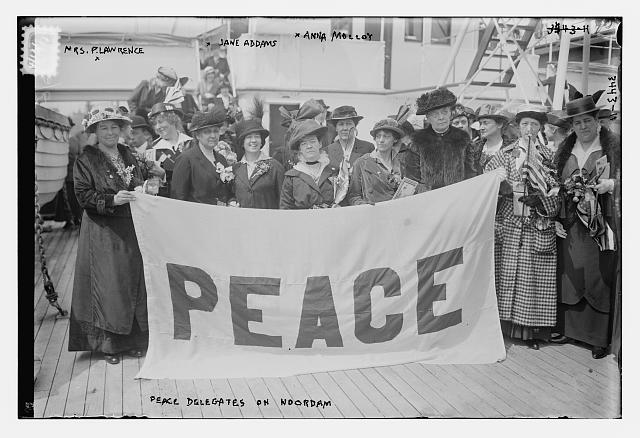
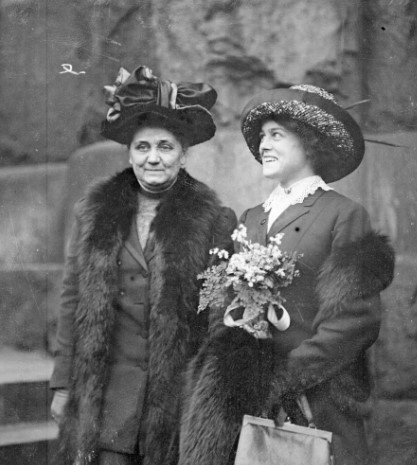
This tale could be duplicated almost every morning; what might be merely a boyish scrap is turned into a tragedy because some boy has a revolver.

In 1927, during Prohibition and much gang violence in Chicago, Addams published an essay that appeared in The Prevention and Cure of Crime, Discussed by the American Crime Study Commission. In that essay, she argued:

The sale of arms should be prohibited, for if a criminal has a gun he will shoot, and that he will try to shoot first, when in danger of arrest is perfectly obvious. We have had a great deal of shooting in our neighborhood in Chicago in connection with bootlegging. Illicit liquor is stored in empty warehouses, in stores and in the basements of disused houses. Bootleggers are much afraid of being detected not only by Federal officers and the police, but by the hijacker—the man who steals goods which are already illicit, so it is almost impossible to arrest him as a thief. 

For all of these reasons the bootleggers employ lookouts to protect their goods, sometimes blocks away, and many of them are boys and very young men. Of course, many of these boys are armed. In fact, they do not like the job unless they are armed. They know that not only the hijackers, but the Federal officers and the police are armed, and in the spirit of sheer excitement they also wish to be armed “to the teeth.” Of course, the whole situation becomes dangerous to the community, perhaps most of all to the innocent passer-by. 

In a statement supporting the presidential candidacy of Herbert Hoover in 1928, Addams argued:

What the prohibition situation needs first of all is “disarmament,” if this necessitates federal control of the sale of firearms so much the better, but whatever is necessary for the final result, the government agents should promptly be taught some other method than those of gunmen. That the police of the Irish Free State established immediately after the evacuation of the English Black and Tans and after Ireland’s civil war, could go unarmed in the midst of a population still carrying “concealed weapons,” encourages me to believe that brave and conscientious men may be found in America who realize that it is their business to bring the culprit to court.

In a speech at the Conference on the Cause and Cure of War in Washington, D.C., in January 1931, Jane Addams, clear and loud as a clanging bell, said:

About two years ago, a bill was introduced into the legislature of Massachusetts, in an attempt to control banditry, which has developed so rapidly into our American cities, by curtailing the manufacture as well as the purchase of firearms. While this bill was being discussed, it is said that a telegram came from Washington, stating that such legislation was contrary to the National defense policy, that wished the manufacturing of firearms to go on at a good pace, so that in time of war, arms might be easily available. 

We have not gotten to the point of discussing this in Chicago, or reducing it to law, but you all know very well that our situation would be enormously improved in every great city, if some such law were passed.

Our thugs are armed and our policemen are armed, so it is largely a question of who shall shoot first; one sometimes longs for the English police who carry no arms…

Dear Jane Addams, please come back to help us. Please. We need you.

By Stacy Lynn, Associate Editor

Sourceswww.gunviolencearchive.org; John W. Leonard, ed., The Book of Chicagoans: A Biographical Dictionary of Leading Living Men of the City of Chicago (Chicago: A. N. Marquis & Co, 1905), 247; “Soldiers Hold up Clerk in Hotel,” The Inter Ocean (Chicago), Dec. 22, 1903, p. 2; and Respect for Law, January 3, 1901; Statement on Carrying Concealed Weapons, December 21, 1903; Address at Memorial for Teachers Who Perished in the Iroquois Theatre Fire, January 16, 1904 (excerpt); Statement on Rifle Practice in Public Schools, 1907-1908; The Bad Boy of the Street, October 1909; Problem of Crime Unsolved, Let Us Start at It Anew, May 13, 1927; Draft of Statement Endorsing Herbert Hoover, October 23, 1928; What is Security? Conference on the Cause and Cure of War, 1931; all in Jane Addams Digital Edition.

A Week in the Life of Jane Addams, April 9-15, 1906

A black-and-white scan of a handwritten diary page dated April 10–15, 1906. Each day contains brief weather notes and various personal or medical appointments written in cursive, some of which are difficult to read.

Over the past couple of years, as I’ve worked to contextualize the documents we have chosen to publish in Volume 4 of The Selected Papers of Jane Addams, I have made a good effort to decipher Jane Addams’s engagement diary. She kept an annual engagement calendar during most of her years in Chicago, although some of them are more rich with details about her life than others. As with any such diary a person keeps, the diaries we have for Jane Addams are riddled with abbreviations and cryptic notes, and some entries are impossible to understand. Addams’s handwriting, which was abominable even in her professional correspondence, is particularly illegible in these private diaries, and the microfilm images we use at the Jane Addams Papers Project (the originals are located in the Jane Addams Memorial Collection at the University of Illinois Chicago) add to the difficulty.  Yet despite all the problems with reading these diary entries, they are invaluable.

Snapshots of these calendar entries offer a good sense of the cadence of Addams’s life, especially when she was in Chicago. They help us track her meetings and lectures, doctor’s appointments, and her special engagements, likes dinners and teas, with friends, family, and fellow reformers. Sometimes Addams would record the speaking fee she collected for a speech, particular trains on which she traveled, or the people she stayed with when she was on the road. Other entries indicate various Hull-House activities she attended or groups she hosted at the settlement. And particularly exciting for me as an editor ferreting out Addams’s daily life and activities, often a diary entry corroborates something Addams mentioned in her correspondence or, better still, provides the definitive clue that helps me unlock the mystery of a vague reference in a letter.

By way of celebrating this hidden treasure chest of documents, I thought it might be fun to offer a Day in the Life of Jane Addams. I’ve chosen a week in the spring of 1906, when Addams was up to her eyeballs with work as a leading member of the Board of Education of the City of Chicago. From the images I’ve provided, you can see for yourself what we are up against with Jane Addams’s dreadful penmanship and get a feel for her daily life. For each day in the calendar, I offer a translation of her entries, followed by sources, which corroborate or contextualize the entries or add the fullness of particular day.

*****

Since a trip in early February to Baltimore for speeches at the National American Woman’s Suffrage Association convention and for the Maryland Child Labor Committee, Addams had been in Chicago. She was in her first year on the school board, having been appointed in July 1905, and was serving as chairman of the School Management Committee. Regular school board meetings prevented extensive travel and the work load monopolized much of her time. However, a latecomer to woman suffrage, she was finding time to carve out a new place for herself in the movement. In the spring she was also involved with the National Tuberculosis Exhibition at the Chicago Public Library. On April 2, 1906, she shared the podium with Illinois Governor Charles Deneen, at the exhibit’s grand opening.*

Monday, April 9

2.30 School Mag’t

 The Chicago Board of Education had offices on the sixth, seventh, and eighth floors of the Tribune Building, which was located at the corner of Dearborn and Madison streets in Chicago’s business district. Addams likely traveled to and from most meetings on the trolleys; there was a station on Halsted Street near Hull-House. At this afternoon meeting, Addams and her committee considered actions against a chemistry and physics teacher at Jefferson High School for fighting with a school janitor. Thomas H. Furlong made his case for self-defense, and the committee somewhat sympathized with his argument that the janitor had struck first. However, the committee also determined the teacher may have verbally provoked the affray, and because a student had witnessed the fight the committee recommended a one-week suspension for Furlong.

“Fighting Teacher Loses,” The Inter Ocean (Chicago), April 10, 1906, p. 2; “Teacher Suspended a Week for Fighting the Janitor,” Chicago Tribune, April 10, 1906, p. 18.

Tuesday, April 10

2 Finance
H.H. trustees [4]

As the chairman of the Board of Education’s School Management Committee, Addams was also a member of the Board’s Finance Committee. After attending a meeting of the Finance Committee downtown, she hurried back to Hull-House for the regular meeting of the trustees of the Hull-House Association at 4:00 p.m. Meeting with Addams, who was the president, were trustees Mary Wilmarth, Helen Carver, Mary Rozet Smith, and Allen Pond. The trustees accepted Culver’s proposal to sign over Hull-House land, which she owned, to the Hull-House Association; and they discussed plans for the proposed Boys’ Club. At some point during this same day, Addams declined an offer from a publisher who was interested in turning a series of autobiographical articles, which  had recently come out in Ladies’ Home Journal, into book form. Addams noted she liked the idea and had made an outline, but was “so immersed in the Chicago School Board,” she wrote, “that I find it hard to pull my mind out of it long enough to think of books.” This was, of course, an early discussion about Twenty Years at Hull-House, which would be published in 1910.

Hull-House Association, Trustees’ Minutes, April 10, 1906, JAPM, 49:1188-89; Jane Addams to Walter Hines Page, April 10, 1906; Jane Addams’ Own Story of Her Work: The First Five Years at Hull-House (Second of Three Installments), April 1906; and Hull-House Year Book 1906-1907, all in Jane Addams Digital Edition (JADE).

Wednesday, April 11

3 dentist
[two illegible words smudged under “dentist”]
4 P.M. [illegible name] Hall
5.00 106 Randolph
Mrs Blaine dine
Bd. of Ed.

There are no letters in 1906 discussing dental work, but Addams did suffer some problems with her teeth over the years. Although dental hygiene was a new science at this time, most people only went to the dentist when they had to go; routine cleanings were not yet the norm. Board of Education meetings were held in the evenings on alternate Wednesdays. Prior to this meeting, Addams dined with Anita McCormick Blaine, who was one of her fellow school board trustees, perhaps at a restaurant on Randolph Street, which was just two blocks north of the Board of Education offices. The two women may have then traveled to the meeting together. It is also possible the meeting with Blaine had nothing at all to do with what Addams was doing on Randolph at 5 p.m. At the school board meeting, Addams’s School Management Committee offered reports on several issues, including the graduation of three young women from the Chicago Normal School and recommending the full board grant them elementary school teaching certificates. Addams also presided over a contentious discussion about high school fraternities and athletic programs, and she recommended the board enforce a rule that prohibited fraternity members from becoming a member of a school athletic organization. The specific reasons for Addams’s opinion are not known, and the board did not solve the issue that night. At the meeting, however, there was a unanimous vote to disallow private competitions for the city’s school children. Addams argued that the “Granting of these medals and other prizes is not a movement for education. It fosters rivalry rather than wholesome competition among the pupils, and has just the opposite effect to that which is intended.”

“Dental Hygiene’s Grand History, RDH Magazine, July 1, 2010 (online); “Renews Fight on ‘Frats,’” Chicago Tribune, April 12, 1906, p. 3; School Management Committee to Board of Education, Report of Diplomas, April. 11, 1906, Jane Addams Papers Microfilm (JAPM), 39:1158; Statement on Chicago Board School Action, April 12, 1906, JADE. For a letter Addams received on this day in her capacity as a school board member, see: Lilian Smith Haines to Jane Addams, April 11, 1906, JADE.

Thursday, April 12

3 Dr [Hebert?]
<[illegible]>
3.30-4 Mrs Henrotin
to see newspapers
tuberculosis [pm]

The doctor reference is curious, and I was unable to identify him (bad spelling, Jane?); nor can I decide if the squeezed in text goes with the good doctor or is another appointment wedged into a busy day. Addams and Ellen Henrotin, a well-known Chicago clubwoman, were serving together on a municipal suffrage committee organized in Chicago to lobby the city charter convention to give women the right to vote. They had been meeting since January and had participated in a mass meeting about suffrage at Hull-House on Sunday, April 8. Addams and Henrotin were likely meeting about their suffrage work on that committee. Addams was likely going to see various newspaper reporters or editors to shop a lengthy article she had written on municipal suffrage, because less than a week after seeing newspapers, at least two of them published the article. At the end of her busy Thursday, Addams attended a session on “The School and Tuberculosis” at the National Tuberculosis Exhibition.

“Women Demand to Vote,” Chicago Tribune, April 9, 1906, p. 11; “To Rid Schools of Tuberculosis,” Chicago Tribune, April 13, 1906, p. 3; Statement on Woman’s Suffrage, January 18, 1906; Statement on Tuberculosis at The School and Tuberculosis Conference, April 12, 1906; Pleads for Suffrage, April 17, 1906, both in JADE.

Friday, April 13

11 a.m. C.J.W. at H.H.
[Hebert?]
4 School Mag’t
Moody Play

I have no clue what “C.J.W.” might be, but I suspect it was an organization (Chicago Council of Jewish Women, perhaps?) rather than a person; and there is that mysterious Hebert again. A Board of Education School Management Meeting was cancelled. And finally some leisure for Addams in the evening, when she went to the Garrick Theatre in Chicago to see a play. The theater was in the Schiller Building, which was designed by architects Louis Sullivan and Dankmar Adler.Black and white newspaper ad for Garrick Theatre, promoting “A Sabine Woman” by Wm. Vaughn Moody starring Miss Anglin, and “Zira.” Also announces “Fantana” with Jefferson De Angelis, with seats on sale Thursday. The play was “A Sabine Woman,” written by the poet and playwright William Vaughn Moody. Addams was an admirer of Moody’s work, in 1901 writing him a letter of thanks for his poem—“On a Soldier Fallen in the Philippines” published in The Atlantic Monthly—which gave her “clarity and comfort.”

“Advertisement,” Chicago Tribune, Apr. 11, 1906, p. 9; Jane Addams to William Vaughan Moody, February 9, 1901, JADE.

Saturday, April 14

10 doctors
11 preside suffrage meeting
5.00 WTUL
Dinner [Miss?] [illegible name]

On this day, the Chicago Eagle (admittedly not the most reliable of historical resources) reported that Addams and a group of women representing the Consumers’ League met with a Dr. Whalen of the Chicago health commission about meat inspection in the city. This could be the 10 a.m. entry here, but I’m not not even close to certain. I am certain, however, that the second engagement here was a planning meeting of the Chicago municipal suffrage committee, which took place at the Municipal Museum. In the evening, Addams attended a meeting of the Women’s Trade Union League, probably at Hull-House, where it regularly met. As for the dinner afterwards, your guess is as good as mine. If you know the answer, let us know! 

Chicago Eagle, April 14, 1906, p. 7; “Women Plan for Ballot,” Chicago Tribune, April 15, 1906, p. 68.

 Sunday, April 15

2.30 Brands Hall
Erie & Clark sts
tuberculosis

This was Easter Sunday, and Anita Blaine, who was a Hull-House donor as well as a friend, sent a lilac bush to the settlement in celebration. Brand’s Hall, which was located on the corner of Erie and Clark streets, was an auditorium in the Chicago business loop northwest of Hull-House. Perhaps Addams attended an Easter performance of some sort, although I could not find any mention of one in her letters or in the Sunday newspapers. Later in the day, she attended the Tuberculosis Exhibition, still underway at the Chicago Public Library.

“Find Root of Phthisis,” Chicago Tribune, Apr. 15, 1906; Jane Addams to Anita McCormick Blaine, April 16, 1906, JADE.

And so you can see that Jane Addams was a busy woman, and the editors at the Jane Addams Papers are always busy, too, trying to figure out what the heck she was doing and struggling to decipher the woman’s handwriting. At the end of this particular busy week, Addams declined an engagement at the University of Wisconsin in Madison, writing: “I have delayed replying to your cordial letter hoping that I might be able to accept your very attractive invitation. But I have already so many engagements for June and School Board affairs entail so many special appointments for the second and third weeks of that month that I really cannot add another thing.”

I’m exhausted just thinking about the rapid pace of Jane Addams’s daily life, but I never tire of editing her papers. Studying her life and her work is a privilege. Even with the daily frustration of reading her handwriting, it’s a pretty darn good gig.

by Stacy Lynn, Associate Editor

*Sources: Board of Education, City of Chicago, 1905-1906 (Chicago: Board of Education, 1906), 6-9; “What the Woman Suffragists Will Do Today,” The Baltimore Sun, February 9, 1906, p. 7; “Miss Jane Addams Speaks,” The Inter Ocean (Chicago), Feb. 11, 1906, p. 3; JA Diary, April 9-15, 1906; “Phthisis Show Opens Tonight,” Chicago Tribune, April 2, 1906, p. 10, JAPM, 29:1181; Jane Addams to Edward A. Ross, April 16, 1906, JADE.

A black and white image of a handwritten calendar from April 4–9, 1906, listing daily notes and events, with cursive writing and visible dates for each day of the week. A black-and-white scan of a handwritten diary page dated April 10–15, 1906. Each day contains brief weather notes and various personal or medical appointments written in cursive, some of which are difficult to read.

Every Day an Easter Bonnet

Black-and-white photo of a serious-faced woman wearing a decorative hat adorned with large flowers, a high-necked blouse, and a dark jacket, standing in front of a light-colored, textured background.

A man once asked me if I thought anyone would see me as a serious scholar wearing such heavy eyeliner. I am sorry now that I did not defend myself to him. But I was a young scholar then, lacking confidence. He was an old scholar, lacking good manners. People called him a curmudgeon, but I called him words that were not euphemisms for what he was. Under my breath, of course. Today if he said such a thing to me, my retort might give him a little ‘ole heart attack. But back then I was polite to my own detriment. I ignored his comment and went on with my life. In eyeliner.

Fast forward about twenty-five years.

Black-and-white photo of a serious-faced woman wearing a decorative hat adorned with large flowers, a high-necked blouse, and a dark jacket, standing in front of a light-colored, textured background.Recently, I ran across a photograph of Jane Addams I’d never seen before. In the photo she is young, her face smooth and unlined, and her extraordinary, expressive eyes are bright, and also as yet unlined. She is wearing a hat with a curved brim, atop of which is what looks like a slouchy dark velvet adorned with GIANT chrysanthemum-like flowers, six at least, perched slightly off center. I gaped at the magnificent chapeau atop her brilliant mind, and before I could stop myself, I said out loud, to Jane Addams on my computer screen: “Oh my god, woman, how did people take you seriously in that hat!”

I covered my mouth. My eyes scanned the room as if searching for anyone who might have heard me. Shame on me. Shame, because my mind had immediately conjured the memory, for first time in years, of that old, rude, sexist scholar who dissed me for wearing eyeliner. And now I was dissing Jane Addams for wearing a hat. I know Jane Addams is dead, so it wasn’t like I could actually offend her, or offend anyone for that matter, alone as I was in my home office. But I was so mad at myself for making fun of Addams’s hat out loud with such vehemence, that I answered my own question: “Well, Stace, how does anyone take you seriously in such heavy eyeliner?”

Maybe some people don’t take me seriously in heavy eyeliner, but I am old enough and confident enough in myself and my abilities that I do not care. I’ve written books and given lectures and appeared in history documentaries in eyeliner. I am not a flashy dresser, but I like eyeliner. So what? Jane Addams was a serious woman, a determined advocate for the underprivileged, an innovative reformer, and a brilliant thinker and writer. She lived in the era of spectacular hats, and after a quick search through pictures of her, it became as obvious as the painted lines around my eyeballs that Jane Addams loved a spectacular hat. I still think she might have crossed over the milliner’s line with the chrysanthemum one, but what if she did? So what?

A woman in a formal, ornate dress with puffed sleeves sits on a large, intricately carved chair with lion heads on the armrests and decorative figures on the backrest. She looks to the side, holding her hands in her lap.In 1896, Jane Addams visited Leo Tolstoy at his country estate Yasnaya Polyana, south of Moscow. When she met him that day, she was wearing a dress with extraordinary sleeves, and Tolstoy chastised her for them. In 1911, she published an account of that meeting in McClure’s, writing:

“Tolstoy, standing by clad in peasant garb, listened gravely, but, glancing distrustfully at the sleeves of my traveling gown, which, unfortunately, at that season were monstrous in size, took hold of an edge and, pulling out one sleeve to an interminable breadth, said that there was enough stuff on one arm to make a frock for a little girl, and asked me directly if I did not find ‘such a dress a barrier to the people.’ I was too disconcerted to make a very clear explanation, although I tried to say that, monstrous as my sleeves were, they did not compare in size with those of the working-girls in Chicago, and that nothing would more effectively separate me from ‘the people’ than a cotton blouse following the simple lines of the human form; that even if I had wished to imitate him and ‘dress as a peasant,’ it would have been hard to choose which peasant among the thirty-six nationalities we had recently counted in the Hull-House neighborhood.”

I guess you might say Tolstoy was kind of like the old scholar who questioned my eyeliner. Way more accomplished, of course, but still, rather rude. And Jane Addams might have been stung by Tolstoy’s comments, like I was stung, and clearly she was thinking about them fifteen years later. Yet although she most always wore plain and simple frocks, she never shied away from a magnificent hat. She worked hard and dedicated her life to helping others, so I think it rather grand she afforded herself this luxury. Jane Addams kept her face determined and serious, and I suspect a pretty hat was her smile.

In honor of the season of Easter bonnets, here are some of my favorites. And do, please, place your cursor over each image to treat yourself to the full effect. (P.S. We used that last one as the inspiration for our Jane Addams Papers Project logo).

Jane Addams was not the only serious woman who appreciated a stylish hat. Check out these women changing the world while rockin’ a posh headdress.

Now that I’ve thought about Jane Addams’s hats and my eyeliner and written this fluffy blog post, I’ve changed my mind about the chrysanthemum hat. I actually think I rather like it, all naysayers be damned.

by Stacy Lynn, Associate Editor

Notes: The Selected Papers of Jane Addams, 3:510-11; A Visit to Tolstoy, January 1911, Jane Addams Digital Edition.

Illustration of a woman in a large hat, shown in grayscale on a red background, with the words Jane Addams Papers Project in a circular border around the image.