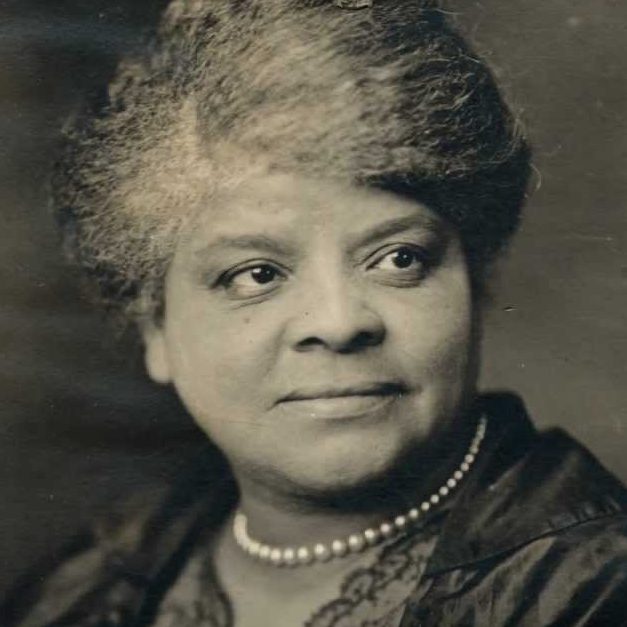
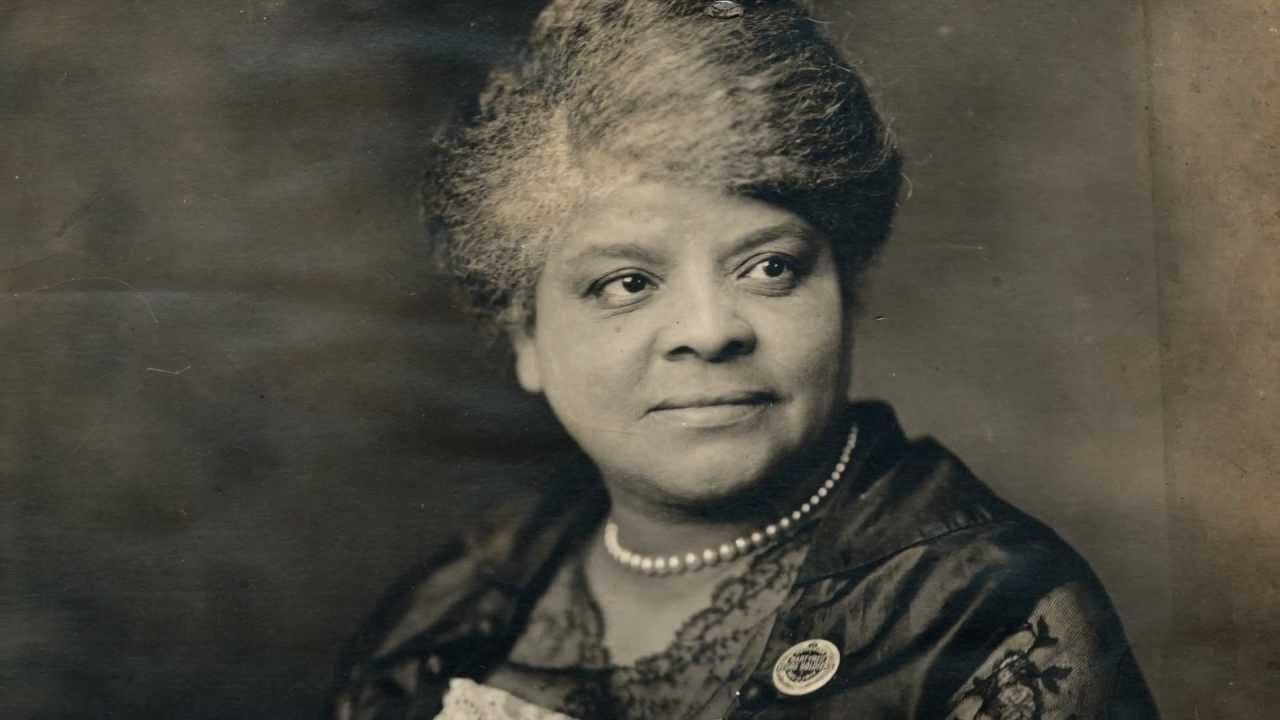
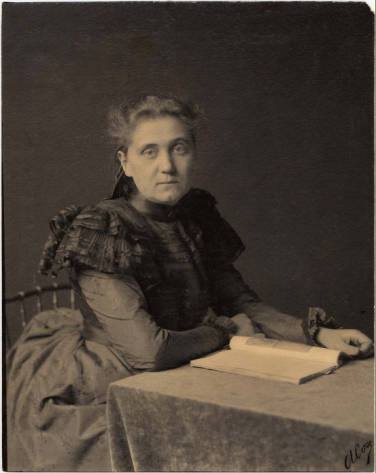
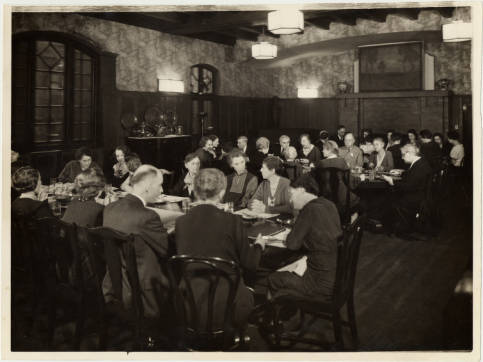
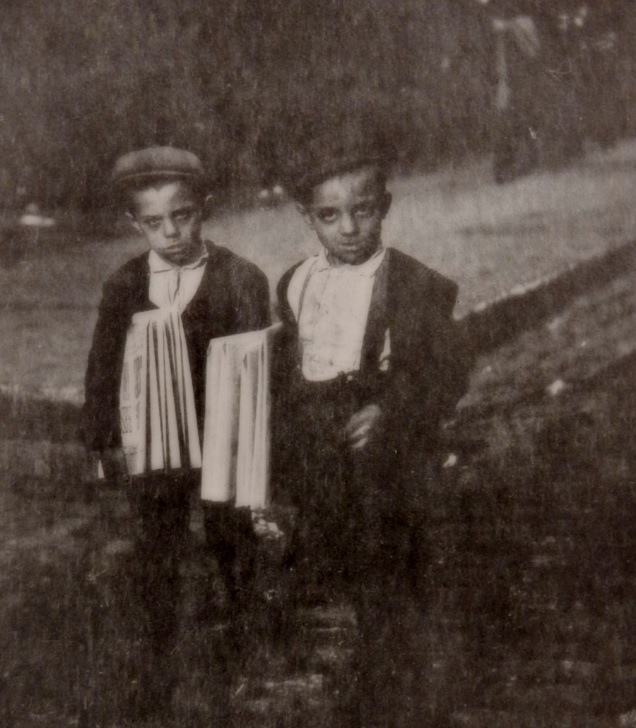
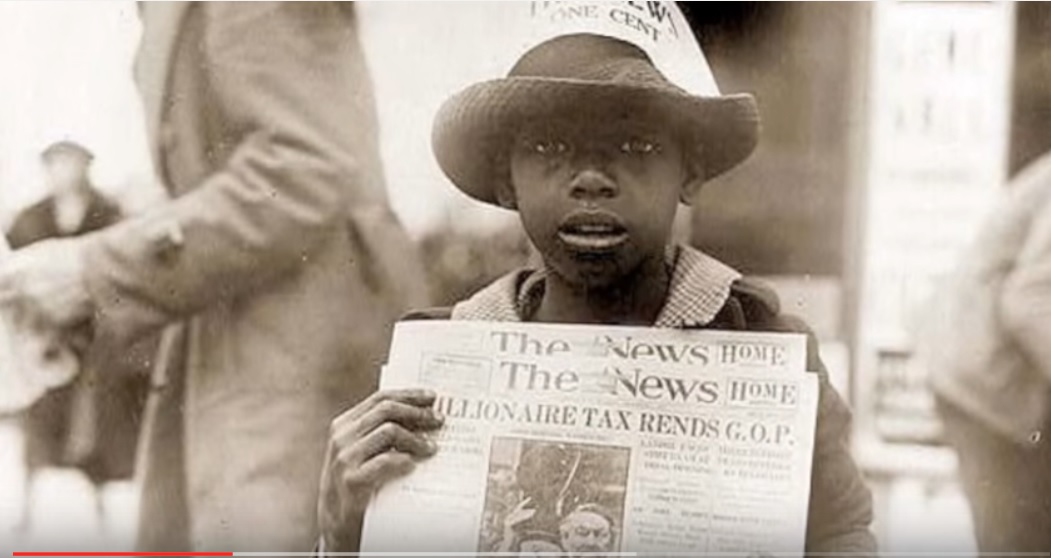
Jane Addams, 1926 (Image courtesy of Swarthmore College).
In April 1915 before leaving for The Hague to attend the peace meeting of the International Congress of Women, Jane Addams made a public statement about her mission:
“We do not expect to end the war. We have not much hope that our meeting will have immediate effect upon the present situation, but we do believe that as women, as mothers of men and soldiers, we are in position to meet, without bias, and formulate plans for the settlement of the present international troubles when the time comes to consider terms of peace. The present system of diplomacy has failed; it has plunged the world into a war the like of which it never saw before and it has done it in the infancy of the feminist movement. Now is the time for women to assert themselves and attempt to bring about a settlement that will be a lasting settlement if it be possible to do so.”
Jane Addams was right.
The diplomacy of men had failed, and now Europe was engaged in a devastating war. That failed diplomacy and resulting war would kill nearly 10 million soldiers and more than 6.5 million civilians, leave more than a million widows in France and Germany alone and result in innumerable bereaved mothers who lost children to battle, genocide, disease, and starvation. Men had failed women spectacularly. War jeopardized every reform that Addams championed since she opened Hull-House in 1889.
Jane Addams was righteous.
She knew that women had “a vested right in the developed conscience of the world.” Women had everything to lose and no political power to stop the war, but in 1915 more women than ever before in the history of humankind, were finding their voices and willing to raise them. Women could claim the moral high ground and speak out against the slaughter of their men and their boys. They could be humanity’s good sense when the powers that be had lost their minds. For Jane Addams, peace was as central to human well-being as clean food and water, safe housing and work spaces. As she wrote in Newer Ideals of Peace, there was a direct correlation between peace and humanitarianism. War jeopardized everything.
Jane Addams was brave. She led a group of forty-seven American women to The Netherlands in the middle of a war. They boarded a ship, left the safety of the United States more than 3,500 miles away from the fighting, and sailed into dangerous waters. Their purpose to convene a peace meeting with more than 1,100 women from twelve neutral, allied, and central powers, was bold. Jane Addams believed that women had “a right to protest against the destruction of that larger ideal of the state in which they had won a place now being destroyed through an appeal to the loyalties of savagery, and to deprecate a world put back upon a basis of brute force.” To be a pacifist in wartime was no path for the faint of heart. For the next decade Jane Addams endured the wrath of politicians and citizens alike who accused her of being un-American, even as she courageously exercised her First-Amendment rights.
Currently, I am working on Volume 6 of The Selected Papers of Jane Addams, which covers the years of World War I through Addams’s death in May 1935. A large proportion of the documents we selected touch on or deal solely with international peace, a selection that rightfully represents the focus of Jane Addams’s attention in these years. Yet even as I am not a procrastinator by nature, I have been procrastinating the full annotation of these documents. For months I have avoided them, worked around them, and put off for far too long the deep historic reading necessary to fully understand them. When I try to focus on these peace documents, I find myself asking, “What the heck, Jane, why are you screaming into the void about peace?”
What I should have been asking was, “What the heck, Stacy, why do you hate peace?”
I love peace as a concept. Like Jane Addams, I abhor war and I (mostly) blame men for it and view peace as a woman’s issue. As a feminist who stands on the shoulders of Addams’s pioneering generation of women, I believe that women, particularly as they are the creators of all human life, have the moral authority to condemn war and demand peace. As a practicing yogi, I adhere to the tenant of nonviolence (ahimsa), just as Jane Addams identified with Quaker pacifism and adhered to her ideals of antimilitarism, internationalism, and arbitration. I am inspired by Addams’s life, reform work, ethics, and particularly so by her unflappable commitment to her principles; and in no other part of her work did she most illustrate her integrity than in her peace work.
Addams founded the Women’s International League for Peace and Freedom, an organization that still exists today. She led the women’s movement for peace for twenty years. She left hundreds of articles, speeches, statements, and letters that illustrate her commitment to the peace movement and her arguments for antimilitarism and international cooperation, a treasure trove for historians. And she was awarded the Nobel Peace Prize in 1931.
So, if Jane Addams was right and righteous and brave and in advocating peace was most true to her foundational values, then why am I, as an editor of her papers, struggling to be compelled by the historical topic of peace? Why am I at war with peace?
I sat down to write this essay in order to ponder this question. I often write to untangle my inner knots and, in that writing process, I frequently unravel something surprising. Honestly addressing my unnatural procrastination in the editing of the peace movement documents exposed an anger in me that was most unexpected, indeed. I am afraid that my best answer to the question embarrasses me: Jane Addams’s peace movement failed, I am furious that it failed.
Despite rational pacifist arguments (or perhaps to spite pacifists), the United States entered the war, the brutality of chemical weapons on the front continued, the peace settlement was inhumane, and the world’s great powers refused to disarm afterwards. The women’s peace movement failed to counter criticism of the League of Nations or to temper reactionary, isolationist policies in America after the war. World War II happened. And 111 years after Jane Addams got on that ship and sailed toward warring Europe, humanity is still fighting, still committing genocide, still othering, and still too many of the men in power are failing at diplomacy. Jane Addams was vehemently opposed to the building of battleships, and I don’t have to wonder what she would say today about the more than 12,000 nuclear warheads stockpiled in nine countries, only one warhead of which could destroy Chicago, kill and sicken millions of people, and lay waste to the environment for hundreds of miles. Photographs of Gaza, Ukraine, and Sudan would make Jane Addams weep.
Addams and Breckinridge co-founded the Woman’s Peace Party, later to become the U.S. chapter of the Women’s International League for Peace and Freedom, in 1915. (Image Courtesy of Women’s International League for Peace and Freedom Collection, Special Collections, University of Illinois at Chicago Library)
The spectacular failure of peace makes me furious. I am mad for Jane Addams not at her, because I know that the spectacular failure of peace after the horrors of World War I is a reflection on society not on Jane Addams and her brave, optimistic sister pacifists. But I must admit that I am very sorry that she expended so much of the energy of her golden years in a losing, hopeless effort, sometimes to the detriment of her own health. Peace jeopardized Addams’s personal well-being, her reputation, Hull-House, and her other reform work and, frankly and sadly, I am more compelled by her brilliant successes than by her one magnificent failure.
Jane Addams was an extraordinary reformer, playing a direct role in most of the major reform efforts of her generation and supporting in some way all the others. She literally cleaned up the streets of Chicago. She and her Hull-House colleagues provided economic, recreational, educational, and artistic opportunities for their Hull-House neighbors that markedly improved the quality of human lives. She was instrumental in the passage of child labor laws, the improvement of food quality and workplace safety, and getting American women the right to vote. She helped build a juvenile court system and redefined the rights and needs of childhood. She personally mentored dozens of reformers who went out in the world and made a definitive difference in myriad fields, and she inspired an entire generation of women to use their unique talents for the betterment of society. She validated and provided meeting spaces for radical thinkers, and she was a remarkably prolific and accomplished author.
Peace was her one losing proposition, and after thinking through my war with peace, right here in this essay, I realize now that Jane Addams at least kind of knew it. Note the “we have not much hope” in her 1915 statement. In an April 1915 letter to fellow proponent of peace David Starr Jordon (a deeply problematic individual—perhaps I will tackle him in a future blog post), Addams called the peace mission to The Hague “a fool’s errand, perhaps. But at any rate,” she continued, “forty American women are now committed to it and I understand that the response from the European women, both of the neutral and belligerent nations, is most gratifying.” Jane Addams knew she might be screaming peace into a void, but peace was right and true and standing up for it was what mattered. And now I feel a little bit terrible for being at war with peace because it failed, and I look pretty lousy for thinking it was, indeed, a fool’s errand.
Do I think the peace women wasted their time?
Yes, I suppose I do.
Do I imagine what laws Jane Addams could have championed or what reforms she could have accomplished in the United States instead of organizing women around the world for international peace?
Yes, definitely.
Am I frustrated that Addams’s leadership of an ungovernable bevy of brilliant peace women was something akin to herding feral cats?
Yes, absolutely and, by the way, I am allergic to cats.
Do I feel any better now that I’ve written about my war with peace?
No, not really.
Because I have failed as a historian on peace and Jane Addams. It is bad history to read history backwards, and counterfactual questions, even the ones stewing in my subconscious, are problematic, distracting, and irrelevant to the work I do at the Jane Addams Papers. I am a trained historian and skilled editor, but I was so blinded by the spectacular failure of peace, that I forgot all about the historic context of 1915 and the war years. Peace was, indeed, a longshot, but Jane Addams knew what she was up against; and she did not know how it would all unfold as I know how fast it went south. Besides, peace didn’t have to fail—the League of Nations, for example, had support and enjoyed some successes. Most importantly, however, that peace did fail means nothing.
Can lousy art be evidence of my willingness to give peace a chance?
I need to stop whining about peace and be the historian I was trained to be. I need to immerse myself in Jane Addams’s world and leave my angry judgment in the present. I do that with every other aspect of her life, and so I can do it with peace. Because Jane Addams was right and righteous and brave to be a pacifist when all the world was at war. How hard should it really be let the peace movement unfold in Jane Addams’s papers, the way she saw events unfolding? I have exposed my blind spot on the topic of peace, and now I hope it will be easier to just accept the peace movement’s promise and its limitations within its particular historical contexts and let myself be cheered by its sane and optimistic rhetoric.
In order to understand Jane Addams, I simply must give peace a chance. I need to give it at least as much of a chance as she did.
Wish me luck.
Peace out.
Stacy Lynn Associate Editor
Sources: Susan R. Grayzel, Women and the First World War, 2nd ed. (Longman, 2024); Michael Kazin, War Against War: The American Fight for Peace, 1914-1918; Report of the International Congress of Women (Woman’s Peace Party, 1915); Jane Addams, Newer Ideals of Peace (Macmillan, 1907); from Jane Addams Digital Edition: What War is Destroying, Jan. 10, 1915 (Advocate of Peace, Mar. 1915, 65-66); Comments on Upcoming Peace Conference in The Hague Apr. 7, 1915 (The New York Sun, Apr. 9, 1915, 3).
Mary McDowell and Jane Addams at the Democratic National Convention, Chicago, 1932 (Image courtesy of Swarthmore College).
I recently finished reviewing all of the congratulatory telegrams and letters Jane Addams received when she was awarded the Nobel Peace Prize in December 1931. More than 375 of these messages are known to be extant, and they came in from across the country and around the world. The well-wishers included other peace activists, like Frederick Libby of the National Council for the Reduction of Armaments, Mary Thoday of the North Wales Women’s Peace Council, and Addams’s cowinner Nicholas Murray Butler. There were notes from friends, family members, dozens of colleagues in the social settlement and suffrage movements, and ecstatic and proud members and state, local, and national branches of the Women’s International League for Peace and Freedom, which Addams founded in 1915. Addams heard from educators, business people, writers, clergymen, and politicians. There were letters in German, Spanish, and French, two women named for Jane Addams (Jane Addams Weinreb of Chicago and Jane Addams Thompson of Thornwood, NY), and many letters included honorary resolutions passed by peace societies and organizations across the globe.
Some of the most notable among the correspondents were racial justice reformer Mary McCleod Bethune, sitting Illinois Governor Louis Lincoln Emmerson, former (and future) Canadian Prime Minister William Mackenzie King, journalist Oswald Garrison Villard, Oxford University professor Gilbert Murray, Chinese feminist writer Sophia H. Z. Chen, and Swedish-American painter Carl Eric Lindin. Of course Jane Addams heard from friends and family and professional associates. Naturally, as well, civic and political leaders who shared her world view were compelled to write, particularly those who supported Addams during the post-war years when her unwavering pacifism caused many to criticize her and to question her patriotism.
Yet the letters from the more common folks are the ones I find most revealing. The well-wishing from the people Addams didn’t know illustrate more clearly the scope of her influence and the myriad ways her life and work inspired people outside of the reform movements she led. These more common messages came from women, men, and young people worried about the state of the world. They came from mothers, teachers, and religious souls who admired Addams’s integrity, humanity, intellect, and resolve. One came from Harold Palmer, an inmate in a New York Prison, who had grown up in the Hull-House neighborhood. One came from Bess Swett, a representative from the South Sioux City Woman’s Club in Nebraska. Another came from Mamie Jefferson, a school teacher in Camden, NJ. And one came from Morris Osofsky, a teenager from the Bronx, New York:
2085 Walton Avenue Bronx, New York December 10, 193
Dear Miss Addams,
Bravo!! May a seventeen-year-old high-school student offer his very sincerest congratulations on the awarding of the Nobel Peace Prize?
As an advocate of peace and a great humanitarian you have long been the idol of we young would-be philanthropists who so often say, “If I had a million dollars. I’d give it to charity.”
But perhaps I bore you so I will cease now and again permit me to say that no person is more deserving of the prize than yourself, Congratulations!
Very respectfully, Morris Osofsky
One of my favorite tasks as a historian is to uncover the lives of ordinary people, to do the detective work necessary to identify them, and then to share their stories. It is often a difficult task, because historians are always at the mercy of the incomplete historical record. People of the past are often hiding in the historical shadows. They move, they get married and change their names, they die at sea or in foreign countries, they are illiterate, they have their foreign names butchered or change them to become American, they burn their letters. Sometimes the paper trail ends and the historical trail runs cold.
From young Mr. Osofsky’s letter, I know he lived at 2085 Walton Avenue in the Bronx and was born in 1914. I quickly find him in the 1930 U.S. Census, living at that exact address with his parents and an older sister. From that census page, I learn that Morris’s father Nathan Osofsky (born c. 1875) immigrated from Russia in 1904 and was a clerk in a delicatessen. Morris’s mother Miriam Osofsky (born c. 1875) immigrated from Russia in 1910. The native language of both parents was Yiddish, so I also know now that the family was Jewish. Morris and his sister Ethel (born c. 1917) were born in New York and grew up as the children of immigrants.
I find Morris and his parents in the 1940 U.S. Census, as well, although in this record his mother is named Mary, either a personal choice or a mistake by the census taker. At some point between 1931 and 1940, the family moved to Brooklyn, New York. Morris’s father was a counter man at a delicatessen there, and Morris, aged 26, had been out of work for seventy weeks. In trying to fill in the nine-year gap and move beyond 1940, I do some searching in newspapers but quickly learn there were two Morris Osofsky’s in Brooklyn at the same time and nearly the same age, and there is not enough evidence to untangle them.
I then attempt one those hopeful-but cautious searches in Ancestry.com, hoping to find another clue to pick up the trail. I find a military registration card signed by a Morris Osofsky, born in Yonkers, N.Y., on April 14, 1914. And, huzzah! His address on the card matches his address in the 1940 census. Also on the card, Osofsky had listed his mother Mary Osofsky at that same address in Brooklyn as his contact. This card is not only a record of his name, birthdate, and current address, it is also my historical missing link. Because, at the top of the card, the name “Morris Osofsky” was stricken, and written in red ink was “Maurice Paul [effective] 1-15-46.”
Eureka! Morris Osofsky had changed his name, and that is why my trail ran cold in 1940.
I then check the 1950 census and find Maurice Paul, the Brooklyn 36-year-old formerly known as the Bronx high school student named Morris Osofsky. He was living with Nathan Osofsky, age 76 (that tracks), and Mary Osofsky, age 76 (also tracks), and both born in Russia (more corroboration). Miriam had, indeed, morphed into Mary, and their son had become Maurice Paul. A quick newspaper search fills in the final detail. In 1945, Morris Osofsky petitioned the court to legally change his name to Maurice Paul. The notice included his wife Rose and one-year-old son Barry, also legally changing their surname to Paul.
Oh, how I do love playing history detective. And when a single document connects two disparate dots, in this case a corrected military registration card, I give my thanks to Clio.
The discovery of the legal name change opened up a flood of new documents and evidence of the ordinary extraordinary life of Morris Osofosky/Maurice Paul. I am especially happy to share the details here in a blog post, because only a very distilled version of his story will appear in a footnote to his letter, which we will publish in Volume 6 of The Selected Papers of Jane Addams.
As a youngster, Morris Osofsky was employed in the restaurant business, perhaps even working in the same delicatessen as his father. He appreciated the strict discipline of his parents and respected their hard work and struggle as immigrants. He was also greatly influenced by their good sense and frugality, but remembered that “every so often Pop would slip a dollar bill in the toe of my stocking while I slept (so Mom shouldn’t know about it). While Mom always slipped me an extra quarter or so when I went to the movies (only don’t tell Pop).
Osofsky was unemployed during at least one good stretch of time during the Great Depression, he married Rose Ress in Brooklyn on December 12, 1941, and had a son named Barry. In 1945, he changed his name to Maurice Paul; and sometime before April 1950, he and Rose were separated. I found no evidence that the couple divorced, but Maurice Paul never remarried.
In 1950, Maurice Paul was living in Brooklyn with his parents and working as a journalist in a literary agency. It is the professional side of his story about which he left the most clues. He became a reform-minded journalist and wrote on a wide variety of subjects, especially in the beginning of his journalism career. He published articles in newspapers and periodicals, including the Brooklyn Daily, where he started writing a column entitled “Unadjusted Impressions.” The column was an eclectic collection of facts, observations, and literary quotes. The style of the writing was colloquial.
In 1961, Paul became the editor of the Canarsie Courier, which covered the Canarsie neighborhood of Brooklyn on Jamaica Bay. He continued to publish the “Unadjusted Impressions” column in his new paper. Yet it was in his role as editor that Paul found his true calling, living up to the spirit of a good journalist by speaking truth to power. His hard-hitting editorials called out bad government and demanded community improvements, and his advocacy was hailed as instrumental in pressuring local officials to build a modern, new high school and to replace an antiquated and dilapidated police station. Paul also took on the N.Y. Transit Authority, which resulted in improved transportation networks in Brooklyn.
In 1967, Paul was awarded the Canarsie High School Human Rights Award for championing “the cause of tolerance, human decency, and brotherhood.” I wonder if the 53-year-old Maurice sitting in that packed high school gymnasium being honored remembered the 17-year-old Morris who wrote to Jane Addams, identifying himself as a “would-be philanthropist.” I did not have the luxury to read all of the articles Maurice Paul wrote over the years, but a search for him and Jane Addams’s name together in one newspaper database revealed no evidence that he ever publicly credited her with his civic concerns.
I wish I could write that Jane Addams inspired Maurice Paul’s good deeds, although I do believe that every adult who inspires a young person gets into the subconscious mind of the emerging adult. Maurice Paul certainly had good parents, and they can take the credit for his success in the world. They fled horrible conditions for Jews in Russia to make a better life for themselves in the United States, and their all-American son, no doubt, made them proud. Yet I cannot help but believe that the teenager so inspired to write to Jane Addams in 1931 was also shaped by his knowledge of her good work. Maurice Paul was a writer in his bones, but perhaps Jane Addams’s dedication to make the world a better place inspired him to use his own unique talent and passion to make his community a better place.
Maurice Paul suffered a fatal stroke in 1969. He was only 55 years old, and his death was a terrible shock to his newspaper and his community. He had only just taken on a campaign, through his editorials, to eliminate the “Jet noise problem” in Canarsie. His advocacy would be missed, as the obituary in the Canarsie Courier opined: “Canarsie lost one of its most respected and dedicated fighters for civic improvement … He wrote extensively about the wonders of nature and the animal kingdom. But Maurice was at his best at a typewriter, ‘telling off’ disinterested public officials who neglected their civic obligations.”
Stacy Lynn, Associate Editor
Sources: Legal Notice for Morris Osofsky, Brooklyn (NY) Citizen, Dec. 12, 1945, 8; 1930, 1940, 1950 U.S. Censuses; U.S., World War II Draft Cards Young Men, 1940-1947; New York, NY, U.S., Marriage License Indexes, 1907-2018; “Unadjusted Impressions,” Canarsie Courier, Feb. 18, 1966, 9; “Human Rights Award to Maurice Paul,” Canarsie Courier, June 8, 1967, 7; “Maurice Paul, Editor, Dead at 55,” Canarsie Courier, Aug. 7, 1969, 1; Letters to Jane Addams in the Jane Addams Digital Edition: Nicholas Murray Butler, Dec. 9, 1931; Louis Lincoln Emmerson Addams, Dec. 10, 1931; William Lyon Mackenzie King, Dec. 10, 1931; Frederick Joseph Libby, Dec. 10, 1931; Carl Eric Olaf Lindin, Dec. 10, 1931; Morris Paul Osofsky, Dec. 10, 1931; Oswald Garrison Villard, Dec. 11, 1931; Jane Addams Thompson, Dec. 12, 1931; Jane Addams Weinreb, Dec. 13, 1931; Gilbert Murray Addams, Dec. 16, 1931; Mamie E. Jefferson, Dec. 17, 1931; Bess Swett, Dec. 22, 1931; Mary McLeod Bethune, Dec. 23, 1931; Sophia H. Z. Chen, Dec. 24, 1931; Mary Gladys Sykes Thoday, Feb. 6, 1932.
Currently, I am editing documents in the Jane Addams Papers from the 1920s. Jeannette Rankin, the first woman elected to the United States Congress, has been popping up a lot in my daily work. Rankin went to Europe with Addams in 1919 to attend the International Congress of Women in Zurich. She was a field secretary for the Women’s International League for Peace and Freedom (WILPF), of which Jane Addams was president. And in 1924, she lived and worked at Hull-House.
Of course, I had known about Rankin since I was an undergraduate studying women’s history, but I never had any depth of knowledge about her or her life. For a blog post I thought I would explore what led her to Hull-House, suspecting that Jane Addams was that gravitational pull. But those plans went almost immediately off the rails when I read a description of Rankin as exhibiting considerable sangfroid—sang-froid, from the French, literally “cold blood”—self-possession, coolness, or, as Merriam-Webster defines it, someone who is “cool as a cucumber,” possessing “imperturbability especially under strain.”
Wow, what a word, sangfroid, I thought (after I looked it up). And the more I kept reading the more I agreed with the description of Jeannette Rankin, the tough nut from Montana. This woman dared to run for a seat in the U.S. House of Representatives in 1916, just two years after women earned the right to vote there. She was a woman who unapologetically campaigned on a platform of equal suffrage for all American women, child protection legislation, and preparedness for peace instead of preparedness for war, while all of Europe was at war.
In this cartoon, Rankin’s bag is packed for Washington, as the Susan B. Anthony Amendment for woman suffrage reaches out for her. Nina Allender, “Come to Mother,” 1917, Library of Congress, Prints and Photographs, Washington, DC.
Cool as a cucumber, indeed, this 35-year-old Republican woman who won her Congressional seat despite Democrats sweeping up nearly all the others in Montana that year. This unrepentant pacifist Congresswoman voted NO in 1917 to declare war on Germany. “I want to stand by my country,” she said, “but I cannot vote for war.” Her vote won her praise in Montana, within the peace movement, and among Quakers, but she had been one of only a handful of dissenters in Congress and there was not much praise coming from anywhere else. Interestingly, Rankin had the historic opportunity to vote against world war again during her second term in the U.S. House of Representatives on December 8, 1941. On that day she cast the single, lonely, dissenting voice of Congress on the resolution to declare war against Japan. Defending her position, which was widely condemned and made her reelection impossible, she said: “As a woman I can’t go to war, and I refuse to send anyone else.”
And guess what? Jeannette Rankin lived long enough to protest the Vietnam War, too. On January 15, 1968, she led the Jeannette Rankin Brigade and several thousand marchers protesting the war in Washington. When a reporter asked her if she wanted her country to surrender in Vietnam, 87-year old Rankin said: “Surrender is a military idea. When you’re doing something wrong, you stop.”
Rankin leaving the White House in 1917. Photograph by Harris & Ewing, Library of Congress, Prints and Photographs, Washington, DC.
Through all of it, Rankin was true to her principles, unwavering under tremendous pressure.
I kept reading about Rankin because she is fascinating, but I was no longer interested in her time at Hull-House (at least for now). Now I was intrigued by the qualities of Rankin’s character, particularly as compared with those of Jane Addams. I saw the common traits of quiet determination, commitment to personal values, and self-confidence. You see, at the Addams Papers we sometimes grumble a little bit about the stoicism of our dear subject. We sometimes long to discover chinks in the armor of her curated public personal. Jane Addams didn’t write much of anything at all about how hard it was to be a woman trying to save the world in the Progressive Era. We are sometimes frustrated that her composure even during the most stressful periods of her life makes it hard to know her. But as I kept reading about Rankin, I wondered if that biographer was onto something. Sangfroid, that curious new word, was pounding in my head as I continued reading.
Born in Montana in 1880, nine years before it gained statehood, Rankin was educated at Montana State University and the New York School of Philanthropy. Rankin’s interest in reform and social work mirrored the perspectives and paths of other educated and reform-minded women of her generation, but unlike most of them her priorities of suffrage, reform, and pacifism veered her directly into politics. Rankin’s term in Congress brought her fame and much respect and she rendered good service to her constituency, but she failed to be reelected in 1918. However, she seemed unphased by the defeat and just moved forward open to the next opportunity. After she left office in 1919, she joined the pacifist movement, went to Zurich with Addams, and became an active WILPF member. After Zurich, she worked with the formidable Florence Kelley at the National Consumers’ League. Then after she left Hull-House in 1924, she bought a small farm in Georgia, living a simple life there without plumbing and electricity. She kept her home in Montana, perhaps always thinking she might return to politics, and served nine years as a lobbyist for the National Council for the Prevention of War. She won her second term in Congress in 1940, beating out her antisemitic incumbent opponent. No matter what she was doing or where she was, she lived with intention and on her own terms.
The surface reading I was doing to write a short piece about her life was making it easy to see why Jane Addams took a shine to Jeannette Rankin. She was an intriguing woman, principled, fair-minded, and strong-willed. As if I needed more proof to believe that Jeannette Rankin was self-possessed, an example of Sangfroid right out of the Oxford English Dictionary, I came across the official portrait of the 65th Congress., the first in which she served.
The 65th Congress, 1917, Library of Congress, Prints and Photographs, Washington, DC. Click to see the full photograph in all its panoramic glory.
There is Congresswoman Jeannette Rankin, sitting nearly dead center, the central portico of the U.S. Capital right behind her. The only hat and the only skirt. A woman in a sea of men. Uncrossed legs and upright posture, she commands her space. There is a quiet, determined expression on her face. She is far more dignified than many of her fellows near her in the front row, slouching, legs splayed, arms crossed, and one shielding his eyes from the sun as he gazes into the distance at something he deems more interesting than the capturing of this historic photograph. Congresswoman Jeannette Rankin is sitting in that portrait like she belonged there because, of course, she knew she belonged there.
Yep.
Sangfroid on display. Jane Addams (with Lillian Wald to her right) cool as a cucumber with an all-male group of journalists asking questions. (Image courtesy Library of Congress).
Sangfroid.
Unflappable is a word I have frequently used to describe Jane Addams. It is an apt word for a woman who stuck to her principles no matter the pressure. A woman who over and over and over again kept making informed arguments in Springfield before the Illinois General Assembly about the evils of child labor against the manufacturing lobby who did not care one whit that factories were stealing the futures of children. Jane Addams, unflappable in the face of attacks that she was un-American, a Bolshevik, a traitor, because she dared to exercise her constitutional right to speak out against war and to promote peace for the benefit of humanity.
Unflappable works, but at every turn Jane Addams also exhibited considerable Sangfroid. Yes. Sangfroid is better. Unflappable sounds like a stiff brimmed, oversized, Edwardian hat on the windy city streets of Chicago. Sangfroid is a mighty oak standing against an impossible and exasperating Prairie tempest.
Yes. Sangfroid is better, so much so that I am beginning to consider the idea that what we have here is a generation of Sangfroid. Jeannette Rankin and Florence Kelley and Julia Lathrop and Jane Addams and so many members of that reforming generation of women were unperturbed, especially under strain. They had to be.
Rankin was the only woman in Congress when she served that first term in Congress. Everything she did and said was under a microscope. America was watching. The press was watching. History was watching. Jeannette Rankin stood up tall against all of that scrutiny. Sangfroid.
When Florence Kelley became the chief factory inspector for Illinois in 1893, she had to enter factories run by men to tell them that they were in violation of the law. She had to report her findings to a legislature of men at a time when women had no political power at all. Not surprisingly, men fought her tooth and nail, but still she kept walking into those factories and writing reports that led to the enacting of child labor legislation that changed lives and the future. Sangfroid.
When Julia Lathrop became the director of the U.S. Children’s Bureau in 1912, she was the favorite choice of many progressive men in Washington. However, many believed her task was woman’s work, not real work, and her budget to protect children was a fraction of the budget the U.S. government spent on the protections of livestock. Still, Lathrop did her work, spearheaded revelatory research studies, educated an entire generation about the needs of America’s most vulnerable children, and changed how Americans defined childhood despite an economic and political system that chafed at every suggestion of reform. Sangfroid.
Jane Addams was the first woman to do so many things I cannot name them all here but will give you a few examples: she was the first woman garbage inspector in Chicago, first woman president of the National Conference of Charities and Corrections, first woman to receive an honorary degree from Yale University, first woman to deliver a commencement address at the University of Chicago, and the first American woman to win the Nobel Peace Prize. She served on numerous boards and committees in which she was the sole woman. She boldly took her seat on panels of male scholars. She lobbied before male-dominated state legislatures and the U.S. Congress and met with the most important religious, business, and political leaders in the United States and around the globe to make her arguments for a better world. For much of the time she had no political power, but she exerted her will anyway. She couldn’t even vote for president until 1916, but long before that she commanded audiences with presidents and sat down with them as an equal. Sangfroid.
This reform generation of American women was smart and compassionate and they had bold and brilliant ideas about how to make the world a better place. But perhaps even more important than their empathy and their ideas was the nature of their steely nerve. Men had all the power, and if women wanted to change the world they had to sit down at the table with disagreeable and disinterested and dismissive men and make them see the light. These women expected the chorus of doubt from those men (and some women, as well), but doubt for themselves was not an option. They had to open the doors and let themselves in, stand in extremely uncomfortable spaces, and hold their ground. Although they possessed warm hearts for the betterment of humanity, they had to be a little cold blooded. Self-possessed. Cool as damned cucumbers.
In 1906, President Theodore Roosevelt wrote Jane Addams: “Will you let me say a word of very sincere thanks to you for the eminent sanity, good-humor and judgment you always display in pushing matters you have at heart? I have such awful times with reformers of the hysterical and sensational stamp, and yet I so thoroughly believe in reform, that I fairly revel in dealing with anyone like you.”
Jane Addams, Jeannette Rankin, and all of those reform women were up against thousands of patronizing Theodore Roosevelts as well as thousands more men who didn’t have Roosevelt’s bent toward reform and general interest in interesting women like Jane Addams. I’m now thinking about the bold women who organized female workers through the Women’s Trade Union League, Mary McDowell who worked her entire life in the impossibly tough Union Stockyards of Chicago, and suffragists, yes, all the suffragists. Alice Paul certainly exhibited imperturbability under strain! Sangfroid. All of them. Sangfroid.
I’ve written before about how Jane Addams developed a particular persona she found politically effective, a voice that would be heard in a public arena that in many ways was unattuned to women’s voices. I stand by my previous arguments that Jane Addams was guarded, deliberate, and dispassionate because, for her, the changes she wanted to see in her world were more important than any one person doing the work. She set her inner self aside, displayed a resolute dispassion, and made many of the tough Theodore Roosevelts of the world respect her, hear her, and listen to her ideas.
But now I have to wonder. Maybe it wasn’t so hard for Jane Addams to construct a demeanor of calm. Maybe Jane Addams was born exhibiting considerable sangfroid, like Jeannette Rankin’s biographer said she was born. Perhaps Jane Addams succeeded in her work and became the icon of the Progressive Era she became because imperturbability was innate in her character. I certainly would have slugged many of the fools Jane Addams had to face down, because I am, naturally, not even unflappable. I wonder, if we did a personality study of the all of the women who were first to do all kinds of stuff we wouldn’t find that each and every one of them possessed considerable sangfroid. Perhaps the historical circumstances didn’t effect such a demeanor but rather the demeaner itself, deep in their bones, made these women capable of opening all those doors and calmly standing in the fire on the other side.
Sometimes, we just need to take thirty minutes and read a little history.
In 1926, the United States, which was marking the sesquicentennial of its founding, was not in a particularly democratic mood. Nor were the political, economic, social, and racial conditions of the country reflective of the promise of the U.S. Constitution and the ideals of American democracy. The democratic malaise was so complete, even the Sesquicentennial celebration of the American founding failed to inspire and encourage the body politic.
.S. Border Patrol agents block a road in Gainesville, Florida, in 1926. Image courtesy U.S. National Archives.
In 1926, American women had the vote, but Black voters in the South were effectively disenfranchised by Jim Crow policies such as literacy tests, poll taxes, and all-white primaries. Groups like the KKK employed violence and vigilante tactics to terrorize Black, Jewish, and Catholic Americans, as well as immigrants. Immigration at this time was governed by the 1924 Immigration Act—which favored white European immigration, functioned by a rigid quota system, was based on race and “fitness” for American citizenship, and completely barred immigrants from Asia. The purpose of the new act was to preserve a mythological ideal of American homogeneity. On the heels the 1924 act, Congress also established U.S. Border control, which fundamentally altered the U.S. government’s interactions with immigrants. Nativist propaganda was rampant, a growing fear that different cultures would destroy America was surging, eugenics was being seriously discussed, and racial stereotyping was the norm.
In 1926, American law enforcement and politics were rife with corruption and scandal. This was the era of gangland violence in American cities, organized criminals running around armed with machine guns. The Volstead Act (prohibition) had created an underworld of bootlegging and crime and bribery of police officers by rum runners with pockets full of cash. In 1926, Al Capone ruled the underground of Chicagoland, and in September rival gangs shot up his headquarters at the Hawthorne Hotel in a massive drive-by shooting, spraying 1,000 bullets into the hotel’s restaurant.
Cities like New York, Chicago, and St. Louis were rife with political corruption, and the fallout of the corrupt Presidency of Warren G. Harding (1921-1923), most notably the Teapot Dome Scandal, was still coming to light. In Chicago hand grenades (called Chicago pineapples) were used to intimate voters, a U.S. District Court judge for the Eastern District of Illinois resigned after he was impeached by the U.S. House of Representatives for abuse of power, and the U.S. Senate investigated a senate campaign in Illinois for campaign finance corruption, one of the candidates caught taking a $125,000 bribe from the director of a public utility. Next door in Indiana, the KKK had infiltrated Indianapolis municipal government and had members in the statehouse, as well. And that is just a modest Midwestern sampling of the political and judicial corruption running roughshod over American law and politics at every level in 1926.
In 1926, American foreign policy was generally characterized by political isolationism and economic nationalism. American wealth was concentrated in the top 5 percent of Americans. Businessmen controlled Congress, and corporations paid low taxes, while two million Americans were unemployed, more than 70 million (60 percent) lived in poverty, and 80 percent had no savings to stave off personal economic disaster. It was the Roaring ‘20s, but it was not roaring good for the majority of working people.
In 1926, the future of the post-World-War world was uncertain. There was considerable unrest across the globe with authoritarian coups in Lithuania, Poland, and Portugal; a general strike in Britain that led to a declaration of martial law. Prime Minister Theodoros Pangalos assumed dictatorial powers in Greece, and the fascist Benito Mussolini increased his power in Italy by cracking down on public demonstrations and abolishing opposition parties following an assassination attempt.
In 1926, fear of fascism and socialism and communism, internationalism and humanitarianism—basically all of the isms—became a rallying cry for the white and rich power brokers who employed the rhetoric of othering to gain political support in communities that should have rejected their politics. During this time, not even the best among Americans were safe from attack.
Jane Addams in 1926. Image courtesy of Swarthmore College.
In 1926, Jane Addams was a sixty-six-year old internationally famous and well-respected reformer who had dedicated her entire adult life to improving the lives of vulnerable people. A renowned settlement worker, social philosopher, and orator, she was the author of seven books on democracy, social uplift, peace, and humanitarianism. Since cofounding Hull-House in Chicago in 1889, she had worked to expand democracy, shed light in the darkest corners of American cities, and lobbied for legislation and public policy initiatives to improve the lives of children, women, immigrants, and the working poor in the United States. She was beloved, and most Americans never wavered in their respect for her principled advocacy for a better world. Yet because she was an unflinching advocate for ALL vulnerable people, stood her ground on peace and antimilitarism, and constantly used her public platform to decry injustice and to stand up for free speech, the rule of law, and the ideals of American democracy, the fearmongers, who were smaller in number but so much louder in voice, branded her a dangerous radical.
In 1926, people hell-bent on silencing speech against the U.S. government or others merely seeking to draw attention to themselves and their political, social, or religious views, declared Hull-House a harbor for all of the “isms” and called Jane Addams anti-American. Although she seized opportunities to defend her good work and her reputation throughout the year, she refused to take the bait of the fearmongers, even when many of her friends and supporters urged her to sue for slander. It was not the only time in her life people had doubted or questioned her, and she certainly absorbed a great deal of negative press during World War I when she was unwavering in her position of peace. Yet the assaults in 1926, during a roller-coaster year that included two trips abroad and a heart attack, took their toll. As she wrote Dorothy Detzer, a sharp-tongued feminist and secretary of the WILPF, in November 1926: “I have had a horrid attack from the Commander of the Ill. Div. of the American Legion. I wish you were coming over soon to confront him!”
Some Jane Addams highlights of 1926:
January 14. Jane Addams and Mary McDowell, Chicago commissioner of public welfare, hosted a meeting with Capt. C. B. Hopkins, a member of the Military Intelligence Association who had accused them of being “Reds” because of their association with the American Civil Liberties Union (ACLU). When Addams asked him why he considered her dangerous, he responded: “Because of the good you have done your influence for wrong is far greater than that of any other.” (Statement on Pacifism and Patriotism, Jan. 13, 1926).
January 16. The Chicago Tribune, in an editorial with the headline “Both Wrong and Dangerous,” agreed with Hopkins that “the universal recognition gained by persons like Miss Addams for their good works makes them all the more dangerous when they turn to doctrines of pacifism which no experience supports.” (Chicago Tribune, Jan. 16, 1926, 8).
A new kind of patriotism, opined Addams: “free from dislike and mistrust of things foreign.” Elmira (NY) Star Gazette, March 4, 1926.
February 28. In a speech to the United Neighborhood Houses of New York, Jane Addams argued: “It is quite as devoted and loyal as the old type, but it believes that certain humanitarian ends can be achieved only through cooperation between all nations and all races. In the United States … we believe in brotherly love, in international cooperation and goodwill … but we need something beyond words. We need what I may call an emotional shove that will bring us to a reassertion of our birthright, the moral leadership we have always assumed we had. Other countries are for the moment showing more devotion to the advancement of humanity than we are, and to regain our place we need leadership, not so much by the individual as by the group. Women in groups, joined together not only for settlement work but for every other kind of high minded endeavor, can break down these inhibitions in the public mind so that we can assert our moral leadership, and, while working for the best interests of our country, advance the world.” Speech to the United Neighborhood Houses of New York).
March 20. In a speech before the Women’s National Republican Club, Col. Hanford MacNider, assistant secretary of war, called Jane Addams a “professional agitator” because she opposed military training in the public schools. (New York Daily News, Mar. 20, 1926, 7).
April 1. A Sioux City, Iowa, newspaper questioned the patriotism of the Women’s International League for Peace and Freedom (WILPF), of which Jane Addams was president. “It is believed,” it read, that “these good women have been deceived by the ‘wolf in sheep’s clothing.’ This so-called League for Peace and Freedom starts out with a high sounding title and fairly reeks with expressions of good will and Christian spirit. An investigation into its activities and its associations, however, will show that it is one of the most vicious and unpatriotic organizations in the United States.” When the WILPF demanded a retraction in November, the newspaper retracted its opinion, local American Legion members doubled-down and demanded that the newspaper “reaffirm its belief that certain activities and purposes of the Women’s International League for Peace and Freedom are disloyal, unpatriotic and inimical to the national safety.” (League For Peace and Freedom Opposed, Apr. 1926).
April 5. Paul Kellogg, editor of The Survey, who had a meeting with Addams in NYC in late March, wrote her: “There was one comment of yours which I have thought over several times since. You visualized how the fear of Russia was sort of a red herring drawn across the nascent forces in American life; just as the fear of France balked things in England during the first decades of the last century. You cited how the suppression of the slave trade was delayed, for instance, because everyone who espoused such a cause was denounced as a ‘red,’ or its equivalent a century back.” He also asked Addams to write an article for The Survey which would celebrate social work, so much of which was under attack, because “there is a great hungriness among folk who are up to their elbows in work for their communities, and who would a prize word from you at this time.” (Paul Underwood Kellogg to Jane Addams, Apr. 5, 1926; “How Much Social Work Can a Community Afford?, The Survey, November 15, 1926, p. 199-201.).
May 24. Addams in a speech at a meeting of the National Federation of Settlements in Cleveland said: “The American people are in a panic. We must help to mitigate the scare, remembering that all this is nothing new. The same thing happened after the French Revolution. Fifteen years ago those of us who felt that child labor, for instance, could be better controlled by the federal government than by the states, simply went about saying so, and nobody questioned the sincerity of our position. But if you say it now you are a Bolshevik. A member of congress once asked me who wrote the proposed child labor amendment to the federal constitution, and where. I told him it was written by Dean Lewis of the University of Pennsylvania, but whether in Philadelphia or New York or Washington I didn’t know. I was willing to find out where he sat, if that was important. “I am reliably informed,” the congressman replied, “that this was written by Lenin, sitting in Moscow.” (Speech to National Federation of Settlements, May 24, 1926).
May 25. During a Chicago meeting of the American Legion Auxiliary, president Mrs. Eliza London Shepherd declared pacifists and “breeders of pacifism” as “the most dangerous menace to the United States; ” and C. B. Hopkins (yep, same guy), continued his “red-baiting” by denouncing Jane Addams again. (Chicago Tribune, May 26, 1926, 31).
June 7. Addams defended herself in this letter to the editor of the Boston Herald: “I am not in any sense a Socialist, have never belonged to the party, and have never been especially affiliated with them. I am certainly not a communist nor a Bolshevik. I am, of course, president of the Women’s International League for Peace and Freedom and we have advocated recognition of Soviet Russia, not because we have been in favor of the government any more than we were with that of the Czars. … I do not know why I am called a Bolshevik except as a term of opprobrium that is easily flung about. …” (Jane Addams to the Editor of the Boston Herald, June 4, 1926).
June 9. An article in the DeKalb (IL) Daily Chronicle read: “Miss Jane Addams, addressing a social workers’ conference, pleads with people not to label all settlement work as ‘red.’ This label, indiscriminately applied harms the cause of social progress she says. She’s right, as she often is. Too often we unthinkingly conclude that any person who tries to improve the condition of those less fortunate than ourselves must be a wild and desperate radical.” (The Daily Chronicle, June 9, 1926, 4).
June 12. Morris Ernst, an ACLU attorney, wrote to Addams regarding Captain Hopkins attack on her and the ACLU, writing “In the course of his remarks he spoke of this organization as being directly or indirectly influenced by agents from Russia. … In the opinion of our attorneys, this attack is clearly libelous both against you and against the organization. We should like to bring libel actions against the Chicago Tribune, Captain Hopkins and the Military Intelligence Association. We shall certainly do so so far as the Union is concerned, and if you will permit us, we will take charge of a case for you and handle it ourselves without any embarrassment or bother for you. … The case is so good, that we have no doubt of our ability to win an action. It will be of immense value as putting a quietus on the pernicious activities of men like Hopkins and the Association which he represents.” (Morris Leopold Ernst to Jane Addams, June 12, 1926; Forrest Cutter Bailey (ACLU) to Jane Addams, June 12, 1926).
June 17. Addams wrote to the ACLU: “I am too much of a Quaker to care for lawsuits altho I do hope that the Civil L.U. will proceed against The Chicago Tribune.” (Jane Addams to Forrest Cutter Bailey, June 17, 1926.
November 4. The WILPF demanded a retraction of the libelous attack that the Sioux City, Iowa, newspaper had published back in April. When the paper issued a retraction, local American Legion members, who had urged the publication, doubled-down and demanded that the newspaper “reaffirm its belief that certain activities and purposes of the Women’s International League for Peace and Freedom are disloyal, unpatriotic and inimical to the national safety.” (Sioux City (IA) Journal, Nov. 4, 1926, 8; League For Peace and Freedom Opposed; Dorothy Detzer to Jane Addams, November 22, 1926.
November 10. Ferre Watkins, of the Illinois American Legion, in a speech to the Illinois Federation of Women’s Clubs said: “Hull House is the rallying point of every radical and communistic movement in Chicago. The leaders of the settlement are attempting to sell out their country to some international scheme from which they vainly hope to realize great things for themselves.” Watkins also accused the WILPF and Addams as its president of interfering “with the Government’s program of training men for service as officers in the defense of the United States” because she disagreed with her country’s policy of military preparedness and spoke up against military training in the public schools. Addams exercised her constitutional right to free speech and petition of her government, but because Watkins disagreed with her politics he sought to brand her as a communist and to silence her. (Statement on Captain Watkins, Nov. 11, 1926).
Twenty-five Hull-House residents signed a quick defense: “We, residents of Hull House, are not ‘leaders’ in any movement, but plain workers, but we feel that the recent assaults upon Miss Addams and Hull House are [too] vicious to be totally ignored. Miss Addams needs no defense at our hands, for no sane person will credit the utterly silly and puerile [charges] leveled at her by Captain Watkins. But we enter emphatic protest against the statement that Hull House is a rallying point for every radical or communist movement. Hull House believes in free speech and free discussion, but it is not in any way committed to communism or any other form of radicalism. The residents of Hull House carry on no propaganda whatever; they teach classes; they direct clubs; they do what they can for the neighborhood in the way of aid, advice, and instruction; they produce plays and supervise other recreational activities. Those who say Hull House is a center of radical or revolutionary activity are either ignorant or irresponsible. In either case, their statements should be resented by all the intelligent friends and supporters of Hull House.” (Hull-House Residents Protest, ca. November 1926).
November 10. Edith Abbott, University of Chicago professor, wrote to Addams: “Mrs. Kohn has spoken to me about that Legion business and I feel very strongly that nothing but a libel suit will stop those people. Mrs. Kohn tells me that Mrs. Rufus Dawes has been also publicly quoting Mr. Watkins and I think you or the Hull-House Trustees really ought to bring a libel suit against her as well as against Watkins. There is so absolutely no excuse for the kind of talk now. During the war when exaggeration ran high no one weighed words very carefully. But it is simply too despicable for people of this sort to go on repeating these gross slanders. It seems to me like the case when T. R. finally sued that editor for calling him a drunkard. It is the only way to stop this kind of irresponsible lying.” (Edith Abbott to Jane Addams, Nov. 10, 1926).
November 12. In a speech at a meeting of National Federation of Women’s Clubs in Grand Rapids, Michigan, Helen Dawes, of Evanston, Illinois, accused the WILPF of having “communistic tendencies.” “I speak freely,” she said, “because Miss Addams herself does not conceal the fact that she does not believe in our ideas of American loyalty.” (Jane Addams is Scored by Mrs. Dawes, Nov. 12, 1926).
November 13. Lucia Ames Mead, a Boston pacifist, wrote to Addams: “I see from the papers that your Legion savages are after your scalp again. … a fund should be raised to take these libels to court and to call a halt to this audacious slander.” (Lucia Ames Mead to Jane Addams, Nov. 13, 1926).
November 13. Margarita Seymour, a civic leader in Illinois, wrote to Addams: “Great people like yourself must carry heavy crosses, but devotion, honesty and truth will be victorious.” (Margarita Petitdidier Seymour to Jane Addams, Nov. 13, 1926)
November 14. Addams wrote to the Woman’s Peace Union: “The Commander of the Illinois Division of the American Legion who made the attack, made me say very absurd things about stripping the uniform from West Point cadets, in a speech he had heard me make against compulsory military training in the colleges. In reply to the reporter’s question I said that I had stuck to my subject and had not mentioned soldiers. This must be the foundation of the report. It seems to me however so desirable to drop the whole matter that I should deprecate prolonging the publicity which has been much exaggerated on both sides.” (Jane Addams to Women’s Peace Union, Nov. 14, 1926).
November 15. Dorothy Detzer wrote to Addams: “I realize how terrible it is for us, but I do wish a good strong libel suit could be started. I think some of these gentleman will have to pay before they stop abusing decent people.” (Dorothy Detzer to Jane Addams, Nov. 15, 1926).
November 15. John Gabriel, a Denver lawyer, wrote to Addams: “It is, indeed, with regret that I learn of the uncalled for and malicious attack made by Captain Watkins, recently named National Commander of the Illinois American Legion upon the wonderful work that you are doing at Hull House. I have known of your work, not intimately in later years so much as in former years, for now more than thirty-three years and I know there is no foundation whatsoever for such a malicious attack. The good you have done is beyond measure of computation. I wish that I might do something to let you know how much it is appreciated by the many people in the United States who have the uplifting view of things, and, also, I wish it were possible for me to do something to assist you in the great work.” (John H. Gabriel to Jane Addams, Nov. 15, 1926).
December 1. From an article in The Progressive, “a Journal Devoted to Advancement and Improvement in Education, Popular Intelligence, Science, Politics and American Welfare Generally: “The reason that many people long ago began to revolt against the patriotic firebrands who see an anarchist, communist or bolshevist in every American citizen who has a political opinion that has not been rubber-stamped by the conventional boob-intellect may be found in such charges as those recently voiced by one Capt. Ferre Watkins, commander of the Illinois American Legion, that ‘Hull House is the rallying point of every radical and communist movement in Chicago.’ Anyone who knows anything about the subject knows that Hull House, as founded and conducted by that great American woman, Jane Addams, as nearly approaches the ideal of practical Christianity as any institution in the world.” (The Progressive 10 [Dec. 1, 1926]).
December 8, 1931. Jane Addams’s steadfast devotion to her principles paid off, of course, because history tends to get it right, in the end. Jane Addams became the first American woman awarded the Nobel Prize for Peace. Within hours of the news, the telegrams and letters of congratulations began flooding in. This telegram from Walter Pyne, a Massachusetts lawyer, was one of the first: “Congratulations you should have received it long ago you are everything that is good beautiful and lovely.” (Walter William Pyne to Jane Addams, Dec. 9, 1931)
Crowds gather at Hull-House for Jane Addams’s funeral, May 23, 1935
May 21, 1935. Jane Addams died. Thousands of mourners streamed through Hull-House two days later for her funeral. The Chicago Tribune devoted four full pages to her obituary and funeral, hailing her as “America’s Foremost Woman.” (Chicago Tribune, May 22, 1935, 1, 4, 38; May 23, 1935, 9).
2026. Today, Jane Addams is remembered as an icon of Progressive Era Reform and as an American who stood up for the most vulnerable Americans. She is a great hero of American democracy, arguably the equal (or even the better) of leaders like George Washington, Abraham Lincoln, and Martin Luther King Jr. She made countless contributions to the betterment of the social, economic, political, and educational conditions in the United States. She helped make America more just and more free. She was principled and compassionate, never denigrating others, preferring instead to lift people up, to bring all voices to the table, and always listening and willing to learn and to grow. From much of her work we still benefit today—from the enactment of child labor laws, to woman suffrage, and to the labor protections and the safety of our food that we too often take for granted. There are schools named in her honor across the country; and Hull-House, her home and base of her reform work for more than four and a half decades, is a museum and social justice center on the University of Illinois Chicago campus.
Jane Addams’s name endures because she stood for what is good in America. She wasn’t perfect. She made mistakes, and she owned them. But she walked through all the challenges and celebrations in her life with humility and integrity, compassion for others, a fierce dedication to public service, and, unlike those who attacked her 1926, she refused to wallow in the mud of tearing people down; she never believed that humiliation of one’s opponents was the way to be right. And she never let the critics, the doubters, or the haters make her compromise her principles or shift her moral compass; and no matter who they were or how wrong they may have been, Addams recognized their humanity.
Vivekananda (center right in turban) at the Parliament of Religions, Chicago Columbian Exposition, 1893 (Wikipedia Commons)
It was my first weekend of an intensive 200-hour yoga training course. I was sitting with my yogi cohorts on my mat after an energetic yoga flow. We were listening to our first yoga humanities lecture on the history of yoga. Yeah! History is always the very best place to start when exploring any new topic or activity. I was enthusiastically taking notes on the history handout, listening to tales of ancient and modern practices of yoga, when—bam!—there was Swami Vivekananda, a Hindu monk from India, coming to Chicago in 1893 to participate in the Parliament of Religions held at the World’s Columbian Exposition. On this visit to the United States, Vivekananda introduced the practice of yoga and “made a big and lasting impression on the American public,” wrote Georg Feuerstein, yoga scholar and author of “A Short History of Yoga.”
Jane Addams was in Chicago in 1893. She attended that Chicago World’s Fair. She was curious about everything, always learning, always open to new philosophies and practices, always eager to bring fascinating people to Hull-House. I bet she met Swami Vivekananda, I thought.
At the first opportunity, I searched for Vivekananda in the Jane Addams Digital Edition. And there he was! He was tagged to a speech Jane Addams delivered in November 1933 in which she said:
Vivekananda, c. 1893 (Wikipedia Commons)
“I am reminded of a story told to me forty years ago by Vivekananda, a great Hindu teacher who went about in India expounding what he thought to be the great meaning and the purpose of life.” Forty years ago was 1893.Yep, Jane Addams knew Swami Vivekananda. Of course, she did. After a little more digging, I also found that Addams had related this same Vivekananda story in a 1911 speech about selflessness and charitable work, and I was able to then identify the “native of of East India” she referenced as Vivekananda himself. In this research, I also located three new Jane Addams letters to add to our digital edition.
In Addams’s 1933 speech, given during the terrible throes of the Great Depression, she recounted Vivekananda’s allegorical tale in detail:
“He told about a woman who found herself at the bottom of a pit. I suppose every religion has some sort of pit in it which it brings out on occasion. This woman was at the bottom of the pit, very hot and very uncomfortable. Because she felt so uncomfortable and so unhappy she sent up prayer after prayer to the throne above, begging that she might be released from this punishment. Finally word came down to her that if she could think of one unselfish thing she had ever done it would be taken into consideration and perhaps she would be taken out.
“She thought and thought, trying to remember an unselfish act. Finally she remembered that one day when she was sitting in her doorway getting some carrots ready for dinner a blind beggar came by and asked her for something to eat and that she had given him a bad carrot that she was not going to use herself anyway. It was not a very unselfish act, but the best that she could recall.
“Then she waited. After a while there came down into the pit from above a carrot attached to a string. It came lower and lower. She was told to take hold of this carrot and that perhaps it would pull her up. So she took hold with great fear and trembling. It began to go up and went up farther and farther and the atmosphere grew more salubrious and she felt very much happier. Then she looked back and found that somebody was clinging to her feet and coming with her, and somebody else was clinging to his feet and somebody clinging to the feet of that man. There was a whole string of people coming out of the pit upon this one carrot. She knew that it would not last very long. She knew that it was not a good carrot; so she called out ‘Let go, this is my carrot, my one chance to get out of this place.’ Then, of course, the carrot immediately broke and they all went down together.
“Vivekananda contended that if we were not thoroughly concerned about our neighbor’s good, if we were not given to considering their good quite as valuable and important as our own, then we were not on the right path of going up. When we begin to say, ‘This is mine and mine alone,’ then we are sure to drop back.”
Born Narendranath Datta into an upper-middle-class family in Calcutta in 1863, Vivekananda studied at Presidency College before becoming a disciple of the Hindu mystic Ramakrishna (spiritual guru and founder of the Ramakrishna Order) in 1881. He studied and toured throughout India before coming to the United States in 1893. In lectures and various public and private appearances, Vivekananda shared the Vedanta philosophy based on four sacred Vedic texts. In his lectures he discussed those texts, like the Bhagavad Gita (a first century epic Sanskrit poem), the divinities of Hinduism (Vishnu, Shiva, and various goddesses), and yoga. It is unclear when Addams heard the story of the woman and the carrot, but there were multiple opportunities for her to hear Vivekananda speak. He was in Chicago from September 1893 through June 1894, delivering multiple speeches at various venues. He also visited Hull-House at least once during this time, delivering a lecture on the economic and social conditions in India on October 24, 1893. After his Hull-House lecture, at which Addams was likely present, Vivekananda entertained questions for an hour, overseeing a lively discussion.
Addams may have also attended a Vivekananda lecture in New York City in December 1895; and Vivekananda was back in Chicago for appearances in April 1896. During that latter trip, he wrote to a friend: “Everything has been well arranged here, thanks to the kindness of Miss Addams. She is so, so good and kind.”
Vivekananda returned to Chicago in late November 1899 and visited with Addams at Hull-House. Before his arrival in Chicago his disciple, Sister Nivedita of the Order of Ramakrishna (born Margaret Elizabeth Noble in Ireland), lodged at Hull-House for several days. She described the settlement ethos as “perfect self-forgetfulness—all generosity and enthusiasm.” In a letter from Chicago, she wrote: “At Hull House I feel myself in a more natural atmosphere than elsewhere. … There—one is in the world. The whole interest is life and ideas.”
After Sister Nivedita delivered a lecture at Hull-House on November 20, she wrote: “Last night at Hull House I really did feel that we had had Swami’s blessing…60 or 70 people stayed about 1½ hour to ask questions about the philosophy. And such intelligent questions too!” Sister Nivedita was impressed with the settlement and inspired by Jane Addams and Ellen Gates Starr (“I love her so much,” she later wrote of Starr). Sister Nivedita gave at least two more lectures at Hull-House, including one to the Chicago Arts and Crafts Society entitled “The Ancient Arts of India.”
Sister Nivedita dedicated her life to the study of Hinduism and to the education of girls in India. She also nursed patients in Calcutta during a bubonic plague epidemic in 1899, and later joined Gandhi’s movement to liberate India from British rule. Sister Nivedita described Jane Addams as “a clear-headed quiet and unassuming person,” and she was so impressed with Addams’s compassion and reform work to better the lives of vulnerable people, she called Addams a karma yogi.
Today, we think of yoga mostly as a practice of movement, meditation, and breath work. However, there is also a deep cultural and spiritual practice associated with yoga that emphases compassion for self and others, moral restraints (yama) such as nonviolence and truthfulness, and observances (niyama) such as study and contentment. The practice of karma yoga has some uncanny philosophical similarities with the Progressive Reformers. Selfless service. A desire to perform one’s duty without attachments to personal gain. Motivation of a social gospel for collective uplift. Commitment to justice and nonviolence. The idea that all people are worthy of dignity and respect, akin to possessing, in the language of yoga, Atman, or the true nature within all beings.
Karma is the universal law of cause and effect. Karma yoga is “the practice of serving others while seeking to relinquish the ego judgments projected by one’s own ego.” A karma yogi gives freely of herself and is self-controlled, sincere, truthful, loving, and filled with the desire to serve.
That philosophy sounds just like Jane Addams to me.
Swami Jane Addams (University of Illinois Chicago, Jane Addams Memorial Collection)
Jane Addams dedicated her life to improving the lives of vulnerable people—children, immigrants, women, and the working poor. She cared deeply about people she knew in the Hull-House neighborhood and in Chicago as well as the people she didn’t know in Illinois, in the United States, and throughout the world. She gave all her money and energy to the causes she served. Jane Addams was not driven by ego, and she lived a life of compassion and nonjudgment. She always sought to understand people on their own terms, to respect their beliefs and cultural traditions, to study the social and economic conditions that affected their health and wellbeing, and to tell the truth about the social ills she witnessed. She used her talents as an organizer, a philosopher, a public speaker, and a writer for the good of society not for personal wealth or accolades.
Addams wrote in 1910: “If at times the moral fire seems to be dying out of the good old words, relief and charity, it has undoubtedly filled with a new warmth certain words which belong distinctively to our own times; such words as prevention, amelioration and social justice. It is also true that those for whom these words contain most of hope and warmth are those who have been long mindful of the old tasks and obligations as if the great basic emotion of human compassion had more than held its own. After all, sympathetic knowledge is the only way of approach to any human problem.”
Philanthropic endeavor to Jane Addams was more than an occupation, it was a higher calling. She would not have defined what she was doing as karma yoga, but she was emulating the very heart of its philosophy.
Here is a humble sampling of Jane Addams Yoga Sutras (sutra = thread; general truth; rule or aphorism):
“No man, whatever his genius or his organizing ability, can hope to permanently uplift himself or his followers, unless with them he uplift the masses.”— How Would You Uplift the Masses?, February 4, 1892
“Too often we make our attitude toward the poor one of duty rather of sympathy and love. This must be changed if success would attend our efforts.”— Social Settlements, August 12, 1900
“The gravest charge I have to bring against Child labor is that it pauperizes the consumers, all of those who use the product into which this labor has entered. If I wear a garment which has been made in a sweatshop or a garment for which the maker has not been paid a living wage, or a wage so small that his earnings had to be supplemented by the earnings of his wife and children, then I am in debt to the man who made my cloak. I am a pauper if I permit myself to accept charity from the poorest people in the community.”—Child Labor and Pauperism, October 3, 1903
“The fittest man in a community is not the man who crushes his rival in business, who survives all his rivals, but the man with the greatest and broadest sympathies. The desire to crush out others, whether commercially or physically, is a sure sign of arrested development. As we go on to a deeper understanding of the philosophy of life we avoid combat more and more.”—Newer Ideals of Peace, February 19, 1904
“We must search in the dim borderland between compassion and morality for the beginnings of that cosmopolitan affection.”—Newer Ideals of Peace, 1907
“Man excited is quite different from man when calm. When we are angry we talk of what we can do; when our anger has passed away we consider what we should do.” Is the Peace Movement a Failure, November 1914
Stacy Lynn Associate Editor
Notes: Darren Main, Yoga and the Path of the Urban Mystic, 2nd ed. (iUniverse Star, 2007), 57-62, 73, 76-94, 224; “Vivekananda” (1863-1902), Nivedita (1867-1911), and Ramakrisna (1836-1886), Encyclopedia Britannica; John Henry Barrows, The World’s Parliament of Religions, 2 vols. (R. R. Donnelley, 1893), 1:66, 5, 101-2 (speech), 118-20 (fable), 124, 128-29, 148, 153, 170-71; 2:968-78, 1590; “Chronology of Vivekananda” (https://chronologyofvivekananda.rkmm.org/k); “Sister Nivedita’s Battle for Indian Ideals in America,” Daily Katha blog, June 24, 2018; Vivekananda to Sarah Chapman Bull, April 6, 1896, in Advaita Ashrama, ed., Letters of Swami Vivekananda (Modern Art Press, 1940), 306; Letters of Swami Vivekananda, 111; Swami Vivekananda, Yoga Philosophy: Lectures Delivered in New York, Winter of 1895-96 (Longmans, Green & Co., 1896); Sankari Prasad Basu, ed., 2 vols., Letters of Sister Nivedita (Nababharat Publishers, 1960), 1:229, 230, 241, 248-51; The [Chicago] Inter Ocean, Dec. 2, 1899, p. 13; and from the Jane Addams Digital Edition (the first three are newly located): Margaret Noble (Sister Nivedita) to Jane Addams, Feb. 14, 1906; B. M. Malabari to Jane Addams, May 26, 1906; Jane Addams to Sara Chapman Bull (Mrs. Ole Bull), June 23, 1906; Charity and Social Justice, June 11, 1910; Address at the Indiana State Conference of Charities and Correction, October 29, 1911; November 1914; Pioneering in Social Work, November 1933.
Jane Addams left Illinois for Chautauqua, New York, on Friday, July 4, 1902, at 3 p.m. Traveling on the New York Central Railroad, perhaps in a sleeping car, she had at least one book with her to read, as she always traveled with books. Onboard the train, Addams enjoyed the countryside passing by outside the train windows and engaged in casual conversation with fellow travelers. She may have snacked or had a light meal in the dining car and polished up her series of five lectures she was scheduled to deliver during her week-long stay at the Chautauqua Institution. She arrived in Chautauqua in the wee hours of the morning the following day and checked into the Athenaeum Hotel, a Second-Empire building opened to guests in 1881. The hotel boasted an ornate three-story tower with a mansard roof, centered on the front façade of the hotel. It stuck a magnificent pose from atop a small hill overlooking a deep lawn and Chautauqua Lake, matching in style the long skirts and elaborate hats of the women who strolled on the winding paths below it.
Exactly 123 years after Addams arrived in Chautauqua, I left Illinois for Chautauqua at 7:45 a.m. I drove by myself in my Ford Escape hybrid, stopping overnight in northern Indiana at my mom’s house. I drove the remaining six of the nine-hour journey the next day, snacking on cashews and dried mango while alternately listening to an audio book and rehearsing memorized sections of the one lecture that I was scheduled to deliver during my week-long stay at the Chautauqua Institution. I arrived in Chautauqua in the midafternoon on Sunday, July 6, and checked into the Athenaeum Hotel. Despite its peeling paint and the somewhat ragged appearance of the wicker chairs lined across the inviting two-story porches, the historical charm of the building calmed my road-weary spirit and my nerves, frazzled from sharing the road with semi-tractor trucks oblivious to speed limits. I would not learn it until later, but the stately hotel tower was two-stories shorter than the one that greeted Jane Addams in 1902, the upper stories having been dismantled for safety reasons in the 1920s. Still, in the hazy heat of July in 2025, the hotel was yesteryear grand, nestled as it was among mature trees and rich foliage, the Victorian porches already calling me. I made a vow to enjoy them each day of my visit, to drink coffee and watch every sunrise over the lake and sip cocktails as evening shadows fell over the enchanting, historic village.
In 1902, Jane Addams was not only a featured lecturer for Chautauqua’s “Social Settlement Week,” but she also brought with her the Hull-House Summer School. After ten years at her alma mater in Rockford, Illinois, this year she was hosting the Summer School at Chautauqua Institution. Seventy young women, mostly teachers from Chicago, would reside in various cottages scattered across the Chautauqua campus, participate in a variety of Institution lectures on topics like pedagogy and history and participate in activities like swimming and an excursion to Niagara Falls. The students would also attend Addams’s lectures and then met with her each evening in a shelter by the ravine piazza of the Institution’s auditorium. Addams’s good friend and fellow settlement house leader Graham Taylor from Chicago Commons was also joining her as a member of the Chautauqua faculty that summer.
In 2025, I was at Chautauqua as part of a group assembled by President Lincoln’s Cottage, a historic site in Washington, DC, where Abraham Lincoln and his family lived for one-quarter of his presidency. It is the place where Lincoln wrote the Emancipation Proclamation and where he and his family grieved the death of eleven-year-old Willie Lincoln in 1862. Our group was leading a Master Class series to provide both historical and modern contexts for the Metropolitan Opera’s Chautauqua workshop of Lincoln in the Bardo, based on the novel of the same name about Willie’s death and his father’s grief. My lecture was part history about the Lincoln family and grief, and it also shared my personal story of grief and illustrated, as well, how my emotional connection to the figures I study informs my understanding of the past.
I was in Chautauqua because of my years as an editor of Abraham Lincoln’s papers, but I went to Chautauqua with Jane Addams in my head. I knew about the long, storied history of the Chautauqua Institution through my work editing Jane Addams’s papers, and I was eager to breathe in the place to which she returned many times during her long career as a reformer, writer, and renowned lecturer.
Chautauqua Institution was founded in 1874 by Episcopal Bishop John Heyl Vincent (1832-1920) and Lewis Miller (1829-1899), a religious leader, educator, and industrialist. The first Chautauqua assemblies were camp meetings for Sunday school teachers (attendees sleeping in actual tents!), but the organization expanded quickly four years later when Vincent established the Chautauqua Literary and Scientific Circle (CLSC), a correspondence school which offered “courses of reading for all classes of people.” The early popularity of the CLSC and the growth of the Chautauqua Institution in western New York spurred the organization of Chautauqua societies across the country, the Chautauqua Movement promoting the idea of lifelong learning for adults, celebrating the most important work of educators, scientists, artists, writers, political leaders, and reformers, and espousing the idea that an educated public is a healthier public.
In his 1886 book The Chautauqua Movement, Vincent wrote: “Education, once the peculiar privilege of the few, must in our best earthy estate become the valued possession of the many. It is a natural and inalienable right of human souls.”
Jane Addams was a lifelong learner herself, and all of her reform work in Chicago and beyond was rooted in her steadfast belief that education and learning had power to lift up individuals and communities and help create a better world for all people. It is not surprising, then, that she supported the Chautauqua Movement, as did numerous leaders during the Progressive Era.
Jane Addams at Chautauqua in 1915; Bishop Vincent is on the right.
Addams’s trip to Chautauqua for Social Settlement Week in July 1902 was not her first. She previously lectured there in July 1893 as part of another program about social settlements, and she returned in July 1895. In August 1898, she lectured on “Aspects of the Social Problem,” and in August 1900, she was back to deliver four lectures. Jane Addams valued the mission of Chautauqua, speaking at numerous Chautauqua Movement events throughout the Midwest and returning to Chautauqua Institution as a featured lecturer six times between 1903 and 1915. Ill health forced her to turn down an invitation to Chautauqua in 1918, but as she wrote Arthur Bestor, president of Chautauqua Institution, in March of that year: “My plans are of necessity indefinite but as it is always a pleasure to me to speak at [Chautauqua] I shall hope to be able to arrange it this year.”
My cabinet of curiosities. (And, yes, I do believe that Abraham Lincoln would have loved Jane Addams).
Two of Addams’s books were selected as part of the coveted CLSC’s annual reading curriculum: Newer Ideals of Peace in 1907-1908 and Twenty Years at Hull-House in 1911-1912. It is the Chautauqua Edition of Newer Ideals that I have in my Jane Addams cabinet of curiosities. The 2025 CLSC reading list includes one of my favorite books of recent years, Eve by scholar Cat Bohannon as well as Liberation Day, stories by George Saunders. Saunders was the featured lecturer at Chautauqua during the week I was there. He was present at the end of the week for the opera workshop of his brave and human novel Lincoln in the Bardo. Not bragging or anything, but it was a thrill for me to meet Saunders and have him inscribe my personal copy of Lincoln in the Bardo.
George Saunders was the star of my week at Chautauqua, but Jane Addams was always the star when she visited the Chautauqua Institution.
Even in 1915, when her peace work made her unpopular with some audiences, people clamored to read her books and articles, to meet her, and to hear her speak. In a speech at Chautauqua Institution in August that year, just four months after the United States entered the World War, she took the podium to defend herself. As an unwavering peace advocate, she was subject to criticism by many who believed that patriotism required total support of one’s government during wartime. Addams disagreed, believing instead that to be a patriot was to question the government and that free speech in time of war was even more important than in peacetime. In a speech at Carnegie Hall in New York on July 9, during which she had discussed her tour of Europe as part of the work of the International Congress of Women, Addams made some statements about soldiers, the use of stimulants in the European armies, and definitions of bravery that rankled many. However, at Chautauqua she reiterated those statements, reaffirmed the horror faced by men in the trenches, and celebrated the courage of soldiers.
I don’t know how the audience received her lecture, but that the Chautauqua Institution granted Jane Addams a forum to raise her voice of peace during a time of war, speaks to the Institution’s commitment to free speech and the free exchange of ideas.
I witnessed that commitment to free speech at Chautauqua, as well. In a crowded amphitheater on July 10, at the coveted daily 10:45 a.m. Chautauqua Institution lecture, I watched Deborah Rutter, the widely regarded and long-time director of the Kennedy Center for the Performing Arts, defend her tenure leading the Center. Fired in February by President Trump for cultivating diversity and inclusion in the arts, Rutter spoke to the Chautauqua audience about the importance of creative expression in a democracy. She defended the Center’s mission to bring people of diverse backgrounds to perform on a variety of stages and to bring in audiences across all social, political, racial, ethnic, and economic divides. Her Chautauqua audience interrupted her speech numerous times in rousing applause of her arguments that art is important for art’s sake, that creative expression in dark political times can save us, and that we must support the arts even more strenuously now that some voices are under the threat of being silenced.
Jane Addams would have been every bit as impressed with the speech and the audience as I was.
My week at Chautauqua was inspiring, rewarding, eye-opening, and a little bit magical. It was a modern experience informed by my interest in and emotional connection to the past. I was there in the company of new friends and historical figures, Jane Addams front and center in my mind’s eye during my eight days on the Chautauqua campus. I am one of those history nerds who is always looking to run into ghosts of the past, and on that front my summer week in Chautauqua did not disappoint.
By Stacy Lynn, Associate Editor
A “Chautauquapolitan” on one of the glorious porches of the Athenaeum.
Pro Reader Tip: Are you looking for suggestions for your next read? Consider consulting the CLSC Book List, 1878-2024. There is bound to be a perfect book for you to consider. Cheers and happy reading!
Sources: Jonathan David Schmitz and William Flanders, Postcard History Series, Chautauqua Institution (Charleston, SC: Arcadia, 2011), 13, 52; American National Biography; John H. Vincent, The Chautauqua Movement (Boston: Chautauqua Press, 1886), 2; “Next Season at Chautauqua,” The Buffalo (NY) Review, June 21, 1902, 5; “Chautauqua 1902,” The Chautauquan, 35 (July 1902): 385-411; “Railway Time Tables; Chicago Tribune, July 3, 1902, 15; “Personal Record,” The Daily Journal (Freeport, IL), July 3 1902, 4; “Jane Addams Goes East to Open Summer School,” Chicago Tribune, July 5, 1902, 4; “Chautauqua Is Open,” The Fredonia (NY) Censor, July 9, 1902, 5; “A Fair Chautauqua,” Buffalo (NY) Evening News, July 10, 1902, 1; “Chautauqua’s Success,” Buffalo Evening News, July 13, 1902, 24; “Jane Addams to Be at Chautauqua,” Buffalo Evening Times, Aug. 11, 1915, 5; Hull-House Bulletin, 1 (Dec. 1, 1896): 3; Hull-House Bulletin, 15 (Semi-Annual, 1902, no. 2): 4; Selected Papers of Jane Addams, vol. 3, 320, 437, 654n7; Democracy and Education, August 9, 1900; Jane Addams to Julia Clifford Lathrop, July 13, 1902; Chautauqua Girls to Jane Addams, c. August 1902; Jane Addams to Sarah Alice Addams Haldeman, August 15, 1903; Work and Play: Recognition Day Address, August 16, 1905; Hull-House Year Book 1906-1907; Macmillan Company to Jane Addams, October 11, 1906; Jane Addams to Sarah Alice Addams Haldeman, July 10, 1907; Newer Ideals in Education, July 3, 1908; George Platt Brett Sr. to Jane Addams, January 10, 1911; Peace, August 14, 1915; Jane Addams to Arthur Eugene Bestor, March 1, 1918, all in Jane Addams Digital Edition.
In 1932, a great economic depression gripped America and the world, and from her homebase at Hull-House Jane Addams witnessed the devastation first hand. Chicago, a manufacturing city, was one of the hardest hit areas in the United States, and by 1933 half of the city’s factory workforce of 1927 was unemployed. Even white-collar workers and professionals struggled. When the country went to the polls in November 1932, the city of Chicago, for example, owed its public-school teachers more than five months of back pay. Even charitable organizations experienced hardships, pressed to exhaustion and financial collapse in their efforts to provide relief for the constituencies that were increasingly reliant upon them for survival. It was a time of great desperation for the Hull-House neighborhood made up mostly of poor immigrants.
For Jane Addams it was a time of great highs and lows. In December 1931, she became the first American woman to win the Nobel Peace Prize. She learned the news of the award from her bed at Johns Hopkins Hospital in Baltimore, where she had surgery to remove an ovarian cyst a few days later. In February and April of 1932, she suffered two devastating personal losses in her inner circle, when Florence Kelley and Julia Lathrop died. In the month between their deaths, Addams published her tenth book. The Excellent Becomes The Permanent was a lovingly curated collection of memorials to some of the most inspirational people in her life and to her life’s work.
Relief efforts in Chicago and an intellectual focus on world peace kept Jane Addams moving, despite grief and poor health. Hull-House was “swamped with unemployment needs,” and Addams and her fellow settlement workers could think of little else. Addams drew a direct line between the economy and her ideals of world peace. In a radio interview in Chicago on June 5, 1932, she said:
“During 1931 the world spent five billion dollars on useless armaments. In that very year half the governments were bankrupt, millions of men and women were unemployed, with myriads of children under-nourished. It will be increasingly difficult to defend such folly, not only to those who are facing starvation but to every one of us.”
In the summer, both the Republican and Democratic parties held their conventions in Chicago. On June 14, Addams rode in a peace parade that ended at the venue of the Republican National Convention, where she delivered remarks on foreign relations and world trade. She offered similar remarks at the Democratic National Convention two weeks later. To both parties, she argued:
“Perhaps what the world needs more than anything else at this moment is an outbreak of goodwill and human understanding to overwhelm the suspicion and mistrust which has paralyzed trade and poisoned every relationship. Nothing could achieve this so quickly and so powerfully as a statement by the United States that war debts are being considered generously and impartially.”
Franklin Delano Roosevelt, c. 1932-1933 (Library of Congress)
On behalf of the peace organizations she represented in her remarks, she urged political leaders that the cancellation of war debts, tax relief, reduction of military spending, and U.S. membership in the World Court were necessary for a brighter, more prosperous future for humanity.
On July 18, Addams left for the East Coast and a long and quiet summer vacation in Maine. She was in frail health and grieving and could make no plans for political stumping even if she had an inkling to do so. Addams’s surviving letters from the summer give no strong clues about her political thinking, but I suspect she simply lacked the physical and emotional stamina that had fueled her political engagement in previous campaigns. She would be 72 years old when she voted in the 1932 Presidential Election between the embattled incumbent Herbert Hoover, a Republican, and the Democratic challenger Franklin Delano Roosevelt. Addams might have also been somewhat disillusioned with politics—many Americans were disillusioned with politics during the Great Depression.
President Hoover and First Lady Lou Henry Hoover (Library of Congress)
Addams did no political stumping for either national candidate when she returned to Chicago in early October. However, she was enthusiastic about one political candidate. Henry Horner, a Chicago probate judge, was the Democratic candidate for governor. He was running against Len Small, the notoriously corrupt former Illinois governor (indicted and acquitted for embezzlement and money laundering while serving as the state’s treasurer, eight jurors in the case later receiving state jobs). Addams was well acquainted with Henry Horner and had previously disavowed Small. It was more than personal connection and character, however. There was a vigor in Addams’s support for Horner, particularly in the context of the current economic crisis and the question regarding government’s role to address it. In an afternoon radio address on WMAQ Chicago on November 6, two days before the election, Addams endorsed Horner:
“I believe that Judge Horner, if elected Governor of Illinois, will lead us out of the indifference and false conceptions of government itself, which at the present time characterizes our people. Perhaps what we need now more than anything else is an outbreak of good will and human understanding, so genuine and so powerful, that it may change the direction of our political life, that we may remember that after all government may be tested by its reaction upon the humblest of us.”
Henry Horner, n.d. (Abraham Lincoln Presidential Library)
I have not yet made a close study of Addams in 1932. We are only now getting all the 1932 documents into the Jane Addams Digital Edition, still transcribing, proofing, and editing them. However, I think by the time of the election, Addams had lost faith in Hoover’s policies to address the devastating economic depression. She was critical of his administration in an article published in ACentury of Progress, a collection of essays edited by historian Charles Beard, in the summer of 1932. Two of Addams’s biographers assert (with no sources) that Addams voted for Hoover in 1932. Maybe she did vote for Hoover, and her very quick support of Roosevelt after his inauguration was just classic Jane Addams pragmatism. Or maybe she voted for Horner and Roosevelt on November 8, 1932. Maybe in Roosevelt’s campaign promises of a “New Deal” the wise Jane Addams saw ideas that would put the country back on the road to prosperity. Certainly, many of the New Deal policies would at their core sound very familiar to Jane Addams.
Regardless of Jane Addams’s vote, it was a landslide victory for Franklin Delano Roosevelt, in both the popular vote and the Electoral College. Hoover won Pennsylvania and its thirty-six electoral votes but only won five other (small) states. Illinois went for Roosevelt and elected Henry Horner as the state’s first Jewish governor (interestingly, at least to this former Lincoln scholar, Horner was a great collector of Lincoln documents and memorabilia, which today is the cornerstone of collections at the Abraham Lincoln Presidential Library in Springfield, Illinois).
I wish we knew for whom Jane Addams voted in the Presidential Election of 1932. Alas, we enjoy secret ballot in the United States and may never know for sure. Perhaps we will find the document that answers the question as we finish editing her papers. For now, I am leaning toward Roosevelt. I like the symmetry of it. Addams started her national political engagement with Theodore in 1912 and cast her last presidential vote for Franklin 1932.
Stacy Lynn Associate Editor
Presidential Election: November 8, 1932
Franklin Delano Roosevelt (Democrat)
Popular Vote: 22.8 million
Electoral College: 472
Herbert Hoover
(Republican)
Popular Vote: 15.8 million
Electoral College: 59
Sources: Paul F. Boller Jr., Presidential Campaigns: From George Washington to George W. Bush (New York: Oxford University Press, 2004), 231-39; Allen F. Davis, American Heroine: The Life and Legend of Jane Addams (New York: Oxford University Press, 1973), 287-88; Jean Bethke Elshtain, Jane Addams and the Dream of American Democracy (New York: Basic Books, 2002), 16-17; Louise W. Knight, Jane Addams: Spirit in Action (New York: W. W. Norton, 2010), 256-59; “Great Depression, Encyclopedia of Chicago; “Jane Addams Operated on at Johns Hopkins,” ChicagoTribune, Dec. 13, 1931, 3 ; “Peace Parade of Women to Be Held Today,” Chicago Tribune, June 14, 1932, p. 8; Jane Addams Calendar, June 14-Oct. 2, 1932, Jane Addams Papers Microfilm, 30:817-21; Jane Addams to Jeanette Rankin, Apr.12, 1932; Jane Addams to Mabel Vernon, Apr. 13, 1932; Interview with William Hard, June 5, 1932; Address to the Resolutions Committee of the 1932 Democratic National Convention, June 14, 1932; Address of Miss Jane Addams before Resolutions Committee, Democratic National Convention, June 24, 1932; Comments on the Republican Party Platform, June 24, 1932; Address on Welfare and Relief Mobilization, Oct. 30, 1932; Address on Henry Horner, Nov. 6, 1932; The Process of Social Transformation, 1932 (in Charles A. Beard, ed., A Century of Progress [New York: Harper & Brothers, 1932], 233-52), all in Jane Addams Digital Edition; see also Democratic and Republican Party Platforms, The American Presidency Project, University of California Santa Barbara.
Jane Addams (center) with Eleanor Roosevelt (left), in May 1935, just two weeks before her death. (Library of Congress)
Addams in Honolulu, Hawaii, at the Pan Pacific Conference, where she first publicly endorsed Herbert Hoover for President. (Swarthmore College)
Of all the presidential candidates Jane Addams ever supported, perhaps no other was more obvious to her than Herbert Hoover in 1928.
Yes, Herbert Hoover.
It is true that Herbert Hoover ranks very low among American presidents because the Great Depression happened on his watch and his administration’s policies were insufficient to address the crisis. However, his international humanitarian efforts during World War I were inspirational to folks like Addams. So, let’s back up in time for a minute.
When the war began in 1914, Herbert Hoover, a mining engineer based in London, led a private effort (with the support of the Wilson Administration) to aid Americans in war-torn Europe. After the German invasion of Belgium, Hoover, as chairman of the Commission for Relief in Belgium, distributed its privately funded resources. Hoover was not a soldier, but he became an American hero. In one two-week period, for example, Hoover and his commission distributed over two million tons of food to nine million war victims. When the United States entered the war in 1917, President Wilson appointed Hoover as head of the new U.S. Food Administration, an independent agency charged with the conservation and distribution of the nation’s food supply. Hoover’s role in European relief efforts was widely applauded and in this new post he earned additional respect.
Jane Addams was against American involvement in the war in Europe and had been a strong voice for American neutrality. In 1915, she became the founding leader of the Women’s International League for Peace and Freedom, and peace was a central focus of her work. In 1917, with the United States at war and the establishment of the U.S. Food Administration, Addams saw her opportunity to be a patriot and a help without violating her principles of peace. When Herbert Hoover asked Addams to be a prominent spokesperson for food conservation, she accepted his offer. As she wrote him on August 17: “It gives me much pleasure to be of any service in the great effort for food conservation so ably [led] by yourself.”
During World War I, Hoover’s name was synonymous with good works and patriotism. To conserve food for the war effort was to “Hooverize.”
Addams delivered her first food conservation speech in Traverse City, Michigan, on October 16, 1917. In that speech she expressed the daunting task at hand:
“Mr. Hoover thus defines the task which is set before America; to provide the Allies with at least 132,000,000 bushels of wheat above our apparent surplus, with twice as much meat as we think we can spare, with three times as much fat as seems available.”
Over the next two years Addams delivered at least thirty-five speeches—what she called “Hooverizing”—on behalf of the Food Administration in Alabama, Arkansas, California, Colorado, Connecticut, Florida, Illinois, Kansas, Louisiana, Michigan, Missouri, New York, Ohio, Pennsylvania, and Washington, DC. As she later wrote in Peace and Bread in Time of War, she felt a “great sense of relief when Congress finally established a Department of Food Administration for the United States and when Mr. Hoover, who had spent two and half years in Europe in intimate contact with the backwash of war, made his first appeal to his fellow countrymen in the name of the food shortage in the entire world, insisting that ‘the situation is more than war, it is a problem of humanity.’”
In 1928, after President Calvin Coolidge declined to stand for reelection, Herbert Hoover was the obvious candidate of the Republican Party. “Who but Hoover?” was the convention delegates’ refrain. Hoover, the humanitarian with a Quaker upbringing, made sense to Jane Addams, too. Addams’s decision to support Hoover and not the Democratic Party candidate Alfred E. Smith vexed her old Progressive Party friend Harold Ickes. He wrote Addams in October: “There seem to me to be so many reasons why Smith should be the preference of progressive and socially minded people and yet the preeminently progressive and socially minded person in all the world has declared for Hoover.” To which Addams replied: ” I may have been too much influenced by my personal acquaintance with Mr. Hoover during my various visits in Europe immediately after the War.”
Lillian Wald, one of Addams’s oldest and closest friends, was also “very much for Al Smith.” Still, Hoover made perfect sense to a wide range of reformers, as he did to Jane Addams. Addams had confidently endorsed Hoover in early August; and she remained firm in mid-October, writing in a lengthy public endorsement:
“It is significant that Herbert Hoover, the one American identified with the World War to be nominated to the Presidency, should have been distinguished not for his military prowess but for his conservation of tender lives menaced by war’s starvation. This is the more remarkable because the American people after [each] of their other great wars — the Revolution, the Mexican War, the Civil War, the Spanish War — have elected to the presidency a military hero whom they identified with victory. … Hoover’s restoration in Europe implied not only a knowledge of the world’s food material and an unparalleled skill in the use of all available transportation but even more a grasp of man’s moral resources. He dramatically utilized that sense of responsibility for the preservation of human life which brought to his gigantic undertakings a world wide response, from the governmental subsidies voted by hard-boiled politicians to the hot pennies carried in the fists of little children. He brought us in those dark years of war a moment of “release” from its chaos and horror and led our minds back to the familiar folk ways of patient nurture and protection.”
The humanitarian angle was important to Addams, but she was also acquainted with Hoover. For her politics had always been personal. Theodore Roosevelt in 1912, Woodrow Wilson in 1916, Bob La Follette in 1924 were well-known to her, all men with whom she had a personal relationship. Al Smith had sent a nice tribute to her for a civic dinner in her honor, and she publicly acknowledged that his candidacy for President was “a great boon for the country” because it demonstrated increased religious tolerance among the electorate. However, Addams had no such relationship with Al Smith.
Much of the Presidential Campaign of 1928 was a contest of opposites. Al Smith, an Irish Catholic city boy from New York, was down-to-earth and wise-cracking. Herbert Hoover, a Protestant Midwestern farm boy, was serious and humorless. Hoover’s Republican platform called for maintenance of the economic status quo and enforcement of prohibition. Smith’s Democratic platform proposed tariff and farm relief and criticized Republican failures. Depending upon your economic status at this time, it was either the Roaring Twenties or an era of disillusionment. Wealth and glamour, technology and innovation, music and the movies dominated American culture, but gross income inequality kept many Americans from the benefits of the American economy. However, a majority of voters had enjoyed American prosperity under Coolidge.
Al Smith, 1928 (Library of Congress)
The incumbent Republican Party held an advantage. Anti-Catholic prejudice did not help the Democratic challenger. One popular slogan was “A Vote for Al Smith is a Vote for the Pope.” Radio had become the most important medium in political campaigns. Smith was better in person and off the cuff, but Hoover brilliantly employed radio to reach voters.” In the November 6 Election, Hoover and his running mate Charles Curtis (U.S. Senator from Kansas) won easily, earning nearly 60 percent of the popular vote. Smith and his running mate Joseph T. Robinson (U.S. Senator from Arkansas) carried only 8 states, losing five southern states in which anti-Catholic Democrats (some cross-burning members of the Ku Klux Klan) turned against their party.
Addams supported Hoover in 1928 in good part because she knew him and trusted his heart in humanitarian concerns. She believed he was America’s “best bet.” Of course, we cannot know how a President Al Smith would have reacted to the stock market crash and America’s descent into a horrific depression. Perhaps Hoover was the best bet. Maybe no one person or policy could have mitigated the devastating reality just beyond the horizon.
Stacy Lynn, Associate Editor
Presidential Election: November 6, 1928
Herbert Hoover (Republican)
Popular Vote: 21.4 million
Electoral College: 444
Al Smith (Democrat) Popular Vote: 15 million
Electoral College: 87
Sources: Herbert Clark Hoover (1874-1964); Alfred E. Smith (1873–1944), both in American National Biography; Paul F. Boller Jr., Presidential Campaigns: From George Washington to George W. Bush (New York: Oxford University Press, 2004), 223-231; American National Biography; “Jane Addams, in Honolulu, Says She Is for Hoover,” Freeport (IL) Journal-Standard, Aug. 6, 1928, p. 2; “Hoover Greets Bert Hassell, Jane Addams,” Baltimore Sun, Oct. 17, 1928, p. 3; “Jane Addams, 27 Social Workers Indorce Hoover,” Chicago Tribune, Nov. 1, 1928, p. 15; Jane Addams, Peace and Bread in Time of War (New York: Macmillan, 1922), 25, 74-75; Petition for Belgian Food Relief, November 22, 1914; Jane Addams to Herbert Clark Hoover, August 17, 1917; Food Conservation, October 16, 1917; Jane Addams to Stanley Ross Linn, December 3, 1917; Alfred Emanuel Smith to Jane Addams, January 20, 1927; Statement on Al Smith, April 25, 1927; Lillian D. Wald to Mary Rozet Smith, September 14, 1928; Jane Addams to Julia Clifford Lathrop, October 12, 1928; Statement Endorsing Herbert Hoover for President, c. October 13, 1928; Herbert Clark Hoover to Jane Addams, October 13, 1928; Hoover Indorsed by Jane Addams, October 17, 1928; Jane Addams, Graham Taylor, Julia Clifford Lathrop, et al. to Herbert Clark Hoover, October 23, 1928; Harold LeClair Ickes to Jane Addams, October 22, 1928; Jane Addams to Harold LeClair Ickes, October 26, 1928, all in Jane Addams Digital Edition.
Side Note:The American Presidency Project at University of California Santa Barbara provides free access to documents of American political campaigns and the presidency. This useful archive includes, among other resources, State of the Union addresses, convention speeches, Presidential proclamations, and party platforms (such as the 1928 Republican and Democratic party platforms).
On behalf of the Democratic Party, Eleanor Roosevelt wrote to Jane Addams on May 20, 1924. As chair of the party’s committee for platform planks of interest to women, she hoped to secure the action and support of the nation’s best-known woman. Jane Addams, however, had likely already decided to support her old friend, Progressive Robert La Follette, former governor and sitting U.S. senator from Wisconsin. Twenty days after Roosevelt penned her letter, Addams joined the Progressive Party’s national campaign for La Follette, whom she described as a strong and wonderful man, “the real leader of the Progressive Party.”
Theodore Roosevelt would have argued with Addams about that final assertion. But he was dead. And as far a Progressive Era leaders go, Robert M. La Follette Sr., known popularly as “Fighting Bob,” was an important one. As a Republican, La Follette, a lawyer, served in the U.S. House of Representatives (1885-1891), as Governor of Wisconsin (1901-1906), and in the U.S. Senate (1906-1925). He began his political career as a loyal Republican, but he emerged as a leader of the new progressive reform movement in the mid-1890s. Biographer David Thelen described La Follette as “perhaps the most popular and respected radical in modern American history.”
La Follette appealed to Jane Addams for a number of reasons, but perhaps none more obvious than his intellectual capacity. La Follette thoughtfully considered the social and economic problems facing Americans and the ways in which government could be deployed to address those problems. As a politician, he embraced the idea of utilizing academic expertise in the drafting of legislation, coming under the influence of economists and sociologists at his alma mater, the University of Wisconsin. Men like Professor Richard Ely, Jane Addams’s book editor and close friend, inspired La Follette’s critical thinking and evolution over time. The philosophical world views of Addams and La Follette overlapped and their paths began to cross in 1905, their relationship deepening in 1906 through Addams’s lobbying efforts in Washington on an immigration bill and her full entry into the woman suffrage movement in which she became a close colleague of La Follett’s wife, suffragist Belle Case La Follette.
Addams would not be as fully engaged in the 1924 Presidential Campaign as she had been in 1912 for Theodore Roosevelt. She did not attend the Progressive Party convention in Cleveland in July and she did not write a large body of campaign literature to disseminate the party’s platform as she had done for Roosevelt. However, when she returned in September to Chicago from her summer vacation in Maine, she jumped into the campaign. She raised campaign funds in Illinois (her partner Mary Rozet Smith made a $25 donation), she did a little campaign writing and a few interviews; and in October and November she delivered speeches across the Midwest.
Robert M. La Follette, 1924 (Library of Congress)
When Robert La Follette campaigned in Chicago, Jane Addams presided at a rally of 11,000 supporters. When she introduced the candidate, she said:
Thousands of women in Chicago bid him welcome and assure him of their convinced and unwavering adherence. They remember him as a pioneer advocate of woman suffrage, as the author of the extension of the eight hour law to governmental employees of which so large a portion are women, and of many another far reaching provision to protect women both in industry and in the home, and to make possible their fuller participation in governmental affairs. … It is for his courage in such matters, for his unblemished record of public service, for his rousing patriotism, and for his devotion to the interests of the common people that we gladly welcome him to this group of his enthusiastic followers, and pledge him our cooperation.
Addams delivered additional speeches for La Follette in Chicago, and she traveled to Grand Rapids and Detroit, Michigan; Des Moines, Iowa; and Cincinnati, Ohio. She believed in La Follette’s political approach to reform, she supported his Progressive Party’s platform, which included a plank for “Peace on Earth,” and she also favored a third-party presence in American political campaigns. Addams seems to have enjoyed her campaign work for La Follette. He was not as big a character as Theodore Roosevelt had been, but he was a charismatic fellow, especially in comparison to the Republican candidate Calvin Coolidge who was well-liked but terribly boring. Coolidge, who had been President since August 1923 when Warren Harding died of a heart attack, was the comfortable incumbent. His campaign slogan “Keep Cool with Coolidge” did not mean cool as in swell (or hip, in more modern parlance) but rather it conveyed calm and conservative and conventional.
Jane Addams reserved her political energy for politicians who wanted to shake things up and enact change, despite their poor chances to win the presidency. Politicians like Theodore Roosevelt and “Fighting Bob” La Follette. Not “Silent Cal” or the Democratic candidate nominated on the 103rd ballot whom nobody now remembers, John W. Davis, a New York lawyer whom nobody in 1924 knew, either, a man who did not have a snowball’s chance in hell to beat Coolidge. As for Robert La Follette, he was no Theodore Roosevelt—who had beaten the Republican candidate and come in respectable second place in 1912. Like Davis, La Follette had very little chance of winning the presidency.
In Bob La Follette, however, Jane Addams saw a principled man and a dedicated reform politician who was easy to support. Real change required bold leaders. Jane Addams respected innovate thinkers and courageous politicians. It is also clear that Addams believed that La Follette represented the type of modern leader necessary in an increasingly global world. Local and national reform was important, but an informed international outlook was equally critical in the modern world. In a New Republic article, published on September 10, 1924, Addams explained her reasons for supporting La Follette:
All America is familiar with Senator La Follette’s career … It was quite logical that the voters of Wisconsin should by an overwhelming majority send their Governor to the United States Senate, if only because so many of his policies required federal action for their consummation. Personally, I believe in time he will find the same necessity for action through an international body, both because of his sound political philosophy and because of his understanding of the far-flung problems of modern life. I once attended the meetings of a commission held in Geneva under the auspices of the International Labor Bureau connected with the League of Nations, when the matter under prolonged discussion was the protection of the seamen, who for many weeks every year find themselves remote from consular offices and courts of justice. The most successful protection ever offered to these men, the one achievement constantly quoted, was embodied in the La Follette Seamen’s Act, which because of its intrinsic worth, and because of the eloquent speeches made by its author when urging its passage on the floor of the United States Senate, has made the name of Robert La Follette beloved literally around the world.
Some of us who recall almost with a lump in the throat, the precious planks so enthusiastically put into a Progressive platform in 1912—many of these propositions are actually operative as laws at the present moment—rejoice in an opportunity to work for “progressive political action” under a leader who has, since 1898, successfully led a progressive moment inevitably expanding through a quarter of a century. At this moment under his trained leadership, is taking place for the first time in the United States … a welding together of the forward-looking voters, whether they have called themselves Socialists or liberals, proletarians or agriculturists. They all have many experiences to report with reasons for success or failure. They hope under the leadership of this wise man—who combines so remarkably the abilities of the expert with those of the statesman—to integrate their cooperating experiences into a progressively efficient political activity.
Addams did her part in the campaign, but she lost another election. And so did Robert La Follette, coming in a disappointing third. Coolidge earned more popular votes than both of his opponents combined. It was an easy, breezy reelection for Coolidge, and America roared onward.
Four days after the election, Addams wrote Belle La Follette:
You and Senator La Follette have been in my mind so constantly during the past months that I feel as if I must write to tell you what a pleasure and inspiration it has been and to send to both of you an assurance of my unwavering devotion and affectionate regard. Hoping to see you next winter in Washington, I am always devotedly yours Jane Addams.
Jane Addams had already dusted off her hems from the campaign trail and gotten back to work.
Stacy Lynn
Associate Editor
Presidential Election: November 4, 1924
Calvin Coolidge (Republican)
Popular Vote: 15.7 million
Electoral College: 382
John W. Davis (Democrat)
Popular Vote: 8.4 million
Electoral College: 136
Robert M. La Follette (Progressive)
Popular Vote: 4.8 million
Electoral College: 13
Calvin and Grace Coolidge, June 1924 (Library of Congress)
John W. and Ellen Davis, 1924 (West Virginia & Regional History Center, West Virginia University, Morgantown)
Spoiler alert: Jane Addams was not impressed with the Presidential Election of 1920, and neither am I.
Jane Addams, ca. 1920-1923 (Swarthmore College Peace Collection)
With the summer passage and ratification of the Nineteenth Amendment, all American women had the right to vote in the Presidential Election of 1920. This historic moment for women after a seventy-two-year fight for equal citizenship, which had begun at the Seneca Falls Convention in 1848, was the one bright side of a rather lackluster campaign season.
President Woodrow Wilson, whom Jane Addams had supported in 1916, had suffered a stroke in October 1919 and was not well enough to seek a third term. Just as well, probably, because a lot of Americans (and a big chunk of Congress) were sick of him and angry about his foreign policy to make the United States a force for democracy across the globe. Addams had agreed with Wilson’s support of the League of Nations, but she was disappointed with some domestic policies, particularly racial segregation in his administration. It is unclear if she would have supported his candidacy in 1920.
Jane Addams worked to get women to the polls in 1920, but she was underwhelmed by the candidates and refused to publicly support any of them. I wonder why. Let’s see:
The Democratic ticket of James M. Cox and Franklin D. Roosevelt in 1920 (Library of Congress)
To replace Wilson, the Democratic Party considered fifteen candidates at their convention in San Francisco and selected James M. Cox, the sitting governor of Ohio, on the forty-fourth ballot. Cox was a likable chap, supported woman suffrage, and had been a reformer-ish governor. He was a smart enough fellow and campaigned hard, covering some 22,000 miles, but he failed to garner much enthusiasm in the party or with the electorate. The most interesting fact of his candidacy was his selection of Franklin Delano Roosevelt as his running mate (but, of course, no one then knew what we know now about FDR). In the summer, Cox wrote to Addams seeking her advice on a speech. She wrote back from Colorado Springs where she was vacationing with Mary Smith:
“Your letter of July 21st was forwarded several times and finally reached me here ↑unfortunately↓ so late that it was impossible to avail myself of the suggestion which you so kindly made. May I thank you for your courtesy and will you permit me to express every good wish for a successful campaign.”
Republican candidate Warren G. Harding (Library of Congress)
At its convention, the Republican Party nominated Warren Harding on the tenth ballot. Harding, a U.S. Senator from Ohio, was a compromise candidate of the Progressive and conservative wings of the party. Harding was a cigar-chomping, hard drinking (this was Prohibition times, remember), and a notorious womanizer. Even some of his supporters called him a party hack, and he basically refused to campaign, assuming he had the election in the bag, which it turned out he did. He would win in a landslide.
Eugene Debs was running again on the Socialist ticket, from prison, where he was serving a ten-year sentence for sedition (giving socialist speeches).
The remaining candidates were:
Parley P. Christensen of the Farmer-Labor Party, a former Illinois Progressive.
Aaron S. Watkins of the Prohibition Party. He would get 188,709 votes, which I suspect represented the only people left in America who didn’t need a drink.
James E. Ferguson of the American Party (his own little racist party) was a former Texas governor, former because after he was indicted (and later found guilty) for the misappropriation of funds and impeached in 1917 he resigned. Interestingly, he served as the first First Gentleman of Texas when his wife Miriam “Ma” Ferguson served as governor (1925-1927, 1933-1935).
William Wesley Cox of the Socialist-Labor Party, who received 30,594 votes.
Robert Colvin Macauley, the one-issue, single-tax candidate, who received only 5,750 votes.
Too bad Theodore Roosevelt was dead.
It was an uninspiring slate of candidates and an uninspiring campaign.
In 1920, the United States was a little bit of a lost soul. Americans helped win a war, and then the country retreated into itself. They were still processing the horrific Flu Pandemic of 1918-1920. The population was politically divided. America was, as one presidential historian describes it, “seething with discontents.” Isolationists clashed with internationalists. Working people raged against the high cost of living and high unemployment. Industrialists and business people raged against government regulation. Progressives were frustrated by stalled reforms. Conservatives were mad about too much reform. All American women were now voting , and not everyone was happy about it. Racism was rampant in the north as well as the south, and immigrants from almost everywhere and Irish Americans, too, were blamed for America’s problems. People were, basically, at each other’s throats. Given the environment, the presidential campaign was mostly dull, although at one point opponents falsely accused Harding of having “Negro blood.” He brushed it off, probably with a shot of whiskey, and it didn’t make a difference at the polls. Harding suggested a return to normality (whatever that meant), and he gave some speeches in which he talked about normality, but he pronounced it normalty, which reporters changed to normalcy, so the campaign adopted the slogan “Back to Normalcy.” Some of the other campaign slogans that year were: “Down with Wilson,” “Convict No. 9653 for President,” and “America First.”
Some of this seems worlds away from now, and some of it sounds a bit too familiar. But no wonder Jane Addams kept her distance from the campaign. She had a settlement house and an international women’s peace organization to run. She decided that the best use of her power was to get women to exercise their right to vote. When asked about immigrant women and the vote, she offered this retort:
“There has been enough stirring up of political societies and prominent organizations interested in civic life. Stirring up more enthusiasm among these women leaders is not going to solve the problem of getting Chicago’s 600,000 eligible woman voters to the polls. The greatest number of Chicago women ever registered were 306,920 in the 1919 mayoralty election. We want the other 300,000 to show up at the polls.”
Jane Addams did not endorse a candidate in 1920. She did not campaign. But she made a plan to vote, and she voted (I’m guessing for Cox). And she helped get out the woman vote, too. We don’t always get the candidates we want. Sometimes the choices are lackluster. Sometimes distasteful. Sometimes the choice is crystal clear. ALWAYS, however, it matters that we exercise our right to vote in EVERY election.
Jane Addams’s Calendar
By Stacy Lynn Associate Editor
Presidential Election: November 2, 1920
Warren G. Harding (Republican)
Popular Vote: 16.2 million
Electoral College: 404
James M. Cox (Democrat)
Popular Vote: 9.1 million
Electoral College: 127
Eugene V. Debs (Socialist)
Popular Vote: 914,191
Electoral College: 0
Sources: Paul F. Boller Jr., Presidential Campaigns: From George Washington to George W. Bush (New York: Oxford University Press, 2004), 212-17; Allen F. Davis, American Heroine: The Life and Legend of Jane Addams (New York: Oxford University Press, 1973), 279; American National Biography; Harding and Cox, both in Biographical Directory of the United States Congress; James Middleton Cox to Jane Addams, July 21, 1920; Statement on the Foreign Women’s Vote, May 24, 1920; Jane Addams to James Middleton Cox, August 22, 1920, both in Jane Addams Digital Edition.
What a difference four years and a world war made in the political opinions of Jane Addams.
In the Presidential Election of 1912, Jane Addams had supported Theodore Roosevelt and the new Progressive Party, in part because Democrat Woodrow Wilson and Republican William Howard Taft refused to add a plank for woman suffrage to their platforms as the Progressives had done. Jane Addams was also a member of the Progressive Party because it was pledged to social and industrial reform. When Woodrow Wilson was inaugurated on March 4, 1913, Addams was chair of the Department of Social and Industrial Justice of the Progressive National Service, an organization established to further the reform planks of the Party’s 1912 platform.
President Woodrow Wilson’s policies almost immediately rankled progressive reformers. For example, federal departments instigated segregationist policies that threatened the established civil service system which had employed Black Americans since reconstruction. Racial justice activists, organizations like the National Association for the Advancement of Colored People (NAACP), and social justice advocates like Jane Addams were watching. Just five months into Wilson’s administration, Addams headlined a small group of Chicago NAACP members protesting “against the adoption or extension of a segregation policy in the treatment of United States civil service appointees.”
Jane Addams (with Lillian Wald to her left) speaking with journalists (Image courtesy Library of Congress).
During the next four years, Addams would frequently challenge the policies of the Wilson Administration. She protested the deportation of famed British suffragist Emmeline Pankhurst, took Wilson to task for his refusal to support woman suffrage, and urged him to meet with striking workers. Jane Addams had earned a national reputation as a leading thinker in America, her opinions held widespread sway, and she had impressive power to influence politicians. Her role in the Progressive Party presidential campaign of 1912 had enhanced that influence, particularly in American politics, and Wilson was wise to keep his door open to Addams, through correspondence and face-to-face meetings.
In January 1915, Addams praised Wilson for his veto of a harsh immigration bill. She commended his early commitment to maintain U.S. neutrality, at one point calling him “a splendid man.” As the war in Europe escalated, Addams continue to urge the President to keep the United States out of the conflict and to negotiate for peace. Her establishment of the Women’s International League for Peace and Freedom in the spring of 1915 at The Hague gave her an international platform for her ideas about democracy, humanitarianism, war, and peace. And she used that pulpit to press her claims. When she requested a meeting with the President in March 1915, Wilson wrote:
“I need not tell you how glad I shall be to consider any suggestion with regard to a peace that you may care to submit to me, but I literally dare not seek an interview such as you suggest because I think I do not exaggerate when I say that requests of a similar sort come from different quarters at least every week and I should have to draw some distinctions which would become invidious before I get through with them, unless I granted interviews to all who applied for them in this matter. You will understand the delicacy this situation places me in. I should welcome a memorandum from you with all my heart.”
Laws of the State of Illinois (1912), 333.
In the spring and summer of 1916, as Republicans and Progressives considered strategies to defeat Wilson in the upcoming President Election, Jane Addams was convalescing (from an operation to remove a kidney) in Chicago and later in Bar Harbor, Maine. There would be no Progressive Party candidate for president, which likely dampened her appetite for the extensive campaigning she had done in 1912. But Addams would cast her first vote for president in the November election, as Illinois had granted women suffrage rights in June 1913. She would have to choose between Wilson, with whom she disagreed on a variety of issues, and Charles Evans Hughes, the compromise candidate of the progressive and conservative members of the Republican Party. Hughes was a former New York Governor (1907-1910), and President Taft appointed him to the U.S. Supreme Court in 1910. He was a moderate and would make few of the social reform promises Theodore Roosevelt had made in the 1912 presidential campaign.
Many progressive reformers and friends of Addams, including Louise de Koven Bowen whose home in which Addams was recuperating, planned to vote for Hughes. Theodore Roosevelt also supported Hughes, although his endorsement was decidedly lukewarm. President Wilson had supported some progressive measures and had sent Addams sixty long-stemmed American Beauty roses and get-well greetings. Still, Addams was always guided by her own conscience (and not a woman to be bribed by flowers, not even roses!). Jane Addams was a pragmatist. She carefully considered the two candidates. Like we often have in our modern elections, there were two imperfect options. Like we often have to do in our modern elections, Addams had to chose the lesser of two evils or the best of the middling.
On October 4, 1915, she made a public statement: “I am ill and not able to do any political work. I do not think I shall make any statement formally declaring myself. When I am asked the direct question about my vote I reply that I shall vote for Wilson.” Upon hearing of her support, Wilson sent Addams another impressive bouquet of flowers!
In the end, Jane Addams answered public pressure for a more verbose statement. And on the eve of the election, she explained herself in an article published in newspapers across the country. Introducing her declaration for Wilson, the Cincinnati Post wrote: “Jane Addams, Hull House, Chicago, is one of the world’s greatest women. In 1912 she was one of the most enthusiastic delegates to the Progressive Convention that nominated Roosevelt, and she supported him with all her ardor. That Jane Addams, whose sincerity and disinterestedness in the cause of the plain people are beyond question, gives her approval of the progressive laws enacted during the Wilson administration is of great significance.”
In her typical, clear-headed fashion, Addams explained herself:
“In 1912 many of us became members of the Progressive Party, not only because we believed that the correction of abuses inevitably developed by an uncontrolled industrialism should become a vital issue in federal politics, but also because we were convinced this modern type of remedial legislation could be accomplished only [through] a new party.
“Because of this belief I, at least, was quite unprepared for the distinctive period in American politics developed under the brilliant party leadership of President Wilson, when important federal measures were constantly passed for the national adjustment of nationwide problems.
“The present administration comes before the country with a social program that carries assurance because of a record of pledges fulfilled and a series of legislative achievements not equaled by any other administration. Prominent among its contributions to social and industrial justice are these:
“It has been established as a matter of law that labor is not to be considered a mere commodity or article of commerce.
“The seamen have been made free men and have been given the right, previously denied, to leave their employment when conditions become intolerable.
“The products of child labor have been excluded from interstate commerce.
“The most liberal workmen’s compensation law in the world has been enacted, affecting 400,000 federal [employees].
“The principle of the eight-hour day has been recognized.
“The rural credits bill and the Federal Reserve Act are contributions to the welfare of the entire country.
“This administration has made certain distinct advances toward more rational international relations:
“(a) Treaties with 30 nations have been signed which provide for a year’s delay and investigation of matters at issue before diplomatic relations are severed.
“(b) The repeal of the toll exemptions for American ships in the Panama Canal was a recognition of the principle of fair dealing among nations, which may be a first tentative step toward the internationalization of such highways of the sea as the Dardanelles, the Panama, Suez and Kiel canals.
“(c) Determination, in spite of almost insuperable difficulties and obvious blunders, to permit the Mexicans to work their way to self-government without recourse to the old imperialistic method of sending soldiers into a weaker nation, first to police property and then to become an army of occupation.
“(d) During the past four years the Pan-American Union has been strengthened and made more genuine. The importance of this is not merely local, for this union has seemed to distressed and bewildered students of internationalism in Europe to offer an example of the kind of machinery for international action which is not inconsistent with a sound nationalism.”
After the election, Wilson wrote Addams: “I wish I felt more worthy of the great trust imposed in me.”
Addams would stay the Wilson course, at least for a while. In just five months the United States would enter the war in Europe and test her support. On April 10, 1917, ten days after the United States declared war on Germany, she signed a petition to the President to demand his promise to uphold free speech and democratic values for all Americans during the war:
“We are deeply concerned lest America, having declared a state of war, should sacrifice certain safeguards fundamental to the life of her democracy.
“Several bills are now before Congress, or may come before it, seeking to punish those who designedly use military information for the benefit of foreign governments.
“With this purpose we, of course, are entirely sympathetic, but the administration of such laws, purposely made comprehensive, so as to include a wide range of possible offenders, may easily lend itself to the suppression of free speech, free assemblage, popular discussion and criticism.
“We believe that you would deem it essential, perhaps more at this time than at any other, that the truth should not be withheld, or concealed from the American people whose interests after all are the most vital consideration.
“Even by this time, we have seen evidence of the breaking down of immemorial rights and privileges. Halls have been refused for public discussion; meetings have been broken up; speakers have been arrested and censorship exercised, not to prevent the transmission of information to enemy countries, but to prevent the free discussion by American citizens of our own problems and policies. As we go on, the inevitable psychology of war will manifest itself with increasing danger, not only to individuals but to our cherished institutions. It is possible that the moral damage to our democracy in this war may become more serious than the physical or national losses incurred.
“What we ask of you, Mr. President, whose utterances at this time must command the earnest attention of the country, is to make an impressive statement that will reach, not only the officials of the federal government scattered throughout the union, but the officials of the several states and of the cities, towns and villages of the country, reminding them of the peculiar obligation devolving upon all Americans in this war to uphold in every way our constitutional rights and liberties. This will give assurance that in attempting to administer war-time laws, the spirit of democracy will not be broken. Such a statement sent throughout the country would reinforce your declaration that this is a war for democracy and liberty. It is only because this matter seems of paramount public importance that we venture to bring it to you at this time for your attention.”
Jane Addams was still watching, and she would keep on watching. She did not vote and forget about it. She stayed informed. She held her leaders accountable. She did not take her vote nor her political power for granted.
Presidential Election: November 7, 1916
Woodrow Wilson (Democrat)
Popular Vote: 9.1 million
Electoral College: 277
Charles Evans Hughes (Republican) Popular Vote: 8.5 million
Electoral College: 254
Jeannette Rankin, 1916
One resounding victory for women in 1916 was the election of Jane Addams’s friend Jeannette Rankin (1880-1973) of Montana to be the first woman to serve in the U. S. Congress.
Addams sent this telegram to Rankin: “Heartiest congratulations on your election and appreciation of what it means to all American women.” Biographical Directory of the U.S. Congress; Congratulatory Telegram for Jeannette Rankin, November 12, 1916, Jane Addams Digital Edition.
For an in depth analysis of Jane Addams’s ideas about peace in juxtaposition with those of Roosevelt and Wilson, see Neil Lanctot, The Approaching Storm: Roosevelt, Wilson, Addams, and Their Class over America’s Future and his Jane Addams Papers Project blog post, “Jane Addams and the Great War.”
Note: This post is the second in a six-part series discussing Jane Addams’s political alliances and engagement in presidential elections from 1912 to 1932.
TR and JA Enlisted for the Great Battle. Philadelphia Times, Aug. 8, 1912.
One of the most fascinating decisions Jane Addams ever made was to enter the fray of partisan politics and back Theodore Roosevelt’s Progressive Party bid for the Presidency in 1912. She had endorsed political candidates before, but her participation as a delegate to the Progressive Party Convention in Chicago, her role in seconding Roosevelt’s nomination, and her stumping for and writing of a series of articles in support of the Progressive Party ticket and its platform was historic. It was a bold move for Addams. It raised many eyebrows. And although there is no evidence that it jeopardized Hull-House’s patronage, it went decidedly against the general philosophy of reform and charitable organizations whose livelihoods depended upon support from across the political spectrum.
When she stood on the stage of the Coliseum in Chicago at the Progressive Party Convention on August 7, 1912, Jane Addams explained to the cheering crowd why she supported Roosevelt and the Progressive Party:
I rise to second the nomination, stirred by the splendid platform adopted by this convention.
Pensacola (FL) News Journal, Aug. 13, 1912.
“Measures of industrial amelioration, demands for social justice, long discussed by small groups in charity conferences and economic associations, have here been considered in a great national convention and are at last thrust into the stern arena of political action.
A great party has pledged itself to the protection of children, to the care of the aged, to the relief of overworked girls, to the safeguarding of burdened men. Committed to these humane undertakings, it is inevitable that such a party should appeal to women, should seek to draw upon the great reservoir of their moral energy so long undesired and unutilized in practical politics—one the corollary of the other; a program of human welfare, the necessity for women’s participation.
We ratify this platform not only because it represents our earnest convictions and formulates our high hopes, but because it pulls upon our faculties and calls us to definite action. We find it a prophecy that democracy shall not be actually realized until no group of our people—certainly not 10,000,000 so sadly in need of reassurance—shall fail to bear the responsibilities of self-government and that no class of evils shall lie beyond redress.
The new party has become the American exponent of a world-wide movement toward juster social conditions, a movement which the United States, lagging behind other great nations, has been unaccountably slow to embody in political action.
I second the nomination of Theodore Roosevelt because he is one of the few men in our public life who has been responsive to the social appeal and who has caught the significance of the modern movement. Because of that, because the program will require a leader of invincible courage, of open mind, of democratic sympathies, one endowed with power to interpret the common man and to identify himself with the common lot, I heartily second the nomination.”
The following day, Roosevelt sent a long telegram to Addams:
“I wished to see you in person to thank you for seconding me. I do it now instead. I prized your action not only because of what you are and stand for, but because of what it symbolized for the new movement. In this great national convention starting the new party women have thereby been shown to have their place to fill precisely as men have, and on an absolute equality. It is idle now to argue whether women can play their part in politics, because in this convention we saw the accomplished fact and more-over the women who have actively participated in this work of launching the new party represent all that we are most proud to associate with American womanhood. …”
The week was a whirlwind, but Addams was, perhaps surprisingly, enjoying herself. She was all in on the campaign, writing her sister Alice Haldeman on August 9:
“You may have seen by the papers that I have become a full fledged ‘bull moose’ and this morning accepted a place on the National Committee. I am sending you a copy of speech of acceptance which really explains my attitude better than anything else does.”
On the surface, Jane Addams’s quick jump into partisan politics made a great deal of sense. The Progressive Party’s Platform was in alignment with her reform work and her values. In a series of syndicated articles she published in the fall campaign, she explained in great detail to the American public why the Progressive Party was right for women, workers, immigrants, and Black Americans. In one of those articles, Addams attempted to explain her conversion to partisan politics:
“When I try to write down the steps by which I became a Progressive, I am inclined to trace them first to the gradual discovery that philanthropic effort everywhere, is merging into civic effort. In fact the line between philanthropy and politics is so constantly changing that it is very difficult to know when the given step has been taken, which carried one from the first field into the second.”
Addams had come to understand that philanthropic work was, indeed, political work. By necessity, real reform required legislative force. Her alliance with the Progressive Party was rooted in that belief and, in her eyes, this new national political party stood soundly upon a foundation of reform. However, could Addams have supported the Progressive Party’s platform without jumping in with both feet? What made her go all in on Roosevelt, a man she had just two months prior called “wabbly” on woman suffrage? She had never before been involved in a presidential campaign. What was different in August 1912?
I cannot get into Jane Addams’s head, but I believe that the extensive woman suffrage campaigning Addams had done all spring in Kansas and Wisconsin inspired her decision to become a “Bull Moose.” She was frustrated and losing patience. As she wrote in an article in The Survey on June 1, 1912:
“The comfortable citizen possessing a vote won for him in a previous generation, who is so often profoundly disturbed by the cry of ‘Votes for Women,’ seldom connects the present attempt to extend the franchise with those former efforts, as the results of which, he himself became a member of the enfranchised class. Still less does the average voter reflect that in order to make self-government a great instrument in the hands of those who crave social justice, it must ever be built up anew in relation to changing experiences, and that unless this readjustment constantly takes place self-government itself is placed in jeopardy.”
It is true that when Theodore Roosevelt agreed to support an equal suffrage plank in the Progressive Party Platform and to personally support woman suffrage, Addams was willing to lend her reputation, her writing talent, and her valuable time to the presidential campaign. She recognized this historic opportunity to be part of a new reformed-minded national party that had a chance to win the election. Behind a seasoned politician like Theodore Roosevelt, the Progressive Party would put the issues she cared about most deeply on the national stage. The party platform included fifteen distinct social justice issues that Addams had championed, from the prohibition of child labor to support for the eight-hour workday to the favor of labor organization. Most critically, however, was the Progressive Party’s pledge: “to the task of securing equal suffrage to men and women alike.” For Addams, the plank of equal suffrage was more than icing on the cake, it was the imperative to ensure all the rest of the party’s aims. And so, even as she could not vote, she became a political animal, a dedicated Bull Moose for the presidential campaign of 1912.
Progressive Party Suffrage Plank, 1912
It is also true that Addams surprised herself by the excitement the campaign roused for her. A day at Progressive Party headquarters in New York City in late September, making campaign telephone calls, was particularly fun for her. To put ala Teddy, Addams was deee-lighted to be a Bull Moose. En route to Indianapolis for a campaign speech, she wrote her sister on October 14: “I am quite enjoying my campaigning and especially my trip [to] N.Y.”
New-York Tribune, Sep. 26, 1912.
In addition to spending her summer vacation in Maine writing campaign articles, Addams served as chair of a Progressive party women’s committee in Chicago and as a member of the Cook County Progressive Committee. She delivered speeches and attended campaign rallies in Colorado, Illinois, Indiana, Iowa, Kansas, Michigan, Minnesota, Missouri, Nebraska, New York, North Dakota, Oklahoma, South Dakota and Wisconsin. She wrapped up a western campaign swing in Kansas City on November 4 and was back home at Hull-House for election day.
On the night of the election, when the results were in, Roosevelt wrote Addams from Oyster Bay:
“Now, my dear Miss Addams, I wish to tell you how very much your support in this campaign has meant to me personally. We have fought a good fight; we have kept the faith; we have gone down in disaster. Yet I certainly feel that it would have been wrong for us not to have fought exactly as we did. At any rate, you may be sure of one thing: I shall conscientiously do my best so to act in the future that you shall not feel regret that you supported me in this campaign.”
Jane Addams had no regrets. She wrote Roosevelt on November 20 that she hoped to see him the following week at a Progressive Party Meeting in New York City:
“Perhaps I may have an opportunity to tell you then the tremendous impulse the campaign has given to social reform measures in which I have been interested for many years, but which have never before seemed to become so possible of fulfilment as at the present moment. I had never dared hope that within my lifetime thousands of people would so eagerly participate in their discussion. I am sure you have been in a large measure responsible for this outcome, and I shall hope to have a moment to discuss the subject with you in New York.”
Theodore Roosevelt had lost the election, but Jane Addams had had one hell of a ride.
Results of the Presidential Election: November 5, 1912
Woodrow Wilson (Democrat)
Popular Vote: 6.3 million
Electoral College: 435
Theodore Roosevelt (Progressive)
Popular Vote: 4.1 million
Electoral College: 88
William Howard Taft (Republican)
Popular Vote: 3.5 million
Electoral College: 8
Eugene V. Debs (Socialist)
Popular Vote: 901,551
Electoral College: 0
Progressive Party Campaign Articles by Jane Addams (all available in the Jane Addams Digital Edition):
Be like Jane Addams, phonebank for your candidate. Get informed. Get involved. And don’t miss out on the opportunity Jane Addams did not have in 1912, VOTE!
Note: This post is the first in a six-part series discussing Jane Addams’s political alliances and engagement in presidential elections from 1912 to 1932.
In 1908 when Jane Addams was speaking at a dinner in Chicago, she expressed her frustration with women who ridicule suffragists:
There are women who will laugh at us for our interest in the ballot, and who will then give absorbed hours, in the privacy of their rooms, to great electrical massage machines, face-steaming engines, curious masks and huge flesh-reducing mechanisms. An elderly woman of this type, after an afternoon’s struggle with all sorts of beautifying devices, dyed her hair a bright gold. “Do you think it makes me look younger?” she asked me. “Yes,” said I. “About three weeks.” — Jane Addams’s Retort, June 7, 1908, Jane Addams Digital Edition (JADE).
Jane Addams and other serious suffragists in fabulous hats, 1912. Image courtesy of Swarthmore College.
Jane Addams had a sense of humor, but she rarely made such public jibes as she did in telling this story, which was reported in newspapers across the country. It is understandable, however, that the frivolous, gold-haired woman mocking the suffrage movement would annoy her. Jane Addams was a serious woman who devoted her time to making the world a better place; she had no time to worry that her hair was turning gray and that lines were forming on her face. In fact, it was her assertion that as the social health of the nation was concerned “gray-haired women” needed to “become a part of it.”
By personality in 1908 Jane Addams wanted to appear to the world as a well-groomed, modest, serious woman in sensible shoes. Yet it is also true that Jane Addams likely curated a persona designed to make her a credible witness to the social ills she sought to remedy, to make the public feel at ease with her, and to convince people in power to be more open to her ideas. She struck a brilliant balance that allowed her to be approachable to her working-class Hull-House neighbors and to fit in among her middle-class peers and wealthy patrons. She dressed to blend in, not to stand out; she presented a gentle, serious, thoughtful demeanor in order to convey authority.
She was simply dressed. Her attire was a soft gray in deep harmony with the woman. Her hair was combed straight back from her high forehead, and made into a knot on the back of her head. Her eyes are large and soft, and continually there is a little light flickering in them, which seems to bid children welcome to her side. She radiates kindness and a big heart’s offerings would inspire any child to do better. — Dedication of Bomberger Park, June 30, 1908 (The Dayton Herald), JADE.
What this large and visibly impressed crowd saw was a woman of medium height, with hair well streaked with gray, and dressed in a plain dark dress relieved only by a white lace collar. In a clear, well-modulated voice that carried to every corner of the room she started in, without preliminaries, to tell the story of the condition of the starving children of the European countries. — Feed the World and Have a League of Nations, February 19, 1921 (Rochester Democrat and Chronicle), JADE.
Recently, I read a 1915 Washington Times interview with Jane Addams, which at first made me start and then made me consider this idea that Jane Addams wore a mask she designed for the successful female Progressive reformer she became. Florence Yoder, the young journalist conducting the interview, who was perhaps wearing her own mask as a woman in a newspaper world of men, described Addams this way:
Unlike any other person in the world whom we have ever seen, Miss Addams regulates her facial expressions by exactly the opposite method employed by the average person. When speaking of something in which she is very much interested, there is little or no animation, her face becomes a mask, she looks in one direction only, glancing occasionally full into the eyes of the listener. Her voice is pitched very low, almost a monotone, yet one never misses a word. Then when something trivial comes up, something of almost childish interest, her face brightens she relaxes into a smile, and the mask does not slip on again until the more serious subject is revived. It is almost as if she were trying to subjugate her own personality entirely, eliminate herself entirely from the discussion, and let only the ideas with which she wishes to impress her listener, register on the brain. —Interview with Florence E. Yoder, Jan. 8, 1915 (Washington Times), JADE.
Until I read that description of her, it had not occurred to me that Jane Addams might have subdued her own personality for effect. I have long understood her as a shrewd debater, a calm mediator, and a respectful listener, all skills she practiced in order to obtain her reform objectives. I have studied her ability to form coalitions and build networks, which required humility as well as strength. But did Jane Addams regulate her demeanor and her appearance to strike an expected pose for the public?
Jane Addams, c. 1896. Image courtesy Library of Congress.
Yes, I suppose she did. I missed it before, for reasons (or gendered perceptions of my own) I may need to explore later. But now the truth of Jane Addams as a public persona seems clear. The more I have thought about the idea, the more I think I understand the woman behind the persona. It is always rewarding for a historian to pinpoint moments in the lives of their subjects that suggest a shifting perspective, particularly exciting when it reveals a blooming of wisdom. I think it is possible Jane Addams learned the power of appearance in July 1896 when she met Leo Tolstoy. Although the thirty-five-year-old Addams was already a serious woman with seven years of leading Hull-House and a social settlement movement in America to her credit, it was her fashionable 1890s frock that Tolstoy noticed. Addams remembered the meeting in a 1911 article:
Tolstoy, standing by clad in peasant garb, listened gravely, but, glancing distrustfully at the sleeves of my traveling gown, which, unfortunately, at that season were monstrous in size, took hold of an edge and, pulling out one sleeve to an interminable breadth, said that there was enough stuff on one arm to make a frock for a little girl, and asked me directly if I did not find “such a dress a barrier to the people.” — A Visit to Tolstoy, Jan. 1911, JADE.
Jane Addams probably did not return to Hull-House after her trip to Russia and immediately begin constructing a persona more in keeping with her humanitarian work than those voluptuous sleeves. However, Tolstoy’s comments penetrated her psyche. That she told the story fifteen years after the meeting might be enough evidence to prove it. She admired Tolstoy and continued throughout her life to be inspired by his plain-clothes and calloused-hands example of living. Jane Addams was moved at that moment in time of her meeting with an idol to be mindful of the image she portrayed.
Jane Addams, 1914. Image courtesy of the Jane Addams Collection, Swarthmore College Peace Collection, Swarthmore College, Swarthmore, PA.
At the Jane Addams Papers, we are often frustrated by the quiet, guarded language Addams employed in her correspondence, which makes it hard to know her. Given the care she seems to have always taken with her language, it should not surprise me that by the time Jane Addams became a nationally known figure, a successful reformer and inspirational leader on the public stage, she would understand and make good use of a curated public persona. I had falsely assumed Jane Addams was naturally unassuming instead of shrewdly navigating public expectations about what a female reformer could be and should be and what a credible female reformer must look like. Today, the physical appearance and demeanor of public women is still fraught with gendered assumptions, therefore imagine the dilemma for educated, working women of Jane Addams’s generation. Given the success Jane Addams enjoyed as a reformer, particularly her ability to bridge gaps as wide as the difference between rural clubwomen and American presidents, of course she crafted a persona that paid the proverbial bills.
That there was a Jane Addams persona is not to say that Jane Addams the woman was not a genuine human being. Far from it. Jane Addams was, indeed, motivated by true empathy and real intentions to save the world. That she crafted a public persona simply means that Addams had a private self and a public self, and as a woman the divide between her two selves required special caretaking, especially as success in her line of work required the open hearts and wallets of others. In order to take her compassionate heart and radical ideas out into the world, she had to package that heart and those ideas for public consumption.
So how did the public view Jane Addams? Reformers and scholars and philosophers of her day respected her humanitarian experience, her intellect, and her ideas. Publishers clamored to sell her words and philosophy of reform. Politicians sought her support. Women’s and men’s organizations of all types across the country and around the globe wanted her to speak to their memberships. But how did people see her? What was it about the visage Jane Addams presented to the world that drew people in close enough to hear the important messages she wanted to convey?
After spending some time searching through the documents in the Jane Addams Digital Edition looking for descriptions of Jane Addams’s physical appearance, I was struck not only by the similarity of gendered language to describe her over the years but also by the ways in which those descriptions reflected what the observers themselves defined as appropriate for a woman like Jane Addams in the twentieth century’s first three decades.
Often the descriptions evaluated the womanliness of Jane Addams. As this Washington Herald noted:
These words were spoken in a singularly soft yet vibrantly earnest voice—the voice of a woman dressed in gray, with a face softened by the beauty of tenderness and hair becoming silvered by time. From the face glowed eyes magnetic and prophetic. — We Must Go Man Hunting, Apr. 26, 1908, JADE.
The Birmingham News in 1914 described Addams’s meeting with national suffrage leaders in Alabama as “very human and feminine,” and wrote of Addams:
Simply attired and her graying hair gathered into a loose coil at the back of her neck, this venerable woman was distinctly one of the plain people whom she champions, and the essence of American naturalness.— Speech on Woman Suffrage, Mar. 9, 1914 (The Birmingham News), JADE.
Last night at the Santa Fe railway station, any one observing the passengers who arrived from the west, might have failed entirely to see a motherly looking woman of medium height, with iron gray hair, descending from a Pullman, but once one saw the woman one knew that there was an individual who has been and is, the center of many big things. That person is Miss Jane Addams of Hull House, Chicago.— Speech to the Shawnee County League of Women Voters, Jan. 13, 1922 (Topeka State Journal), JADE.
Jane Addams is gray but she is not masculine nor is she old. Certainly she is not hard. She smiled when the strange thought was told her. “I don’t get enough physical exercise to be hard. No, I’m afraid I’m rather much too soft.”— Interview with Jane Addams, Jan. 30, 1925 (New York Times Magazine), JADE.
Warmth, understanding, keen judgment, shine from her blue eyes; warmth, motherliness, sympathy, strength, mark the face of this American woman who has been a pioneer in social service work and in work for International Peace. The thing which amazes a stranger who meets her is that she, while so many human problems are brought to her, can be so calm, so very calm. — Interview with Jane Addams for the Public Ledger Sunday Magazine, Dec. 1933.
Descriptions of Addams often reduced her, even while praising her:
Miss Addams is not a lecturer, but she is a very interesting talker. While she seemed perfectly at home on the platform her hands were busy all the time toying with her watch and the chain by which it was suspended from her neck. When she spoke she was forceful and energetic but her voice was almost lost in the bigness of the Auditorium.— Speech on Hull-House Work, Dec. 8, 1905 (Topeka Daily Capital, Dec. 9, 1905), JADE.
They offered convoluted or backhanded complements:
A woman so completely wrapped in her work that her other side of life is forgotten, a trifle hardened by the nature of her work, which has brought her in contact with every kind of suffering, are the first impressions gained of Miss Addams, but as talk progresses the softness coming from a big heart creeps into her eyes, about her mouth and a charming elderly woman is revealed. —Interview with Baltimore Evening Sun, Apr. 21, 1922, JADE.
Or they shamelessly judged her physical appearance:
She is a most satisfying person, even in appearance. She has a wonderfully strong face, square as a man’s, and her hair, parted simply and combed back into a low knot, does not conceal a line of the finely modelled head. Her eyes, gray and set wide apart, meet one with an impassive directness even when her straight, firm lips are smiling. Her mouth belongs to a compassionate woman, her eyes to one who is not readily deceived. As for her chin, it is [chiseled] determination. —Interview with Jane Addams, Jan. 30, 1911; (Washington Evening World), JADE.
She is a medium-sized, rather stout, but quick-moving woman. Her manner is brusque but kindly. The blue eyes which have looked upon so much of want and misery, wretchedness and desolation, are sweet in expression and win you to the woman as she talks in her quick, direct manner. Her hair, the style of wearing which she never has changed since she began to coil it up from girlhood’s braids, is parted, and drawn back loosely from a finely shaped forehead. She smiles easily with her eyes, but not with her mouth. Her mouth is grave and rather sad.— Interview with Jane Addams, Sept. 24, 1913 (Pittsburgh Press), JADE.
It is no wonder Jane Addams shunned the camera, relied on a couple of profile pictures for promotional images, and worked so hard to remain in character. No wonder either that observers were so keen to define her and to understand the extraordinary success of this incomparable woman. The St. Louis reporter who wrote this description in 1910, when Addams was serving her historic presidency of the National Conference of Charities and Corrections, leaned toward the poetic:
Miss Addams has a strong personality, that makes itself felt at once through her vital intellectuality and her warm, genial manner. She is of medium stature with bright, luminous penetrating eyes of a blue-gray shade, which are keen and searching. An intense love of mankind pervades Miss Addams’ every word and look. Her prominent cast of features are accentuated by the soft gray with which her hair is just beginning to be sprinkled, and there is a certain nobility and distinction about her carriage which would mark her a central figure in any assemblage, even though her name and fame had not preceded her. It is easy to be led by such a woman, and in the great work to which she has dedicated her life, there is a special field for the qualities with which she is so richly endowed, in the uplifting and betterment of her fellow-beings. — Interview at the National Conference of Charities and Corrections, May 22, 1910 (St. Louis Star & Times), JADE.
In 1928, Jane Addams wrote to an old friend: “I am sending you two pictures, one taken in Rockford in 1881 and one during the first years at Hull-House in 1891. You see I have always worn my hair the same way. A great lack of imagination.”
During her lifetime, Jane Addams was famous throughout the United States and around the world. Known for Hull-House and as the leader of the American social settlement movement, respected for her wide-ranging reform activities, and beloved for her commitment to economic, political, and social justice for all, Addams became a household name. Reformers, educators, politicians, and the public looked to her for inspiration and for answers to the social and economic problems of the Progressive Era.
However, although she won the Nobel Peace Prize, published eleven books and hundreds of articles, and led consequential movements to restrict child labor, gain suffrage for women, improve the lives of immigrants, and change America ideas about poverty and the role of government in the protection of society’s most vulnerable people, she is grossly underappreciated today. I have stopped counting the number of people who ask me who Jane Addams was when I tell them I edit her papers and study her life. Although I take these opportunities to tell them about her or share a great story about her work, it makes me sad that Jane Addams is not a household name today. It is depressing that Americans can name the Kardashian sisters but have never heard of Jane Addams.
In our time of increasing inequality, rising hostility toward immigrants, and rampant civil discord, we need Jane Addams. We need inspirational figures who live or have lived in the service of others, not to themselves. Every day as I edit her papers, I am struck by how applicable the work and words of Jane Addams are today. Her dedication to equality and peace and her philosophical understanding of the connection of democracy and humanitarianism are still relevant, as is her talent to see need and suggest solutions, to mediate vast distances between cultures and ideas, and to inspire people to join her efforts to make a city, a country, or the world a better place. Her world view and ideas and her commitment to democracy are still imperative. As Charlene Haddock Seigfried writes: “The need to make democracy a vital way of life was a constant theme for Addams and one that challenges us yet again.”
The words of Jane Addams are still relevant:
Like what she wrote in defense of Russian Jews in Chicago in a 1908 article in Charities and the Commons: “In fact the more excited and irrational public opinion is, the more recklessly newspapers state mere surmises as facts and upon these surmises arouse unsubstantiated prejudices against certain immigrants, the more necessary it is that some body of people should be ready to put forward the spiritual and intellectual conditions of the foreign colony which is thus being made the subject of inaccurate surmises and unjust suspicion.”
Like the question she asked in 1913 of white Americans about what they had done or failed to do in pursuance of equality for Black Americans: “How far are we responsible that their civil rights are often rendered futile, their political action curtailed or frustrated, their equality before the law denied in fact, business and industrial opportunities withheld from them and, above all, that for twenty-five years they have been exposed to the black horrors of lynching?”
I do not meet historians of American history who are ignorant of her wide-ranging reform work. Illinois school children learn about Jane Addams when they study the state’s history; and Jane Addams is a popular subject for history students who participate in National History Day. The Jane Addams Papers Project is making her correspondence and writings freely available (Jane Addams Digital Edition) and has created Jane Addams lesson plans for high school teachers as well as AP history and National History Day resources (Jane Addams Exhibits). All of Jane Addams’s books are in print and/or available online. There is also a growing number of books about her life and her work, written from myriad perspectives, most notably Erik Schneiderhan’s The Size of Others’ Burdens: Barack Obama, Jane Addams, and the Politics of Helping Others (2015); Neil Lanctot’s The Approaching Storm: Roosevelt, Wilson, Addams and Their Clash over America’s Future (2021); and The Oxford Handbook of Jane Addams (2023).
There is no excuse to be ignorant of Jane Addams.
Especially now.
Because Jane Addams is now on television.
In October, WTTW, a PBS member television station in Chicago, premiered a Chicago Stories episode on Jane Addams. Jane Addams: Together We Rise examines the importance of Jane Addams in Chicago and of Hull-House as a laboratory for reform. It also chronicles the significance of Jane Addams as the leader of an incomparable group of women who became leaders in their own rights of a variety of Progressive Era organizations and activities to improve the lives of children, women, immigrants, and the working poor. When the producer Rachel Ruiz contacted the Jane Addams Papers Project about the documentary, we were thrilled and happy to assist. Our Project is based in New Jersey, but I live in Illinois and work remotely. It made sense for me to be the editor on camera for the film, although I was, at first, apprehensive.
Jane Addams was shy about having her picture taken, and I am shy about appearing on camera.
As an editor of historical documents, I spend much of my professional life in solitude, reading letters and speeches, straining over handwriting, solving the mysteries of vague references, and contextualizing the words of my subjects. I do not teach and have little interaction with students. And, since Jane Addams is under appreciated, there are few opportunities for me to interact with the general public. During the twenty years I edited Abraham Lincoln’s papers, I gave numerous public presentations every year, hosted a long parade of visiting scholars, attended untold Lincoln events, and appeared in several Lincoln documentaries. It was often a bit much, especially in February for Lincoln’s birthday. I cannot lie. I prefer the quiet and the anonymity of my life as an editor of the Jane Addams papers.
But because I cannot lie, I also have to admit it was pretty cool to have a film crew in my Jane-Addams-era bungalow and spend the day talking about Jane Addams. The novelty of the experience for me (and my two little dogs, one of whom made it into the film!) calmed my nerves about being under the blazing (unflattering) lights in front of a camera. Although it was terrifying a year later to preview the documentary the day before it aired, I am so proud and honored to have been part of it.
Jane Addams allowed photos of herself to be taken and dispersed for the good of her causes; and so, I was happy to participate in a documentary about her life for the good of our cause at the Jane Addams Papers Project: to make her work and her words accessible to a society that needs her now more than ever. Jane Addams’s life was consequential, her work was historically significant, and she still matters. Her extraordinary example of compassion, tolerance, civility, and the belief in the promise of democracy to lift up all people, is still relevant nearly eighty years after her death. We need American heroes right now, and few are more perfect for our troubled times than Jane Addams.
Therefore, dear readers who already know the worth of Jane Addams, go forth and spread the Jane Addams word. Watch the documentary, read her books, and tell your friends, family members, teachers, students, and community leaders to do the same.
Stacy Lynn, Associate Editor
Books by Jane Addams (with links to first and early editions of them online)
Democracy and Social Ethics (New York: Macmillan, 1902); reprinted with introduction by Charlene Haddock Seigfried. Urbana and Chicago: University of Illinois Press, 2002.
Newer Ideals of Peace (New York: Macmillan, 1907); reprinted with introduction by Berenice A. Carroll and Clinton F. Fink. Urbana and Chicago: University of Illinois Press, 2007.
The Spirit of Youth and the City Streets (New York: Macmillan, 1909); reprinted with introduction by Allen F. Davis. Urbana and Chicago: University of Illinois Press, 2001.
Twenty Years at Hull-House with Autobiographical Notes (New York: Macmillan, 1910); reprinted with original illustrations by Norah Hamilton and introduction and notes by James Hurt. Urbana and Chicago: University of Illinois Press, 1990.
A New Conscience and an Ancient Evil (New York: Macmillan, 1912); reprinted with introduction by Katherine Joslin. Urbana and Chicago: University of Illinois Press, 2002.
The Long Road of Woman’s Memory (New York: Macmillan, 1916); reprinted with introduction by Charlene Haddock Seigfried. Urbana and Chicago: University of Illinois Press, 2002.
Peace and Bread in Time of War (New York: Macmillan), 1922); reprint with introduction by Katherine Joslin. Urbana and Chicago: University of Illinois Press, 2002.
The Second Twenty Years at Hull-House. (New York: Macmillan, 1930).
The Excellent Becomes the Permanent (New York: Macmillan, 1932).
My Friend, Julia Lathrop (New York: Macmillan, 1935); reprinted with introduction by Anne Firor Scott. Urbana and Chicago: University of Illinois Press, 2004.
Forty Years at Hull-House; being “Twenty Years at Hull-House” and “The Second Twenty Years at Hull-House.” (New York: Macmillan, 1935).
Sources: Charlene Haddock Seigfried, “Foreword,” in Patricia M. Sheilds, Maurice Hamington, and Joseph Soeters, eds., The Oxford Handbook of Jane Addams (New York: Oxford University Press, 2023), xvi; Neil Lanctot, “Jane Addams and the Great War,” Jane Addams Papers Blog, Dec. 21, 2021; from the Jane Addams Digital Edition: Jane Addams, “Chicago Settlements and Social Unrest,” Charities and the Commons, 20 (May 2, 1908): 155-66; Jane Addams, “Has the Emancipation Act Been Nullified by National Indifference,” TheSurvey, 29 (Feb. 1, 1913): 565-66; Jane Addams, “Americanization,” Dec. 29, 1919.
When you edit the documents of a historical figure, you live with them as their life progressed, chronologically. They are alive with you, day in and day out, as you edit their correspondence and other papers, sometimes paused in a very concentrated place and time in their lives. As a result, I have an odd habit of thinking and speaking about the subjects of my work in the present tense. Jane Addams has been dead eighty-eight years, yet here I am in the present, for example, recording in the detailed life chronology I am creating for her: “takes the train from Paris to Marseilles.”
As I type that entry for Jan. 11, 1923, Jane Addams, in my mind, is stepping on that train. Right now she is finding her seat and beginning a conversation with her traveling companion Mary Rozet Smith. Perhaps they are talking about the RMS Kaisar i’Hind, the steamship they will meet in the Port of Marseilles that will sail them to India. Maybe they are already thrilling at the prospect of the white marble of the Taj Mahal glinting in the moonlight.
See, even my tense construction in the previous paragraph writes Jane Addams alive, at a moment in her life when she is anticipating an exciting vacation in her immediate future. And I am right in there with her on that train, dreaming of the Arabian Sea, Darjeeling and Mt. Everest, and the markets of New Delhi. I cannot wait to see what she will see. Now that I think about, maybe what my unusual problem with tense really means is that I am the one out of time. Jane Addams is not alive in my present. Rather, I am alive 100 years in the past with her.
You might think I need therapy. Maybe you just need to borrow my time machine: the editing of historical documents.
Anyway. I digress.
When I joined the Jane Addams Papers in 2017, I began working on documents from 1901 when Jane Addams was 41-years-old, in her prime, younger than I am, and with so much important work and life ahead of her. At first, her death never occurred to me at all, like it probably never occurred to her in 1901, either. She was too busy to die then, and I was too busy getting to know her for her to die.
I am now working in the 1920s and recently began proofreading transcriptions of documents from late 1922 to early 1923, when Addams was setting off on a grand tour of Asia. During that trip, she experienced a serious health scare. A lump in her breast and emergency surgery in Tokyo reminded the world and Jane Addams (and me) that she was a mortal woman. The tumor was benign, and she recovered, but I did not. I was coming on fast to her death, I couldn’t stop thinking about it, and the acknowledgment of it grew a lump in my throat. For me there is an empathy for a subject that I develop in the day-to-day examination of a life, and I am the kind of historian who has been known to cry over death or tragedy that happened to people who were long dead before I was even born.
I suspect there are at least a few other editors or biographers or historians like me who feel a human connection with the past, but I will admit such an emotional reaction is probably quite strange. Perhaps even ridiculous, and so I swallowed the lump in my throat and decided to face Addams’s death and get over it. I jumped ahead to May 1935 and spent a couple hours looking at Addams’s calendar and reading the documents we have for the last month of her life.
Eleanor Roosevelt, Rose Hull (the wife of Secretary of State Cordell Hull), and Jane Addams at the WILPF dinner, May 2, 1935, Washington, DC. [Los Angeles Times, May 5, 1935]On May 1, Jane Addams arrived in Washington, DC, to celebrate the twentieth anniversary of the Women’s International League for Peace and Freedom (WILPF). As the founding president of the League, she was the honored guest at luncheons, participated in two international radio broadcasts, and attended a gala dinner hosted by Eleanor Roosevelt.
She was in frail health at this time, her heart still weak from a heart attack and the grief of losing her life partner, Mary Smith, who died of pneumonia in February 1934. Yet in Washington, she appeared radiant. In photos of these events, Addams is lovely, a silver-haired woman of seventy-four years commanding all audiences. In one photo, she has the undivided attention of the First Lady, and in another she is depicted with a rare smile upon her lips, enjoying a conversation with a gaggle of female reporters.
Jane Addams, with Anna Wilmarth Ickes (daughter of old friend Mary Wilmarth and wife of Secretary of the Interior Harold Ickes) on her right, and surrounded by journalists in Washington. [The Springfield (OH) Daily News, May 2, 1935]Jane Addams returned to Chicago on May 5 and holed up at her friend Louise de Koven Bowen’s home to complete the book she was writing about Julia Lathrop, her deceased friend and fellow reformer. In the following days, she presided over a Hull-House dinner for about sixty residents to tell them about her trip to Washington, worked on the manuscript and some correspondence, visited with friends, and attended a meeting and a lunch at Hull-House. On May 14, Addams went to Mercy Hospital to see an ailing Hull-House employee, penned her last known letter, and enjoyed her final dinner at Hull-House.
At 2:45 a.m. on Wednesday, May 15, Jane Addams awoke with a sudden, severe pain in her abdomen, but she did not call for help. When Louise Bowen woke up a few hours later, she found her friend quite unwell. Addams was running a fever, the doctors arrived, Addams felt a little better, failed again, and still more doctors. At 9:00 a.m. on Saturday, May 18, an ambulance delivered Jane Addams to Chicago Passavant Hospital, her dear friend Dr. Alice Hamilton traveling with her. When Louise Bowen arrived at the hospital soon afterward, Addams, who was sitting up in her bed reading a book, said to her worried friend: “Don’t look so solemn, dear.”
Later in the morning, Addams underwent surgery to remove a blockage in her bowel. She survived the surgery, but she would not survive the cancer. Over the next forty-eight hours, Addams was in and out of consciousness. On May 19, Weber Linn, Addams’s nephew, wrote his brother Stanley Linn, who lived in California: “Aunt Jane is old, she has done a great work, and she has never been the same since Mary Smith died.” The next day, Alice Hamilton wrote to Grace Abbott: “There is something I have told only Mrs. Bowen and Weber Linn and nobody is to be told of it, for all of JA’s doctors are agreed that she herself is not to know. She will not get well, she may have a few months of comparative comfort but if she lives on, it can only mean pain, it is quite hopeless.”
At 3 a.m. on Tuesday, May 21, Hamilton telephoned Weber Linn to come to the hospital immediately. By the time he arrived, his beloved aunt had slipped into a coma. Louise Bowen arrived at the hospital at 7 a.m. to join the daylong vigil. At 4:14 p.m., Bowen sent a telegram to Stanley Linn: “Your aunt is dying cannot last more than an hour would not advise coming much sympathy.” Bowen, Hamilton, Weber Linn, and a few Hull-House residents kept to the bedside for two more hours, until 6:15 p.m., when the good heart of Jane Addams stopped beating.
Jane Addams was dead. I could now return to where I was when I went off on this odd little death tangent. January 1923. I add the next entry in the chronology for Jan. 12: sails at 5 a.m., bound for the Mediterranean Sea, the Suez Canal, and onward to India.
By Stacy Lynn
Associate Editor
Sources:Evening Star (Washington), May 2, 1935, 3, 22; “Peace Leader Honored at Dinner,” Evening Star, May 3, 1935, 3; “First Lady at Dinner for Jane Addams,” The Los Angeles Times, May 6, 1935, 11; “Jane Addams, [74], Undergoes an Operation,” Chicago Tribune, May 19, 1935, 1; “Jane Addams Gains; Hope for Recovery,” Chicago Tribune, May 20, 1935, 1; Alice Hamilton to Grace Abbott, May 20, 1935, in Barbara Sicherman, Alice Hamilton: A Life in Letters (Cambridge, MA: Harvard University Press, 1984), 353; Jane Addams to Esther Loeb Kohn, Jan. 11, 1923, Jane Addams Digital Edition; from Jane Addams Papers Microfilm: NBC International Broadcasts, Celebration of WILPF, May 3 and 4, 1935 (26:1519-20); Jane Addams to Grace Abbott, May 14, 1935 (26:1547); James Weber Linn to Stanley Linn, May 19, 1935 (45:1249); Louise de Koven Bowen to Stanley Linn, May 21, 1935 (45:1251); Certificate of Death (cause: intestinal obstruction from cancerous lesions), May 21, 1935 (27:1049); and Alice Hamilton, Account of Jane Addams’s Last Days, May 1-21, 1935 (45:1279-80). Addams’s book, My Friend Julia Lathrop, was published posthumously in November 1935.
Crowds gather at Hull-House for Jane Addams’s funeral, May 23, 1935
On June 27, 1923, Jane Addams had a mastectomy, and the world held its breath. She was the most beloved woman in the United States and was respected worldwide for her reform work and efforts for international peace. News about this serious threat to her health spread rapidly in newspapers across the globe, and telegrams and letters filled with get-well wishes poured into Tokyo, where she and her partner Mary Smith had been traveling when the tumor in her right breast was discovered.
Newspaper editor Arthur Brisbane published a syndicated article on the day of her surgery, closing with: “If pure goodness, unselfishness and devotion count in Heaven as we believe they will do, Jane Addams will have a seat in front of Washington, Jefferson and many others, and very likely next to Lincoln.”
Abraham Lincoln in 1863 and Jane Addams in 1914, both at the age of 54. Images courtesy of the Library of Congress.
Addams’s recovery was painful and long, but the tumor was benign and she would live another twelve years, publish three more books, preside over two more international women’s congresses, and win the Nobel Peace Prize. However, already in 1923 the historical significance of Jane Addams was under consideration. Her name could sit comfortably in a sentence with George Washington and Thomas Jefferson. And she was on the level with Abraham Lincoln.
Abraham Lincoln and Jane Addams were worlds apart. He a man of the nineteenth century. She a woman of the twentieth. Yet their stories are connected. Their lives overlapping, their experiences across 126 years of American history were lived in the midst of revolutionary political, social, and economic change, his old-world nineteenth-century contexts evolving into her modern twentieth-century contexts. Both Lincoln and Addams were inspired by books and craved knowledge. Each of them had compassionate hearts and carried the weight of their country’s problems upon their shoulders. Both were shaped by historical events while at the same time making history by their own determined actions.
In accepting an invitation to speak on the bicentennial of Lincoln’s birth in 1909, Addams wrote: “I have always been a Lincoln enthusiast.” Classic Jane Addams understatement. Abraham Lincoln was, in fact, a figure who rooted her, who guided her work to define her place and her purpose. She drew inspiration from Lincoln’s life for the entirety of her own. She was born in Illinois exactly one month before Abraham Lincoln was elected President of the United States. Her father John Addams knew Lincoln well and supported his candidacy. One of Jane Addams’s earliest childhood memories was of the gate in front of her home in Cedarville draped in black crepe and her father weeping over President Lincoln’s death. So important the spirit of Lincoln in her life and her chosen path of social settlement work that in her autobiography Twenty Years at Hull-House she included a entire chapter entitled “The Influence of Lincoln,” in which she wrote:
Is it not Abraham Lincoln who has cleared the title to our democracy? He made plain, once for all, that democratic government, associated as it is with all the mistakes and shortcomings of the common people, still remains the most valuable contribution America has made to the moral life of the world.
In her reform work, Jane Addams connected democracy to human progress. Like Lincoln, she understood that the betterment of society meant the expansion of democratic institutions and the full inclusion of a growing number of the nation’s citizenry. She believed that equality was the answer to modern society’s most pressing problems. She saw her settlement work and efforts for social justice as an extension of the ideals Abraham Lincoln articulated.
Let [the law] become the political religion of the nation; and let the old and the young, the rich and the poor, the grave and the gay, of all sexes and tongues, and colors and conditions, sacrifice unceasingly upon its altars.—Abraham Lincoln, Springfield Young Men’s Lyceum Address, Jan. 27, 1838.
That the nation, shall have a new birth of freedom.—Abraham Lincoln, Gettysburg Address, Nov. 19, 1863.
With malice toward none and charity for all.—Abraham Lincoln, Second Inaugural Address, Mar. 4, 1865.
Addams studied Lincoln, drew inspiration from his words, expanding their purpose to meet the challenges of her rapidly changing world. She applied the underlying ideals of democracy Lincoln articulated into her philosophy of social ethics to include women and immigrants. She developed those ideals into her own creative and ambitious brand of humanitarianism.
Perhaps it is woman who can best testify that the honor of women is only secure in those nations and those localities where law and order and justice prevail.—Jane Addams, “Respect for Law,” The Independent, Jan. 3, 1901.
Most immigrants have come to America because they wanted more opportunity for themselves and their children; because they believed that this was a land of freedom and equality. It is a grave matter to [willfully] destroy the ideal with which they came to us…—Jane Addams, “The Immigrant and Social Unrest,” speech in New Orleans, Apr. 19, 1920.
Our various charitable and benevolent societies and institutions, our laws for the preservation of life and health, all work to teach us the value of human life, and when this new, this broader humanitarianism, is spread worldwide, war will be a moral impossibility.—Jane Addams, “Newer Ideals of Peace,” syndicated newspaper article, Spring 1904.
Some of the activities in which Jane Addams participated were directly related to Abraham Lincoln’s legacy. After the devastating race riot in Springfield, Illinois, in 1908, Addams was the following year one of the signers of the Lincoln Birthday Call for racial equality that established the National Association for the Advancement of Colored People. At Hull-House, there was an Abraham Lincoln Club and a large mural of Lincoln painted on the wall of the settlement’s theater. In 1913, on the fiftieth anniversary of the Emancipation Proclamation, Addams published a scathing critique of America’s failure to live up to the promise of racial equality. And in 1920, Lincoln Memorial University, charted as a living memorial to Abraham Lincoln, conferred on Addams an honorary Doctor of Laws degree.
Over the years, Addams quoted Lincoln and connected his political positions to her reform ideas. She spoke at numerous Lincoln birthday events and put on some of her own, inviting W. E. B. Du Bois to deliver a lecture about Lincoln at Hull-House in Feb. 1907. She frequently evoked Lincoln’s legacy, like she did in 1921 in her remarks at the dedication of the woman suffrage statue of Lucretia Mott, Elizabeth Cady Stanton, and Susan B. Anthony. The suffrage statue had been placed in the U.S. Capitol next to the one of Abraham Lincoln, which had been sculpted by a woman, the artist Vinnie Ream. Addams could not resist drawing a direct line to history: “It is fitting that they should stand next to the great emancipator of another group, who has also long since transcended national boundaries,” she said.
Most of the time, however, I think that Abraham Lincoln was in the background, quietly reinforcing all that Jane Addams knew was honest and right. Her interpretation of the past, her work for a better present, and her aspirations for a brighter future world were all her own. Knowing history gave Addams confidence in her own convictions. Whether she was arguing for child labor laws, better working conditions for women, justice for immigrants or Black Americans, freedom of speech, world peace, or woman suffrage, her perspective and her ideas for improving the lives of America’s most vulnerable citizens were always rooted in a long view of history. Jane Addams was a woman who understood the past, but she was a woman who faced forward, pressing toward the future.
Yet during times when the weight of the world was too heavy, she was not afraid to draw inspiration from her idols. When she doubted herself and felt helpless to answer the big human troubles right in front of her, she glanced back over her shoulder, to Abraham Lincoln. She did just that in the violent summer of 1894, when the Pullman Strike was tearing Chicago apart. In her autobiography Twenty Years at Hull-House she wrote:
I recall during a time of great perplexity in the summer of 1894, when Chicago was filled with Federal troops sent there by the President of the United States, and their presence was resented by the governor of the state, that I walked the wearisome way from Hull-House to Lincoln Park—for no cars were running regularly at that moment of sympathetic strikes—in order to look at and gain magnanimous counsel, if I might, from the marvelous St. Gaudens statue which had been but recently placed at the entrance of the park. Some of Lincoln’s immortal words were cut into the stone at his feet, and never did a distracted town more sorely need the healing of “with charity [for] all” than did Chicago at that moment, and the tolerance of the man who had won charity for those on both sides of “an irrepressible conflict.”
It is a romantic reflection, I know. But there is profound truth in it, too. I often visit the Lincoln Tomb in Springfield or the Lincoln Memorial in Washington to find my own magnanimous council in an effort to soothe my sorrows or to silence my doubts. Like Addams, I have also experienced the solace of a quiet visit with Mr. Lincoln in the form of that magnificent statute in Lincoln Park to which Jane Addams was drawn 129 years ago. There is a magic in communing with our admired spirits of the dead. Thinking about Jane Addams making that four-mile, sultry-summer walk from Hull-House connects me to her and to Lincoln in a very human way that anchors my own study of the past. I can imagine Addams making that journey, walking at an ambling pace, her mind thinking about and her heart breaking over the striking workers and their families, the people feeling most keenly the unrest and uncertainty in Chicago. Perhaps she walked north most of the way up Halsted Street, through immigrant neighborhoods and by tenements and storefronts and quiet streetcar platforms, all the way to North Avenue, before turning right, eastward toward Lake Michigan. Arriving then at the extreme southwest corner of Lincoln Park, she made her way into the urban oasis of green space and to the twelve-foot bronze statute. It was a purposeful, meditative walk back to the past to clear the cobwebs of the present.
The threads of history are ties that bind us across the generations, and the best leaders view history as a teacher, making meaning from the past and drawing inspiration from the human beings who went before us. It is a pleasing harmony to me the spirit songs of Abraham Lincoln and Jane Addams, linked to each other, and it is my honor and privilege as a historian to have studied them both.
Speakers at the dedication of the suffrage statue in the U.S. Capitol, Feb. 15, 1920: Speaker of the House Frederick H. Gillett, Jane Addams, and poet Sarah Bard Field. I love it that the statue of Abraham Lincoln is looking on. He was in favor of woman suffrage, you know, advocating for it in an 1836 speech when he was campaigning for reelection in the Illinois House of Representatives (Collected Works, 1:49). Image courtesy of the Records of the National Woman’s Party, Manuscript Division, Library of Congress, Washington, DC.
One day I was proofreading transcriptions of Jane Addams documents, spending a typical day at my desk, when I came across this paragraph in a letter from a Swiss man named Alfred Kammermann:
As I have no relations, where I could find a young lady, who would give me her heart, I respectfully request you to bring me in connection with [an] intelligent serious, kind-hearted young lady, if possible with a certain fortune, who is [prepared] to become my wife. I was thirty yesterday.
Say, what?!!!
Yes, Jane, I made that face, too; and I read the letter again because I could not believe it said what I thought it said. But it did, indeed, say precisely what I thought it said. This male correspondent, writing from Bern, Switzerland, on Dec. 27, 1921, was asking Jane Addams, a world-renowned reformer, to hook him up with a woman. I have been working at the Jane Addams Papers Project for nearly six years, and I have proofread nearly 7,000 documents and read a few thousand more (FYI: we currently have 14,608 documents in our online database!). People wrote Jane Addams asking for all kinds of things—for advice or for money, to speak to their groups, to use her name in a particular cause, or to give them an introduction to someone; and there was one request from a man asking Addams to talk his wife into reconciling with him. But this is the first letter I have seen asking Jane Addams to find a man a wealthy wife.
Good Grief. What kind of a fella writes such a letter?
Well, Alfred Kammermann, who was born in Bern, Switzerland, addressed his letter to Addams as the President of the Women’s International League for Peace and Freedom (WILPF), so this is likely how he knew who she was. Addams had been writing about the food crisis in Europe and lecturing widely on serious problems Europeans faced after the World War. Kammermann was, presumably, following international relief work and was an informed person. He had written to Addams before about a plan he had to educate war orphans; and although we don’t have a reply to his first letter, Jane Addams’s secretary Anna Lloyd apparently wrote Kammermann on Oct. 20, 1921, that he should see Emily Balch, the Executive Secretary of the WILPF, in Switzerland to further discuss his educational scheme. Kammermann was clearly concerned about and interested in the conditions of war-torn Europe.
Kammermann’s full letter of Dec. 27 offers some additional clues. He was currently unemployed and looking for meaningful work. He was eager to “leave in earnest the business line,” which he had taken up to support himself, but for which he had no “real interest.” He told Addams that since his early youth it was his longest wish to work for the benefit of mankind.” Kammermann also mused that some other such “project of education” might be acceptable to him or, perhaps, Addams could just give him a job with the WILPF.
After discussing himself and his reform interests, Kammermann then set up the big request:
I have still a very great, delicate and especially unpolite request, which you however will certainly understand and therefore kindest excuse, if I tell you that I work without success since then years for social problems. If I shall not [lose] soon all my energy to combat further on, I must have somebody on my side, who encourages me. Having lost my beloved mother fifteen years ago at Xmas, I have no body, to whom I can have fullest confidence.
Ooo, boy.
And then he wrote the sentence that prompted this blog post, which I will repeat because it is so good in its unusualness:
As I have no relations, where I could find a young lady, who would give me her heart, I respectfully request you to bring me in connection with [an] intelligent serious, kind-hearted young lady, if possible with a certain fortune, who is [prepared] to become my wife. I was thirty yesterday.
Kammermann then apologizes (as well he should!):
Please do not consider it as an unpolite request, but please try to understand my feeling.
The end of the letter reads like a thousand other letters I’ve read: polite and not at all weird:
May I by this opportunity offer you, though too late, my sincerest congratulations for a happy New Year, trusting that you may always enjoy of best health and of a happy futurity. Trusting to be honoured with an early and favourable reply, and thinking you in advance very sincerely for your great kindness, I have the honour to be, dear Madam, Very respectfully Yours, Alfred Kammermann.
Apparently, Jane Addams did not answer Kammermann’s Dec. 27 letter, because he wrote her again on Jan. 18, 1922, asking her to confirm receipt of his letter of Dec. 27. In his January letter, Kammermann asked for help in obtaining a loan to begin his educational scheme. He does not mention his previous request for a wife. Whew. Maybe he took better hold of his senses.
There is no evidence at all Jane Addams helped this poor lonely guy find a wife because, of course, she would not have done so. For the purposes of this quick blog post, I was unable to do the kind of research necessary to figure out if Alfred Kammermann ever realized his goals to educate war orphans or ever married. Quick searches in a few online databases yielded nothing but a Swiss document indicating Kammermann was born in Bern in 1891 and traveled to Shanghai in February 1920. Not enough information to understand him. From the ten letters related to Kammermann in the Jane Addams Digital Edition (JADE), we know that in late 1922 he put together a fairly detailed proposal for educating European orphans and shopped it around. In the proposal he argued:
The whole world is in duty bound to adopt and support a scheme for the education and well-being of the thousands of unfortunate war orphans, many of whom suffered great hardship and untold misery, from which they have not yet been able to escape.
Kammermann was, it seems, a caring man, concerned for the welfare of humanity. On Sep. 23, 1922, Emily Balch wrote Kammermann:
Miss Addams and I read your proposition about the education of war orphans with great interest, but as we are obliged to restrict our work very strictly to the programme of our league as defined in the enclosed leaflet, we are sorry not to be able to deal with it officially or in public. We keep your letter filed among our documents and shall be glad to show it to any of the guests of Maison Internationale interested especially in this nation.
I don’t know if Kammermann ever got his project to educate war orphans off the ground. Nor do I know if he ever found a wife (I hope so). Part of me wishes I did know the answers. Part of me suspects he failed on both counts. Drawing from the phrasing of his letters and reading between the lines, to me he seems to have been something of a lost soul, groping for purpose. Kind of like this blog post, groping for purpose beyond being amused by this poor lonely guy hoping Jane Addams would introduce him to a good woman.
Sometimes the incoming letters we collect lead to significant stories that illuminate fascinating historical contexts, and sometimes they offer only mildly interesting vignettes that make us smile.
By Stacy Lynn, Associate Editor
Sources: Swiss Overseas Emigration, 1910-1953, Records on ancestry.com; letters from the Jane Addams Digital Edition: Alfred Kammermann to Jane Addams, Nov. 23, 1921; Dec. 27, 1921; Jan. 18, 1922; Aug. 23, 1922; and Oct. 6, 1922; Alfred Kammermann to Emily Greene Balch, Aug. 23, 1922; and Oct. 4, 1922; Alfred Kammermann, “Proposition for the Education of War Orphans in Europe,” Aug. 1922; Emily Greene Balch to Alfred Kammermann, Sep. 23, 1922; Adolf Finkler to Jane Addams, July 9, 1921, and Sep. 16, 1921. Image of Jane Addams looking weary, courtesy of Chicago Tribune, May 1, 1905, 3.
I am an impatient woman, which makes me feel particularly indebted to patient women like Jane Addams who struggled year after year after year to convince men to give them the right to vote. I salute those women and whisper to their spirits that I am grateful for their patience and that it is lucky good they didn’t have to count on me. I would have wanted to bonk upside their heads those men in power who looked on, made fun, and kept saying “NO!” That the suffragists stayed the persistent course in the face of persistent rejection in order to gain a right so obvious (yes, even back then it was obvious) is heroic to me. I would have found it quite impossible to maintain for decades the energy it took to keep advocating, educating, marching, lobbying, writing, and coming up with new arguments and new nonviolent activities to bring awareness to the injustice of men denying women the right to vote, only to fail in that effort over and over and over again.
Suffragists were superheroes. They are my superheroes.
However, I must admit that it is a challenge sometimes to study the woman suffrage movement knowing how many freaking years it was going to take to be successful. It is hard to see some of the suffrage activities through the long and winding history of the movement as anything other than futile. But, thankfully, there are some suffrage efforts so inspired, so bursting with wisdom and enthusiasm that I wish I could have been there fighting with those goddesses of persistence.
Take the 1909 suffrage train from Chicago to Springfield as one shining example.
In the spring of 1909, there were three suffrage bills bouncing around like playground balls in the Illinois State Capitol, because there were a few suffrage supporters among the men in the Illinois General Assembly (Senators William M. Brown and Charles L. Billings, along with Rep. James M. Kittleman, all of Cook County, for example, each introduced suffrage bills). One such measure was a long-shot constitutional amendment to grant universal suffrage to Illinois women. There was also a Senate bill to allow Illinois women to vote in city and state elections, which had little-to-no support in the House. And there was the Chicago Municipal Suffrage Bill to give women in Chicago the right to vote in city elections. Illinois suffragists understood that the constitutional measure was on par with “when pigs fly,” but they were hopeful for the third measure and praying for the second, which would render the third measure moot.
Enter Superhero Catharine Waugh McCulloch.
Catharine Waugh McCulloch, c. 1907
McCulloch, a lawyer and justice of the peace in Evanston, Illinois, was chairman of the Legislative Committee of the Illinois Equal Suffrage Association. In order to raise public awareness of the suffrage bills and hit members of the Illinois legislature with reasoned arguments, coming at them from every angle imaginable, she spearheaded a star-studded, public spectacle, suffrage extravaganza. The event was to start in Chicago with a special suffrage train filled with the “wisest and most influential women” in Illinois, continue with whistle-stop suffrage speeches in six cities on the way to Springfield, and culminate in a public hearing of joint committees of the Illinois Senate and House of Representatives at the State Capitol Building. It would be the biggest, boldest lobbying effort of the Illinois suffrage movement to date, a giant push to collect new converts to the cause.
Illinois Equal Suffrage Association Flyer, c. April 1909
Superhero Jane Addams was one of the other women leading the charge.
Addams was a member of the municipal suffrage committee in Chicago. In January the committee set up headquarters in the Stratford Hotel and “began the work of canvassing the entire city for the right to vote.” They held Saturday morning meetings and covered the city with posters. In February, Addams sent a suffrage postcard to her sister, writing: “Doesn’t this look as if our new movement was coming on?” The suffragists in Illinois were turning up the heat, as Addams declared in March: “There are plenty of things we need in this country for the protection of the health and the morals of our people. We could have them if we would ask for them, but the men won’t ask for them, and the women cannot.”
Postcard, Jane Addams to Alice Haldeman, Feb. 23, 1909
The women would, therefore, descend upon Springfield to make the case. On Tuesday, April 13, the special train, costing $5.50 for the round-trip fare and with a reported 150 suffragists on board, left Chicago on the Chicago & Alton Railroad at 10:30 in the morning. The train arrived at the first whistle stop in Joliet an hour later. Leading a group of four women who addressed a crowd at the Alton Depot of several hundred from a platform at the rear of the train, Jane Addams said:
“For many years the women have gone to Springfield, and in fact to all the capitals in the United States, asking for the right of voting. Their enfranchisement is no longer considered a radical move. The adherents of the move have steadily grown in numbers until today the movement has assumed an important position throughout the world. The women of today are treated in many ways the same as men. They have equal responsibilities and should be enfranchised. In Finland, which is a part of Russia, there are women in the parliament. It is hard to believe that America would be behind such a country in a matter so important. Belgium, England, and English colonies are giving more and more rights to women, and Illinois should not be in the rear. We ask reasonably for your sympathy in this movement. You have representatives in the legislature. Those men are anxious to please their constituents. A delegation of women is not going to have much weight with them, but your wishes will. We ask you to use what influence you have for our cause. It is but a reasonable request.”
A reasonable request, indeed.
Suffrage Train, leaving Chicago for Springfield, April 13, 1909
After the rousing stop at Joliet, the suffrage train continued on, stopping in Pontiac, Lexington, Bloomington, Atlanta, and Lincoln. Greeted by large crowds at each depot, the women took turns on the rear platform making their case for the vote. The Joliet News called them the “Conquering Heroines.”
At the hearing the next day, Senator Kittleman gave the chair and gavel to Jane Addams, who introduced each of the nineteen suffrage speakers, all women except for one. Each of the speakers made their unique arguments in favor of woman suffrage grounded in their own particular experiences. The sheer magnitude of this brilliant lobbying effort was inspiring. By way of celebrating all the superheroes who took part I offer the full roster of speakers and the titles of their speeches:
Ella Stewart
“Increasing Evidence that Women Want the Ballot,” Ella Stewart (1871-1945), President of the Illinois Equal Suffrage Association, married to Oliver Stewart, a former member of the Illinois legislature
“Changing Public Opinion toward Municipal Suffrage,” Elia W. Peattie (1862-1935), Chicago Tribune literary editor
“The Indirect Benefits of the Ballot,” Anna Nicholes (1865-1917), settlement worker and clubwoman
“The Ethics of Equal Suffrage,” Prof. Herbert L. Willett (1864-1944), University of Chicago Professor of languages and literature
“The Lack of the Ballot the Handicap of the Working Girl,” Agnes Nestor (1880-1948), a trade union organizer representing the International Glove Worker’s Association
Agnes Nestor, 1914
“The Need of the Ballot for Working Women,” Margaret Dreier Robins (1868-1945), President of the Chicago branch of the Women’s Trade Union League
“The Woman Official and the Ballot,” Catharine Waugh McCulloch (1862-1945)
“The Farmer’s Wife and the Ballot,” Norah Burt Dunlap (1856-1932) a clubwoman from Savoy, Illinois
“The Professional Woman and the Ballot,” Marjorie Gomery of Rockford, Illinois
“The Foreign Woman and the Ballot,” Lilian Anderson, (b. c. 1883), a librarian at Northwestern University in Evanston, Illinois
Julia Lathrop, Jane Addams, and Mary McDowell in Washington, D.C., lobbying for woman suffrage, 1913
“The College Associations for Equal Suffrage,” Harriet Grimm (b. c. 1886), who earned her Ph.D. at the University of Chicago in 1908
“Church Interests and Suffrage for Women,” Eugenia Bacon (1853-1933), a clubwoman from Decatur, Illinois
“The Ballot for Women and Progressive Legislation,” Mary McDowell (1854-1936), director of the University of Chicago Settlement
“The Experiences of the Chicago Municipal Suffrage Campaign,” Mrs. William Hill
“Improved Sanitary Legislation and the Ballot,” Dr. Caroline Hedger (1868-1951), a Chicago physician
“The Justice of Equal Suffrage,” Rev. Kate Hughes (b. 1854), minister of a church in Table Grove, Illinois, and former president of the Illinois Equal Suffrage Association
Elizabeth Hawley Everett, c. 1909
“The Attitude of the Illinois Club Woman toward Equal Suffrage,” Elizabeth Hawley Everett (1857-1940), President of Illinois Federation of Women’s Clubs, Highland Park, Illinois
“Modern Philanthropy and the Ballot for Women,” Flora Witkowsky (1869-1944), President of Jewish Chicago Women’s Aid
“The Ballot for Woman and Legal Protection of Children,” Harriet Park Thomas (1865-1935), Secretary of the Juvenile Protective Association of Chicago
None of the measures about which the speakers hoped to inspire legislative action that day passed into law. However, the suffragists won some allies and shifted momentum in their favor. They showed up and they proved they were in it to win it. They were determined to persevere, and just because I know it would take another four years until Illinois women would win voting rights does not render that suffrage train and hearing futile. The superhero suffragists did not get what they wanted in April 1909, but they made some serious noise and changed the game. The suffrage train of 1909 and the hearing orchestrated by the dynamic Catharine Waugh McCulloch and conducted by the cool and collected manner of Jane Addams was the dramatic beginning of the final push.
Nineteen cheers for these nineteen superheroes. And a hundred cheers for their persistence.
The legislative suffrage campaign in Illinois had begun in 1891 with a failed vote on a constitutional amendment to grant woman suffrage, continuing with more failed bills in 1893, 1895, 1897, 1901, 1903, 1905, 1907, and 1909. Finally in 1913, the Illinois legislature voted on S.B. 63 to grant women aged 21 and older full presidential and municipal suffrage and partial state and county suffrage. The vote in the Senate was 29 to 15 in favor of passage. In the House, the successful vote was 83 to 58. The suffragists had never wilted in the face of rejection. They were persistent. They kept on asking for the vote. And on June 26, 1913, when the bill became law, Catharine Waugh, Jane Addams, and all the other suffrage heroes finally got the answer they deserved.
Men watching women marching for suffrage in New York City, Oct. 23, 1915
Sources: Steven M. Buechler, The Transformation of the Woman Suffrage Movement: The Case of Illinois, 1850-1920 (New Brunswick, NJ: Rutgers University Press, 1986), 174-82; Rima Lunin Schultz and Adele Hast, eds., Women Building Chicago (Bloomington: Indiana University Press, 2001), 560-65, 623-26, 634-36, 846-49; Martha G. Stapler, ed., Woman Suffrage Year Book (New York: National Woman Suffrage Association, 1917), 16, 29; 46th Illinois General Assembly, listed in John Clayton, comp., The Illinois Fact Book and Historical Almanac, 1673-1968 (Carbondale: Southern Illinois University Press, 1970), 265-67; Laws of the State of Illinois (1913). 333; “An Act to confer the right to vote at municipal elections upon women citizens of the city of Chicago,” Mar. 23, 1909; Journal of the House of Representatives of the 46th General Assembly of the State of Illinois (Springfield: State Printers, 1909), 324; “An Act granting women the right to vote at certain elections,” Jan. 11, 1910, Journals of the Senate and House of Representatives, Special Session of the 46th General Assembly (Springfield: State Printers, 1910), 86, 218; “Petticoat Diplomacy,” St. Louis Globe-Democrat, June 17, 1908, p. 7; “Chicago Suffragettes to Stop in Joliet Thirty Minutes,” The Joliet Evening Herald-News, Apr. 8, 1909, p. 3; “Crowds Gather at Stations,” Chicago Tribune, Apr. 14, 1909, p. 3; “Critic Fires Hot Blast at Suffragists,” The (Chicago) Inter Ocean, Apr. 14, 1909, p. 1, 3; “The Conquering Heroines Came,” The Joliet News, Apr. 15, 1909, p. 3; Illinois Equal Suffrage Association Flyer, c. April 1909, Jane Addams Papers Microfilm Edition, 41:1082; and from the Jane Addams Digital Edition (JADE): Jane Addams to Sarah Alice Addams Haldeman, Feb. 23, 1909; Jane Addams Says that American Women are Slower, March 19, 1909; Woman Suffrage Is Needed in Chicago, March 24, 1909; Jane Addams to Agnes Nestor, April 9, 1909; Jane Addams to Agnes Nestor, April 9, 1909; Address to Women’s Suffrage Rally at Joliet, Illinois, April 13, 1909.
Images: Elizabeth Hawley Everett in Illinois Club Bulletin 1 (Oct. 1909): 2; Lathrop/Addams/McDowell, Nestor, Ella Stewart, and NYC parade, all from Library of Congress Prints and Photographs; Suffrage Train from The (Chicago) Inter Ocean, Apr. 14, 1909, p. 3: Postcard, JADE.
In the wealthy suburb of Highland Park, Illinois, a place where Jane Addams sometimes vacationed on the shore of Lake Michigan, a gunman with a high-powered assault rifle mowed down innocent people attending the city’s Independence Day parade. In a planned attack, from an elevated position, the gunman killed 7 people and injured 30 more. It was another preventable tragedy in a long-line of preventable tragedies in a country in which mass shootings are, outrageously, normal. The Gun Violence Archive in Washington, DC, reported on July 5, 2022, that there have been 318 mass shootings this year, ten alone on July 4 ( including the one in Highland Park). A physician, who was at the Highland Park parade and attended to the victims in the aftermath of the shootings, told a CNN reporter that the injuries he saw were “wartime injuries,” bodies “blown up by that gunfire—blown up.”
But it wasn’t a war zone. It was a parade.
Every day there is a new mass shooting (or two, or three…), and every day I am horrified, like the majority of us, who want gun legislation to stop this madness, are horrified. I can barely read the news anymore for the horrendous stories of senseless gun violence, story after story of people murdered by men with military-grade weapons designed for the battlefields of war.
Someone asked me what Jane Addams would think about this constant violence, about people gunned down in churches, grocery stores, public spaces, and schools. Jane Addams, a pacifist, would be heartsick. She would be in disbelief that she had worked so hard to get small children out of the factories and into classrooms, only to see that 100 years later children are not safe in their schools. She would be disgusted, like she was disgusted by the lynching of Black Americans in her era. She would be shocked, like she was shocked over the unthinkable deaths of more than 600 people, many of them children, burned alive in 1903 in the Iroquois Theatre Fire in Chicago because fire safety laws went unenforced. Most importantly, she would be furious with the inaction of our leaders and would turn that fury into action. If she were alive today, she would be lobbying in Springfield and in Washington, demanding change.
So, of course, I wondered if Jane Addams had any wisdom to impart on the subject of firearms and gun control. And as is always the case when I search the Jane Addams Digital Edition for answers to our modern problems or consolations for our current sorrows, I find in the words she left us nuggets of wisdom, truth, prescient observation, astute analysis, and sane advice. What I was not ready for this time, however, was the setting—Highland Park, Illinois—of the first nugget I found when I starting searching for “guns” and “gun control” and “firearms” in Jane Addams’s papers, dated from 1901-1931.
Below is a sampling of what I found. Some of it is eerie in its relevance:
On Dec. 21, 1903, two armed cavalry soldiers, who had deserted their post at Fort Sheridan, held up a hotel clerk and guests in Highland Park, Illinois, at gun point and robbed them of cash and personal possessions. Upon hearing the news, Howard H. Gross, a Chicago attorney, advocated repeal of the Chicago ordinance, passed in 1881, which made it unlawful “for any person within the limits of the city to carry or wear under his clothes, or concealed about his person, any pistol, colt or slung shot, cross knuckles, or knuckles of lead, brass or other metal, or bowie knife, dirk knife or dirk, razor or dagger, or any other dangerous or deadly weapon.” Jane Addams weighed in on the suggestion the following day, declaring it “a most pernicious idea.”
Chicago Tribune, Dec. 2, 1903, p. 14.
Lawlessness would only be encouraged by such a measure. Enforcement of the existing laws is the proper remedy for crime.
In 1907, the Peace Association of Friends published a pamphlet that asked the question: “Do We Want Rifle Practice in Public Schools?” The effort was a response to a growing military preparedness movement in the United States in which advocates argued that children should conduct military drills in school. Jane Addams, who had served three years on the Chicago Board of Education, was not having it and offered this statement for publication:
I am of course shocked at any proposition to introduce rifle practice into the public schools. The increasing number of accidents and murders due to the totally unnecessary and illegal “carrying of concealed weapons,” makes it difficult to understand why familiarity with fire arms should be encouraged. If war is to continue, at least let us insist that the use of fire arms shall be confined to the soldier, as strictly as the surgeon’s knife is limited to the man professionally prepared to use it.
In an article about juvenile delinquency published in the Ladies’ Home Journal in 1909, Addams wrote:
There is an entire series of difficulties directly traceable to foolish and adventurous persistence in carrying loaded firearms. The morning paper of the day on which I am writing records the following:
A party of boys, led by Daniel O’Brien, thirteen years old, had gathered in front of the house, and O’Brien was throwing stones at [Niezgodzki] in revenge for a whipping that he had received at his hands about a month ago. The Polish boy ordered them away and threatened to go into the house and get a revolver if they did not stop.
Pfister, one of the boys in O’Brien’s party, called him a coward, and, when he pulled a revolver from his pocket, dared him to put it away and meet him in a fist fight in the street.
Instead of accepting the challenge [Niezgodzki] aimed his revolver at Pfister and fired. The bullet crashed through the top of his head and entered the brain. He was rushed to the Alexian Brother’s Hospital, but died a short time after being received there. [Niezgodzki] was arrested and held without bail.
This tale could be duplicated almost every morning; what might be merely a boyish scrap is turned into a tragedy because some boy has a revolver.
In 1927, during Prohibition and much gang violence in Chicago, Addams published an essay that appeared in The Prevention and Cure of Crime, Discussed by the American Crime Study Commission. In that essay, she argued:
The sale of arms should be prohibited, for if a criminal has a gun he will shoot, and that he will try to shoot first, when in danger of arrest is perfectly obvious. We have had a great deal of shooting in our neighborhood in Chicago in connection with bootlegging. Illicit liquor is stored in empty warehouses, in stores and in the basements of disused houses. Bootleggers are much afraid of being detected not only by Federal officers and the police, but by the hijacker—the man who steals goods which are already illicit, so it is almost impossible to arrest him as a thief.
For all of these reasons the bootleggers employ lookouts to protect their goods, sometimes blocks away, and many of them are boys and very young men. Of course, many of these boys are armed. In fact, they do not like the job unless they are armed. They know that not only the hijackers, but the Federal officers and the police are armed, and in the spirit of sheer excitement they also wish to be armed “to the teeth.” Of course, the whole situation becomes dangerous to the community, perhaps most of all to the innocent passer-by.
In a statement supporting the presidential candidacy of Herbert Hoover in 1928, Addams argued:
What the prohibition situation needs first of all is “disarmament,” if this necessitates federal control of the sale of firearms so much the better, but whatever is necessary for the final result, the government agents should promptly be taught some other method than those of gunmen. That the police of the Irish Free State established immediately after the evacuation of the English Black and Tans and after Ireland’s civil war, could go unarmed in the midst of a population still carrying “concealed weapons,” encourages me to believe that brave and conscientious men may be found in America who realize that it is their business to bring the culprit to court.
In a speech at the Conference on the Cause and Cure of War in Washington, D.C., in January 1931, Jane Addams, clear and loud as a clanging bell, said:
About two years ago, a bill was introduced into the legislature of Massachusetts, in an attempt to control banditry, which has developed so rapidly into our American cities, by curtailing the manufacture as well as the purchase of firearms. While this bill was being discussed, it is said that a telegram came from Washington, stating that such legislation was contrary to the National defense policy, that wished the manufacturing of firearms to go on at a good pace, so that in time of war, arms might be easily available.
We have not gotten to the point of discussing this in Chicago, or reducing it to law, but you all know very well that our situation would be enormously improved in every great city, if some such law were passed.
Our thugs are armed and our policemen are armed, so it is largely a question of who shall shoot first; one sometimes longs for the English police who carry no arms…
Dear Jane Addams, please come back to help us. Please. We need you.
Over the past couple of years, as I’ve worked to contextualize the documents we have chosen to publish in Volume 4 of The Selected Papers of Jane Addams, I have made a good effort to decipher Jane Addams’s engagement diary. She kept an annual engagement calendar during most of her years in Chicago, although some of them are more rich with details about her life than others. As with any such diary a person keeps, the diaries we have for Jane Addams are riddled with abbreviations and cryptic notes, and some entries are impossible to understand. Addams’s handwriting, which was abominable even in her professional correspondence, is particularly illegible in these private diaries, and the microfilm images we use at the Jane Addams Papers Project (the originals are located in the Jane Addams Memorial Collection at the University of Illinois Chicago) add to the difficulty. Yet despite all the problems with reading these diary entries, they are invaluable.
Snapshots of these calendar entries offer a good sense of the cadence of Addams’s life, especially when she was in Chicago. They help us track her meetings and lectures, doctor’s appointments, and her special engagements, likes dinners and teas, with friends, family, and fellow reformers. Sometimes Addams would record the speaking fee she collected for a speech, particular trains on which she traveled, or the people she stayed with when she was on the road. Other entries indicate various Hull-House activities she attended or groups she hosted at the settlement. And particularly exciting for me as an editor ferreting out Addams’s daily life and activities, often a diary entry corroborates something Addams mentioned in her correspondence or, better still, provides the definitive clue that helps me unlock the mystery of a vague reference in a letter.
By way of celebrating this hidden treasure chest of documents, I thought it might be fun to offer a Day in the Life of Jane Addams. I’ve chosen a week in the spring of 1906, when Addams was up to her eyeballs with work as a leading member of the Board of Education of the City of Chicago. From the images I’ve provided, you can see for yourself what we are up against with Jane Addams’s dreadful penmanship and get a feel for her daily life. For each day in the calendar, I offer a translation of her entries, followed by sources, which corroborate or contextualize the entries or add the fullness of particular day.
*****
Since a trip in early February to Baltimore for speeches at the National American Woman’s Suffrage Association convention and for the Maryland Child Labor Committee, Addams had been in Chicago. She was in her first year on the school board, having been appointed in July 1905, and was serving as chairman of the School Management Committee. Regular school board meetings prevented extensive travel and the work load monopolized much of her time. However, a latecomer to woman suffrage, she was finding time to carve out a new place for herself in the movement. In the spring she was also involved with the National Tuberculosis Exhibition at the Chicago Public Library. On April 2, 1906, she shared the podium with Illinois Governor Charles Deneen, at the exhibit’s grand opening.*
Monday, April 9
2.30 School Mag’t
The Chicago Board of Education had offices on the sixth, seventh, and eighth floors of the Tribune Building, which was located at the corner of Dearborn and Madison streets in Chicago’s business district. Addams likely traveled to and from most meetings on the trolleys; there was a station on Halsted Street near Hull-House. At this afternoon meeting, Addams and her committee considered actions against a chemistry and physics teacher at Jefferson High School for fighting with a school janitor. Thomas H. Furlong made his case for self-defense, and the committee somewhat sympathized with his argument that the janitor had struck first. However, the committee also determined the teacher may have verbally provoked the affray, and because a student had witnessed the fight the committee recommended a one-week suspension for Furlong.
“Fighting Teacher Loses,” The Inter Ocean (Chicago), April 10, 1906, p. 2; “Teacher Suspended a Week for Fighting the Janitor,” Chicago Tribune, April 10, 1906, p. 18.
Tuesday, April 10
2 Finance
H.H. trustees [4]
As the chairman of the Board of Education’s School Management Committee, Addams was also a member of the Board’s Finance Committee. After attending a meeting of the Finance Committee downtown, she hurried back to Hull-House for the regular meeting of the trustees of the Hull-House Association at 4:00 p.m. Meeting with Addams, who was the president, were trustees Mary Wilmarth, Helen Carver, Mary Rozet Smith, and Allen Pond. The trustees accepted Culver’s proposal to sign over Hull-House land, which she owned, to the Hull-House Association; and they discussed plans for the proposed Boys’ Club. At some point during this same day, Addams declined an offer from a publisher who was interested in turning a series of autobiographical articles, which had recently come out in Ladies’ Home Journal, into book form. Addams noted she liked the idea and had made an outline, but was “so immersed in the Chicago School Board,” she wrote, “that I find it hard to pull my mind out of it long enough to think of books.” This was, of course, an early discussion about Twenty Years at Hull-House, which would be published in 1910.
3 dentist
[two illegible words smudged under “dentist”]
4 P.M. [illegible name] Hall
5.00 106 Randolph
Mrs Blaine dine
Bd. of Ed.
There are no letters in 1906 discussing dental work, but Addams did suffer some problems with her teeth over the years. Although dental hygiene was a new science at this time, most people only went to the dentist when they had to go; routine cleanings were not yet the norm. Board of Education meetings were held in the evenings on alternate Wednesdays. Prior to this meeting, Addams dined with Anita McCormick Blaine, who was one of her fellow school board trustees, perhaps at a restaurant on Randolph Street, which was just two blocks north of the Board of Education offices. The two women may have then traveled to the meeting together. It is also possible the meeting with Blaine had nothing at all to do with what Addams was doing on Randolph at 5 p.m. At the school board meeting, Addams’s School Management Committee offered reports on several issues, including the graduation of three young women from the Chicago Normal School and recommending the full board grant them elementary school teaching certificates. Addams also presided over a contentious discussion about high school fraternities and athletic programs, and she recommended the board enforce a rule that prohibited fraternity members from becoming a member of a school athletic organization. The specific reasons for Addams’s opinion are not known, and the board did not solve the issue that night. At the meeting, however, there was a unanimous vote to disallow private competitions for the city’s school children. Addams argued that the “Granting of these medals and other prizes is not a movement for education. It fosters rivalry rather than wholesome competition among the pupils, and has just the opposite effect to that which is intended.”
“Dental Hygiene’s Grand History, RDH Magazine, July 1, 2010 (online); “Renews Fight on ‘Frats,’” Chicago Tribune, April 12, 1906, p. 3; School Management Committee to Board of Education, Report of Diplomas, April. 11, 1906, Jane Addams Papers Microfilm (JAPM), 39:1158; Statement on Chicago Board School Action, April 12, 1906, JADE. For a letter Addams received on this day in her capacity as a school board member, see: Lilian Smith Haines to Jane Addams, April 11, 1906, JADE.
Thursday, April 12
3 Dr [Hebert?]
<[illegible]>
3.30-4 Mrs Henrotin
to see newspapers
tuberculosis [pm]
The doctor reference is curious, and I was unable to identify him (bad spelling, Jane?); nor can I decide if the squeezed in text goes with the good doctor or is another appointment wedged into a busy day. Addams and Ellen Henrotin, a well-known Chicago clubwoman, were serving together on a municipal suffrage committee organized in Chicago to lobby the city charter convention to give women the right to vote. They had been meeting since January and had participated in a mass meeting about suffrage at Hull-House on Sunday, April 8. Addams and Henrotin were likely meeting about their suffrage work on that committee. Addams was likely going to see various newspaper reporters or editors to shop a lengthy article she had written on municipal suffrage, because less than a week after seeing newspapers, at least two of them published the article. At the end of her busy Thursday, Addams attended a session on “The School and Tuberculosis” at the National Tuberculosis Exhibition.
“Women Demand to Vote,” ChicagoTribune, April 9, 1906, p. 11; “To Rid Schools of Tuberculosis,” ChicagoTribune, April 13, 1906, p. 3; Statement on Woman’s Suffrage, January 18, 1906; Statement on Tuberculosis at The School and Tuberculosis Conference, April 12, 1906; Pleads for Suffrage, April 17, 1906, both in JADE.
Friday, April 13
11 a.m. C.J.W. at H.H.
[Hebert?] 4 School Mag’t Moody Play
I have no clue what “C.J.W.” might be, but I suspect it was an organization (Chicago Council of Jewish Women, perhaps?) rather than a person; and there is that mysterious Hebert again. A Board of Education School Management Meeting was cancelled. And finally some leisure for Addams in the evening, when she went to the Garrick Theatre in Chicago to see a play. The theater was in the Schiller Building, which was designed by architects Louis Sullivan and Dankmar Adler. The play was “A Sabine Woman,” written by the poet and playwright William Vaughn Moody. Addams was an admirer of Moody’s work, in 1901 writing him a letter of thanks for his poem—“On a Soldier Fallen in the Philippines” published in The Atlantic Monthly—which gave her “clarity and comfort.”
On this day, the Chicago Eagle (admittedly not the most reliable of historical resources) reported that Addams and a group of women representing the Consumers’ League met with a Dr. Whalen of the Chicago health commission about meat inspection in the city. This could be the 10 a.m. entry here, but I’m not not even close to certain. I am certain, however, that the second engagement here was a planning meeting of the Chicago municipal suffrage committee, which took place at the Municipal Museum. In the evening, Addams attended a meeting of the Women’s Trade Union League, probably at Hull-House, where it regularly met. As for the dinner afterwards, your guess is as good as mine. If you know the answer, let us know!
Chicago Eagle, April 14, 1906, p. 7; “Women Plan for Ballot,” Chicago Tribune, April 15, 1906, p. 68.
Sunday, April 15
2.30 Brands Hall
Erie & Clark sts
tuberculosis
This was Easter Sunday, and Anita Blaine, who was a Hull-House donor as well as a friend, sent a lilac bush to the settlement in celebration. Brand’s Hall, which was located on the corner of Erie and Clark streets, was an auditorium in the Chicago business loop northwest of Hull-House. Perhaps Addams attended an Easter performance of some sort, although I could not find any mention of one in her letters or in the Sunday newspapers. Later in the day, she attended the Tuberculosis Exhibition, still underway at the Chicago Public Library.
And so you can see that Jane Addams was a busy woman, and the editors at the Jane Addams Papers are always busy, too, trying to figure out what the heck she was doing and struggling to decipher the woman’s handwriting. At the end of this particular busy week, Addams declined an engagement at the University of Wisconsin in Madison, writing: “I have delayed replying to your cordial letter hoping that I might be able to accept your very attractive invitation. But I have already so many engagements for June and School Board affairs entail so many special appointments for the second and third weeks of that month that I really cannot add another thing.”
I’m exhausted just thinking about the rapid pace of Jane Addams’s daily life, but I never tire of editing her papers. Studying her life and her work is a privilege. Even with the daily frustration of reading her handwriting, it’s a pretty darn good gig.
by Stacy Lynn, Associate Editor
*Sources:Board of Education, City of Chicago, 1905-1906 (Chicago: Board of Education, 1906), 6-9; “What the Woman Suffragists Will Do Today,” TheBaltimoreSun, February 9, 1906, p. 7; “Miss Jane Addams Speaks,” TheInterOcean (Chicago), Feb. 11, 1906, p. 3; JA Diary, April 9-15, 1906; “Phthisis Show Opens Tonight,” ChicagoTribune, April 2, 1906, p. 10, JAPM, 29:1181; Jane Addams to Edward A. Ross, April 16, 1906, JADE.
A man once asked me if I thought anyone would see me as a serious scholar wearing such heavy eyeliner. I am sorry now that I did not defend myself to him. But I was a young scholar then, lacking confidence. He was an old scholar, lacking good manners. People called him a curmudgeon, but I called him words that were not euphemisms for what he was. Under my breath, of course. Today if he said such a thing to me, my retort might give him a little ‘ole heart attack. But back then I was polite to my own detriment. I ignored his comment and went on with my life. In eyeliner.
Fast forward about twenty-five years.
Recently, I ran across a photograph of Jane Addams I’d never seen before. In the photo she is young, her face smooth and unlined, and her extraordinary, expressive eyes are bright, and also as yet unlined. She is wearing a hat with a curved brim, atop of which is what looks like a slouchy dark velvet adorned with GIANT chrysanthemum-like flowers, six at least, perched slightly off center. I gaped at the magnificent chapeau atop her brilliant mind, and before I could stop myself, I said out loud, to Jane Addams on my computer screen: “Oh my god, woman, how did people take you seriously in that hat!”
I covered my mouth. My eyes scanned the room as if searching for anyone who might have heard me. Shame on me. Shame, because my mind had immediately conjured the memory, for first time in years, of that old, rude, sexist scholar who dissed me for wearing eyeliner. And now I was dissing Jane Addams for wearing a hat. I know Jane Addams is dead, so it wasn’t like I could actually offend her, or offend anyone for that matter, alone as I was in my home office. But I was so mad at myself for making fun of Addams’s hat out loud with such vehemence, that I answered my own question: “Well, Stace, how does anyone take you seriously in such heavy eyeliner?”
Maybe some people don’t take me seriously in heavy eyeliner, but I am old enough and confident enough in myself and my abilities that I do not care. I’ve written books and given lectures and appeared in history documentaries in eyeliner. I am not a flashy dresser, but I like eyeliner. So what? Jane Addams was a serious woman, a determined advocate for the underprivileged, an innovative reformer, and a brilliant thinker and writer. She lived in the era of spectacular hats, and after a quick search through pictures of her, it became as obvious as the painted lines around my eyeballs that Jane Addams loved a spectacular hat. I still think she might have crossed over the milliner’s line with the chrysanthemum one, but what if she did? So what?
In 1896, Jane Addams visited Leo Tolstoy at his country estate Yasnaya Polyana, south of Moscow. When she met him that day, she was wearing a dress with extraordinary sleeves, and Tolstoy chastised her for them. In 1911, she published an account of that meeting in McClure’s, writing:
“Tolstoy, standing by clad in peasant garb, listened gravely, but, glancing distrustfully at the sleeves of my traveling gown, which, unfortunately, at that season were monstrous in size, took hold of an edge and, pulling out one sleeve to an interminable breadth, said that there was enough stuff on one arm to make a frock for a little girl, and asked me directly if I did not find ‘such a dress a barrier to the people.’ I was too disconcerted to make a very clear explanation, although I tried to say that, monstrous as my sleeves were, they did not compare in size with those of the working-girls in Chicago, and that nothing would more effectively separate me from ‘the people’ than a cotton blouse following the simple lines of the human form; that even if I had wished to imitate him and ‘dress as a peasant,’ it would have been hard to choose which peasant among the thirty-six nationalities we had recently counted in the Hull-House neighborhood.”
I guess you might say Tolstoy was kind of like the old scholar who questioned my eyeliner. Way more accomplished, of course, but still, rather rude. And Jane Addams might have been stung by Tolstoy’s comments, like I was stung, and clearly she was thinking about them fifteen years later. Yet although she most always wore plain and simple frocks, she never shied away from a magnificent hat. She worked hard and dedicated her life to helping others, so I think it rather grand she afforded herself this luxury. Jane Addams kept her face determined and serious, and I suspect a pretty hat was her smile.
In honor of the season of Easter bonnets, here are some of my favorites. And do, please, place your cursor over each image to treat yourself to the full effect. (P.S. We used that last one as the inspiration for our Jane Addams Papers Project logo).
Jane Addams (1885) – Swarthmore Peace Collection
Jane Addams – Library of Congress
Jane Addams Leaving Mercy Hospital (1912) – Library of Congress
Jane Addams (1913) – Library of Congress
Jane Addams (1914) – Library of Congress
Jane Addams was not the only serious woman who appreciated a stylish hat. Check out these women changing the world while rockin’ a posh headdress.
Jane Addams and Lillian Wald meet with journalists, (1916) – Library of Congress
Mrs. Charles Blancy, Mary Hawes Wilmarth, and Jane Addams en route tot he Progressive Convention, 1912 — Jane Addams Memorial Collection, University of Illinois, Chicago.
Julia Lathrop, Jane Addams, and Mary McDowell (1913) – Library of Congress
Jane Addams and members of the Women’s International Congress (1915) – Library of Congress
Jane Addams and Elizabeth Blake (1911) – Chicago History Museum.
Now that I’ve thought about Jane Addams’s hats and my eyeliner and written this fluffy blog post, I’ve changed my mind about the chrysanthemum hat. I actually think I rather like it, all naysayers be damned.
by Stacy Lynn, Associate Editor
Notes:The Selected Papers of Jane Addams, 3:510-11; A Visit to Tolstoy, January 1911, Jane Addams Digital Edition.
In June 1907, Jane Addams sent her sister Alice Haldeman handmade bags for her birthday. Made by a Hull-House neighbor, likely a poor immigrant, the bags were a typical gift from Addams, who enjoyed sending handmade goods, particularly from the Hull-House Shops. Items like linens and wooden or metal household objects were typical choices for birthday, Christmas, and thank-you gifts Addams gave to friends, family members, and Hull-House patrons. Most of her recipients were likely grateful for these thoughtful gifts or, at least, they were gracious in the receipt of them. Haldeman, however, did not hide her feelings about much of anything, let alone gifts from baby sister. She did not appreciate the bags, and she told Addams so.
In response to Haldeman’s disappointment, Addams wrote: “I am sorry you didn’t like my poor little bags which were made by [an] old lady in the neighborhood who sells them. I have had one in my traveling bag which I have grown attached to. Of course it would be no use in a bureau drawer. However I will try again and send you a book…”
Oooo. Burn.
We cannot know what Haldeman might have written to raise the ire of her sister because her letters to Addams do not survive. However, this passive aggressive response reveals Addams’s frustration, whereas we get so little of her personality in most of her surviving letters, which are guarded, congenial, and professional. Addams’s letters to her sister from 1901 until Haldeman’s death in 1915 contain numerous instances of apologies for failed gifts, evidence that Addams’s failure in this regard caused difficulty between the sisters. To know she chafed at a sister who had the power to put her on the defensive helps us chip away a little at Addams’s constrained, disciplined, public persona.
Haldeman was picky about gifts. Addams was sensitive to Haldeman’s criticism of her gifts. They exchanged strong words. Feelings were bruised. And then the women went on being sisters and friends. Sounds human to me, and I can certainly relate on a personal level. What is interesting to me as a historian, however, is to think about Jane Addams as a sister, as an ordinary human being doing ordinary human-being things, like stressing out over gifts to her nit-picking elder sister. Addams was not just a famous social reformer, or activist, or best-selling author, or recipient of the Nobel Peace Prize. She was a woman, just like me, who was imperfect, who sometimes lost her cool, and who failed on occasion to please the people she loved most.
After the failed birthday bags in June 1907, Addams was determined to get it right at Christmas. That holiday she sent Haldeman a book and followed it up with a box of sparklers, closing her Christmas Eve letter: “I am always, dear Alice, your loving sister Jane.” In other words, sis, give me a break.
The book she sent was Mother by Russian writer Maxim Gorky. Addams deemed the novel “remarkable,” but it was one of Gorky’s least successful works and Addams sent Haldeman the copy she had read because the new one she ordered did not arrive in time to send. I can almost hear Haldeman grumbling that her sister sent her a crappy, used novel for Christmas. She had complained about books before, in fact, one time accusing Addams of sending her a book for Christmas that she deemed inappropriate for her young daughter. To that snub, Addams had replied: “I hadn’t thought of course of Marcet’s reading it. I might easily send you many books that would be too mature for her.”
The Christmas gift debacle of 1909 is my favorite of Addams’s sister-gift failures. That year she sent a kimono, which seems a perfectly glorious gift to me and likely did to Addams, too. Picked out by a wealthy Chicago friend, Addams hoped it might please her finicky sister. Nope. Haldeman poo-pooed the kimono, and Addams, once again, was annoyed: “I am sorry you didn’t like the kimono, it was bought in Chinatown in San Francisco, selected by Mrs Robert Herrick when she was there, perhaps you are disillusioned about Xmas, last year you didn’t like the book I sent—after all it is only the message of remembrance which reaches thru, isn’t it? Please give the kimono to someone and forget it— next year I’ll try something quite different.”
I am not one who buys into the “Saint Jane” moniker for Jane Addams. She was too shrewd and too determined in her activism to live up to that gendered, ridiculous, otherworldly title. It is clear Alice did not think saint when she unwrapped a gift from Jane. But I do think Jane Addams was a wee bit saintly in dealing with her grumpy, perpetually dissatisfied sister. Nowhere is this clearer than in Addams’s persistent attempts to bestow on Haldeman the perfect gift. She kept trying to please her sister, even though her sister kept throwing the gifts back in her face.
Perhaps it was difficult for Haldeman to acknowledge a kindness or the favor of her younger, famous sister. Maybe she liked to play the cranky-butt. Or, most likely I believe, she took a little pleasure in stirring the emotional pot in the belly of the serious, stoic leader of Hull-House. I wonder if she actually liked all the gifts Addams selected for her, but she just couldn’t allow herself to give her sister the win. In the end, I suppose, Alice Haldeman was probably a difficult woman to please; and I love it that Jane Addams just kept on trying.
Regardless of what Haldeman thought about them, Jane Addams’s gifts were good and great and sometimes spectacular. They reflected her economic and aesthetic sensibilities, illustrated her social responsibility and intellectual curiosity, and related to her work at Hull-House, her interest in different cultures, and her respect for the immigrants who lived in Chicago. Jane Addams was a generous, inspired giver of gifts. In honor of her and in the spirit of the coming holiday season, I offer the following annotated list of gift ideas, straight out of the correspondence of the patron saint of gift giving.
Gifts Ideas from Jane Addams (JA)
Art (and for goodness sake, pay for the frame if it needs one)—JA to the wife of her nephew Stanley Linn and her one-year-old great-niece and namesake: “I hope you will like the pictures. We are all very fond of Norah Hamilton’s etching and I put in the Irish geese for Jane. Please have them all framed ‘on me,’ as it were, that is part of it.” Jane Addams to Myra Harriet Reynolds Linn, December 19, 1917
Blanket (Handmade, by YOU. If Jane Addams had time to knit, then so do you. Do you run a social settlement and take trains all over the country giving lectures about starving orphans in Europe? I didn’t think so. Start knitting; the Christmas clock is ticking, people).—JA to her niece and great-nephew: “The blanket I knitted for Henry, got awfully grimy in the process. I did it at H. H. where it is impossible to keep white wool clean. It goes to the little brother with my best love and a Merry Christmas.” Jane Addams to Anna Marcet Haldeman-Julius, December 10, 1919
Books—JA to her niece and great-niece Alice (her sister’s namesake): “I hope her very prosaic little present reached you safely, to [the] rest of you I am sending only books this year — very simple presents indeed! … I am sending things there early because of the crowded mails — don’t open them too soon.” Jane Addams to Anna Marcet Haldeman-Julius, December 17, 1917
Books for Children (one book for siblings to share so as not to be excessive)—JA to fellow suffragist and friend: “I have sent the children one of the Van Loon books which my little nephew so dotes on. I hope they won’t mind having it together altho I am afraid it is not a favorite plan with children.” Jane Addams to Florence Gottschalk Taussig, December 31, 1921, Jane Addams Digital Edition (JADE).
Book of which you are the author—JA to the wife of a HH patron: “May I congratulate you on the new daughter and send you a copy of my new book with best wishes for a merry Christmas. You doubtless know much more about the spirit of youth these days than I can possibly tell you.” Jane Addams to Mary Everts Ewing, December 22, 1909
Car (or a Cow)—JA to her niece-in-law: “I do hope that the baby is better, if the doctor advises a cow you would better get one at once and I will send the Xmas money as soon as I return — of course we would not hesitate between a cow and a Ford if the baby is better fed by the former.” (Hey, I could use a new car this year, a Ford would be fine so long as it’s a hybrid, please). Jane Addams to Myra Harriet Reynolds Linn, November 30, 1916; Jane Addams to Myra Harriet Reynolds Linn, December 3, 1916
Holy Water Receptacle (only old ones from Paris)—JA to Alice Haldeman: “I am sending my Christmas package today to avoid the final rush. Knowing your fondness for worked metal, it is an old holy water receptacle I got in Paris last summer. It can of course be used for matches or anything you like.” Jane Addams to Sarah Alice Addams Haldeman, December 19, 1913.
Japanese Kimono (who cares what Alice thought, a kimono is a great gift idea; pick a colorful pattern you like, and if your recipient doesn’t like it, keep it for yourself and never buy that ungrateful person another gift.)—JA to Alice Haldeman: “I am sending you a short Japanese kimono which is nice to wear in bed or in your room. It goes with my best wishes for a Merry Christmas.” Jane Addams to Sarah Alice Addams Haldeman, December 19, 1908
Japanese Sparklers—JA to Alice Haldeman: “I sent you a box of Japanese ‘sparkers’ which seem to be a feature of Christmas this year. You light the end in a flame and all the rest happens merrily.” Jane Addams to Sarah Alice Addams Haldeman, December 24, 1907
Lamp—JA to her sister’s daughter: “The little Italian lamp is for Marcet. I wish very much that you would be here for Christmas but I hope that it will be a merry one, wherever it is. Jane Addams to Sarah Alice Addams Haldeman, December 6, 1903
Linens—JA to Alice Haldeman: “I am sending your Xmas present now because the mails are so full later. The bureau scarf is a [Romanian] one, ‘handmade’ from the neighborhood.” Alice probably hated it, but I’m sure JA’s niece-in-law was appreciate of her furniture linen: “The blue table covers were woven at Hull-House, one of the best bits of weaving which we have done.” Jane Addams to Sarah Alice Addams Haldeman, December 6, 1903; Jane Addams to Myra Harriet Reynolds Linn, December 11, 1919
Money (money is always good)—JA to a widowed friend: “May I send five dollars for Christmas to each child and ten for you. I wish it were ten times more, it would more adequately express my love and best wishes to the dearest family in the world.” Jane Addams to Mary Kenney O’Sullivan, December 18, 1911
Piano—JA to nephew Stanley Linn regarding gift for his wife: “I will send a little package for Jane later, but the real purpose of this letter is to ask you whether you think that between us we might get a piano for Myra’s Christmas. It might be a little solace to her to have music in the house. I could pay $150. down and the rest might come along on the [installment] plan. Could you have a good piano selected at Los Angeles and let me know the cost and terms of payment before buying. I should want to know what we were in for. It might be possible to get a good second hand one for two hundred dollars in which case I would try to do it all at once.” Following up two weeks later, JA wrote: “[Enclosed] please find a draft for the full amount of the piano. I am so glad you found one, and I hope that it is a good one.” Jane Addams to Stanley Ross Linn, December 4, 1919; Jane Addams to Stanley Ross Linn, December 17, 1919
Pin (a simple brooch of some sort)—JA to friend Lillian Wald: “May I send you this very work-a-day little pin from our shop with my most ardent wishes for the very best Christmas of all to you…” Jane Addams to Lillian D. Wald, December 21, 1911
Ad, Chicago Tribune (1917)
Rompers—JA to her grand-nieces and nephews in Kansas and California: “The rompers I had ordered from the Trade School were so big that I sent them all to Cal. and after Xmas they were going to try again.” Jane Addams to Anna Marcet Haldeman-Julius, December 17, 1917
Russian Things, Box of—JA to eight-year-old great niece: “I am sending you a box of some Russian things which I found the other day in the Russian shop, and I am sending a typewritten list so you may know how to divide them. Jane Addams to Jane Addams Linn, December 20, 1924, JADE.
Silver Box—JA to a regular Hull-House donor: “Some of the advanced boys in the shop have lately been venturing upon silver work and I am sending you a box they have made which has received some praise from one or two artists. It ought to be much bigger to contain all the gratitude and affection which I should like to put into it. But perhaps you will know what it ‘represents’ to use kindergarten lingo. With every possible good wish for the New Year.” Jane Addams to Anita McCormick Blaine, December 25, 1904
Typewriting Table (only go for this if you are giving it to someone who has hated every single gift you’ve ever given them for twenty years)—JA to Alice Haldeman: “I sent you a typewriting table today from Fields for Xmas. I almost sent a much prettier one which was not the right height but finally settled on the plainer one. If it isn’t right for the space please use it in the bank and we will look for another when you come, for your own room.” (Good grief, did Addams have to tell her sister there was a prettier one? ) Jane Addams to Sarah Alice Addams Haldeman, December 10, 1914
Happy Holidays. And good luck.
by Stacy Lynn, Associate Editor
Notes: It is important to note that there is a disproportionate number of surviving Christmas letters that Addams wrote to her sister Alice and her nephew Stanley Linn and his family. The evidence makes it appear she favored them with her gift giving. While it is true she was fond of the Linns and provided them extra support because they struggled, the extant correspondence only provides a glimpse of Addams’s holiday generosity. Louise W. Knight, Citizen: Jane Addams and the Struggle for Democracy (Chicago: University of Chicago Press 2005), 489n52, 519; Sherry R. Shepler and Anne F. Mattina, “Paying the Price for Pacifism: The Press’s Rhetorical Shift from ‘Saint Jane’ to ‘The Most Dangerous Woman in America,’” Feminist Formations 24 (Spring 2012): 154-71; “Noiseless Parlor Fireworks,” The Index, 17, Christmas ed. (Dec. 14, 1907): 55; “Rompers and Creepers Come,” Chicago Tribune, Feb. 19, 1917, p. 12 (advertisement); Jane Addams to Sarah Alice Addams Haldeman, January 10, 1901; Jane Addams to Sarah Alice Addams Haldeman, June 13, 1907; Jane Addams to Sarah Alice Addams Haldeman, December 18, 1907; Jane Addams to Sarah Alice Addams Haldeman, January 10, 1909; Hull-House Year Book, January 1, 1916 (boys metalworking), all in JADE. Photo of Jane Addams, c. 1912, courtesy Prints and Photographs, Library of Congress.
In 1893, an African-American woman with an extraordinary academic background came to live at Hull-House, and she spent a decade of her life in residence at the famous social settlement in Chicago. Her story is not a tale of realizing dreams against all odds. It is not a tale of American exceptionalism, illustrative of the possibilities of equality in a democracy. It is certainly no fairytale. It is, instead, a history of realities. It is a history of human experience informed by the harsh constraints of race and gender in the post-Reconstruction United States. Hull-House was remarkably progressive during the nadir of American race relations, and it provided a space for women to thrive. However, it was not a protective bubble against the prejudices of white America. And the city of Chicago, strictly ordered as it was by race and ethnicity and class, even in many forward-thinking reform organizations, could be cold and bigoted and cruel.
When Harriet Rice, a 27-year-old physician, arrived at Hull-House in the year of Chicago’s great and hopeful Columbian Exposition, she understood it was not going to be easy. She was the first and only African-American resident at the Hull-House settlement, which was located in an impoverished neighborhood of white immigrants, many of whom measured their success and status in juxtaposition with that of African Americans, the city’s lowest caste. Dr. Rice was a smart, ambitious Black woman at a time when society relegated women and people of color to subordinate roles. She knew that a majority of the population in the United States believed Black people were inferior. She knew women had to work harder than their male counterparts to make professional careers for themselves. But she was not looking for easy. She was used to hard work and struggle. She had always chosen challenging paths.
Born in 1866 in Newport, RI, Harriet Alleyne Rice was the daughter of a steamship steward who prospered enough to own a home and to send his children to college. Harriet was a bright and curious girl and a gifted student, and she dreamed of following the career path of an older brother and becoming a doctor. In 1887, she became the first African-American woman to graduate from Wellesley College, and she went straight on to the University of Michigan to join an early cadre of female, Black medical students there. Unfortunately, a health crisis brought on by a debilitating injury derailed her medical studies, but after enduring two operations and a lengthy convalescence, she entered the Woman’s Medical College of the New York Infirmary for Women and Children. After earning her medical degree in 1891, she completed a year of post-graduate training at the prestigious New England Hospital for Women and Children. Dr. Rice was in a special class of African-American women, only one of 115 who held medical degrees by 1896.
When Dr. Rice settled in Chicago, her plan was to practice medicine, and on Sep. 8, 1893, the Illinois State Board of Health issued her a certificate entitling her to practice medicine and surgery in the state. Yet finding work proved difficult. Most hospitals in the United States did not grant privileges to African-American doctors, and Provident Hospital, established in 1891 on Chicago’s South Side, was the only African-American hospital in the city. As well, many white patients rejected medical treatment from Black doctors, and by 1900 there were only 30,150 African-Americans in Chicago and fewer still who could afford to pay for medical visits and treatments. Rice, who was one of only forty-five African-American physicians in Chicago, faced not only racial prejudice but gendered prejudice, as well. Many male physicians at that time barred women physicians from hospitals, and gender discrimination in all areas of the medical profession was commonplace.
We can only speculate about Rice’s hopes and dreams for herself in Chicago, and the particulars of her decision to live at Hull-House are unknown. But it is likely that Hull-House offered a refuge and an agreeable and affordable housing option. For Black Chicagoans housing was expensive and limited, confined almost exclusively to the city’s “Black Belt,” and much of the housing available to the city’s Black residents was inferior in condition and inconveniently located. There was a growing middle-class in Chicago and a prosperous Black community, but Rice was not possessed of standing and wealth when she arrived in the city seeking to build a better life for herself. When she moved into Hull-House, she might have already been feeling discouraged about her prospects, despite the fact that Jane Addams wanted her to join the settlement and might have even recruited her. Other residents were supportive of Rice, too. Mary Rozet Smith funded a fellowship with a small stipend for her. Florence Kelley shared a room with her at the settlement and, no doubt, offered her advice. And Julia Lathrop helped Rice make contacts in Chicago and counseled her when her medical practice floundered.
At first, Rice settled in comfortably and made friends. Madeleine Wallin, who was also a new resident, found Rice “one of the most lady-like and unobjectionable people” at the settlement. Jane Addams assigned Rice to help establish a medical clinic and dispensary at Hull-House, and when the leading physician, a white woman, left the settlement, Addams was hopeful that Rice would assume responsibility for the operation. However, Rice was either uninterested in dispensing medical care to the poor or, more likely, she was unwilling to accept poor treatment by Hull-House’s clientele of white immigrants, many of whom likely mistrusted the young Black doctor. Black Chicagoans would have been accepting of Dr. Rice, but most of the city’s Black residents lived too far from Hull-House to make use of the dispensary or other of the settlements programs and services.
In January 1895, Addams wrote to Mary Smith: “Dr Rice has an awful cold which has hung on for weeks and is perfectly miserable, she is also desperate about her financial situation, she has no practice save the Jane Club and H. H. Sister Lathrop has taken her life in her hand and is trying to induce her to go to the colored hospital. She said that I might find her in fragments upon my return.”
The following month, Addams updated Smith again: “I forgot to mention Dr Rice in my long screed this morning. She has a wretched cold—has lost her voice for weeks and is altogether doing miserably. I do not know what do for her or about her. She is still working on the library but by the time she pays her room rent and her coal probably does not eat enough. She has not the settlement spirit (if there is such a thing) and makes Miss [Annie] Fryar and indeed the rest of us, indignant by her utter refusal to do anything for the sick neighbors even when they are old friends of the House. I am constantly perplexed about her.”
And later in the month, Addams wrote: “Dr Rice’s cold is no better but she is much more human and charming.”
Rice struggled to establish a private medical practice, and she was struggling to find purpose at the settlement, too. Addams arranged for a $25 monthly stipend for Rice to work in the Hull-House branch of the Chicago Public Library, and then Rice ran the Hull-House Dispensary until it closed in June 1896. After that she took a short-term, paid position for the Illinois Board of Charities to organize records of Cook County’s public institutions serving the poor. From 1897-1898, Rice was the only doctor at the Chicago Maternity Hospital and Training School for Nursery Maids.
Jane Addams may have been right. Perhaps Rice did not have the “settlement spirit,” certainly other residents of Hull-House over the years failed to find the spirit in their own hearts. In Rice’s defense, however, she possessed the skills and education to be a physician, and she wanted to be a physician. Running a dispensary for the poor did not fully utilize her talents, and it is easy to imagine the racial hostility she experienced in that role. Addams liked Rice and felt empathy for her financial difficulties and ill health, but whereas she could accuse Rice of lacking the “settlement spirit,” Addams herself seemed to have lacked the spirit of sympathy for the frustrations Rice experienced. Addams likely believed that having Rice at the settlement was evidence of her own open-mindedness and racial equality at Hull-House. However, she either ignored or failed to fully understand Rice’s unique challenges from the standpoint of race. Hull-House was a safe environment for women, but in the early decades the settlement was probably not always a safe environment for a woman of color.
The truth of the matter is clear. Race and racism played a significant role in the experience of African-Americans, and Rice was not immune. Though she had the mental capacity and the training for a lucrative career in medicine, the color of her skin had more bearing on her chances for professional and financial success than did her preparedness for medical work. As a result, since arriving in Chicago, Rice had had to worry about money. All Hull-House residents were required to contribute to the settlement, to have a purpose, to pull their weight. They were also required to cover their expenses, although Hull-House was an affordable housing option for most of its residents. Rice’s attempt to establish a private medical practice was failing, and she was having difficulty making ends meet.
She also suffered poor physical health, perhaps exacerbated by the stress of persistent discrimination. In 1899, an unknown illness became serious enough that she moved back home to Newport to have another surgery and endure another long convalescence. There is no record of how Jane Addams or any of the other residents felt about Rice’s departure. However, when she returned to Chicago in 1901, she went back to Hull-House.
In July 1901, Jane Addams wrote Mary Smith: “The Bureau of Charities has absolutely no money and we have been more of a relief bureau than any thing else — but — [though] relief was needed Dr Rice is most amiable and charming and likes the work.”
Jane Addams still wanted Rice at Hull-House and, perhaps, felt an obligation to her. In 1902, Rice took a flat in the new apartment building at Hull-House, her salary as postmistress at the settlement’s Post Office allowing her to afford the flat and take her meals in the settlement’s Coffee House. From 1902-1904, Rice’s circumstances were secure, but perhaps she was restless or disappointed that a career in medicine was eluding her. After serving briefly as the Hull-House cashier, Rice left the settlement for good in 1904. If she kept in touch with Addams in the early years after her departure, no correspondence survives to document it. If she had hard feelings for the settlement, we cannot know, although later evidence suggests that Rice did not look upon her years in Chicago as successful, nor particularly pleasant ones.
WWI Medal of French Gratitude Image Courtesy of the American Medical Women’s Association.
We don’t know much about what happened to Rice after she left Hull-House, but there is evidence she continued to be restless. In 1910 she was an assistant in a Boston dispensary’s pathology laboratory, and sometime after that moved to France to live with her brother. She was in Europe when war broke out, and she was one of two African-American women who served in WWI, finally getting a real chance to practice medicine. Rice worked in a French military hospital for most of the war. In 1919, she was awarded the bronze medal of French gratitude, the Reconnaissance Française, for her meritorious medical service. Her WWI years were “happy years,” perhaps the most professionally fulfilling years of her life, years that proved to herself and illustrate for the historical record Dr. Rice’s capacity to be an skilled physician.
After the war, Rice returned home to Newport, where she lived with her sister, and she made another attempt at private medical practice. She also returned to the same old discriminatory circumstances she had faced in the past. When her sister died in 1925, Rice wrote to Wellesley classmates to share the bad news and some of her personal disappointments, as well. “I’m a lonely wonderer on the face of earth, without friends, without home, or settled employment of any kind,” she wrote. She was 61 years old and feeling lost. She was also, she added, “looking forward without hope, and backward only, with regret.”
In December 1928, when she was living in Boston, Rice wrote to Jane Addams, and her letter is a heartbreaking illustration of her sorrows. Having read in the newspaper that Addams had been in town for a lecture, she wrote: “I do wish I might have seen you. I should have been so glad to see you once more—although I hardly imagine that you would have been the least glad to see me. I’ve never forgotten once hearing a southern doctor tell about seeing again his old “colored Mammy” and how glad she was to see him; but on his side there seemed to be nothing.”
That sentence of the letter is replete with bitterness, but there is some tenderness in the letter, as well. Rice alluded to a less than amiable final departure from Hull-House, but she was hopeful that the years had softened any hurt there may have been between her and Addams, and also between her and Mary Rozet Smith, who had sponsored her residency at Hull-House all those years ago. “So,” Rice concluded, “please do let me wish yourself, and Miss Mary and Miss Eleanor [Smith] all the best wishes of the Christmas tide—health and good cheer and all the happiness possible in this dreadful world.”
Despite her accomplishments, which were unique and impressive, Rice saw the world through the lens of disappointment. The “dreadful” world had been for her, in large part, cold and bigoted and cruel. The character of race was a living, breathing entity, shaping her life and drawing her experiences; and it is hard to blame her for feeling frustrated and wounded. As for Jane Addams, it is impossible to know what she would have said to Rice to counter her negative narrative or to console her. If she replied to Rice, the letter is lost. But I suspect Addams, who was usually keen to reconnect and keep in touch with previous Hull-House residents, would have taken the time to see her old colleague in Boston had Rice requested a meeting when she was in town.
Between 1928 and 1933, Rice worked in Philadelphia and later in New York City, where she found employment in a laboratory at the Columbia Medical Center. Apparently, her financial circumstances were often precarious in those years. In June 1933, she wrote Mary Rozet Smith for help. In America’s Great Depression, her position at Columbia was in jeopardy. She hated to beg for work, but she had no choice. “This is a man’s world and they won’t let a woman get farther than they can help—or hinder.”
In 1935, Rice received a questionnaire sent to Wellesley graduates. Many of the questions pertained to marriage and family and did not pertain to her, but one of the questions provoked a passionate response. To the question “Have you any handicap, physical or other, which has been a determining factor of in your activity,” she wrote: “Yes! I’m colored which is worse than any crime in this God blessed Christian Country!”
Racial prejudice and discrimination had not subsided in the 1930s. Jim Crow still reigned in the South, “Sundown Towns” restricted the movements of African Americans in the Midwest, and most northern cities were increasingly segregated. There is little evidence of Rice’s later years, but at some point she settled in West Somerville, MA, outside of Boston to live in retirement. She was living there when she died at the age of 92 on May 24, 1958. Although she faced unimaginable difficulties, she had accomplished much in her long life, including a few historical firsts as an African-American woman. Before she died, I hope she gave herself the credit she deserved for reaching beyond what the society in which she lived proscribed for her. I suspect at the end of her life, however, she was still disappointed about the ways in which her country failed her. And it makes me angry that in death she suffered one final indignity, being buried in a public cemetery in her hometown of Newport in the area designated for African Americans.
I was born exactly 100 years after Dr. Rice, and I wish I could tell her things are different now. And they are different; and, in many ways, they are better. There are far fewer obstacles today for bright and curious little girls like Harriet had been, and Black women have greater access to college and professional careers than those who lived in the nineteenth and twentieth centuries. Still, I suspect, Rice would be disappointed to learn that only 36 percent of doctors today are women, and less than 3 percent are Black women.
By Stacy Lynn,
Associate Editor
Sources: Allan H. Spear, Black Chicago: The Making of a Negro Ghetto, 1890-1920 (Chicago: University of Chicago Press, 1967), 3-15, 23-30, 57, 97, 103; Irving Cutler, Chicago: Metropolis of the Mid-Continent, 4th ed. (Carbondale: Southern Illinois University Press, 2006), 156-60; Linda Gordon, “Black and White Visions of Welfare: Women’s Welfare Activism, 1890-1945,” in Vicki L. Ruiz and Ellen Carol Dubois, eds., Unequal Sisters: A Multicultural Reader in U.S. Women’s History, 3rd ed. (New York: Routledge, 2000), 214-41; Rayford Whittingham Logan, The Negro in American Life and Thought: The Nadir, 1877-1901 (New York: Dial Press, 1954); Rima Lunin Schultz and Adele Hast, eds., Women Building Chicago, 1790-1990: A Biographical Dictionary (Bloomington: Indiana University Press, 2001), 740-42; Louise W. Knight, Citizen: Jane Addams and the Struggle for Democracy (Chicago: University of Chicago Press, 2005), 387-88; Ann Oakley, Women, Peace and Welfare: A Suppressed History of Social Reform, 1880-1920 (Chicago: Policy Press, c/o University of Chicago, 2018), 53; Allan H. Spear, Black Chicago: The Making of a Negro Ghetto, 1890-1920 (Chicago: University of Chicago Press, 1967), 12, 14; Kimberly Jensen, “Uncle Sam’s Loyal Nieces: American Medical Women, Citizenship, and War Service in World War I,” Bulletin of the History of Medicine, 67 (Winter 1993): 680; “African Americans,” Encyclopedia of Chicago; Florence Kelley to Nicholas Kelley, June 29, 1902, transcribed in Kathryn Kish Sklar and Beverly Wilson Palmer, eds., The Selected Letters of Florence Kelley, 1869-1931 (Urbana: University of Illinois Press, 2009), 113; 1910 U.S. Federal Census; 1920 U.S. Federal Census; Maria Aspan, “Black Women Account for Less than 3% of U.S. Doctors,” Fortune, Aug. 9, 2020; “New Physicians for Illinois,” Chicago Tribune, Sep. 9, 1893, p. 4; “George Addison Rice,” Fall River (MA) Evening News, Mar. 10, 1894, p. 4; “New England News in Tabloid Form,” Newport (RI) Mercury, Sep. 24, 1921, p. 5; “Dr. Harriet Rice, 92, Native of Newport,” Newport (RI) Daily News, May 27, 1958, p. 2; Selected Papers of Jane Addams (Urbana: University of Illinois Press, 2019), 3:233n2, 3:241, 3:270n24, 3:454n6; 415n21; Jane Addams to Mary Rozet Smith, Jan. 15, 1895, in Selected Papers of Jane Addams, 3:411; Jane Addams to Mary Rozet Smith, Feb. 3, 1895, Jane Addams Papers Microfilm (JAPM) 2:1656-58; Jane Addams to Mary Rozet Smith, Feb. 24, 1895, JAPM, 2:1673; Harriet Rice to Jane Addams, Dec. 7, 1928, JAPM, 20:608; Jane Addams to Mary Rozet Smith, July 19, 1901; Harriet A. Rice to Anita McCormick Blaine, Aug. 31, 1904, both in Jane Addams Digital Edition.
On May 12, 1902, Jane Addams was aboard the California Limited, traveling on the Santa Fe Railroad line on her way home to Chicago. She had been in Los Angeles for a national convention of the General Federation of Women’s Clubs. The California Limited, inaugurated in 1892, was billed as the “finest train west of Chicago.” It featured Pullman sleeping cars, an observation deck, and dining cars, and it offered “the highest attainment in luxurious railway travel.”
Jane Addams was a seasoned traveler, had toured Europe twice, traveled to Paris for the World’s Fair in 1900, and had visited much of the United States. Yet she was often an impatient traveler, and long journeys tended to steal her energy. She accepted train travel as a regular occurrence in her busy life, but riding on trains and waiting on trains sometimes made her tired and cranky. She had been anxious about the long trip to the West Coast and, in fact, might have begged off if she had not promised Florence Kelley she would go. Kelley was a committee chairwoman for the Federation and headed up the panel on which Addams was presenting a paper. Addams went West not for herself, but at the behest of her friend. She wanted to support her old Hull-House colleague, but she had been “quite dreading California.”
To her surprise, however, the journey out to California turned out to be a delightful and welcomed reprieve. It was “very easy,” she wrote Mary Smith, “Mrs Wilmarth, Mrs Ward and I had a state room together and read aloud and united our souls to no end.” Mary Wilmarth and Lydia Coonley-Ward, both active members of the Chicago Women’s Club, were also attending the national convention.
Addams’s time in California was also something of a triumph for her public reputation. At the convention, which was a great success and drew enthusiastic attention, Addams delivered a well-received speech, “The Social Waste of Child Labor.” She also earned praise for the “intense” appeal she made on behalf of African-American women’s clubs, when the Federation, to placate the white southern women in attendance at the convention, effectively voted to bar black clubs from admission to the national organization. Addams also made public appearances and delivered speeches beyond the convention, spending two weeks as a media darling. A reporter who covered her speech at a Y.M.C.A. in Los Angeles, for example, marveled at her “extremely effective presence” and the frequent applause Addams’s speech there garnered. And an early historian of the General Federation of Women’s Clubs noted in her 1912 history that “no woman at the Los Angeles Biennial could have failed to be greatly impressed by the address of Jane Addams of Illinois.”
Still, Jane Addams of Illinois was underwhelmed by the convention. As she wrote Smith, “I met with all the delegates as wise as an owl as to looks, but it all seems terribly remote and save for the color question without any real issue.” Although she was a supporter of women’s clubs, she was not, in her bones, a club woman. As well, she was anxious to get back to work in Chicago, was longing for home, and itching to return to Hull-House, having spent much of the spring on the road.
At 6 p.m. Saturday, May 10, she boarded the California Limited at the Los Angeles train station to embark on the approximately fifty-seven hour journey to Chicago. A successful trip in the books, Addams settled in for the ride, tucked up with a good book and good company. A “very easy” journey home? Not so much.
Just before 10 o’clock on the following Monday morning, her train was nearing Revere, MO, a few miles northwest of Keokuk, IA, and still nearly 300 miles southwest of Chicago. Addams was sitting in her section of the train with her nephew James Weber Linn, a University of Chicago professor, who was traveling with her. Suddenly, an axel on the dining car broke, the train ran into a switch and crashed into a box car sitting on a side track. A corner of the dining car was torn off and six of the train’s cars derailed. Addams was “thrown with quite a degree of violence to the side of the coach.”
In the first decade of the twentieth century, train accidents were on the rise. Americans at this time were ninety times more like to die in a train wreck than they were to die in an airplane crash a century later. On the California Limited that day, one man was killed and many passengers were injured. A physician on board attended to Addams, who injured her arm and torso and suffered lacerations on her face from a shower of broken glass from the car’s shattered windows. In a public statement later that day, Addams told reporters: “The same jolt that injured me threw my nephew to his feet, saving him from serious hurts. I was thinking of something else at the time and didn’t have time to make any effort to save myself. The crash came without warning.”
Addams was pretty banged up in the accident, arriving home to Chicago later that night to a group of worried Hull-House residents, who collected her at the train station. She would take a few days to rest and recover, and would experience some lingering aches for the rest of the month. Yet she was sanguine when she wrote Mary Smith a week after the accident.
Dearest: I have had my R.R. wreck at last, the pain, the moment of panic, the thrill, the rescue, all very neatly enacted. The ten days thereafter, [although] containing some very miserable hours, have not on the whole been so bad & I find this morning — the first downstairs — filled with a content so deep that it reminds me of that of the early days of H. H. You have been a saint about writing, three of your letters during the first week and cheered me to the soul.”
Jane Addams was not one to dwell on her difficulties and always as quick to return to her work as possible. Following the train wreck, she cleared her calendar, striking one particularly busy day entirely off, but soon her schedule was full again. On May 26, she hosted friends for a Hull-House play, addressed the Merchants’ Club of Chicago on May 31, and was back on a train in July for a long trip to upstate New York.
Jane Addams was a woman who filled up nearly all her days with her reform activities and her writing. Women in perpetual motion, ever engaged in good work, have no time for a derailment. Not by trains, nor by anything else.
By Stacy Lynn, Associate Editor
Notes: Mark Aldrich, “Public Relations and Technology: The ‘Standard Railroad of the World’ and the Crisis in Railroad Safety, 1897-1917,” Pennsylvania History: A Journal of Mid-Atlantic Studies, 74 (Winter 2007): 76-77; Michael Bezilla and Luther Gette, Branch Line Empires: The Pennsylvania and the New York Central Railroads (Bloomington: Indiana University Press, 2017), 219-20; Rima Lunin Schultz and Adele Haste, eds., Women Building Chicago: A Biographical Dictionary (Bloomington: Indiana University Press, 2001), 183-85, 982-86; Steve Glischinski, Santa Fe Railway (Minneapolis: MBI Publishing, 2008), 35, 139; Mary I. Wood, The History of the General Federation of Women’s Clubs (New York: General Federation of Women’s Clubs, 1912), 141-45; “To Chicago and New York; The California Limited—Daily,” Advertisement, The Los Angeles Times, Feb. 27, 1901, p. 1; “Colored Clubs Need Not Apply,” The Los Angeles Times, May 9, 1902, p. 44; “California Limited,” Advertisement, San Bernadino (CA) County Sun, May 11, 1902, p. 4; “Santa Fe Train Is wrecked Again,” Salt Lake (City) Telegram, May 12, 1902, p. 6; “Santa Fe Limited in Wreck,” The St. Louis Republic, May 13, 1902, p. 3; “Miss Addams Hurt in Wreck,” The Inter Ocean (Chicago), May 13, 1902, p. 1 (clipping); “Jane Addams Injured,” The Daily Times (Davenport, IA), May 14, 1902, p. 10; “Jane Addams Still Suffers,” The Los Angeles Times, May 14, 1902, p. 2; “The Federation’s Best Brilliancy,” The Los Angeles Times, May 4, 1902 (drawing); “Colored Clubs Need Not Apply,” Los Angeles Times, May 9, 1902, p. 44; Jane Addams Diary, Mar. 15-May 8, May 24, July 4, 1902, Jane Addams Papers Microfilm, 29:796-810, 813, 822; Jane Addams to Mary Rozet Smith, April 8, 1902; Jane Addams to Mary Rozet Smith, April 16, 1902; Jane Addams to Mary Rozet Smith, May 3, 1902; Statement on Train Wreck, May 12, 1902; Jane Addams to Mary Rozet Smith, May 19, 1902; Jane Addams to Mary Rozet Smith, May 26, 1902; Delinquent Children, May 31, 1902; Jane Addams to Mary Rozet Smith, August 5, 1904, all in Jane Addams Digital Edition.
Photographs: Jane Addams, c. 1900; All Aboard the California Limited, c. 1905; both photos courtesy of Prints and Photographs Division, Library of Congress, Washington, DC.
I live about three hours south of Chicago, and while I don’t pay close attention to the Chicago news I keep a peripheral eyeball on the city’s newspapers. A couple of weeks ago, I saw in the Chicago Tribune a mention of a non-fatal, semi-trailer rollover on the Jane Addams Memorial Tollway. Heh? The Jane Addams Memorial Tollway? How on the Illinois prairie had I never heard about a tollway named for Jane Addams?
So, it turns out that the Northwest Tollway was renamed the Jane Addams Memorial Tollway in 2007, so I’m fourteen years late to this party. The Jane Addams Memorial Tollway is a section of Interstate 90, which is the longest interstate highway in the United States and is the busy, east-west highway that runs from Boston to Seattle, crossing through twelve northern states, from Massachusetts to Illinois to Washington. The Jane Addams part of the interstate covers seventy-six miles from O’Hare International Airport, northwest of downtown Chicago, to the Wisconsin state border. The Jane Addams Memorial Tollway goes right through Rockford, where Jane Addams attended college at Rockford Female Seminary, and it bends north heading toward Wisconsin about thirty miles southeast of her hometown of Cedarville.
Jane Addams spent forty-six years in Chicago, cleaning up the 19th Ward, assisting poor immigrants, advocating for child labor laws, demanding woman suffrage, and pleading for world peace. While leading a variety of reform movements, writing eleven books, and becoming a Progressive Era icon, Jane Addams also functioned as a matriarch of her extended Cedarville family. Over the years, she spent a lot of time in train cars traveling to and from Hull-House and her hometown, passing through Rockford each time. Perhaps that was a factor in the mind of the history genius or crackpot, depending on your point of view, who came up with the idea and deemed it an honor to name that path for the most famous Illinois woman who ever traveled it.
Is it an honor to have your name attached to a road? Some people think so, I guess. It sure is a popular memorial route (pun intended) here in Illinois. A stretch of Interstate 55 in southwestern Illinois is named for beloved U.S. Senator Paul Simon, and the signs announcing it as such include an image of a bowtie for which he was famous. A Mississippi River bridge connecting Illinois and Missouri at St. Louis is named for Cardinal baseball great Stan Musial (it’s called “The Stan Span” by locals—yes, yes, it is, oh my god). And REO Speedwagon Way, a couple of blocks in downtown Champaign, commemorates the University of Illinois beginnings of the popular 1980s band.
Hull-House and Rockford College held a 150th birthday celebration at the Belvidere Oasis on the Jane Addams Memorial Tollway on Sep. 14, 2010. A reporter covering the tollway renaming found it “sensible that an Illinois Tollway is named for Jane Addams because women drive, too.” Okay, well, who am I to diss a highway oasis birthday party for Saint Jane or to argue with the argument that women drive? So let us assume that naming a road after an important person (or band) makes sense. What bothers me is that this road named for Jane Addams, a woman who dedicated her life to helping the less fortunate people around her, is a tollway. Paying drivers only, thank you very much. Today, if I get on the Jane Addams Memorial Tollway at tollway plaza #6 at O’Hare and drive it all the way to Beloit at the Wisconsin state line, it will take me ninety minutes if I’m lucky and traffic isn’t horrible and it will set me back $7.90, albeit locals with an I-Pass will pay half that amount. To be honest, I am one of those crazy people who think basic infrastructure, like roads, should be provided for all citizens free of charge, and I suspect Jane Addams would agree with me on that point.
To make this Jane Addams tollway thing even more unseemly to me is the fact that this “honor” renaming of highway happened at the moment the Illinois Tollway authority was “flush with cash” from tollway collections and planning an expensive, long, disruptive construction project to widen and improve the road at a final staggering cost of $2.5 billion. The Illinois Tollway, which operates mostly independent of Illinois state government, was using the good name of Jane Addams for positive spin. In 1907, Addams protested the widening of Halsted Street in front of the Hull-House settlement, and I’m offering this fact as historical evidence that she was an “Anti” in the road-widening movement. My own read on this story is that the Illinois Tollway had extracted too much toll money from previous drivers, widened the road to get more “customers,” named it the Jane Addams Memorial Tollway to make us feel warm and fuzzy, and has been gouging drivers in the good woman’s name ever since.
Paul Simon, Stan Musial, and REO Speedwagon got free transportation memorials. Jane Addams got a tollway. Seriously? Is this a joke?
The signs for the Jane Addams Memorial Tollway feature a logo of sorts, with a dark profile of Jane Addams in front of a simple drawing of a white house (Hull-House, presumably), both contained in a circle. Around that circle are the words “Dedication” and “Advocacy” and “Service.” Those of you who have not had the “pleasure” of traversing the toll roads of Chicagoland will have to take my word for it that they have absolutely nothing to do with dedication or advocacy or service. Jane Addams Memorial Tollway makes me scratch my perplexed noggin, because nothing about traffic congestion, suburban sprawl, concrete spaghetti, or the ca-ching sound of coins being sucked into the change bins on toll plazas sings Jane Addams to me.
Oh, I know, I know. In this big, wide, crazy world, it matters not a bit. Jane Addams is remembered every day at Hull-House, which is not only a museum that contextualizes her life and her work, but is also a soulful, living and breathing organization still dedicated to social justice. Illinois school children learn about Addams and her work every year when they study Illinois History. And the Jane Addams Papers Project is making her documents freely available on the internet. Each of these efforts is a beautiful memorial to Jane Addams and her historical importance. It is really not important that Interstate 90 from Chicago to Wisconsin is named the Jane Addams Memorial Tollway. I am sure most people who drive upon it know it only as Interstate 90, anyway, and even those who might catch one of logoed signs indicating that it is the Jane Addams Memorial Tollway, likely pay it no notice whatsoever.
Yet, in an era when Americans are reconsidering what place historical memorials have in public spaces, how their meanings change over time, and the costs we pay for getting them so wrong, I wonder what good even the good ones can do us. Some might argue that a highway or a bridge beats a stone statue any single day of the week for its ability to honor what and who matters to a collective national, state, or local us. I wonder if whatever “us” is has, however, become too divided to agree on what makes a good or bad monument or memorial. In the end, I think I’ve decided that statues and roads don’t cement legacies into our shared consciousness, and I believe that good books and museums and accessibility to the historical records that document our past are the best, truest memorials of all. I’m content to let historians, museum professionals, and school teachers do the long-haul driving on this road.
As for Jane Addams, she is well known in Illinois, more appreciated here in her home state than she is anywhere else. She is a favorite Illinois daughter, and that is why the Jane Addams Memorial Tollway exists. As an Illinoisan and as an editor of the papers of Jane Addams, I sometimes get a little sensitive when I meet people who haven’t heard of Jane Addams and then leap to conclusions to recover themselves. But the next time I tell someone what I do for a living and they ask me if Jane Addams is related to the famous Boston Adams family, I will sigh, like I always do. I will offer them a short bio of the woman and her work, like I always do. And then I will roll my eyes in my imagination and say to myself: “Come on, people, even the Illinois Tollway has heard of Jane Addams and knows that she spelled her surname with two “d’s!”
Stacy Lynn, Associate Editor
Notes: Illinois Tollway, “Jane Addams Memorial Tollway,” flyer, 2016; Jane Dwyre Garton, “76 Years After Her Nobel Prize, A Tollway for Jane Addams,” Huffington Post, May 25, 1911; “Tollway Windfall Spawns Big Plans, Chicago Tribune, Sep. 8, 2007, p. 1; “Celebrating a Radical Social Worker,” Chicago Tribune, Aug. 27, 2010, p. 3; “Tollway Contracts Close to $180M,” Chicago Tribune, June 30, 2013, p. 7; “Illinois Tollway Recognized for Its $2.5 Billion Jane Addams Tollway Project,” Toll Roads News, Mar. 15, 2017; “Illinois. (Construction video of part of the tollway); Jane Addams to the City of Chicago Board of Local Improvements, January 10, 1907, Jane Addams Digital Edition.
Image courtesy of Prints and Photographs, Library of Congress, Washington, DC.
Jane Addams was an author with a fascinating and peculiar style. Her writing was all about her settlement work and social justice philosophy, but she had a delicate hand. She infused her philosophy with stories, weaving like lace her world view and ideas into the tapestry of the human drama and sometimes shocking socioeconomic realities she presented in her writing. I admire Jane Addams as a writer. In addition to publishing dozens of articles and pamphlets, she published eleven books in her lifetime. And it is my intention to own a first edition copy of every single one of them.
This is what I do. I embrace with wholeheartedness the historical subjects I study. I am no dispassionate historian, and I am always looking for tangible ways to connect with the past. As an editor, I always ground my analysis of history by the words on the pages of the historical documents with which I am so lucky to work. But I also know that weaving my historical enthusiasm into my scholarly writing, using threads from the connectedness I cultivate in my work, makes me a better historian. Perhaps, I, too, have a peculiar style.
Also like Jane Addams, I am a lover of books. My ever growing personal collection of 1,500-ish weighs heavy the bookcases in my modest 1919 bungalow. Like Jane Addams, I am an author, although my two books hold no candle to her eleven. Like Jane Addams, I also take great joy in owning, giving, and receiving books that matter to me. I appreciate Addams’s particular delight in collecting books associated with her friends and the people she admired. As Addams wrote the writer and editor Richard Watson Gilder in 1903: “The little book of Lincoln I knew very well but splendidly forgot that you had edited it. I need not say that I shall prize [it] more than before—which means a great deal.”
Having studied the papers of Jane Addams for four years now, I have come to see Jane Addams the woman as a distant friend. The project of collecting her books means a great deal to me. It feels a natural way to connect with her across the distance of the years between us. I am also drawn to Addams’s books because history has undervalued her contributions as an author. To most people who know of her, Jane Addams is Hull-House. She is a social worker and reformer. She is a campaigner for suffrage, for the short-lived Progressive Party, and for world peace. Indeed, all good and well deserved descriptions of her. Yet despite the fact that she published eleven books, she is rarely defined as an author, and with the exception of Twenty-Years at Hull-House, her books are not widely read or known today.
I am not a voice in the wilderness on the merits of Jane Addams’s literary significance. Her books are digitized on platforms like Internet Archive. Her writing inspired an excellent writer’s biography, Jane Addams: A Writer’s Life, and selections from Twenty-Years at Hull-House often appear in literary or historical anthologies. As well, in recent years, the University of Illinois Press has made her books more accessible, publishing them in paper with rich introductions to provide important historical contexts and bringing back into print the rarer among them.
Perhaps you, like so many people interested in the life and times of Jane Addams, have read one or more of the many biographies about her life. But have you read one of Jane Addams’s own books? If the answer is no, I encourage you to do so. To read her books is to know her better by seeing how she packaged her social reform knowledge for a wide audience. And, by the way, if it suits you to purchase a first edition copy in order to fulfil this imperative, and then if you find you have not the shelf space to accommodate it, I will happily take it off your hands.
Thus far, I have collected five first editions in various states of condition. I have The Second Twenty-Years at Hull-House, My Friend, Julia Lathrop, The Spirit of Youth and the City Streets, A New Conscience and an Ancient Evil , and Twenty Years at Hull-House. The condition of my copy of Twenty Years at Hull-House is a bit rough, or, perhaps, I should say that it is delicate, like Jane’s soft employment of her bold philosophical ideas in her writing. No matter. It is my favorite, partly because of the lovely etching on the cover by Frank Hazenplug and the drawings scattered throughout by Norah Hamilton, both of these artists Hull-House residents. Because of their contributions to the book, Jane Addams wrote that it was “quite a Hull-House effort.” The book is quintessential Jane Addams, beautiful in its connections to the critical reform work she conducted in Chicago, to the settlement house that made her famous, and to the extraordinary people who lived and worked with her there.
Inside my copy of Twenty Years at Hull-House is the name, written in pencil, of the woman whom I suspect was the book’s first owner. Fanell Crawford McDaniel. She was a former teacher, trained at the Normal School in St. Louis, who was a 33-year-old homemaker in 1910 or early 1911 when she purchased the book and when she was the wife of a prominent attorney in Tuscaloosa, AL. I lived in St. Louis for eight years, and one of my dearest friends in the world was born and raised in Tuscaloosa. The spine may be broken on my affordable first edition of Twenty-Years, but possessing it connects my heart to Jane, to Fanell, and to my friend Christi in ways that make it more prized than a more pristine but less loved copy of Addams’s most well-known book might be.
I am content to take time in the acquisition of the remaining six of Jane Addams’s books. It is a fun process this state of collecting, and I don’t want to reach its end too soon. I know the first two books, Democracy and Social Ethics and Newer Ideals of Peace, are more rare and will come at dearer prices. Last week I almost pulled the trigger on a copy of Democracy, but its raggedy condition bid me pause to think it over for a while. There is a fine copy of the Chautauqua Reading Series edition of Newer Ideals available for $24, which is intriguing. I might purchase that one soon, although it would be an addition and not a replacement of the original edition I desire.
Right now, I also have my eye on a first edition of The Excellent Becomes the Permanent. I hope one of the books I collect will have an inscription by Jane Addams. This copy of The Excellent would check that box in glorious fashion. It is inscribed by Addams to her English friend Stanton Coit, a leader in the Ethical Culture Movement. The book is in the UK, and its list price of $360 will make it my most expensive acquisition yet. The shipping costs alone will top the bargain price I paid for my first edition copy of My Friend, Julia Lathrop. I wonder if this might be my best and least expensive chance for a signed Jane Addams original, but I don’t know enough about the market to deem my hesitation a gamble.
On one of the bookseller websites I monitor there is a first edition, second printing of The Long Road of Woman’s Memory. Not the first edition I seek, but it is desirable for its lengthy inscription: “With all good wishes from ‘the author’ Jane Addams Hull-House Chicago.” Sigh. Heavy sigh. The list price of that dandy is $2,500. Free shipping, but still beyond the budget of this historian.
Maybe I should order that $360 book in the UK and count my first-edition-Jane-Addams-book blessings.
Stacy Lynn, Associate Editor
Sources: Katherine Joslin, Jane Addams: A Writer’s Life (Urbana: University of Illinois Press, 2004); “Stanton Coit” (1857-1944), Oxford Dictionary of National Biography; “James Watson Gilder” (1844-1909), American National Biography; 1900 U.S. Federal Census; 1920 U.S. Federal Census; “A Charming Teacher,” Tuscaloosa (AL) Gazette, July 9, 1896, 3; Wedding Notice, Tuscaloosa News, Nov. 10, 1903, p. 5; Jane Addams to Richard Watson Gilder, April 6, 1903; Jane Addams to Graham Taylor, September 4, 1910, all in Jane Addams Digital Edition.
Below is the impressive book bibliography of Jane Addams, the oldest books with links to a version of them on the internet. It is Women’s History Month, you know, so why not celebrate by reading a book by a great American writer?
Every Sunday evening during the winter months, visitors jockeyed for seats in the Hull-House Auditorium. They came for the weekly Hull-House lecture at 8 p.m. They came to hear from diverse speakers, who shared knowledge and enthusiasm for a wide range of topics and used the stereopticon (an early projector) to illustrate their thoughts and ideas.
The Hull-House settlement’s winter lecture series was wildly popular, and every week many people were turned away after the auditorium filled all of its 750 seats. The lecture series was an important part of the settlement’s mission. The lectures were intended to educate, to inspire, to encourage appreciation for the arts, science, and culture, and to foster respect for new people and new ideas. The lectures were free, and working people from the Hull-House neighborhood, predominately men, made up a good share of the audience.
Hull-House Coffee House and Theatre Building, constructed in 1899. The Auditorium was located on the second floor.
On Sunday, Nov. 29, 1903, the speaker was Toyokichi Iyenaga and his topic was “Beautiful Japan.” Iyenaga was a lecturer in political science at the University of Chicago and was an expert on Japanese diplomacy.
Professor Iyenaga was born in Japan in 1862 and came to the United States to study at Oberlin College, where he won a prestigious oratorical contest and earned his degree in 1887. After he completed his Ph.D. at Johns Hopkins University in 1890, he settled in Chicago, where he was a lecturer at the University of Chicago for nineteen years. Iyenaga distinguished himself as an orator and was a prolific, compelling, and sometimes controversial speaker. At a public lecture in Chicago in July 1903, Iyenaga raised eyebrows by arguing that American women could learn from the women of Japan, in matter of their attire, because Japanese women did not waste their time on fashion and did not, like their American counterparts, endure “the torture of high-heeled shoes or shock the sensibilities of right-minded people by wearing dead birds on her hats.”
News coverage of his visit
Iyenaga was a colorful speaker. He was also, for most people, a curiosity. In 1903, there was only a small number of Japanese people living in the United States, and most of them were settled in the Pacific Northwest. American immigration policy—like the Chinese Exclusion Act of 1882 that barred the immigration of Chinese laborers and later the 1907 Gentleman’s Agreement between Japan and the U.S. to restrict Japanese immigration—reflected prevailing racist sentiments in America against Asian peoples. As well, racist imagery of “Yellow Peril” exacerbated irrational fears that people from the East represented an existential danger to people in the West. Thus, the Japanese community in Chicago was small and remained small, growing only to about 300 in the city by the 1920s.
One of the quintessential characteristics of Jane Addams’s philosophy as a human being and as a reformer was the importance of intercultural exchange, of face-to-face interaction between people of widely diverse backgrounds, of different races and cultures, religious affiliation, and economic or social class. Critical to that philosophy in the organization and management of Hull-House was providing a forum for all people and all viewpoints. Over the years, Hull-House hosted anarchists, socialists, feminists, labor organizers, and many other people with sometimes controversial ideas and radical rhetoric. Speakers like the Russian anarchist Prince Kropotkin and the African-American leaders W. E. B. Du Bois and Ida B. Wells, who were not welcome in many venues in the segregated United States, were welcome at Hull-House.
Hull-House provided child care, pure milk, economic resources, and educational opportunities. It was a laboratory for social, political, and economic reform. It launched the careers of dozens of progressive reformers. It sheltered people and fed them. It helped poor people navigate charitable, educational, and municipal bureaucracies. It offered spaces for immigrants to celebrate their cultural traditions and to learn ways to embrace their new Americanness, too. But Hull-House also offered a venue for ideas to freely flow, and for diverse voices to speak, to be heard, and to be respected. It was not so much brave as it was a simple imperative, a nonnegotiable truth in the world view of Jane Addams.
And so, there was Dr. Iyenaga at Hull-House on a winter night in 1903. Not a curiosity or a “Jap,” as a majority of Americans would have described him. Rather, an educated man and a talented orator with an interesting perspective to offer an audience of a mostly poor, immigrant quarter of Chicago.
The more I study Jane Addams and the activities of Hull-House, the more I appreciate the wide and beautiful network of people she cultivated and the open arms of the settlement she led. In the narrative of Hull-House, there was a never ending flow of people with breathtaking stories to tell us about the American past. Toyokichi Iyenaga is one of those stories. He is another person on my growing list of people who came into the Hull-House orbit who are worthy of at least a small spotlight of his own.
After that first Sunday lecture, Professor Iyenaga returned to Hull-House for additional lectures. He attended a teacher’s workshop in Iowa with Jane Addams in 1906, and he worked with her in the peace movement. In 1917, he and Addams attended a peace conference in New York, where he urged the United States to allow Japanese admission to citizenship and argued that “hundreds” of Japanese men in America wanted to enlist to fight Germany but were prevented from doing so. In 1921, he helped fund the attendance of Matsuyo Takaziwaa, a young Japanese woman and Wellesley College student, at the Third International Congress of Women in Vienna, at which Jane Addams presided as president.
Sometime in the 1910s, Toyokichi Iyenaga traded the University of Chicago for Columbia University and moved his wife Yui and son Katsunosuke “Kenneth” to New York. He continued his work as a professor with growing expertise in U.S.-Japanese relations and remained a popular public lecturer. He also published several books, his most prominent Japan and the California Problem, published in 1921. From the limited historical record of his life, Iyenaga’s immigrant story was a successful one. He prospered, won respect as a scholar, and raised his son, who became a small businessman. In 1922, the elder Iyenagas retired to Oneida County, New York, where they were prominent citizens and active in charitable causes. In 1936, Professor Iyenaga was ice fishing on Oneida Lake, fell through the ice, and drowned. He was seventy-four years old, and he left behind a wife, son, daughter-in-law, two young grandsons, and an impressive list of publications.
But that was not the end of his immigrant story. And, sadly, the end of that story was an ugly one, reflecting the depth of racism in the United States, and the sad truth that in some ways not much had changed since Toyokichi Iyenaga was a young professor in Chicago.
On Dec. 23, 1942, a drunk white man announced to his friends in a bar in Sylvan Beach, NY, that he could “get a couple of Japs. I’m not just talking either.” With his .32 caliber automatic revolver, he walked a mile to the home of Kenneth Iyenaga, the late Professor Iyenaga’s 47-year-old son. The Iyenaga family, five of just 460 Japanese-Americans who lived in upstate New York in 1942, lived in a 1920s house, built from a Sears Roebuck construction kit. There was a photograph of Gen. Douglas McArthur in a front window and a portrait of George Washington hanging in the parlor. The Iyenagas were patriotic Americans. Kenneth purchased war bonds and donated an old car in a local drive for scrap metal. His wife Kei, a Japanese immigrant who graduated from Barnard College, volunteered for the American Red Cross.
The shooter who had come to murder the Iyenagas was Joe O’Toole, a 64-year-old former bartender. He came in the kitchen door with his gun and started shooting. He first hit Kei in the neck, he shot the 77-year-old widow of Professor Iyenaga in the thigh, abdomen, and shoulder, and then he shot Kenneth once in the chest. Fortunately, the Iyenaga’s elder son Yone escaped when the shooting started, and their younger son Kenneth Jr. was not at home at the time.
Kei and Yui survived their injuries, but Kenneth died that day on the kitchen floor. O’Toole confessed his crime. He was proud. “I shot the damn Japs,” he told police.
O’Toole was indicted for murder and assault, but the court excused him of responsibility. Instead, he was committed to the Matteawan State Hospital for the Criminally Insane. He escaped justice, or perhaps he was dealt the only kind of justice a white criminal justice system in America could see. In 1943. When the country was at war with people who looked like O’Toole’s victims. O’Toole was white, so he was lucky. The Iyenaga family was brown, and not so lucky. A mother lost her only son that day, a wife became a widow, and two boys no longer had a father.
The Iyenaga family’s immigration story represented the best and worst of what America offered and denied immigrants. Jane Addams appreciated the possibilities and understood the difficulties Toyokichi Iyenaga faced in Chicago in 1903 at the time he delivered a lecture about the beauty of his native country at Hull-House. She would have been horrified by the violence his family faced, seven years after she was buried.
During World War I, Jane Addams never wavered in her commitment to peace, paying a high price in reputation and support for Hull-House. I have often wondered if she would have set aside the peace dove when the United States stood up against Hitler in World War II. But I don’t have to wonder about one thing. Based on how she maintained her respect for German people during World War I, I feel confident she would have maintained her respect for Japanese people during World War II. She understood that you could abhor a country’s militaristic behavior and not abhor that country’s people.
I also feel confident that Jane Addams would have been a vocal opponent of the internment of Japanese Americans during World War II. Not only because she knew Toyokichi Iyenaga, but because she understood that democracy or peace or anything that is worth holding requires an acceptance that all people are entitled to their humanity.
by Stacy Lynn, Associate Editor
Sources: Michael D. Albert, “Japanese,” in Richard Sisson, Christian Zacher, and Andrew Cayton, eds., The American Midwest: An Interpretive Encyclopedia (Bloomington: Indiana University Press, 2007), 253-55; Masako Osako, “Japanese Americans: Melting into the All-American Melting Pot,” in Melvin G. Holli and Peter d’A. Jones, Ethnic Chicago: A Multicultural Portrait (Grand Rapids, MI: William B. Eerdmans Publishing Co., 1995), 409-37; Greg Robinson, The Great Unknown: Japanese American Sketches (Boulder: University Press of Colorado, 2016), 276-77; “Japanese,” Encyclopedia of Chicago; Report of the Third International Congress of Women (Geneva: Women’s International League for Peace and Freedom, 1921), 165; 1920 U.S. Federal Census; 1940 U.S. Federal Census; Toyokichi Iyenaga Gravestone, Verona Beach Cemetery, Verona Beach, NY; Cap and Gown (University of Chicago Year Book), (1904), 25; “A Jap Carries off a Prize,” Gibson City (IL) Courier, Jan. 28, 1887, p. 2; “Finds Fault with American Women,” The Inter Ocean (Chicago), July 25, 1903, p. 3; “The Jap, Toyokichi Iyenaga,” Bureau County Tribune (Princeton, IL), Aug. 11, 1905, p. 6 (image 1 of Iyenaga); “Iyenaga Tells of Women in Japan,” The Dispatch (Moline, IL), Feb. 22, 1906, p. 5; “Good Program Is Prepared,” The Gazette (Cedar Rapids, IA), Oct. 5, 1906, p. 5; “Toyokichi Iyenaga, Ph.D.,” The Buffalo Sunday Morning News, Nov. 30, 1913, p. 37 (image 2 of Iyenaga); “Charges Hibben Is in Pay of Greece,” The Boston Globe, June 1, 1917, p. 10; “Toyokichi Iyenaga, Former Lecturer at U. of C., Drowns,” Chicago Tribune, Dec. 30, 1936, p. 1; “Ex-Bartender Held in Killing of Jap at Rome,” Press and Sun-Bulletin (Binghamton, NY), Dec. 24, 1942, p. 28; “Slaying of Jap Laid to Insanity of Man Tested Here,” Press and Sun-Bulletin (Binghamton, NY), Mar. 17, 1943, p. 17; “Tragedy That Struck the Iyenaga Family,” Syracuse (NY) Herald American, Aug. 11, 1985; Jane Addams, Twenty Years at Hull-House (New York: Macmillan, 1910), 429-31; Selected Papers of Jane Addams, 3:606 (image of auditorium); Hull-House Bulletin, 6 (Mid-Winter 1903-04), 1, Jane Addams Papers Microfilm (JAPM), 53:1170; Hull-House Year Book 1906-1907; Jane Addams to W. E. B. Du Bois, January 26, 1907; Mabel Hyde Kittredge to Jane Addams, May 18, 1921, all in Jane Addams Digital Edition.
Children Practicing at the Hull-House Music School. (Photo courtesy: Jane Addams Memorial Collection, Special Collections, University Library, University of Illinois Chicago).
On February 21, 1901, little Blanche Ebert performed big musical compositions by Ludwig van Beethoven and Stephen Heller on the piano at a concert at Hull-House. She was a student of the Hull-House Music School and one of four gifted pupils who performed that day. Blanche was nine years old, and her passion for music just blossoming, but her education at Hull-House, a settlement dedicated to expanding the definition of the possible for young people, must have given her early confidence, both as a pianist and as a girl.
Hull-House Music School offered “serious musical training to talented children,” admitting them based upon aptitude tests; and Blanche was no doubt gifted from the start. But as she hailed from a poor immigrant family in the 18th Ward, just north of Hull-House, Blanche was also at least a little bit lucky, too. Most poor children did not have access to the musical instruments, private lessons, and concerts, like those offered at the Hull-House Music School.
Blanche Ebert Seaver, 1916. (Photo courtesy David Stoddard Atwood Collection, California History Room, California State Library, Sacramento, CA).
In a brochure circulated to raise funds for the Hull-House Music School in the late 1890s, Jane Addams said: “We realize afresh that it is the business of youth to reaffirm the beauty and joy in the world.” In order to succeed in that business, girls and boys deserved cultural nourishment, Addams believed. Much of the focus of the activities at Hull-House revolved around children, each one an effort to expose young people to a world beyond the tenements and dirty streets of urban Chicago, to organize activities to bring art and music and beauty to people in the settlement’s neighborhood. At Hull-House, children were deemed worthy of attention and nurturing in the arts, and activities like private piano lessons , gave them remarkable opportunities to redefine their futures.
Blanche Ella Theodora Ebert was born on Sep. 15, 1891, in Chicago, the tenth child of Norwegian immigrant parents. Her father supported his large family as a painter, and in 1901 Blanche was one of seven children still living at home. We cannot know how Blanche felt as she took the stage to perform the opening piece of music by Beethoven for the Hull-House concert in 1901, but we can imagine something of what the opportunity to play a piano and perform for an audience meant to an underprivileged kid on a cold Chicago day in the early twentieth century. And we do know that Blanche Ebert took full advantage of the opportunity, charting for herself an unlikely and brave career as a pianist and composer.
Until about 1906, Blanche was a piano student and assistant music teacher at Hull-House. Her natural talent and her education at Hull-House afforded her entry into the Chicago Musical College from which she graduated in 1911. In 1912, she felt bold and moved west to Los Angeles, where she became a music teacher at the Egan School of Music and Drama. She also performed as a pianist in a variety of venues in southern California and became a “noted” accompanist. By late 1914, she was teaching at Blanchard Music School in Los Angeles and playing piano for silent films shown at the Majestic Theatre.
One day while riding the streetcar downtown, Blanche met Frank R. Seaver, an attorney eight years her senior. The couple married in Chicago on Sep. 16, 1916. They lived in California for a while before moving to New York, where Frank was stationed during WWI. In New York during that time, Blanche became a successful musical arranger and composer, writing and selling dozens of songs, many to popular artists of the day like the Irish singer John McCormack. Her most famous songs were “Calling Me Back to You,” composed during the war, and “Just for Today.”
In the 1920s, the Seavers lived in Mexico City, and it was there where Blanche discovered a second passion, philanthropy. She established a society to help homeless Mexican children, and that was the start of seventy-years of generous living. The Seavers moved back to the United States in 1928, settling permanently in Los Angeles. Frank Seaver made a fortune in the oil business, and Blanche became a well-known philanthropist.
Inspired and grateful for the education she received in Chicago, Blanche focused her giving on educational institutions. She and her husband donated money to the Harvard Boys School in L.A., the University of Southern California, Loyola Marymount University, Claremont McKenna College, Pomona College, Rockford College in Illinois, and Pepperdine University. After Frank’s death in 1964, Blanche continued her giving, helping Pepperdine establish its Malibu campus and dedicating the Frank R. Seaver College there in 1975.
Throughout her life, Blanche, who never had children, continued to share her love of music and was an active patron of the arts and a supporter of children’s charities. She supported the Los Angeles Music Center, the Los Angeles Symphony, the Los Angeles Pops Orchestra, and the famous Hollywood Bowl. She also founded the Los Angeles Orphanage Guild and served as a member of the Board of Directors of Los Angeles Children’s Hospital. In 1963, the Los Angeles Times named her “Woman of the Year;” and MacMurray College in Illinois and Pepperdine University awarded her honorary doctorate degrees in 1973 and 1980, respectively.
Blanche Ebert Seaver died on April 14, 1994, ninety-three years after playing Beethoven at Hull-House. Her story is a second-generation American story. Her hard-working immigrant parents could only have dreamed of such a robust life for their children. But Seaver’s story is also a story of what Hull-House could offer little girls and little boys with talents and courage and dreams. Jane Addams could not write such a story as Blanche’s for every child who took advantage of the programs at Hull-House. But every single day, through its programs and activities, the settlement exposed young people to the arts and made a difference in the lives of the children in Chicago’s poorest neighborhoods. Blanche’s story is one shining musical example of how Hull-House was a house of possibilities.
Stacy Lynn, Associate Editor
Sources: Los Angeles City Directory (1915), 757; Blanche Ebert and Frank R. Seaver Papers, Finding Aid, Pepperdine University, Malibu, CA; 1900 U.S. Federal Census; 1910 U.S. Federal Census; Blanche Ebert Baptismal Record, U.S. Evangelical Lutheran Church in America Church Records, 1781-1969; Ebert and Seaver Marriage Record, Cook County, Illinois, U.S., Marriage Index, 1871-1920; “Chicago at a Glance,” Chicago Tribune, June 17, 1900, p. 50; “Reception to Pianist,” Los Angeles Express, Oct. 19, 1912; “Egan Recital Will Be Given Tomorrow,” Los Angeles Express, Jan. 8, 1913, p. 7; “The Festival Choir,” Los Angeles Express, Mar. 21, 1913, p. 10; “Whittier Choral Society,” The Whittier (CA) News, Mar. 24, 1914, p. 3; “Coronation of Queen Thelma Chamber Music Featured,” The Daily Telegram (Long Beach, CA), June 6, 1914, p. 5; “Important Musical,” Hollywood (CA) Citizen, July 3, 1914, p. 5; “Lost and Found,” Los Angeles Express, Nov. 27, 1914, p. 17; “Brahms Quintet Will Give Concert,” Los Angeles Express, Feb. 25, 1915, p. 6; “Majestic,” The Los Angeles Times, Mar. 31, 1916, p. 16; “Seaver-Ebert Nuptials, Chicago Event,” The Bulletin (Pomona, CA), Sep. 17, 1916, p. 9; “Mac to Confer Five Honorary Degrees at Commencement,” The Jacksonville (IL) Journal Courier, May 20, 1973, p. 36; “Blanche E. Seaver, Major Donor to Colleges, Dies,” The Los Angeles Times, Apr. 13, 1994, p. 206; “Seaver, Blanche Ebert,” The Los Angeles Times, Apr. 17, 1994, p. 164; Hull-House Music School,” pamphlet, c. 1935, Jane Addams Papers, Microfilm Edition (JAPM), 36:78-81; Hull-House Bulletin, 4 (January 1-May 1, 1901), 4-5, JAPM, 53:1123-24; Hull-House Bulletin, 5 (Semi-Annual, 1902, no. 1), 5, JAPM, 53:1141; Hull-House Bulletin, 6 (Autumn, 1904, no. 2), 4, JAPM, 53:1193; Hull-House Bulletin, 7 (1906-1906, no. 1), 6, 53:1219; Selected Papers of Jane Addams, 3:421, 473n3; Jane Addams’ Own Story of Her Work: How the Work at Hull-House Has Grown (Third of Three Installments), May 1906; Hull-House Year Book 1906-1907; Hull-House 1889-1909, 1909, all in Jane Addams Digital Edition.
Henrietta Swope, the daughter of Gerard and Mary Hill Swope.
When I wrote last time on the “The Other Worldly Orbit of Jane Addams,” I knew I was going to follow it up by writing the story of a particular Hull-House resident, the daughter of Hull-House residents, who became an astronomer and very early in her career discovered 385 stars. This story of a woman named Henrietta Swope began at Hull-House, where her settlement worker parents met. It passed back through Hull-House with her own year of residency at the settlement after her graduation from Barnard College in 1925. And it is as illustrative of the extraordinary list of human beings who had a connection to Jane Addams and to Hull-House as the variable stars Swope studied are of the beauty of the universe.
Henrietta Swope began dreaming about the stars when she was ten years old, and I cannot help but think that at least a little part of the reason she was able to reach those stars was because she had Hull-House in her family.
But more about the stars later. Let’s start Henrietta’s story at the very beginning.
On Tuesday, August 20, 1901, at noon, in a clearing in the woods on Mackinac Island in northern Michigan, Jane Addams delivered a wedding speech. It was an unusual venue for the settlement leader to give a speech. But it was an unusual wedding. It was the union of Hull-House residents Mary Hill and Gerard Swope, two young members of the extended Hull-House family. A large contingent of the small wedding party were Hull-House residents, including the bride and groom’s best friends George Hooker and Maud Gernon.
Addressing the couple and the wedding party near picturesque Sugar Loaf Rock, Addams said, in part:
“Knowing as we do something of the character of these two people, somewhat of the temper of their attachment and the form of the expression we may confidently predict that and all life’s journey through to the end is will be illuminated by [that] Love which carries a burden which is no burden, the Love which attempts what is above its strength, pleads no excuse of impossibility for it believes all things are possible to itself.”
It’s a coincidence and not at all prophetic, but I love that Addams used the word “illuminated” and wow, indeed, “all things are possible.”
Mary Hill and Gerard Swope were two extraordinary young people who found their way to Hull-House and who would be forever shaped by the experience. Mary was the thirty-year-old the daughter of a former Harvard president and an 1896 graduate of Bryn Mawr College. She moved to Chicago to study at the University of Chicago under renown educator John Dewey. In 1898, she became a resident at Hull-House, where she taught textile classes and basket weaving, directed the Hull-House Shakespeare Club, and for a time managed the Hull-House Labor Museum. The twenty-eight-year-old Gerard Swope, a native of St. Louis, arrived in Chicago with a degree in electrical engineering from the Massachusetts Institute of Technology. He worked at the Western Electric Company in Chicago, and he taught English, electronics, and algebra classes at Hull-House and lived at the settlement for a short time in 1897. Mary and Gerard met at the settlement and fell in love.
Gerard Swope George Grantham Bain Collection, Library of Congress)
Gerard moved to St. Louis in 1899 to become a branch manager there for Western Electric, and Mary remained at Hull-House. The couple maintained a long-distance relationship until their wedding, after which Mary joined her new husband in St. Louis, where she did social welfare work and the couple started their family. Their first child Henrietta was born in St. Louis on October 26, 1902. Three sons—Isaac, David, and Gerard Jr.—followed, and a fourth son John was born in New Jersey where Gerard Sr. moved the family as his career path led him to the East Coast. In 1919, Gerard became president of General Electric’s new subsidiary International G.E., and the family moved to Manhattan. Gerard was involved with various reform organizations and he worked for quality working conditions which set him apart in the 1920s from many of his contemporary leaders of large corporations. Mary became a member of the board of directors of the Henry Street Settlement, operated by Lillian Wald, the good friend of Jane Addams, and she volunteered at Greenwich House and served as vice-chair of the New York branch of the Women’s International League for Peace and Freedom.
Over the years, Mary and Gerard Swope kept in touch with Jane Addams, visited Hull-House, and made donations to the settlement. Gerard became a millionaire and in 1922 became the president of General Electric. The Swopes sent their bright daughter Henrietta off to Barnard College, where she earned her degree in mathematics; and then they sent her off to Chicago. Or perhaps Henrietta herself felt the pull of social work and felt the family connection to Hull-House. Although little is known about Henrietta’s time in that city, she lived at the settlement and worked in a program for the elderly while studying in the School of Social Service Administration (formerly the School of Civics and Philanthropy) at the University of Chicago with two significant members of Jane Addams’s orbit, Sophonisba Breckinridge and Edith Abbott.
But Henrietta Swope was still dreaming of the stars.
So she left Chicago to take a job at Harvard to work for the astronomy professor Dr. Harlow Shapley at the Harvard Observatory. While she looked for variable stars and became Shapley’s first assistant, she earned a Master’s degree in astronomy from Radcliffe College in 1928. The following year, she became famous when she identified 385 new stars, which helped scientists identify the “hub” of the Milky Way. At the time, Swope was touted as “one of the youngest women ever to have made a comparable mark in scientific research.” During her long, successful career as an astronomer, she studied Cepheid variable stars in dwarf galaxies and M 31, the Andromeda Galaxy. However, her most significant contribution was developing a new method for measuring the universe, using the brightness of stars, which became known as the “celestial yardstick.” I don’t understand any of this, but it sounds amazing. Henrietta Swope was an accomplished and well-respected scientist.
In 1936, Henrietta Swope was a member of the joint-expedition of the Harvard Observatory and the Massachusetts Institute of Technology to study the solar eclipse in Soviet Central Asia. During World War II, she worked in the M.I.T. Radiation Laboratory and then served as a mathematician in the Hydrographic Office of the United States Department of the Navy. Swope returned to Barnard College in 1947 to teach astronomy until 1952, when she moved to California to work at the Mt. Wilson and Palomar Observatories. After her retirement in 1968, she continued to work at the observatories. Swope was a member of the American Astronomical Society; she won the American Astronomical Society Annie Jump Cannon Prize in 1968 for her research on photometry and variable stars; and she received an honorary Ph.D. from the University of Basel in Switzerland.
Henrietta Swope dreamed of the stars, she reached the stars, and then she made certain many generations to come could see the stars. In 1969, when she was in active retirement, Swope donated $650,000 worth of securities to the Carnegie Institution of Washington for the development of the Las Campanas Observatory in Chile and the installation of a 40-inch telescope in the mountains. The Swope Telescope began operation in 1971. Henrietta Swope died in 1980, but the observatory she helped established is still helping people look at the stars.
Now, how’s that for a life story from the otherworldly orbit of Jane Addams?
By Stacy Lynn,
Associate Editor
Sources: “Swope, Gerard,” American National Biography; Mary Hill Swope Papers, Finding Aid, Special Collections, University of Illinois Chicago; Papers of Henrietta Hill Swope, Schlesinger Library, Radcliffe Institute, Harvard University; Oral History of Henrietta Swope, August 1977, Transcript, Niels Bohr Library and Archives, American Institute of Physics, College Park, MD; Carnegie Institution of Washington, Year Book 67, 1967-1868, 73-74; “Hull House Teacher is Wed,” Chicago Tribune, Aug. 21, 1901, p. 3; “Romantic Wedding,” The Daily Herald (Port Huron, MI), Aug. 21, 1901, p. 5; “Wealthy Girl Aids in Finding Universe’s Hub,” The Capital Times (Madison, WI), June 11, 1929, p. 6 (image 1); “Girl Aids in Discovering Hub of Universe,” The Rock Island (IL) Argus, June 13, 1929, p. 12; “Henrietta Swope Wins Distinction,” The North Addams (MA) Transcript, June 24, 1929, p. 8; “Girl in Her Twenties Gets Credit in Major Scientific Discovery,” The Dispatch (Moline, IL), July 26, 1929, p. 31; “Girl Eclipses Stay-at-Homes,” Journal Gazette (Mattoon, IL), July 6, 1936, p. 6 (image 2); “Henrietta H. Swope, Is Dead; Helped to Measure Variable Stars,” The New York Times, Nov. 28, 1980, p. 28; “Studies Gauged Depths of Space,” The Los Angeles Times, Dec. 1, 1980, p. 23; Hull-House Bulletin, 3 (Oct. 1898), 7, Jane Addams Papers Microfilm Edition (JAPM), 53:1051; Hull-House Bulletin, 3 (Nov. 1898), 4, JAPM, 53:1058; Hull-House Bulletin, 4 (Autumn 1900), 3, 4, JAPM, 53:1106-1107; Selected Papers of Jane Addams, 3:618n5; Jane Addams to Florence Kelley, August 1, 1901;Address at the wedding of Gerard Swope and Mary Dayton Hill, August 21, 1901; Jane Addams to Esther Linn Hulbert, July 16, 1901; Gerard Swope to Jane Addams, January 7, 1905; Mary Hill Swope to Jane Addams, December, 1910; Gerard Swope to Jane Addams and Mary Rozet Smith, January 19, 1923, all in Jane Addams Digital Edition.
I grew up in Illinois where the life and legacy of Jane Addams is widely known and appreciated. Illinois School children learn about Addams and Hull-House, and she is a perennial favorite topic of their book reports, term papers, and history fair essays and display boards. As a historian of Illinois history in the early years of my work, I came to know and appreciate Jane Addams at a deeper level, too, understanding better her contributions to social reform, her lobbying for protective legislation for workers, her modern arguments for woman suffrage, her importance as a philosopher, and her unwavering advocacy of world peace, even when it threatened to harm all she had built at Hull-House.
Yet the more I study the ways in which Jane Addams supported, nurtured, and inspired the women around her, and the ways in which she drew on the spirits, intellects, and achievements of those women, the more convinced I am that Jane Addams created and existed in an otherworldly orbit. An orbit where innovation and creativity and fearless determination flourished. An orbit which attracted women of myriad backgrounds and life work—educators, business women, artists, social scientists, doctors, writers, and lawyers, as well as social workers and reformers. An orbit which drew in some of the most talented and inspirational women of the era. An orbit that energized and empowered young women to find their talent and become inspirational leaders in their chosen fields and disciplines.
It was this otherworldly orbit of women that was Jane Addams’s super power.
Hull-House Dining Hall; Jane Addams head of table at the far left, surveying her orbit.
Hull-House was a social settlement offering important educational and cultural programming for immigrants and working-class people. It was a place dedicated to social, economic, and political change to benefit all people in a society reeling from the excesses and inequalities of American industry and politics. Hull-House was also a remarkable planet of women, full of purpose and promise. And Jane Addams was the gravity that held these women together, bolstering their courage and making them so much greater than the sum of the individuals who at some point in their lives called the settlement on Halsted Street their home. Jane Addams dedicated her life to making the 19th Ward, Chicago, her state of Illinois, the United States, and the world better places to live. That work and dedication set her apart. But I believe, this orbit of women that Jane Addams created at Hull-House was what made her truly extraordinary.
One of my greatest privileges of editing the papers of Jane Addams is daily introduction to the fascinating women in Jane Addams’s orbit. Although it is only a qualitative observation, I assert that few (if any) other institutions in American history so beautifully nourished more women to do so much good in the world than did Hull-House. I suspect this inspirational characteristic of Hull-House was in part due to Addams’s feminine, motherly or sisterly guidance of her juniors and her peers, as well as the more generous hearts of women in collaborate work. But I would also argue it was the brilliance of Jane Addams to understand that women of all backgrounds had something to offer to the narrative of reform and possessed voices worthy of projection. It was the brilliance of Jane Addams to create an atmosphere of open-minded curiosity and respectful discourse for women. It was the brilliance of Jane Addams to fill up that atmosphere with as many bright and shining female voices she could find and who could find their own way to her and to Hull-House, as well.
It would be hard to overstate the significance of the long list of extraordinary women connected with Hull-House and Jane Addams. Many of those women, like Florence Kelley, Julia Lathrop, and Dr. Alice Hamilton were well-known in their lifetimes and remembered by history today. One scholar likened some of those women to “stars” in a constellation around Jane Addams. I prefer to think of those female “stars” as existing in an otherworldly orbit with Jane Addams and with a breathtaking list of incredible women that history has largely forgotten. As a tribute to my joy in discovering the women in Jane Addams’s orbit and to amplify, like she did, the voices of the lessor known, I am going to offer a series of blog posts about some of the women you may not know who found their way to Hull-House and became a part of the wide influence of the settlement in the world far beyond Halsted Street.
**********
On Oct. 21, 1902, Jane Addams penned this letter:
My dear Miss Monroe The twenty [minutes] will be perfectly convenient for us and affairs have so adjusted themselves that the little room now vacant may be yours so long as you care to keep it. The word little however is used advisedly—perhaps it would be better for you to see it before you decide on your belongings. Faithfully yours Jane Addams
The letter was to Harriet Monroe, a 41-year-old poet from Chicago. Monroe, who became a Hull-House resident for a brief time, delivered a public lecture about Milton on Dec. 3, 1902, at the settlement. She became a Hull-House teacher, offering an advanced class on English poetry and establishing a reading club at the settlement. Monroe was born and raised in Chicago, where her father was a successful lawyer before the Chicago Fire, after which his financial situation deteriorated. From a young age, Monroe developed a love of literature by exploring her father’s library. Although her family was not Catholic, she was educated at the Georgetown Visitation Convent in Washington, DC. In the 1880s, she lived in New York City, from where she wrote articles on the arts for the Chicago Tribune, before returning to her hometown in 1889.
In 1902, when she arrived at Hull-House, Monroe was not a well-known poet, not a household name, nor a novelist, as she had reported her occupation to the census taker in 1900. She struggled to make a literary name for herself, although she had published a few poems and penned a special verse, “The Columbian Ode” to open the World’s Columbian Exposition in Chicago in 1893. Poor health and failure to attain critical acclaim for her literary work frustrated her, but she kept writing and developed a widening circle of literary friends, which would come to include Robert Louis Stevenson, Eugene Field, Richard Watson Gilder, and Vachel Lindsay. In the years after her time at Hull-House, Monroe supported herself as a journalist, writing more than 200 articles for the Chicago Tribune, mostly on the arts, and she published sporadic freelance pieces in popular publications like Atlantic Monthly and Century Magazine. It was a meager existence, but Monroe remained committed to writing, bemoaned modern American society’s general disinterest in poetry, and began to articulate the need for poetry in American cultural life.
As was typical with most Hull-House residents who came and went, Monroe maintained her connection to the settlement and to Jane Addams years after her departure. She was a frequent guest at the settlement, made donations and offered gifts, and in 1905 wrote “The Troll’s Holiday,” an operetta set to music by Hull-House music teacher Eleanor Smith and performed at the Hull-House Music School. Over the years, the letters between Addams and Monroe reflect a respectful, friendly relationship infused with admiration and staunch support for one another’s work. In 1908, Addams wrote Monroe about her poetry: “It seems to me very remarkable, to be able to express the subtler side of the background of life as you…” In 1910, Monroe praised Addams’s latest book, The Spirit of Youth and the City Streets: “It seems to me profoundly thought out and beautifully done; thought and done with fine intelligence and exquisite sympathy. Surely it will have a far-reaching affect.”
Women supporting women was the foundational characteristic of the orbit Jane Addams cultivated, and that super power of hers became the super power of other women, too. To be in Jane Addams’s orbit was to remain there, to want to stay close to the spirit of the woman, to feel the pull of the supportive energy of Hull-House, no matter the time or the distance. To have experienced Jane Addams’s orbit was to wish to create your own orbit of inclusion and support and purpose beyond the self.
I suspect Harriet Monroe either learned at Hull-House the lesson of going beyond yourself and connecting your talents to others, or while there she practiced the lesson which was already in her own heart. Because ultimately, Harriet Monroe’s greatest contribution was not her own poetry but rather her fierce support of the art form and the poetry of others. At the age of 52, Monroe conceived of the idea to create an American journal of poetry, to seek out great poets and good work, and promote that work in the pages of a popular magazine. In October 1912, Monroe published the first issue of Poetry: A Magazine of Verse. When she launched the magazine, Monroe sent Jane Addams a complimentary subscription. Addams would not have it, however, writing in reply: “I am not in the least willing to have my name stand on an honorary list. Please let me send the enclosed and assure you that I have seldom subscribed to a magazine with more pleasure.”
Poetry was an immediate critical and popular success. For the remainder of her life, Monroe edited the magazine, raising American interest in poetry and launching the careers of many of America’s greatest poets, like Robert Frost and T. S. Eliot. Eighty-four years after Monroe’s death in 1936, Poetry magazine is still in publication, still a venue for new poets, still a vehicle for a great American art form. Hull-House and Jane Addams may or may not have directly inspired Monroe’s direction in life. I dare not give either the credit for Monroe’s brilliant vision and stunning contribution to modern American poetry. But in reading more and more stories of the lives of people who were in the orbit of the woman and the settlement, even for very short periods of time, one cannot dismiss the excellence of that orbit, either in what it may have inspired or the inspirational figures it drew into its remarkable sphere of influence.
History is, essentially, the stories of individual people and the interconnectedness of their stories to each other and to the broader history of their communities, their societies, and their world. The intersections of the lives of the historical figures who occupy my historical imagination are fascinating to me, and the people who inspired them are always central to the development of my understanding about their lives and the historical space they occupied. Jane Addams, for example, was an inspiration to an entire generation of female reformers who lived and worked at Hull-House, and the individual work those women pursued made an important impact on Addams’s world view, her writing, and her advocacy for social and economic justice. As well, her fascination with Tolstoy and her childhood memories of Abraham Lincoln offer us insights into the development of her ideas, her ideals, and her visions for reform.
As a historian, I spend a great deal of time thinking about these human connections of the past. The close relationships of the historical figures I study—like the intimate friendship between Jane Addams and Mary Rozet Smith or the professional relationship Addams shared with reformer and settlement worker Lillian Wald—offer obvious clues about Addams’s personal and professional life. The intersection of these particular personal stories tell me much about the lives of women in the first part of the 20th century, the network of Progressive Era reformers, and the conditions of life in the urban environments of Chicago and New York City. But as an enthusiast of the past, it really gets interesting for me when I chance upon an unexpected or less obvious historical connection. It is particularly thrilling when that connection also resonates in some way with my own personal story or relates to other historical interests I entertain.
Recently, I was doing some editorial work on a set of documents dated just days after American entry into WWI. One document was a letter to Jane Addams, dated April 9, 1917:
My Dear Friend:
What shall I do? This war breaks my heart. Send me what you have written since [William Jennings] Bryan enlisted — for instance. Are you with Bryan? Do you accept President Wilson’s war message on its face value? Is that final with you?
I hate a hyphenated American. I hate war. But I owe no one in Europe a grudge. I would rather be shot than shoot anybody. If I had been in Congress I would have voted with Miss [Jeannette] Rankin and would have considered it a sufficient reason to say “I will not vote for war till she does.”
Please write me a tract, or send a clipping. With all respect
Nicholas Vachel Lindsay
Vachel Lindsay was a poet and performing artist who is relatively unknown today. He lived and worked in Springfield, Illinois, where I lived and worked myself for more than twenty years; and, therefore, I am well acquainted with his body of work and the story of his life. When I read his letter to Addams, I recalled that Lindsay had written a poem about her, inspired by her peace trip to Europe in 1915. However, I was unaware he knew Addams personally nor that he had corresponded with her. The Jane Addams Digital Edition includes four letters from Lindsay to Addams, each revealing something of the poet’s respect for and fascination with Addams and with Hull-House. In an October 1916 letter, Lindsay proclaimed: “I have loved you a long time dear lady.”
That love had, indeed, inspired the poem I had remembered, “To Jane Addams at The Hague,” which Lindsay first published in the Chicago Herald in May 1915 and later as part of his popular 1917 collection The Chinese Nightingale and Other Poems.
In the 1910s, Lindsay spent time in Chicago performing his poems and seeing his literary friends, including the poet and magazine editor Harriet Monroe, with whom Addams was also acquainted. Lindsay frequented Hull-House, where his good friend George Hooker was a resident, and it seems likely he enjoyed at least one or two good talks with Addams. It is unclear when he might have been formally introduced to her, but in April 1916 he wrote her a letter indicating they had been corresponding for some time. That letter was a reply to a letter from Addams, and in it Lindsay sent her his wish that they may soon see a moving picture show together. There are no known extant letters of Jane Addams to Vachel Lindsay, but the content of his letters to her indicates she had some interest in the young man and his work, and in a speech in 1922, she quoted Lindsay’s analysis of the new medium of the movies in modern society.
Lindsay, who was associated with a group of celebrated Chicago writers that included Edgar Lee Masters and Carl Sandburg, was a creative and somewhat eccentric young man. He traveled the country on foot, selling his poems to support himself, and he popularized for a time the chanting and singing of poems, often performing them with musical and dance accompaniments. In December 1916, Lindsay invited Addams to one of those performances at the Little Theatre in Chicago. It is unclear if she attended, but there is evidence she invited Lindsay to Hull-House on a few occasions. In October of that year, Addams sent Lindsay a copy of her book The Long Road of Woman’s Memory, and in his letter of thanks he wrote: “I sat down and read it all morning and half the afternoon the minute it arrived. It is a lovely book—the work of a Greek, a woman more Greek than Christian.”
The fact that Lindsay, who was a progressive thinker, admired Jane Addams and her work is not surprising. Addams and Hull-House inspired many artists and writers, as well as reformers and social workers. Nor is it surprising that Lindsay, who spent time in Chicago and who interacted with people in the orbit of Hull-House, had a personal acquaintance with the famed settlement worker. What is surprising, and fascinating, too, is that Lindsay experienced a strong emotional connection to Addams. His friendship with her touched his soul, as one biographer put it. Lindsay looked to Addams for answers about his anxieties related to the war, sought her approval of his work, and shared with her his fears about failure. “Back of it all is the hope that my book shall be a live thing—a piece of ink-dynamite, not just a book pleasantly discussed by people who read my verses,” he wrote Addams in 1916. “With so many books dying before my eyes—I cannot bear to write a dead one.”
Lindsay had experienced his first hallucinations in 1904, initial signs of the future mental illness that would ultimately cost him his life; and his breakup with the poet Sara Teasdale in 1914 had been emotionally traumatic for the poet. But by 1916, Lindsay was enjoying considerable literary success, winning awards and selling books. Although four letters is far, far, far from enough evidence to evaluate the emotional importance Lindsay may have been attaching to his friendship with Addams, a close reading of the letters, however, evokes a whisper of the mental distress that was coming. There is a breathless quality to the words and the sentences, and the letters leave me wondering what kind of advice or encouragement Jane Addams may have offered Lindsay in their face-to-face interactions with each other. It is unlikely we will ever know.
What I know for certain, however, is that the relationship between Lindsay and Addams, despite what it may have meant to her on a personal level, is an example of the richness of the interconnectedness of human stories, the broader sphere of one person’s influence in the world. In this case, it speaks to the significance of Jane Addams as an inspirational figure. But it is also one of those delightful connections I am happy to chance upon, which light a spark in my historical imagination and connect my own story to the stories of the past.
Notes: Anna Massa, Vachel Lindsay: Fieldworker for the American Dream, Bloomington: Indiana University Press, 1970, 17, 46, 100-101, 202; Eleanor Ruggles, The West-Going Heart: A Life O Vachel Lindsay (New York: W. W. Norton, 1959), 240, 247, 258; “Lindsay, Vachel (1879-1931), American National Biography; Vachel Lindsay to Jane Addams, October 15, 1916; Vachel Lindsay to Jane Addams, October 29, 1916; Vachel Lindsay to Jane Addams, April 9, 1917; Vachel Lindsay to Jane Addams, June 26, 1917, all in Jane Addams Digital Edition. William Jennings Bryan (1860-1925) was a Democratic politician from Nebraska. In April 1917, he offered his services to the government in the war effort. American National Biography. Jeannette Rankin (1880-1973), a peace activist and Republican politician from Montana, was the first woman to serve in Congress. She voted against the American declaration of war against Germany in 1917. American National Biography; Biographical Directory of the United States Congress. The image of Lindsay is courtesy of the Prints and Photographs Division, Library of Congress, Washington, DC.
Once upon a time in Chicago, there was an ambitious little politician who decided to make a name for himself by picking a fight with the women of Hull-House. For a man who built things for a living, perhaps he should have known better than to employ a political strategy of burning down the house. But he was new to politics, and he did not know better. He saw his path to power in the persona of “Battling Peter,” who would rattle the foundations of the city’s social reform structures to raise his voice above the progressive din. His political strategy was to attack social reformers in the city, particularly the female ones, and the institutions they supported.
Peter Bartzen, a 61-year-old proprietor of a mason and carpentry business, was that politician. The office he sought was President of the Cook County Board of Commissioners. During the fall of 1910, the fiery Democrat campaigned for that office by denouncing what he called the “hypocritical horde of reformers,” particularly the women of Hull-House. Politically ambitious with his eyes on a future gubernatorial run, Bartzen was a political novice. His only political experience was a four-year stint as an appointed building commissioner. To be governor, he needed a political victory and a message to launch his political career. With an “aggressive personality,” Bartzen decided to make a name for himself by whipping up foment against his city’s “child savers” and meddling do-gooders.
Bartzen was not a popular candidate, but the incumbent he hoped to unseat was not all that popular, either. Bartzen, who was not widely known, won the election on the coattails of a historic Democratic sweep, the county Democrats upsetting Republicans who had held power for sixteen years. The women Bartzen had maligned during his campaign for office had no direct say in the election, because women in Chicago, in Illinois, and in most states across the country, could not vote. No doubt that is precisely why Bartzen was so comfortable in his attacks against them. But when Bartzen took his seat, many prominent women reformers in Chicago set their watchful eyes upon the pesky, provocative politician.
During his first year in office, Bartzen did much to earn the disdain of Chicago reformers. For instance, he took aim at many of the county’s social service institutions, arguing that they were doing more harm than good to the county’s children and their families. In particular, he launched a full-scale investigation of the Chicago Juvenile Court in July 1911 in an effort to dismantle it. At the same time, Bartzen wholeheartedly embraced the long Chicago tradition of the spoils system by appointing his political allies to various posts under his authority, including some within the court itself. When Bartzen removed the juvenile court’s chief probation officer John Witter, a professional hired through the civil service system, he renewed his personal attacks against Hull-House, as well. In a public statement about Witter’s firing, Bartzen said: “It looks as if Mr. Witter has been under the influence of Hull-House. He ought not to be listening to a bunch of old women all the time.”
The “Old” Women of Hull-House (Julia Lathrop and Jane Addams with friend Mary Wilmarth, who was, actually, kind of old, but she didn’t live at Hull-House)
That bunch of old women was led by the 51-year-old Jane Addams, a nationally respected and beloved social reformer, and the 53-year-old Julia Lathrop, who helped found the influential Chicago School of Civics and Philanthropy and was one of the city’s most prominent proponents of the Chicago Juvenile Court. Both of the women were a decade younger than Bartzen, but he dismissed them as members of the weaker sex, with no right to their opinions let alone their influence. Bartzen’s position was a powerful one. He presided over a fifteen-member board that controlled some $10 million and managed much of the county’s infrastructure and its public institutions, including its civil service system. But the city’s community of social reformers was also powerful, and Bartzen underestimated the women who led them.
In September 1911, Bartzen’s fight with the women of Hull-House escalated. When he made a particular play to discredit the work of the Chicago Juvenile Court and the Illinois Industrial School for Girls, Julia Lathrop fired back. In a public speech, Lathrop responded: “Both attacks have been made for the purposes of political capital…The noble minded women who have been working for the salvation of Chicago’s children made some errors. They were not serious errors, but they were enough to give politicians a peg on which to hang an investigation.” The court had suffered some growing pains, but the court’s founders and supporters were willing to recognize problems and work to correct them. As well, the Chicago Woman’s Club and the Juvenile Protective Association, which included some very well-heeled and outspoken women, loudly reaffirmed their support of the institution in the wake of what they believed were unwarranted, politically motivated attacks against it.
Reformers in Chicago were eager to defend the court and its mission to help disadvantaged youth escape the harsh justice of the criminal courts. They were growing particularly concerned about Bartzen replacing qualified probation officers working with the juvenile court with political hacks. Just days after Lathrop’s defensive stand against Bartzen, Dr. James A. Britton, the chief medical officer of the city’s juvenile home, resigned his post in protest. He charged that Bartzen was thumbing his nose at civil service law, which provided qualified professional probation officers to the juvenile court, and that Bartzen was “loading up the county service with political friends.” Britton was a Hull-House resident and the husband of Gertrude Howe Britton, another Hull-House resident, who was also affiliated with the Juvenile Protective Association. Mrs. Britton was just 43-years-old, but Bartzen no doubt dismissed her, and likely her husband, too, as meddling Hull-House do-gooders. Bartzan was leaving in his political wake a long list of scorned old women at Hull-House.
During the next year, Bartzen did not change his colors, and neither did the old women of Hull-House. Bartzen continued to undermine the civil service system and threaten the life of the city’s social institutions; and the city’s reformers grew increasingly certain Bartzen was a dangerous political incumbent. In the fall of 1912, Jane Addams decided to beat Bartzen at his own game: politics. She led a group of the city’s reform-minded citizens, most of them men with political clout, to select a candidate to defeat Bartzen in the November 1912 election. The committee chose Alexander A. McCormick, a former newspaper editor and progressive thinker. In August, Addams sent a telegram home to Chicago while she was vacationing in Maine, indicating the reformers’ choice: “Social workers have much to do in persuading A A McCormick to run for president of county board.” Addams believed a failure to defeat Bartzen would spell the “destruction of juvenile court.”
Jane Addams (at right) in a parade for woman suffrage.
McCormick agreed to run on a Progressive Party ticket, and Addams’s political committee went to work. The campaign against Bartzen was ruthless, focused as it was on exposing him as a danger to the county’s most vulnerable citizens. Women led the charge, giving speeches and writing letters. On Nov. 2, 1912, on the Saturday just before the election, Addams and her committee behind McCormick published in the Chicago newspapers a signed circular entitled “Call to Public Service in the Interest of the Poor, Sick, Aged and Injured, and the Helpless Children of Chicago and Cook County.” The document skewered Bartzen’s policies, accused him of wasting public funds, asserted his guilt in “crimes of neglect and mismanagement of the Cook County Hospital,” and called his attack on the juvenile court “misleading and fraudulent.” In summary, the circular cautioned readers: “A vote for Peter Bartzen means a vote for the continued demoralization of all the public service institutions of the county, on which Bartzen and his henchmen have feasted while the dependents of the county have starved and been neglected.”
It is true that 1912 was a weird political year, with the role of a spunky third party mixing things up at the local, state, and national levels. The “Bull Moose” factor definitely influenced the Cook County elections. However, Bartzen’s particular reelection chances appeared to have lost traction on the heels of Chicago’s old women weighing in so loudly on his political record. Bartzen’s political strategy of picking a fight with Hull-House and Chicago’s most respected citizen backfired, and he lost the election.
The ambitious little politician had underestimated the old women at Hull-House and the political power they could garner, even without the right to vote for themselves. Bartzen not only lost this election, but he did not become the governor of Illinois, either. Even his obituary in 1933 dismissed his brief political career as minor, remembering his tenure as “anything but peaceful.” In the end, “Battling Peter” lost his battle against the battle-tested old women of Hull-House. While those women continued to make their positive marks on the history of Chicago, history resigned Bartzen to the political dustbin.
In 1914, Jane Addams published an article in the Ladies’ Home Journal in which she hailed the value of women over the age of fifty. “The weariness and dullness, which inhere in both domestic and social affairs when they are carried on by men alone, will no longer be a necessary attribute of public life when such gracious and gray-haired women become a part of it,” she wrote. “Ever-widening channels are gradually being provided through which woman’s increasing moral energy may flow, and it is not too much to predict that in the end public affairs will be amazingly revivified from those new fountainheads fed in the upper reaches of woman’s matured capacity.”
In the article, Addams shouted praise to “old” women like Ella Flagg Young, the Chicago Superintendent of Schools; novelist Edith Wharton; and Dr. Anna Howard Shaw, the long-running president of the National-American Woman Suffrage Association. Jane Addams knew the fight that resided in the hearts of experienced, capable, older women. She understood the beautiful extent of possibilities for women who used their talents for the betterment of their communities and the world. Peter Bartzen probably didn’t read that Ladies’ Home Journal article, and he may have never admitted to himself or to anyone else that he had been undone by women. Who knows if he harbored any regrets about his brief political career or the choices he made to conduct it.
The story of the politician and the old women of Hull-House is not a fairytale in which the villains are defeated and heroes in the story live happily ever after. Real life is more complicated than that. But this story is, perhaps, a fable Aesop himself may have written if he had lived in Chicago during the Progressive Era, when Jane Addams and scores of smart, capable, and commanding older women roamed the city’s dirty streets in order to clean them up. The moral of that fable is this: Beware the people you look past in your blind ambition; beware the people who seem to be precisely what you assume, unthreatening and unworthy of your respect. They might just turn out to be the clever, unrelenting, powerful force that becomes the fatal obstacle you never expected.
By Stacy Lynn, Associate Editor
Notes: David S. Tanenhaus, Juvenile Justice in the Making (New York: Oxford University Press, 2004), 82-110; Albert Nelson Marquis, ed., Book of Chicagoans, 1911 (Chicago: A. N. Marquis & Co., 1911), 42-43; Illinois, Deaths and Stillbirths Index, 1916-1947; Witter v. County Commissioners, 256 Ill. 616 (1912); “Editorial Musings,” The Daily Herald (Arlington Heights, IL), Nov. 4, 1910, p. 1; Letter, Nov. 5, 1910, “Busse-Deneen Ring Is Smashed in Cook County by Democratic Victory,” Nov. 9, 1910, p. 1; “Would End Juvenile Court,” Chicago Tribune, July 30, 1911, p. 7; “Fight New Child Court Idea,” Chicago Tribune, Aug. 1, 1911, p. 4; “Bartzen Scored by Julia Lathrop,” Chicago Tribune, Sep. 24, 1911, p. 5; “Physician Quits Bartzen Regime,” Chicago Tribune, Sep. 26, 1911, p. 3; “Call to Public Service,” Nov. 2, 1912, p. 5; “Sociologists Say Bartzen Is Menace,” The Inter Ocean (Chicago), Nov. 2, 1912, p. 5; “Chicago Women, In Humane Plea, Flay Bartzen,” The Inter Ocean, Nov. 2, 1912, p. 1; “Save the Helpless From Bartzen,” The Inter Ocean, Nov. 4, 1912, p. 6; “Old and New County Board Presidents Shake Hands,” Chicago Tribune, Dec. 1, 1912, p. 3; “Peter Bartzen, Old Political Battler, Dead,” Chicago Tribune, Apr. 8, 1933, p. 1; Jane Addams to Julia Clifford Lathrop, August 7, 1911; Endorsement for Alexander McCormick for Cook County Board of Commissioners, 1912; Jane Addams to Alexander Agnew McCormick, August 21, 1912; Jane Addams to Charles E. Merriam, August 21, 1912; Jane Addams to Raymond Robins, August 21, 1912; Raymond Robins to Jane Addams, August 22, 1912; Need a Woman Over Fifty Feel Old?, October, 1914, all in Jane Addams Digital Edition.
Women played basketball at Hull-House. Well…they played basket ball, two words. In bloomers, wearing long sleeves and lace collars, and with hair coiffed into neat buns. Early on, female players of this thrilling new game also competed under the regulation of girls’ rules, which restricted their movement across the court. There were many people in those days who deemed the game unwomanly and fretted about women overexerting themselves. However, women’s basketball at Hull-House quickly got real. What would become one of America’s favorite sports made an early start in Chicago on Hull-House hardwood, and women were on the court from the start. Who knew Jane Addams, in the closing decade of the nineteenth century, helped birth the first generation of female athletes in the city?!
James Naismith invented and promoted the game of basketball in 1891, and two years later women at Smith College were playing it with modified rules to “avoid physical roughness” and to maintain at least the appearance of femininity. When Hull-House resident Rose Gyles became director of the Hull-House gymnasium in 1895, she brought the game to the men, women, and children of Chicago’s Nineteenth Ward. Under her guidance, Hull-House fielded one of the first girls basketball teams in Chicago. At Hull-House, the women’s players shared the facilities right along with the three Hull-House men’s teams. By the late 1890s, Hull-House had two competitive women’s teams, a growing group of interested girls playing the sport for recreation at the settlement, and a winning record in Chicago’s burgeoning basketball league. A generation of “new” women were growing up at Hull-House, and competitive sport played a role in their changing relationships with the world around them. For many Hull-House girls, like reformer Florence Kelley’s daughter Margaret (who was partly raised at the settlement), basketball was a part of their coming-out party.
Image 2: Female Physical Education at Hull-House
Women of the upper classes long had access to organized sports, like tennis, croquet, and archery. However, in the context of a growing belief in the benefits of fresh air, physical fitness, and physical education programs, interest in sports for the masses increased, and basketball became a popular activity. Public and private schools fielded recreational and competitive teams, churches and private organizations like the YMCA offered athletic facilities, city parks built playgrounds and athletic fields, and even settlement houses jumped on the sports bandwagon. Hull-House maintained a gymnasium from the start and continually worked to improve it over the years, offering girls, boys, men, and women in the neighborhood a variety of athletic programs.
Hull-House was famous for its social settlement and reform work, but in Chicago it was also famous for basketball. And at Hull-House, the basketball program, like most all of its other programs, did not discriminate against girls and young women. Hull-House celebrated female athletics. Women’s basketball games at Hull-House were announced in the Chicago papers, encouraging attendance, and scores were published the next day.
Image 3: Hull-House Women’s Basketball Team
In 1906, Jane Addams’s Hull-House girls beat Graham Taylor’s Chicago Commons girls 26-3 in the Hull-House Gymnasium. Over the years, Hull-House sort of owned Chicago Commons where women’s basketball was concerned, and I wonder if Addams ever teased her good friend and fellow settlement worker across town about Hull-House domination. Hull-House teams did not only compete against other settlement houses, however. They also played Chicago high schools, church teams, and other organizational teams, as well.
Jane Addams was herself a proponent of exercise and recreational activities for women. In a speech in 1908, she praised Chicago for establishing and maintaining “fifteen parks with playing fields, gymnasiums and baths, which at present enroll 18,000 young women and girls.” Addams was very supportive of the developing basketball program at Hull-House, although she did question the wisdom of the sports’ less-than-adequate venue. In 1902, when sixteen-year-old Margaret Kelley was injured during a game, Addams wrote her mother: “She hurt her head playing basket ball you know—and I am in doubt as to whether she ought to play in a gym full of posts!”
Image 4: Hull-House Gymnasium, c. 1900.
Jane Addams was, of course, merely joking, and basketball carried on at the settlement. Regardless that male and female athletes might get hurt, the Hull-House gymnasium remained a popular gathering place for basketball players and for spectators, alike. In the first decade of the twentieth century, basketball was a quickly growing sport. It was popular with men and children, but it was also becoming a favorite activity of college coeds. The captain of the University of Chicago women’s team said of the sport in 1896: “It calls into play every muscle in the body, and besides the real benefit we get out of the exercise it is quite the nicest game we play.” Another aficionado of the sport noted that it tended to quiet the nerves of restless young women.
Others believed women should avoid sports like basketball. Some medical professionals argued that the sport was too athletic for women and, according to one University of Chicago physician, the exertion the sport required of women led to “enlarged, irritable, and overactive hearts.” His assertion is, of course, ludicrous from the viewpoint of our modern medical perspective, but it was alarming to many people in the early 1900s. In 1907, the Illinois State High School Athletic Association barred girls from playing basketball, arguing:
“The game is altogether too masculine and has met with much opposition on the part of parents. The committee finds that roughness is not foreign to the game, and that the exercise in public is immodest and not altogether ladylike.”
Fortunately for the female basketball players in Chicago, the ruling did not affect them, as Chicago schools were not members of the state association. Thus, women’s basketball continued on in the city, and women played it with increasing gusto. Early women’s basketball in Chicago had followed Smith College rules, which positioned seven players in designated areas of the court to limit physical exertion. However, in 1903, the Chicago girls basketball league adopted boy’s rules instead, and thereafter five players for each team took the court for each girls basketball game, and the physicality of the play increased. In 1909, the Chicago Tribune reported on a particularly athletic came between the Evanston Girls Athletic Club and the Evanston YMCA team:
“Frizzles, pompadours, marcel waves, psyche knots, corkscrew curls, and Aunt Mary’s wavelets were all mauled in a strenuous context last night…Bangs, rats, and other feminine fixings became segregated from their original compositions and several times it was necessary to stop the carnage to make repairs. The athletic girls won, 9 to 8, but this was merely one of the hair raising incidents.”
In spite of the possible physical dangers of athletics and in the face of public, medical, and media scorn for women who engaged in sports, more and more girls and young women wanted to play games and to be physically active. There may have been a decline in public enthusiasm for the sport as an acceptable pursuit for women, but basketball was still popular with young women, particularly on college campuses. College women were not only playing the sport for healthy recreation, either. They were also gaining a competitive spirit and making demands for proper equipment and equity with men’s teams. In 1902, for example, Northwestern University women basketball players demanded the college provide them with uniforms and allow them to travel outside of Evanston, IL, for games. The woman ultimately won their fight to travel, and the team played in their first away game in Pontiac, IL, the following year.
By 1916, 900 young people were enrolled in programs in the Hull-House gymnasium, many of them girls and women, and many of them playing on sixteen organized basketball teams. Title IX—sweeping federal legislation that sought to equalize women’s access to educational opportunities of all sorts, including sports—was still decades away. In the first half of the twentieth century, there remained, as well, widespread concern that organized sports defeminized women. Society also placed a stigma upon women who dared to step outside of gendered norms which sought to constrain them. However, women and girls played on, at Hull-House, in Chicago, and across the country.
Women who had the opportunity to engage in physical activities like basketball in the Hull-House gymnasium took those experiences out into the world with them. Playing the sport gave them confidence in their bodies and developed in their spirits courage and grit and gumption. Emma Karstens, a Hull-House basketball player and coach went on to direct other athletic programs in the city, inspiring girls and young women to be physically active and to play sports. In 1920, she was involved with a city-wide sports fest, which encouraged girls and boys to take part in athletics. In less direct ways, girls who played basketball and other games at Hull-House were also shaped by those experiences. The settlement’s early encourage of girls to engage in sports and other activities previously thought to be the domain of men inspired thousands of women and girls to be more, do more, and raise daughters differently than they themselves were raised. Hull-House was on a grand scale a locus of serious social, economic, and political reforms; but Hull-House was also a place where girls could stretch the boundaries of their own imaginations.
Hoops at Hull-House could arguably be credited with establishing the popularity of basketball in the city of Chicago. We might also accurately call Jane Addams one of the mothers of the first generation of female athletes. But one thing is certain. Hull-House offered girls and women opportunities about which they may have never dared to dream. On the hardwood or elsewhere on the settlement campus, girls and women mattered. Girls and women were considered capable. And, most importantly perhaps, Hull-House set the bar high for girls and women and expected them not only clear the bar, but to set it even higher for themselves.
By Stacy Lynn, Associate Editor
Sad Epilogue: Margaret Kelley was definitely a young woman who grew through her experiences at Hull-House. She was a courageous and energetic young woman when she arrived at Smith College in 1905, determined to take advantage of college athletics even though she had been “cautioned against violent exercise.” Unfortunately, Margaret’s ailing heart failed her, and she suffered a fatal heart attack that year.
Notes: Mary Lynn McCree Bryan and Allen F. Davis, eds., 100 Years at Hull-House (Bloomington: Indiana University Press, 1990), 73-74 (Image 3); Peggy Glowacki and Julia Hendry, Hull House (Chicago: Arcadia, 2004), 26 (Image 2); Shannon Jackson, Lines of Activity: Performance, Historiography, Hull-House Domesticity (Ann Arbor: University of Michigan Press, 2004), 306; “The New Athletic Girl and Interscholastic Sports,” in Robert Purter, The Rise of American High School Sports and the Search for Control (Syracuse: Syracuse University Press, 2013), 145-53; “Before the Sports Bra: A Short History of Women’s Sports through the 1970s,” in Game, Set, Match: Billie Jean King and the Revolution in Women’s Sports (Chapel Hill: University of North Carolina Press, 2011), 119-22; Joan S. Hult, “Introduction to Part I,” 6-7; Betty Spears, “Senda Berenson Abbott: New Woman, New Sport,” 24-25; “Clara Gregory Baer: Catalyst for Women’s Basketball,” 45; Lynne Fauley Emery and Margaret Toohey-Costa, “Hoops and Skirts: Women’s Basketball on the West Coast, 1892-1930,” 50, all in Joan S. Hult and Marianna Trekell, eds. A Century of Women’s Basketball: From Frailty to Final Four (Reston, VA: American Alliance for Health, Physical Education, Recreation and Dance, 1991); Kathryn Kish Sklar and Beverly Wilson Palmer, eds., The Selected Letters of Florence Kelley, 1869-1931 (Urbana; University of Illinois Press, 2009), 134n1; Emma Karstens in 1910 U.S. Federal Census; Hull-House Basketball Players, 1907 and Hull-House Basketball Players, 1909, photographs, Chicago History Museum, Explore Chicago Collections (Images 5 & 6); “Many Athletic Coeds,” Chicago Tribune, Mar. 30, 1896, p. 8; “Talks of New Woman,” The Inter Ocean (Chicago), Dec. 29, 1900, p. 12; “’Coed’ Team Wants Uniforms,” Chicago Tribune, Apr. 11, 1902, p. 13; “Girls Adopt Boys’ Rules,” Chicago Tribune, Jan. 11, 1903, p. 10; “Girls to Play Basketball,” Chicago Tribune, Apr. 10, 1903, p. 6; “Athletics at Northwestern,” The Inter-Ocean, Apr. 15, 1903, p. 4; “Drops Dead in Gymnasium,” The Bedford (IN) Daily Mail, Oct. 23, 1905, p. 2; “Hull House Girls Win,” Chicago Tribune, Mar. 4, 1906, p. 11; “Hull House Girls, 25; Gads Hill, 13,” Chicago Tribune, Mar. 10, 1906, p. 10; “Armour Mission Girls Win,” Chicago Tribune, Mar. 18, 1907, p. 12; “Bars Girls from Basketball,” Chicago Tribune, Nov. 3, 1907, p. 25; “Great Wreckage of ‘Fixings,’” Chicago Tribune, Mar. 28, 1909, p. 31; “Women’s Gymnasium,” Suburban Economist (Chicago), May 2, 1919, p. 3; “Chicago Pauses for Day’s Romp with 5,000 Kids,” Chicago Tribune, Oct. 10, 1920, p. 11; Selected Papers of Jane Addams,(Urbana; University of Illinois Press, 2019), 3:xxxii (Image 4), 345n6, 346 (Image 1); Hull-House Bulletin 1 (No. 4, April 1896), 5, Jane Addams Papers Microfilm, reel 53:897; Jane Addams to Florence Kelley, December 29, 1902; Hull-House Year Book 1906-1907; Address to the Playground Association, March 31, 1908; Hull-House Year Book, January 1, 1916, all in Jane Addams Digital Edition.
For the twenty years I edited Abraham Lincoln’s papers, I never had a strong desire to own a Lincoln document. Well, let’s be honest, I never made enough money to buy a Lincoln document. Even a clipped Lincoln signature will set you back a few grand. Instead, my Lincoln collection included a bookcase full of Lincoln mass-market biographies and edited volumes, a nice bust, one significant historic print, a few mugs, salt and pepper shakers, and a weird-but-adorable Lincoln rubber ducky.
My Lincoln collecting was not at all sophisticated, based as it was on a scholarly editor’s pocketbook, but it was great fun and it still gives me much joy. Looking back on my collection now, I understand the value of my kitschy Lincoln stuff for the giggle it inspired in me as I conducted my serious scholarly work and for the little breather it provided from the rarified air of academic history. History should be fun, darn it, and part of the reason I think so many Americans find history boring is because they had teachers who squeezed no fun out of history at all.
I am a historian who squeezes a great deal of fun from the work I am lucky to do. I am also a historian who embraces my historical subjects with a big hug, leaning in and opening my heart as well as my head to my work. I am passionate about finding the humanity of the historical figures I study. I think at least in part, the fun I had collecting Lincolniana humanized Lincoln for me and humanized the scholar in me, too. It allowed me to see Lincoln as a man (and a bobblehead), not as a god or a myth, and to allow my work to delight me. My editing work made an important contribution to Lincoln scholarship, but allowing humor and humanity into the work provided me with balance. My joyful approach to Lincoln rooted my feet to the ground, where history actually lives, and kept my head out of the ivory tower, where history is sometimes self-important and inaccessible.
When I started working for the Jane Addams Papers Project in January 2017, I naturally approached Jane Addams in the same way I had approached Lincoln. Joy and a sense of fun balanced my very serious effort to get to know the woman and the social reformer Addams was, to understand her era, and to learn all I could about the fascinating historical contexts of her life. In the beginning of my work with the project, I immersed myself in biographies about Addams, and I studied her surviving correspondence, the speeches she delivered, and the articles and books she published. However, I also immediately coveted the Jane Addams doll that was sitting on a shelf in the project’s offices in New Jersey. All work and no fun is just not my style.
It took a few weeks, but I found said doll on eBay for $10, and Jane the Doll has been sitting next to or on my desk ever since. In her smart gray frock and sensible black hat she stands, with a slight muppet-like smile, holding her memoir Twenty Years at Hull-House under her arm and wearing her Nobel Peace Prize medal around her neck. To me, Jane the Doll is a muse, of sorts, juxtaposed as it is to the ever more solemn nature of the life-changing reform work in which the real Jane Addams was engaged. I also like that the doll is the silly to Jane Addams’s serious. It is, as well, a daily physical reminder that while my work may be a scholarly business, it is also an honor and a pleasure. I actually get paid to do work I love, so why not embrace the passion and the fun within it.
As I did with Lincoln for twenty years, I now do with Jane Addams. I balance the serious with the silly. I admit it is sometimes harder to find the funny bone in Miss Addams than it was to find it in Mr. Lincoln, but that is no bar to my finding levity in the painstaking and labor-intensive scholarly editing work I do. Collecting my subjects is my way of bringing fun into my life as a historian, so it was exciting for me to learn it will be well within my financial reach to collect first editions of each of Jane Addams’s published books (five already down six to go!). Although memorabilia of Addams is far more rare than it is for Lincoln, in my growing collection of Addams kitsch, I have already added a peace poster for the wall, buttons with “I Love Jane Addams” and “I love Peace,” a coffee mug, and a “Peace, Love, and Jane Addams” t-shirt. Only recently, however, did I realize that a Jane Addams document could be available to me for purchase.
A few weeks ago, I traveled to Springfield, Illinois, for a Lincoln event and to meet up with a group of people who have come into my life through our shared interest in Abraham Lincoln. One of those people who joined me in the sunny beer garden across from the Lincoln Home that afternoon brought me a surprise from the rare bookshop where he works: a printed calling card signed by Jane Addams! It is not a historically important note or a romantic letter to Jane’s beloved Mary Rozet Smith. It is not large, measuring just a 3½ by 2¼ inches. It is not in perfect condition, either. In fact, it has some damage on the printed side from glue which held it in position in an album or adhered it to matting within a frame, and one blob of gluey residue obscures the printed script of “Hull-House.” However, the handwritten side is pristine and features legible-for-Jane-Addams scrawl and her characteristic loopy signature. It is a humble document, indeed, but its imperfections do not lessen my enchantment with it.
Holding that little note in my hands for the first time tendered a tangible spark through my fingers and up to my heart, sending me back in time 100 years. To noisy, dirty, Progressive-Era Chicago. To Hull-House in the city’s impoverished and overcrowded 19th Ward. To Jane Addams, “the world’s best-known and best-loved woman” of her time, standing in the doorway. Handling a historic document has always been for me a kind of handshake with the historical figure of the past who wrote it. Over the years of searching for Lincoln documents in repositories across the country, I shook hands with Lincoln a great many times. But because I work with digital copies of documents at the Addams Papers, this was the first time I had the pleasure of this special and particular introduction to Addams. My day trip to Springfield got even better when I carried that little scrap of Jane Addams handwriting home for fifty times less than it would have cost me had Abraham Lincoln been the one who had penned it.
It annoys me to know that the manuscript market is as sexist as the world. To deem as practically worthless a handwritten note with a fine signature, written by a woman who was the most significant reformer of the Progressive Era, is, I think, almost a crime. But the market’s misjudgment and loss is my gain, allowing me to own a piece of historical magic. My little Jane Addams note is priceless to me. It is the star of my collection of Addamsiana, and I plan to have it conserved and encased in a two-sided archival frame. I do not have aspirations to collect additional documents in the hand of Jane Addams. This one will be enough for me (at least for now, I think). It conjures the handshake, inspires my joy, and provides a palpable human connection to a woman I get to hang out with five days a week.
Anyway, from the perspective of historical memorabilia, in going from a $1 Lincoln rubber ducky to a signed Addams note worth about 100 bucks, I’ve come a long way, baby. Maybe not the equivalent of Jane Addams getting the right to vote, but still super cool for this historian, who is having way too much fun.
Mary Rozet Smith was well-loved by a long list of extraordinary, historically important women who came through the doors of Hull-House in Chicago. From 1889, when she first visited the settlement and met its young, then unknown founder Jane Addams, until 1934, when she died suddenly of pneumonia at the age of sixty-five, Smith was an unwavering supporter of Hull-House, its residents, and its activities. She became, along with her wealthy and generous family, one of Hull-House’s most important donors. She was also for nearly forty years the dearest friend and most intimate companion of the incomparable Jane Addams. Yet Mary Rozet Smith remains something of a mystery.
Mary Rozet Smith, c. 1880s (image: Ellen Gates Starr Papers, Smith College)
Despite her importance to the story of Hull-House and to the personal life of Jane Addams, Mary Smith is an elusive wisp of a historical figure. She was, apparently, content in the shadows, wanting nothing more, or so it seems, than to be generous, to be a devoted daughter, to be a cherished friend, and to be a special confidant of Jane Addams. Mary Smith’s proximity to the most famous social experiment in American history could have made her a valuable witness and informant of that history. Instead, she left historians very few clues about her life, and the loss of her letters to Jane Addams deprive us not only of her voice in that relationship but also of her own importance as a Chicago philanthropist. As Jane Addams’ nephew James Linn wrote in his biography of his beloved aunt: “the interests of [Hull-House] remained the center of her own interests, and the friendship of Mary Smith soon became and always remained the highest and clearest note in the music of Jane Addams’s personal life.”
Just after Mary Smith died, long-time Hull-House resident Dr. Alice Hamilton wrote her sister from Chicago: “I can’t look at my grief over Mary because I should lose my grip. When I came out here I told Mary that she must get well, that she could live on without J. A., but J. A. could not live without her.” Jane Addams had suffered a second heart attack and died just thirteen months after Smith, so the statement was, perhaps, prophetic. But more importantly, what resonates in Hamilton’s words and in Linn’s words, too, is the centrality of Mary Rozet Smith to the Hull-House universe. She was embedded in the heartbeat of the institution and its women, and to one woman in particular, Jane Addams, she offered quiet domestic solace to balance the chaos of public life. However, we cannot truly know who Mary Rozet Smith was, because there is so little evidence of her activities found in newspapers, pubic documents, and organizational records; and, most unfortunately, very few of her own words survive her.
As I work on the annotation for Vol. 4 of the Selected Papers of Jane Addams, covering the years 1901-1913, and as I research and write the more than 100 footnotes about Mary Rozet Smith that will appear in the volume, I am missing her voice. When I read any of the seventy-three letters Jane Addams wrote to her during that period, I mourn the loss of her letters to Addams. Not a single letter of hers to Addams survives from those years, and I sometimes curse Jane Addams for destroying correspondence which would, I suspect, provide rich context not only for their relationship but also for Smith’s engagement as a sister of Hull-House. I am editing Addams’ papers and not Smith’s, I know, but I also know we are impoverished in our ability to fully contextualize Addams’ letters without Smith’s corresponding letters. One-sided correspondence is always a disappointment to the historian, who is left by the absent voice of one of the correspondents to answer the historical questions they raise and to ponder the important historical contexts they inspire with half of the pieces of the puzzle missing.
We have selected thirty of Addams’ letters to Smith for Vol. 4, and on their own they are rich, filled with the details of Addams’ reform activities, her writing habits, her ideas, her public speaking, and her daily life. They are also filled with details of the travels of Addams and Smith, of their health, of their shared concern for each other’s families, of their shared network of friends, and of their frequent separations from each other, due to Smith’s illnesses and Addams’ extensive lecturing and involvement in national and international organizations. However, without Smith’s letters, we are left wanting more to fill in the details, gaps, and silences that are an unfortunate characteristic of one-sided correspondence.
When Addams wrote to her “Dearest,” her “Darling,” sometimes her feelings of love and longing for Smith are clear. In a 1902 letter she wrote: “You must know, dear, how I long for you all the time—and especially during the last three weeks. There is reason in the habit of married folk keeping together. Forever yrs.” In a 1904 letter, she opined: “Your letters are the most cheerful things that I have and you must know that I am mightily empty hearted without you.” And in a 1909 letter she offered three little words that she offered to no other correspondent: “I love you.”
Mary Rozet Smith and Jane Addams (c. 1896) (image: Swarthmore Peace Collection, Swarthmore College)
Jane Addams’ letters to other women among her close circle of friends and Hull-House residents, such as Lillian Wald and Julia Lathrop, were filled with affection. Addams wrote with the intimate language that was the natural and ordinary way of letters between women during this period in American history, when half of all college-educated women did not marry and the kinship of female friends was loving and strong. In a precious few letters, the reader cannot help but to see Addams’ particular tenderness for Smith. However, in most of her letters, Addams’ language is more muted, her tone more guarded, and the content merely practical and informative, many the hasty missives of a busy woman. In those less intimate letters, Addams almost always addressed Smith as “Dearest,” a moniker of affection she reserved for her alone, and she closed all letters with very tender words, but these letters offer far fewer clues about the relationship between the two women and the various contexts of their lives together.
I wonder if the language Smith employed in her letters to Addams mirrored the language Addams used. Was there a tonal difference in her letters to Addams than what she employed in letters she wrote to their mutual friends? What words did she use to express her feelings for Addams? What terms of endearment did she choose to begin her letters to Addams, and did she often write “I love you.”? When Addams shared with Smith her doubts and fears about a book manuscript or an important speech, did Smith respond with a pep talk, a gentle critique, or some soothing, emotional refrain? Did Smith share her own doubts and fears with Addams in her letters, and did she share her hopes and dreams and opinions on the reform topics that occupied the minds of Jane Addams and other Hull-House residents? Did she provide details of her asthma attacks and nervous anxiety and other philanthropies, as well and her travels, and did she offer gossip or news that might explain a vague reference we cannot define and may never define without her letters? What was the character of the letters Smith sent that Addams reported as “a great comfort,” and what were the words Smith offered to soothe that others could not?
Maybe Jane Addams destroyed Smith’s letters because they were too intimate or too emotionally embarrassing. Or maybe she destroyed them because she was a private person, despite her celebrity, and she wished to keep her special relationship with Smith from the prying eyes of the modern world that was pressing in on Hull-House in the early 1930s. I don’t really care what her reason was, but I am quite mad at her for doing it. I can’t help it, but it makes me sad to know so little about the woman to whom Jane Addams spent so much of her personal life.
I do not bemoan the loss of Smith’s letters to Addams simply because I think they would for certain answer the big question about their relationship. Maybe they would, maybe they wouldn’t, and then again if they did we would still have to be very careful about projecting our modern notions of female sexuality onto women of the past. As an editor, who contextualizes historical documents as windows to the past, it is not for me to interpret the nature of the relationship that existed between Jane Addams and Mary Rozet Smith. Whether they were the dearest of platonic friends or enjoyed a sexual relationship is not for me to decide. No matter, besides, because in the historical record of their relationship, there are far more questions than answers. That fact is, after all, the frustrating reality of one-sided correspondence.
I am missing Smith’s voice and her words for what they might have brought to the big Jane-Addams-Hull-House party. If we had Smith’s letters to Jane Addams, I would use Smith’s words to answer Addams’ words, to balance Addams’ particularly romantic phrases, to provide our readers with the dialogue between two women who were emotionally close to each other for four decades. But I would also use them to better understand Smith’s role in the Hull-House community, to glean some clues about who she was as a person, what she believed in, what intrigued her, and what made her smile. I would employ them to understand for myself why she was so dear to all of the extraordinary women who knew and loved her.
From Hull-House financial records, we know the scope of Smith’s contributions to the settlement and its activities. From the correspondence and personal accounts of her friends, we know something of her kindness, deportment, gentle nature, and the various physical and emotional illnesses from which she suffered. And from the extant letters Jane Addams wrote to her, we can understand a little bit about her emotional importance to the woman who is the subject of our documentary edition. Ah, but alas, there is so much of whom Mary Rozet Smith was which is lost to us because her letters to Jane Addams are lost to us. Mary Rozet Smith may well have been the “highest and clearest note in the music of Jane Addams’s personal life,” but why she was and who she was as a person will likely remain elusive. She is a woman whom historians have defined entirely by her relationship to Hull-House, and that is all well and good, I suppose, because Hull-House needed her thrive.
But darnit, I wish Jane Addams would have allowed us the chance to know her dear friend better. I wish we had Mary’s words to tell us a little bit more about Jane, and to tell us a little bit about herself, as well. I wish I had thirty or ten or even two of Smith’s letters to Addams to enhance the thirty letters to her we have chosen to annotate. They would not likely answer all of the questions I have, nor would they likely fill in all of the gaps and silences in Addams’ letters; but I suspect they would fill in a whole lot of missing details and offer a nuance or two. I know they would enlighten, enrich, and contextualize, because back-and-forth correspondence usually does. And I bet they may even offer some evidence of those highest and clearest notes in the music.
By Stacy Lynn, Associate Editor
Sources: Allen F. David, American Heroine: The Life and Legend of Jane Addams (New York: Oxford University Press, 1973), 85-91; Gioia Diliberto, A Useful Woman: The Early Life of Jane Addams (New York: Scribner, 1999), 182-87; Jean Bethke Elshtain, Jane Addams and the Dream of American Democracy (New York: Basic Books, 2002), 23-24; Louise W. Knight, Citizen: Jane Addams and the Struggle for Democracy (Chicago: University of Chicago Press, 2005), 217-18; James Weber Linn, Jane Addams: A Biography (New York: D. Appleton-Century Co., 1935, 147; Rima Lunin Schultz and Adele Hast, eds., Women Building Chicago, 1790-1990: A Biographical Dictionary (Bloomington: Indiana University Press, 2001), 817-19; Barbara Sicherman, Alice Hamilton: A Life in Letters (Cambridge, MA: Harvard University Press), 346-47; Eleanor J. Stebner, The Women of Hull House: A Study in Spirituality, Vocation and Friendship (Albany: State University of New York Press, 1997), 158-66; Jane Addams to Mary Rozet Smith, May 26, 1902; Jane Addams to Mary Rozet Smith, August 13, 1904; Jane Addams to Mary Rozet Smith, October 5, 1904; Jane Addams to Mary Rozet Smith, February 12, 1909, all in Jane Addams Digital Edition.
by Patricia M. Shields, PhD, Texas State University
Jane Addams attended Rockford Female Seminary and was among the first class to receive a Bachelors degree. At Rockford she honed skills that would later be used in her career as the founder of Hull House, leader of the Suffrage, Settlement and Peace movements and her literary career as author of 11 books and hundreds of journal and magazine articles. At Rockford she was the Valedictorian, Editor of the school newspaper, President of the Debate Club and President of her class.
Her addresses at Rockford show that even at ages 20 and 21, Addams saw a new, exciting and complicated future for the women in her class. In her Junior Class Oration (1880), entitled “Bread Givers” she catalogued “the change which has taken place … in the ambition and aspirations of woman.” As women developed their intellect and direct labor something new had emerged. “She wishes not to be a man, nor like a man, but she claims the same right to independent thought and action … [She] has gained a new confidence in her possibilities, and fresher hope in her progress.” At age 20, Addams recognized that women of her generation were poised to cross boundaries. Yet they were not interested in a complete break with the past, woman’s traditional role and experiences had great value. “As young women of the 19th century, we assert our independence … we still retain the old ideal of womanhood – the Saxon lady whose mission it was to give bread onto her household” (Addams, 1880). Over her entire life, Addams acted in accordance with these insights. She, indeed, developed her intellect and claims of “independent thought and action”. She also understood the Bread Giver’s role as she brought an ethic of care to her work at Hull House and organized efforts to feed the starving children of post WWI Europe (Addams, 1922).
In her Valedictory speech (1881), Addams had a cautionary and hopeful message. Here she drew on Greek mythology and the tragic story of Cassandra a princess who was cursed to share true prophesies that no one would believe. As educated women entered the broader world, their gift of intuition and sense of morality could be dismissed as Cassandra’s prophesies. Women should guard against this and bring “force to bear throughout morals and justice, then she must take the active, busy world as a test for the genuineness of her intuition.” Addams believed that educated women had the ability to help establish “actual justice” in the world through their “trained intelligence” and with their “broadened sympathies toward the individual man and woman… Only an intuitive mind has a grasp comprehensive enough to embrace the opposing facts and forces,” and meet future challenges. If women like she and her fellow classmates are able to balance their intelligence and intuition “the story of Cassandra will be forgotten”. Addams certainly foresaw the difficult struggle she and her future sisters would have to be taken seriously as full participants in the modern world.
Addams, Jane (1881). Cassandra (Valedictory Speech). Rockford Seminary Magazine (July).
Addams, Jane (1922). Peace and Bread in Time of War. New York: Macmillan.
Patricia Shields is the author of the 2017 book, Jane Addams: Progressive Pioneer of Peace Philosophy, Sociology, Social Work and Public Administration published by Springer.
In April 1907, Hull-House was likely abuzz when its very own Mr. Le Moyne was named one of Chicago’s most eligible bachelors. The Chicago Tribune reported that the 45-year-old Louis V. Le Moyne—a “good” landscape gardener “fond of the esthetic”—was quite a catch with his $10,000 annual salary. Continue reading “Celebrity Bachelor at Hull-House”
Jane Addams made the acquaintance of renown African-American journalist and civil rights activist Ida B. Wells sometime in the 1890s, but in the summer of 1899 these two extraordinary women joined forces. In Chicago, each was engaged in different but overlapping endeavors to make the world a better place, but thinking about the two of them working together reinforces my fascination with the past. Continue reading “Jane Addams, Ida B. Wells, and Racial Injustice in America”
To better the lives of poor immigrants and children through Hull-House, Jane Addams often had to involve herself in the issues her residents cared about, such as child labor regulation, establishments of juvenile courts, overpopulated schools, and sanitation. To ensure that the government’s laws heard the voice of the poor, Addams often challenged the status quo, which made political leaders uneasy. Addams specifically butted heads with the corrupt alderman of the Nineteenth Ward, Johnny Powers. Born in Ireland in 1852, Powers moved to America at age 20 and settled in Chicago. He became a politician for the Democratic Party and served as alderman almost until his death in 1930. Since 1892, Hull-House fought Powers to build a new school for neighborhood children, which he opposed. Although ultimately victorious in that fight, Addams tried to get Powers to clean up the garbage in Chicago streets by collecting 1,000 complaints but failed.
This was the start of a political battle between the two. When Addams supported his 1896 opponent, Powers fought back by eliminating the garbage inspector position held by Addams and placing supervision of these activities under the Ward superintendent. This angered Addams because she had previously succeeded in surveying the streets each morning and decreasing Chicago’s litter.
Powers maintained his political influence by purchasing votes. In 1898, Addams wrote: “Last Christmas our Alderman distributed six tons of turkeys, and four or more tons of ducks and geese . . . It is easiest to reach people in the holiday mood of expansive good will, but on their side it seems natural and kindly that he should do it.” Powers often financed and appeared at funerals as well to gain support, earning him the nickname, “The Mourner.” Addams wrote: “If the Alderman seizes upon festivities for expressions of his good will, much more does he seize upon periods of sorrow. At a funeral he has double advantage of ministering a genuine craving for comfort and solace, and at the same time of assisting at an important social function” (1898). Addams argued that this made him seem like a man with virtue; however, he did not strive to help individuals. At the end of the day, the streets were unclean, schools were overcrowded, and parks were unusable.
Addams in 1896
In addition to owning two saloons, a gambling establishment, and a nice house, Powers sold city franchises and bought friends in the Council and courts. Addams demanded to know where he got his money from. “To their simple minds he gets it ‘from the rich,'” Addams wrote, “and so as long as he again gives it out to the poor, as a true Robin Hood, with open hand, they have no objections to offer” (1898).
In the 1898 elections, Addams supported Powers’s opponent, Simeon Armstrong. Because one-fifth of the voters’ jobs in the Nineteenth Ward depended on Powers’s largesse, it was a challenge for Addams to sway people’s self-interest towards a vote for Armstrong. She wrote, “If the so-called more enlightened members of the community accept public gifts from the man who buys up the Council, and the so-called less enlightened members accept individual gifts from the man who sells out the Council, we surely must take our punishment together” (1898).
Powers hit back against Addams in Chicago Tribune: “I am what my people like, and neither Hull House nor all the reformers in town can turn them against me,” he boasted. Powers claimed that Hull-House maligned the Ward, threatening, “Mark my word, a year from today there will be no such institution in the Nineteenth Ward.” Anonymous supporters of Powers sent violent letters to Addams during the election; but, others, like Professor William Hill, supported Hull-House, writing, “Those who make that institution their home have always regarded the people of the Nineteenth Ward as honest, hard-working citizens. Instead of standing on his own record, Powers is trying to shift the responsibility for neglected streets and empty houses upon somebody else” (1898).
Addams seated with Hull-House residents, 1934
Powers won the 1898 election. Despite Addams’s support for his opponents, Powers won re-election for the next 30 years. Though she failed to remove Powers from office, Addams learned through the experience. She realized that she needed to better understand and help her neighbors’ lives before wading in. Entering the political world interfered with her connections with Hull-House’s neighbors and made it more difficult for her to assist them and form relationships with them. After the election, she returned to helping her neighbors directly as well as working with the Chicago Bureau of Charities, which began development in 1894.
Addams’s short-lived success in keeping the Ward’s streets clean also taught Chicago residents to understand how their political leaders should work, challenging Powers and his patronage system in a more indirect way. As Ray Stannard Baker wrote in “Hull House and the Ward Boss” in 1898, “If it does not succeed, at least the residents of the ward will have had a stirring lesson in political morality, which will clear a way for success at another time.”
Sources:
“Defi to John Powers: Antis Accept the Hull House as the Campaign Issue. ” Chicago Tribune, 3 Mar. 1898, p. 7.; Jane Addams, “Why the Ward Boss Rules,” Outlook 58, no.14 (April 2, 1898): 879-82.; Kendall. “Alderman John Powers’ Home Bombed by Political Rivals.” The Chicago Crime Scenes Project, 17 May 2009, Blogger.com, http://chicagocrimescenes.blogspot.com/2009/05/alderman-john-powers-home-bombed-by.html. Accessed 21 Jun. 2017.; “Powers and Cullerton Talk.” Chicago Tribune, 6 Apr. 1898, p. 10.; Ray Stannard Baker, “Hull House and the Ward Boss,” Outlook (March 26 1898): 769-771.; Schneiderhan, Erik. The Size of Others’ Burdens: Barack Obama, Jane Addams, and the Politics of Helping Others. Stanford University Press, 2015.; Scott, Anne Firor. “Saint Jane And The Ward Boss.” American Heritage, Dec. 1960, http://www.americanheritage.com/content/saint-jane-and-ward-boss. Accessed 28 Jun. 2017.; “War on Hull House” Chicago Tribune, 2 Mar. 1898, p. 12.
In the early twentieth century, newsboys were a characteristic of the urban landscape, a ubiquitous presence on big city street corners across America. Boys and girls as young as five or six peddled penny and two-penny papers in the wee morning hours, during the school day, and long, long, long after dark. On muggy and sunny summer days and on blustery winter nights, children sold the news and collected their pennies. In 1900, there were ten major, general-circulation newspapers in Chicago and dozens more specialty publications, as well; and at least 4,000 newsboys and newgirls sold them from established newsstands, from pull carts advertised with newspaper mastheads, from makeshift box displays, and from right out from under their own little arms. The exuberant voice of the newspaper crier, which cut above the chaotic din of the bustling Chicago streets, was more often than not the voice of a child.
And where there was the voice of a child on the streets of Chicago, there was, of course, Jane Addams. In a number of speeches in the early 1900s, Addams argued that “something should be done to take the babies from the streets.” Through her work at Hull-House, Addams witnessed firsthand the dangers faced by children who earned a living on the urban streets. Popular culture has romanticized the newsboy as a “saucy, chattering” chap, whose smudged, little face and crooked Gatsby-hat belied street smarts and worldliness that made him wise beyond his years. Yet Addams would never have succumbed to such romance, for her experiences had shown her otherwise. So while Chicago’s newsboys raised their voices to sell Chicagoans the news, Jane Addams raised her voice to protect them.
Many programs at Hull-House kept children off the streets, maybe even keeping some from resorting to the sale of the evening news. Addams spent a lifetime lobbying for child labor laws, and her hard-hitting articles and widely attended speeches raised public awareness about the difficulties of life for poor children, particularly those of Chicago’s immigrant families. But as was the way of the world in the Progressive Era, many children in the inner city had few choices; and for some, the freedom of movement and money in pockets made selling the news quite an alluring prospect. There were a few newsboys who made $3-5 dollars a day. One small Italian boy named Antonio, who operated two stands on the corner of Clark and Monroe streets, sold 1,000 newspapers a day. The thirteen-year-old Antonio had inherited the prime location from his father, and he benefited from a corner monopoly at a very lucrative location. Antonio was one of the lucky ones, however. Most newsboys were fortunate to take in a fraction of Antonio’s income, as typical pay was just 50 cents per 100 penny papers sold each day; and most did not have the luxury to stand still in one spot and sell such a large quantity of papers. Instead, they lugged heavy, wheeled carts, toted bulky satchels, or secured their product under their arms, as they searched the streets for customers. And it was those roaming newsboys who were, of course, most vulnerable to the dangers and temptations of the city.
Children selling papers at rush hour, at dark, in terrible weather, and without protective supervision faced many perils. In June 1903, Cornelius Scanlan, a twelve-year-old newsboy was selling papers to street car travelers on 47th street when he was hit and killed by a northbound train. Many newsboys were orphans or from poor families and were inadequately attired for Midwestern rains and for Lake Michigan cold. One newsboy named Peter was found sleeping in News Alley at 2 a.m. on one of the coldest days of the winter. He claimed to be an orphan who came to Chicago from Milwaukee. Weather was a constant problem for those who worked and lived out of doors. Newsboys were also frequently the victims of crime. William Cullen was a blind newsboy who was “a familiar figure” at Blue Island Avenue and Twelfth Street. He sold newspapers from a small wagon and with the protection of a dog, but one night as he slept two men stole his newspaper stand, jeopardizing his means of subsistence.
Particularly troubling was the potential for sexual assault. The Chicago police collected evidence on one adult news dealer who had a prosperous corner on Halsted Street. He made eight boys who worked for him come to his room to receive their pay “and there committed violence” on each, most under the age of 14. One-third of the newsboys sent to one reform school in Chicago had venereal disease, an unfortunate reality for many kids who risked life and health on the streets. Of course, even those who were not abused suffered lung ailments and other sicknesses that went untreated; and if they became too unwell to sell papers, they lost income, as well. Sadly, too, adults who should have protected them were often the perpetrators of mistreatment. Many parents, some desperate themselves, pressed these children into the newsboy “economy.” Police officers were sometimes guilty of harassment, as some in Chicago took payoffs from newspaper companies to guarantee particularly lucrative corners, muscling away newsboys who “trespassed” upon those monopolies, and even arresting others for loitering.
In 1902, a group of some 200 newsboys organized the Chicago Newsboys’ Protective Association. This union tried to mediate the conditions of newsboy employment with newspaper publishers, to lobby for better conditions, and to help members who were sick or injured. Strides were minimal, and the streets were no less dangerous. As well, newspapers in this era had multiple editions, and papers were published at morning, at noon, and at night. As such, days for newsboys were often long; and truancy from school was a common problem. Working on the streets also exposed newsboys to the temptations of gambling, smoking, and other vices that resulted from a vagrant lifestyle. Some of these kids were runaways. Edward Fink, a twelve-year-old from South Bend, Indiana, took $30 from his mother and traveled to Chicago on a freight train. He was selling papers on the streets of Chicago and living with other newsboys when he was arrested and returned to his parents. Another boy, a sixteen-year-old from Texas moved to Chicago to work as a newsboy because black newsboys were not allowed in his town. But when he arrived in South Chicago, police arrested him for vagrancy.
In 1903, Jane Addams was part of a two-day investigation into the lives of newsboys in Chicago. Commissioned at the behest of the Federation of Chicago Settlements, a committee of twenty investigators hit the streets to interview 1,000 newsboys (including 20 newsgirls) in Chicago’s “Loop.” They reported that “while favorable to the legitimate features of the newspaper industry” their investigation confirmed their “impression that Chicago needs a city ordinance which would obviate many of the abuses now apparent in the news trade.” The committee printed a 28-page, illustrated pamphlet, which outlined the work and social conditions of the children who sold newspapers and offered proposals for child labor laws to protect them. The investigation in Chicago reported that the newsboys they interviewed had ranged in age from 5-22 and that 127 of them (12%) were under the age of 10. Among the number, Italian, German, Irish, and Jewish immigrants were numerous. The investigators turned up one five-year-old child and five other kids who were just six. The report noted that “the small boy, under ten years of age, is on the ragged edge of the newspaper business.” No doubt, younger newsboys faced the most hardships and dangers, too.
The pamphlet garnered some attention, but six years later Addams was frustrated. In a speech in March 1909 about children and street trading, she complained that newsboys had fallen in the category of “merchant” and were not subject to child labor regulations. Addams was annoyed that even as Illinois had enacted a child labor law, which should have limited the working hours of all children and protected them from harsh labor conditions, it did not apply to Chicago’s newsboys. “So far, we have been unable to secure any legislative action on the subject,” she lamented. “It is a very disgraceful situation, I think, for Chicago to be placed in while the Illinois child labor law is so good. The City of Chicago is a little careless, if not recreant, towards the children who are not reached by the operation of the state law.” And so, Jane Addams’ battle for the safety and wellbeing of all children would continue.
The remarkable, illustrated pamphlet that Jane Addams and her group published is now a part of the Jane Addams Digital Edition, where you can read the document in its entirety. You will also, no doubt, enjoy the poignant photos of real newsboys and newsgirls who worked on the gritty streets of early twentieth-century Chicago.
By Stacy Lynn, Assistant Editor
Sources: Jane Addams, “Address to the Merchants Club, March 8, 1902,” Jane Addams Digital Edition; Jane Addams and Federation of Chicago Settlements, Newsboy Conditions in Chicago (1903),” Jane Addams Digital Edition, accessed March 31, 2017; Chicago Daily Tribune, 7 May 1903, 3:1; 24 June 1903, 1:6; 9 October 1903, 4:3; The Inter Ocean (Chicago, IL); 5 August 1903, 9:5; 13 September 1903, 25:1-7; Aaron Brenner, Benjamin Day, and Immanuel Ness, eds., The Encyclopedia Strikes in American History (New York: Routledge, 2015), 614; “Chicago Newspapers,” https://chicagology.com/newspapers/; Myron E. Adams, “Children in American Street Trades,” The Annals of the American Academy of Political and Social Science 25 (1905): 23-44. The photos featured here are included in Newsboy Conditions in Chicago.
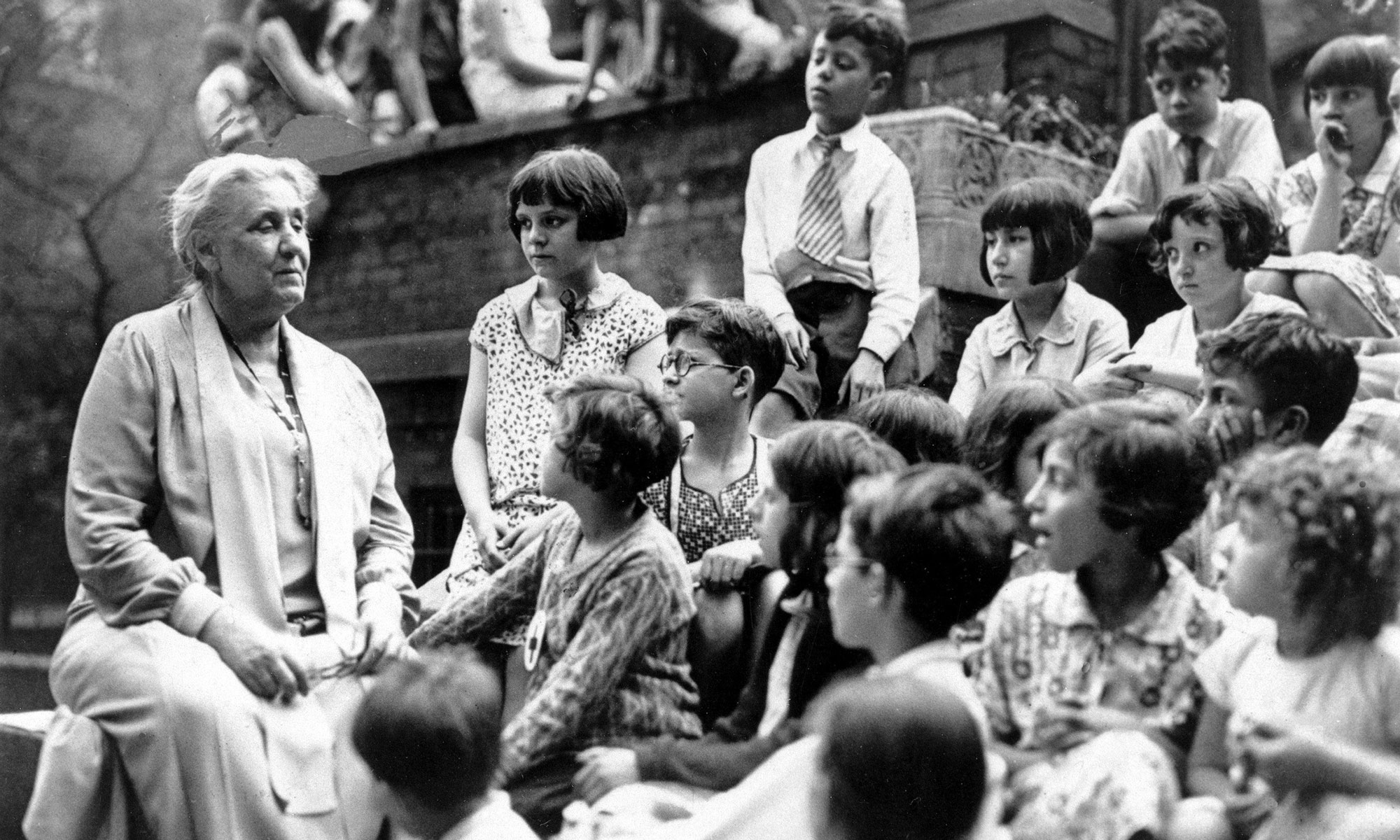
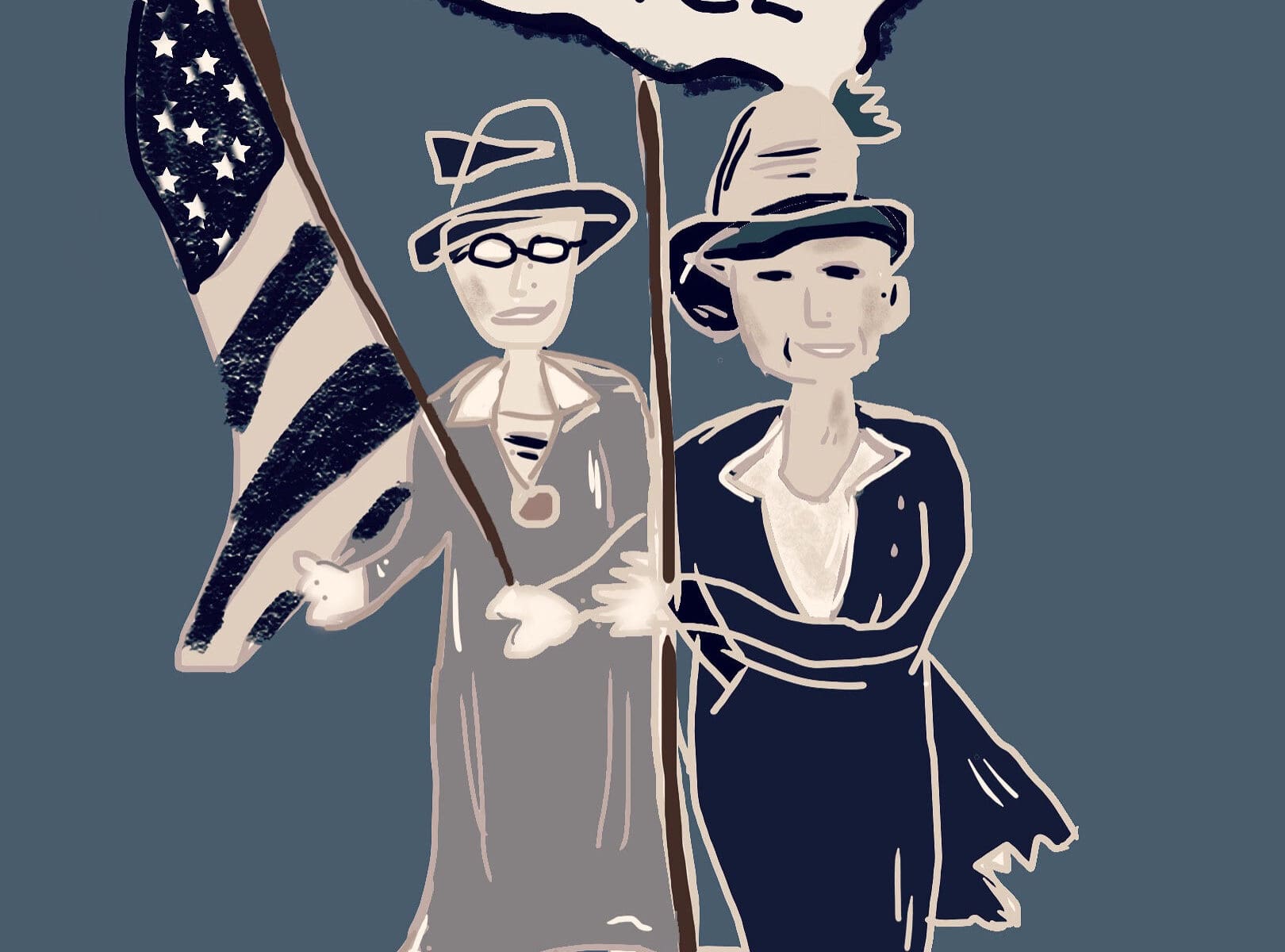
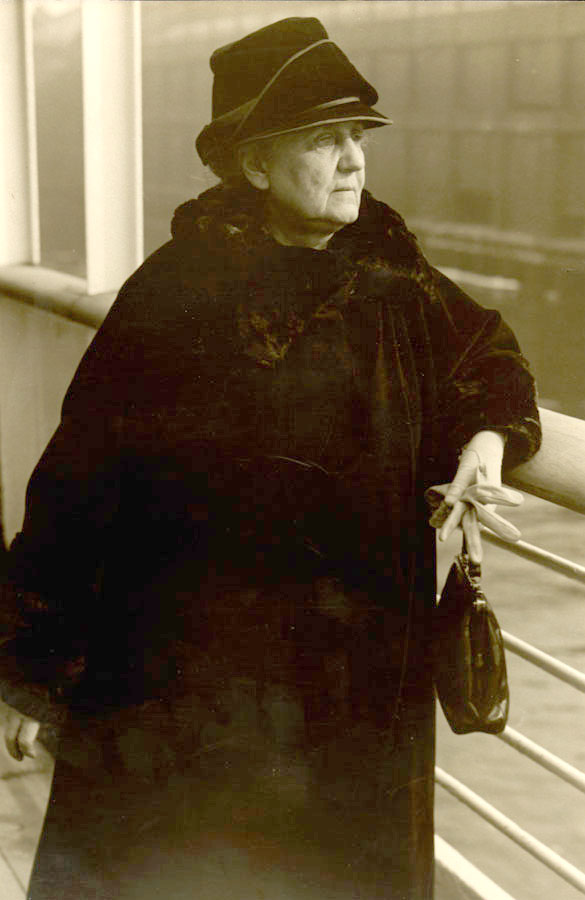
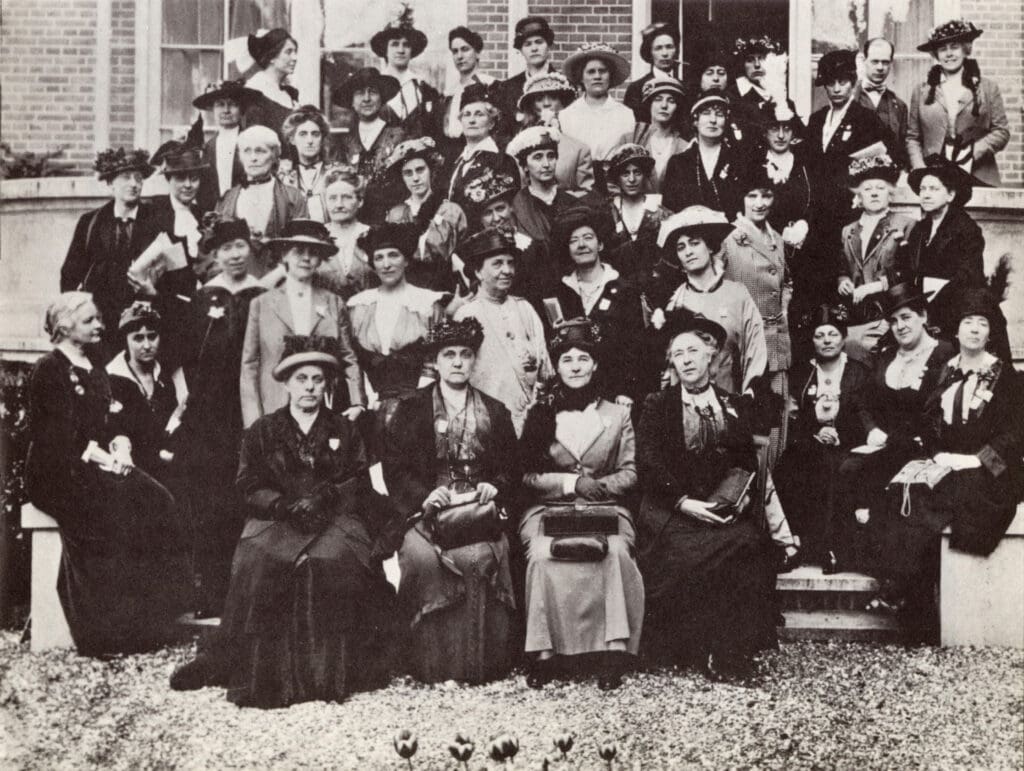
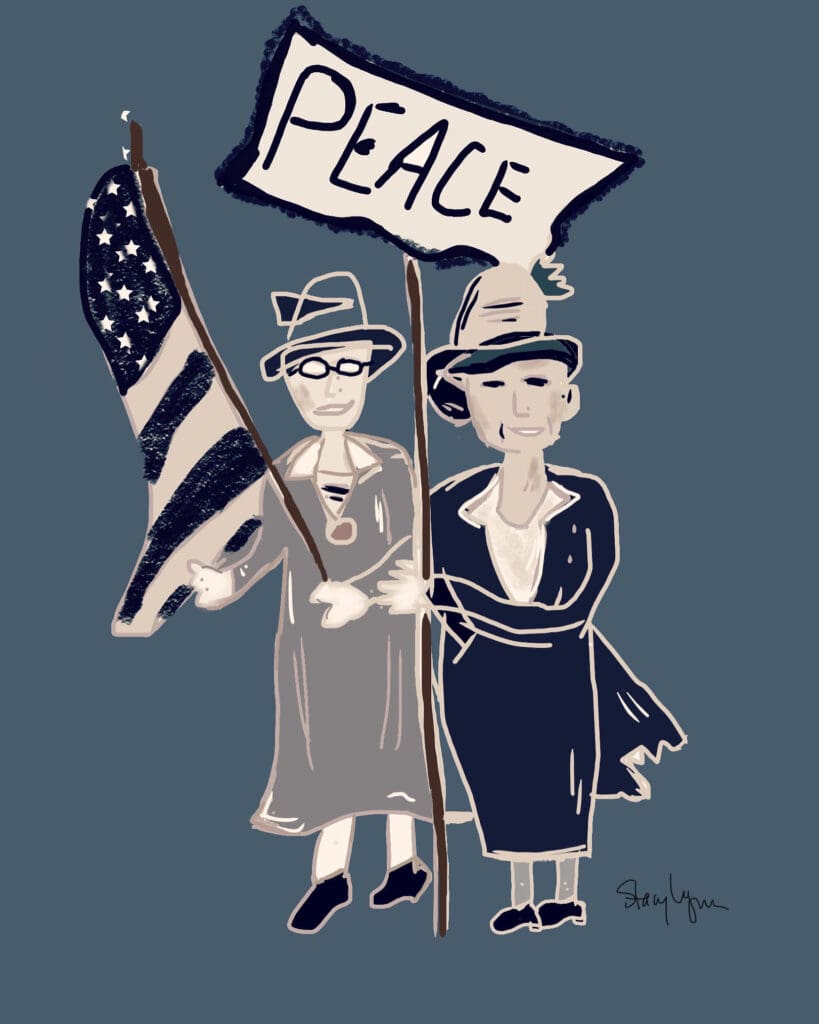
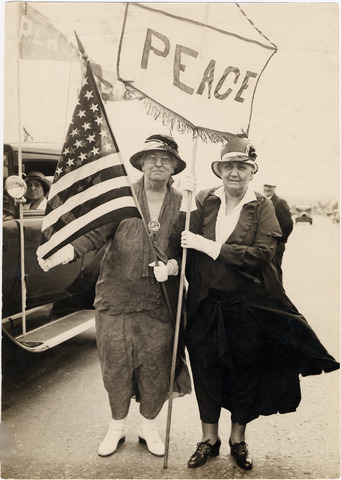
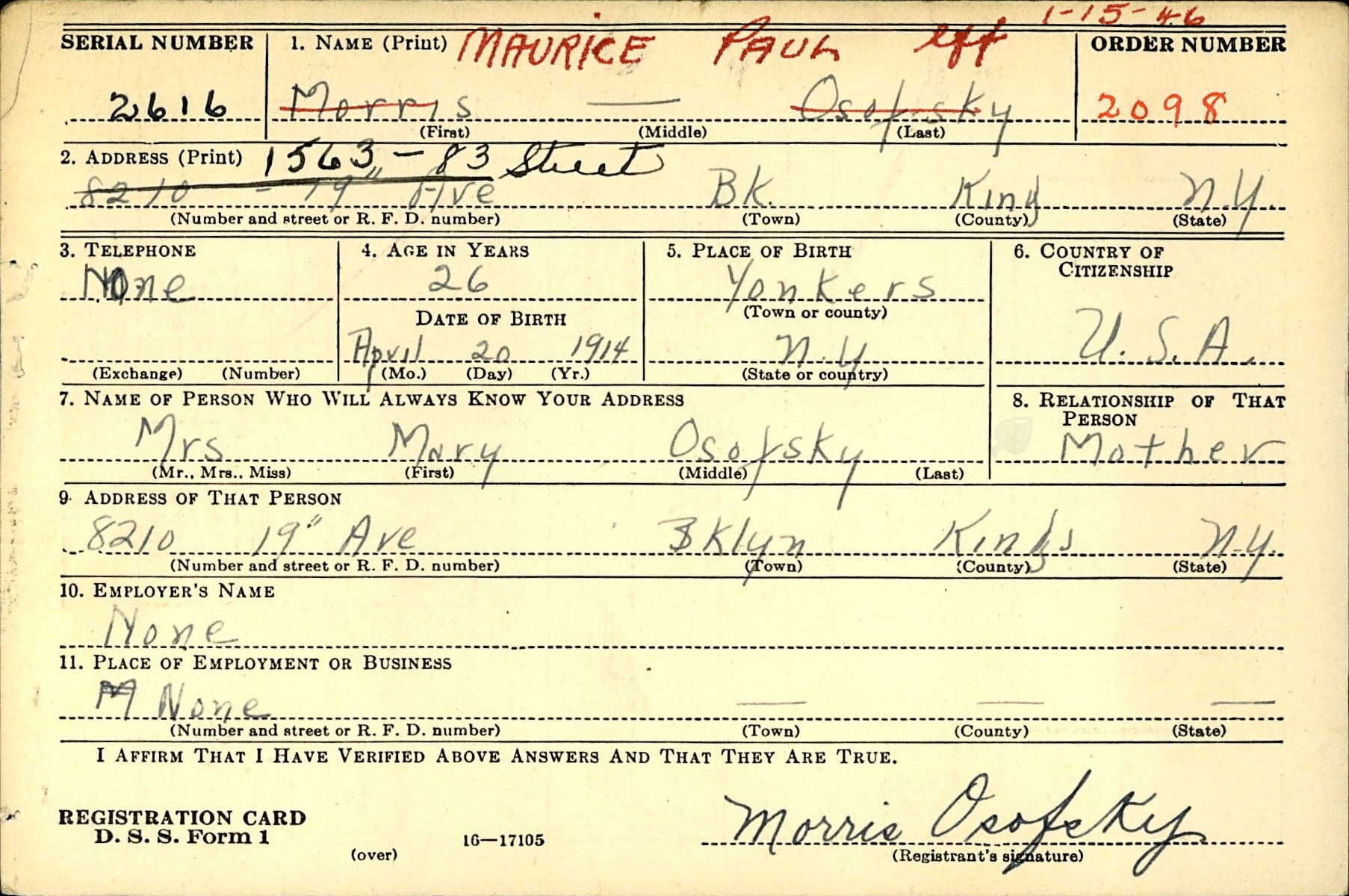
 I then attempt one those hopeful-but cautious searches in Ancestry.com, hoping to find another clue to pick up the trail. I find a military registration card signed by a Morris Osofsky, born in Yonkers, N.Y., on April 14, 1914. And, huzzah! His address on the card matches his address in the 1940 census. Also on the card, Osofsky had listed his mother Mary Osofsky at that same address in Brooklyn as his contact. This card is not only a record of his name, birthdate, and current address, it is also my historical missing link. Because, at the top of the card, the name “Morris Osofsky” was stricken, and written in red ink was “Maurice Paul [effective] 1-15-46.”
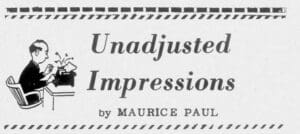 In 1950, Maurice Paul was living in Brooklyn with his parents and working as a journalist in a literary agency. It is the professional side of his story about which he left the most clues. He became a reform-minded journalist and wrote on a wide variety of subjects, especially in the beginning of his journalism career. He published articles in newspapers and periodicals, including the Brooklyn Daily, where he started writing a column entitled “Unadjusted Impressions.” The column was an eclectic collection of facts, observations, and literary quotes. The style of the writing was colloquial.
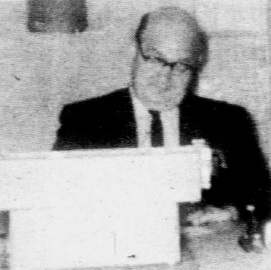 In 1967, Paul was awarded the Canarsie High School Human Rights Award for championing “the cause of tolerance, human decency, and brotherhood.” I wonder if the 53-year-old Maurice sitting in that packed high school gymnasium being honored remembered the 17-year-old Morris who wrote to Jane Addams, identifying himself as a “would-be philanthropist.” I did not have the luxury to read all of the articles Maurice Paul wrote over the years, but a search for him and Jane Addams’s name together in one newspaper database revealed no evidence that he ever publicly credited her with his civic concerns.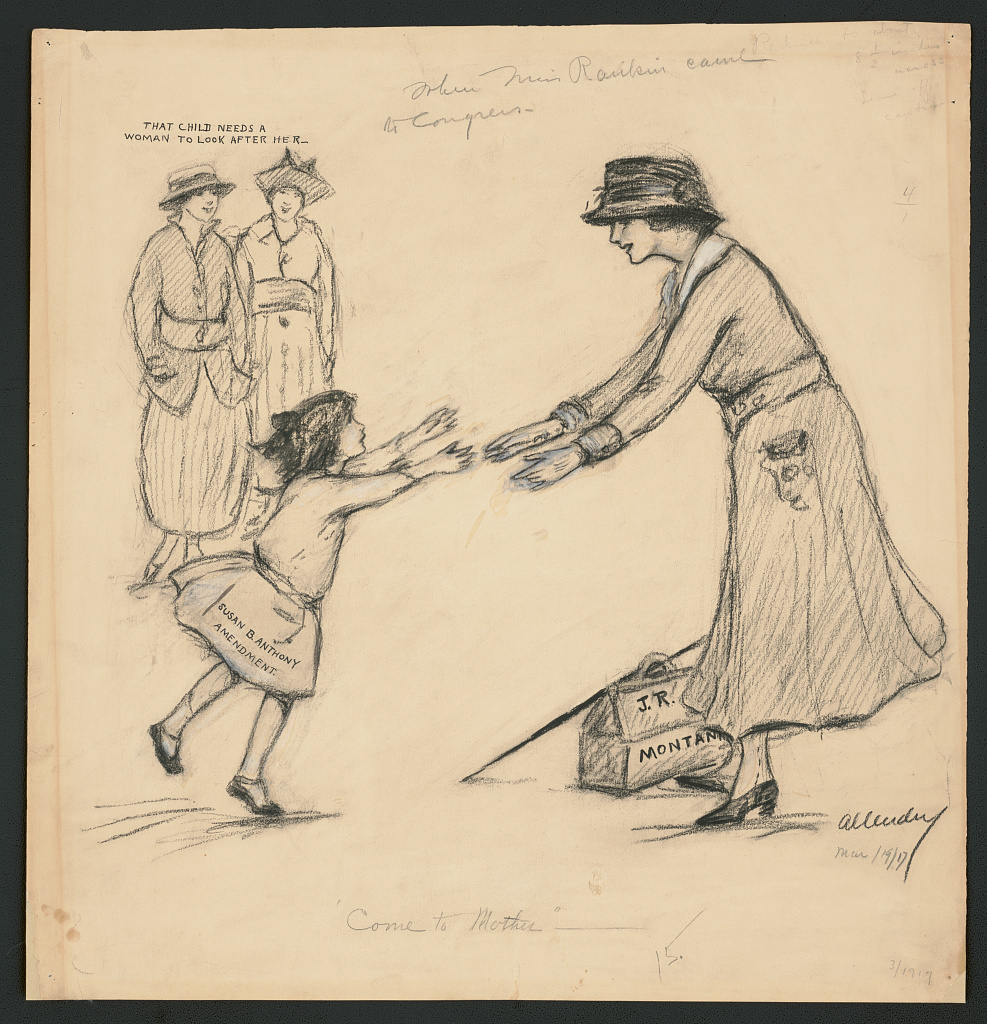
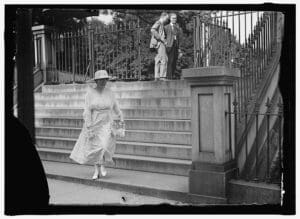

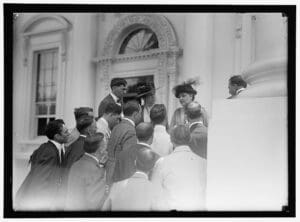
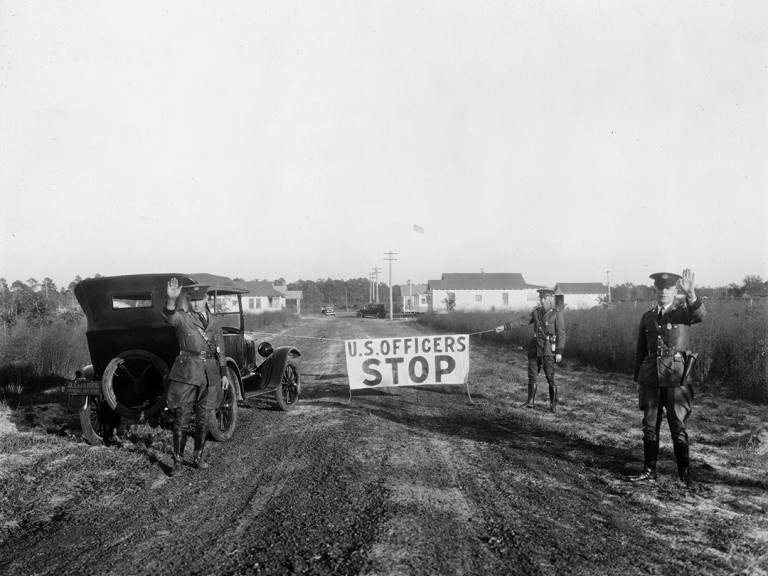
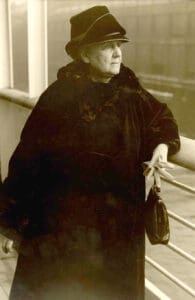
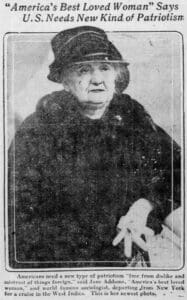
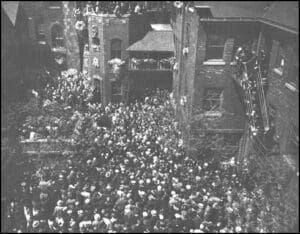
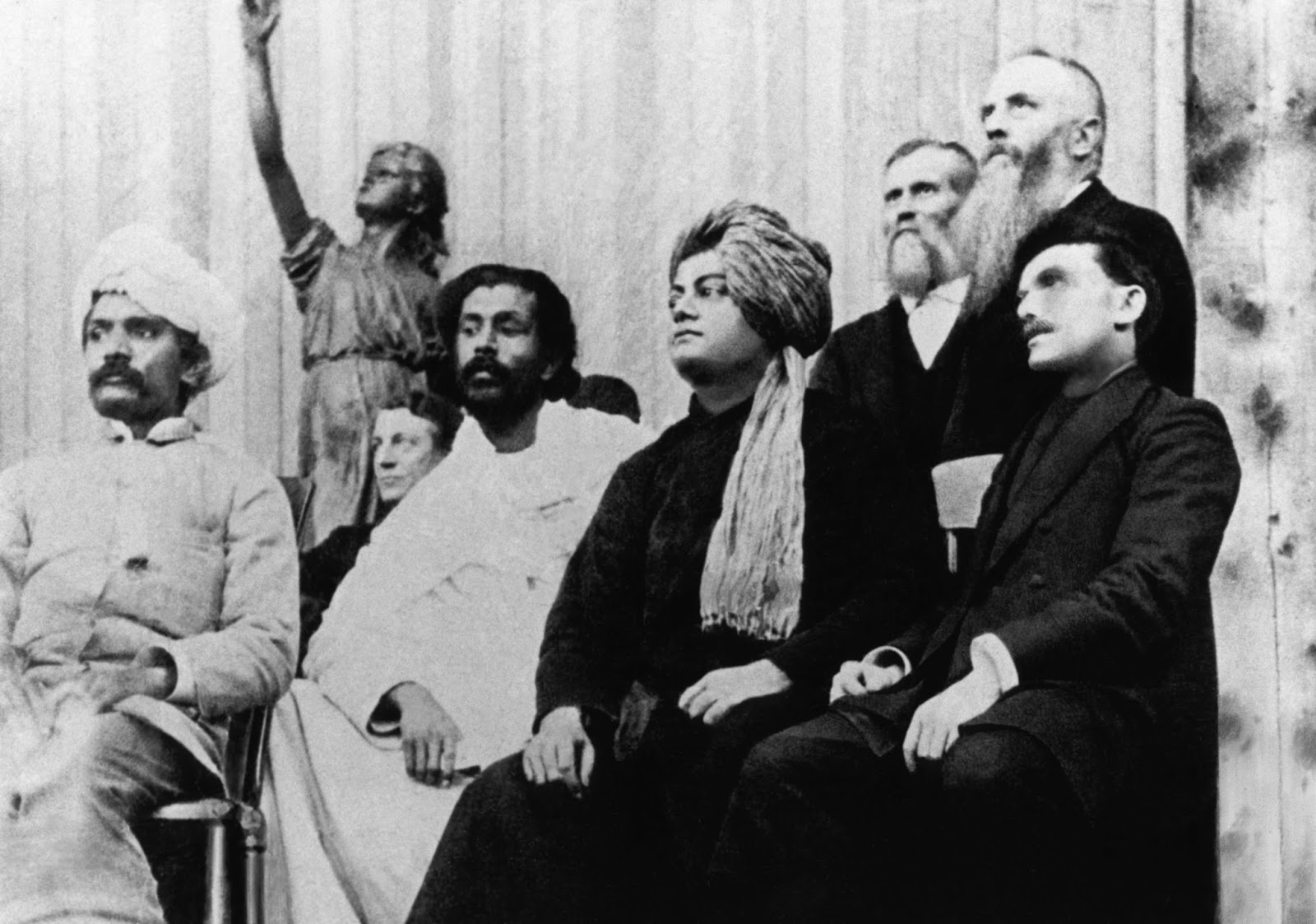
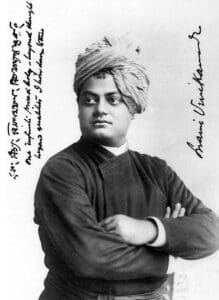

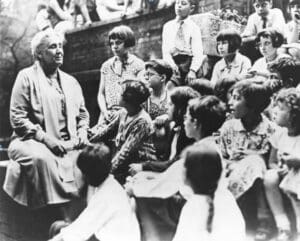

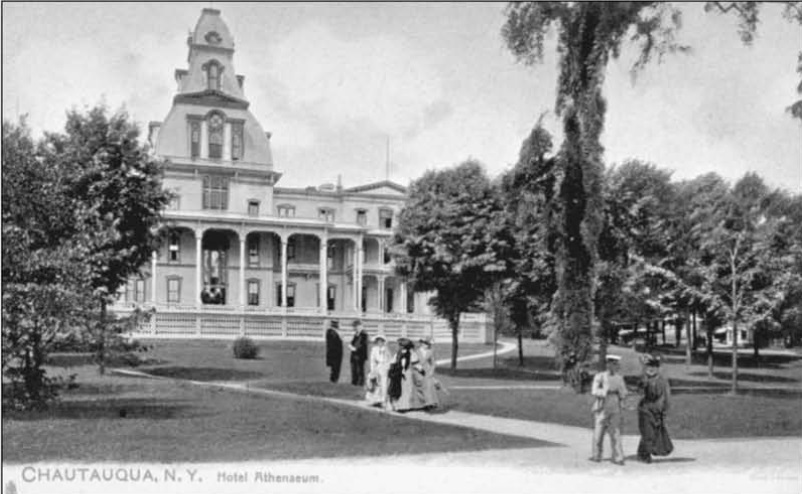
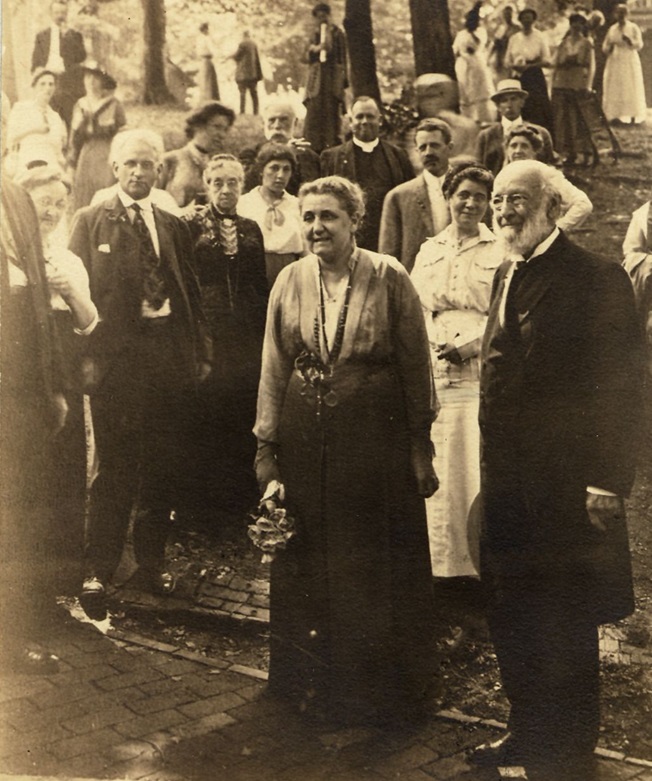
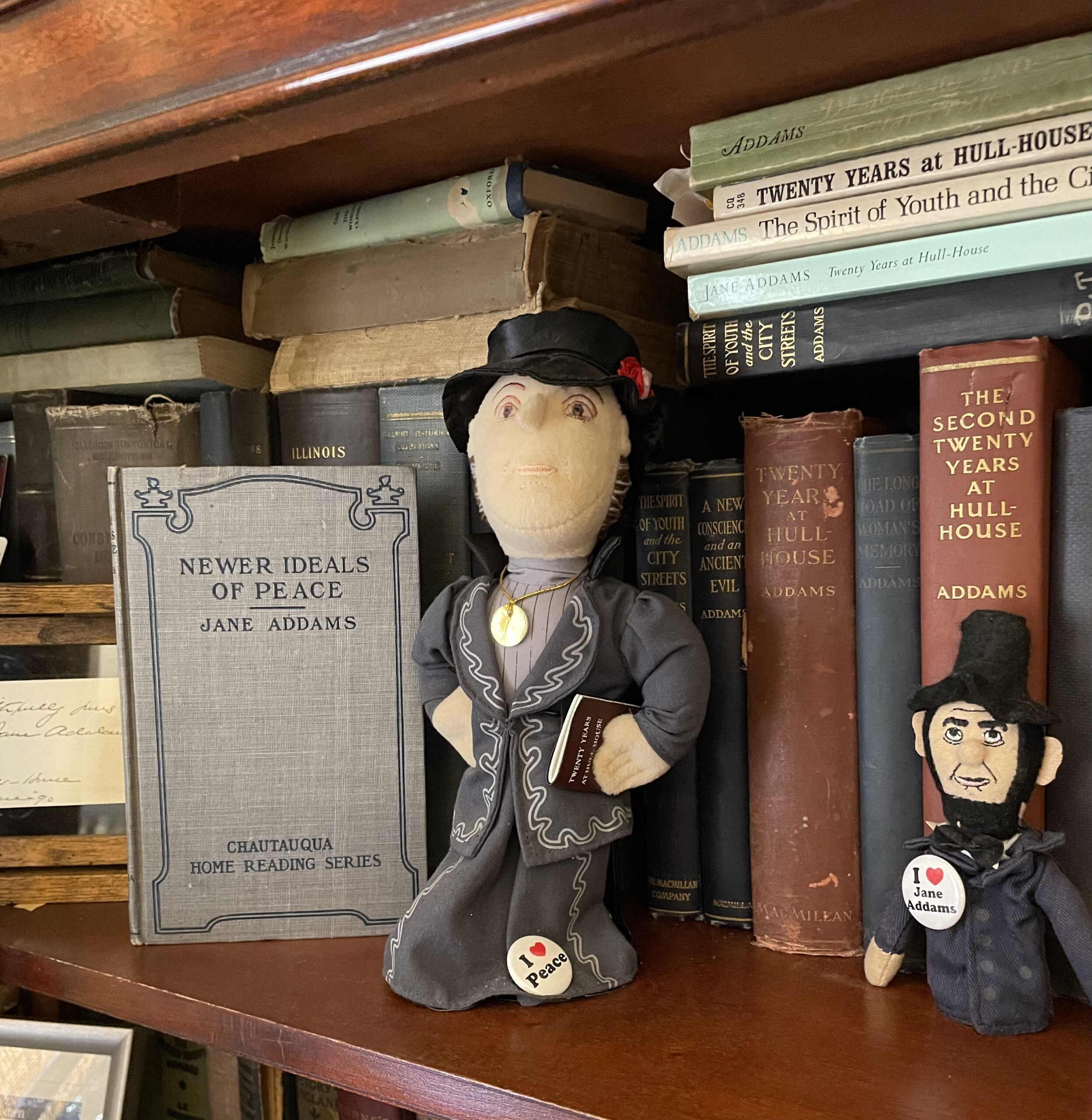
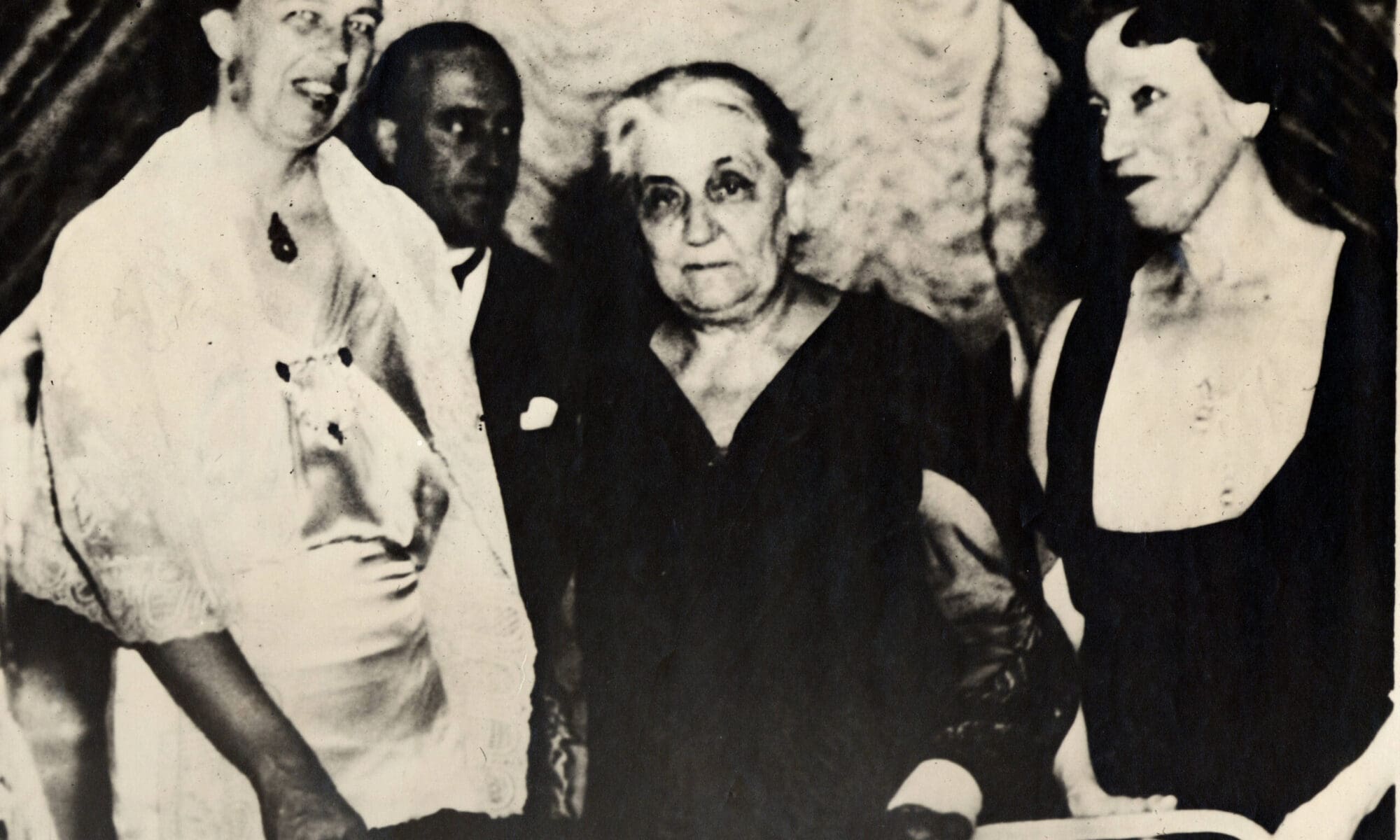
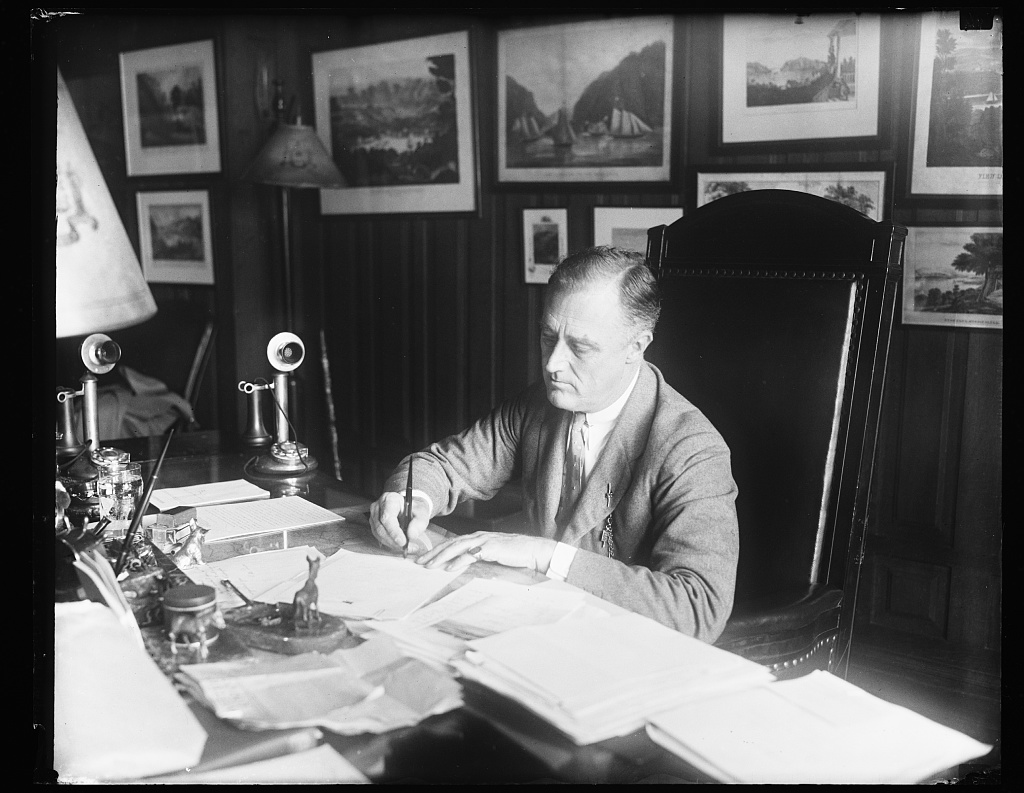
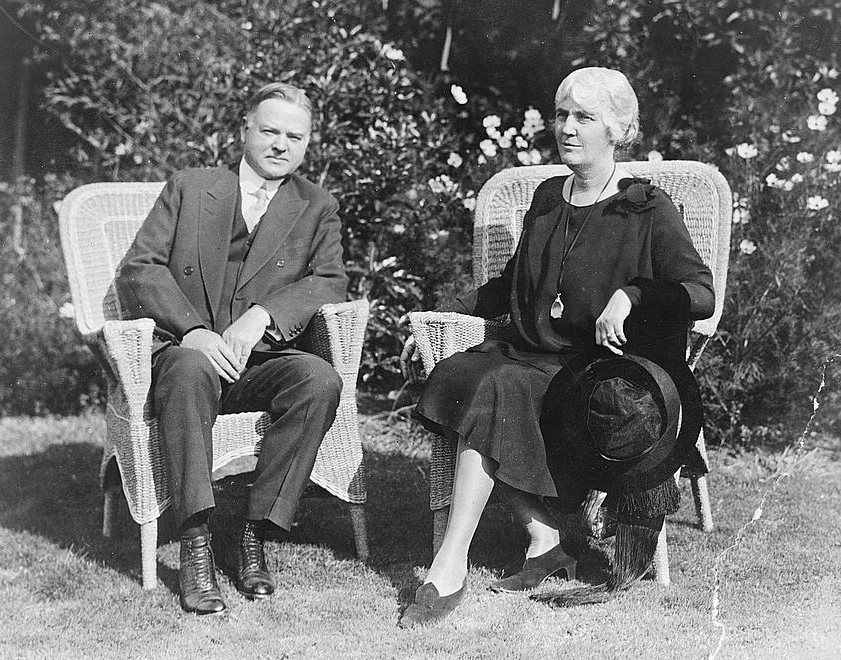
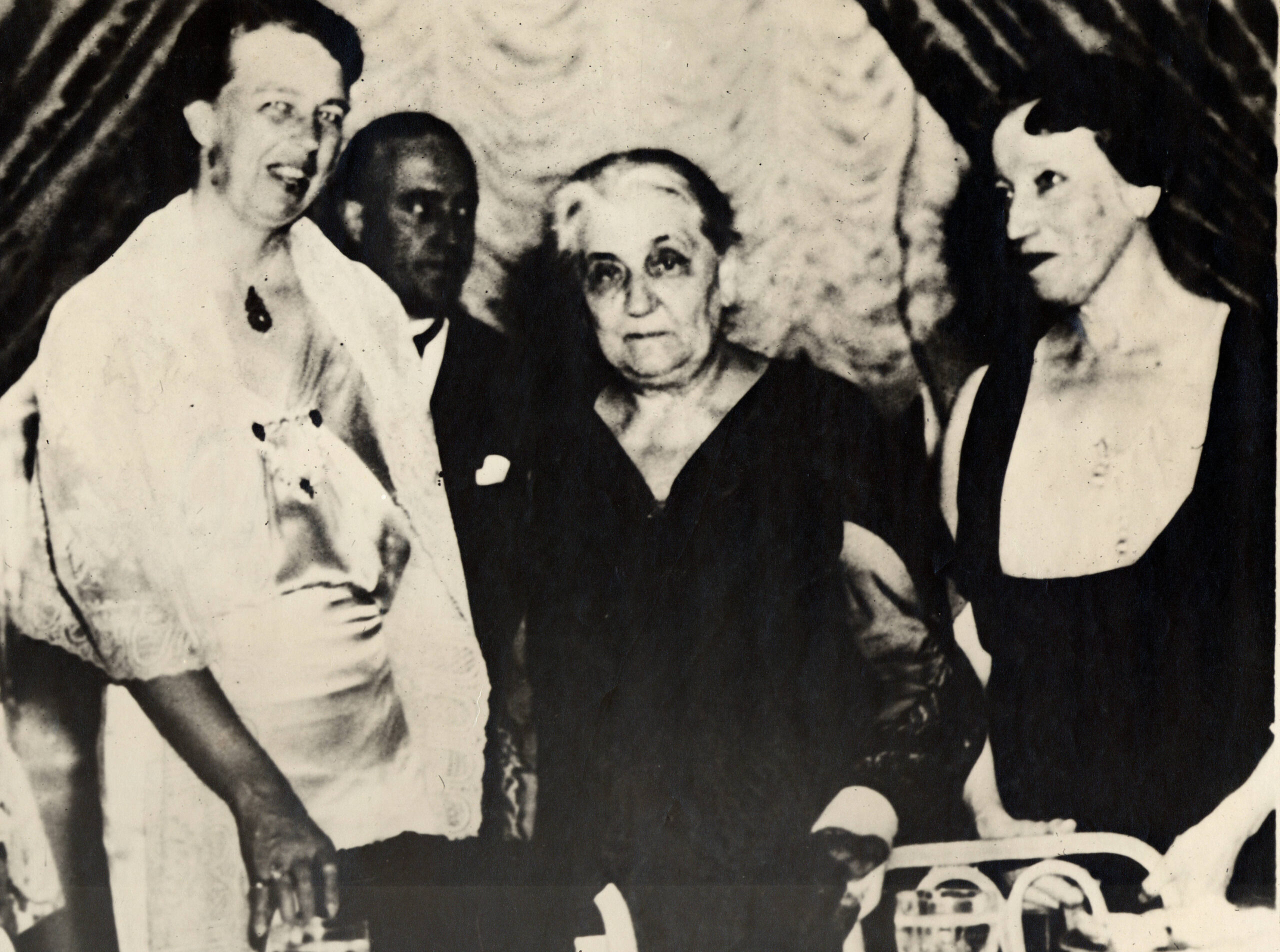
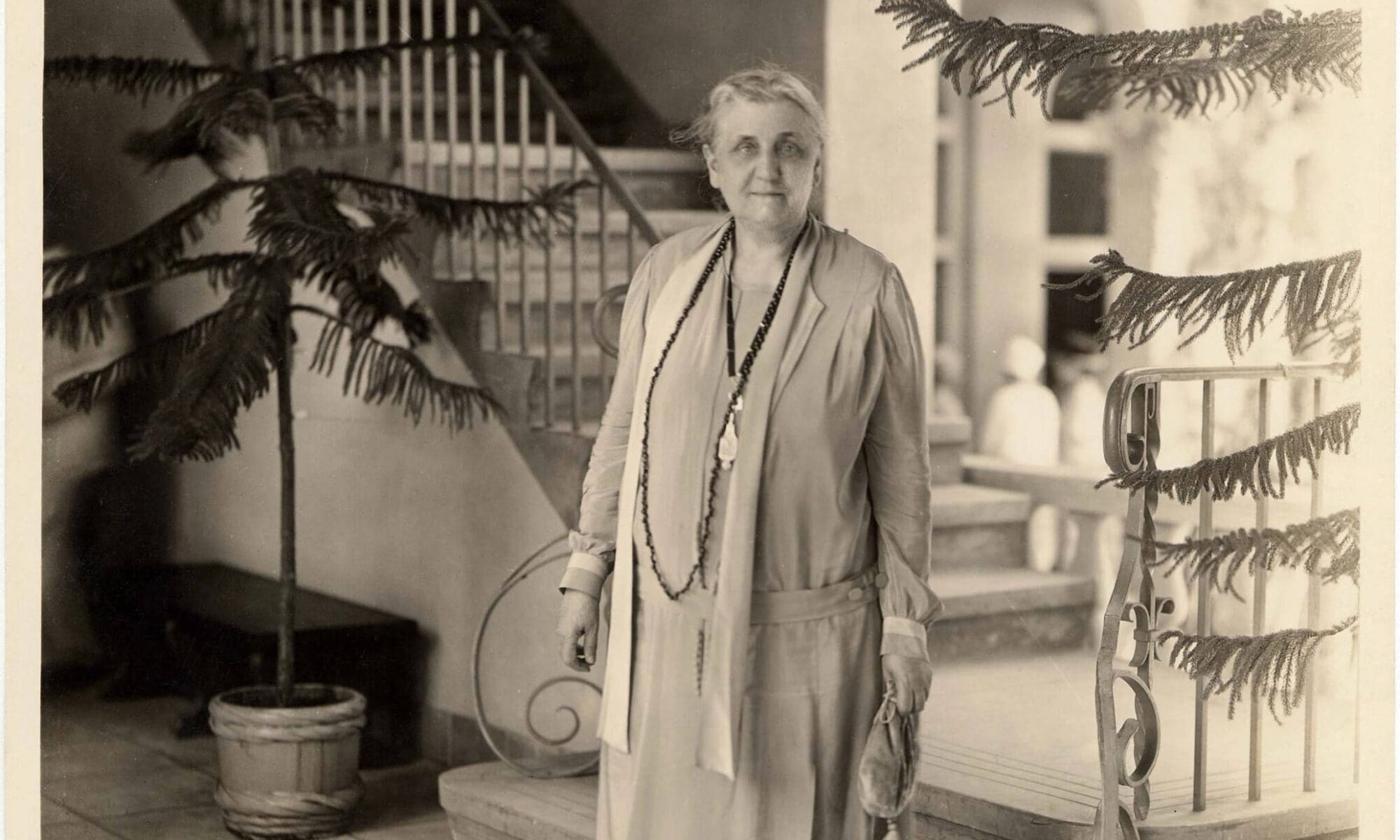
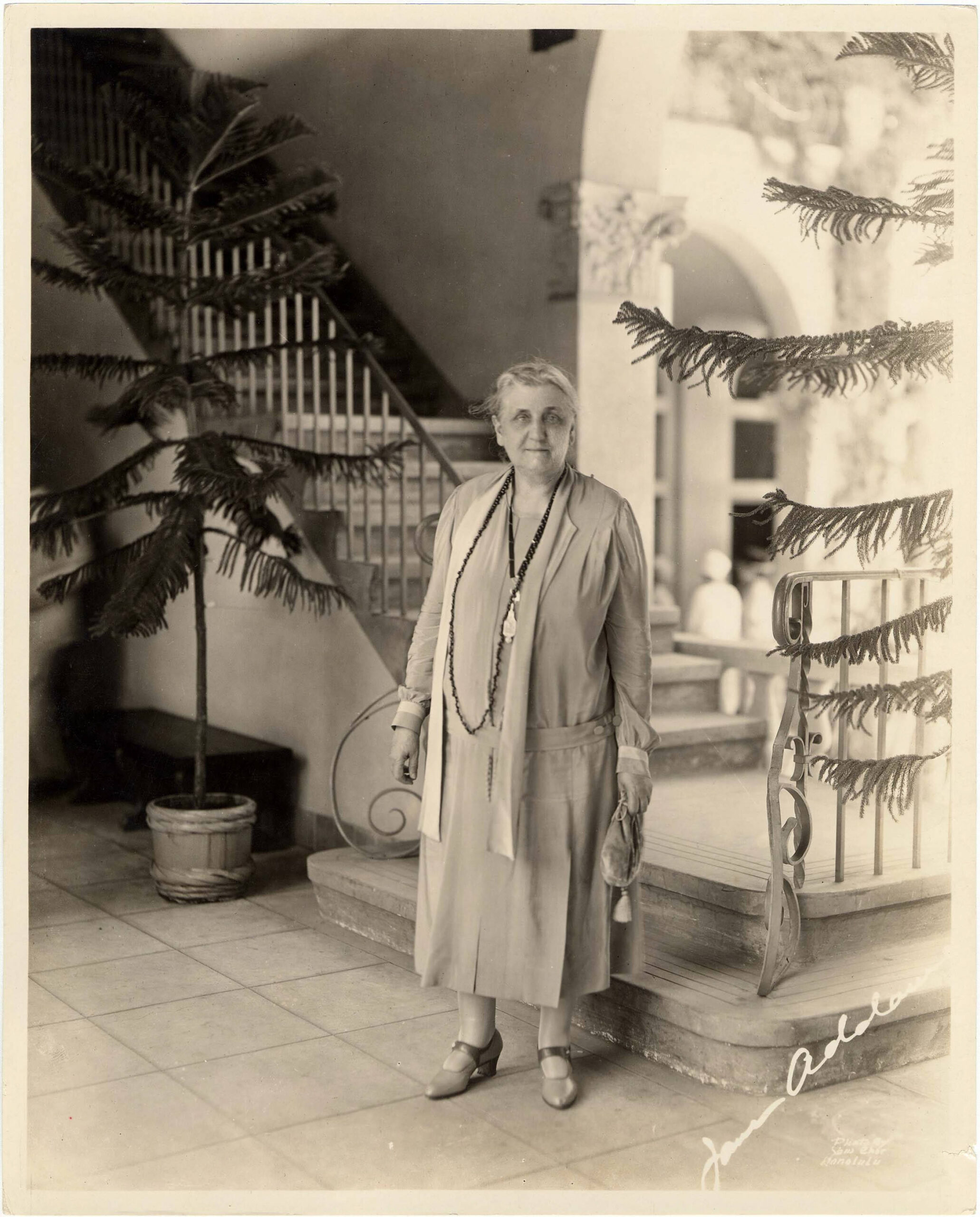
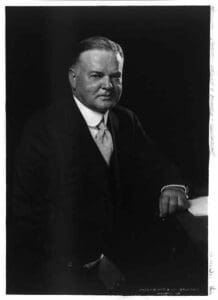
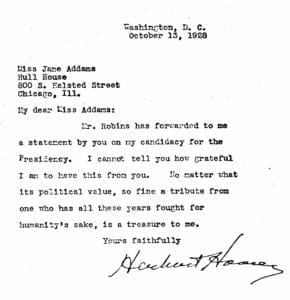
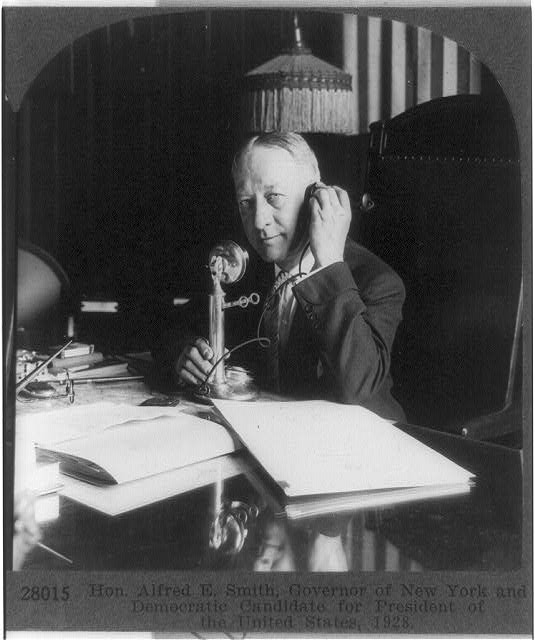
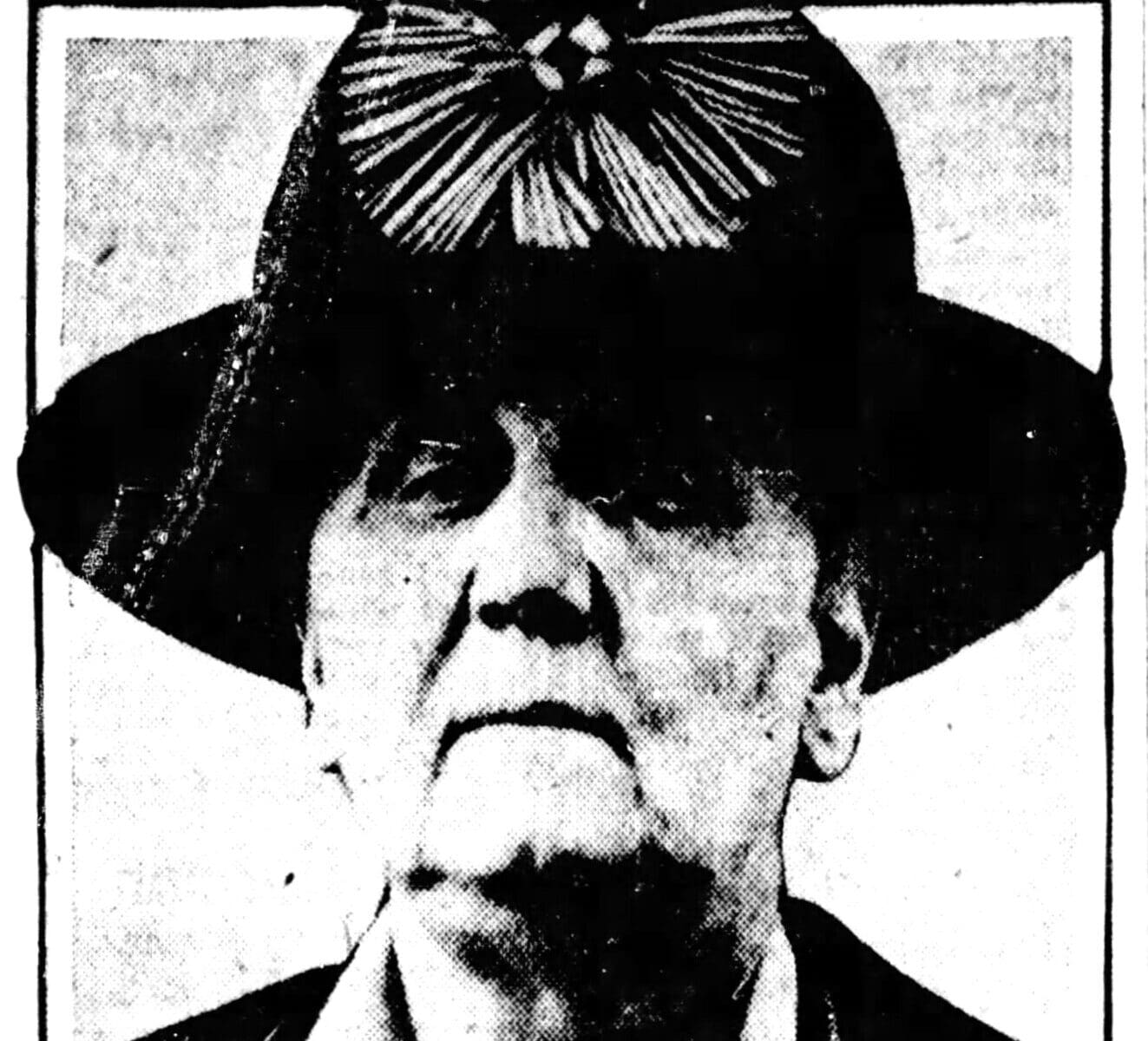
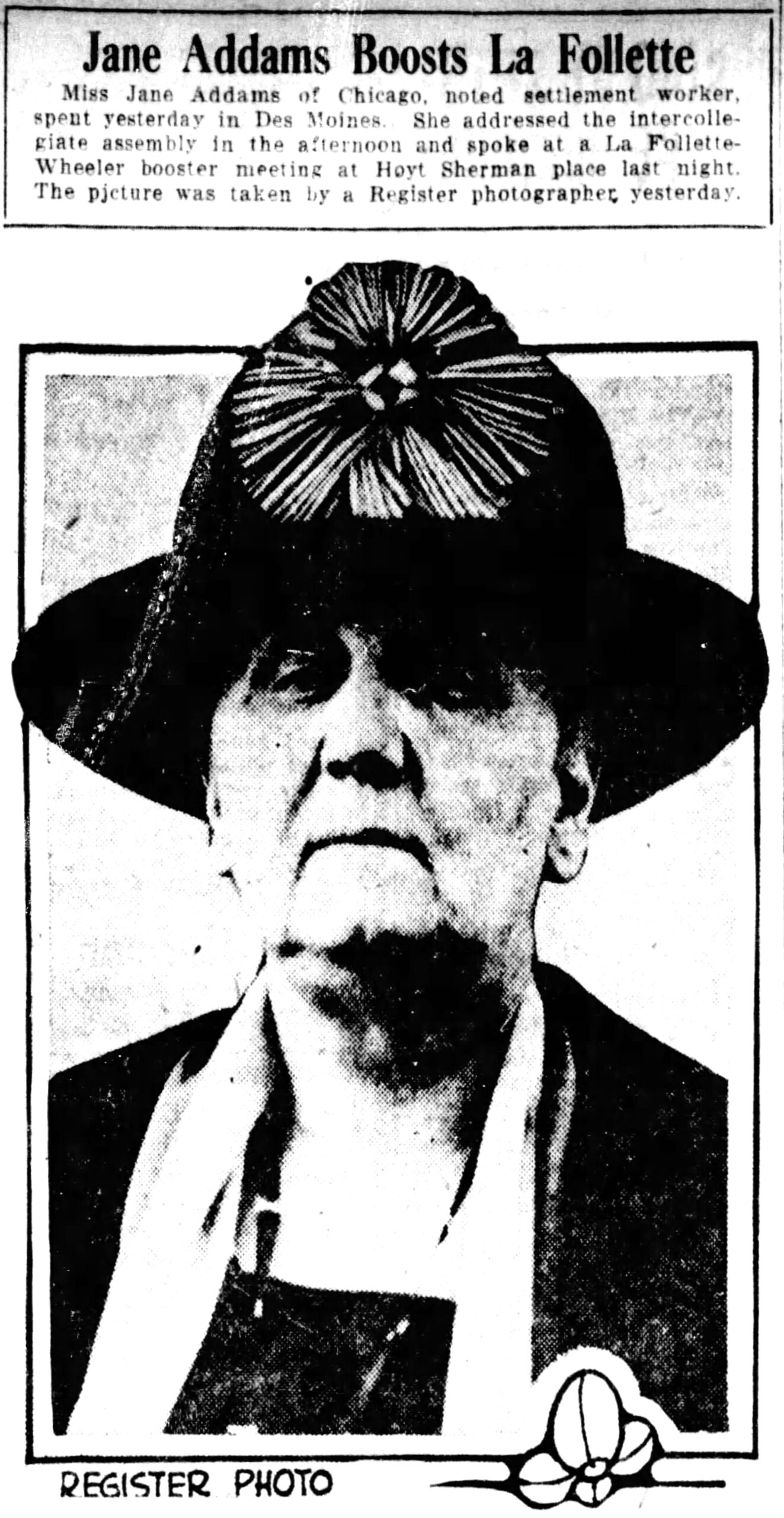
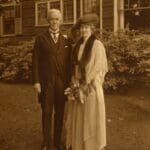
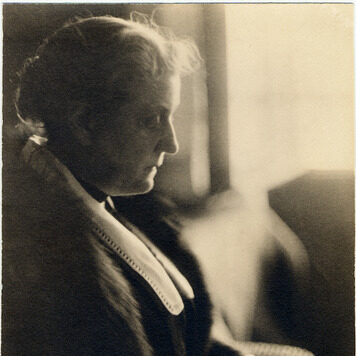
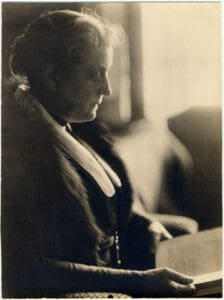
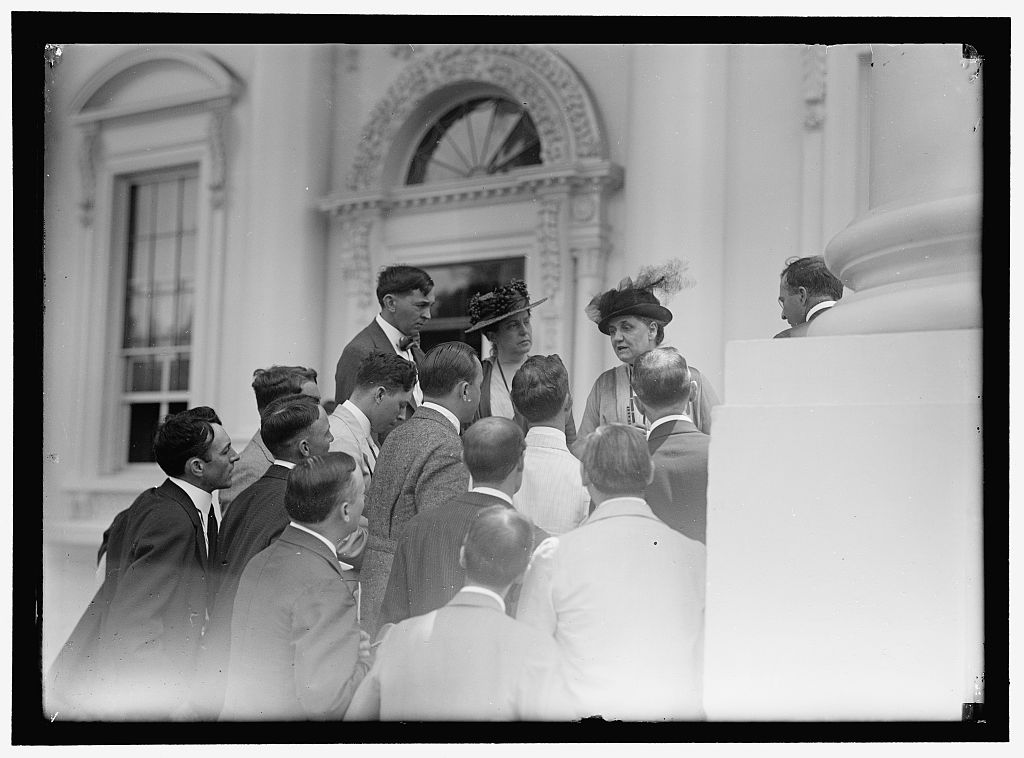
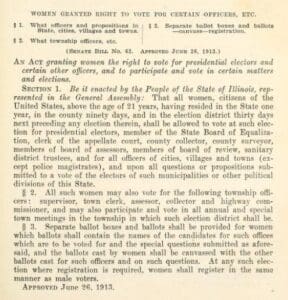
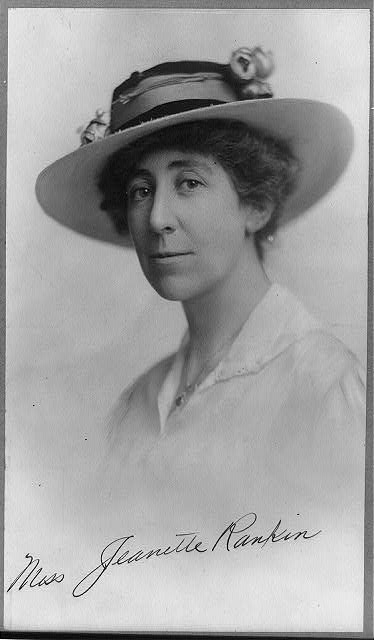
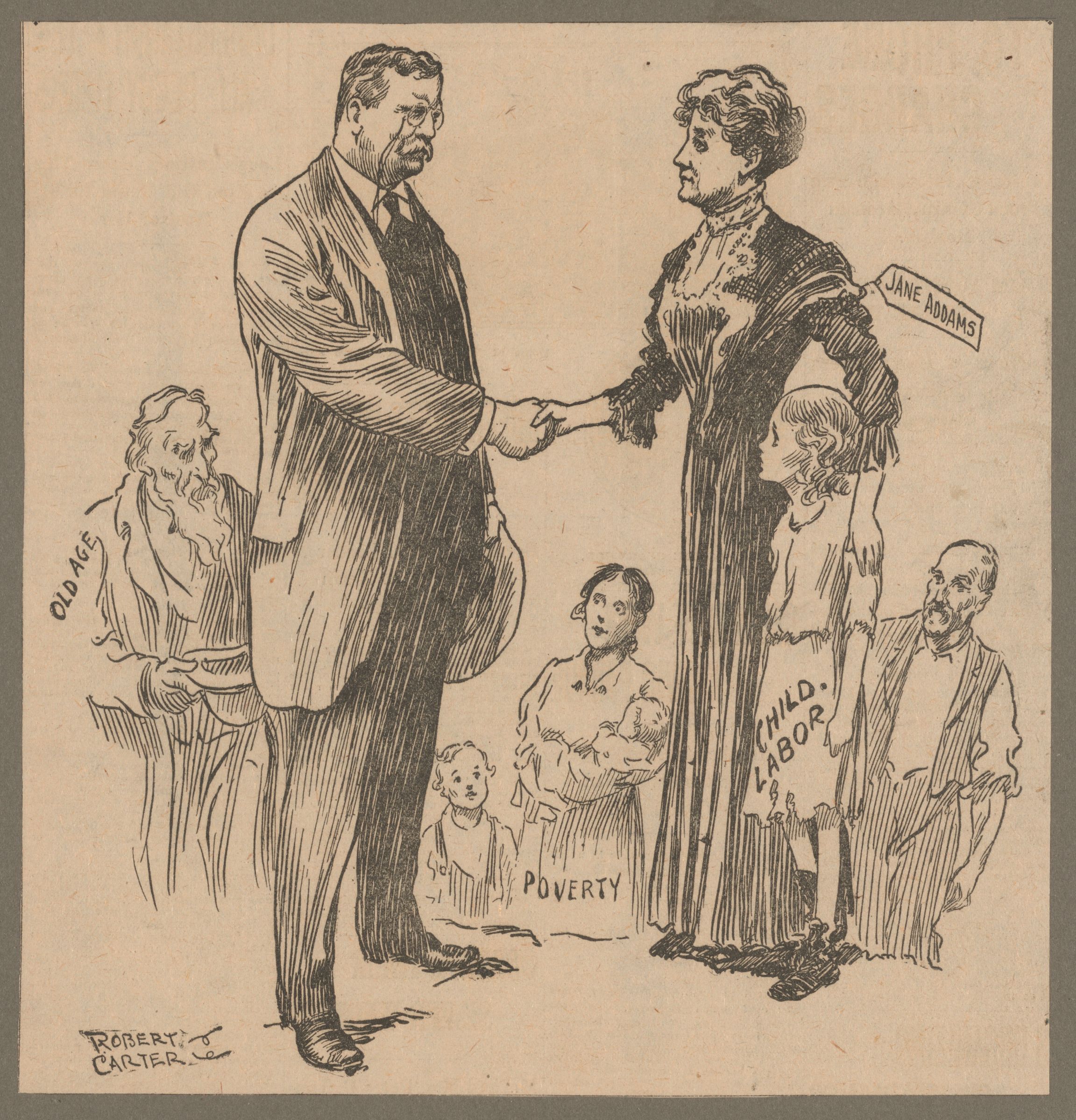
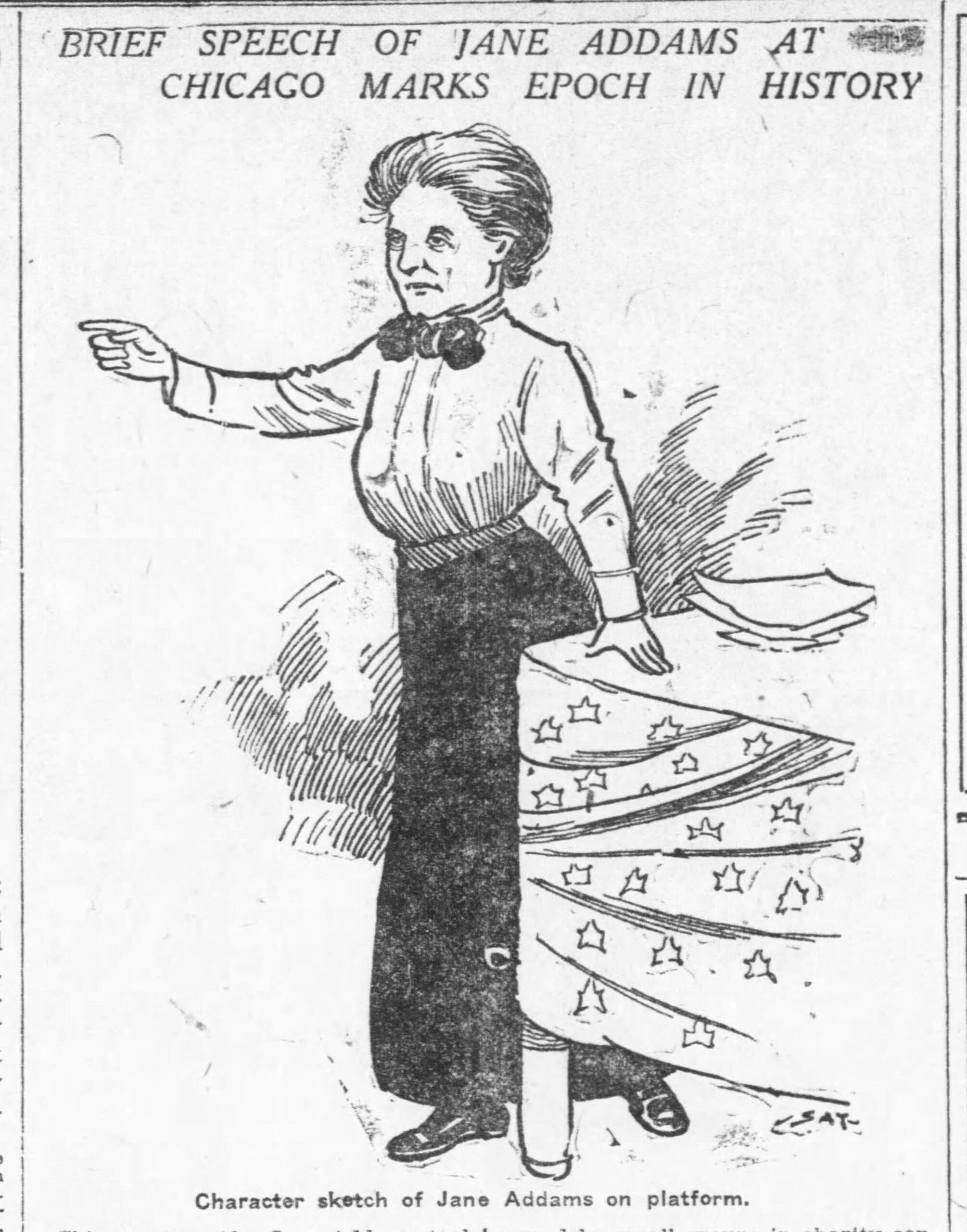
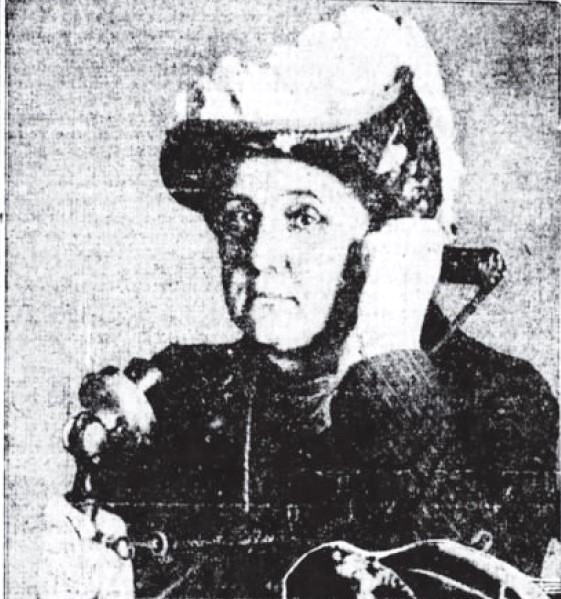
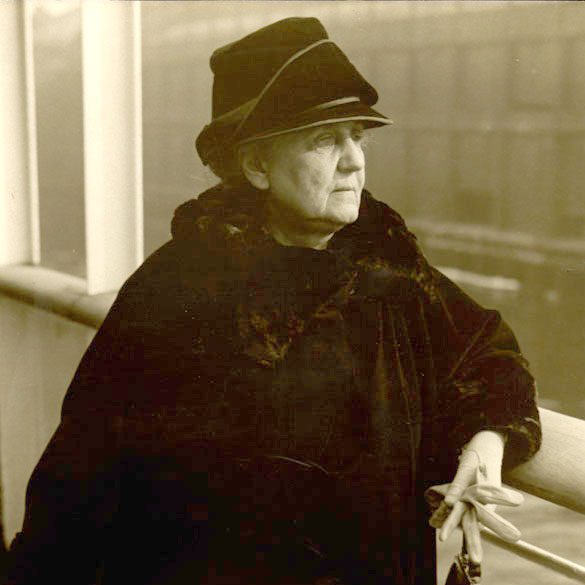
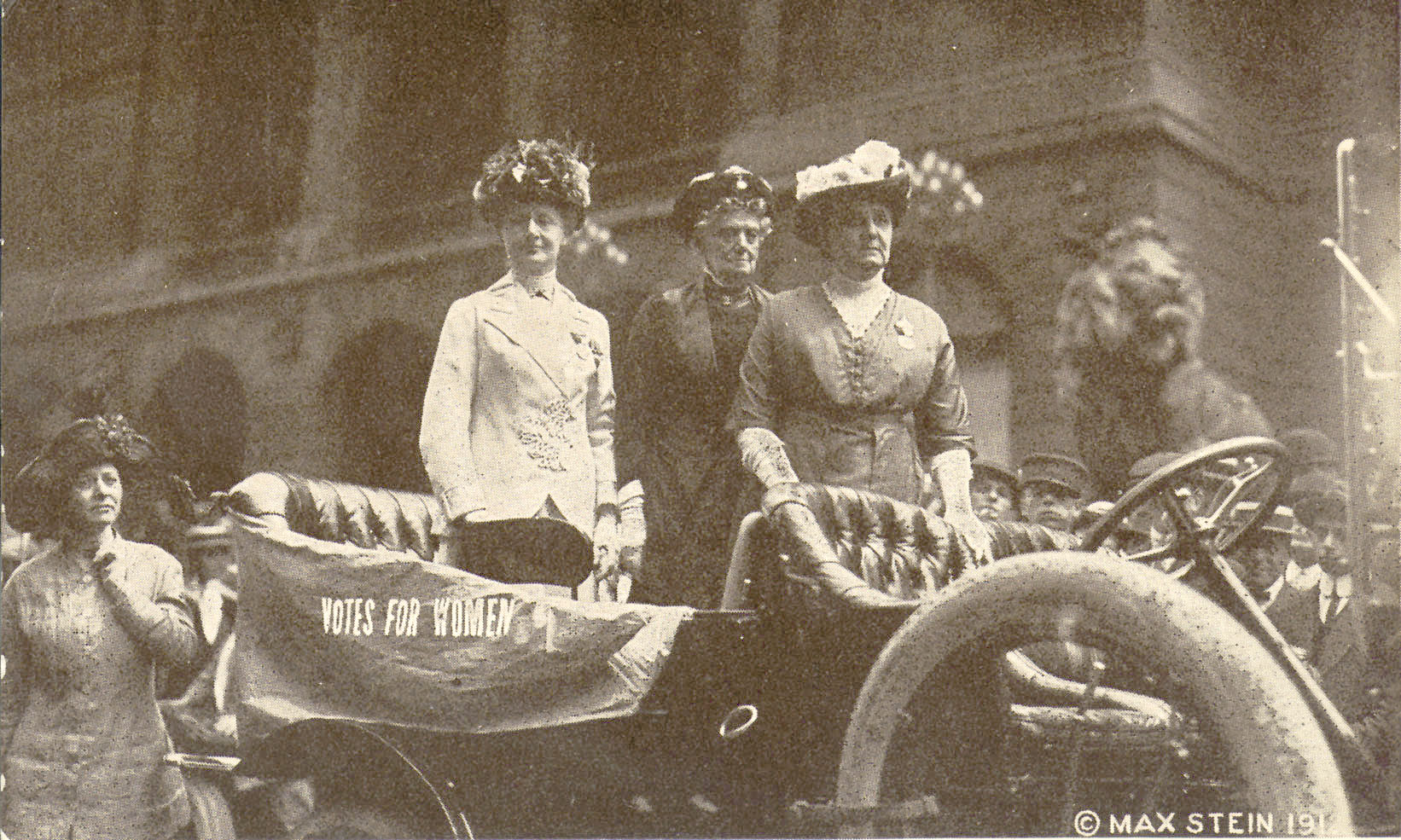
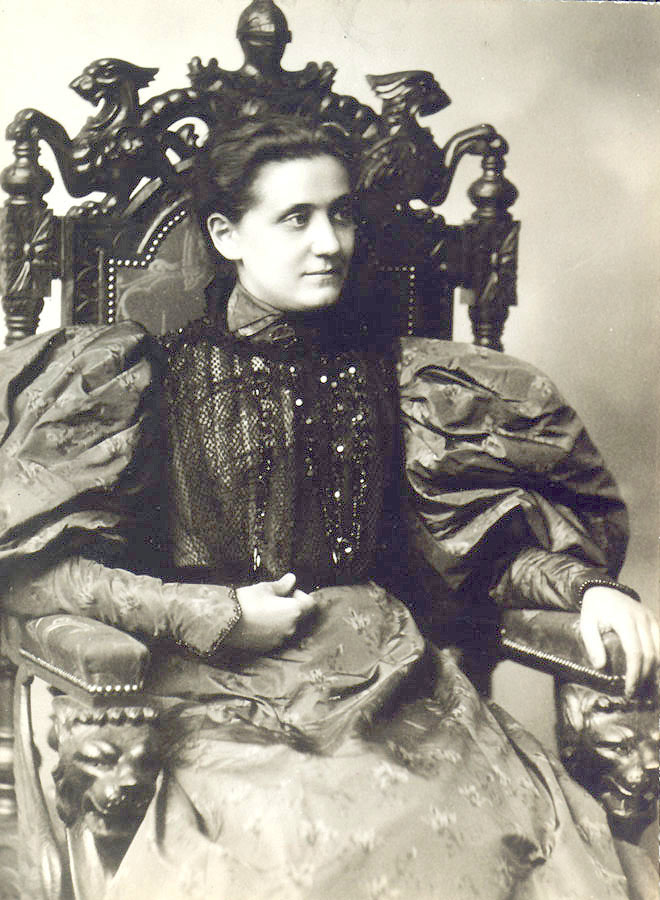
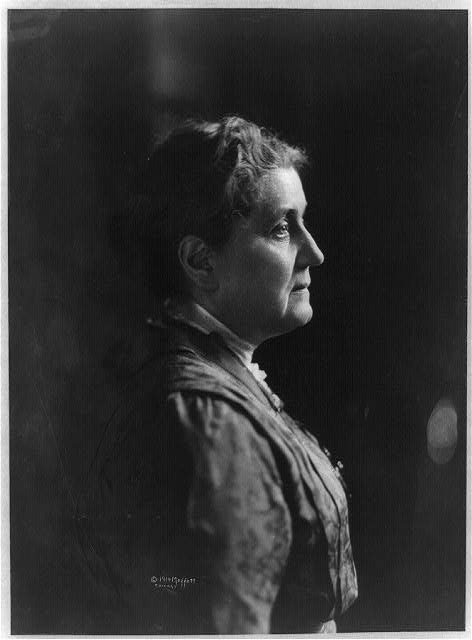
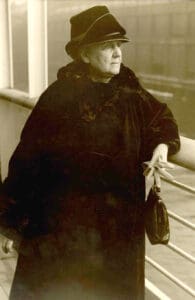
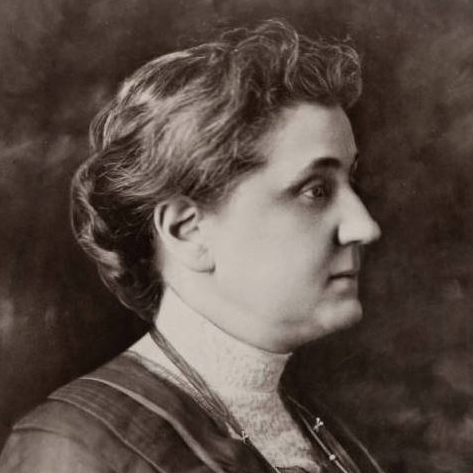
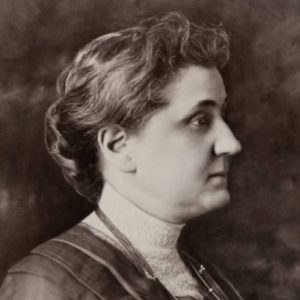 During her lifetime, Jane Addams was famous throughout the United States and around the world. Known for Hull-House and as the leader of the American social settlement movement, respected for her wide-ranging reform activities, and beloved for her commitment to economic, political, and social justice for all, Addams became a household name. Reformers, educators, politicians, and the public looked to her for inspiration and for answers to the social and economic problems of the Progressive Era.
 In October, WTTW, a PBS member television station in Chicago, premiered a Chicago Stories episode on Jane Addams.
 Therefore, dear readers who already know the worth of Jane Addams, go forth and spread the Jane Addams word. Watch the documentary, read her books, and tell your friends, family members, teachers, students, and community leaders to do the same.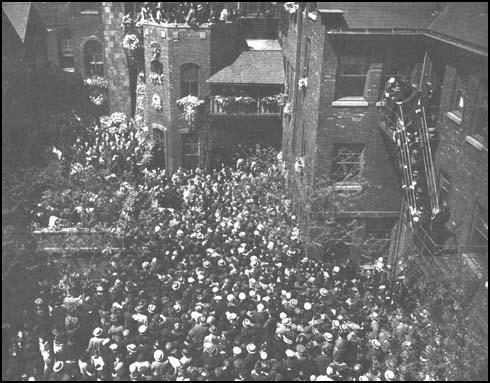
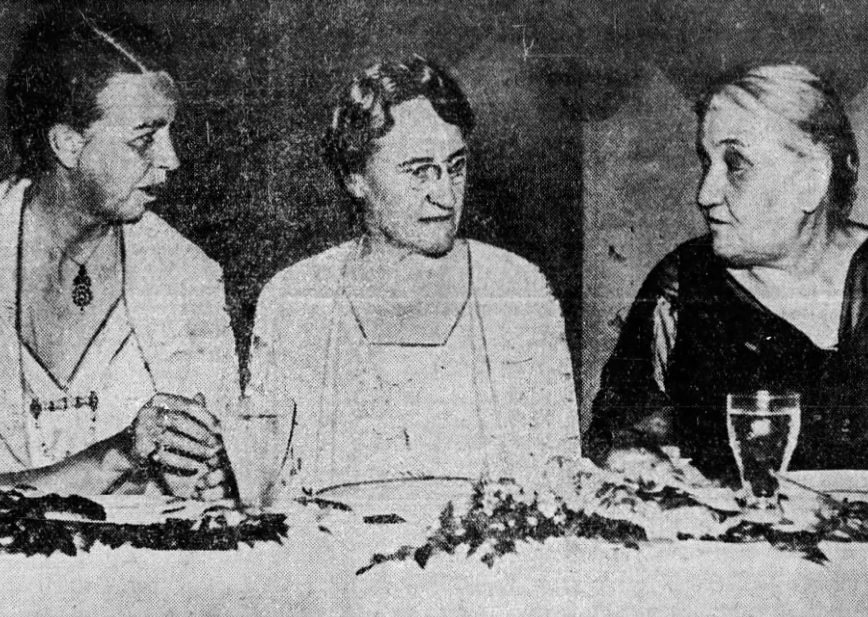
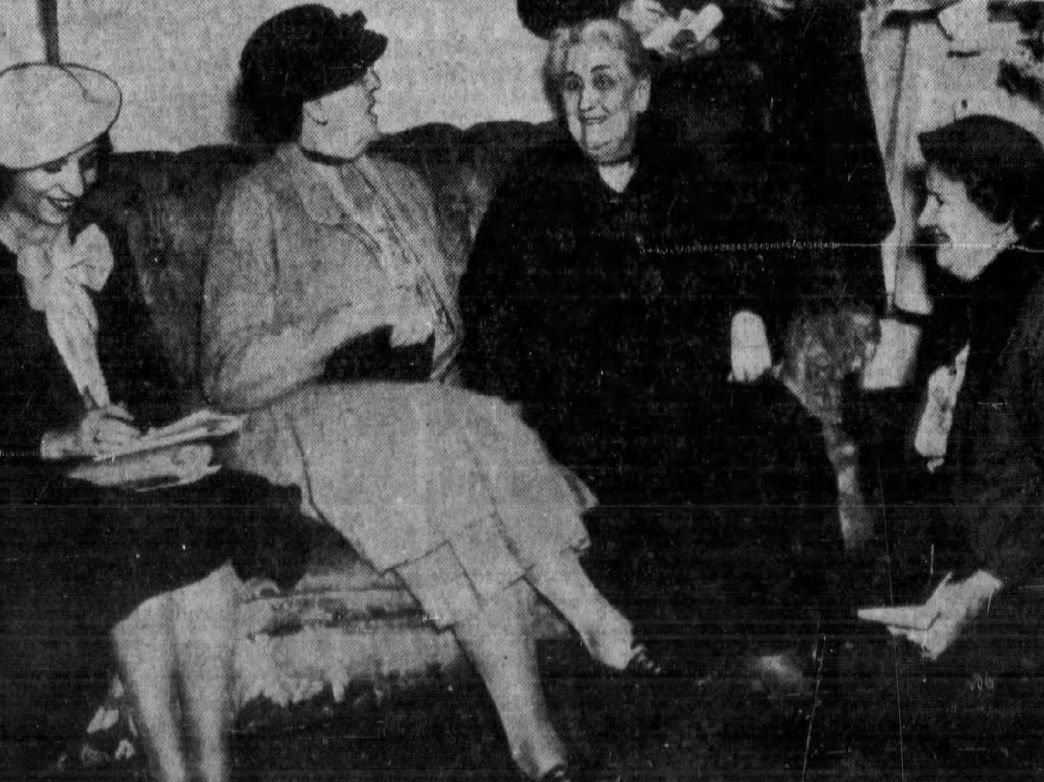
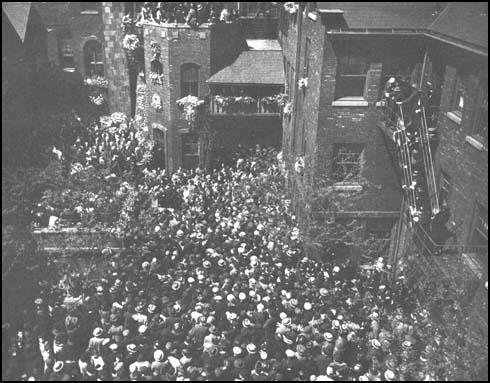
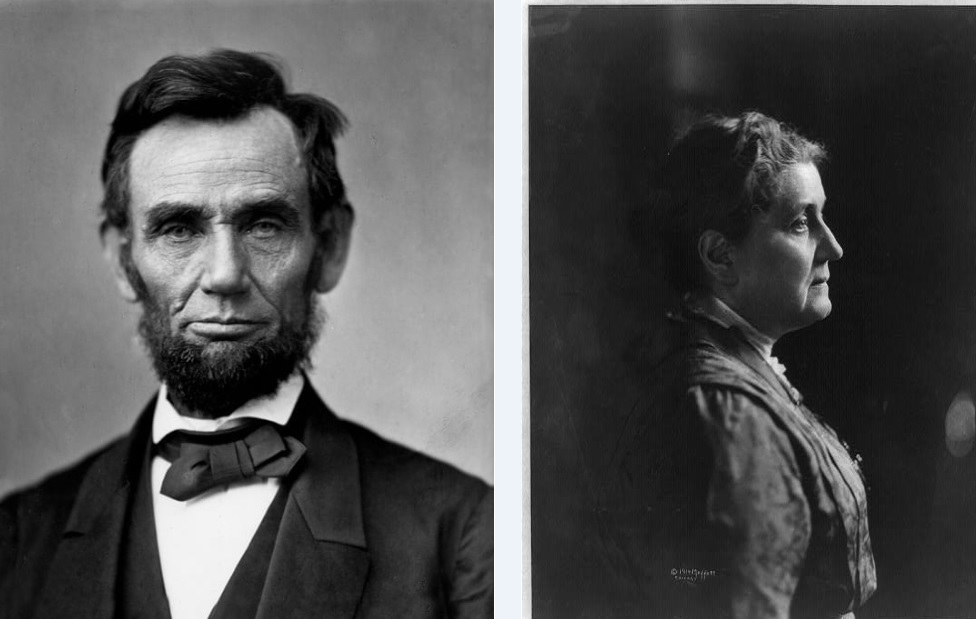
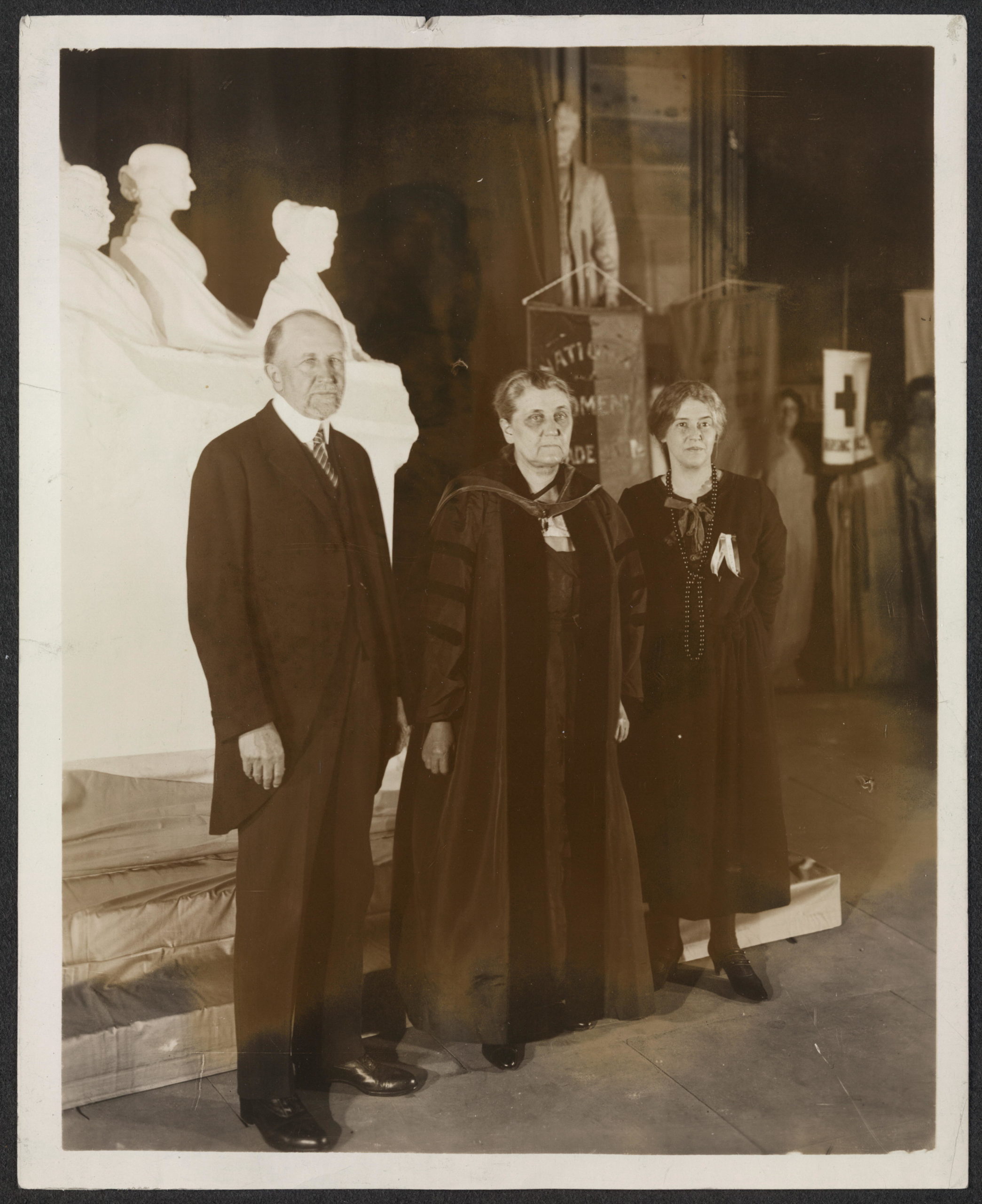
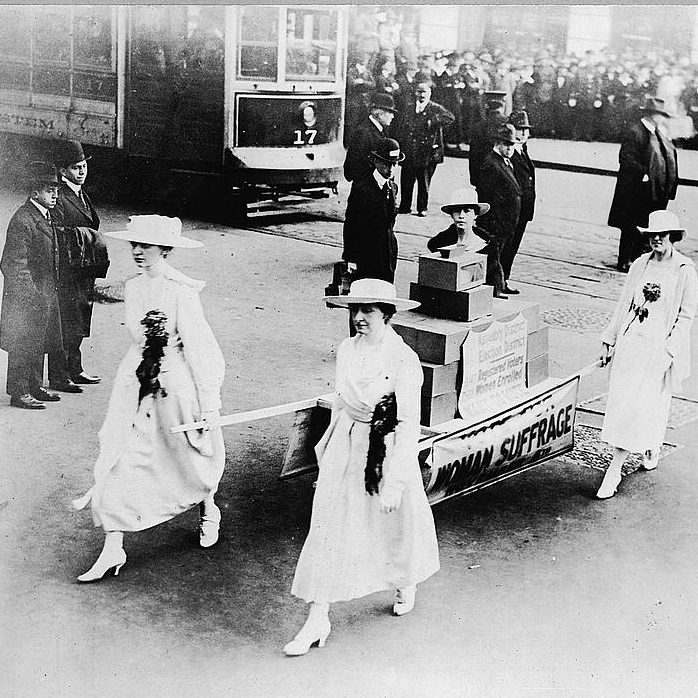
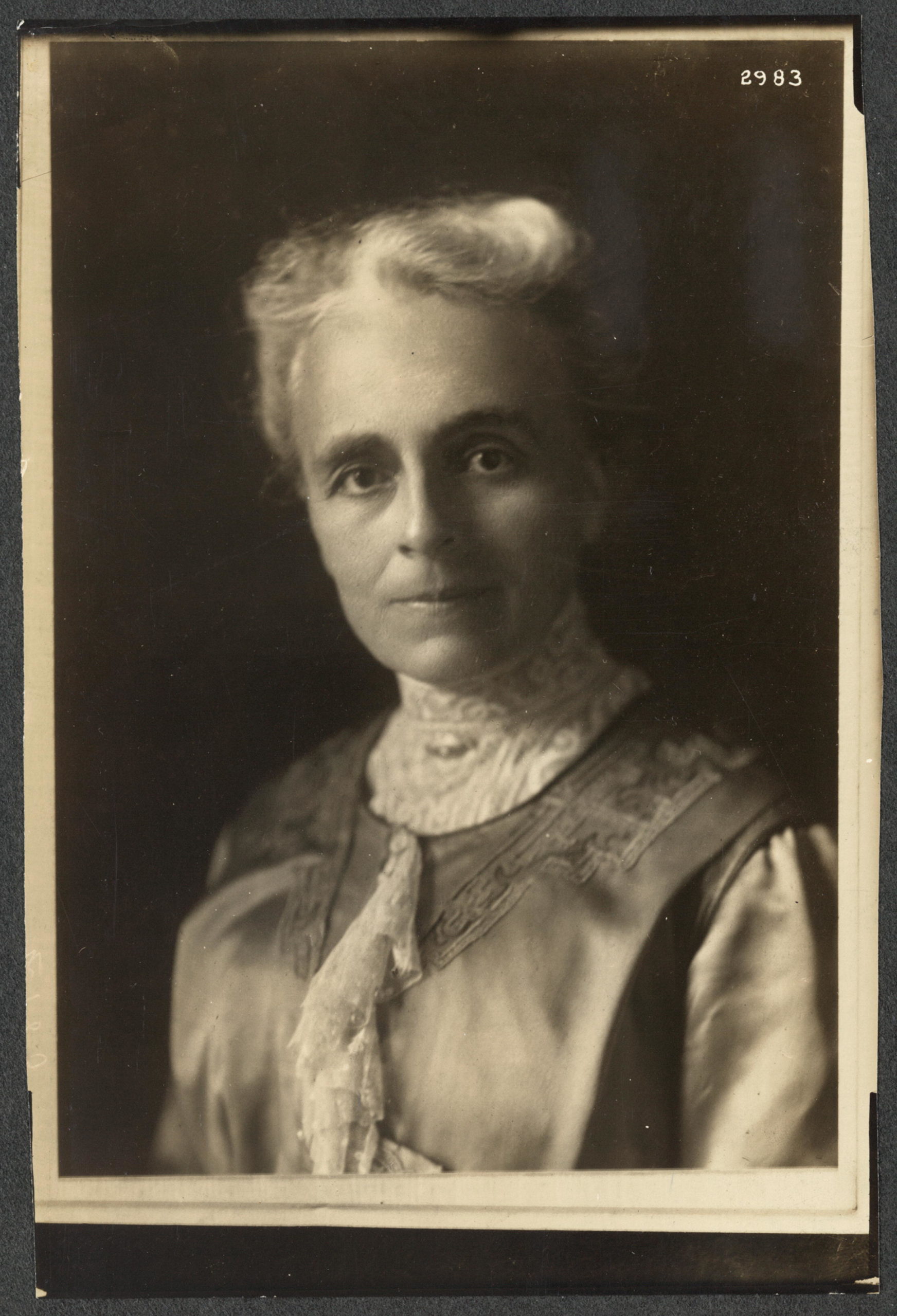
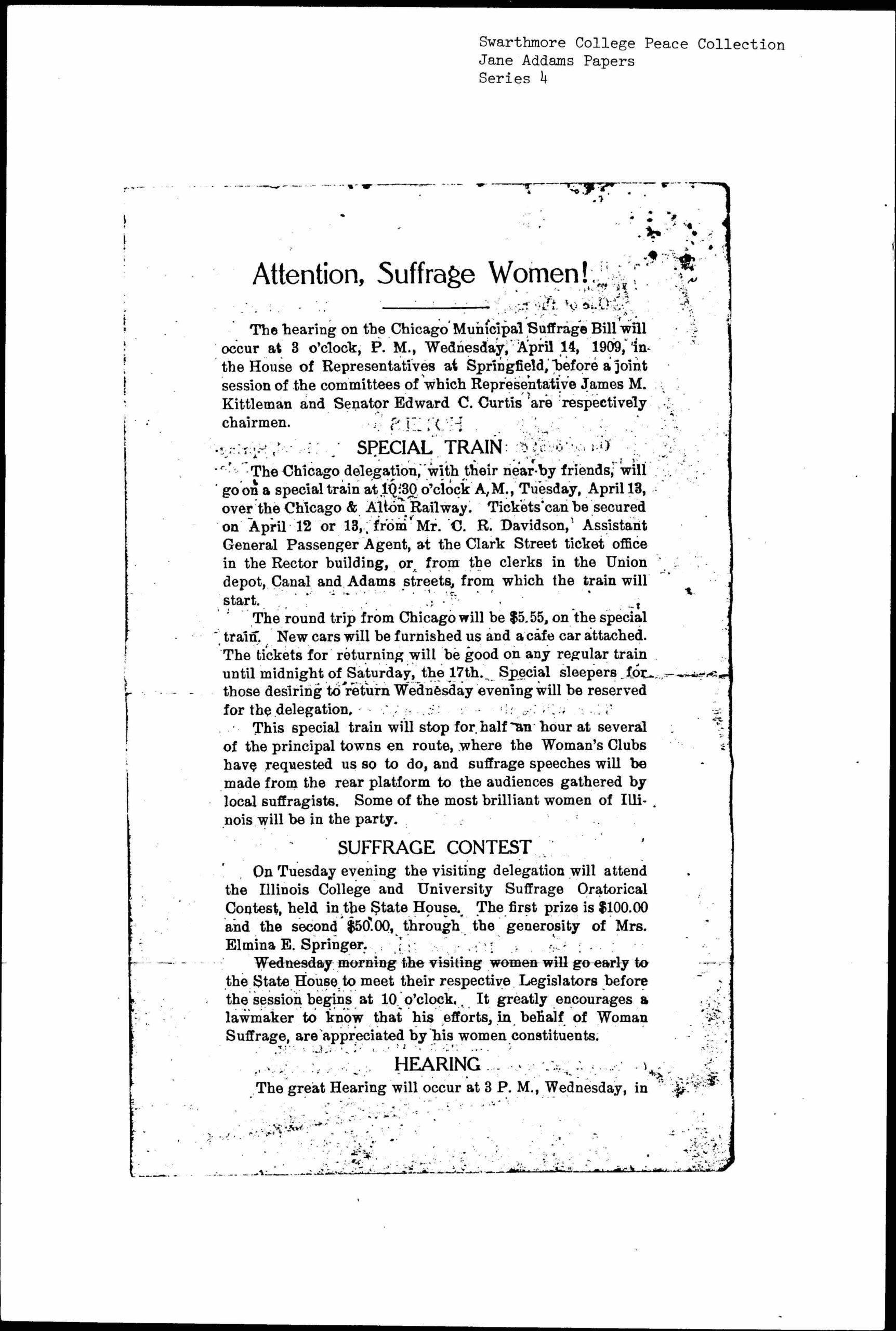

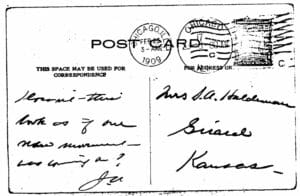
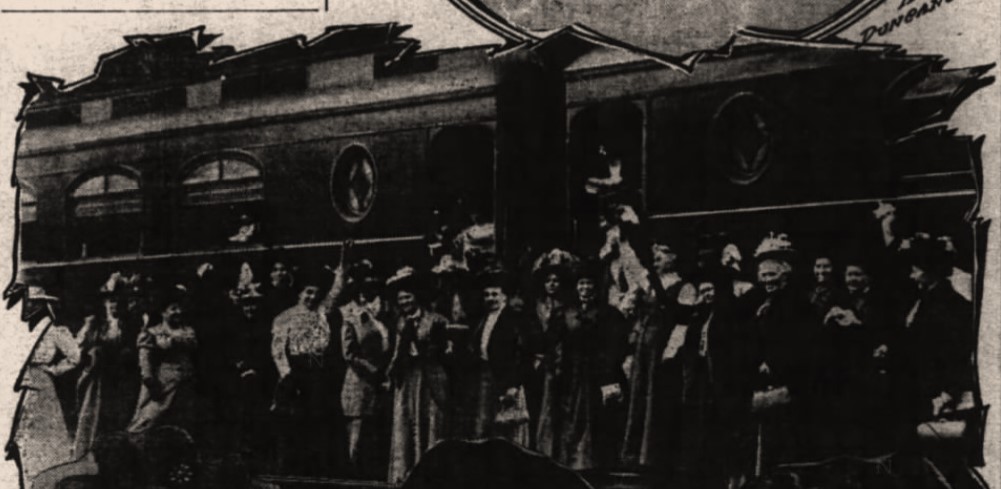
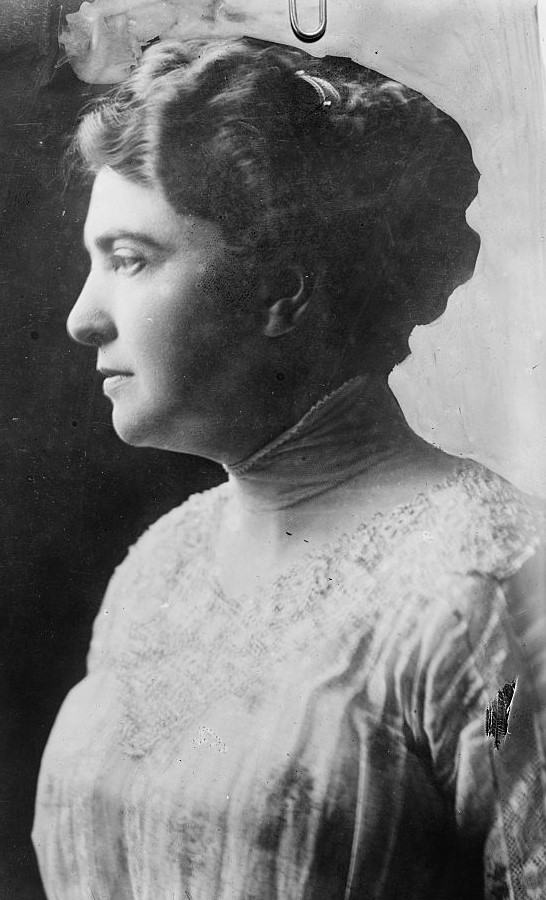
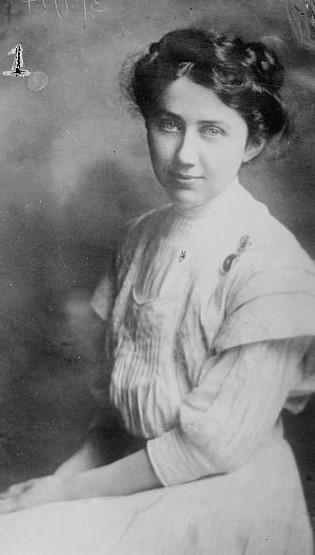
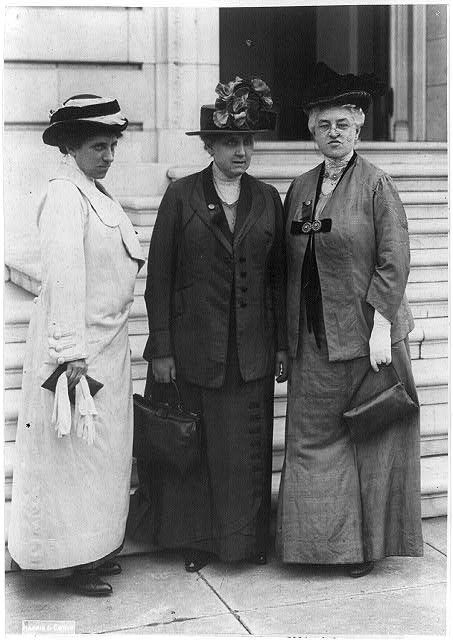

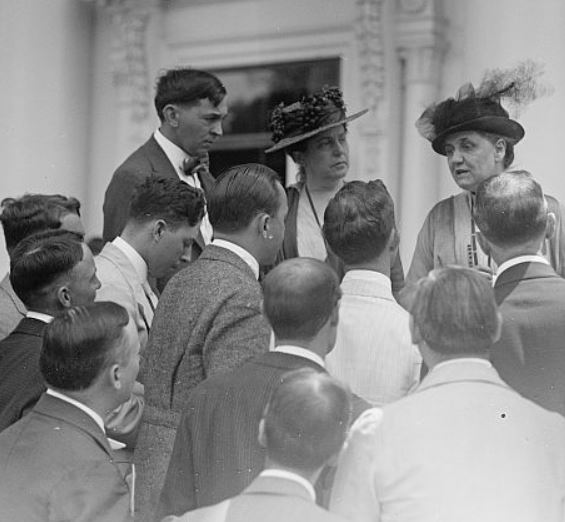
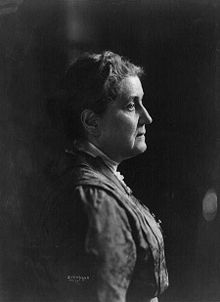
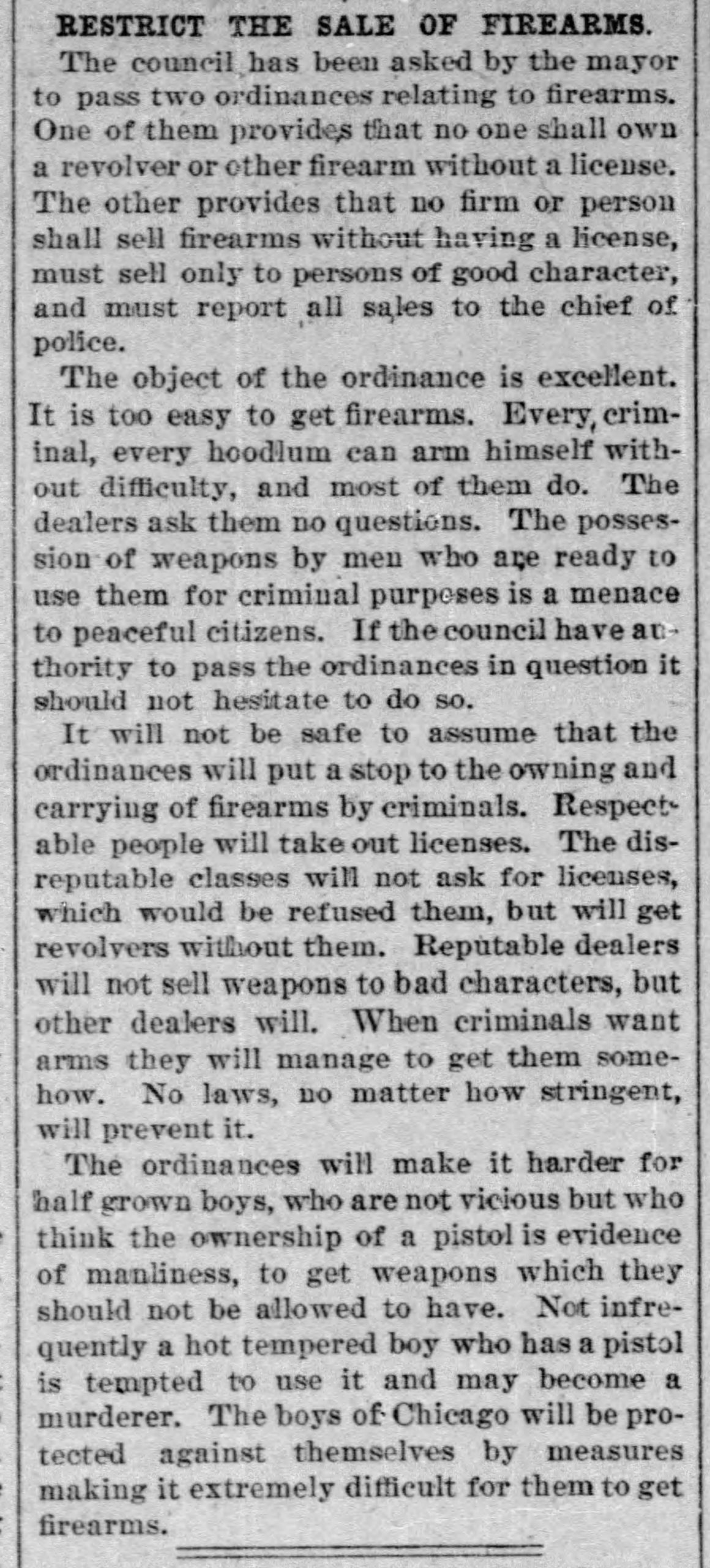
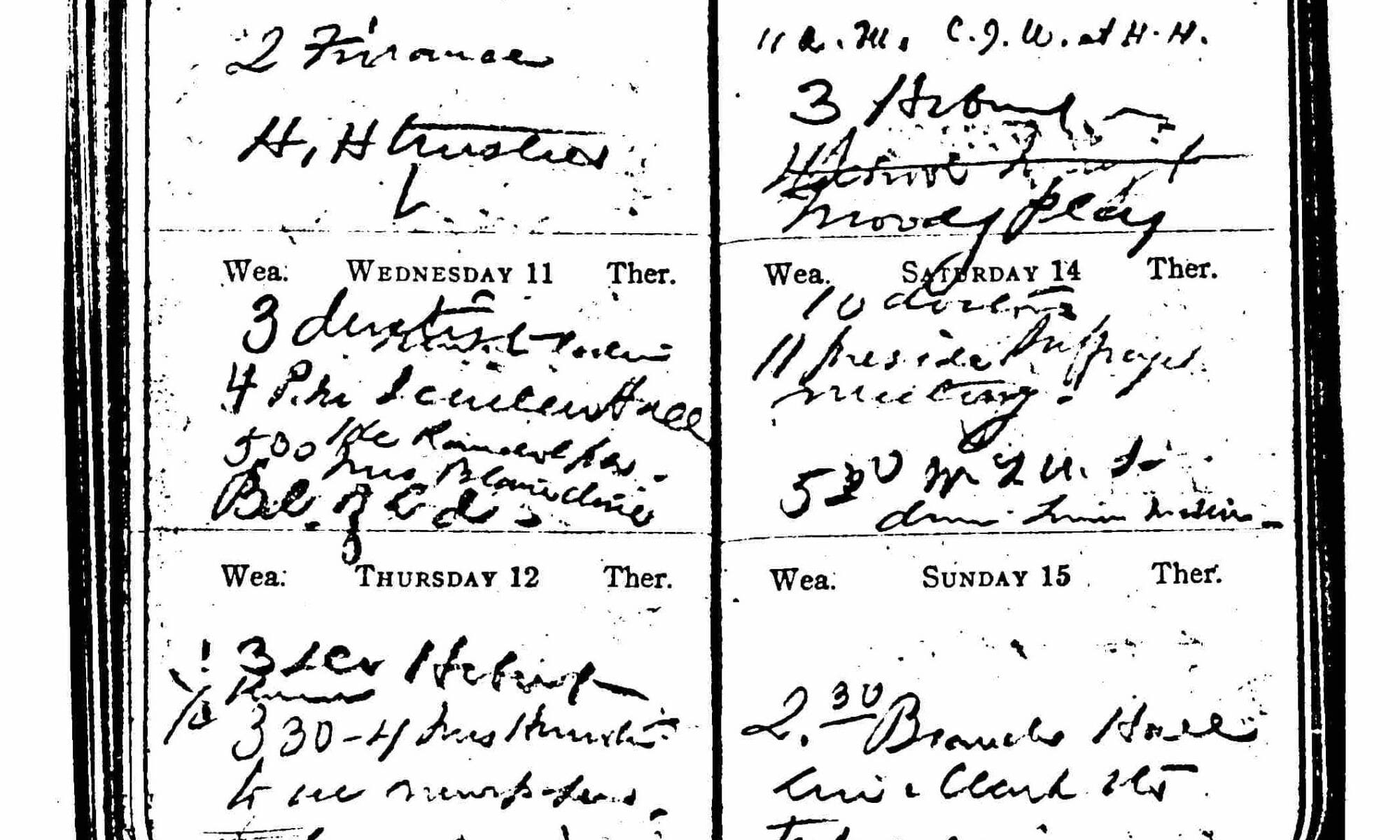
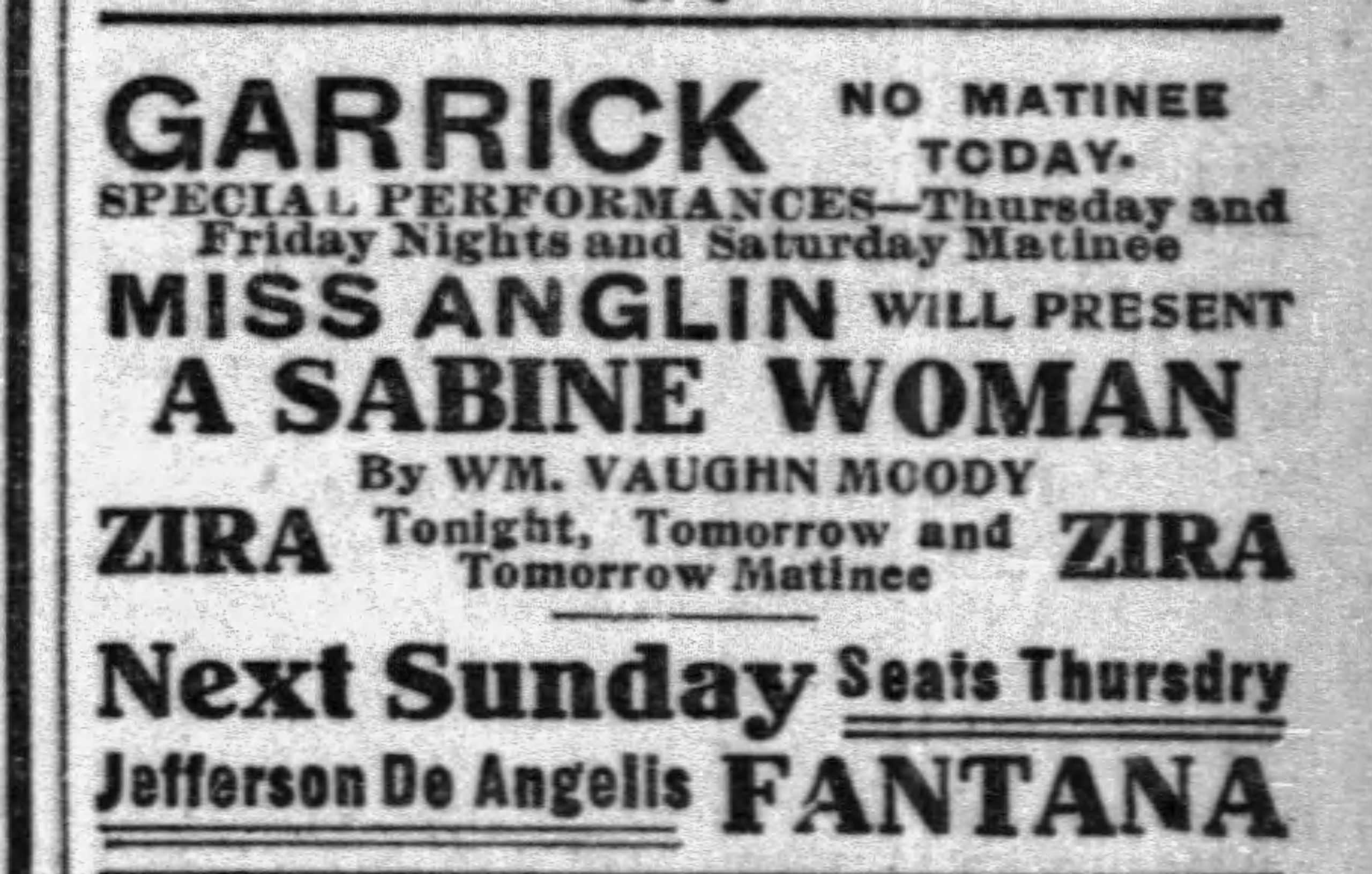
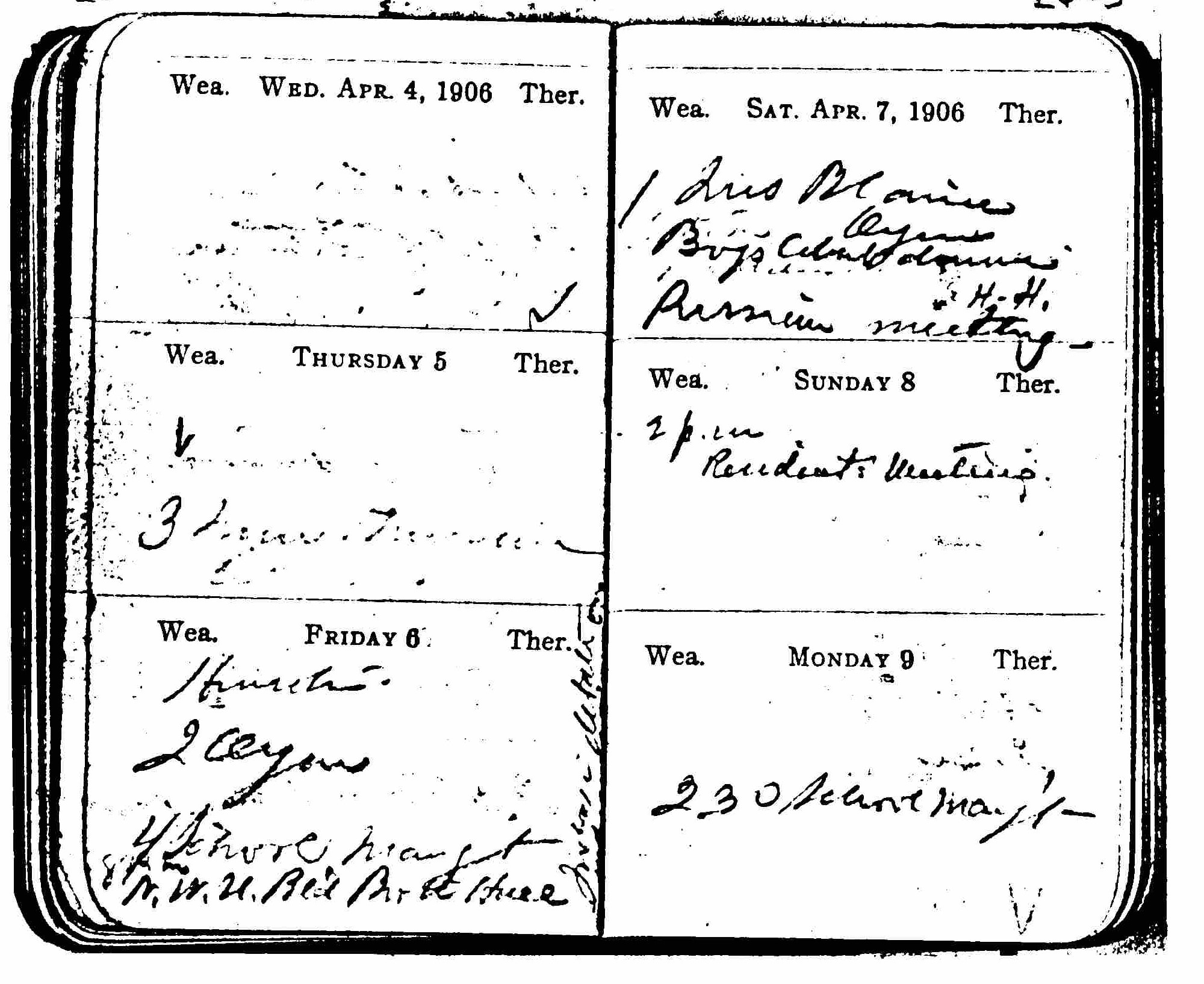
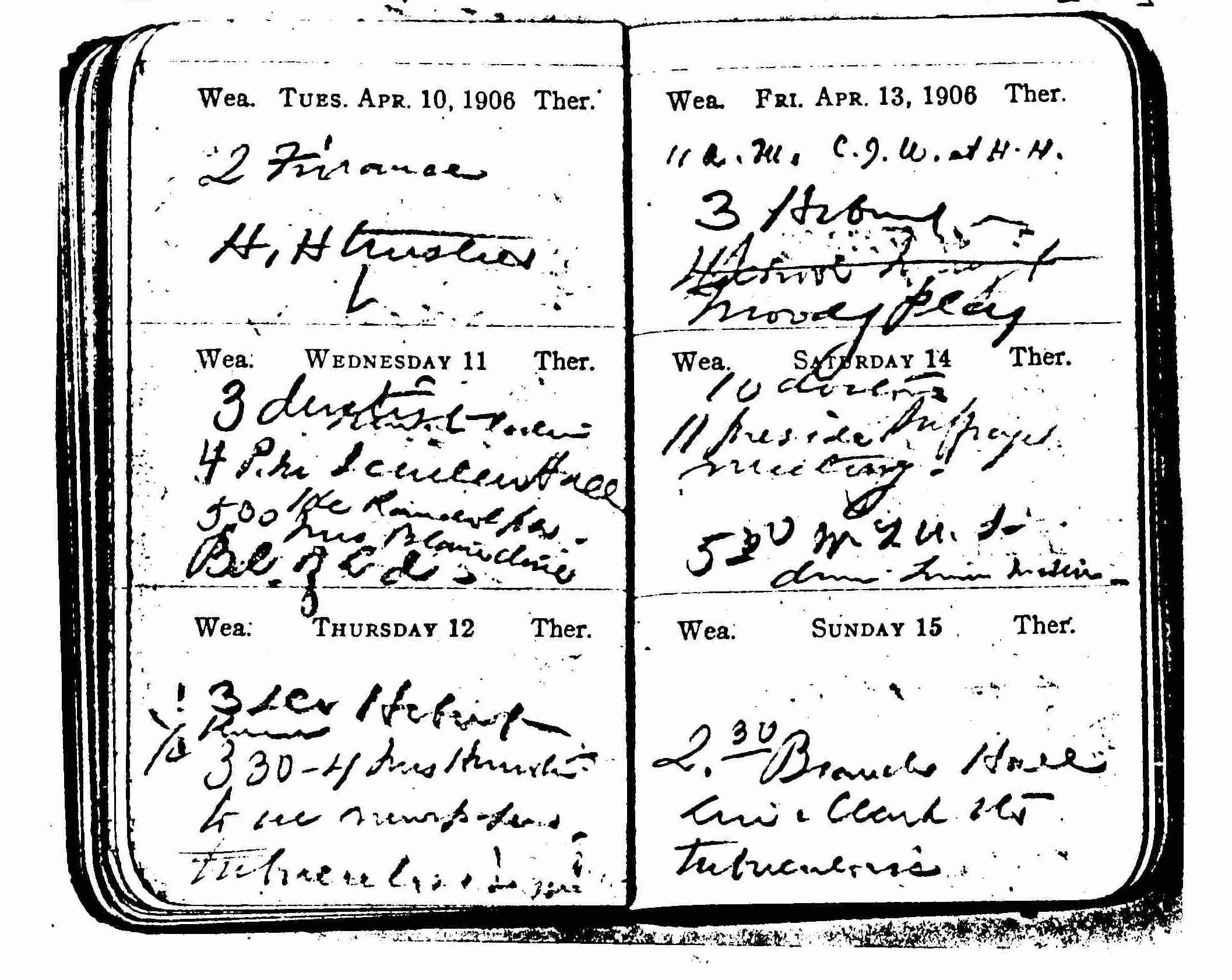
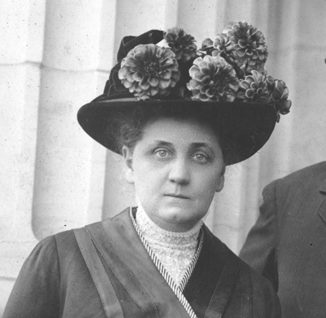
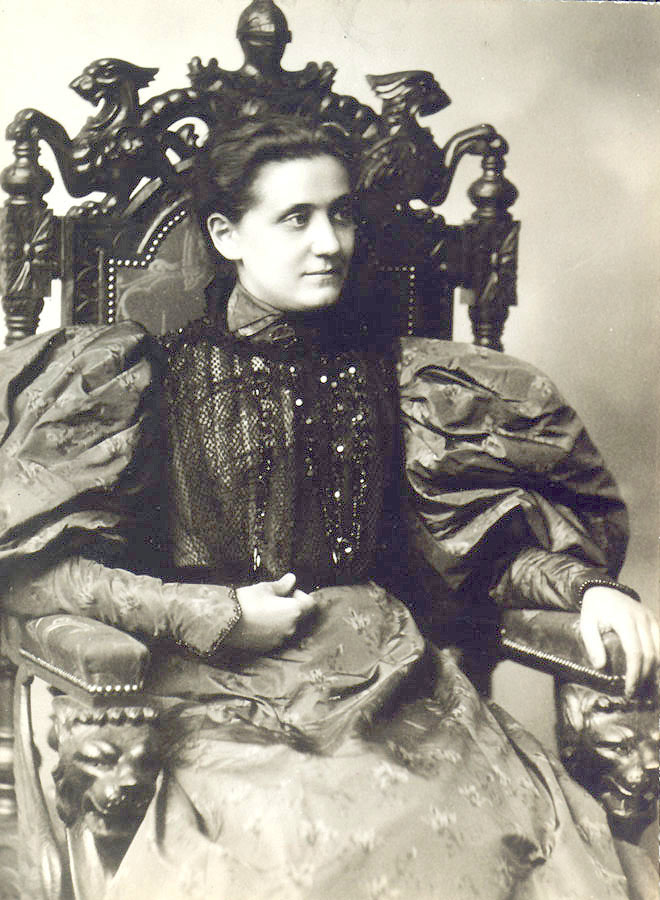
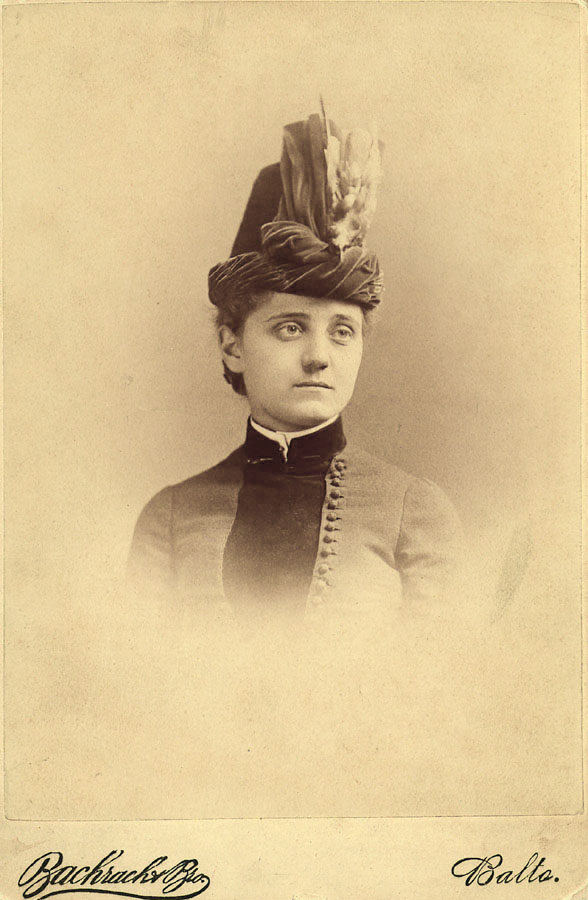
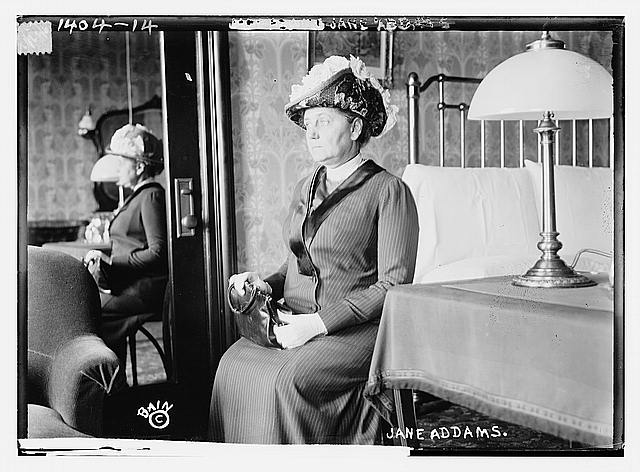
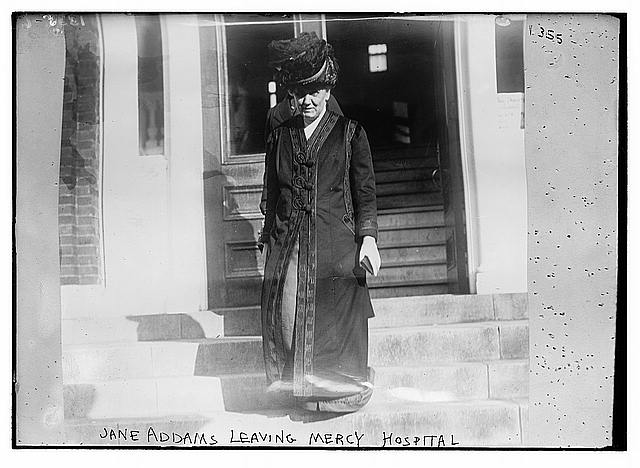
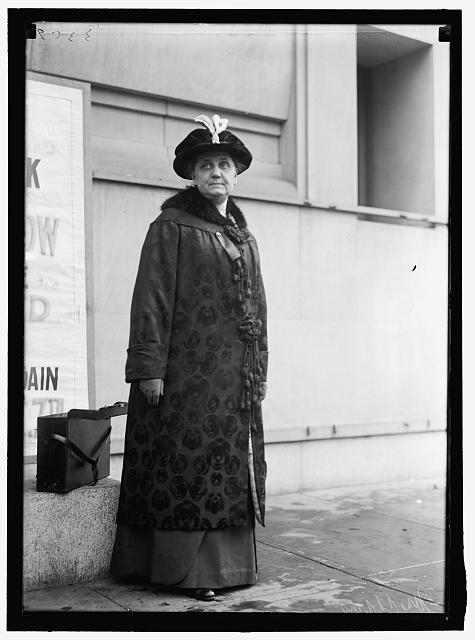
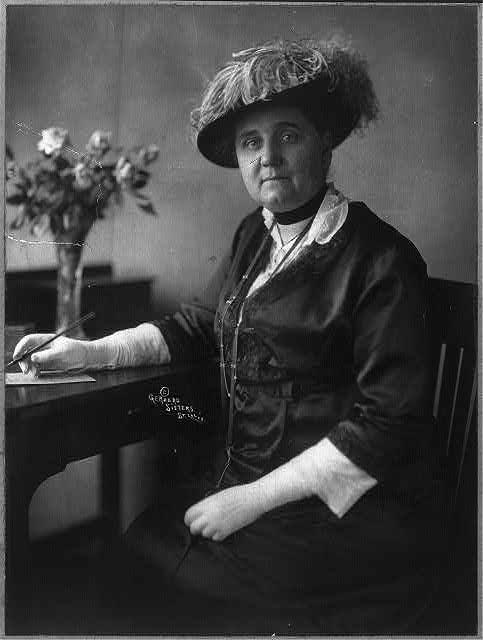
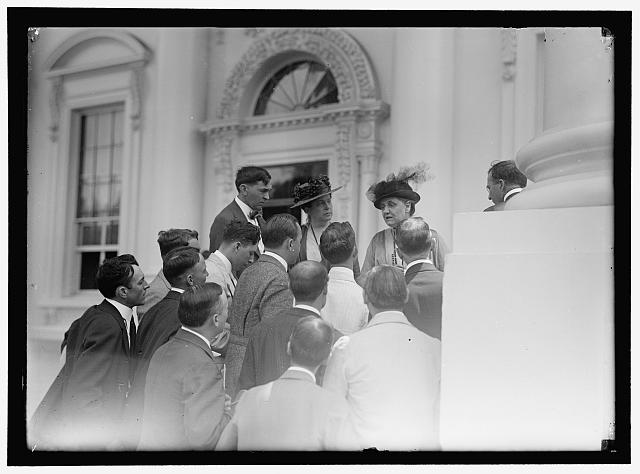
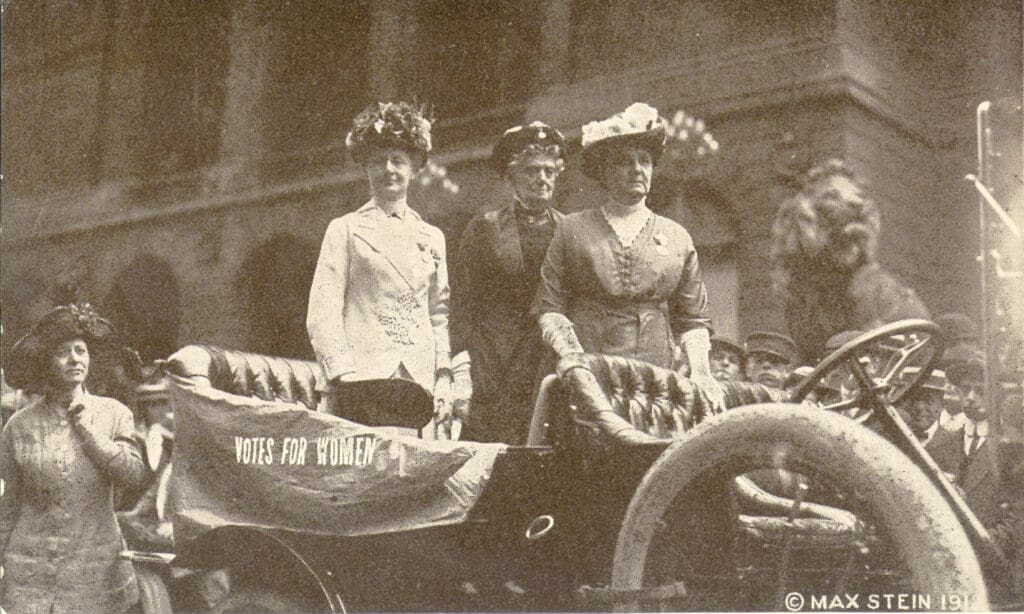
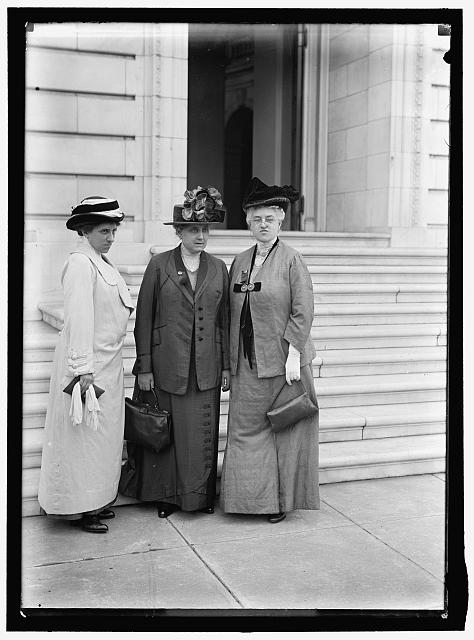
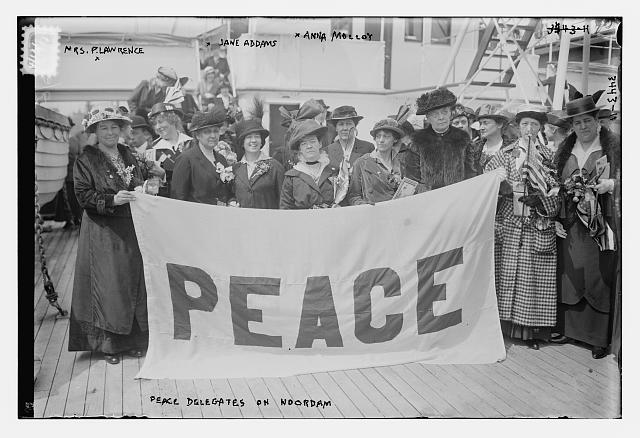
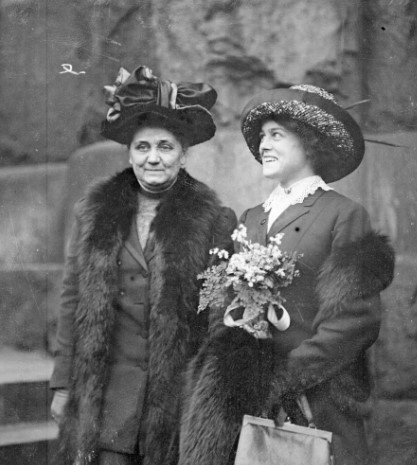

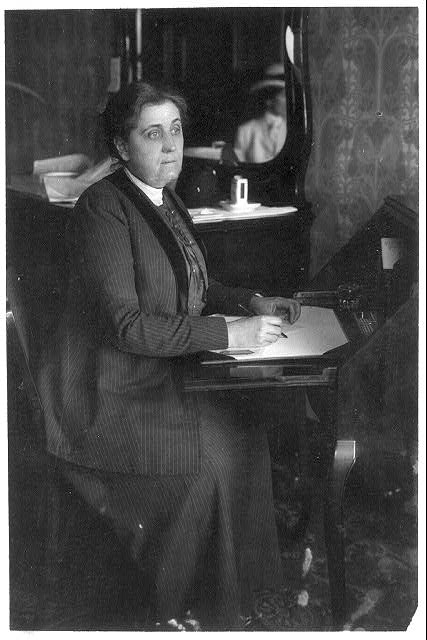

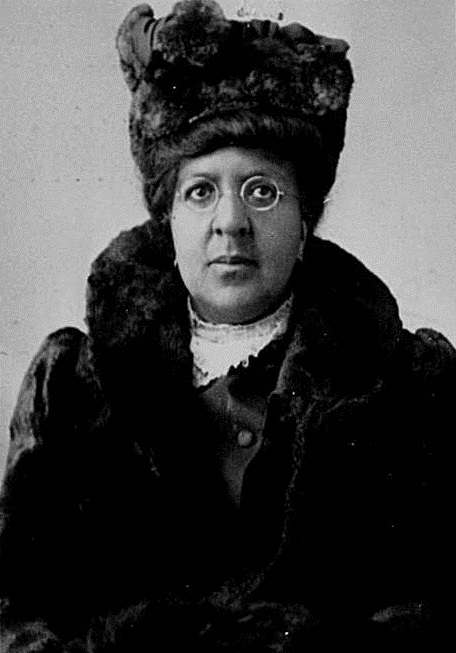
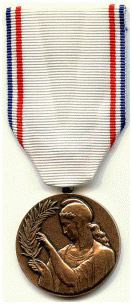
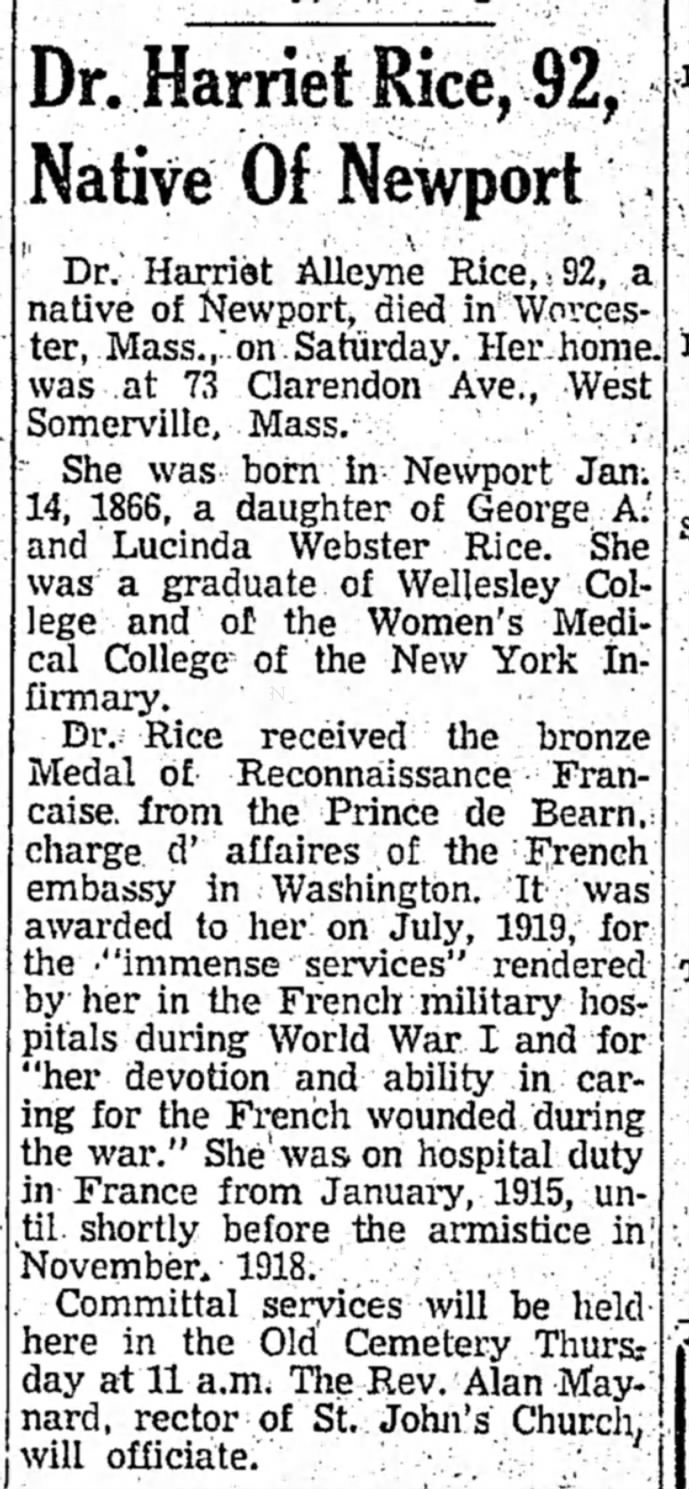
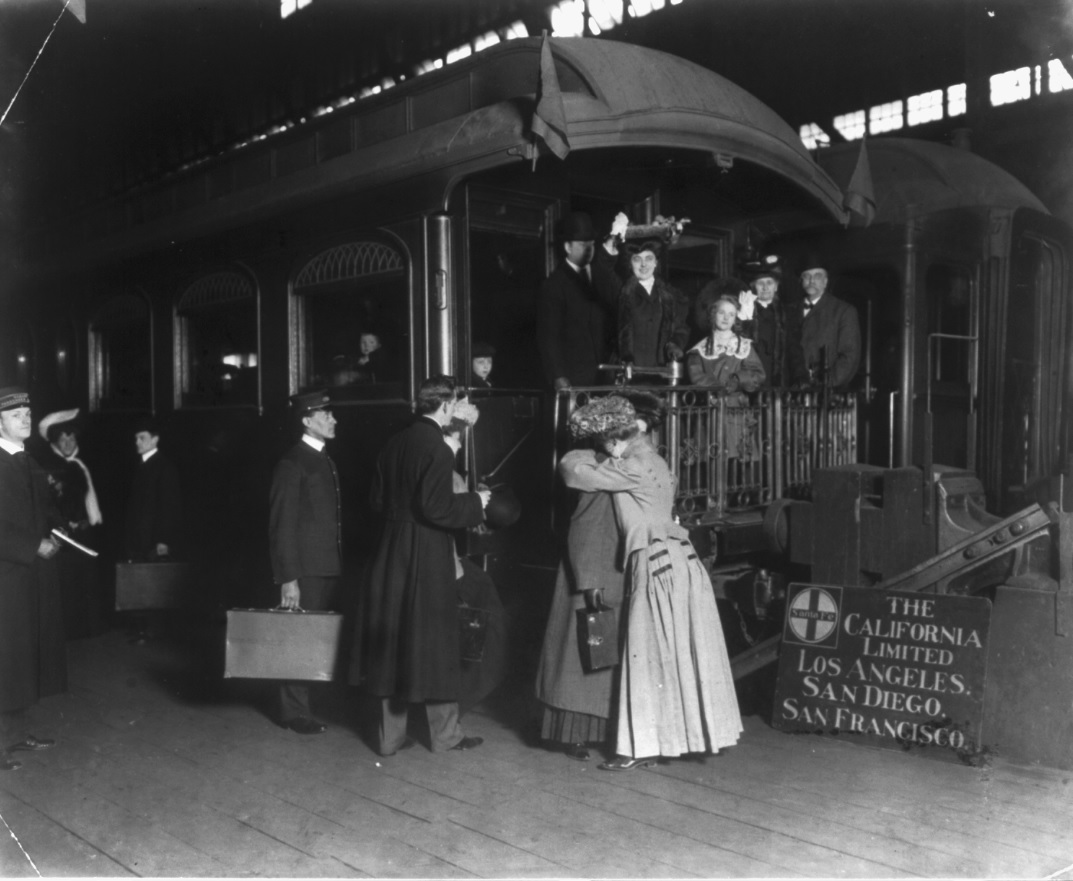
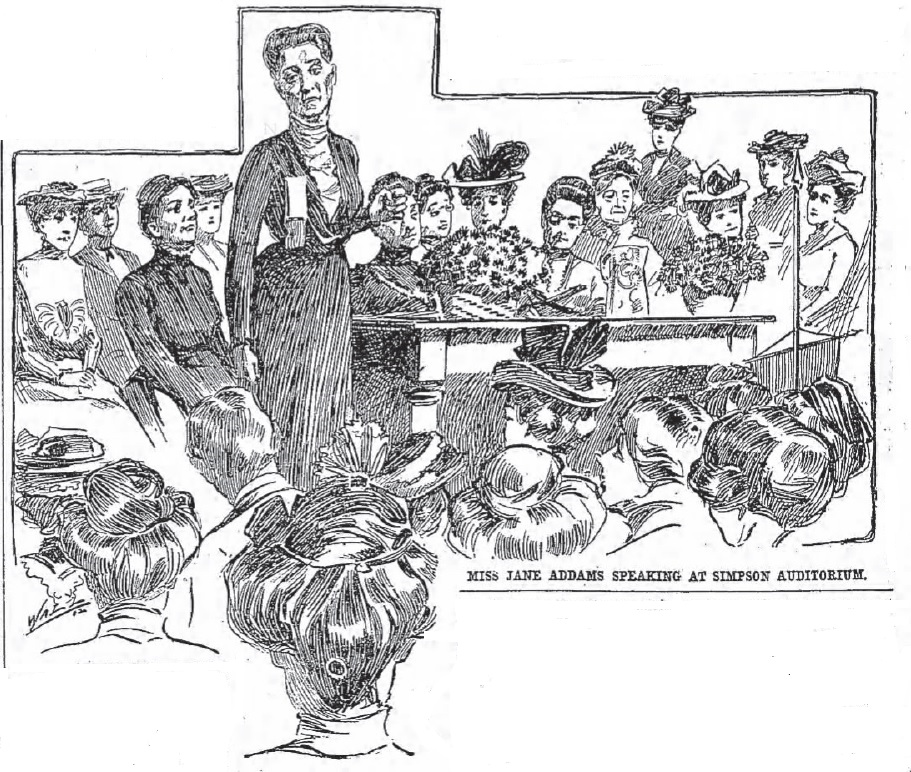
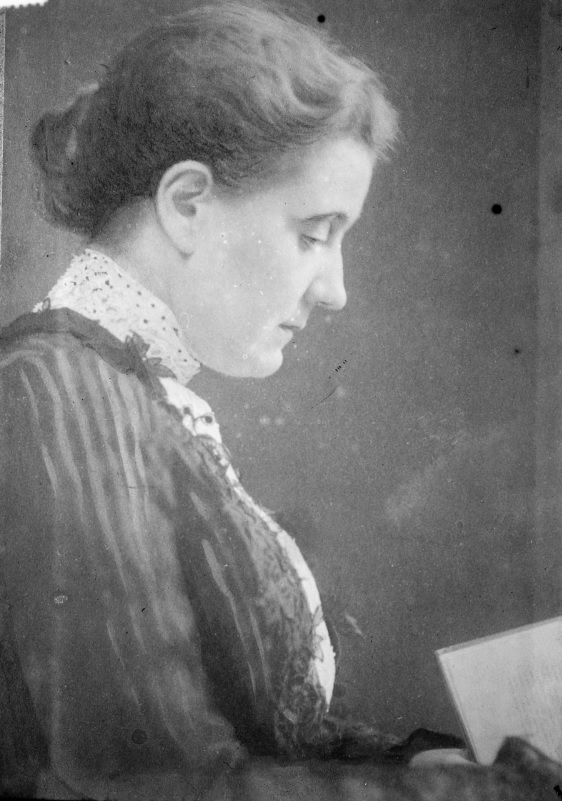
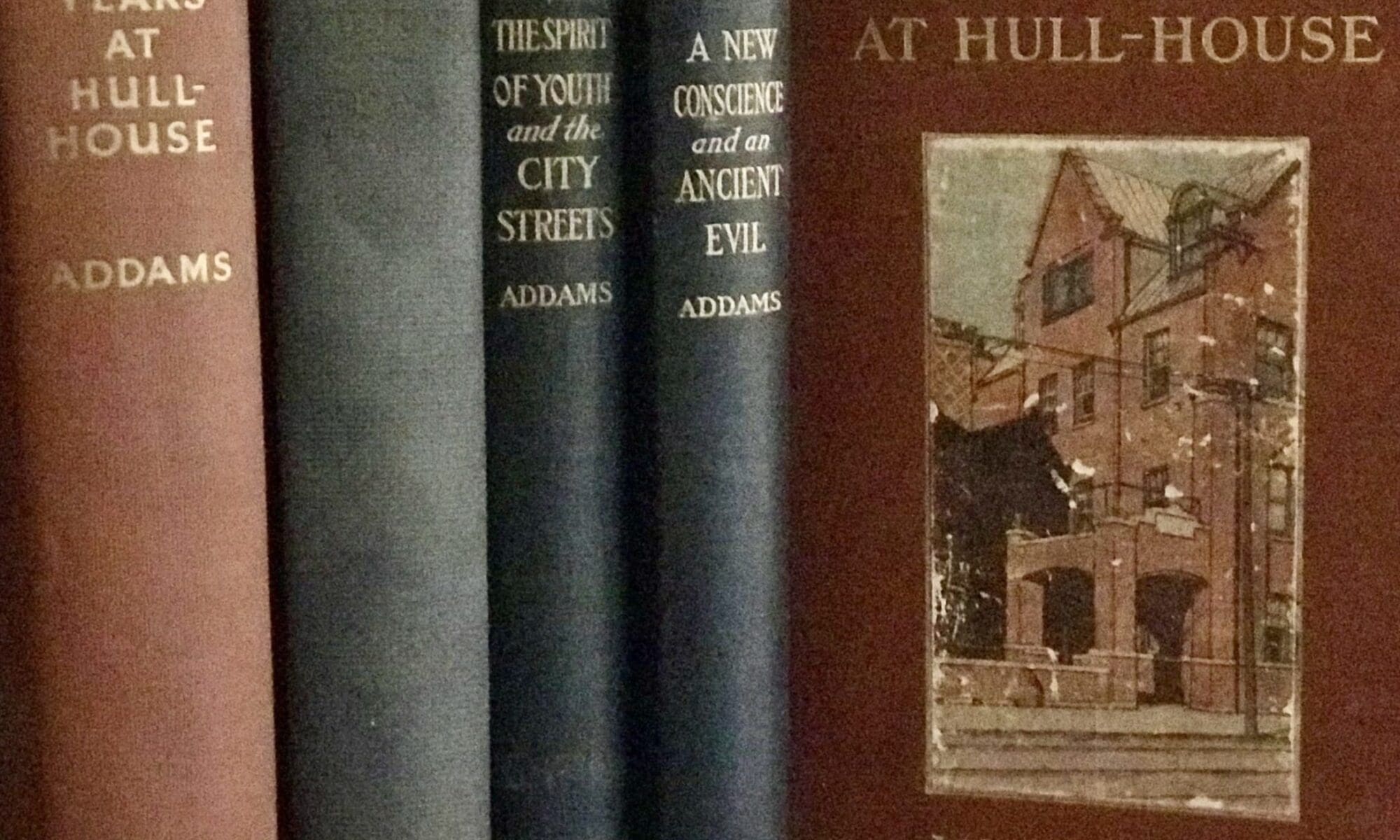
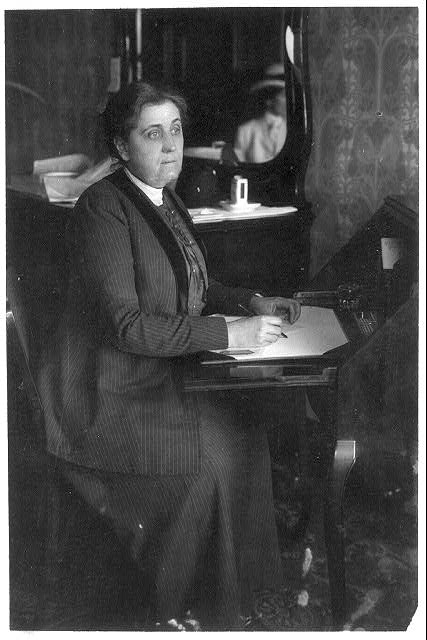
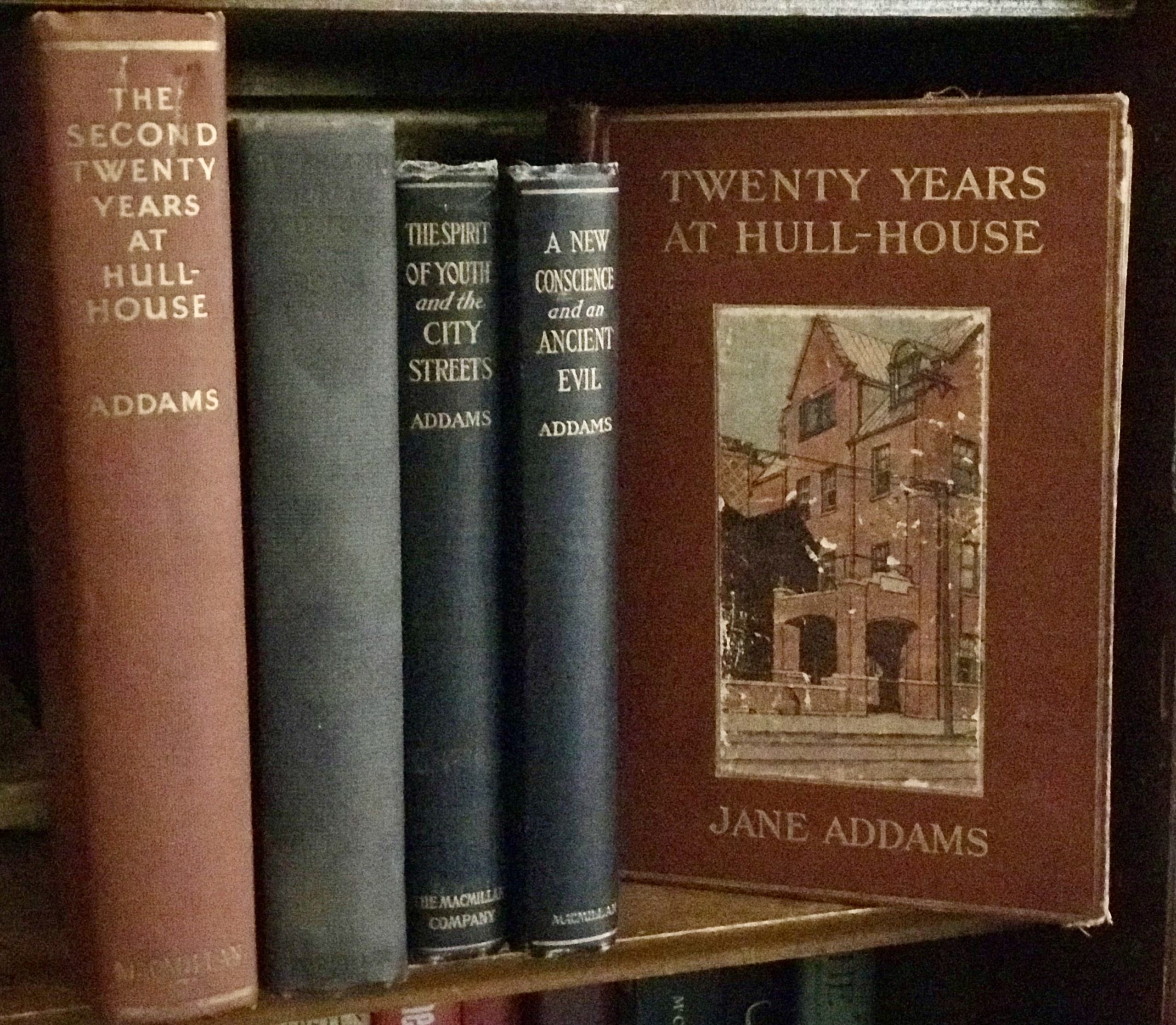
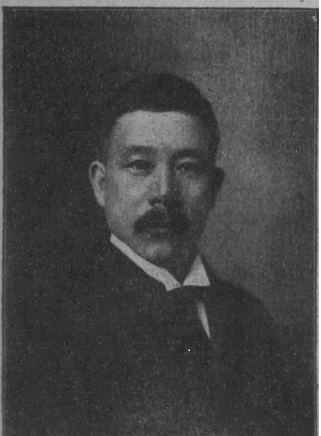


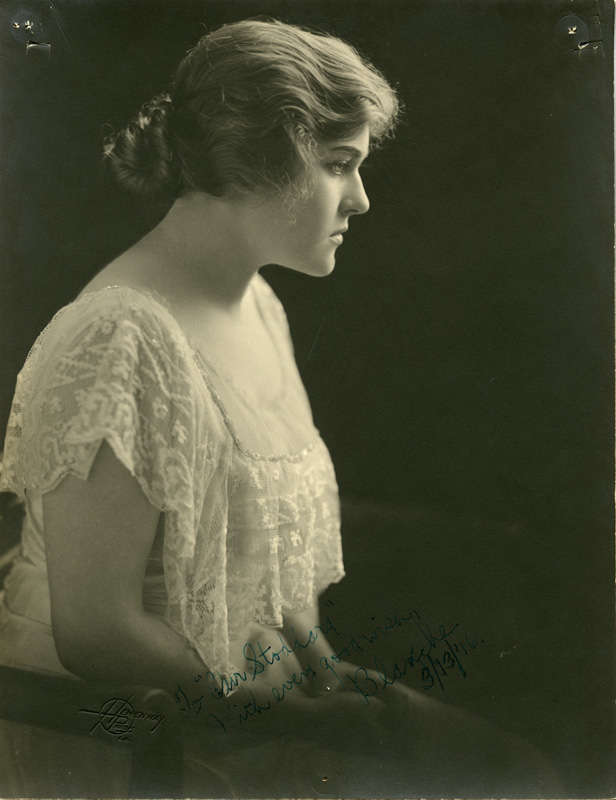
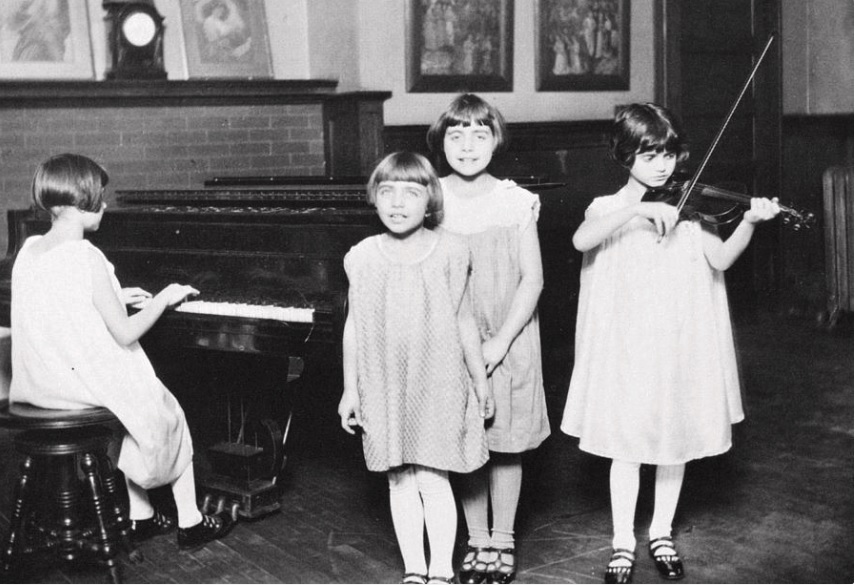



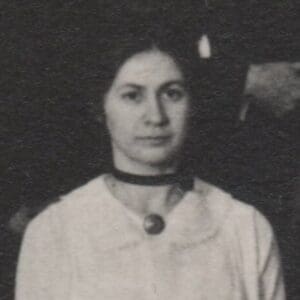
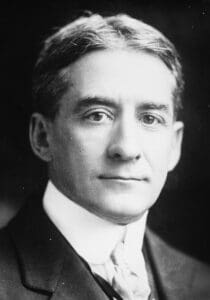
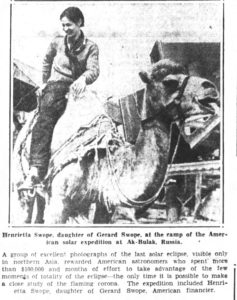 So she left Chicago to take a job at Harvard to work for the astronomy professor Dr. Harlow Shapley at the Harvard Observatory. While she looked for variable stars and became Shapley’s first assistant, she earned a Master’s degree in astronomy from Radcliffe College in 1928. The following year, she became famous when she identified 385 new stars, which helped scientists identify the “hub” of the Milky Way. At the time, Swope was touted as “one of the youngest women ever to have made a comparable mark in scientific research.” During her long, successful career as an astronomer, she studied Cepheid variable stars in dwarf galaxies and M 31, the Andromeda Galaxy. However, her most significant contribution was developing a new method for measuring the universe, using the brightness of stars, which became known as the “celestial yardstick.” I don’t understand any of this, but it sounds amazing. Henrietta Swope was an accomplished and well-respected scientist.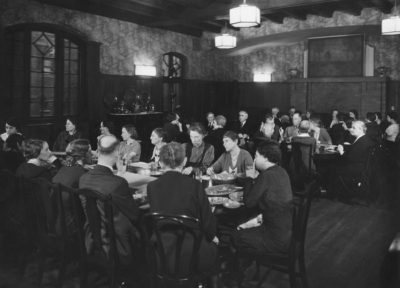


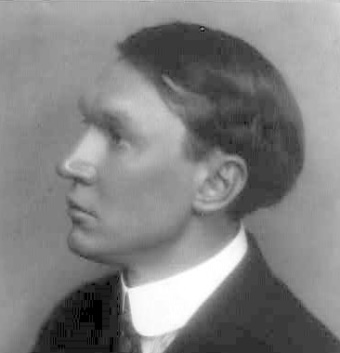
 story of his life. When I read his letter to Addams, I recalled that Lindsay had written a poem about her, inspired by her peace trip to Europe in 1915. However, I was unaware he knew Addams personally nor that he had corresponded with her. The Jane Addams Digital Edition includes four letters from Lindsay to Addams, each revealing something of the poet’s respect for and fascination with Addams and with Hull-House. In an October 1916 letter, Lindsay proclaimed: “I have loved you a long time dear lady.”
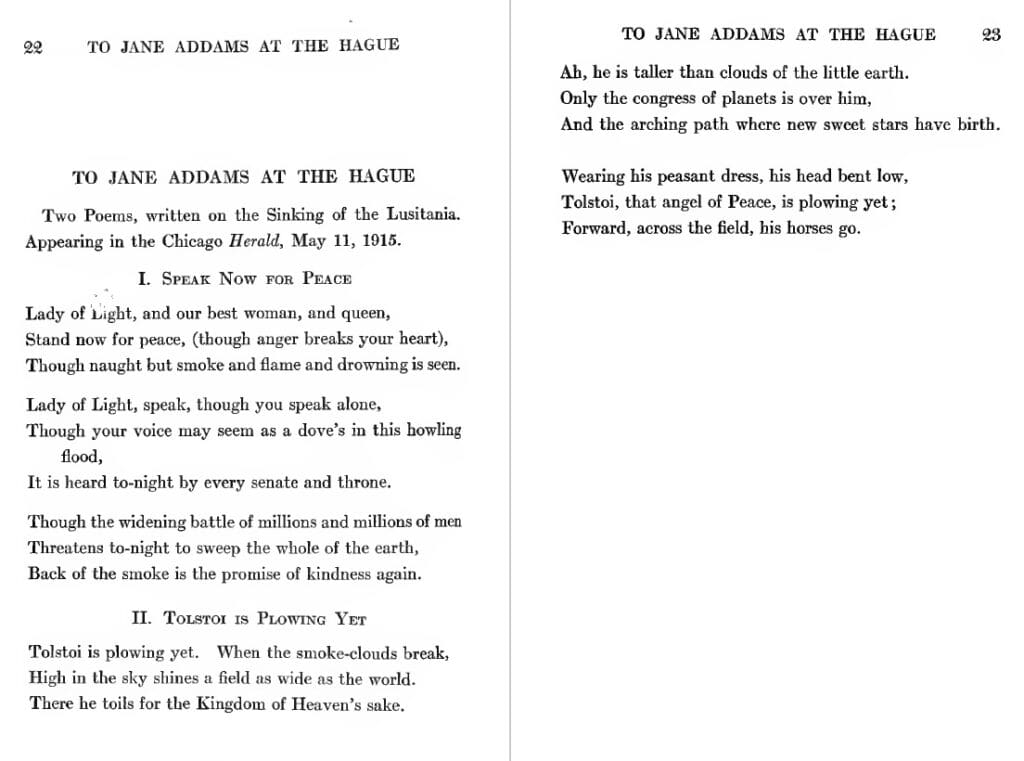
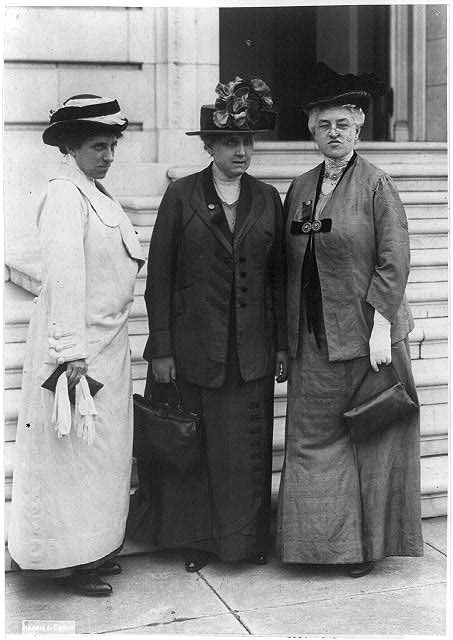
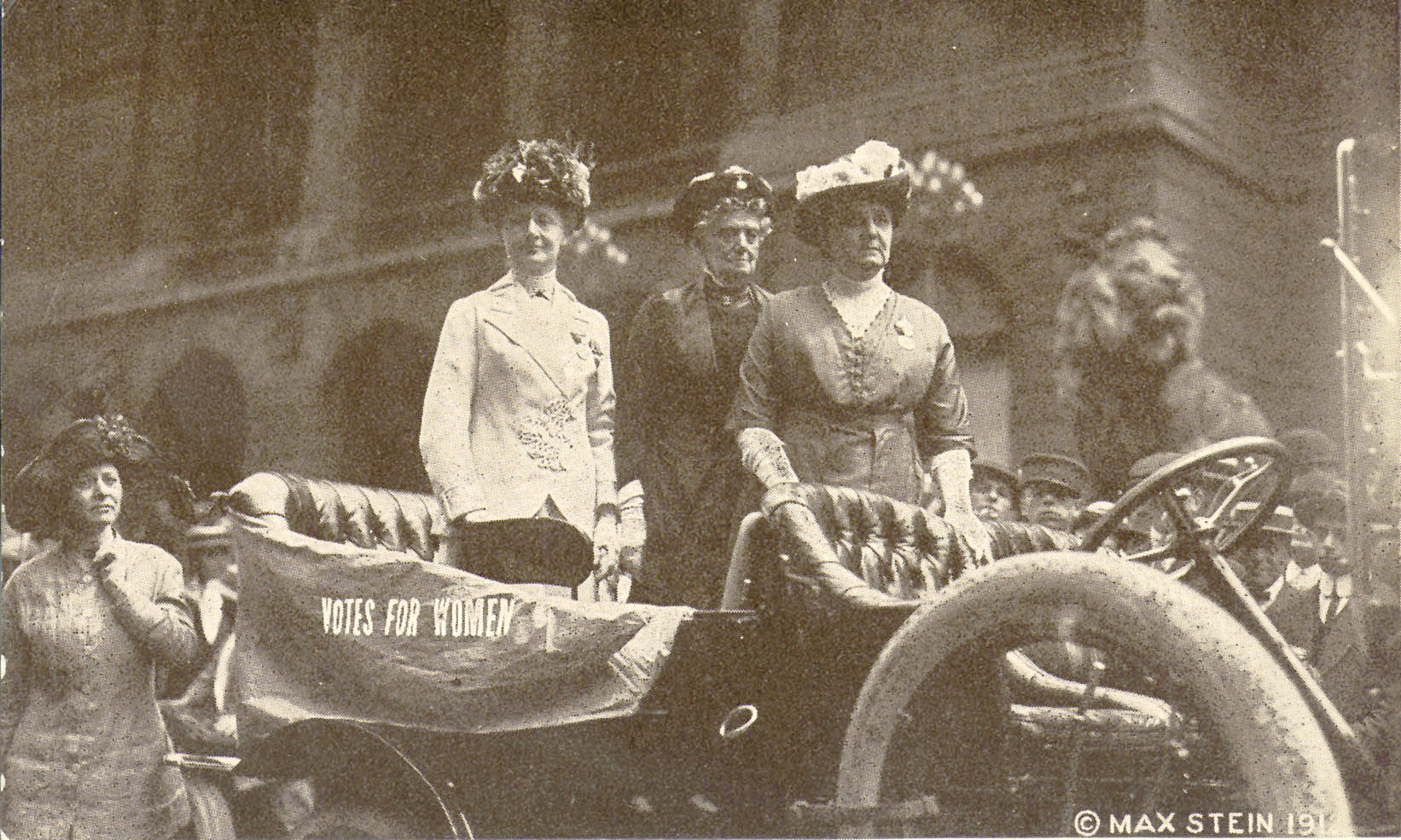
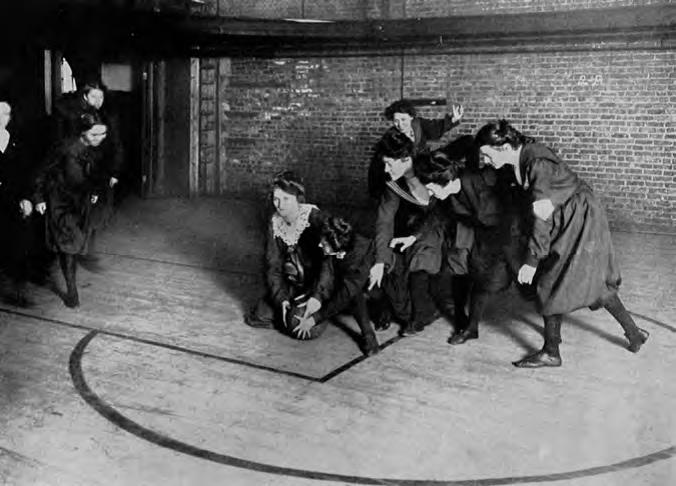
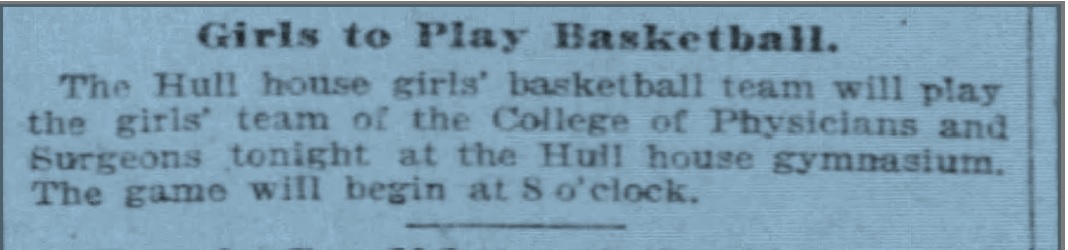
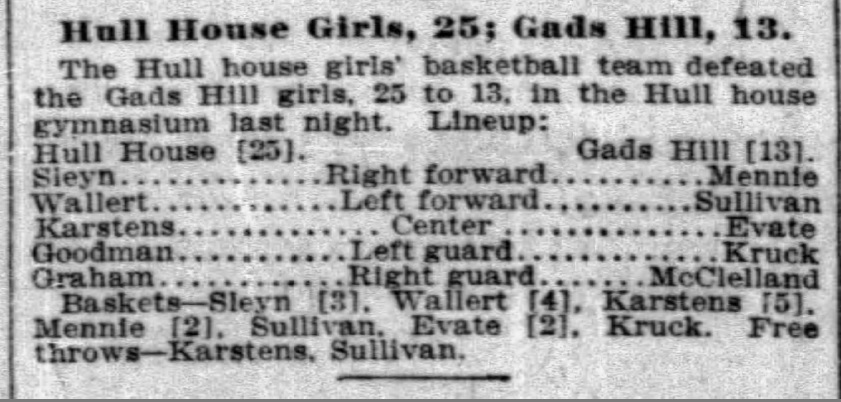
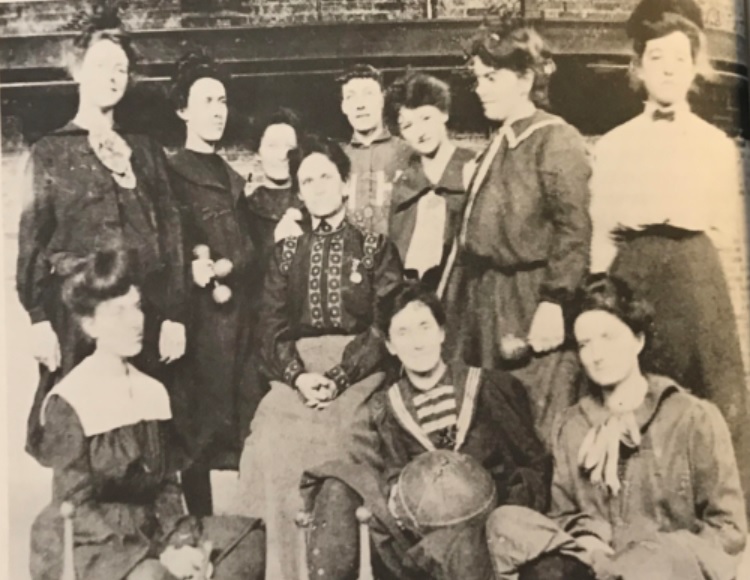
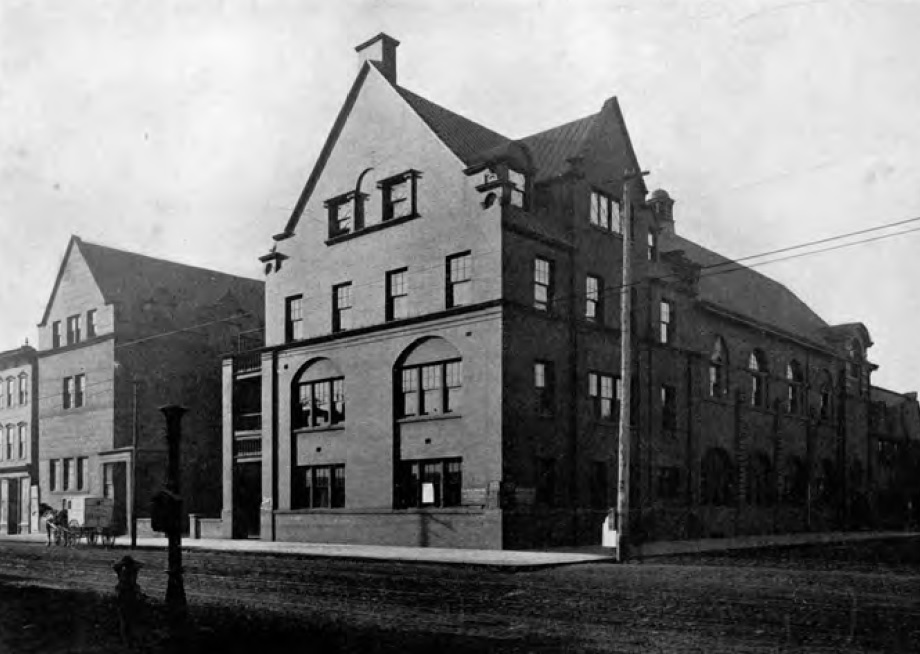
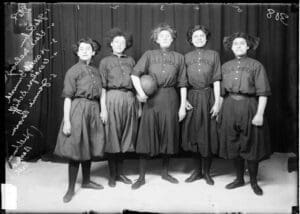
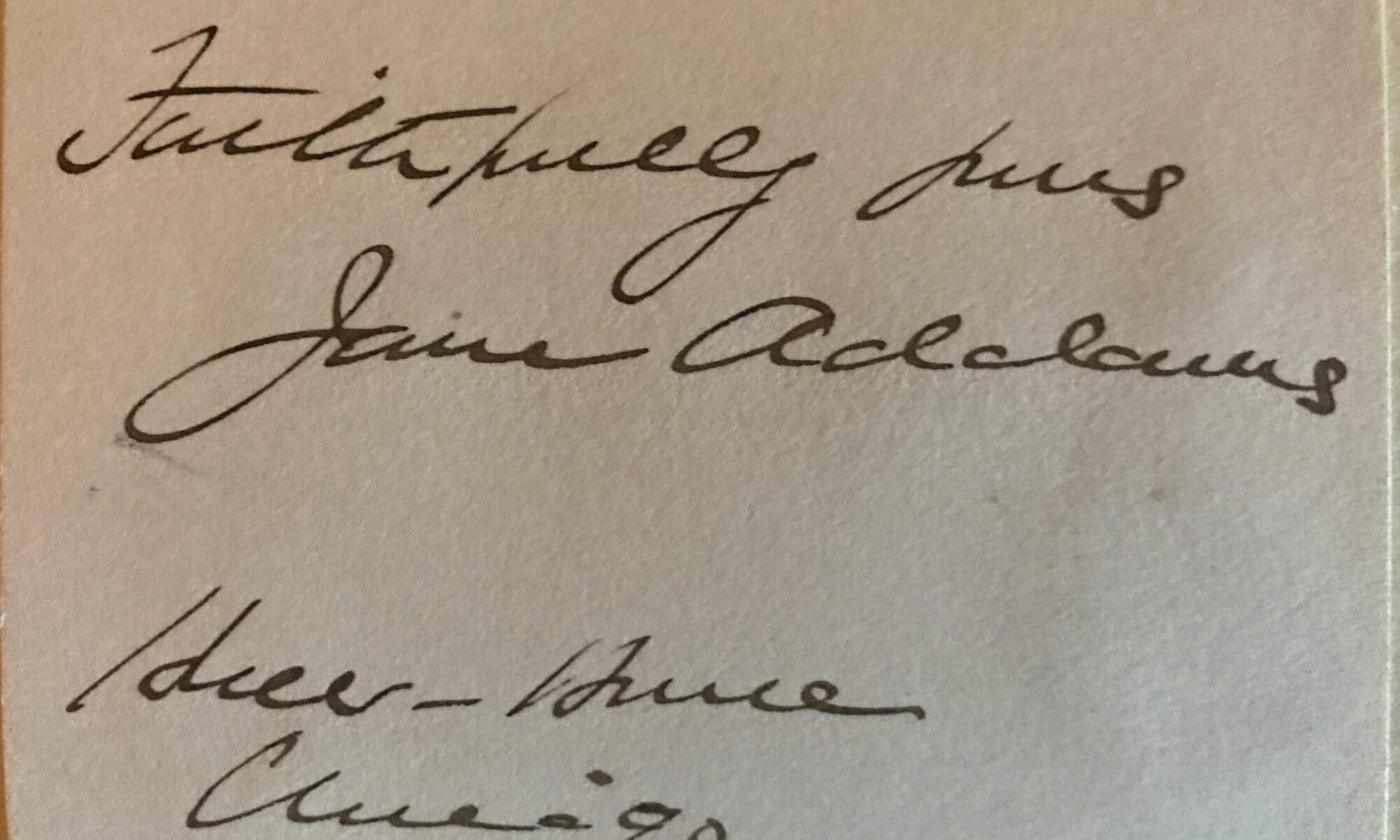
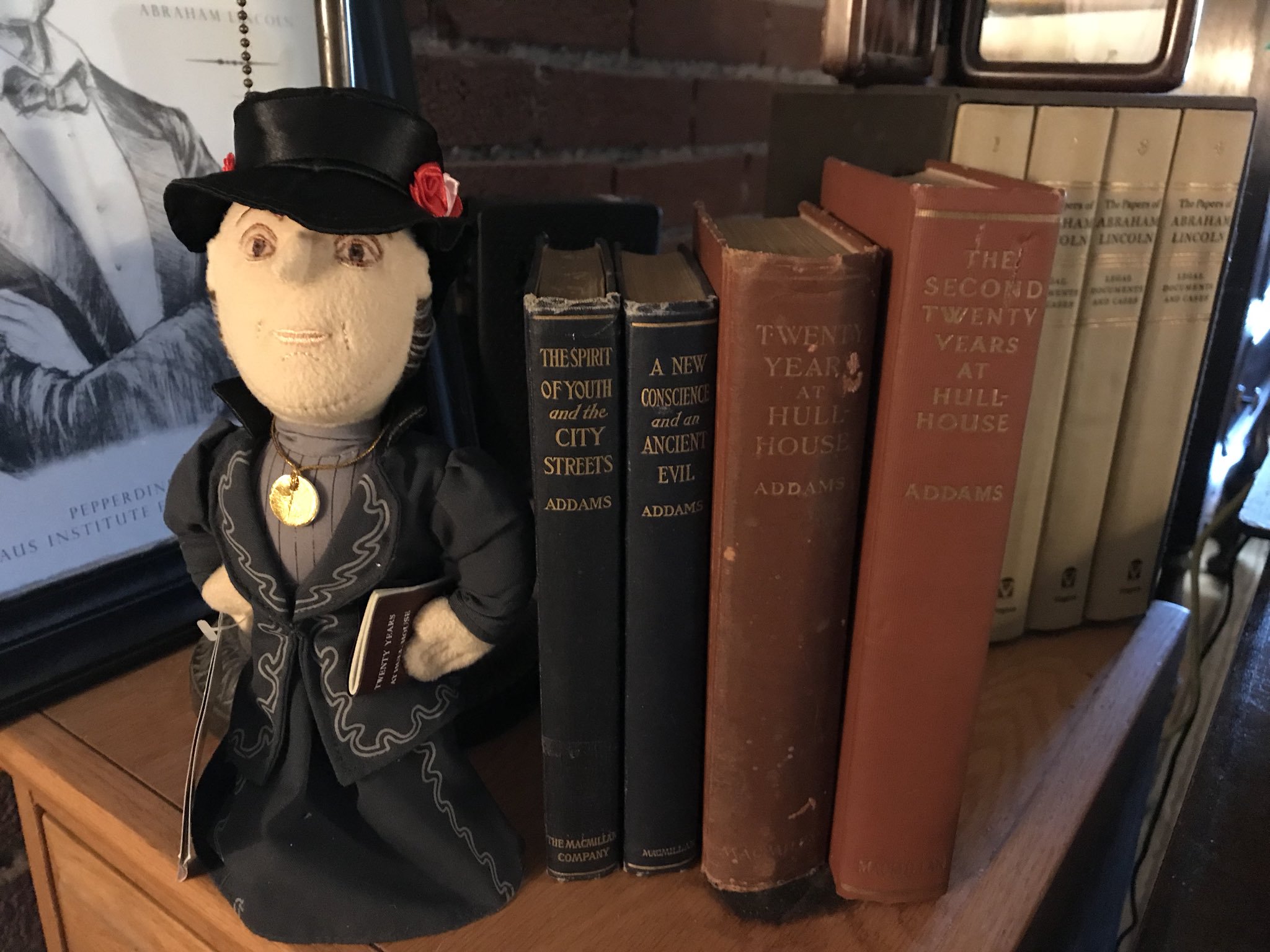
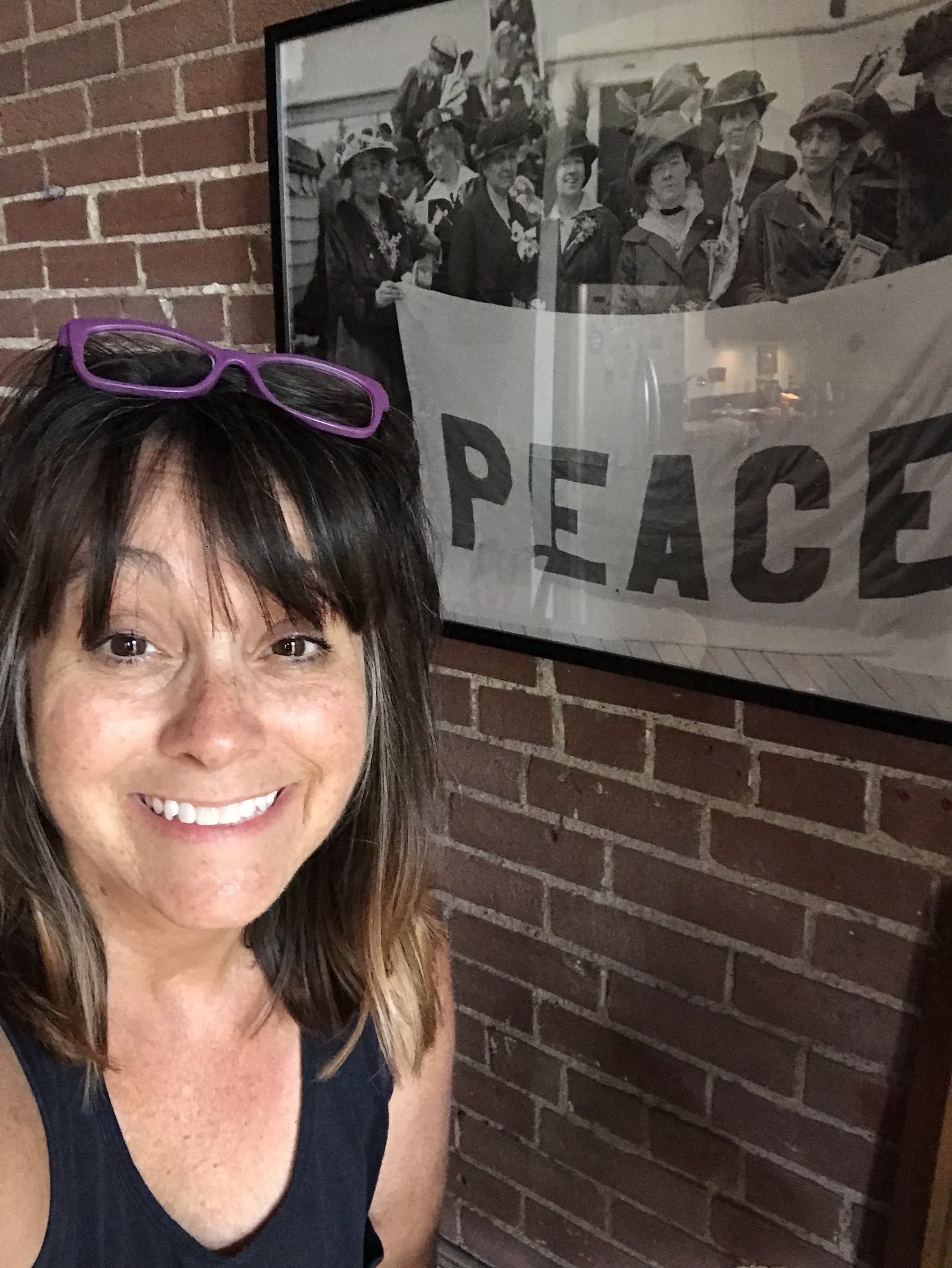
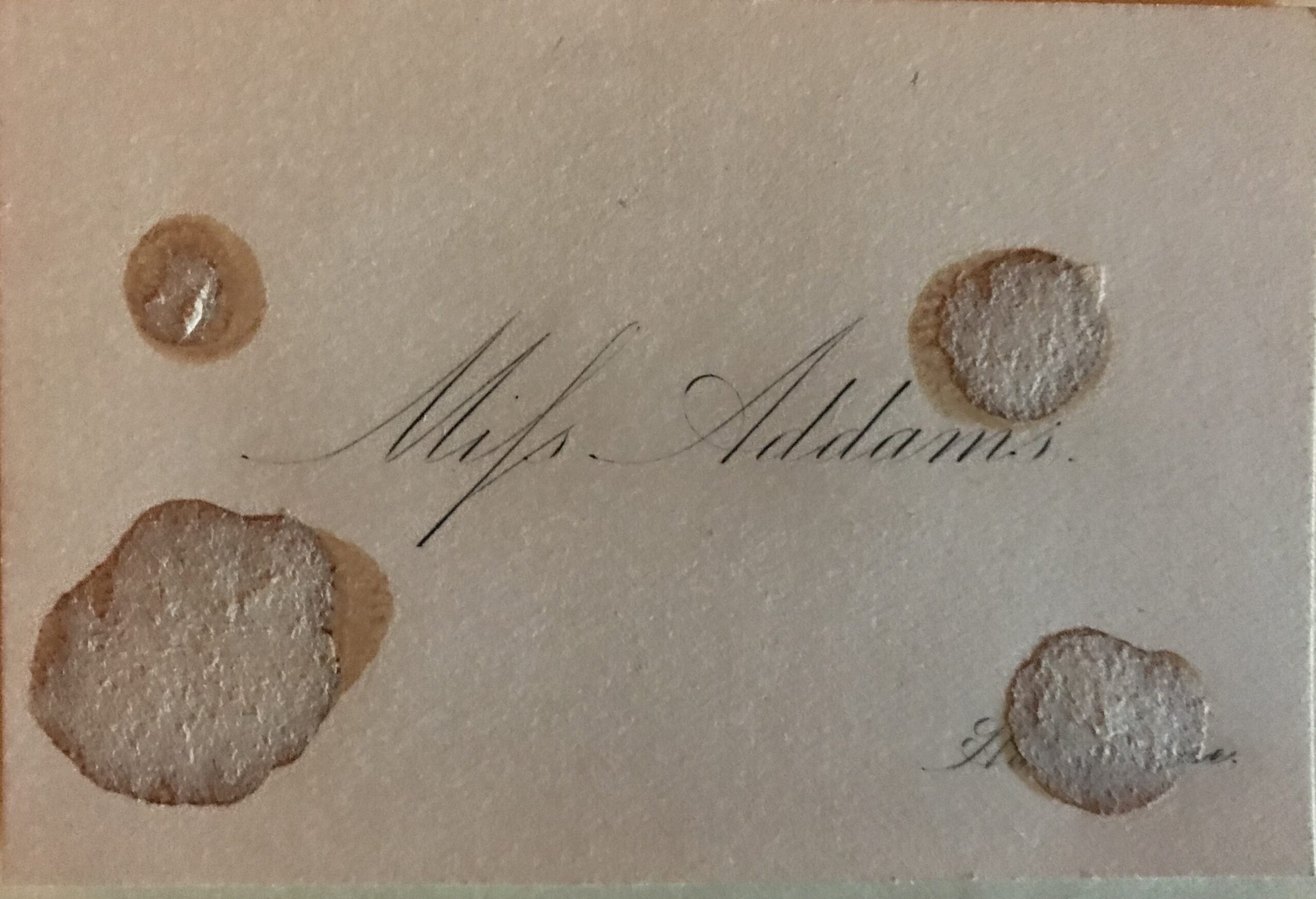
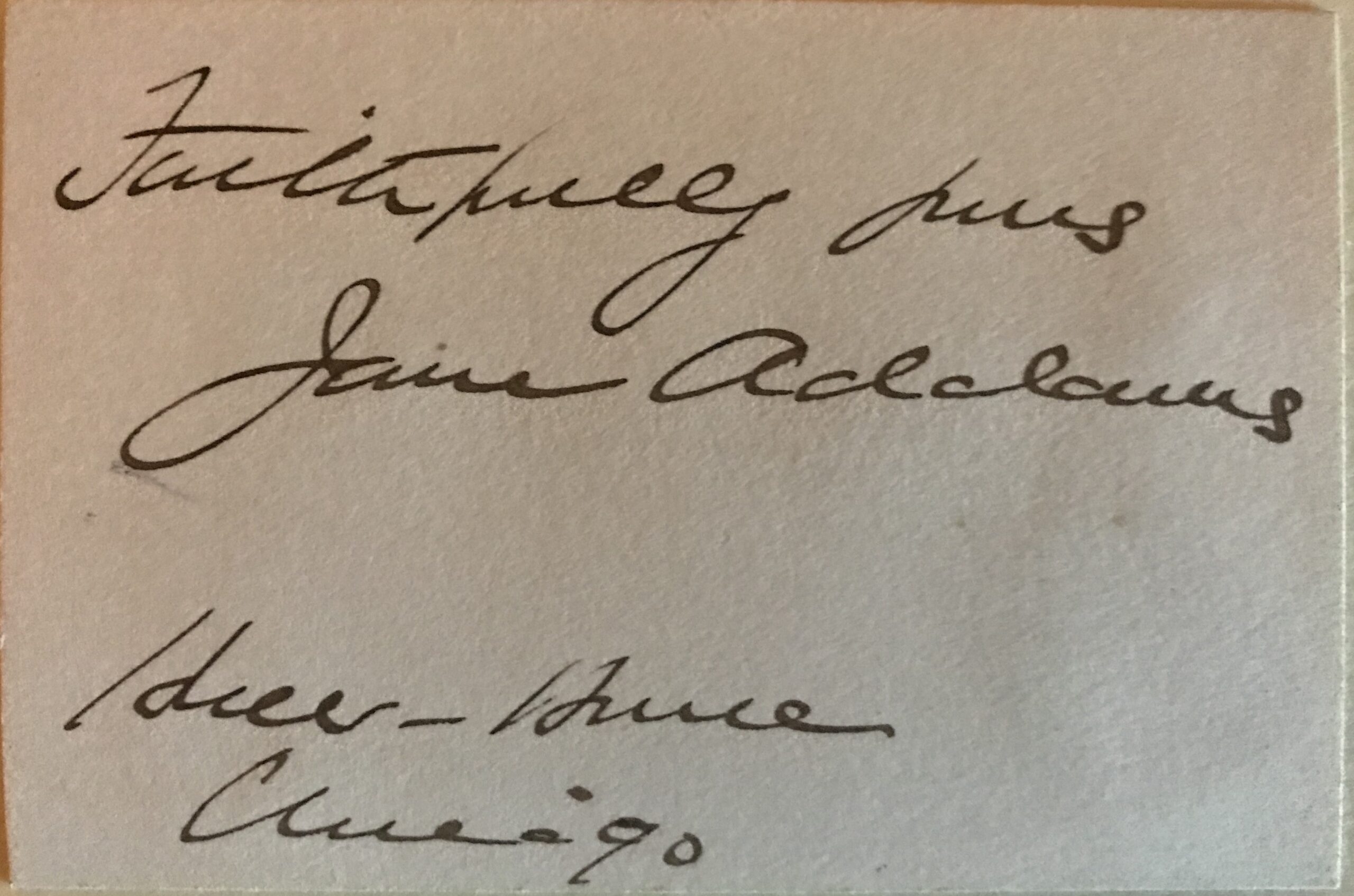
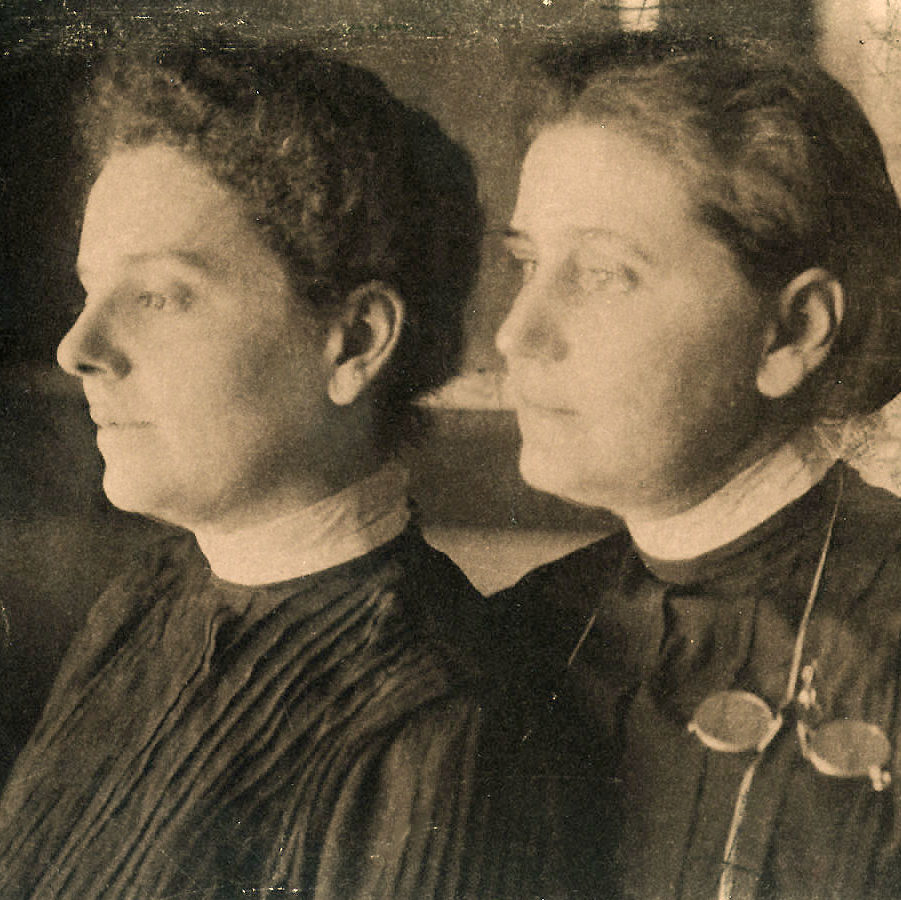
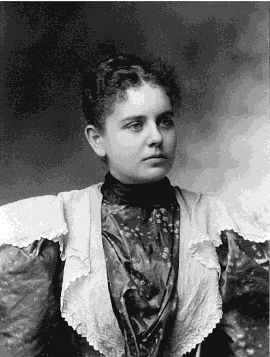
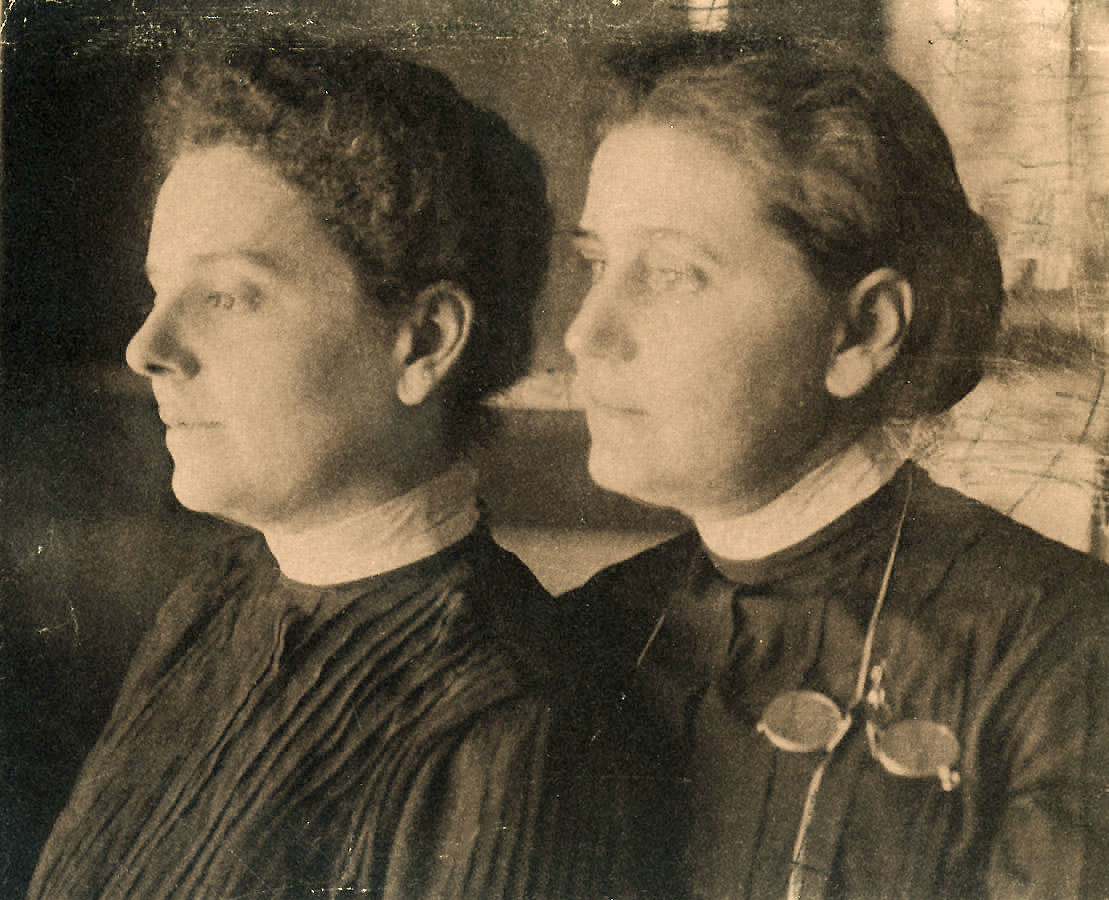
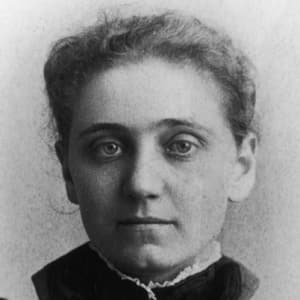
 Jane Addams attended Rockford Female Seminary and was among the first class to receive a Bachelors degree. At Rockford she honed skills that would later be used in her career as the founder of Hull House, leader of the Suffrage, Settlement and Peace movements and her literary career as author of 11 books and hundreds of journal and magazine articles. At Rockford she was the Valedictorian, Editor of the school newspaper, President of the Debate Club and President of her class.