This post was written by Rima Lunin Schultz, and delivered at the Oral History Association meeting in Tampa, FL on October 15, 2015.
This paper looks at how Jane Addams’s stories about her neighbors, what I am calling her “Cultural Fables,” are linked to the radical branch of the oral history tradition in American culture. I have no documentation that there are direct causal links. However, many decades after her death in 1935, a new interest in Jane Addams’s writings and her use of social justice stories of her neighbors resonated with a new breed of young historians. They were dedicated to “history from the bottom up,” including investigators who had begun to do oral histories to document the struggles of “ordinary” people.[1] Not only were Addams’s books filled with stories about workers and immigrants who had been voiceless, but her approach to reform linked social knowledge and advocacy in direct and unapologetic ways. So, in the use of narratives (as an effort to bring her subjects into direct dialogue), and in her social activist agenda, I argue that Jane Addams is an example of a literary and historical tradition that is related to the radical oral history tradition. Acknowledging these roots offers perspective and historical context for an exploration of the methodologies, claims, and goals of current work.
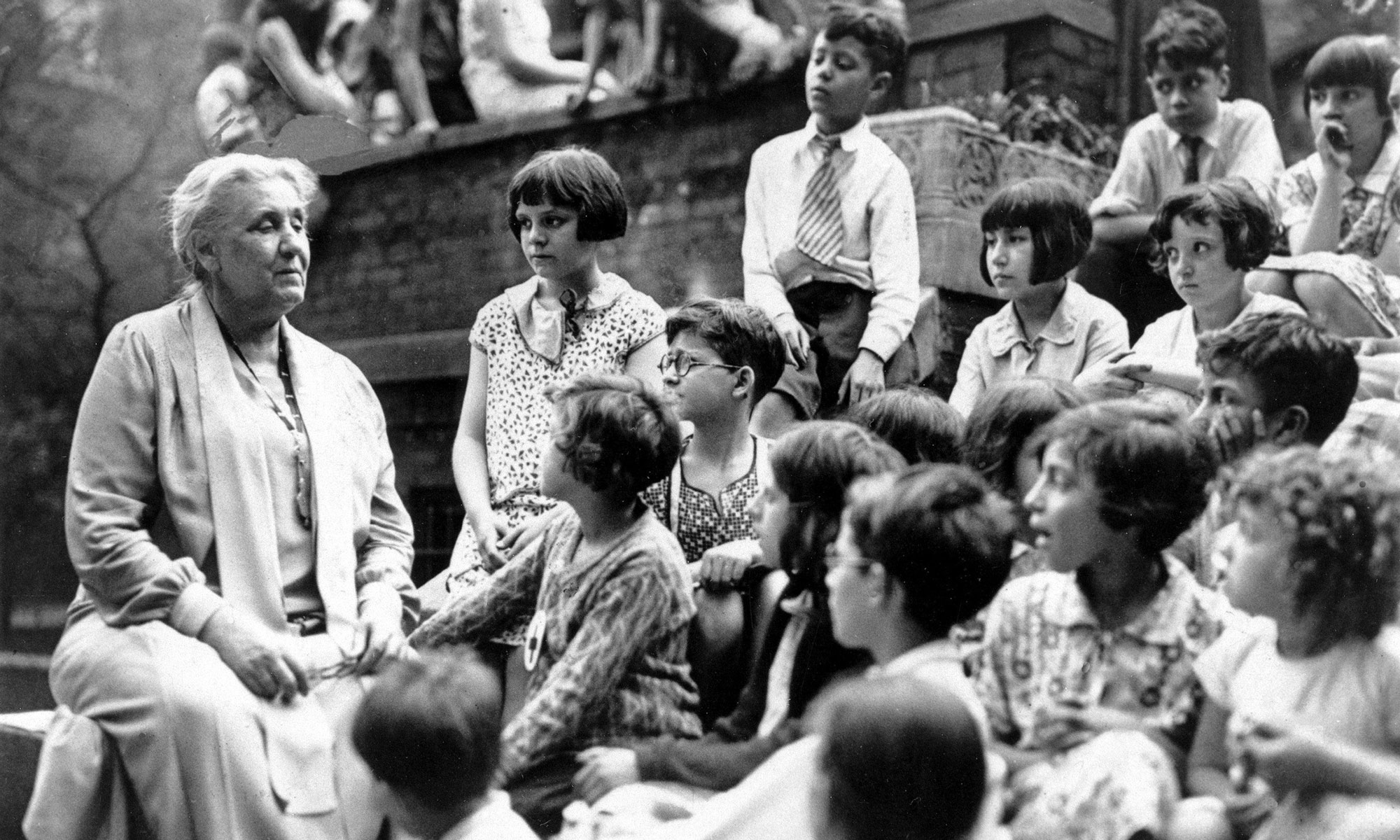
Story telling was significant for Jane Addams. Her international success, one can argue, was in large part because of her skill as a writer, and what was special about her talent was her gift for interposing stories while advancing social policy.[2] Katherine Joslin writes that Addams’s books “are dialogic in nature, have much in common with novels” and “brought voices from . . . [the] street into conversations with the [reformers’] voices from Hull-House.”[3]
How Addams came upon the idea to use stories about her immigrant neighbors to write about the most profound social issues of her day may be simply an outcome of her own saturation in the novels and literature that she gobbled up in her youth. The whole canon of Western tradition–biblical, mythological, and poetic– had made an enormous impression on her.
The “cultural fables” were meant to be understood as real, not fictional accounts, however– because they embodied a deeper truth.[4] So convincing are these cultural fables that many have taken these stories to be historical accounts.[5]
Here is an example of how Addams wrote about the conditions of single working mothers and the crisis of childcare at the turn of the 20th Century. Addams tells us the story of a little boy who came to the Hull-House nursery “wrapped up in his mother’s shawl, [who] always had his hair filled with the down and small feathers from the feather brush factory where she worked” and because of this, the children called him “Goosie.”[6]
“One March morning,” Addams writes, “Goosie’s mother was hanging out the washing on a shed roof at six o’clock, doing it thus early before she left for the factory. Five-year-old Goosie was trotting at her heels handing her clothespins, when he was suddenly blown off the roof by the high wind into the alley below. His neck was broken by the fall and as he lay piteous and limp on a pile of frozen refuse, his mother cheerily called him to “climb up again,” so confident do overworked mothers become that their children cannot get hurt.”
Then Addams continues: “After the funeral, as the poor mother sat in the nursery postponing the moment when she must go back to her empty rooms, I asked her, in a futile effort to be of comfort, if there was anything more we could do for her. The overworked, sorrow stricken woman looked up and replied, ‘If you could give me my wages for to-morrow, I would not go to work in the factory at all. I would like to stay at home all day and hold the baby. Goosie was always asking me to take him and I never had any time.'”
Addams then explained: “This statement revealed the condition of many nursery mothers who are obliged to forego the joys and solaces which belong to even the most poverty-stricken. The long hours of factory labor necessary for earning the support of a child leave no time for the tender care and caressing which may enrich the life of the most piteous baby.”[7]
For the middle classes and rich in America, and for many of the country’s leading intellectuals[8], Addams became the interpreter of the working class and immigrant populations allowing her to engage in a difficult portrayal of controversial and often divisive social questions such as poverty and labor conflict. All make a moral point and, in many cases, illustrate that the subject of the fable has experienced a change of heart, a new attitude or understanding of the world. There is the clear suggestion that the reader, too, can come to a new and evolved ethical position. In political terms, they have become Progressive and their politics have been socialized.[9]
Addams’s early descriptions of Italian immigrant mothers illustrated her argument that public schools should become centers to socialize the children of immigrants.[10] Addams had posited a primitive or socially isolated immigrant mother whose love of her children could not overcome her disabilities to be a constructive force for their socialization into American society. Immigrant families had “no social life in any structural form, and can supply none to the child”[11] she told educators. The Italian mother who feeds her infant bread dipped in wine, the Italian immigrant woman who is shocked to see fresh roses on display at Hull-House because for six years she has not experienced more than her own two-block stretch of neighborhood, have become Addams’s political narrative.[12]
So rich and complex is Addams’s woven tapestry, that it is difficult for the reader to imagine that there are untold stories which might complicate and upset the weave or question the wisdom or the politics. Yet numerous Italian families who lived in the congested “slum” near Hull-House included Italian women who were proprietors of store front groceries and community leaders.[13] Modern oral histories of neighborhood people capturing intergenerational stories illustrate positive themes of economic and social mobility and the encouragement of Italian girls to achieve education and careers.[14]
Addams was aware of the thin line between exploiting the misery of the poor and using stories to promote constructive advocacy for the cause of social reform. “Perhaps Nothing is More Unfair than to know the poor only during a crisis,” she wrote. “I remember one family in which the father had been out of work for this same winter, most of the furniture had been pawned, and as the worn-out shoes could not be replaced the children could not go to school and could scarcely leave the house. The mother was ill and barely able to come for the supplies and medicines.” The second half of the story becomes very important: “She came to see me two years afterward to invite me to Sunday supper in the little home which had been completely restored,” Addams recounts, ” and she gave as one reason for the invitation that she couldn’t bear to have me remember them as they had been during that one winter, which she insisted had been unique in her twelve years of married life. She said quite simply that it was as if she had met me, not as I am ordinarily, but as I should appear during a siege of illness, when I might be misshapen with rheumatism or present a face distorted by neuralgic pain; that it wasn’t fair to judge poor people that way. She perhaps unconsciously illustrated the difference between the relief-station relation to the poor and the settlement relation to its neighbors, the latter wishing to know them through all the varying conditions of life, to stand by when they are in distress, but by no means to drop intercourse with them when normal prosperity had returned and enables the relation to become more social and free from the economic disturbance.”[15]
Addams was committed to the proposition that poverty did not define her neighbors. Telling stories about them, such as the Goosie fable, sought to establish a truth about the humanity of the bereaved mother. Addams assumed that readers would follow her argument and understand that the best way to redress such human tragedies was to reform the wage labor system, provide dependent mothers with adequate pensions to remain at home with young children, and so forth. Photographers like Lewis Hine and investigative journalists followed a similar logic. What distinguished Addams was her claim that the people she was telling stories about were not passing frames in a camera’s eye, or background for a newspaper story. They were the stories of her neighbors with whom she had deeper, sustained relationships and in an almost mystical way, by the end of the story telling, the cultural fable is as much Addams’s story as it is her neighbor’s.
Addams comes closest to melding herself with her neighbors, ironically, with the ” Devil Baby story.”[16] For a period of six weeks in the fall of 1913, thousands of people appeared at Hull-House demanding to see a “Devil Baby” who was rumored to be hidden in the settlement’s living quarters. Each immigrant group had its own version of the tale. The Italian version involved an atheist husband who tells his pregnant wife that he would rather have the devil in his house than her religious pictures on the wall. His wish is granted when the baby turns out to be the devil himself. In the Jewish version the devil appears as the seventh child of a husband who had threatened his wife not to add another daughter to the six they already had. The commotion caused by this event was even reported in the city’s newspapers. Neighbors insisted that the “Devil Baby” had been brought to Hull-House where the resident ladies were keeping it and no amount of insistence on the part of Addams that there was no such baby at Hull-House seemed to make any headway in quelling the rumor and ending the inquiries.
The “Devil Baby” story was a turning point in Addams’s understanding of her neighbors’ and her own relationship to memory, to custom and tradition, and to women’s coping mechanisms in the struggle of survival. Addams writes or talks about this story and the neighborhood incident that brought it to her attention in several venues–a sociological journal, an important speech to a woman’s club, in her 1916 book, The Long Road of Woman’s Memory, and finally, in 1930, with The Second Twenty Years At Hull-House. In the process of living with the story, as she had “lived” more than forty years with her neighbors, Addams had forged an approach to life that had started with the shape and tradition of high Western culture; she had “collected” her neighbors’ superstitious tales as the folk culture she believed must be interwoven with the Western canon, and thus transmuted. This was not just a literary process. It was Addams’s journey toward self-discovery through the memories and stories of the immigrant women and their children.
The “Devil Baby” also became part of her narrative of Progressive politics and her explanation of the residual ancient myths and superstitions inhabiting space alongside modern progress. This, after all, had become the nature of her neighborhood as she and her social reform allies had introduced a world of modern ideas and institutions. Addams reasoned that the story had persisted because of its usefulness in “taming recalcitrant husbands and fathers”[17] and had “evolved in response to imperative needs of anxious wives and mothers.”[18]
Addams acknowledged the social usefulness of so-called “primitive” or isolated immigrant women, who cling to tradition yet, in her new understanding, can be seen as examples of self-advocacy and survival. “Only through words [in the Devil Baby tale] could they hope to arouse the generosity of strength,” Addams explained, “to secure a measure of pity for themselves and their children, so to protect the life they had produced.” Addams realized they had “embodied their memories in a literature of their own”[19] that had “something of social value . . . forced out of oppression through the centuries.”[20] Her mind was opened to the fact that “humble women are still establishing rules of conduct as best they may, to counteract the base temptations of a man’s world.”[21]
Addams shares the inspiration and motivation of radical oral history. She intended for us to know her working-class and immigrant neighbors in all their complexity and humanity. She attempted to treat her interactions and investigations along ethical guidelines, refusing to see her neighborhood as a sociological laboratory. Such clinical words as “clients” or “patients” or “interviewees” didn’t fit her idea of the transaction that was occurring. Her activities were framed in the language of domesticity and friendship and the stories were gathered informally and simply through the experiences of living alongside. And finally, Addams wrote about her neighbors narratively because she wanted her readers to understand the social reality of other peoples’ lives–people who lived world’s apart from the comfortable bourgeois lives in other parts of the city. She wanted to use the stories to advocate for social change. The impulse to collect the voices of the silenced or marginalized is strong in the radical branch of modern oral history. Addams’s interest in the stories of her immigrant neighbors resembles these values and goals, if not the actual literary structure of modern oral histories.
In conclusion, using the stories of her neighbors, Addams’s melding her political story with them was an innovative, if imperfect, beginning to documenting their lives. As a form of writing, her books represent Addams’s effort to democratize the American narrative. In her challenge to the hegemonic American narrative of her day, we find the boy Goosie and his mother, and other neighbors, mostly unnamed, in the pages of Twenty Years At Hull-House. Yet the narrative remains in Addams’s voice as she tells her neighbors’ stories through the lens of the social reformer as interpreter.
[1] The literature on the “new social history” is voluminous. The explosion of new scholarship in women’s, labor, African American, and ethnic histories is well known. The landscape today is vastly different although the outcomes for revising the Master Narrative of American history have been slower in happening, and history from the top down has had a stronger grip. At the same time we have to acknowledge the difficulties of writing the new synthesis that has plagued the subspecialties. In terms of the vast field of oral history, such projects as Elizabeth Balanoff’s Oral History Project in Labor History, 1970-, Roosevelt University, Chicago, Illinois, is an example of the currents in the field. My personal experience using Balanoff’s collection is instructive: without this collection my biographical project, which resulted in Women Building Chicago 1790-1990: A Biographical Dictionary (Indiana University Press, 2001) would have faltered in its efforts to “discover” and include labor women activists of and working-class women of color from the Great Depression thru the 1950s. The documentation of lives of pioneering women in the steel industry, the laundry unions, the Chicago Federation of Labor were known to our project almost entirely as a result of Balanoff’s efforts. Coming from a steel worker union family, “Betty” Balanoff wrote a breakthrough dissertation, “A History of the Black Community of Gary, Indiana, 1906-1940” (Ph.D. diss. U. of Chicago, 1974) and oral histories were part of her work. I would be remiss in not mentioning Studs Terkel and his working-class oral interviews that became Division Street (1968), Hard Times interviews (1971) and Working (1974).
[2] Historian Victoria Brown correctly acknowledges that an important “key to understanding Jane Addams’s reform career lies in recognizing that she was the most effective and prolific writer of her generation of reformers.” Victoria Bissell Brown, “Jane Addams,” in Women Building Chicago 1790-1990: A Biographical Dictionary, ed. Rima Lunin Schultz and Adele Hast (Bloomington & Indianapolis: Indiana University Press, 2001): 14.
[3] Katherine Joslin, Jane Addams A Writer’s Life (Urbana & Chicago: University of Illinois Press, 2004), 16.
[4] Addams’s most successful book, Twenty Years at Hull-House, which has never been out of print since its publication in 1910, has been analyzed by scholars interested in the fictive aspects of this autobiography. See: Rima Lunin Schultz, “Questions and Comments on Reading Twenty Years at Hull-House: How Two Addams Biographers View Twenty Years” in Urban Experience in Chicago: Hull-House and Its Neighborhoods 1889-1963, Rima Lunin Schultz, editor, http://tigger.uic.edu/htbin/cgiwrap/bin/urbanexp/main.cgi?file=new/show_doc.ptt&doc=902&chap=137.
[5] Addams, who often demonstrates a modern sensibility about the grey areas of narrative, was aware and careful to note in her most widely read work, Twenty Years at Hull-House with Autobiographical Notes, that she was not writing an historical account: “It has been hard to determine what incidents and experiences should be selected for recital,” Addams explained. “I have found,” she goes on, “that I might give an accurate report of each isolated event and yet give a totally misleading impression of the whole, solely by the selection of the incidents.” [italics added] Jane Addams, Twenty Years At Hull-House, vii.
[6] Jane Addams, Twenty Years at Hull-House with Autobiographical Notes (New York: Macmillan Co., 1910), 173-175.
[7] Jane Addams, “Problems of Poverty,” Chapter 8 in Twenty Years at Hull-House with Autobiographical Notes (New York: Macmillan, 1910). 173-175.
[8] Middle-class Protestants who flocked to Chautauqua lectures are a representative group who saw Addams as the great interpreter. When Twenty Years came out, a detailed guide to the book was printed in the society’s house organ, The Chautauquan, and members were encouraged to form study groups. These were her people: American born, white, liberal Protestant, middle-class, educated, citizens ready to be enlightened in the morally righteous causes of progressivism. In 1905 Addams, with hopes of shaping civic consciousness to support progressive educational reforms, and trusting in the basic good will of educated, liberal Protestants, told her Chautauqua audience that they were “the ones who will most readily understand this great demand [to understand working class and immigrant children’s needs] which is coming to us adult Americans that they will come to understand the peoples from all parts of the world and to find out what it is that they have that will be of benefit to us. . . until we are all ashamed of ourselves when we are separated by differences of language or differences of dress and manner, or when we are content to go along day by day and say no word of fellowship.” Jane Addams, “Work and Play as Factors in Education,” The Chautauquan, A Weekly Newsmagazine; Nov. 1905; 42, 3; American Periodicals Series Online, pg. 251. John Dewey and William James were just two of the many intellectuals at the time who looked to Addams for guidance when it came to understanding “the people” in the neighborhoods. William James wrote Addams after reading her Newer Ideals of Peace, a badly named book that actually delves into the politics and social relations of her immigrant neighborhood as the basis for her ideas on national and global issues: “I am just back from a fortnight in New York, where, after in the intervals of “energizing” in the rhythm of that active city (or trying to), I soothed myself by the perusal of your book. I find it hard to express the good it has done me in opening new points of view and [end 5-0063]annihilating old ones. New perspectives of hope! I don’t care about this detail or that—it is the new setting of questions. Yours is a deeply original mind, and all so quiet and harmless! yet revolutionary in the extreme, and I should suspect that this very work would act as a ferment thru long years to come. I read precious little sociological literature, and [end 5-0064] my opinions in that field are worth nothing—but I am willing to bet on you. William James to Jane Addams, Cambridge, MA, Feb. 12, 1907, Swarthmore College Peace Collection Jane Addams Papers Series 1, Jane Addams Papers Microfilm Reel 5-0063-0066.
[9] Eldon J. Eisenach, The Lost Promise of Progressivism (Lawrence, Kansas: The University Press of Kansas, 1994).
[10] The School as a Social Center is a major contribution of reformers in the Progressive Era. Jane Addams, “Educational Methods,” Democracy and Social Ethics (New York: The Macmillan Company, 1902; Urbana and Chicago: University of Illinois Press, 2002): 80-97 (2002 edition); John Dewey, “The School as Social Center,” National Education Association Proceedings (Chicago: University of Chicago Press, 1902): 373-83.
John Dewey, “The School as Social Center,” National Education Association Proceedings (Chicago: University of Chicago Press, 1902): 373-83; Clarence Arthur Perry, “School Center History in Chicago: Some Beginnings and Their Significance,” The Journal of Social Forces 3 (January 1925): 291-93. For a different “take” on public versus parochial schools, see: Rima Lunin Schultz, “Jesuits, Catholic Women Religious and Public School “Secularists”: Competing Visions For Educating Immigrant Catholics in Jane Addams’s Progressive Era Chicago, 1890-1925,” in Crossings and Dwellings: Restored Jesuits, Women Religious, American Experience, 1814-2014, edited by Kyle Roberts and Stephen Schloesser (Leiden: Brill Publishing, forthcoming 2016).
[11] Jane Addams, “Foreign-Born Children in the Primary Grades,” National Educational Association Journal of Proceeding and Addresses of the Thirty-Sixth Annual Meeting Held at Milwaukee, Wis., July 6-9, 1897 (University of Chicago Press, 1897), 106.
[12] These are gathered from Twenty Years at Hull-House and there are others of a similar vein, 102; 110-111; 253-255. Although Irish and Jewish immigrant women have found their “voices,” the revisionist histories about Italians are more recent. See: Jennifer Guglielmo, “Donne Ribelli: Recovering the History of Italian Women’s Radicalism in the United States,” 113, in The Lost World of Italian-American Radicalism edited by Philip V. Cannistraro and Gerald Meyer (Westport, Conn. & London: Praeger , 2003); Donna Gabaccia, editor, Seeking Common Ground: Multidisciplinary Studies of Immigrant Women in the United States (Westport, Conn. & London: Praeger, 1992).
[13] Stephen Giovangelo, nephew of community activist Florence Giovangelo Scala, donated photos and other memorabilia for my research. A photo of his great grandmother behind the counter of her grocery store: “Here’s a terrific one of my GREAT grandmother, Rose Napolitano (mother’s side) behind the counter of her Chicago west side grocery store. My mother Rose (named after her grandmother) is the baby in the arms of the woman, my [maternal] grandmother, Mary [nee Napolitano] Marinello, who grew up on Miller Street. She was the first American born of the family, in the 800 block of South Miller Street, about half a block from our old family building. She said half the buildings back then (ours was there when she was little) had a small barn with a horse and a few laying-chickens in a coop. Her father had one of those behind the house, Grandma said and he called the horse ‘Maria.”
[14] Perhaps it is a function of “selection”–the neighbors who faired well in life tend to become available for oral interviews. The Hull-House Oral History Collection has more than 200 interviews. The majority tell stories of early poverty, experiences of refinement and education at Hull-House, and trajectories of upward social mobility. See: Sadie Garland Dreikurs Oral Interview transcript, OH-024; Eleanor Carroll Farwell Oral History transcript, OH-052; Esperanza and James McNeilly Oral Interview transcript, OH-093; Dorothy Sigel Oral Interview transcript, OH-071; Nicolette Malone Oral Interview transcript, OH-076; Mrs. Nate (Goldie Newman) Kahn Oral Interview transcript, OH-073; Alex Elson Oral Interview transcript, OH-074. Francine Tarsitano Underdown Oral Interview Transcript OH-114, Hull-House Oral Interviews, Spec. Collections, Daley Library, University of Illinois at Chicago; Barbara Dobschuetz, “Research Notes From Tarsitano Family Interviews,” Urban Experience in Chicago: Hull-House and Its Neighborhood Project, 2002-2005, Hull-House Museum, University of Illinois at Chicago.
[15] “Jane Addams’s Own Story of Her Work: How the Work at Hull-House Has Grown,” The Ladies Home Journal 23 (May 1906): 11-12, 48.
[16] An interesting essay on The Long Road of Woman’s Memory are: Charlene Haddock Seigfried, “Introduction to the Illinois Edition,” The Long Road of Woman’s Memory by Jane Addams (Urbana & Chicago: University of Illinois Press, 2002).
[17] Jane Addams, The Long Road of Woman’s Memory (Urbana & Chicago: University of Illinois Press, 2002), 17.
[18] The Long Road, 18.
[19] The Long Road, 19.
[20] The Long Road, 55.
[21] The Long Road, 19.