This post was delivered by Rima Lunin Schultz at a Rediscovering Jane Addams Conference, held at Swarthmore College, on February 2, 2002.
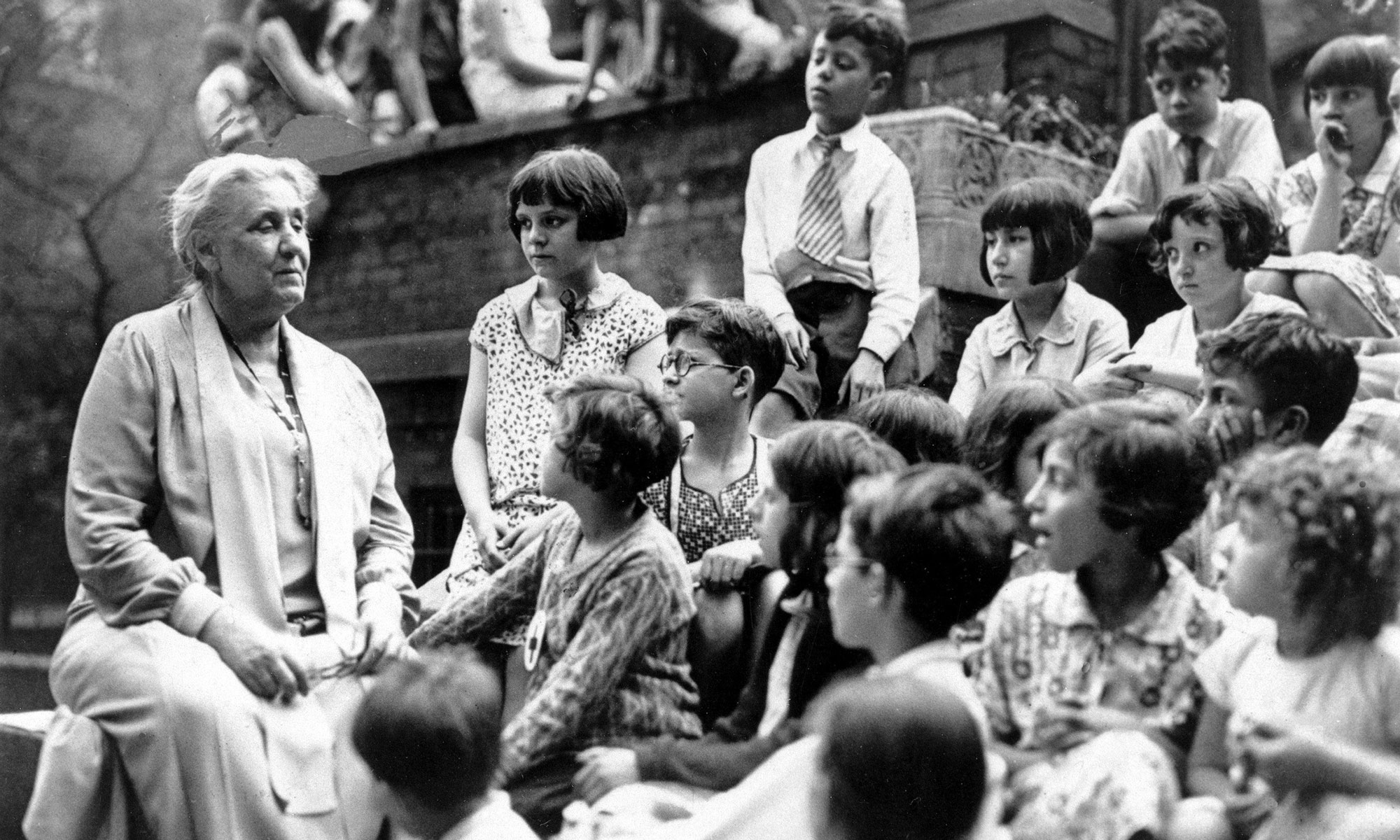
Jane Addams, founder of Hull-House, social reformer, suffragist, and pacifist, is one of the most admired women in American history. She has been called an “American Heroine” by her biographer, Allen F. Davis, who has done more than any other historian thus far, to separate the legend from the reality of her life story. Remembered as the first woman to receive the Nobel Prize for Peace in 1931 and as the founder of Hull-House, the social settlement located on Halsted Street in Chicago’s Near West Side immigrant neighborhood, popular images of Addams include that of “Saint Jane,” in combat against the corrupt political ward boss; but a “saint” who more resembled a Protestant missionary who chose to live in the slum of a great city rather than remain in the privileged world of her upper-middle class family. Images of her surrounded by boys and girls, a grandmotherly protector of children’s rights, are familiar. The social work field proudly claims her as a foremother. Her controversial anti-war position during World War I, her support of freedom of speech for radical dissenters, and her lifelong partnership with another woman are the stuff of academic articles and books but have not spilled out into the popular legend. The historical Jane Addams and the legendary have both become part of the historical narrative defining who we are as Americans in the same way that both the legendary and the historical Abraham Lincoln, or George Washington, has become part of the story of the American past. Many of the images that were cultivated by Addams in an interesting collaboration with the media stemmed from the gendered politics of the Progressive Era, a time when women challenged the status quo but did so from the model of domesticity, making the argument that women could protect the American family best by obtaining the vote and purifying corrupt municipal politics.
Rethinking Jane Addams’s private beliefs and public religious expressions has outcomes for the narratives of progressivism, American Protestantism, and the rise of the gendered welfare state. Jane Addams has held a pivotal role in historian’s explanations of the reform movement from 1880 to 1920. She has been viewed as a proponent of the expanded welfare state and as a leading figure in the transformation of the role of women in the civic or public sphere. She participated in the woman’s political culture in the Progressive Era and developed a new social space for women through the settlement movement. Hull-House, which was nonsectarian and independent of any religious organization, pioneered in investigation in industrial conditions and advocacy of social reform.
There is considerable evidence that the role of religion for Jane Addams is far more complicated than Addams let on. Unsuspecting readers accept the narrative of Addams’s religious faith contained in Twenty Years At Hull-House With Autobiographical Notes (1910)[1]: it begins with her early years as the daughter of a prominent businessman and Illinois state senator, who was a “Hicksite Quaker” and, as a leading figure in Cedarville, Illinois, a supporter of the Protestant denominations in the town, although he did not join any one of them, but taught Sunday School and made certain that his children attended classes. John Addams, a trustee of Rockford Female Seminary, by her own recollection in Twenty Years sent a less-than enthusiastic Jane Addams to the school that her older sisters had attended. Jane resisted the evangelical Christian message of the seminary and remained unconverted, though torn about religious faith. Her correspondence with her seminary friend, Ellen Gates Starr, is filled with adolescent and young adult musings on the themes of faith, salvation, and whether or not belief in Jesus is possible, intertwined with self-doubts and expressions for a life of service and meaning in some yet-to-be-found (and nontraditional) career path. After graduation from Rockford, Addams’s plans are sideswiped by the sudden death of her beloved father; what follows is a period (1881-1889) in which Addams flounders. Towards the end of that period of indecision, illness, travels in Europe (Rome and the catacombs; Spain and a bullfight; London and Toynbee Hall), and a brief enrollment in medical school in Philadelphia and charity work in Baltimore, Addams joins the Presbyterian Church in Cedarville and, with her friend Ellen, plans to establish a social settlement in some foreign quarter of industrial Chicago. Hull-House, on Chicago’s Near West opens its doors in September of 1889, and takes off like a meteor. By the opening of the World’s Columbian Exposition in 1893, Addams and Hull-House are so well-known that distinguished religious and cultural visitors to the Fair also visit Hull-House and William T. Stead, the English journalist, finds Jane Addams and her settlement house, one of the few places that Jesus Christ would feel comfortable, If Christ Came To Chicago. The popular narrative then, takes up the story of the secular Jane Addams. Pointing out that Hull-House prides itself on its independency from any religious, educational, or corporate sponsorship, Addams herself is perceived as a social reformer with little or no connections to religious institutions or crusades. Her interest in peace and her pacifism is sometimes linked to her family’s purported Quakerism.
My revisionist narrative about the role of religion in the life and work of Jane Addams starts by asserting that the question of denominational affiliation or personal religious practice adhered to by Addams is of far less importance than the involvement she had with the emerging movement of liberal religions and the ideas of evolutionary theory, the new social sciences, and the works of pragmatic philosophers and educators. Addams was one of a group of intellectuals—religious leaders, college professors, social reformers and cultural critics—who offered a new interpretation of the relationship of religion, ethics, morality, and democracy to the first generation of Americans faced with the impact of industrialism, urbanization, and immigration. Coming just after the early criticism voiced by such radicals as Henry Demarest Lloyd, Henry George, and Edward Bellamy of the downside of the “progress” produced by the new technology and industrialization, and influenced by the English critics John Ruskin and William Morris, there was a trans-Atlantic movement to adapt traditional Christianity to the modern age. Addams’s closest full-blown expression of this liberalism can be found in Democracy and Social Ethics (1902), but it was less in its theoretical articulation and more in the way in which Hull-House was an example of a new approach to democracy that Addams made her most convincing statements. Addams success in bringing a new narrative of democratic citizenship to middle class Americans began even before Hull-House opened. At a time when many Americans worried about the ability of the American system of governance to withstand the transformations of economic and social life because of industrialization, immigration, and urbanization, Addams’s message was a positive affirmation of the agency of middle-class, Protestant, American-born citizens to make democracy work. Through articles in the press, lectures to women’s groups, churches, and as a Chautauqua lecturer Addams hammered away at the potential for industrial harmony; she told women and men that the solution to the social and economic dislocations in urban areas was within their own reach.
Addams’s essay, “The Subjective Necessity of Social Settlements,” delivered at a summer conference sponsored by the Ethical Culture Societies at Plymouth, Massachusetts, in 1892, was published in 1893.[2] Addams addressed her generation in this essay. She began with the idea that educated young people wanted to find an outlet for the feeling of disconnect that they experienced between their ideals and a practical way to implement these values. She assumed that they, like her associates in the new social movement, were dismayed by the corruption of politics, turned off by the industrial districts of cities, and anxious about the conflict between workers and employers, between Americans and new immigrants that seemed to challenge the future of the nation
These young men and women, longing to socialize their democracy, are animated by certain hopes. These hopes may be loosely formulated thus: that in a in a democratic country nothing can be permanently achieved save through the masses of the people, it will be impossible to establish a higher political life than the people themselves crave; that it is difficult to see how the notion of a higher civic life can be fostered save through common intercourse; that the blessings which we associate with a life of refinement and cultivation can be made universal and must be made universal if they are to be permanent; that the good we secure for ourselves is precarious and uncertain, is floating in mid-air, until it is secured for all of us and incorporated into our common life.[3]
Where did this impulse to do good originate? Again, speaking to the American-born, college educated, Protestant men and women of her generation, Addams places the spirit of the new social movement in the context of Christianity: “The impulse to share the lives of the poor, the desire to make social service irrespective of propaganda, express the spirit of Christ, is as old as Christianity itself.”[4] The importance of the Christian context for Addams’s invitation for civic engagement for her generation cannot be overstated. Addams’s autobiographical construction of her early years living in a Christian environment allows her readers to identify with their own backgrounds. Hers was a generation that came of age at a time when questions about the inerrancy of the biblical text were undermining orthodoxy and a new theology of liberal Protestantism was in the ascendancy.[5] Historian Gary Dorrien argues that American theological progressivism in the nineteenth century created “a modernist Christian third way between a regnant orthodoxy and an ascending ‘infidelism.’ Culturally and religiously . . . the American pastors and academics who pioneered the liberal tradition in American theology were earnest Victorians. All of them conceived of religion as a civilizing—and thus personally and socially saving—power of spirit over the bestial forces of nature. As modernists of a distinctive kind, the founders of American theological liberalism were always concerned to find a progressive Christian way between the religious conservatism that they discarded and the rationalistic radicalism they dreaded.”[6]
Addams, influenced by the new biblical scholarship, and by her study of early Christianity, argues:
we have no proof from the records themselves that the early Roman Christians, who strained their simple art to the point of grotesqueness in their eagerness to record a ‘good news’ on the walls of the catacombs, considered this good news a religion. Jesus had no set truths labeled ‘Religious.’ On the contrary, his doctrine was that all truth is one, that the appropriation of it was freedom. His teaching had no dogma to mark it off from truth and action in general. He himself called it a revelation—a life.[7]
To buttress my argument that Addams was actively reinterpreting the establishment denominational Protestantism of the status quo into a more egalitarian and democratic vision of Christianity that emphasized the social message of the early Church, I offer two pieces of evidence that have been ignored by most scholars, including those that have used the images I describe below. So convinced that by 1889 and the founding of Hull-House, that religion was not important to Addams’s vision of the social settlement, historians have actually failed to recognize the Chi-Rho cross she prominently affixed to the collar of her dress in the famous photo that has come to symbolize the determined young woman in her inaugural year as co-founder of Hull-House. The Chi-Rho cross is visible in the 1892 charcoal drawing of Jane Addams by Alice Kellogg Tyler; it is in the famous portrait of Addams that appeared in New England Magazine, July 1898, in an article about Hull-House by Florence Kelley. It is visible in the portrait of Jane Addams that is on the cover of Victoria Bissell Brown’s new edition of Twenty Years at Hull-House (1999) and in the majestic photo portrait of Jane Addams seated in an elaborate Victorian chair that graces the front cover of Allen F. Davis’ American Heroine: The Life and Legend of Jane Addams reprinted in 2000.[8] In Brown’s recent biography of Addams, she explains why she believes Addams wore the Chi-Rho cross as a brooch in most of the surviving photographs from the 1890s:
This aesthetic representation of the first two Greek letters in Christ’s name, known as a Chi-Rho cross, announced Jane’s identification with that early moment in Christian history when, in Jane’s mind, followers of Jesus’ teachings comprised a democratic counterculture. The starkly simple Chi-Rho that Jane wore did not incorporate the alpha omega symbol, a later assertion of Jesus’s divinity. Nor did her Chi-Rho cross gesture to Constantine, who carried the symbol into battle as a sign of conquest. As a student of Tolstoy, Jane regarded Constantine’s legalization of Christianity, and his violent use of it, as a tragic distortion of ‘the spirit of the whole doctrine’ which Jesus meant to convey. For her, the brooch was symbolic of the pre-Constantinian era, as well as a pre-crucifix era, when Jesus was a guide to peaceful love in this life, not disembodied salvation in the next.[9]
In addition to this visual evidence that suggests her revisionist interpretation of Christianity, Addams was quite public in her interest in the pre-Constantinian era. Between 1889 and 1896, Addams’s taught at the Chicago Methodist Deaconess Training School for City, Home and Foreign Missions, run by Lucy Rider Meyer.[10] Addams is identified as non-resident teacher, teaching Kindergarten principles & clay modeling in 1889-90 and in 1890-91. Also in 1890-91, she is listed for two courses: Industrial art: form study with color, drawing & clay-modeling, study with paper cutting; and Early Christian Art: “Earliest Christian painting and mosaic; churches of Ravenna and Clemente of Rome. Catacombs of St. Calixtus and St. Agnes.” From 1891-92 thru 1896 Addams taught the course in Early Christian Art.[11]
Addams interest in early Christian art may well have begun during her European travels probably between 1883 and 1885. She had first seen Rome in 1884 and vowed to return “to spend a winter there and to carry out a great desire to systematically study the Catacombs.”[12] Victoria Brown relates that Addams, when she was a student at Rockford, told “Ellen [Gates Starr] that her spiritual quest was to ‘get back of it all,’ beyond the layers of orthodoxy, to find what she [Jane] imagined as an essential spiritual truth. She continued that effort in Europe, especially in Italy, where she consciously elbowed her way past the pomp and ‘glamour’ of the Catholic Church and examined Catholic art for the ‘secret’ of Christ and his most holy followers.”[13] Addams returned to Rome during her travels to Europe with Ellen Starr in 1887-88.
This spiritual quest to get at an essential spiritual truth about Christianity was related to Addams’s pursuit of fellowship. It is not an accident, I would argue, that Addams’s discussion of her interest in Rome and early Christian art is interrupted in Twenty Years by her account of her baptism and membership of the Presbyterian church in Cedarville, an event that she misremembers as occurring when she is twenty-five (it occurs three years later, actually). “I was conscious of no change from my childish acceptance of the teachings of the Gospels,” Addams wrote in explanation of her conversion, “but at this moment something persuasive within made me long for an outward symbol of fellowship” and she identified her willingness to be baptized with her growing devotion “to the ideals of democracy.”[14]
One of the reasons why Twenty Years At Hull-House has had such success is that Addams constructed her autobiography in such a way that it resonates with other narratives of American history. It is the story of the loss of an agrarian past; it resembles the conversion narrative but has a modern sensibility in its personal saga of the loss of orthodox faith and the substitution of an ethic of practical good works, indeed, a civil religion for a democracy; it is a tale that celebrates the triumph of democracy over slavery, and the human spirit over personal tragedy and loss. It is a story that revises the tragic narrative of Orthodox Protestant declension and the loss of Protestant hegemony in urban America by positing that these developments were necessary and progressive aspects in the evolution of a truly democratic society. This society would correct its problems by applying more, not less, democracy in its urban centers; by making certain that the opportunities of education and culture were available to all conditions of people; and that the sharing of human experiences would make it possible for Americans to rise above the divisions of class, ethnicity, and narrow sectarian religion with its emphasis on personal salvation rather than social ethics. What will emerge in place of sectarian religions remains undefined in Addams’s writings. Yet she continues to encourage religious training for young people and sees religious experience as critical for moral growth.
Addams’s lack of conviction or acceptance of traditional Trinitarian Protestantism should not be interpreted as an indication that she abandoned religion, either personally, or as an important aspect of human experience. Her autobiographical notes created a narrative that makes religious experience possible for herself and the first generation of Americans who confronted modernity and the contradictions of progress and blight in the new industrial and urban nation that had emerged by the 1880s. Addams naturalizes her inability to accept traditional Protestantism and redefines the nature of religious experience rejecting the need for the acceptance of creeds and emphasizing that a person’s religious or moral growth can be known only by his deeds. Righteousness is not a matter of adherence to specific dogma but is a result of acts of socially ethical value. Addams’s use of the word “social” is important. For example, social ethics are juxtaposed to personal ethics. The latter involve the individual in terms of his personal piety or salvation. Social ethics are those having to do with an expanded understanding of responsibility beyond one’s self and family. She redefines stewardship to encompass more than an individual’s responsibility to his local community church; and citizenship is now understood as having to do with the provision of opportunities for education, recreation, culture, religion, and health, not just the right to a vote.
It is difficult to place Jane Addams in one or the other of the two categories delineated by historians of American religion who have divided Protestant Americans during the period 1880-1920 into a “liberal” and a “conservative camp in response to industrialism, urbanism, immigration, and modernity. These two separate religious responses to industrialism and the rise of immigrant-dominated American cities figure in the Protestant narrative of declension. The conservative response attempts to sustain traditional biblically based, pre-millennial Christianity. Evangelicalism to the “unchurched” (read “not converted to Evangelical Christianity”) in American cities, and to missions in foreign lands is the major thrust. Charitable and relief agencies based on traditional ideas of Christian stewardship continue, and to them are added institutions like the Young Men’s Christian Association, that create evangelical Christian environments adapted to social conditions in cities. Presbyterians, Congregationalists, Methodists and Baptists established mission chapels and institutional churches in urban areas where immigrant populations had recently settled.
Jane Addams and other progressive reformers are not associated with these evangelical efforts, although the overlap of Social Gospelers and Evangelicals in the field of foreign missions is striking. The programs of liberal Protestants in the “foreign quarters” of American cities, including those who “settled” in these neighborhoods like Jane Addams, Graham Taylor and Mary E. McDowell in Chicago, and Robert A. Woods and Helena Dudley in Boston, and Mary Kingsbury Simkovitch in New York City often share cultural assumptions (implicit or explicit) with conservative Protestants of the superiority of Western Christian values of English-speaking groups, i.e., the Anglo-Saxon experience.
The other response to the social conditions caused by industrialism and the rise of immigrant-dominated cities is a post-millennial and liberal theological approach typified by the Social Gospel ministers who called for Christianity’s adaptation to modernity. The process of adaptation, however, in the context of the Protestant narrative, is often perceived as one of the contributing factors in the secularization of American society and the decline of traditional Protestant denominations.
Jane Addams had close ties to the Social Gospel movement but did not join it; her relationship with the Reverend Graham Taylor, founder and director of Chicago Commons Settlement, was cooperative and supportive. His Social Gospel message, delivered as a seminary professor, as a head resident of an influential settlement house, and as one of the faculty of the School of Civics and Philanthropy more closely represented the ideology of the social settlement movement than did that offered by the more famous and frequently quoted Jane Addams.
Jane Addams does not fit neatly into either broad category described above. Nor does the settlement she co-founded. In comparison to Chicago Commons or to Toynbee Hall, the East London settlement that initiated the transnational movement in the 1880s, Hull-House was, indeed, an example of a settlement without any formal religious affiliation. It held no religious services, was affiliated with no mission or chapel, and asked no questions about one’s religious beliefs. Jane Addams and Ellen Gates Starr, its co-founders, did not agree about religion in either their personal lives or, after the early years of the settlement’s existence, the role religion or the religious impulse was to play in the daily life of the settlement community. It would be a mistake, however, to view Addams’s nonsectarian policy as either an anti-Christian message or a pro-secular humanist position.
I think the difficulty with placing Jane Addams in either the Social Gospel movement, the Ethical Culture Society, the Christian Socialists, or with any specific denominational church has encouraged the notion that she had no religion or was a secular humanist. Jane Addams was not an architect of a secular humanism that displaced traditional Protestantism, but a pioneer in the adaptation of Protestantism to the conditions of modernity. This paper makes the case that Addams sought to solve what she believed to be the crisis in contemporary democracy not by abandoning religion but through the transformation of religious thinking. It traces the development of Jane Addams’s thinking on the topics of democracy and religion and of their interdependence. It does so in the context of Addams’s published writings, her private correspondence, and her public policy about religion as demonstrated in her dealings with Hull-House and its neighbors. Addams persisted in sustaining the category of religious thinking as fundamental to social ethics. She rejected materialist philosophy of all brands and revised Social Darwinist evolutionary concepts by rejecting the concept of survival of the fittest in human affairs and asserting that race progress depended on intervention in the evolutionary process of society along cooperative and ethical lines.
Sharing each other’s doubts and confusions about religion alone could not have kept the relationship between Starr and Addams vital. The key to it was the connection they forged over a more compelling confusion: how to deal with personal ambition and a growing interest in issues of social justice. Starr and Addams conform to a larger pattern of female dissatisfaction with both the opportunities society believed were legitimate expressions of Christian womanhood, and the related concern that there were serious social needs brought about by industrial conditions that were not being addressed by the traditional leadership in civic and in religious circles. College women (and men) did not invent such issues as “the woman question,” “the labor question,” or the unchristian divide of industrial cities into the “haves” and the “have-nots.” They “graduated” into a world where class struggle, poverty, disease and disorder were part of the urban experience and in which social thinkers had begun to register their critique of industrial society. The settlement movement is one of the ways that this impressionable generation responded to the industrialization of society.[15]
The abundant print literature of the day—novels, magazines, newspapers, serious essays, tracts, and commentaries—brought the “realities” of life to impressionable young women and men. Yet Addams and Starr were drawn to certain themes and writers and not others. What Addams leaves out in her accounting of the social and intellectual influences significant for her generation is as interesting as what she selects to emphasize. For example, Addams appears to have no connection with the struggle for woman suffrage and names no “heroines” like Susan B. Anthony or Elizabeth Cady Stanton in her list of influences in her life. She mentions, in passing, when discussing the debate society in which she is a participant at Rockford, that when she was finally selected as an orator in the intercollegiate oratorical contest of Illinois, “I was somewhat dismayed to find that, representing not only one school but college women in general, I could not resent the brutal frankness with which my oratorical possibilities were discussed by the enthusiastic group who would allow no personal feelings to stand in the way of progress, especially the progress of Woman’s Cause.”[16] She does read George Eliot, but does not indicate that she has read Mary Wollstonecraft or any of the American women writing in the suffrage journals in this country. There was an international woman’s movement active and connected with the clubwomen Addams and Starr visit during the period of preparation in late 1888 and 1889 before they launch Hull-House. These women were already engaged in women’s rights issues. Yet their names and suffrage activity do not appear in Twenty Years at Hull-House.
What I am suggesting here is that Addams’s creative self-construction could have been organized in several narratives: the women’s rights struggle having the most potential. That Addams chose a religious context in which to situate herself is strong evidence that her inner struggle about whether or not she could be an authentic Christian was, indeed, a real struggle. The Christian message, especially her reading of the social message of the historical Jesus set the context for her identity crisis as a young adult.
Addams later described the intellectual atmosphere her generation absorbed; she chose a religious context to explain the phenomenon of social awakening of her peers, and of herself: “I believe that there is a distinct turning among many young men and women toward this simple acceptance of Christ’s message. They resent the assumption that Christianity is a set of ideas that belong to the religious consciousness, whatever that might be. They insist that it cannot be proclaimed and instituted apart from the social life of the community and that it must seek a simple and natural expression in the social organism itself. The Settlement movement is only one manifestation of that wider humanitarian movement which throughout Christendom, but preeminently in England, is endeavoring to embody itself, not in a sect, but in society itself.”[17] (38)
She continued: “I believe that this turning, this renaissance of the early Christian humanitarianism, is going on in America, in Chicago, if you please, without leaders who write or philosophize, without much speaking, but with a bent to express in social service and in terms of action the spirit of Christ. Certain it is that spiritual force is found in the Settlement movement, and it is also true that this force must be evoked and must be called into play before the success of any Settlement is assured. There must be an overmastering belief that all that is noblest in life is common to men as men, in order to accentuate the likenesses and ignore the differences that are found among the people whom the Settlement constantly brings into juxtaposition. It may be true, as the Positivists insist, that the very religious fervor of man can be turned into love for his race, and his desire for a future life into content to live in the echo of his deeds; Paul’s formula of seeking for the Christ which lieth in each man and founding our likenesses on him, seems a simpler formula to many of us.”[18]
Addams’s Christian upbringing (even as unsystematic and “liberal” as she perceived her father’s approach to be) left her with contradictory messages. She was inculcated with the need to be of service; she took the social message of the Gospel with great seriousness; she had ambition and drive that, had she settled on a different religious understanding might have led to an embrace of holiness or perfectionism. Addams writes about her admiration of Abraham Lincoln, Guiseppe Mazzini, and her own father. She reads heroic interpretations of history. She has no female model from which to mold herself. That is a great struggle. The absence of any discussion of her stepmother, Anna Haldeman Addams, in Twenty Years at Hull-House is instructive. Anna Haldeman Addams supervised her household servants, traveled a great deal, worried about her family connections, but took no interest in religious benevolence work, civic volunteerism, or the new kind of women’s club activities sprouting up all over the country.[19]
For Addams, her search for religious identity is tied to her quest for personal autonomy. She would not settle for a traditional female Christian role for would she accept a traditional secular construction for her life. She depicts her search for “authority” to engage in a man’s world in her speech titled “Cassandra” which she gives at her graduation from the Rockford Female Seminary. In a manner similar to how feminists have interrogated history to find examples of female authority, she chose Cassandra, the Trojan woman who was given the power of prophecy and who predicted the victory of the Greeks and the destruction of her father’s city, for her topic. (40) The speech continued: “But the brave warriors laughed to scorn the beautiful prophetess and called her mad. The frail girl stood conscious of Truth but she had no logic to convince the impatient defeated warriors, and no facts to gain their confidence, she could assert and proclaim until at last in sooth she became mad.’ This was the tragedy of Cassandra, and implicitly of all women, ‘to be right and always to be disbelieved and rejected.’” (41) “It was a feminine trait of mind, she [Addams] maintained, to have ‘an accurate perception of Truth and Justice which rests contented in itself and will make no effort to confirm itself, or even in England culture had effected in him because of the ‘divisions by way of isolation of self from the world, of soul from body, of nature from God’ that it produced.” (42)
Starr and Addams continued to correspond with each other on the topics of religious faith and meaningful work. Starr, who had planned to take the entrance exam for the Radcliffe Annex, as the woman’s college was referred to at the time, missed her change to take it. She joined the Episcopal Church and reported this to Addams, who continued to search for her own religious path. Jane wrote Ellen about becoming an Episcopalian, “You have found the Peace which passeth understanding my friend, and showed it in every line you wrote . . . . “ (51) In the summer of 1885 Addams and Starr had a reunion. That winter Addams wrote Starr, “I am always floundering when I deal with religious nomenclature or sensations simply because my religious life has been so small;–for many years it was my ambition to reach my father’s moral requirements and now when I am needing something more, I find myself approaching a crisis—& looking wistfully to my friends for help.”(52)
Starr continued to teach in Chicago, supporting herself and living independently of her family. Refined and cultivated, but without an inheritance like Jane had, Starr’s class position in American society gave her a different perspective from Addams. She had connections to both the elite Protestant world of St. James (Episcopal) Church and the society families whose girls attended the Kirkland School, where she taught, and the cultivated Roman Catholic intellectual circles where her aunt, Eliza Allen Starr, held court, but she did not belong completely in either group. (53) Eliza Allen Starr’s model of independent womanhood, her embrace of Roman Catholicism (she was a convert from Unitarianism in the antebellum era), and her championing of high catholic culture for rich and poor had important outcomes for her niece, Ellen, and for the development of Hull-House. Starr’s development at times coincides with Addams’s, but also is divergent in important ways.
Pointing out the differences allows us to see how Addams’s autobiographical writings universalize her own experience but makes no allowance for the differences that must have been so apparent to her in the life of her best friend, Ellen. (54) Starr, unlike Jane, is forced to be independent because her family can not support her, and is employed as a teacher from the time she leaves Rockford Female Seminary in 1879 until she moves in with Jane Addams, first in an apartment they take in February 1889 in preparation for finding a suitable location to start a social settlement.
In 1886, Ellen wrote Jane that she was reading Cardinal Newman’s Apologia, and that she had attended Catholic services with her Aunt Eliza’s maid on Easter Sunday and “struggled to subdue her own class-consciousness. ‘I thought of Cardinal Newman,’ she confessed to Jane, ‘as I sat in the midst of that sea of unimpressed, common faces, and said to myself <what is it?> There must be something for a man like him besides what one sees.’ Afterwards she went to services at the Episcopal Church of St. James and observed that for the first time, ‘the respectability chilled me just a little.’” (55) Jane, who was in Baltimore during the winter of 1886, wrote Ellen, “The finest minister in the city whom I have heard is a Unitarian, the church is near us, and I am rather afraid that I shall settle down to it. The sermon is more to me than the service.” (56)
During their European tour (1887-1888), Addams and Starr continue to collect more knowledge about religious experience and social conditions. They are attracted to monastic sites, visit Catholic shrines, and in April 1888 Starr takes girls from Miss Kirkland’s School on a tour of Venice and Florence while Addams goes to London to study the British reform movements. Addams, in Twenty Years at Hull-House, says that her stop at Toynbee Hall was unplanned, but historian Elizabeth Carrell says that from her correspondence at this time it is clear that Addams “intentionally went to London to study the British reform movements. The meeting with Canon Barnett may have been largely accident . . . but the exposure to the first great settlement house proved decisive in shaping her future commitments.” (57) Addams was impressed with the way the college men at Toynbee Hall lived among the poor not as professional do-gooders or as missionaries but in a sincere effort to share their lives. Canon Samuel A. Barnett’s Toynbee Hall and Walter Besant’s People’s Palace, both East London institutions that pioneered in bringing the cultural advantages of English society to the working-classes and poor in the city’s worst slum neighborhoods, appealed to many Americans who, like Addams and Starr, had concerns about the widening gap between the rich and the poor. When plans were announced by Addams and Starr about Hull-House, the Chicago settlement, even before its opening, was compared with Toynbee Hall. (58) Interest in Toynbee Hall and in the People’s Palace was high among Americans from the mid-1880s through the 1890s. (59)
Addams admits that “It is hard to tell just when the very simple plan which afterward developed into the Settlement began to form itself in my mind. It may have been even before I went to Europe for the second time, but I gradually became convinced that it would be a good thing to rent a house in a part of the city where many primitive and actual needs are found, in which young women who had been given over too exclusively to study, might restore a balance of activity along traditional lines and learn of life from life itself . . . .” (60) She goes on to say, “I do not remember to have mentioned this plan to any one until we reached Madrid in April, 1888.” (p. 51.)
Back in the States, Addams quickly turns to the other side of her dilemma. She had, as indicated above, determined she would open a social settlement. So the problem of what meaningful work to undertake had been “settled” in the idea of “settling” in an appropriate urban industrial and immigrant neighborhood. In the summer of 1888, Addams joined the Presbyterian Church in Cedarville. She was not conscious of any “emotional conversion,” but joined with “humility and sincerity” as she had come to respect the outward expressions of religious community. She thought the faith required of the laity by her minister “almost early Christian in its simplicity.” (61)
In Twenty Years at Hull-House, Addams turns her personal religious experience in joining her local Presbyterian Church into an act of universal fellowship. She writes, “There was also growing within me an almost passionate devotion to the ideals of democracy, and when in all history had these ideals been so thrillingly expressed as when the faith of the fisherman and the slave had been boldly opposed to the accepted moral belief that the well-being of a privileged few might justly be built upon the ignorance and sacrifice of the many? Who was I, with my dreams of universal fellowship, that I did not identify myself with the institutional statement of this belief, as it stood in the little village in which I was born, and without which testimony in each remote hamlet of Christendom it would be so easy for the world to slip back into the doctrines of selection and aristocracy?” (62)
Wearing the Chi-Rho Cross came to symbolize for Jane Addams, the “fellowship,” where “unity of spirit might claim right of way over all differences,” and it was at this time that she began to wear the Christogram. Along with this notion of an egalitarian Christianity, Addams’s had absorbed ideas about Positivism, the philosophy that advocated a religion of humanity. Addams was impressed and influenced by Frederic Harrison and the Positivists whom she heard in Newton Hall, London, because they offered a modern way out of sectarianism. “I was enormously interested in the Positivists during these European years; I imagined that their philosophical conception of man’s religious development might include all expressions of that for which so many ages of men have struggled and aspired. I vaguely hoped for this universal comity when I stood in Stonehenge, on the Acropolis in Athens, or in the Sistine Chapel in the Vatican. But never did I so desire it as in the cathedrals of Winchester, Notre Dame, [and] Amiens. One winter’s day I traveled from Munich to Ulm because I imagined from what the art books said that the cathedral horded a medieval statement of the Positivists’ final synthesis, prefiguring their conception of a ‘Supreme Humanity.’” (63)
At the Cathedral at Ulm, she believed she had found the external art work that depicted what she hoped for, a “cathedral of humanity” which should be “capacious enough to house a fellowship of common purpose,” and which should be “beautiful enough to persuade men to hold fast to the vision of human solidarity.” (64) What had excited Addams at Ulm was that religious history had been carved on the choir stalls that contained the Greek philosophers, the Hebrew prophets, and the disciples and saints of Christianity. However, there was also a jarring note of recognition: “Even then I was startled, forgetting for the moment the religious revolutions of south Germany, to catch sight of a window showing Luther as he affixed his thesis on the door at Wittenberg, the picture shining clear in the midst of the older glass of saint and symbol.” (65)
These two ideas about religion—the first symbolized by Addams’s wearing of the Chi-Rho Cross, and the second, by her establishment of a social settlement that is nonsectarian but has a religious spirit (the Cathedral of Humanity)— are present, then, in 1889. In thinking about the partnership between Ellen Starr and Jane Addams, one is struck by the basic disagreement they share from the onset of the social settlement scheme. Ellen writes that she would prefer to combine her religious faith and her social justice work in one place, the Church. But that since the Church in this time in history is deeply flawed and unable to admit of its twin obligations—the personal holiness of the faithful and social holiness in collective and corporate ways in society—she is forced to divide herself. (66) For Starr, Hull-House was a temporary home of a loyal child of the Church, who would have preferred to do her settlement work connected with the Church. She believes that the “cultivation of personal holiness has been the chief aim of the Church, and can never cease to be a great part of her care.” (67) “But there is another great aim, the pursuit of social holiness, which it more and more behooves us to keep in view.” (68) But the Church’s weakness in dealing with social needs forces Christians to attempt to mend the state of affairs, and to do so wherever it is possible to make progress. Starr feels that “The weak side of the settlement [Hull-House] is unquestionably in the absence of . . . religious atmosphere. Were the strong and genuine social life of the settlement wholly pervaded by the spirit of faith, these friendships [among residents] might bear rich fruit of spiritual life. Because it is not so pervaded shall we, as Christian women, leave the field to the apostles of pure ethics?” (69)
Addams has no interest in preserving a liturgical tradition embodied in the concept of the one, holy, apostolic Church, a belief that Ellen Starr increasingly needs to embrace. Addams is, in 1889, already moving away from traditional ideas about religion. The lack of dogma and doctrine that Addams brings to Hull-House is not expedient, as suggested by Starr, but an ideal to work toward. In keeping with Addams’s religious ideas was her vision “that [the settlement ] . . . should unite in the fellowship of the deed those of widely differing religious beliefs.” (70)
One of the seeming contradictions in the months leading up to opening the settlement is how much effort is made by Addams and Starr to interact with traditional churches and traditional missions. These activities seem to contradict Jane Addams’s goal of establishing a non-sectarian settlement. However, “uniting in the fellowship of the deed those of widely differing religious beliefs” required Addams to gather volunteers and residents from the many traditional denominations and missions in the city. The strategy Addams and Starr employed was to garner the support of religious leaders and to learn as much as they could about hands-on work with the poor. Jane Addams and Ellen Starr talked about the settlement idea with liberal and conservative religious leaders in Chicago. (71)
At the same time that they learned about missions and industrial schools for the poor, Addams began to “teach” a model of religious experience that harkened back to the democratic practices of the early Church. Addams taught at the Methodist Deaconess Training School run by Lucy Rider Meyer; she gave a course of six lectures based on her modest study of the Catacombs and their lore, clearly in keeping with her interest in the democratic Christianity of ancient Rome. Lucy Rider Meyer accepted Jane’s lecture that interpreted early Christianity as being composed of the poor and that it was the poor who took the wonderful news to the more prosperous Romans. Jane Addams wrote: “The open-minded head of the school gladly accepted the lectures, arranging that the course should be given each spring to her graduating class of Home and Foreign Missionaries, and at the end of the third year she invited me to become one of the trustees of the school. I accepted and attended one meeting of the board, but never another, because some of the older members objected to my membership on the ground that ‘no religious instruction was given at Hull-House.’” (72)
Hull-House and Religion
While “no religious instruction” in the traditional Sunday school manner occurred at Hull-House it is not true that religious ideas were excluded. How this distinction was translated into actual programs and activities is an important aspect of the way in which religion at Hull-House promoted Addams’s ideas about traditional sectarianism, the role of religious education, and the evolution of a higher moral behavior in society. An examination of the material culture and programs of Hull-House reveals surprising evidence of the significant place of religious art and music in the settlement’s yearly calendar. The high point was the annual Christmas tableaux, an interdisciplinary pageant depicting the traditional story of the child in the manger. An article in the January 1897, Hull-House Bulletin describes one of the religiously inspired theatricals that was offered to the public, as well as the scenes from the miracle play:
“The Christmas play this year, ‘Longfellow’s Golden Legend,’ was given three times to various audiences and the scenes from the miracle play oftener. The latter consisted of the Annunciation; the Angels of the Seven Planets, bringing their characteristic virtues to earth and forming the Natal Star; and of the Nativity. They were done with a great deal of care and artistic merit. The scenes of the ‘Golden Legend’ were laid in Germany in the 14th century. The piety of the peasant Gottlieb and his wife, the unselfishness and devotion of the beautiful Elsa, the struggle of the prince to overcome his weakness and self-absorption ought to remain with us as helpful experience and remind us that the object of the early medieval plays was to give religious instruction.” (73)
Children from the neighborhood, including those from Jewish families, participated in the Christmas plays as actors and also took part in choral singing. A great deal of preparation and thought went into the productions with Eleanor Smith, the head of the music department, Edith de Nancrede, the head of the children’s drama clubs, and Enella Benedict, head of the art school, who worked on set design, bringing their professional skills to the event. The pageant was not meant to be a religious service or ritual, but a cultural experience. In our contemporary world in which multiculturalism rules, public schools and recreational centers might meet with resistance from citizens who opposed the focus on one tradition as a form of hegemonic domination by a Christian leadership. From the perspective of Jane Addams, theater at Hull-House was an opportunity for a cosmopolitanism that would lead to something approaching a trans-national concept of American identity rather than a forced assimilation into one mold. This fit with the notion that immigrant neighborhoods were political and social spaces where universal values could emerge instead of xenophobic feelings based on religious and ethnic differences. Choices of plays were based on the potential they had for socialization of differences and for moral uplift. (74)
We have one “eyewitness” account to how Jewish neighbors viewed the Christmas activities at Hull-House. Hilda Satt Polacheck left her memoirs that were published posthumously by her daughter, Dena J. Polacheck Epstein. Hilda and her immigrant Jewish family lived in the neighborhood. She writes how “several days before Christmas 1896 one of my Irish playmates suggested that I go with her to a Christmas party at Hull-House.” (75) Hilda explained that she never went anywhere on Christmas Day because she was afraid that she “might get killed.” (76) She then asked her Irish friend if there would be any other Jewish children at the party and she was assured that there had been Jewish children at the parties every year and that no one ever got hurt. Hilda came to the party and realized that the kind of religious intolerance and bigotry, including violence, that Jews experienced in Poland during the Christmas and Easter seasons did not occur in the United States, at least not at Hull-House. She described her fellow Hull-House participants: “We were all poor. Some of us were underfed. Some of us had holes in our shoes. But we were not afraid of each other. What greater service can a human being give to her country than to banish fear from the heart of a child? Jane Addams did that for me at that party.” (77) Hilda also said “While I felt that I had done nothing wrong or sinful by going to the Christmas party, I still hesitated telling Mother where I had been. I was glad that she did not ask me,” an indication that Addams’s goal of providing a space where people of differing religious faiths could unite would take a long time to become a reality. (78)
What is also interesting about Hilda Polacheck’s memories of Christmas at Hull-House is what she leaves out. She writes, “At Hull-House no religion was introduced into any of the clubs or classes, with the one exception of the annual Christmas party, which became a sort of folklore tradition. The religious side of Christmas was left to the various churches. The feature of the Hull-House Christmas party centered around the trees and the songs and the candy and popcorn balls.” (79) The tableaux with its religious iconography, in her mind, had been transformed to a folklore tradition. Jane Addams would have endorsed this interpretation! Hilda Polacheck, a working-class Jew interested in socialism, appreciated the freedom of Hull-House and could not recall “any time when anyone was denied the use of the [Hull-House] hall for a meeting on political grounds.”(80) What remained in her memory more vividly than the scene of the Christ Child in the manger was “the time when a group of young anarchists arranged for a meeting at which Emma Goldman was to be the speaker. When the owners of the hall found out who the speaker was to be, they canceled the use of the hall. A committee came to see Miss Addams and asked if the meeting could be held at Hull-House. I will never forget her reply.” (81)
“Of course you may hold the meeting if there is a vacant room,” she said. “I will see if there is a room.”
“There was a room and permission was granted for the meeting.”
“After the committee left, she turned and said to me: “I do not believe in anarchy, but I do not think it can be stopped by silencing its advocates. It will eventually die of its own inadequacy.” (82)
This is a positive take on how the Hull-House staff handled religious and cultural differences. Other accounts are critical of Addams and accused her of undermining the religious traditions of immigrants in the Hull-House neighborhoods. For the local Roman Catholic hierarchy in the neighborhood, Hull-House was a den of secularity that they perceived was anti-Catholic and anti-clerical. They feared the influence the settlement might have on recent Italian immigrants, especially those from different regions in Italy where local religious fetes took the place of diocesan or parish support or where anticlericalism had strong footholds.
Addams was not disinterested in the religious experiences of her Roman Catholic neighbors. Her approach, however, confused the local Catholic clergy, especially her interest in Giordano Bruno. Bruno, a sixteenth-century Dominican priest whose theological and philosophical writings challenged the Church Fathers, was burned at the stake on the Campo de’Fiori on February 17, 1600. Jane Addams was among a group of religiously liberal Americans who saw Bruno as a great hero because of his rationalism and his perceived anti-clericalism. Addams had met Thomas Davidson, a Bruno scholar, at the home of Mary H. Wilmarth just months before September 1889. Wilmarth, an influential clubwoman in Chicago immediately became an important supporter of Addams and Starr and the Hull-House experiment. Although Davidson at the time was skeptical about the plan for cooperative living in a social settlement, he and Addams shared an interest in Bruno and maintained an acquaintanceship. Addams was influenced by Davidson’s interpretation of Bruno.
Applauding Bruno’s proto-modern science positions and religious rationalism, the Dominican martyr was a perfect model of a heroic thinker who broke with the Church in order to embrace a pure religion that was the essence of Christianity without its sectarianism. That it was anti-papal did not escape the attention of American reformers who, with few exceptions, feared the influence on the papacy and saw the contemporary Roman Church as corrupt, superstitious, and interested in spreading its control worldwide. (83)
The neighborhood was split over Bruno: some Italians saw him as a great anti-clerical hero; others saw the lionization of this heretic as a slap in the face of traditional Catholicism. Hull-House wavered and finally in 1907 asked the Bruno Club to withdraw from Hull-House. There are several points about this incident that I want to make. The first is how her approach to religion might have biased Addams’s judgment with regard to the Bruno club’s affiliation with Hull-House. Meeting routinely at the settlement put the club on a different status than a one-time speech by a controversial figure like Emma Goldman. This was more than a matter of free speech. It was an implicit endorsement that the club offered a worthwhile service to elements of the community. Bruno was a historical figure whose life and martyrdom resonated for Addams in her construction of the evolution of religious experience. Ahead of his time, he seemed to embody in his ideas the kind of democratic spirit of the ancient Christians before the followers of Jesus even thought of themselves as a religion. Addams had written, “We have no proof from the records themselves that the early Roman Christians, who strained their simple art to the point of grotesqueness in their eagerness to record a ‘good news’ on the walls of the catacombs, considered this good news a religion. Jesus had no set of truths labeled Religious. On the contrary, his doctrine was that all truth is one, that the appropriation of it is freedom. His teaching had no dogma to mark it off from truth and action in general. He himself called it a revelation—a life. These early Roman Christians received the Gospel message, a command to love all men, with a certain joyous simplicity.”(84)
Ironically, Addams hoped to provide space where debate about religious ideas would bring people together, not divide them. In this case her actions created serious dissension in the community and reflected her lack of understanding of how complicated and intertwined were political and religious identities among Italians. After the unification of Italy in 1870 good Italian patriots were bound to be anti-clerical, and good Catholics were bound to look upon the Italian state with unfriendly eyes. Nor did unification bring about regional harmony; differences between northern and southern Italy did not disappear after 1870. The reform culture in which Jane Addams participated held up as heroes European liberals like Guiseppe Mazzini, whose nationalism included a secular state. The disestablishment of religion in unified Italy made faith a matter for personal conscience for the first time in the nation’s history. Jane Addams’s admiration for Guiseppe Mazzini began, so she tells us, when she was not yet twelve years old, at her father’s knees. Her father admired Mazzini and this affection was transmitted to his daughter. Whether or not she acknowledged it, Jane Addams had taken sides on questions of great moment for the Italian community.
And finally, Jane Addams, in her writings, seems strangely unaware of the way in which the Italian Catholics in the Hull-House neighborhood had established their own cultural, social, and religious institutions. (85) The local societies were not dominated by the archdiocese. Rather the archdiocesan representatives competed for the loyalty and participation of the Italian immigrants with Protestant evangelicals and their missions, and with Hull-House. Addams, however, saw the Italians in the Nineteenth Ward where Hull-House was located as discrete families that had “no social life in any structural form, and can supply none to the child.” (86) She uses the word “social” in a specific way. Addams believed that the structure of the private family as well as traditional religion that emphasized personal salvation was a stage in human evolution; that industrialization and urban life required the family to extend itself beyond its own claims and to interact with the claims of the larger society, i.e., its “social” claims. She looks to the public school or American institutions as the arenas where social claims develop but does not consider the sense of neighborliness, which she acknowledges in other writings as the cornerstone of community interactions, often amongst those of different nationalities, the same as the social claim. That quality of connection is reserved for interactions and knowledge of the larger public or civic sphere beyond the neighborhood.
There were other ways in which religious ideas were transmitted at Hull-House without reference to denominational creeds and without prayer. One significant way was through the use of art and literature that had religious themes. Paintings of the Madonna and Child adorned the walls of the crèche and the children’s rooms; plays and books on moral and religious themes were part of settlement life. Addams’s goal in offering this cultural and aesthetic environment was not to “preach” a specific religious doctrine or evangelize, but to demonstrate “the conception of life which the settlement group holds. The demonstration is made not by reason, but by life itself.” (87) Art was used to express the meaning of life “in terms of life itself, in forms of activity.” (88)
From Addams’s point of view, as she contemplated the neighborhoods in the Hull-House vicinity, there was “a complete absence of art.” The settlement saw “people working laboriously without that natural solace of labor which art gives; they have no opportunity of expressing their own thoughts to their fellows by means of that labor.” (89) She goes on to write that the settlement “finds the ambitious members of the neighborhood over-anxious and hurried.” (90) Yet we know that the ethnic groups in these neighborhoods attended religious services in churches filled with Christian art. They created street pageantry in their festivals and parades. They played music and organized bands for their fraternal organizations, and they created and participated in family and social circles where music and food and traditional ritual were cultural expressions. For some reason Addams could not relate these activities as a form of art used to express the meaning of life in terms of life itself. Perhaps she believed that the modern and corrupt Roman Catholic Church was authoritarian and its formalism precluded its congregants from experiencing art by living it, since they had not “created” it through their own craftsmanship. The same could not be said for the festas and other communal activities.
Nor does Addams appear to recognize the “art” contained in the homes of the immigrants in her neighborhood. Ellen Starr, in contrast, did. In her essay “Art and Labor,” published in Hull-House Maps and Papers (1895), “I have never seen in a city anything in the way of decoration upon the house of an American citizen which he had himself designed and wrought for pleasure in it. In the house of an Italian peasant immigrant in our own neighborhood, I have seen wall and ceiling decorations of his own design, and done by his own hand in colors. The designs were very rude, the colors coarse; but there was nothing of the vulgar in it, and there was something of hope.”(91) It was the substitution by the immigrant, of cheap American goods, Starr thought, that was vulgar. (92) Starr’s critique of industrial society came out of her adherence to Ruskin and Morris. In this essay she concludes “when life reaches a point at which it can furnish no more material for art, we cannot look to it for an artistic people.” (93) Starr, then, worried about the effects living in industrial America held for immigrants and feared that the factory work—meaningless, repetitious, unskilled, and separated completely from the art of craft—would destroy the connection between art and labor.
Addams appears to be writing specifically about industrial labor and its effects on the worker. In her analysis she, too, exhibits the kind of romanticism about art and labor that is found in Starr’s essay and in the theories of the Arts and Crafts movement. Addams, however, is more realistic and considers the Chicago Arts and Crafts Society as a valiant effort but thinks their protest of industrial society is ultimately feeble and ineffective. (94)
All of this theorizing about art and labor relates to the role of religion at Hull-House. Starr and Addams were grounded in the moral writings of the nineteenth century and could not think about or imagine the development of character in the human being without there being available an aesthetics that would lead or motivate inspiration and idealism. This aesthetics was religiously based in most representations of Western art and culture. The awakening of the child’s reasoning and moral senses required exposure to ideals of the good, beauty, virtue, and truth that were imbedded in the aesthetic of Western religious art. This necessitated an early experience with art that embodied these ideals. In Hull-House this meant Madonnas in the crèche and children’s rooms. It meant religious tableaux and reproductions of the great Renaissance artists. It naturally followed that religious themes would be instructive, not for their specific doctrine, but for their embodiment of moral parables. True to the nineteenth-century sensibility, Starr and Addams could not imagine that such visual representations could offend non-Christians and traditional Christians for different reasons. To many conservative Protestants, social settlements were not Christian enough. (95) Many Roman Catholics believed settlements were engaging in Protestant proselytizing. (96) “As a way to offset the predominantly Protestant involvement in social settlements, Roman Catholics began to engage in such work themselves. In Chicago, the Catholic Women’s National League developed and supported the work of three Catholic settlements, St. Anne’s, St. Elizabeth’s, and All Saints, located in the West, North, and South areas of the city, respectively.” (97) Addams believed that there was no contradiction in the appropriation of Christian art in a settlement identified as independent of any denominational religious affiliation. What is curious is that Addams seemed also to believe that it was important for the socialization of the immigrants that they experienced the moral parables in the context of the settlement house rather than their own parish churches. In this she was implicitly arguing that for religious art to reflect ethical and moral themes there needed to be a cultural space in which to experience the art that was separate from sectarian space.
Religion and Jane Addams Beyond Hull-House
Allen Davis makes the interesting observation that “Time eroded the religious atmosphere of Hull House and altered Jane Addams’s personal faith until she became an agnostic. . . . “ (98) He does not elaborate or give any references to something specific that Addams’s wrote identifying herself as an agnostic. I have found that in terms of the residents’ participation in collective prayer or Bible reading, that occurred in the early years at Hull-House, it is true that such activities ceased. There was a time in the 1890s when Social Gospel ministers and spiritual leaders like Father Huntington, an Episcopalian version of the Social Gospel, visited Hull-House frequently. As Hull-House broadened its interests and programs and became part of the Progressive Movement there was an emphasis on legislative initiatives and national politics. The Hull-House complex, by 1907 a massive campus of thirteen buildings, reflected the institutionalization of the settlement’s work and, as a consequence, its resemblance to secular institutions. (99)
There is no question that in the debate over the role of religion in social settlements that transpired during the 1890s and into the 1900s that Jane Addams stood on the secular end of the spectrum. (100) A comparison with Graham Taylor’s identification with the Social Gospel movement and is espousal of a progressive evangelical Christianity, Jane Addams appears agnostic and her settlement downright secular. Graham Taylor’s goal at Chicago Commons Settlement was “To fraternize the conditions of life and labour, to Christianize the framework and spirit of the community, and to humanize religion for the promotion of these ends….” (101) His hope was “to realize the democracy of religion and the religion of democracy.”(102) (p. viii.) Taylor concluded that without religion human beings, who he identified as essentially religious animals, could not face the most tremendous of all problems—the achievement of social justice. (103) A theologian and ordained minister, Taylor connected sociology and religion in his kingdom theology: “The gospel of the Kingdom is sociology with God left in it, with the Messianic spirit as the bond of unity, with the new birth of the individual for the regeneration of society, and the dynamic spirit of religion as the only power adequate to fulfil its social ideals. Sociology may yet be claimed as having derived its birthright from Judaism and Christianity as the science of ‘the kingdom’ which fulfils the covenants of promise in both Testaments.” (104)
Jane Addams did not share the kingdom theology; a blunt letter sent to her by a Christian social worker who had heard Addams in Osaka, Japan, makes the point. She had heard Addams speak to a conference of social workers at the Osaka Hotel in 1923. She wrote that she was deeply disappointed because Addams “gave no testimony to the underlying power of Christianity in social work” and that the great lady had “failed to mention Christ, the one and only solution to every social problem.”(105)
Jane Addams did not want to throw religion out the window, however, and searched for the origins of moral power in the world. Through the 1900s, a period of time in which Addams published her major works that addressed juvenile delinquency, prostitution, political corruption, inequalities in the economic order, and the search for a moral equivalent to war she found herself searching for a way to rouse women and men from their moral malaise and bring them to “an acute consciousness of unredressed [sic] wrongs.” (106) In the 1880s she had turned to the social settlement movement begun in England because it afforded her generation of educated women and men a place wherein they could translate their convictions into service through daily deeds. She had criticized the traditional denominational churches for not providing avenues to unleash moral power and active energy and to adapt Christianity to the needs of modern times. (107) She criticized religious educators and ministers for ignoring the needs young college graduates had to be of service. In 1910 she wrote that “The Christianity of the twentieth century must gather to itself, as did the Christianity of the early centuries, both the learning of the wise and the virtues of the simple” and she emphasized the interdependence of the spirit and the world, the doctrine and the will, the clue she believed that Jesus gave his followers. (108) In her book, A New Conscience and An Ancient Evil (1911), Addams made clear the economic conditions that forced women into prostitution but looked to the development of a “new conscience” to uproot an “ancient evil” in the same way that the moral necessity of uprooting slavery in the United States had emerged from the development of a change in the minds and hearts of thousands of Christians. The implication here was that change would not come about with new laws or even after there were transformations in the conditions of wage labor, but had to evolve out of a new moral position. She held up the example of the abolitionists whose convictions were translated into deeds.
Addams matured in her thinking about the nature of knowledge in a modern society. She quoted John Dewey: “Knowledge is no longer its own justification, the interest in it has at last transferred itself from accumulation and verification to its application to life.” She also quoted William James: “Beliefs, in short, are really rules of action, and the whole function of thinking is but one step in the production of habits of action,” or “the ultimate test for us of what a truth means is indeed the conduct it dictates or inspires.” (109) She saw the settlement as a group of individuals that had consciously formed for the purpose of the application of knowledge to life. “The settlement stands for application as opposed to research; for emotion as opposed to abstraction, for universal interest as opposed to specialization.” (110) “This, then, will be my definition of the settlement: that it is an attempt to express the meaning of life in terms of life itself, in forms of activity. There is no doubt that the deed often reveals when the idea does not, just as art makes us understand and feel what might be incomprehensible and inexpressible in the form of an argument.” (111)
For Addams, an ideal settlement could not be measured in terms of commerce or even professional gains. “I have in mind,” she wrote, “an application to a given neighborhood of the solace of literature, of the uplift of the imagination, and of the historic consciousness which gives its possessor a sense of connection with the men of the past who have thought and acted, an application of the stern mandates of science, not only to the conditions of sewers and the care of alleys, but to the methods of life and thought; the application of the metaphysic not only to the speculations of the philosopher, but to the events of the passing moment; the application of the moral code to the material life, the transforming of the economic relation into an ethical relation until the sense that religion itself embraces all relations, including the ungodly industrial relation, has become common property.”(112) How was change to come about? An appeal had to be made to the moral sense of the entire community.
In 1907 Addams published Newer Ideals of Peace. Anne Firor Scott says that this book built upon “William James’s idea of a moral substitute for war. [Addams] developed again her theory of the nascent social morality to be found in the crowded immigrant quarters, and argued that when this development was encouraged and directed, made really operative in society, the need for war would gradually disappear. (113) It is something of a surprise, in view of the title, to turn to the book and find chapter headings such as ‘Immigrants in City Government,’ ‘Industrial Legislation,’ and ‘Group Morality.’ It is in fact an extension and expansion of Democracy and Social Ethics, with the difference that it projects the idea of social morality upon the world scene.” (114)
Addams chastises religious education programs and says they have failed either because they have been perfunctory in nature or they have been too detached from life. Teachers must understand that the young are ever impatient of creeds, which do not inspire them to conduct. “We may either feed the divine fire of youth or we may smother it.” (115) “It seems sometimes as if the church and the school, because they are so reluctant to admit that conduct is the supreme and efficient test of religious validity, had turned over to commercialism itself the teachings upon our most vexed social problems.” (116)
Addams was not concerned with the particular faith from which we preach to children, but that youth should be given the best resources. If Jewish, she writes, tell him of that God of Justice, that it is necessary to translate justice into the social order and that Jews have done this; if a Christian, “tell him that man’s heart-breaking adventure to find justice in the order of the Universe, moved the God of Heaven Himself to send a Mediator in order that the justice which men crave and the mercy by which alone they can endure their weaknesses, might be reconciled.” (117) She questions church leaders: “Do we lack moral adventure or have we lost faith in the supremacy of spiritual forces in the affairs of men?”
Addams enumerates what other Western European (Christian) nations have done to protect women from all night work, from excessive labor by day, and designate the weeks before and after childbirth, during which women may be permitted to work in factories. “These paternalistic governments prize the strength of women for the bearing and rearing of healthy children to the state. And yet, in a republic, it is the citizens themselves who must be convinced of the need of this protection unless they would permit industry to maim the very mothers of the future republic.” (118) She says we will have to “bestir ourselves if we would care for the victims of the industrial order as well as other nations do, and it ought to be easy to exhort a care for the widow and fatherless from the point of view of all religions.” (119)
Addams calls upon religious leaders; “It would seem obvious that in order to secure relief in a community dominated by commercial ideals, that an appeal must be made to the old religious sanctions for human conduct, that we must reach motives more substantial and enduring than the mere fleeting experiences of one phase of modern industry which vainly imagines that its growth would be curtailed if the health of its employees were guarded by the state.” (120)
Addams says the problem is that when we attempt to appeal to these old sanctions, we find out that they have not been ingrained in the present generation. This is the most materialistic period of all history, she points out. We need to revolutionize our conception of public morality and national righteousness the way that Charles Darwin revolutionized the study of science. (121) She looks to the image of Lincoln: “Lincoln was not a religious individualist, the championship of the oppressed came to be a spiritual passion not for himself but for the nation, he saw the promise of religion, not for one man, but in the broad reaches of national affairs and in the establishment of social justice.” (122)
At a large gathering in Washington, D.C., in 1935, to honor Jane Addams, the Nobel Prize winner “describ[ed ]the contemporary crisis. . . [and] used a phrase very reminiscent of Democracy and Social Ethics: ‘The source of our difficulties lies in a lack of moral enterprise.’ A few days later she died, and was honored in death as few private citizens have been.”(123)
Addams was not turning away from religion. She was evolving or developing what she believed was a modern and more productive approach to how religion would educate for “social holiness.”
“But indeed Conviction, were it never so excellent, is worthless till it converts itself into Conduct. Nay properly Conviction is not possible till then; inasmuch as all Speculation is by nature endless, formless, a vortex amid vortices: only by a felt indubitable certainty of Experience, does it find any center to revolve around, and so fashion itself into a system. More true it is, as a wise man teaches us, that Doubt of any sort cannot be removed except by Action.” (124)
1 Roger Finke and Rodney Stark, The Churching of America 1776-1990: Winners and Losers in Our Religious Economy. New Brunswick, New Jersey: Rutgers University Press, 1992.
2 Jon Butler, Awash in a Sea of Faith: Christianizing the American People. Cambridge: Harvard University Press, 1990, p. 293.
3 Butler, p. 293.
4 Butler, p. 294.
5 Butler, p. 294.
6 Leila G. Bedell, “A Chicago Toynbee Hall,” [Boston] Woman’s Journal 20, no. 21 (May 25, 1889); 162; David Swing, “A New Social Movement,” Chicago Evening Journal, June 8, 1889; “To Meet on Common Ground: A Project to Bring the Rich and the Poor Closer Together,” Chicago Tribune, March 8, 1889.
7 Allen F. Davis, American Heroine: The Life and Legend of Jane Addams (Chicago: Ivan R. Dee, 2000 [reprint 1973 edition, with new introduction], p. 157; see Victorian B. Brown, “Introduction,” Twenty Years at Hull-House by Jane Addams, edited with an Introduction by Victoria Bissell Brown. Bedford/St. Martin’s 1999, pp. 11-15.
8 Brown, “Introduction,”pp. 11-15; James Hurt, “Introduction and Notes,” Twenty Years At Hull-House with Autobiographical Notes by Jane Addams. (University of Illinois Press, 1990, pp. xiv-xv.) For an interesting feminist reading of Addams’s autobiographical writing see Jill Ker Conway, When Memory Speaks: Reflections on Autobiography. Alfred A. Knopf, 1998.)
9 Davis, Heroine, p. 6.
10 Davis, p. 4.
11 Davis, p. 6.
12 See Ryan K. Smith, “The Cross: Church Symbol and Contest in Nineteenth-Century America,” Church History, vol. 70, No. 4 (December 2001): 705-734, for a discussion of the changing attitudes Protestants held toward the cross, its usage in Reformed churches, and its association with Roman Catholicism.
13 Jane Addams, TwentyYears At Hull-House with Autobiographical Notes edited by James Hurt, (University of Illinois Press, 1990 reprint), p. 12.
14 Twenty, 1990 reprint, 11-12.
15 Twenty, reprint 1990, 10.
16 American Heroine, 4; Jean Bethke Elshtain, Jane Addams and the Dream of American Democracy (New York: Basic Books, 2002), p. 35, writes, “Addams’s youthful engagement with religious belief is instructive. She was not reared doctrinally. Her father called himself a Hicksite Quaker. In line with the generic liberal Protestantism of her day, Addams professed more interest in Jesus as a moral hero than in Jesus the Son of God.” Elshtain is incorrect on the specifics but captures the flavor of religion in the family environment.
17 Victoria Brown e-mail to Rima Lunin Schultz, October 28, 2002 includes the reference to this letter, JA to Linn, Feb. 2, 1935. Linn’s biography includes both the following passage from Twenty Years at Hull-House, which has John Addams identified as a Hicksite Quaker and also the information that this was not the case, with no explanation of why Jane had written the passage. Linn, Jane Addams: A Biography. University of Illinois Press, 2000; reprint of the 1935 edition; Brown’s e-mail also references a letter Jane Addams wrote to Professor William I. Hull, a Swarthmore College professor and her close colleague in the peace movement. Hull had written to Jane inquiring about whether to include her name on a roster of famous Quakers. She wrote back that she wished “with all my heart” that she could trace Quaker heritage, but regarded her one Quaker grandmother on her mother’s side as “too slight a claim.” JA to William I. Hull, January 16, 1916. Brown writes in her e-mail: “This letter is, in my view, the strongest testimony to her father not being a Quaker.”
18 Twenty Years, reprint 1990, p. 10.
19 Twenty Years, reprint 1990, p. 4.
20 Victoria Brown e-mail communication to Rima Lunin Schultz, October 28, 2000.
21 Allen Davis, American Heroine, p. 11.
22 Davis, p. 16.
23 Twenty, p. 31.
24 Twenty, pp. 34-35.
25 Davis, American Heroine, p. 12.
26 Elizabeth Carrell, “Reflections in a Mirror: The Progressive Woman and the Settlement Experience,” The University of Texas at Austin, Ph.D. dissertation, 1981, p. 53.
27 Carrell, diss., pp. 86-87
28 Carrell, diss.
29 Davis, American Heroine, p. 17.
30 Davis, American Heroine, p.18.
31 Ellen Starr does not return to Rockford after completing her freshman year. Lack of finances ends her formal education. While Jane continues in school, Ellen begins her teaching career in 1878, and is employed as a teacher, first in a rural village and then at the Kirkland School in Chicago. “I have a bit of information which may surprise you,” Ellen writes Jane. “My unsanctified feet will not pollute the walks of R.F.S. [Rockford Female Seminary] for the year 1878-9.” (EGS to JA, August 11, 1878, Ellen Gates Starr Papers, Sophia Smith Collection, Box I.
32 Davis, p. 13.
33 JA to EGS, August 11, 1879, EGS/SSC.
34 JA to EGS, November 22, 1879, EGS/Sophia Smith Collection.
35 Addams to Starr, Rockford, May 15, 1880, EGS/SSC, Box I.
36 For example, Vida Scudder, “The Educated Woman as a Social Factor” Christian Union, vol. 35, No. 16 (April 21, 1887), suggests that a framework for college women be provided which would allow them to put their education and their compassion to work in the great immigrant cities. Scudder, who was already teaching at Wellesley College, is one of the founders of the College Settlements Association (CSA). CSA opens a settlement house on Rivington Street in the fall of 1889, about the same time as the launching of Hull-House. According to Elizabeth Carrell, a journalist who prepared an article on Hull-House in its early days contended that the CSA plans had been in the air since 1887 and that Jane Addams knew this. See Carrell, “Reflections in a Mirror,” diss., pp. 192-193, footnote 10.
37 Twenty Years at Hull-House, 1990 edition, 33-34.
38 Twenty Years at Hull-House, 1990 reprint, p. 74.
39 Ibid.
40 Gerda Lerner, The Creation of Feminist Consciousness (Oxford University Press, 1993; Rima L. Schultz, “Doggett, Kate Newell,” in Women Building Chicago 1790-1990: A Biographical Dictionary, Rima Lunin Schultz and Adele Hast, editors (Indiana University Press, 2001).
41 Quoted in Davis, 22.
42 Martin E. Marty, The Irony of It All 1893-1919 (Chicago: The University of Chicago Press, 1986, p. 86.
43 Twenty Years at Hull-House, 1990 edition, p. 39.
44 Twenty Years, 1990 reprint, p. 4.
45 Twenty Years, 1990 reprint, pp. 4-5.
46 Davis, American Heroine, p. 30.
47 Twenty Years, 1990 edition, p. 46; pp. 50-51.
48 Twenty Years, 1990 reprint, 47.
49 Jane Addams to Sarah Alice Addams Haldeman, February 12, 1888, JAMC.
50 Twenty Years, 1990 reprint, p. 42.
51 JA to EGS, June 22, 1884.
52 JA to EGS, December 6, 1885.
53 “Eliza Allen Starr: Career of the Well-Known Pioneer Art Teacher of Chicago,” Chicago Evening Post, July 5, 1890; “Autobiographical Sketches,” The Life and Letters of Eliza Allen Starr, ed. Rev. James J. McGovern (1904).
54 Jane Addams to Sarah Alice Addams Haldeman, August 31, 1889, in which Addams worries about her own health and plans to make provisions for Ellen Starr, should she not survive.
55 Quoted in Carrell, diss., p. 108.
56 JA to EGS, February 7, 1886.
57 Carrell, diss., p. 115.
58 Leila G. Bedell, “A Chicago Toynbee Hall,” [Boston] Woman’s Journal, 20, no. 21 (May 25, 1889).
59 Robert A. Woods, “The Social Awakening in London,” Scribner’s Magazine 11, No. 4 (April 1892); Jane Addams letter to Ellen Gates Starr, January 24, 1889, on their “scheme” and the literature about the settlement movement. Jane Addams letter to Sarah Alice Addams Haldeman, July 1888, regarding Besant’s novels, All Sorts and Conditions of Men and The Children of Gibeon; “Chicago’s Toynbee Hall,” Chicago Tribune, June 21, 1891.
60 Twenty Years at Hull-House, 1990 reprint, p. 51.
61 Twenty Years at Hull-House, 1990 reprint, p. 48.
62 Twenty Years, 1990 reprint, p. 48.
63 Twenty Years, 1990 reprint, p. 50.
64 Twenty Years, 1990 reprint, p. 50.
65 Twenty Years, 1990 reprint, p. 50.
66 Ellen G. Starr, “College Settlement Work: Hull-House,” 4th paper published by the Society of the Companions of the Holy Cross [1895].
67 “College Settlement Work,” p. 1.
68 Ibid.
69 “College Settlement Work,” p. 3.
70 Twenty Years, 1990 reprint, p. 50.
71 Jane Addams to Ellen Gates Starr, January 24, 1889, briefly discusses Addams’s connections with the Armour Mission and its philanthropists in her quest for information and support from leading Protestant organizations in the city; Jane Addams to Mary Catherine Addams Linn, February 12, 1889, and February 19, 1889, describes contacts and meetings with the Clybourn Mission, the Armour Mission, Dr. Simon J. McPherson, pastor of Second Presbyterian Church, Dwight L. Moody’s Industrial School. Jane Addams to Ellen Gates Starr, June 4, 1889, mentions the Rev. Swing’s article in support of Hull-House. David Swing, “A New Social Movement,” Chicago Evening Journal, June 8, 1889.
72 Twenty, 1990 reprint, p. 51.
73 Hull-House Bulletin, January 1897, p. 6.
74 The role of Hull-House theater “in negotiating immigrant difference,” as Shannon Jackson puts it, is too large a topic to discuss in this paper. See Stuart J. Hecht, “Hull-House Theatre: An Analytical and Evaluative History,” Ph.D. dissertation, Northwestern University, 1983; also: Elizabeth C. Barrows, “The Greek Play at Hull-House,” Commons (January 1904); Shannon Jackson, Lines of Activity: Performance, Historiography, Hull-House Domesticity (University of Michigan Press, 2000.)
75 Hilda Satt Polacheck, I Came A Stranger: The Story of a Hull-House Girl, edited by Dena J. Polacheck Epstein (University of Illinois Press, 1989, p. 51.)
76 Ibid.
77 Ibid., p. 52; for a different take on how Jewish immigrants experienced Hull-House see Rivka Shpak Lissak, Pluralism & Progressives: Hull-House and the New Immigrants, 1890-1919 (University of Chicago Press, p. 198.)
78 Polacheck, p. 52.
79 Polacheck, p. 103.
80 Polacheck, p. 103.
81 Ibid.
82 Ibid.
83 Daniel G. Brinton and Thomas Davidson, Giordano Bruno: Philosopher and Martyr. Two Addresses (1890); “Dr. Lorimer on Giordano Bruno: He Discusses in Boston the Proposed Conquest of America by the Holy See,” Chicago Tribune, November 18, 1889; for a view of Jane Addams’s anti-papist bias see Jane Addams to Sarah Alice Addams Haldeman, February 12, 1888, on her impressions of a beatification ceremony at St. Peter’s Basilica in Rome. She found herself finding it “absurd” “to connect all this pageant and pride with the religion which Christ himself taught.”
84 “In February 1908, the [Chicago] archdiocesan organ, The New World, publicized thebrutal murder of Denver priest Leo Heinrich by a member of the Giordano Bruno Club, an Italian anarchist society, The New World used the crime to expose Hull House’s support of the Chicago chapter of the Giordano Bruno Club and attempted to force Jane Addams to halt the club’s use of her facility. When Addams refused to be bullied, The New World responded by attacking Hull House’s programs and the role of the settlement house movement.” (McCarthy dissertation, I, 123.)
85 For a view that privileges Italian agency, see Kate Gertrude Prindiville, “Italy in Chicago,” Catholic World, July 1903.
86 Addams, “Foreign-Born Children in the Primary Grades,” National Educational Association, Journal of Proceedings and Addresses of the Thirty-Sixth Annual Meeting Held at Milwaukee, Wis., July 6-9, !897 (University of Chicago Press, 1897), p. 106.
87 Addams, “A Function of the Social Settlement,” American Academy of Political and Social Science, Annals 13(May 1899), p. 327.)
88 Addams, “A Function of the Social Settlement,” American Academy of Political and Social Science, Annals 13(May 1899), p. 326.
89 “A Function of the Settlement,” p. 331-332.
90 “A Function of the Settlement,” p. 332.
91 Ellen G. Starr,“Art and Labor,” Hull-House Maps and Papers (1895), p. 169.
92 Starr, “Art and Labor,” pp. 169-170.
93 Starr, “Art and Labor,” p. 175.
94 Addams, “A Function of the Settlement,” pp. 333-334.
95 Eleanor Stebner, The Women of Hull-House: A Study in Spirituality, Vocation, and Friendship (State University of New York Press, 1997), pp. 34-35.
96 Stebner, pp. 36-37.
97 Stebner, p. 37.
98 Allen F. Davis, American Heroine: The Life and Legend of Jane Addams. (Chicago: Ivan R. Dee, reprint 2000; originally published in 1973), p. 74.
99 Jane E. Robbins, M.D., “Chautauqua’s Social Settlement Week,” Commons, Vol. VII, No. 73 (August 1902), 5. “In one of the private meetings a warning note was uttered against the danger to the Settlement movement of having big buildings and much organization. It was pointed out that the administration of a large work takes the time and strength that ought to go to ‘folks,’ and that it would not take long for institutionalism to kill out all the good that is in the Settlements.”
100 Dean George Hodges, “Religion in the Settlement,” National Conference of Charities and Correction, Proceedings, ed. Isabel C. Barrows (1896); Graham Taylor, Religion in Social Action (Dodd, Mead and Company, 1913).
101Taylor, Religion in Social Action, p. viii.
102 Taylor, p. viii.
103 Taylor, pp. 255-256.
104 Religion in Social Action, p. 104; See Eleanor J. Stebner, The Women of Hull House: A Study in Spirituality, Vocation, and Friendship. State University of New York Press, 1997, for a discussion of the religious roots of settlements.
105 Evalyn A. Camp to Jane Addams, Osaka, Japan, June 22, 1923, JAMC.
106 Jane Addams, “A Book that Changed My Life,” Christian Century 44, no. 41 (October 13, 1927), p. 1196.
107 Jane Addams, “Obligation of the Woman College Student to Christianity To-day,” typescript, August 8, 1910, JAMC.
108 “Obligation of the Woman College Student to Christianity To-day,” p. 7.
109 “The Function of a Settlement,” p. 324.
110 “The Function of a Settlement,” p. 325.
111 “The Function of a Settlement,” p. 326.
112 Italics mine; “The Function of a Settlement,” p. 330.
113 Anne Firor Scott, “Intro,” p.lxi, Democracy and Social Ethics, Belknap/Harvard University Press, 1964, p.lxi.
114 Scott, Intro, p. lxii.
115 Jane Addams, “The Reaction of Modern Life Upon Religious Education,” Religious Education 4 (April 1909): 23-33.pp. 23-24.
116 “The Reaction of Modern Life Upon Religious Education,” p. 26.
117 “The Reaction of Modern Life Upon Religious Education,” p. 26.
118 “The Reaction of Modern Life Upon Religious Education,” p. 28.
119 “The Reaction of Modern Life Upon Religious Education,” p. 28.
120 “The Reaction of Modern Life Upon Religious Education,” p. 29.
121 “The Reaction of Modern Life Upon Religious Education,” p. 29.
122 “The Reaction of Modern Life Upon Religious Education,” p. 29.
123 Scott, Intro, lxx.
124 Jane Addams, “A Book That Changed My Life,” Christian Century, 44: 1196-1198 October 13, 1927.
[1] As Allen F. Davis writes, “Twenty Years at Hull-House, like all autobiographies, bears a close resemblance to fiction.” Allen F. Davis, American Heroine: The Life and Legend of Jane Addams (Chicago: Ivan R. Dee, 2000 [reprint 1973 edition, with new introduction], p. 157. Victoria Brown writes, “Readers of Twenty Years at Hull-House are often disconcerted to learn that the ‘autobiographical notes’ Jane Addams provides do not fit precisely with the life record her biographers have been able to reconstruct.” Victoria B. Brown, “Introduction,” Twenty Years at Hull-House by Jane Addams, edited with an Introduction by Victoria Bissell Brown. Bedford/St. Martin’s 1999, pp. 11-15. James Hurt in his introduction to the University of Illinois Press reprint of Twenty Years (1990) comments: “What are we to make of these considerable disparities between Addams’s early life and her account of it, between the historical and the autobiographical views? The conclusion is perhaps obvious: that Twenty Years at Hull-House is a vivid illustration of a point that recent critics of autobiography have made repeatedly, that autobiography is never a simple recording of facts about oneself but rather an act of self-creation, a retrospective selection of facts about one’s life that give it a coherence that it lacked—that in the nature of things it had to lack—in the actual living.” James Hurt, “Introduction and Notes,” Twenty Years At Hull-House with Autobiographical Notes by Jane Addams (University of Illinois Press, 1990), pp. xiv-xv. For an interesting feminist reading of Addams’s autobiographical writing see Jill Ker Conway, When Memory Speaks: Reflections on Autobiography. Alfred A. Knopf, 1998.)
[2] Jane Addams, “The Subjective Necessity for Social Settlements,” Philanthropy and Social Progress: Seven Essays by Jane Addams, Bernard Bosanquet, Franklin H. Giddings, J.O.S. Huntington and Robert A. Woods. (Boston: Thomas Y. Crowell Company, 1893).
[3] Ibid., 7.
[4] Ibid., 17.
[5] Gary Dorrien, The Making of American Liberal Theology: Imagining Progressive Religion 1805-1900 (Louisville, Kentucky: Westminster John Knox Pres, 2001).
[6] Ibid., xiv.
[7] Addams, “The Subjective Necessity For Social Settlements,” loc. cit., 17.
[8] Victoria Bissell Brown, The Education of Jane Addams (Philadelphia: University of Pennsylvania Press, 2004), 264; in footnote 77, 390, Brown writes: “I am indebted to Rima Schultz and Ellen Skerrett for bringing the Chi-Rho to my attention.”
[9] Victoria Bissell Brown, The Education of Jane Addams, 264.
[10] See: Annual Reports, Chicago Training School and Methodist Deaconess Home, 1889-1896, Lucy Rider Meyer Papers, Garrett Theological School Library, Evanston, Illinois. These are part of the unprocessed Meyer Papers and I am grateful to The Rev. Elaine Caldbeck, archivist at Garrett, who was willing to allow me access to these papers.
[11] Annual Reports, 1891-92-1896, Lucy Rider Meyer Papers, loc. cit.
[12] Jane Addams, Twenty Years At Hull-House With Autobiographical Notes (New York: The Macmillan Company, 1910), 77.
[13] Victoria Bissell Brown, Education of Jane Addams, loc. cit., 138.
[14] Addams, Twenty Years, 78, 79.
[15] For example, Vida Scudder, “The Educated Woman as a Social Factor” Christian Union, vol. 35, No. 16 (April 21, 1887), suggests that a framework for college women be provided which would allow them to put their education and their compassion to work in the great immigrant cities. Scudder, who was already teaching at Wellesley College, is one of the founders of the College Settlements Association (CSA). CSA opens a settlement house on Rivington Street in the fall of 1889, about the same time as the launching of Hull-House. According to Elizabeth Carrell, a journalist who prepared an article on Hull-House in its early days contended that the CSA plans had been in the air since 1887 and that Jane Addams knew this. See Carrell, “Reflections in a Mirror,” diss., pp. 192-193, footnote 10.
[16] Twenty Years at Hull-House, 1990 edition, 33-34.
[17] Twenty Years at Hull-House, 1990 reprint, p. 74.
[18] Twenty Years, 74.
[19] In a letter to his stepmother in 1890, Addams displays her interest in having Anna Haldeman Addams visit Hull-House & approve of the place.
“I hope very much indeed that you will come for a visit in Sept. I have invited Mamie and Fred Greenleaf for the first week and I know you would enjoy being here with them.. . . I was quite horrified that I had not sent you one of my pictures, which I had meant to do from the first. I do not think they are particularly good and they are certainly too smiling. ” [2-1199] Addams signs the letter “your loving daughter” [JA to Anna Haldeman Addams, Chicago, August 11, 1890, University of Illinois at Chicago Jane Addams Memorial Collection in JAPP Reel 2-1198-1199.] Jane Addans’s niece Marcet wrote years later: “Although years later there was a complete reconciliation, the estrangement while it lasted was so intense on both sides that Aunt Jane, having her own resentment at grandmother’s criticism, would not visit the homestead but when she came to Cedarville stayed with her brother Weber, who then owned the old Addams mill.” Marcet Haldeman-Julius, Jane Addams As I Knew Her (Girard, Kansas: Haldeman-Julius Publications, 1936), 5.