This post was presented by Rima Lunin Schultz at the Crossings and Dwellings Conference, Loyola University Chicago, on October 18, 2024.
Historian Carol Coburn’s keynote address Thursday evening has deepened our understanding of the crucial role Catholic sisters have played in building and shaping Catholic culture and American life over the last 200 years. You don’t have to look far for examples: right around the corner at the Loyola Museum of Art in the “Crossings and Dwellings” exhibit is visual evidence of the contributions of the Religious of the Sacred Heart and the Sisters of Charity of the Blessed Virgin Mary (BVMs) to the social infrastructure of Chicago and to the development of an American Catholic middle class. Many of the BVMs were immigrants themselves or the daughters of immigrants and they understood that Catholic schools could play a central role in shaping American democratic life. Their schools gained a reputation for excellence and grew steadily, enrolling more than 5,000 students in Chicago by the time of the 1893 World’s Fair. At the turn of the 20th Century, BVMs were in the vanguard among American Catholic educators in planning high schools and colleges for the great industrial cities where working-class Catholic immigrants had settled. St. Mary High School on Chicago’s Near West Side, followed by The Immaculata on the city’s North Side, were modern central high schools where Catholic girls from across the metropolitan area were educated for academic, religious, and commercial careers. The BVM vision of a comprehensive educational system for women took physical shape in 1930 with the opening of Mundelein College. Not only did the Art Deco skyscraper reflect a modern sensibility—with a curriculum to match—but the commuter college provided opportunities for a new generation of American-born Catholics.
In the last fifty years historians have documented the contributions of American women to the social, cultural, political, and economic life of the nation in the transformative years of nation-building at the turn of the 20th Century. We now know that a robust women’s political culture existed decades before women won the vote and there is extensive scholarship describing and critiquing the contributions of women to the formation of the modern welfare state. Jane Addams is one of the well-studied women in this great narrative of American women’s social history and while progress has been made, historians of gender and women’s history continue to grapple with the problem of integrating gender and women’s history into the master narrative.
To complicate our work, I want to introduce the problem of where American women’s Catholic history fits into American women’s history, and, implicitly, where it fits into the national narrative, a narrative that has been dominated for the past two hundred year or more, by the Protestant worldview and has been told largely through Protestant male voices. This morning I am using Jane Addams and her relationship to Catholics to examine this historiographic problem. Addams was a self-proclaimed democratic cosmopolitan who regarded her Hull-House settlement as a positive force to uplift her immigrant neighbors but, like many middle class Protestants, she regarded their neighborhood as a slum, devoid of the leadership necessary to form a higher life for men, women, and children. In London, the social settlement was a recent effort by an Anglican priest and his wife and a group of Oxford University graduates to overcome the widening gap between the people who ran English society and the masses who lived and worked separated from culture and privilege. Addams regarded Toynbee Hall, and her own work, as an outgrowth of a humanitarian impulse in a new generation of educated Protestants who found the traditional approaches of their denominational churches inadequate to the problems of industrial life. It was a kind of missionary endeavor of a new, non-sectarian sort. Addams understood that the English model didn’t fit the needs and conditions in American cities and one of the most obvious differences was that in Chicago, where she and Ellen Gates Starr “settled” in 1889, the population was overwhelmingly immigrant and Catholic.
My revisionist work on Jane Addams and Hull-House has led me to reconsider the contributions of Catholic sisters and to question why Hull-House continues to be regarded as the norm against which Catholic institutions are compared. Neither Addams nor historians writing about her acknowledge that Catholic parishes and schools functioned as social centers that performed many of the same functions as the settlement. On the whole, Addams scholars have not been terribly concerned that she interpreted urban problems without any reference to the parish system and the work of Catholic Sisters teaching in the Hull-House neighborhood. Far from critiquing Addams’ basic sociological views on the subject of Catholic immigrants and their adjustment to American life, the opposite has occurred. The trend in Addams scholarship has been to argue for her inclusion as a major American sociologist and as a pragmatic philosopher.
On the other hand there has been a new effort to understand the historiographic problem of the Protestant bias in the writing of American history, to which I applaud. Until we are able to de-center the implicit Protestant hegemonic view of American history we will continue to have problems integrating new knowledge of Catholics in American history, and, more pointedly, we will continue to write the narrative of Addams and Hull-House without acknowledging the dilemma she had in her work with Catholics.
We must carefully distinguish Addams’s positive attitudes toward immigrants and her sympathetic concern for their rights and welfare from her attitudes about the serious issue of religious pluralism in democracy. Simply put, Addams loved the people but disliked and distrusted their churches, their priests, their schools and the Sister-teachers who ran them. When we study her evaluation of immigrants we have to understand this dimension of her deeply rooted world-view.
The paradox of Addams’s thinking about her immigrant neighbors is most apparent in her agenda for the educational needs of foreign-born children and children born in the United States of immigrant parents. For Addams and other social feminists and progressive reformers the public schools were the only sure route to a harmonious and effective democracy. Immigrants and their children could be good citizens if they didn’t go to parochial schools. More than this, Addams and her colleagues called for reform of the public schools to address the special needs of these immigrant children.
The Roman Catholic teaching sisters, the BVMs and the Jesuits who taught young men in St. Ignatius College, just a few blocks from Hull-House, believed they could establish a system of Catholic schools that would promote a wholesome Americanism as well as traditional Catholic religious values. They intended for their graduates to enrich the national civic life not imperil it. They also had definite ideas about the kind of instruction and curriculum their students required.
The Hull-House settlement and the Holy Family parish schools competed for control of the education of the neighborhood children. It was a political battle that was waged in the City Council, on the School Board of the Chicago Public Schools, at the State level where compulsory education legislation was debated, and “on the ground” in the competition in the neighborhoods for students. It was self-conscious, on both sides. Jesuit priests begged the BVMs to open their schools in August before the public schools. There was a rush to keep up with the Catholic student population and make certain no families were kept from placing their children in parochial schools. Public school policy was shaped in the context of this battle royal; Catholics as a beleaguered minority shaped their American church identity and their individual identities in the heat of the discourse over the schools.
The debate over the role of the State in the education of children in a democracy that has many cultures, races, and ethnicities attending a variety of school systems was important at the turn of the 20th Century and continues to be important in the 21st Century. If we have time in the Q & A section this morning, it might be interesting to think about how inner-city Catholic schools are viewed in our present education crisis and how they were viewed about one hundred and twenty years ago! Today and yesterday the relationship of education to citizenship and to the stability and success of the economy and the social system elevates debates about pedagogy, social control, and curricula choices to the highest levels of social policy.
In the 19th and 20th centuries, non-Catholics saw the public schools as “good schools” and the parochial schools as “bad schools.” This certainly was the attitude of Jane Addams and the reformers in the Hull-House circle. This fits in with Tracy Fessenden’s interesting analysis of Protestantism and Catholicism in American culture and literature. Fessenden describes how anti-Catholic Protestants created a myth of good religion and bad religion that they masked with notions of secularism in public life. Good religion is associated with freedom and enlightenment, bad religion with coercion and constraint, and this scheme, Fessenden says, has become implicit in the “progress narrative of democracy.”[1] Now Catholics also had ideas about good and bad religion. This was the whole point about avoiding the public schools, which Catholics continued to believe were really a cover for protestantizing efforts. When Hull-House was accused by one of the principals at St. Mary High School as not being a “Christian institution,” this was really a statement about the settlement house’s anti-Catholic (and implicitly pro-Protestant) approach.
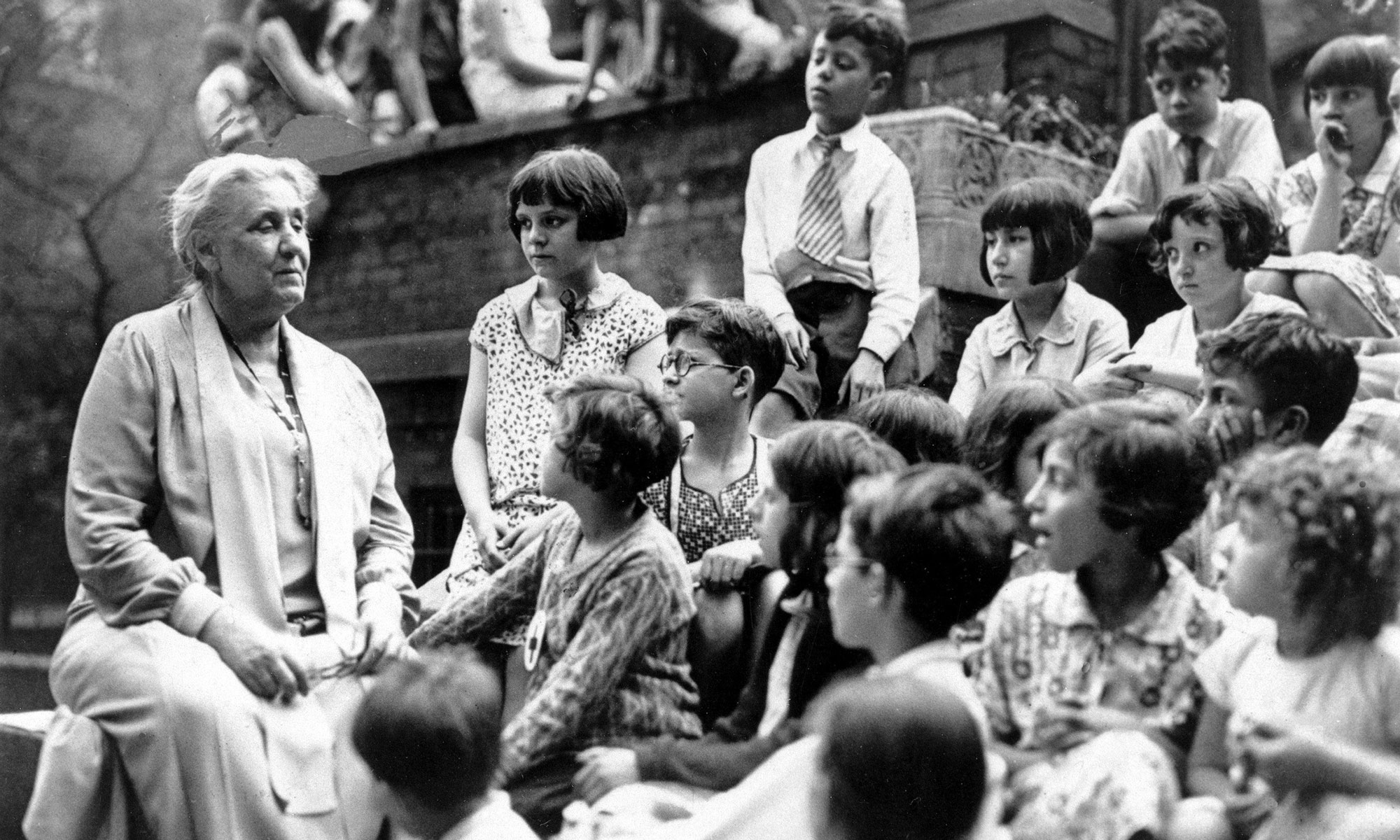
Most troubling to me as an historian is that Addams fails to give a fair accounting of the religious and educational institutions in the neighborhood after claiming that only through the experience of living in the neighborhood could educated Americans like herself uplift the people in these working class and immigrant districts. By 1892, twelve Catholic schools existed in the Hull-House neighborhood.[2] I have found no documentation that she approached these institutions, to which so many of the children and youth who participate in the settlement house, were enrolled, with any openness or interest even as she had pledged herself to engage with the common lot of people. The families in her neighborhood, including many who sent their children to Hull-House programs after school and in the summer, also enrolled their sons and daughters in the Catholic school system. Addams knew these children and could see their talents and their maturation, even with the influence of the religious sisters and the priests. And the teaching sisters were well aware of the influence of Hull-House. The children knew there was a conflict. Francine Tarsitano, a 1954 graduate of St. Mary High School, identified this tension when she recounted the disapproval her BVM teachers expressed when she came to school wearing a special Hull-House club jacket:
Well, we were called into the principal’s office about these jackets. “Where is this club? What is this club?” “This is a Hull-House club.” We were so proud to say that, that it was from Hull-House. She said, “You cannot wear those jackets here. And we advise you not to go to Hull-House anymore because it is not a Christian organization.” So I went home and I told my mother and father that and they said, “A Christian organization. We never even thought of it as that.” But you know, my father went to . . . [St. Mary’s]and said, “They’re going to Hull-House. She is going to Hull-House. They’ve only done good things for our family.” Well we were never allowed to wear the jackets anymore, that was it. Couldn’t wear it to St. Mary’s. [3]
For Addams, who affixed a Chi-Rho Cross to her bodice, her work at Hull-House was religious[4]; yet by establishing her settlement as an independent association without ties to any religious organization, university, or other agency, and by not requiring religious worship or religious education, she set out to spread a Christian humanism that she envisioned as cosmopolitan and democratic, inclusive, and tolerant. In this way she envisioned Hull-House as a “cathedral of humanity,” a place where people of all religious persuasions could learn about each other and engage in a kind of civic or democratic fellowship. Did this mean that she resolved to exclude religious ideas from Hull-House? Not really. In a letter to a college settlement colleague, Addams spoke candidly: “We find each year that it is more possible to discuss frankly religious problems and differences, because our neighbors have constantly less fear that we will proselyte them.”[5] Frannie Tarsitano’s father, the son of Italian immigrants, was comfortable sending his children to Hull-House where they had “done good things for the family.”
The Hull-House approach to Catholic schools really begins before Addams located her new experiment in the Nineteenth Ward, otherwise known as Holy Family parish. She was already convinced that immigrants needed to attend public schools and was pleased when her new friend and guide to Italian neighborhoods, Alessandro Maestro Valerio, reported to her that he had in three months time “sent five hundred Italian children to [public] school.” [6] Addams shared Valerio’s goal to place as many Italian children in public schools as possible; he, like the liberal Protestant social feminists who worked with Addams on school reform, were saving children from the dangers of indoctrination in papal-controlled classrooms. This fear by the hegemonic Protestant culture of Catholic indoctrination in the formation of new citizens was so strong that for the Hull-House residents, imbued with these ideas, children in the elementary parochial schools could not be counted as properly “schooled”; this is indicated in the famous Hull-House Maps & Papers volume published in 1895. Children of immigrants who attended parochial schools, even though they were born in the United States and most likely were English speaking, were counted in the Nationalities Maps along with their parents as foreigners.
The campaign for more public schools in the Nineteenth Ward was led by the Hull-House reformers who claimed that there were 5,000 children in need of seats in new classrooms and demanded the board of education begin construction immediately. This happened to be the exact number of children enrolled in the Catholic elementary schools taught by the Sisters of Charity of the Blessed Virgin Mary (BVMs).[7] In the Hull-House view, American born children of immigrants who had not been influenced by the public schools were more truly designated “second-generation immigrants than first- generation Americans.”[8]
In 1897, Jane Addams, addressing the influential National Educational Association (NEA) on the needs of foreign-born children, or the American-born children of immigrants, explained that their families had “no social life in any structural form, and can supply none to the child.”[9] Addams is not making a derogatory comment about immigrants, who she asserts have very strong family values and love their children very much. Rather, she is expressing a sociological concept. For John Dewey, Chicago educator and superintendent of schools Ella Flagg Young, Addams and others in the progressive education movement, schools had to become social centers to supply the kind of guidance, training, and information that immigrant families were unable to provide. What the Hull-House maps demonstrate is the lack of public schools in the thirty or so blocks most distressed. In fact, a larger project of the Hull-House education reformers was to develop a decent public school system which did not yet exist, although Addams and others felt justified in their claims of its inherent superiority.
When Addams and Starr arrived in the Nineteenth Ward, the public schools had quite a bit of catching up to do. Addams and Starr ultimately chose a location for their settlement house that placed it at the intersection of two Catholic neighborhoods: to the east of Halsted Street there were about thirty city blocks of Chicago-style tenements, filled with immigrants of many nationalities, but predominantly Roman Catholic and Italian; here in the river wards, industrial and commercial businesses had mushroomed after the Great Chicago Fire in 1871, and the housing stock accommodated increasing numbers of immigrant workers’ families. To the west (and including Hull-House itself) was a more prosperous neighborhood of more seasoned immigrants and of older residents, who Addams called “old settlers” and invited to the settlement house just as she invited the newcomers; in America for many generations, they had settled originally in the Near West Side when they, like Charles J. Hull, himself a real estate developer and evangelical Christian who built his homestead in 1856, imagined their homes would increase in value. Relatively undeveloped before the Civil War, this western edge of urban growth also attracted the Rev. Arnold J. Damen, S.J. who founded the Holy Family parish one year after Hull built his house. Addams coveted relationships with the neediest newest immigrants, the Italians, but the earliest efforts at Hull-House could not have gotten off the ground without the cooperation and engagement of the Irish Americans and “Old Settlers” who lived west of the settlement house.
Addams tended to underestimate the private associational strength of the Nineteenth Ward as if the developments at her settlement had no antecedent or parallel institutions with which to have social intercourse. This was particularly true of the underestimating of the Catholic strength and contribution.[10]
Had the Hull-House Maps & Papers project mapped the west side of the Nineteenth Ward, their narrative would have been dramatically different. We are not talking about immense space, just four or five blocks south, north, or west of Halsted Street and Hull-House would have given the neighborhood a different cast; it would have appeared “mixed” economically, with prosperous sections and brick residences, prosperous shops owned by immigrants, and lots of parochial schools and churches. Even the east side, the area mapped, was not all of one piece. Italian families who lived in this congested “slum” did not describe it that way. Francine Tarsitano, who told the story of her Hull-House jacket and the reaction of the BVM principal of St. Mary High School, was the youngest of a large Italian family. In 1901, her grandfather Leopoldo Tarsitano had settled in the east end of the Nineteenth Ward, on a block in the densely populated blocks earlier depicted in the Hull-House Maps. Leopoldo had been in the Italian Calvary before coming to the U. S. With his wife Rosario and son Gabriel, the Tarsitano’s lived for several years in a flat and Leopoldo worked as a grocery cart peddler but by 1907 the family had saved enough money to buy their own two-story store front brick home located just west of Holy Guardian Angel Church, an Italian parish. The store was on the first floor with the family living in the upper levels. The Tarsitano’s children and grandchildren all participated in the cultural and recreational opportunities offered by Hull-House, and they were devotees of the summer camp in Waukegan, a place where the daughters and sons of immigrants had the taste of life outside the neighborhood. They all attended Holy Guardian Angel Church, the parish schools and all of Leopoldo’s four granddaughters attended St. Mary High School; one became a physician, after graduating from Mundelein and Loyola University Medical School; two became school teachers, graduating from Northern Illinois University; and another sister married and had children but did not work outside the home; two grandsons attended St. Ignatius Jesuit High School and Our Lady of Pompeii High School, the former attending the University of Illinois briefly and ending up with a business career at the managerial level; the latter graduated from Loyola University, did graduate work at De Paul and at the University of Nebraska and became a political science professor at the College of Du Page.
One cannot judge whether the successes were mostly the result of the Hull-House connection or the extensive connection with Catholic schools. The more complete genealogy of the family indicates that the trends towards secularization in religion and society can be seen in the family as well as a lasting ethnic and culturally Catholic identity. There has been some intermarriage with non-Catholics and geographical mobility outside of the neighborhood, to be sure. There are also lasting remnants of the imprint of both Hull-House and the values of the teaching sisters.
The St. Mary High School experience was critically important for the Italian girls. They may not have fully understood how unique the experience was for the daughters of working class and immigrant families in the inner city. St. Mary’s had already drawn attention to itself when by 1915 social feminist Ella Flagg Young, superintendent of Chicago’s public schools voiced her concerns that there was a disproportionate numbers of Catholic high school grads enrolled in the Chicago Normal School. They had done so well on the entrance exams that Young was quoted as accusing the Catholics of running “cramming schools” to inflate their numbers entering the teachers’ college. There was anxiety about having too many Catholics from the catholic system end up as public school teachers. The issue had been brewing for some time. As early as 1903, Chicago school boards had openly strategized to limit the numbers of Catholics entering the teaching profession.[11] Superintendent of Schools Young, testifying in 1915 before a state committee investigating the Chicago School Board, “proposed a quota system by which the board would assign to each high school, both public and private , a fixed number of places in the Normal School. The Catholic newspaper the New World saw this as one more bigoted effort to limit the number of Catholic teachers in the public schools.”[12]
Such a proposal and others that followed in subsequent years were not successful, but they had a bearing on the Catholic school culture and the responses made by administrators in the Catholic high schools. [13]
This is a crucial part of the Catholic narrative of education that, unfortunately, is often not known in Catholic circles either. What provoked the Progressive social feminists was the great progress made by the BVM-run St. Mary High School for Girls. Located a stone’s throw from Hull-House, St. Mary High School was inaugurated at the height of the debate over urban education. Both the public system and the Catholic began the twentieth century with inadequate secondary institutions. At the turn of the century, when St. Mary’s was opened, secondary education remained an option for only a small segment of the population, whether American‑born or immigrant. St. Mary High School immediately identified college and careers in education as the major goal for its students, many of whom were the daughters of Irish immigrant women who had worked as laundresses, seamstresses, and domestics. BVM schools already had pioneered commercial programs for boys and girls in the 1890s,[14] so when commercial courses were introduced in 1902, they realistically prepared St. Mary’s students for the sector of the economy where jobs for women were expanding rapidly: the commercial office. Courses in bookkeeping, typing, business arithmetic, and soon, stenography, set the tone, with the goal for many graduates of attending a business college. [15]
The young women also studied laboratory sciences including physics and chemistry, and biological sciences including botany, zoology, and physiology. Music, drawing, manual training, and domestic science courses were also available. Textbooks used were the standard ones assigned in the public schools. Significantly, St. Mary’s was the first catholic girl’s high school to offer advanced academic work in the form of college extension courses taught by the Jesuits.[16]
“The object of the social settlement,’ Addams had outlined, ‘is the uplifting of the people—the word people representing the working classes—and this can best be accomplished by the poor acting as their own missionaries. No doubt the working people could be raised if they could be made to feel their power as citizens, because they are nearer to the needs of the poorest, while those who live in more comfortable parts of the town only hear of their needs remotely and know little practically about them.”[17] This statement by Addams paradoxically could have been written by the BVMs, simply changing “social settlements” to “Catholic schools.” The BVM sister-teachers came from immigrant backgrounds, some were the first women in their families to achieve literacy. They were, indeed, “the poor acting as their own missionaries.” The young women who were educated at St. Mary High School included many who came from the thirty or so blocks east of Halsted Street, mapped by the Hull-House residents in 1895 and designated as a “slum” neighborhood.
In innumerable cases, neighborhood boys and girls of talent and potential found Hull-House to be a school of opportunity and refinement, a bridge out of the neighborhood. In delving into their backgrounds, however, one can draw this surprising conclusion: many of the best and brightest stars who, as one of them put it, “bit the apple” of the settlement ideology about civic engagement, had been educated in the American Catholic parochial system. The Hull-House neighbors did not make an “either/or” choice but as children and later as young adults, many immigrants and their children and grandchildren found ways to benefit from religious, family, and social settlement networks in ways that were not imagined by either the social reformers or the Catholic hierarchy.
More than most mainline Protestants, Addams challenged her own biases and consciously pursued an openness to her immigrant neighbors. She opposed immigration restriction, and upheld the rights of aliens, including their freedom to dissent and criticize the government. She insisted that Hull-House not proselytize its Jewish and Roman Catholic neighbors, and she took pride in the Greek plays, the Italian and German social get-togethers, and the exhibits of old-world arts and crafts displayed in the Hull-House Labor Museum. She handled religious and cultural differences through the “performance” of religious pageantry without worship, religious art without prayer, and enactments of ethnic plays in the context of ethnically mixed audiences.[18] But the heavy-duty lifting educationally in the neighborhood remained in the hands of Catholic women, the teaching Sisters whose recent flight from poverty and illiteracy in their crossings gave their commitment to educate Catholics an urgency and a wisdom as they prepared the poor to “be their own missionaries.”
[1] Tracy Fessenden, Culture and Redemption: Religion, the Secular, and American Literature. Princeton and Oxford: Princeton University Press, 2007, 3.
[2] Historian Ellen Skerrett documents twelve Catholic schools in the Hull-House neighborhood in 1892: Convent Academy of the Sacred Heart, opened fall 1860, 485 [1258] W. Taylor Street ; A free school at the northwest corner of Taylor and Lytle streets for girls of Holy Family parish, 1860; additional buildings for the Sacred Heart Academy complex were constructed in 1864 and 1886; Holy Family Boys School, new building at 462 [approx. 1231] S. Morgan Street] opened 1865; St. Ignatius College, 413 [1076] W. 12th Street [Roosevelt Road] opened 1870 (also enrolled young boys);St. Aloysius School, new building at 210 [631] W. Maxwell Street opened 1870; Holy Guardian Angel School, 168 [ 711] W. Forquer Street [Arthington Street] opened 1874;St. Joseph School, on W. 13th Street near Loomis Street [1413 W. 13th Street] opened 1876 ;St. Agnes School, 530 [approx. 1361] S. Morgan Street opened 1887; Ephpheta School for the Deaf, 409 [1100] S. May Street in operation by 1890 (see attached Tribune article on Eliza Allen Starr, March 16, 1890);St. Francis of Assisi School, new building at southwest corner of 12th and Newberry Avenue opened 1884;Notre Dame [French] School, new building at Oregon [Flournoy] and Sibley Street [approx. 1338 W. Flournoy] opened 1885;St. Wenceslaus [Bohemian] School, new building at 185 [710] W. DeKoven Street opened in 1893. Sources: “Province of Chicago,” [1890 statistics compiled on the Archdiocese of Chicago], in James J. McGovern, Souvenir of the Silver Jubilee in the Episcopacy of His Grace The Most Rev. Patrick Augustine Feehan, Archbishop of Chicago, 1890 (Privately printed, 1891), 242-253; Brother Thomas M. Mulkerins, S.J., Holy Family Parish Chicago: Priests and People, ed. Joseph J. Thompson (Chicago: Universal Press, 1923); Rev. Msgr. Harry C. Koenig, ed., A History of the Parishes of the Archdiocese of Chicago 2 vols. (Chicago: the Archdiocese of Chicago, 1980).
[3] Francine Tarsitano Underdown Oral Interview Transcript OH-114, Hull-House Oral Interviews, Spec. Collections, Daley Library, University of Illinois at Chicago.
[4] The simple Chi-Rho Cross she prominently affixed to the collar of her dress can be seen in all the surviving photographs of Addams from the 1890s. It can be seen in the famous photo that has come to symbolize the determined young woman in her inaugural year as co-founder of Hull-House. The Chi-Rho Cross is visible in the 1892 charcoal drawing of Jane Addams by Alice Kellogg Tyler; it is in the famous portrait of Addams that appeared in New England Magazine, July 1898, in an article about Hull-House by Florence Kelley. It is visible in the portrait of Jane Addams that is on the cover of Victoria Bissell Brown’s new edition of Twenty Years at Hull-House (1999) and in the majestic photo portrait of Jane Addams seated in an elaborate Victorian chair that graces the front cover of Allen F. Davis’ American Heroine: The Life and Legend of Jane Addams reprinted in 2000. Preparing to open a settlement house, Addams compared her intentions with the goals of the College Settlement Association in New York City: “I will inclose [sic] the circular of a similar thing in New York,” she wrote her sister. “We are modest enough to think that ours is better, is more distinctively Christian, and less Social Science.”
Jane Addams to Mary Catherine Addams Linn, March 13, 1889, Stephenson County Historical Society, in JAMC (reel 2-1043-1048), Special Collections, The University Library, The University of Illinois at Chicago.
[5] Jane Addams to Katherine Coman, Chicago, Dec. 7, 1891, JAP Microfilm Reel 2-1283.
[6] Jane Addams to Mary Catherine Addams Linn, March 13, 1889, Stephenson County Historical Society, in JAMC (reel 2-1043-1048), Special Collections, The University Library, The University of Illinois at Chicago.
[7] Rima Lunin Schultz, “Introduction,” 20, Hull-House Maps & Papers by the Residents of Hull-House (Urbana& Chicago: University of Illinois Press, 2007; reprint of original 1895 edition).
[8] Hull-House Maps & Papers, 59.
[9] Jane Addams, “Foreign-Born Children in the Primary Grades,” National Educational Association Journal of Proceeding and Addresses of the Thirty-Sixth Annual Meeting Held at Milwaukee, Wis., July 6-9, 1897 (University of Chicago Press, 1897), 106.
[10]In “Hull House, Chicago: An Effort Toward Social Democracy,”Forum, October 1892, Jane Addams states that: “There are seven churches and two missions in the [Nineteenth] ward. All of these are small and somewhat struggling, save the large Catholic church [Holy Family] connected with the Jesuit College [St. Ignatius] on the south boundary of the ward and the French Catholic church [Notre Dame de Chicago] on the west boundary. There are but three out of these nine religious centres in which the service is habitually conducted in English.” The fact that English is only spoken in three out of the nine religious institutions is particularly upsetting to Addams. Addams also ignores the twelve Catholic schools in the Nineteenth Ward already established by 1892. “Province of Chicago,” [1890 statistics compiled on the Archdiocese of Chicago], in James J. McGovern, Souvenir of the Silver Jubilee in the Episcopacy of His Grace The Most Rev. Patrick Augustine Feehan, Archbishop of Chicago, 1890 (Privately printed, 1891), 242-253; Brother Thomas M. Mulkerins, S.J., Holy Family Parish Chicago: Priests and People, ed. Joseph J. Thompson (Chicago: Universal Press, 1923); Rev. Msgr. Harry C. Koenig, ed., A History of the Parishes of the Archdiocese of Chicago 2 vols. (Chicago: the Archdiocese of Chicago, 1980).
[11] Sanders, 28.
[12] Sanders, 28.
[13] “Bishop Muldoon Denies Charges of Mrs. Young,” Chicago Tribune, Aug. 6, 1915, 13; P. L. B[lakely], “High Winds in Chicago,” America, Vol. 13, No. 21, Sept. 4, 1915, 525-526. It is perfectly clear that the Roman Catholic hierarchy was in competition with public schools in Chicago and did not wish them “success”; rallying around a common enemy stirred up support among Catholics to support their own schools. It was a strange predicament, however, since graduates of Catholic schools found employment in public schools and this was used to defend Catholic education.
[14] Callan, “The Sisters of Charity of the Blessed Virgin Mary and Their Schools in Chicago, 1867-1940,” Master’s Thesis Paper 607, Loyola University Chicago, 1941, Loyola eCommons, 60, establishes that The BVMs had experimented successfully with commercial programs.
[15] William H. Chafe, The Paradox of Change: American Women in the 20th Century Oxford University Press, 1991, 68.
[16] St. Mary’s Herald, vol. I, no. 4, January 1931 includes historical material about the early years. St. Mary High School and Center for Learning papers, Richard J. Daley Library, Special Collections, University of Illinois at Chicago. The BVMs had experimented successfully with commercial programs earlier:
[17] “Outlines A New Creed.” Chicago Tribune, Nov. 7, 1898, pg. 10.
[18] The role of Hull-House theater “in negotiating immigrant difference,” as Shannon Jackson puts it, is too large a topic to discuss in this paper. See Stuart J. Hecht, “Hull-House Theatre: An Analytical and Evaluative History,” Ph.D. dissertation, Northwestern University, 1983; also: Elizabeth C. Barrows, “The Greek Play at Hull-House,” Commons (January 1904); Shannon Jackson, Lines of Activity: Performance, Historiography, Hull-House Domesticity (University of Michigan Press, 2000.) Such performances could also be seen as Addams’s efforts to simulate a “cathedral of humanity.” Jenkin Lloyd Jones, Unitarian minister and ally of Addams, who often invited the settlement leader to lecture from his pulpit, called her “the unordained minister of the unecclesiastical church of human helpfulness that is to be.” “Jenkin Lloyd Jones Memorial,” Unity, vol. LXXXII, No. 12 (November 28, 1918), 148.