This post was written by Rima Lunin Schultz on July 17, 2020.
One of the major pieces of legislation that would forever change the landscape of workers’ lives in the United States was the Social Security Act of 1935, passed just months after Jane Addams’s death. The U.S. was a latecomer among industrial nations in developing a system of social insurance and Jane Addams had advocated for such a system from the 1890s. This story I am going to tell you about her connection to the bill’s passage reveals much about her theory and practice of democracy. In the spirit of Addams, it is an optimistic story about the arc of social change. It is the story of how the head of General Electric, Gerard Swope led a small minority of businessmen to provide crucial support for the passage of social security. Swope was a protégé of Jane Addams.
Sometime in the 1890s Gerard Swope, the son of well-to-do German Jews who owned a manufacturing plant in St. Louis, Missouri, was working his way up in management at the Western Electric plant in Chicago. Enos Barton, Western Electric’s chairman had developed a close relationship with Jane Addams which shouldn’t surprise us. He was one of the local industrialists Addams had made it her business to bring into her social circle at the settlement.
Living close also to the heart of Chicago’s garment industry, Hull-House threw itself into the then raging anti-sweatshop fight and welcomed the embryonic clothing workers’ unions to the settlement. The liberal reform Governor of Illinois John Peter Altgeld, who had pardoned the Haymarket martyrs, had just appointed Hull-House resident Florence Kelley the Illinois Chief Factory Inspector. Kelley had studied in Germany and London where she had developed a friendship with Frederick Engels whose book on the English working class she had just translated from the German. Her familiarity with Marxist theory could be seen in her analysis of the sweatshop system in her Hull-House Maps & Papers chapters.
Western Electric’s Barton found the atmosphere stimulating and encouraged his “most promising young men” from the company to live at Hull-House as residents and sent Gerard Swope there. “Let them see all they can of all kinds of people and of their requirements,” Barton told Addams. “It would be the best possible preparation in this business of electricity which is pushing out so rapidly into so many new fields in response to the incredible variety of human needs.”[1]
Swope, a graduate of M.I.T., taught arithmetic and English at Hull-House in the evenings, paid his room and board, as Hull-House residency required, and entered fully into the communal activities of the group of residents. Swope soon became a mentor to an ambitious Russian Jewish immigrant, Philip Davis, later a labor leader sympathetic to the kind of mediation of labor conflicts Addams favored. Davis wanted help with his English. “Up to the time that I met [Gerard] Swope, I had associated only with workers and trade-unionists,” Davis explained. “Their doctrine that all bosses were evil men and, by inference, that all trade-unionists were righteous, appeared absurd when I saw what sort of individual Swope was.” [2]
In a few years Swope was given the responsibility of reorganizing Western Electric’s factory.[3] When a strike threatened, Swope consulted with his Hull-House colleagues and took their advice to negotiate honestly with his workers.[4]
Moving up in the industry, as head of General Electric, Swope employed Dr. Alice Hamilton, who had done her earliest studies of industrial toxins while living at Hull-House, to oversee the environment of the GE factories. He began experimenting with stock options for his employees, another idea discussed at Hull-House. [5]
Meanwhile Addams had become an advocate of more business and labor cooperation.[6] She even looked with hopeful anticipation of the globalization of American business. Visiting General Electric plants in China and Japan she reported positively on the workers whose standard of living was being improved.[7]
Swope privately unveiled his GE unemployment plan for employees to Addams in a letter that acknowledged her influence.[8]
And now to the end of the story of Swope and Social Security. In 1935 the National Chamber of Commerce voted to deny support for FDR’s programs, including unemployment insurance and other aspects of the proposed social security legislation. Swope and a handful of industrialists broke with the Chamber, formed a subcommittee that voiced a minority opinion and offered their support to President Roosevelt. Swope’s advocacy of Social Security was, perhaps, the highest example of the kind of enlightened industrial relations Addams had envisioned and worked to achieve starting with her efforts in the 1890s when Hull-House had been the incubator of a new social citizenship.
Is the cup half empty or half full? Addams voiced her own misgivings and doubts in 1929 about her work and its results:
“We go on doing what we can in various ways in our Settlements, and some of the things have certainly proved their social utility. But there are moments when our hearts are covered with great doubt as to the basic thing itself as to what we might do as Settlement people to change perhaps the attitude towards immigrants, or towards poverty itself; towards industrial relations, towards dozens of things concerning which we are unhappy. And that, I imagine, is the mood that will at moments urge us all to the end of the chapter. And when we no longer have these moments I doubt whether we are fitted to go on, because, after all, it is our salvation, is it not, that we are continually filled with a holy discontent?” [9]
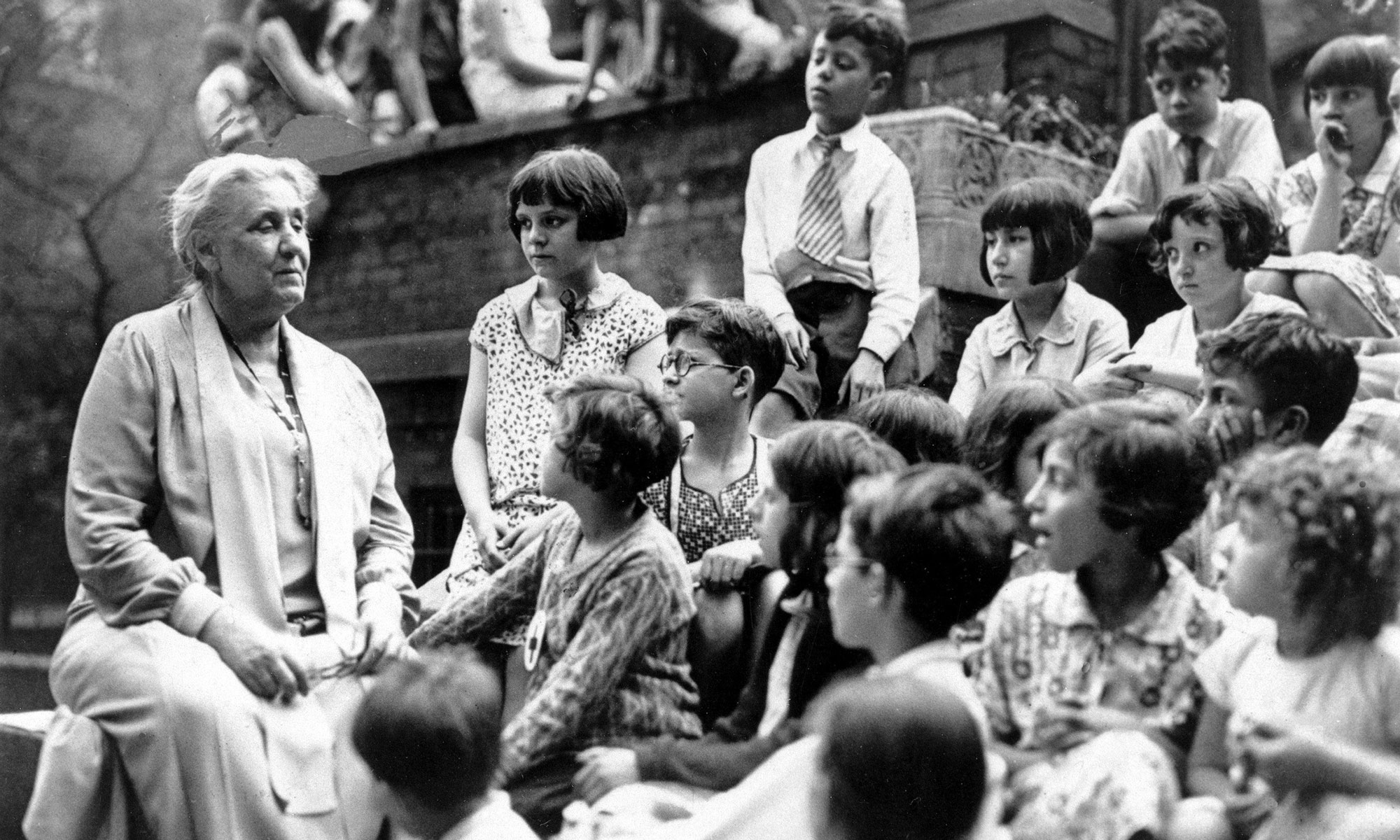
This is the Jane Addams less known. Almost seventy years old, she is self-reflective; besieged by critics for her wartime pacifism, and surveilled by the FBI in the postwar Red Scare for her defense of civil liberties and her support of international causes, she had not yet been awarded the Nobel Prize for Peace.
Personal defeats were not as important to Addams as the loss of the reform spirit and the attacks on liberal policies and progressive social programs. Undaunted, an aging Addams rallied her allies to expand their work rather than retreat and the founding of the Women’s International League for Peace and Freedom was built by women who had participated in domestic social justice initiatives for decades; now they awakened to a global perspective.
Addams feared that postwar social and political conditions were planting seeds for the next conflict. Rebuked by an increasingly hostile press, Addams challenged the rise of militarism, the KKK, government suppression of free speech, immigration quotas and the deportation of thousands. She called out the hypocrisy of the justice system that protected Jim Crow violence: “Our own States Attorney” Addams wrote in a letter to the Chicago Tribune in February 1920, “ who …made numerous arrests [of radicals and aliens] … never caused to be arrested nor indicted a single person connected with the throwing of twenty bombs in Chicago during the last eight months, bombs which had been planted in order to destroy the homes of colored people or of white men who had rented houses to colored people.” [10]
Much of what Addams hoped to achieve remains unfinished. But pathways were laid out by 1935 the year she died.
She had argued that what was missing in democracy was the social expression of democratic living—and to get beyond the antiquated notion of politics imbedded in a limited, unrepresentative and corrupt system, she and others had to get back to the people and redefine social relations; she also realized that the pressures of a cosmopolitan neighborhood seemed to be the simple and inevitable foundations for an international order. She had transcended boundaries of class, gender, nationalities, religions in the expression of a new social citizenship expressed by Swope.
Yet she lived in a segregated world and neighborhood no matter how much she was able, from time to time, to construct interracial space and promote interracial social intercourse. In the postwar era when she failed in her own eyes to prioritize racism, a failure to which she admitted in The Second Twenty Years at Hull-House, it was in large part a failure of her not finding ways to overcome the cultural, social, and political segregation in which all Americans lived and to a large extent still do.
She went into the hospital for the last time in May 1935, knowing the deteriorating situation in Europe. At home she was working on a deal with her old friend and ally Secretary of the Interior Harold Ickes to locate one of the first public housing projects in her Hull-House neighborhood, finally she believed, dealing with the slums she had mapped more than forty years before. And she knew there was a good chance that social security was about to be realized.
Returning finally to Addams as Political Woman writ large, her skill in redefining the roles of men and women in her reform circles was undogmatic and liberating for both sexes. It made her unique among leaders of the woman’s suffrage movement, and often controversial, especially in her view of how to be nonpartisan. Addams made waves when she seconded Theodore Roosevelt’s nomination as the presidential candidate of the Progressive “Bull Moose” Party in 1912 and simultaneously remained vice president of the suffrage association pledged to nonpartisanship. Her undogmatic, nonideological decision to risk support of the imperfect candidacy of TR related to her understanding of social progress. He was a racist, a militarist, an imperialist. Yet Addams’s social settlement and suffrage networks converged to become a dominant influence in the Progressive Party platform. She saw the opportunity for dissemination of social policy ideas nationally. From our standpoint, and from hers—as she looked back, Addams fell short, however, in her goal of fully democratizing the social policy discourse in which she did her political work. She had not been able to bring Blacks fully into the social circle and into full political empowerment. This is a message to us. It reminds us how hard the struggle to live democratically was for Jane Addams and is for us today. And it calls us to ask who has not yet been brought into the circle.
[1] Jane Addams, The Second Twenty Years at Hull-House (New York: The Macmillan Company, 1930), 394.
[2] Philip Davis, And Crown Thy Good (New York: Philosophical Library, 1952), 89-90.
[3] Ellis W. Hawley, “Swope, Gerard,” Dictionary of American Biography, John A. Garraty, editor (New York: Charles Scribner’s Sons, 1980), Supplement Six, 614.
[4] David Loth, Swope of G.E. (New York: Simon and Schuster, 1958), 58-59.
[5] “Employes [sic]to Help Manage Business of Electric Co.” Chicago Tribune, Feb. 17, 1923, pg. 16; “Financial Notes.” Chicago Tribune, Aug. 5, 1923, pg. A10.
[6] Ibid.. 391.
[7] Ibid., 396.
[8] Gerard Swope to Jane Addams, December 10, 1930, Swarthmore College Peace Collection, Jane Addams Papers, Series 1 in JAMC (reel 21-1443-1447), Special Collections, Richard J. Daley Library, The University of Illinois at Chicago.
[9] “The Settlement as a Way of Life.” Addresses by Jane Addams, Mary E. McDowell, Graham Taylor. Neighborhood 2, no. 3 (July 1929), 145-146. [Bold added.]
[10] Jane Addams wrote a Letter to the Editor of the Chicago Tribune protesting “against the flagrant misrepresentation in the report of my address as given in this morning’s Tribune [Feb. 23]” and this letter appeared on Feb. 24,, 1920 in the paper under the column, “Voice of the People.”